
Loose stool is one of the most common digestive issues dog owners in the United States deal with, and while it’s often temporary, it can quickly become frustrating—both for you and your dog. Occasional loose or mushy stools usually point to something simple like a sudden diet change or mild stomach upset. But when the problem becomes frequent or lasts more than a couple of days, it may signal an underlying sensitivity, food intolerance, or poor diet quality. That’s exactly where choosing the best dog foods for loose stool can make all the difference.
This guide compares some of the best dog foods for loose stool, explains which ingredients help improve stool consistency, and shows how to choose the right formula based on your dog’s digestive needs. If your dog has been experiencing ongoing soft stools but seems otherwise normal, you can also review our detailed explanation here: Why Does My Dog Have Soft Stools but Is Acting Normal?. For dogs with a sensitive stomach, understanding the root cause is crucial—learn more here: What Causes Sensitive Stomach in Dogs?.
As always, any chronic loose stool should be discussed with your veterinarian. Vet guidance, along with choosing the right nutrition, is the most effective way to get your dog’s gut back on track. Because diet is the #1 factor in resolving mild digestive upset, reinforcing why selecting the right food matters so much.
This guide will help you confidently choose the best dog foods to firm up loose stool and support long-term digestive health.
What Causes Loose Stool in Dogs?
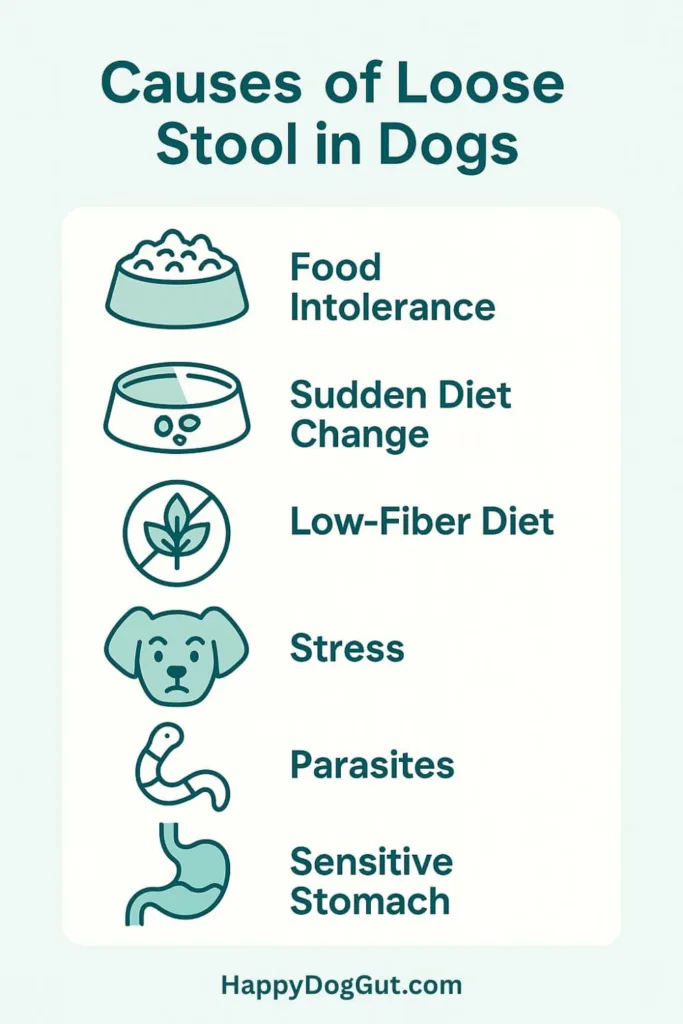
Loose stool in dogs can happen for many reasons, and understanding the root cause is essential before choosing the best dog foods for loose stool. While occasional soft stool may not be a major concern, chronic or recurring loose stool often points to a deeper digestive imbalance.
One of the most common causes is food intolerance, which happens when a dog’s system reacts negatively to certain proteins, grains, or artificial additives. If you suspect intolerance, don’t miss our detailed guide: Signs of Food Intolerance in Dogs.
Another frequent cause is sudden changes in diet, which can disrupt the gut microbiome and lead to mushy stools. This is especially common when switching foods too quickly—learn how to transition safely here: Dog Food Transition Guide.
Dogs on low-fiber diets may also experience loose stool because fiber plays a critical role in firming and shaping stool. See our complete fiber guide: High-Fiber Dog Foods for Firm Stool.
Pinpointing the cause helps you choose the best dog foods to firm up loose stool, ensuring long-term digestive stability and a healthier gut for your dog.
Signs Your Dog Needs a Stool-Firming Diet
Knowing when your dog needs a stool-firming diet is essential, especially if you’re trying to find the best dog foods for loose stool or solutions that help improve long-term digestive health. While an occasional soft stool isn’t usually a reason to worry, certain signs indicate your dog’s gut needs more support.
🐾 Soft or mushy stools lasting 3+ days
If your dog’s stool hasn’t firmed up after several days, it’s often a sign that their current diet isn’t providing enough digestible nutrients or balanced fiber. This is one of the strongest indicators that a stool-firming diet is needed.
🐾 Mucus in the stool
A slimy or jelly-like coating often suggests inflammation in the intestines. Diets rich in soluble fiber and gentle proteins can help calm irritation and restore normal stool consistency.
🐾 Gas, bloating, or mild discomfort
Excessive gas or bloating typically points to food intolerance, low-fiber diets, or poor digestion. Switching to stool-firming dog food can significantly help.
🐾 Loose stool but acting normal
Many dogs remain active and playful even when their stools are loose, making it easy to overlook the issue.
🐾 Signs of food sensitivity
If loose stool occurs alongside itching, vomiting, or chronic digestive issues, a food sensitivity may be the root cause. In such cases, identifying triggers and choosing the right diet becomes crucial.
Loose stool doesn’t always mean something serious, but understanding how long digestive upset typically lasts can help owners decide when diet changes are enough and when further support may be needed. Learning How Long does Diarrhea last in Dogs can provide helpful context before choosing foods designed to support stool consistency.
Recognizing these early signs helps you select the best dog foods to firm up loose stool, ensuring better digestion, healthier stools, and improved gut stability for your dog.
What Ingredients Help Firm Up Dog Stool?
When choosing the best dog foods for loose stool, understanding the right ingredients is essential. Certain nutrients naturally promote firmer, healthier stools by supporting digestion, reducing inflammation, and balancing gut bacteria. Below are the key ingredients for dogs dealing with soft stool, diarrhea, or chronic digestive issues.
1. Soluble & Insoluble Fiber
Fiber is one of the most effective natural tools for firming stool.
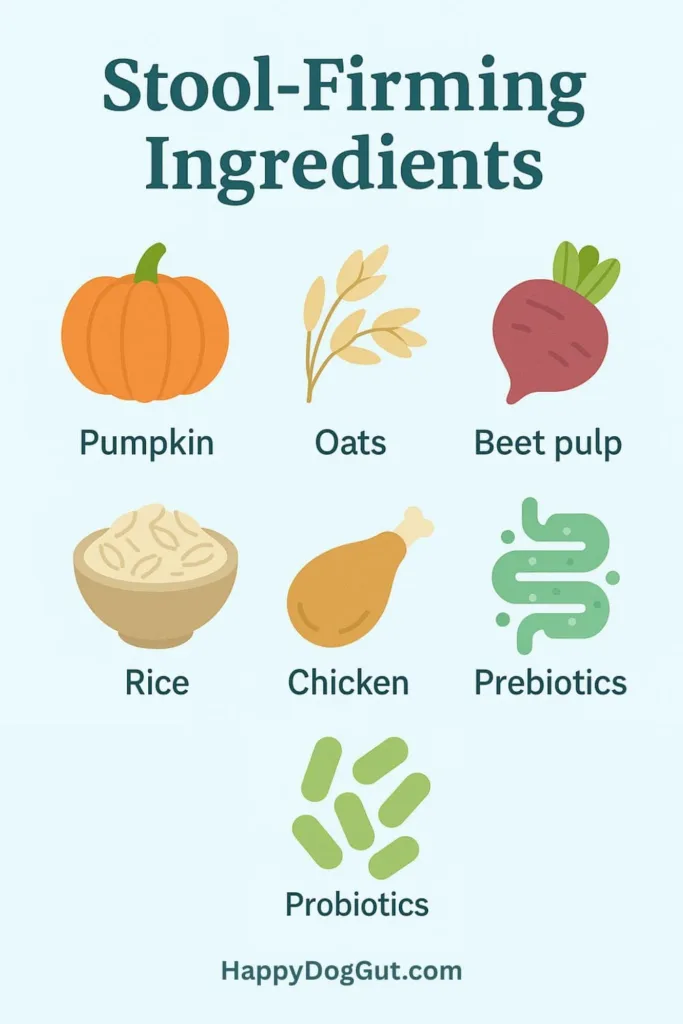
- 🥄 Soluble fiber (like pumpkin and oats) absorbs excess water, helping create well-formed stools.
- 🌾 Insoluble fiber (such as beet pulp) adds bulk and improves stool structure.
If your dog regularly has mushy stool, increasing fiber through diet is often the fastest solution. Explore more fiber options here: High-Fiber Dog Foods for Firm Stool
2. Easily Digestible Proteins
Dogs with loose stool often struggle to digest heavy or low-quality proteins.
Gentle proteins like Chicken, Turkey, and Salmon are easier on the stomach and reduce intestinal stress.
- ❌ Avoid common irritants like beef, corn, and soy, which can worsen stool issues in sensitive dogs.
Learn more about ingredients that trigger digestive problems here: Dog Food Ingredients to Avoid
3. Prebiotics & Probiotics
These gut-friendly ingredients improve stool quality by balancing the microbiome and supporting healthy digestion.
- Prebiotics fuel beneficial gut bacteria.
- Probiotics help regulate stool consistency and reduce loose stool episodes.
For a deeper look at dog probiotics, visit: Best Probiotics for Dogs.
4. Limited Ingredient Diet (LID) Formulas
LID diets contain fewer ingredients, making them ideal for dogs with sensitivities or food intolerances—common causes behind persistent loose stool.
These diets reduce inflammation, ease digestion, and make it easier to identify trigger foods.
Learn how LID formulas help sensitive dogs here: Best Limited Ingredient Dog Foods.
5. Gut-Calming Ingredients
Some gentle, easily digestible foods can soothe an irritated stomach and promote firmer stools.
- 🍚 White rice absorbs excess moisture and is gentle on the gut.
- 🍗 Boiled chicken offers digestible protein without triggering irritation.
- 🎃 Pumpkin provides natural soluble fiber that firms stool quickly.
Helpful guides:
By choosing foods rich in these ingredients, you’re far more likely to find the best dog foods to firm up loose stool and support long-term digestive health—especially if your dog struggles with chronic soft stool, mild diarrhea, or a sensitive stomach.
10 Best Dog Foods for Loose Stool
Choosing the best dog foods for loose stool can feel overwhelming, especially when your dog is dealing with ongoing soft stools, mild diarrhea, or signs of digestive sensitivity. To make things easier, this list highlights the top formulas clinically proven to support firmer stools, improve digestion, and restore gut balance.
1. Hill’s Science Diet Sensitive Stomach & Skin (Best Overall)
Key Ingredients: Chicken, Barley, Beet Pulp, Prebiotic fiber
Fiber %: ~4%
Calories: ~350 kcal/cup
🐾 Why It Works for Loose Stool:
This formula uses highly digestible ingredients plus prebiotic fiber to support stool consistency.
Pros:
- Great for everyday digestive support
- Gentle formula reduces stool irregularities
- Promotes skin and coat health
Cons:
- Not ideal for dogs needing grain-free diets
Best For:
Dogs with ongoing loose stools, mild stomach sensitivities, or inconsistent poop texture.
Avoid If:
Your dog has chicken allergies or requires a very high-fiber diet.
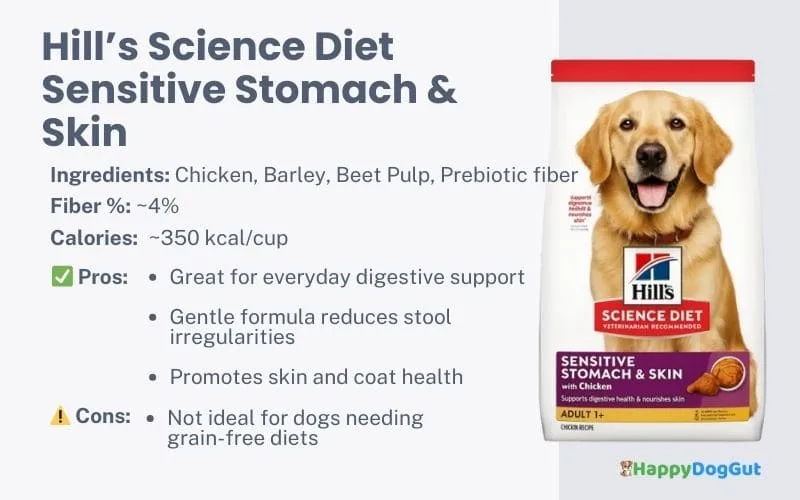
2. Purina Pro Plan Sensitive Skin & Stomach (Salmon & Rice)
Key Ingredients: Salmon, Barley, Rice, Prebiotic fiber
Fiber %: ~4.5%
Calories: ~370 kcal/cup
🐾 Why It Works:
Rich in soluble fiber + salmon protein, this formula helps firm stool while soothing gut inflammation. Great for chronic soft stool cases.
Pros:
- Moderate fiber helps firm stool naturally
- Salmon protein is gentle on digestion
- Highly recommended for chronic loose stool
Cons:
- Not a grain-free option
Best For:
Dogs with mild diarrhea, loose stool but normal behavior, or food sensitivities.
Avoid If:
Your dog cannot tolerate fish-based proteins.
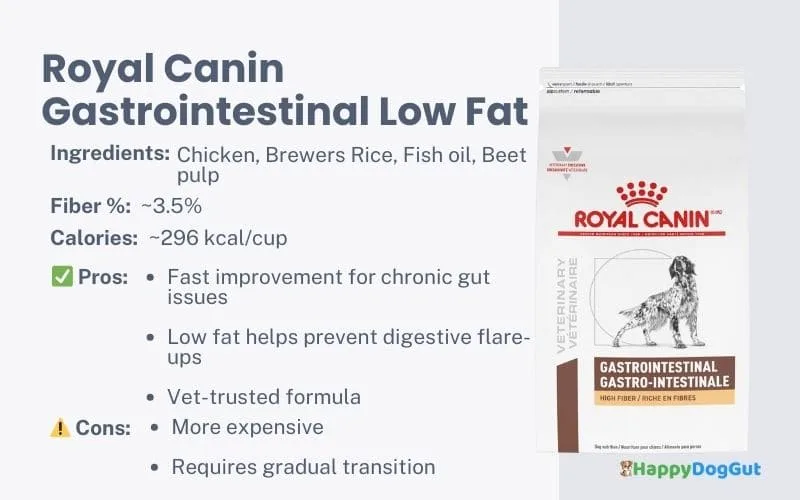
3. Royal Canin Gastrointestinal Low Fat
Key Ingredients: Chicken, Brewers Rice, Fish oil, Beet pulp
Fiber %: ~3.5%
Calories: ~296 kcal/cup
🐾 Why It Works:
Designed for dogs with fat malabsorption, chronic diarrhea, or sensitive GI tracts, this food offers maximum digestibility and rapid stool improvement.
Pros:
- Fast improvement for chronic gut issues
- Low fat helps prevent digestive flare-ups
- Trusted formula
Cons:
- More expensive
- Requires gradual transition
Best For:
Dogs with chronic diarrhea, pancreatitis history, or frequent loose stool.
Avoid If:
Your dog needs higher fat for weight maintenance.
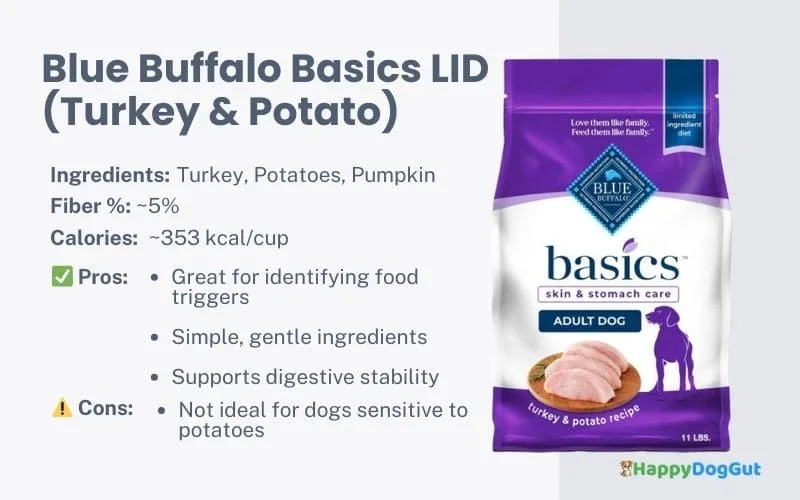
4. Blue Buffalo Basics LID (Turkey & Potato)
Key Ingredients: Turkey, Potatoes, Pumpkin
Fiber %: ~5%
Calories: ~353 kcal/cup
🐾 Why It Works:
Its limited ingredient formula reduces inflammation and helps dogs struggling with food intolerance-related loose stool.
Pros:
- Great for identifying food triggers
- Simple, gentle ingredients
- Supports digestive stability
Cons:
- Not ideal for dogs sensitive to potatoes
Best For:
Dogs with food intolerance or unpredictable soft stools.
Avoid If:
Your dog needs grain-inclusive diets.
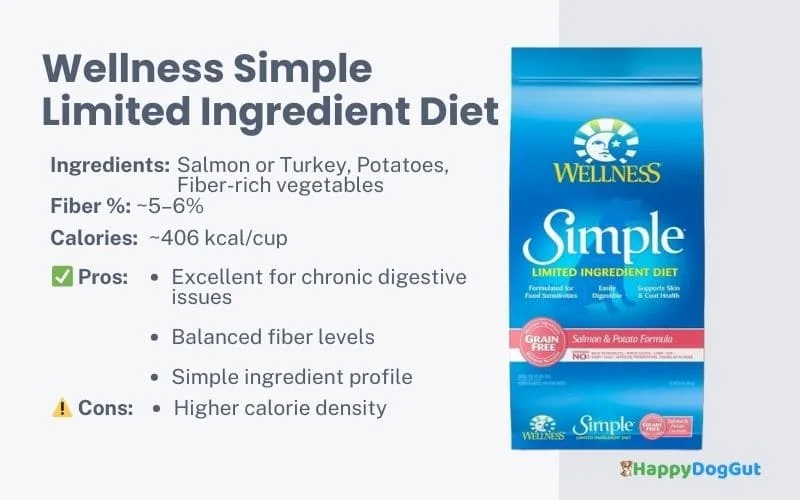
5. Wellness Simple Limited Ingredient Diet
Key Ingredients: Salmon or Turkey, Potatoes, Fiber-rich vegetables
Fiber %: ~5–6%
Calories: ~406 kcal/cup
🐾 Why It Works:
One-protein formula reduces digestive stress and improves stool formation.
Pros:
- Excellent for chronic digestive issues
- Balanced fiber levels
- Simple ingredient profile
Cons:
- Higher calorie density
Best For:
Dogs with long-term sensitive stomach issues.
Avoid If:
Your dog needs low-calorie formulas.
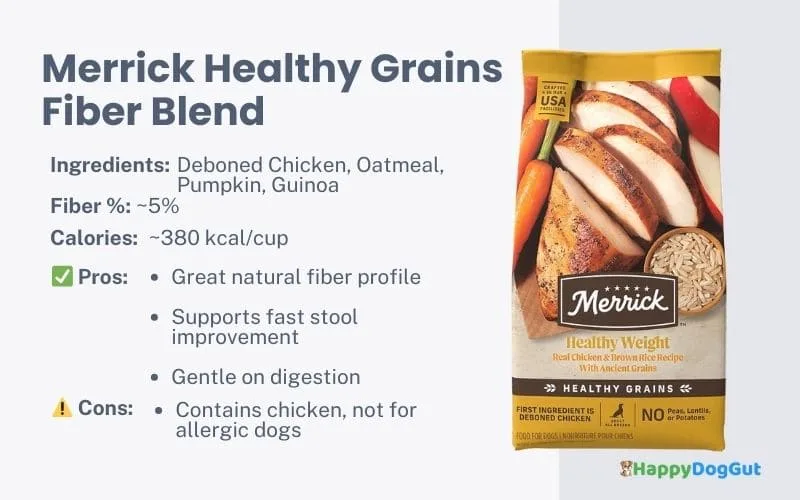
6. Merrick Healthy Grains Fiber Blend
Key Ingredients: Deboned Chicken, Oatmeal, Pumpkin, Guinoa
Fiber %: ~5%
Calories: ~380 kcal/cup
🐾 Why It Works:
A unique blend of oatmeal, brown rice, barley, and pumpkin provides excellent stool-firming properties.
Pros:
- Great natural fiber profile
- Supports fast stool improvement
- Gentle on digestion
Cons:
- Contains chicken, not for allergic dogs
Best For:
Dogs needing extra fiber to maintain firm stools.
Avoid If:
Your dog is on a low-fiber or grain-free diet.
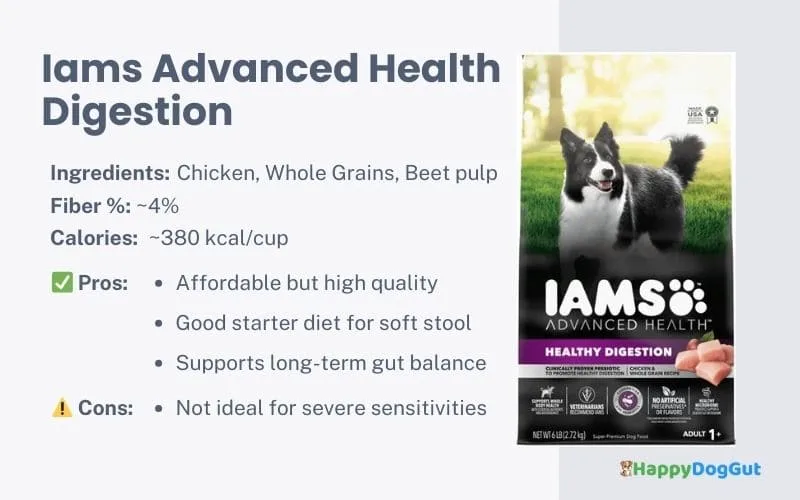
7. Iams Advanced Health Digestion
Key Ingredients: Chicken, Whole Grains, Beet pulp
Fiber %: ~4%
Calories: ~380 kcal/cup
🐾 Why It Works:
Budget-friendly yet effective, this formula supports digestive regularity using beet pulp and tailored prebiotics.
Pros:
- Affordable but high quality
- Good starter diet for soft stool
- Supports long-term gut balance
Cons:
- Not ideal for severe sensitivities
Best For:
Dogs with occasional loose stool or mild gut issues.
Avoid If:
Your dog requires grain-free food.
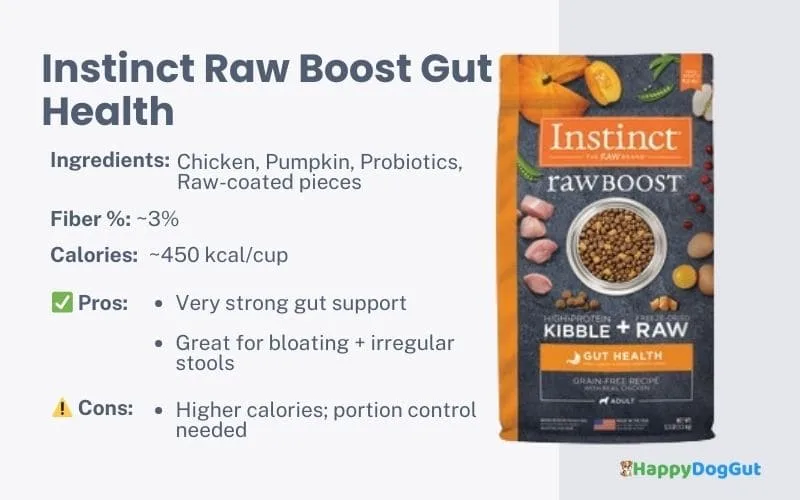
8. Instinct Raw Boost Gut Health
Key Ingredients: Chicken, Pumpkin, Probiotics, Raw-coated pieces
Fiber %: ~3%
Calories: ~450 kcal/cup
🐾 Why It Works:
A powerful probiotic blend + raw-coated kibble supports digestion and reduces bloating or loose stool episodes.
Pros:
- Very strong gut support
- Great for bloating + irregular stools
Cons:
- Higher calories; portion control needed
Best For:
Active dogs with digestive irregularities.
Avoid If:
Your dog cannot tolerate chicken.
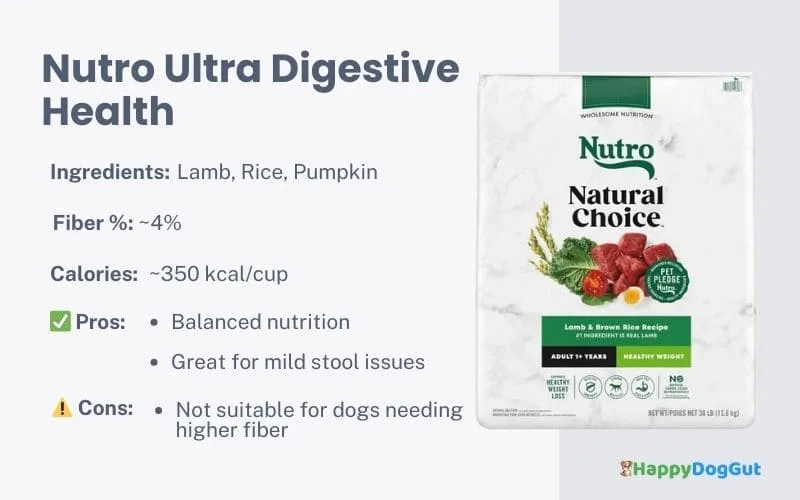
9. Nutro Ultra Digestive Health
Key Ingredients: Lamb, Rice, Pumpkin
Fiber %: ~4%
Calories: ~350 kcal/cup
🐾 Why It Works:
Uses gentle grains and prebiotics to improve stool texture and reduce digestive discomfort.
Pros:
- Balanced nutrition
- Great for mild stool issues
Cons:
- Not suitable for dogs needing higher fiber
Best For:
Dogs with occasional loose stool or stomach sensitivity.
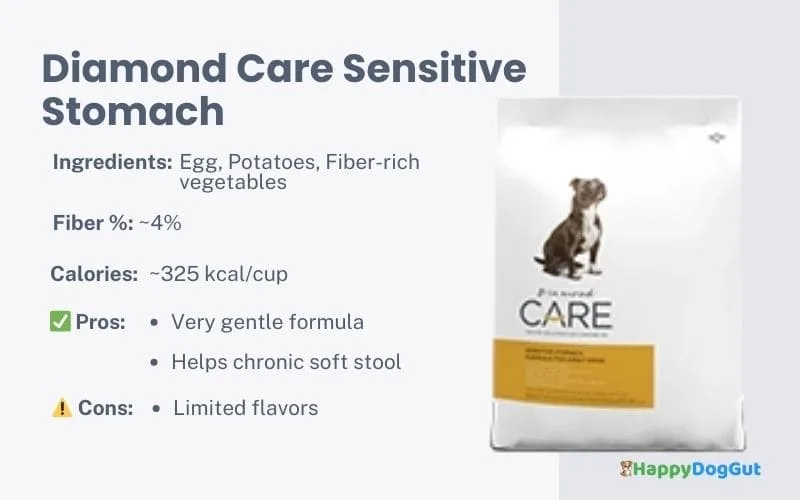
10. Diamond Care Sensitive Stomach
Key Ingredients: Egg, Potatoes, Fiber-rich vegetables
Fiber %: ~4%
Calories: ~325 kcal/cup
🐾 Why It Works:
Simple, gentle ingredients reduce irritation and support firmer stools. Ideal for highly sensitive dogs.
Pros:
- Very gentle formula
- Helps chronic soft stool
Cons:
- Limited flavors
Best For:
Dogs that react to common proteins.
Avoid If:
Your dog has egg allergies.
To help you choose the best dog foods for loose stool based on your dog’s specific condition, explore these essential digestive guides:
- Best Foods for Sensitive Stomach
- Best Dry Dog Foods for Sensitive Stomach
- High-Fiber Dog Foods for Firm Stool
- Best Kibble for Sensitive Stomach
Wet Dog Food vs Dry Dog Food for Loose Stool
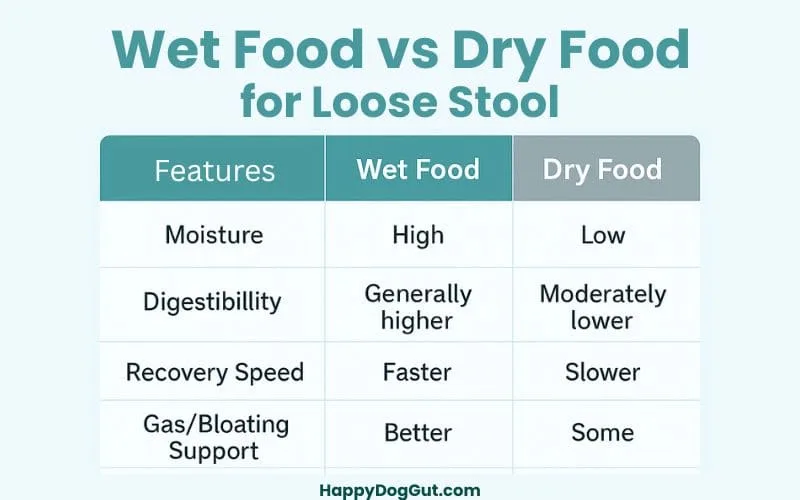
When dealing with loose stool, wet dog food is often easier on the digestive system than dry kibble because it contains much higher moisture, which helps prevent dehydration and supports smoother digestion.
Wet food is typically softer, more palatable, and easier to break down, making it a better short-term option for dogs with sensitive stomachs, diarrhea, or recent digestive upset. It can also help reduce gas and bloating while speeding up recovery.
On the other hand, dry food can still work well for loose stool if it’s specifically formulated for sensitive stomachs and higher fiber, but low-quality kibble or sudden switching can worsen symptoms.
For many dogs, a temporary switch to wet food or a mix of wet and dry food provides the best balance for firming stool while maintaining long-term digestive health.
Best Wet Dog Foods for Loose Stool
Wet dog food can be a game-changer for dogs struggling with loose or mushy stools. Because wet food contains higher moisture, softer textures, and highly digestible ingredients, it’s much easier for dogs with sensitive digestive systems to process. For many US pet owners, switching from dry kibble to a high-quality wet formula often leads to faster stool improvement, especially when paired with the best dog foods for loose stool in dry form.
Wet food is also ideal for dogs who experience dehydration, low appetite during stomach upset, or difficulty digesting dense kibble. Its gentler formulation reduces strain on the digestive system, helps regulate bowel movements, and supports healthier, firmer stools.
Below are the top wet food choices:
1. Hill’s Science Diet Sensitive Stomach & Skin Wet Food
🥄 Why It Works:
The smooth, stew-like texture combined with chicken and gentle grains makes this ideal for dogs with chronic loose stool. The high moisture content aids digestion and supports healthy hydration.
Best For: Dogs with digestive sensitivity, mild diarrhea, or reduced appetite.
Avoid If: Your dog requires grain-free or poultry-free diets.
2. Purina Pro Plan Sensitive Skin & Stomach Wet Formula
🥄 Why It Works:
This formula includes salmon or turkey paired with prebiotic fiber, helping firm stool while reducing inflammation in the gut. It’s especially helpful for dogs with soft stool issues caused by mild sensitivities.
Best For: Dogs who need balanced moisture + fiber for better stool formation.
Avoid If: Your dog cannot tolerate fish proteins.
3. Blue Buffalo Basics Limited Ingredient Grain-Free Wet Food
🥄 Why It Works:
Perfect for dogs with food intolerances, this Limited Ingredient Diet avoids common irritants and uses a single protein source, helping stabilize stool and reduce digestive flare-ups.
Best For: Dogs with sensitivity-triggered loose stool.
Avoid If: Your dog prefers higher-fiber meals.
4. Royal Canin Gastrointestinal Wet Formula
🥄 Why It Works:
This gentle formula is easy to digest and supports quick stool recovery. It’s commonly used for dogs transitioning from diarrhea or recent stomach upset.
Best For: Dogs recovering from digestive illness or frequent mushy stool.
Avoid If: You need a budget-friendly option.
5. Wellness Simple LID Wet Food (Turkey or Salmon)
🥄 Why It Works:
With only a few ingredients and a clean recipe design, this wet food reduces irritation and supports firmer stools without overwhelming the digestive system.
Best For: Dogs needing simple, soothing wet meals.
Avoid If: Your dog is sensitive to potatoes.
Wet foods like these pair extremely well with the best dog foods for loose stool, creating a balanced approach that helps restore gut health, support hydration, and improve stool consistency faster than dry food alone.
For more detailed options, you can explore our full guide here: Best Wet Dog Foods for Sensitive Stomachs.
Homemade Foods That Help Firm Stool
While choosing the best dog foods for loose stool is typically the long-term solution, many US pet owners prefer using gentle homemade meals to provide quick relief. These simple recipes help soothe the digestive tract, add moisture balance, and firm stool naturally. They work especially well when your dog is experiencing soft stools due to mild stomach upset, stress, or recent diet changes. Below are the most effective homemade options trusted for short-term use.
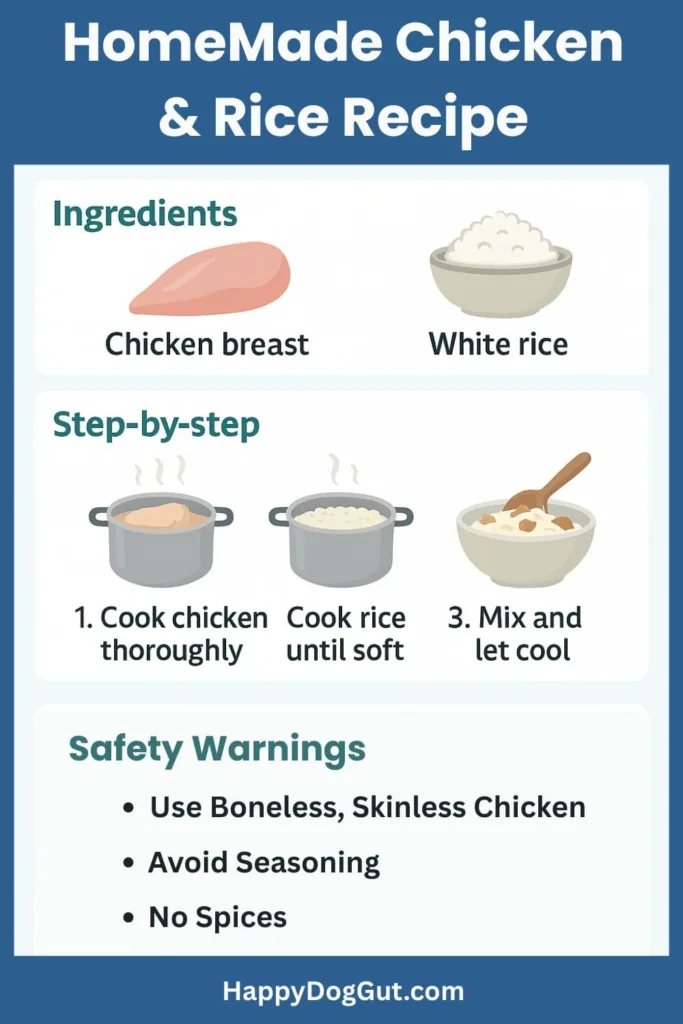
🍚 Chicken & Rice Diet
A classic remedy, the chicken and rice diet is extremely easy to digest and helps stabilize stool during mild digestive upset. The low-fat, high-digestibility combination allows the gut to rest while still providing essential nutrients.
Best For:
Dogs recovering from diarrhea, soft stool, or recent GI irritation.
How It Helps:
- White rice absorbs excess moisture
- Boiled chicken provides gentle protein
- Supports transition back to regular food
For a full, step-by-step recipe guide, see: Homemade Chicken & Rice for Dogs.
Before choosing a long-term diet, first try a short-term bland diet for dogs.
🎃 Pumpkin Meal for Firm Stool
Pumpkin is one of the fastest natural ways to firm stool due to its high soluble fiber content. Just a spoonful can help stabilize bowel movements in dogs experiencing loose stool or mushy poop.
Benefits:
- Adds bulk to stool
- Balances moisture
- Supports gut bacteria
Learn more here: Pumpkin Benefits for Sensitive Stomachs.
🥣 Cottage Cheese & Rice (Occasional Use Only)
Cottage cheese mixed with white rice can soothe the stomach and add bulk to the stool. Its probiotics and gentle texture help calm irritation, but it should be used sparingly.
Best For:
- Dogs needing a short-term bland diet
- Dogs recovering from acute diarrhea
When to Avoid:
- Dogs with lactose intolerance
- Dogs with chronic digestive issues
- Dogs needing low-fat diets
For recovery-focused feeding tips, check: What to Feed After Dog Diarrhea.
Supplements That Help Firm Dog Stool
Supplements can work alongside the best dog foods for loose stool to enhance digestive balance, firm stool faster, and support long-term gut health. Below are the most effective and trusted options for US pet owners.
🦠 Probiotics
Probiotics help balance the gut microbiome, improve stool consistency, and reduce episodes of loose stool. They are especially helpful for dogs with sensitive stomachs, antibiotic-related diarrhea, and chronic soft stools.
Why They Work:
- Restore healthy gut bacteria
- Improve stool formation
- Reduce inflammation
See the best options here: Best Probiotics for Dogs.
🌿 Fiber Supplements
Fiber supplements—like pumpkin powder, psyllium husk, and specialized digestive fiber blends—help bulk up stool and regulate bowel movements.
Best For:
- Dogs with chronic soft stool
- Dogs with low-fiber diets
- Stool irregularity caused by food intolerance
Learn more in our full guide: Best Fiber Supplements for Dogs.
⚙️ Digestive Enzymes
Digestive enzymes help dogs who struggle to break down food properly, leading to loose stools or nutrient malabsorption. They support digestion at every stage and can significantly reduce chronic soft stool.
Why They Help:
- Improve nutrient absorption
- Reduce gas, bloating, and mushy stool
- Support dogs with long-term gut issues
According to VCA Hospitals, digestive enzymes such as lipase, amylase, and protease are commonly used in pets to support digestion and improve nutrient absorption.
Feeding Guide: How Much & How Often to Feed a Dog With Loose Stool
When your dog is experiencing loose stool, how you feed can be just as important as what you feed. Even the best dog foods for loose stool won’t work effectively if your dog’s feeding schedule is overwhelming their digestive system. Adjusting feeding amounts, frequency, and hydration habits can dramatically improve stool consistency and help your dog’s gut recover faster.
🐾 Feed Small, Frequent Meals
Instead of offering one or two large meals, divide your dog’s food into 3–5 smaller meals throughout the day. Smaller portions reduce digestive load, prevent irritation, and help the gut process nutrients more efficiently.
💧 Prioritize Hydration
Loose stool can quickly lead to dehydration. Always provide fresh water and consider adding moisture-rich foods like wet dog food or a small amount of low-sodium broth. Hydration supports the intestines and helps form firmer stools.
🍪 Avoid Treats (For Now)
Many treats—especially those with artificial flavors, fats, or grains—can worsen soft stool. Keep treats minimal or eliminate them until the stool normalizes.
If your dog recently had diarrhea, read:
👉 What to Feed After Dog Diarrhea
A consistent feeding routine paired with the right nutritional choices will help your dog see faster results from the best dog foods to firm up loose stool.
How to Transition to New Dog Food Without Causing More Loose Stool
Switching your dog to one of the best dog foods for loose stool can be incredibly effective—but only if you transition correctly. A sudden change in diet is one of the top reasons US pet owners notice mushy or watery stools. A slow, structured transition gives the gut time to adjust and helps prevent digestive flare-ups.
📅 11-Day Transition Chart
| Day | Old Food | New Food |
|---|---|---|
| Days 1–3 | 75% | 25% |
| Days 4–6 | 60% | 40% |
| Days 7–8 | 50% | 50% |
| Days 9–10 | 25% | 75% |
| Day 11+ | 0% | 100% |
This gradual shift allows gut bacteria to adapt without overwhelming the digestive system.
⚠️ Common Transition Mistakes to Avoid
- ❌ Switching foods overnight
- ❌ Introducing too many new ingredients at once
- ❌ Feeding extra treats during transition
- ❌ Ignoring early signs of intolerance (gas, mucus, soft stool)
If your dog is currently struggling with a food change or you want expert guidance, check our full resource:
👉 Dog Food Transition Guide: How to Switch Without Stomach Upset.
Proper transitioning ensures that the best dog foods for loose stool work effectively, supporting smoother digestion, firmer stool formation, and overall gut health improvement.
When to See a Vet (Red Flags)
While the best dog foods for loose stool can help improve digestion and firm up stool in most mild cases, certain symptoms require immediate veterinary attention. US pet owners should always pay close attention to what their dog’s stool looks like, how long the symptoms last, and whether any additional signs of illness appear. Loose stool itself is not always dangerous—but when paired with the following red flags, professional care becomes essential.
🩸 Blood in the Stool
If you notice bright red streaks or dark, tar-like stool, it may indicate intestinal bleeding, infection, or severe inflammation. This should never be ignored.
🤢 Vomiting + Diarrhea Together
When vomiting occurs along with loose stool, dehydration and electrolyte imbalance can happen quickly. This combination can signal infections, toxins, or pancreatitis.
💧 Signs of Dehydration
Loose stool causes rapid fluid loss. If your dog seems lethargic, has dry gums, sunken eyes, or reduced skin elasticity, call your vet immediately.
⏱️ Loose or Mushy Stool Lasting More Than 48 Hours
Chronic soft stool for more than two days may point to food intolerance, parasites, digestive disease, or a deeper gut imbalance. Diet alone may not resolve it.
🐶 Higher Risk: Puppies & Senior Dogs
Young puppies and older dogs become dehydrated much faster and have weaker immune responses. Any loose stool lasting beyond one day in these age groups is a reason to contact your vet.
Diet changes can support many dogs with mild stool issues, but certain red flags mean it’s time to move beyond nutrition alone. If loose stool lasts longer than expected, becomes more frequent, or appears alongside appetite or energy changes, understanding when to see a Vet for loose stool helps ensure you don’t delay needed care.
Veterinary and regulatory guidance for pet owners emphasizes that symptoms such as persistent diarrhea, vomiting, dehydration, lethargy, blood in the stool, or refusal to eat should prompt immediate veterinary evaluation. According to the U.S. Food and Drug Administration (FDA) animal health guidance, these warning signs may indicate a serious underlying condition. They should not be managed at home without professional advice.
These guidelines help you know when homemade remedies or the best dog foods to firm up loose stool are enough—and when your pet needs medical attention to prevent more serious issues.
FAQs About the Best Dog Foods For Loose Stool
What is the best dog food to firm up loose stool fast?
The fastest way to firm up loose stool is to switch your dog to a highly digestible diet that includes balanced fiber, gentle proteins, and gut-supporting probiotics. Foods like Hill’s Science Diet Sensitive Stomach, Purina Pro Plan Sensitive Stomach (Salmon & Rice), and Royal Canin Gastrointestinal Low Fat are among the best dog foods for loose stool because they help stabilize digestion within a few days. Wet food or bland diets like chicken and rice can also provide quick relief. However, if loose stool continues beyond 48 hours or you see signs of dehydration, contact your veterinarian promptly.
Is rice good for a dog with loose stool?
Yes — white rice is one of the most common ingredients for managing mild loose stool. It’s easy to digest, low in fiber, and helps absorb excess water from the digestive tract, making stool firmer. When paired with boiled chicken, it creates a balanced, soothing meal. This diet is ideal for short-term relief, but for long-term improvement, switching to one of the best dog foods for loose stool is essential.
How long does it take for a new dog food to fix loose stool?
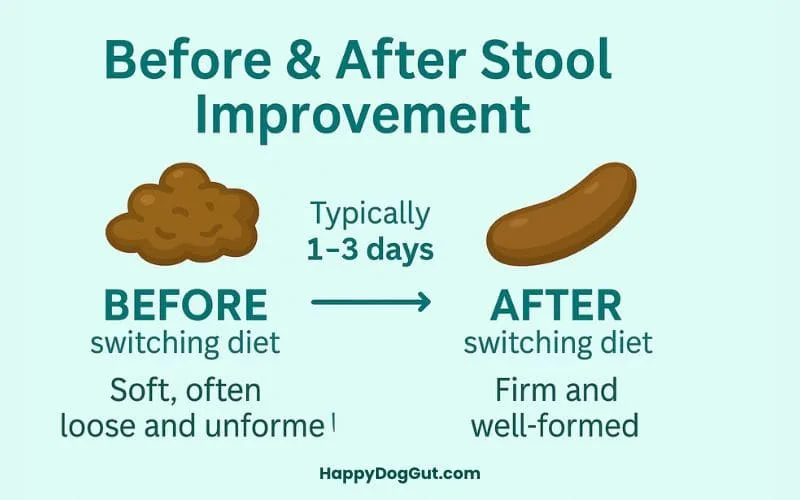
Most dogs begin showing improvement within 3–5 days of transitioning to a digestive-friendly food. Full stool normalization may take 7–14 days, especially if your dog has food intolerances or a sensitive stomach. The key is transitioning slowly and choosing formulas rich in digestible proteins, soluble fiber, and prebiotics. Follow our 11-day transition schedule to avoid worsening loose stool. If your dog has had symptoms for more than 48 hours with no improvement, consult a vet.
Can puppies eat stool-firming dog foods?
Yes, but only if the formula is approved for puppies. Many puppy-specific sensitive stomach foods include balanced nutrition, gentle proteins, and fiber that help firm stool without affecting growth. Avoid adult-only or high-fiber diets unless advised by a vet. Puppies get dehydrated far faster than adult dogs, so soft stool lasting longer than one day should be taken seriously.
Does pumpkin help firm up dog stool?
Absolutely—pumpkin is one of the most effective natural remedies for loose stool. It contains soluble fiber, which absorbs excess moisture and helps create well-formed stools. Even 1–2 tablespoons added to your dog’s food can support digestion. Pumpkin works very well alongside the best dog foods to firm up loose stool, especially for dogs with mild gut sensitivity.
Should I avoid grain-free diets if my dog has loose stool?
Not always. Some dogs with loose stool respond well to grain-inclusive diets because oats, barley, and brown rice provide helpful fiber. Others improve on grain-free diets if grains trigger food intolerance. The key is understanding your dog’s sensitivity rather than following trends. If your dog worsens on grain-free kibble, try a gentle grain-inclusive option like Purina Pro Plan or Hill’s.
What dog treats should I avoid during loose stool episodes?
Avoid treats that are:
High in fat
Contain artificial colors/flavors
Made with corn, soy, or wheat
Rawhide-based
Very chewy or high-calorie
These can irritate the gut and worsen stool consistency. Choose limited-ingredient treats or avoid treats entirely until stool firms up. Pairing treat reduction with one of the best dog foods for loose stool typically produces faster results
Can food intolerance cause chronic loose stool in dogs?
Yes—food intolerance is one of the leading causes of chronic loose stool in US dogs. Symptoms often include gas, itchy skin, bloating, vomiting, and persistent soft stools. Eliminating trigger ingredients and switching to a Limited Ingredient Diet (LID) can dramatically improve stool quality.
Are probiotics safe to give daily to dogs with loose stool?
Yes, daily probiotics are safe for most dogs and can significantly improve stool consistency by balancing the gut microbiome. They support digestion, reduce inflammation, and help regulate bowel movements. Probiotics work best when paired with the best dog foods to firm loose stool.
When should I stop home remedies and switch to a prescription diet?
If your dog still has loose stool after trying chicken and rice, pumpkin, or bland diets for 24–48 hours, it may be time to switch to a prescribed formula, especially if symptoms include vomiting, lethargy, or blood in stool. Prescription diets like low-fat gastrointestinal formulas are designed to stabilize digestion quickly. Home remedies are great for mild issues, but persistent loose stool needs stronger nutritional support and medical evaluation.
Final Thoughts: Best Dog Foods for Loose Stool
Finding the best dog foods for loose stool can make a remarkable difference in your dog’s digestive comfort, overall energy, and long-term gut health. Whether your dog struggles with occasional soft stools, chronic loose stool, or sensitivity-triggered digestive issues, choosing an easily digestible, fiber-balanced diet is one of the most reliable ways to restore normal stool consistency. Wet foods, Limited Ingredient Diets, and high-quality sensitive stomach formulas tend to perform best for US dogs with ongoing gut concerns.
Remember, your dog’s digestive system responds quickly to the right ingredients—and just as quickly to the wrong ones. That’s why it’s important to feed intentionally, transition slowly, and monitor any patterns in your dog’s stool. Proactive gut care, including probiotics, fiber supplements, and bland homemade meals when needed, helps reduce flare-ups and maintain firm, healthy stool year-round.
With the right nutrition, consistency, and care, your dog can enjoy a healthier gut, firmer stool, and a happier life. Always consult your veterinarian if symptoms persist or worsen—your dog’s digestive health is worth the attention.

Hi, I’m Maddy, the writer behind HappyDogGut.com.I’m passionate about helping dog parents better understand gut health, sensitive stomachs, and nutrition through clear, practical, and research-based content. Every article is carefully researched using trusted veterinary and pet health resources, so you can make more informed decisions for your dog’s digestive health.Happy Gut = Happy Dog! 🐾
All content on Happy Dog Gut follows our Editorial Policy.

Pingback: Can Probiotics Cause Diarrhea in Dogs? Causes, Side Effects & What to Expect