

🐾 Over the past few years, veterinarians across the United States have reported a steady rise in food allergies and dietary sensitivity in dogs. Many US dog owners notice symptoms like chronic itching, ear infections, recurring loose stools, vomiting, or gas that don’t fully resolve—even after switching to premium or grain-free diets. When these issues persist, the problem often isn’t just grains or fillers, but the protein source itself.
🍗 Chicken and beef are among the most common allergy triggers in dogs today. Because they’re widely used in commercial dog food, repeated exposure can sometimes cause a dog’s immune system to react over time. This is why some dogs continue to struggle despite trying multiple formulas, including well-known sensitive-stomach or limited-ingredient foods. In these cases, vets often suggest looking beyond standard proteins and exploring the best novel protein dog foods instead.
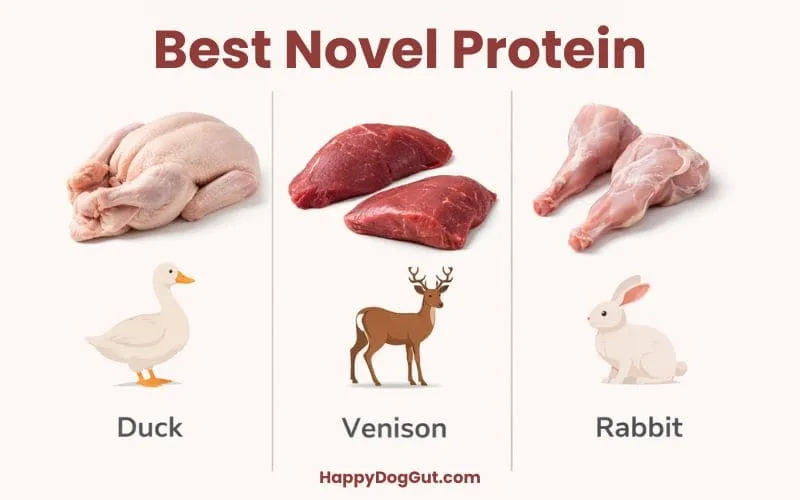
🦆🦌 Novel protein diets use less common proteins—such as duck, venison, or rabbit—that most dogs haven’t been exposed to before. Because these proteins are “new” to the immune system, they’re less likely to trigger allergic or intolerance reactions. If you’re seeing ongoing symptoms, understanding the Signs of Food Intolerance in Dogs can help determine whether a novel protein diet is the right next step.

This guide explains how novel protein diets work, when they may help dogs with food allergies or digestive sensitivity, and compares some of the best duck, venison, and rabbit dog foods available. We’ll also highlight Dog Food Ingredients to Avoid so you don’t accidentally undermine an otherwise good diet. By the end, you’ll be equipped to choose a safer, smarter option for dogs with allergies or sensitivity.
What Is a Novel Protein Diet for Dogs?
A novel protein diet refers to dog food made with a protein source that a dog has never eaten before. Common novel proteins include duck, venison, rabbit, kangaroo, or even alligator. Because these proteins are unfamiliar to a dog’s immune system, they’re less likely to trigger allergic or intolerance reactions.
🧬 Why does the Immune System react less to Novel Proteins?
Food allergies in dogs typically develop after repeated exposure to the same protein over time. When a dog eats chicken or beef for years, the immune system may begin to recognize those proteins as “threats,” leading to inflammation, skin issues, or gastrointestinal upset. Novel proteins haven’t been repeatedly encountered, so the immune system is less likely to overreact—making digestion calmer and symptoms easier to control.
🔍 Novel Protein vs. Hypoallergenic Dog Food
While these terms are often used interchangeably, they’re not the same:
- Novel Protein Diets focus on new, unfamiliar proteins to avoid immune reactions
- Hypoallergenic Dog Foods are usually highly processed (hydrolyzed) so proteins are broken down into tiny fragments
Both approaches can help sensitive dogs, but novel protein diets are often preferred as a natural first step during elimination trials. Dogs showing digestive or skin symptoms related to diet may benefit from this approach—especially when paired with limited ingredient formulas. If you’re unsure whether food is the issue, reviewing the Signs of Food Intolerance in Dogs can help clarify next steps.
In clinical practice, veterinarians frequently use novel protein diets as a diagnostic and management tool. When chosen carefully, the best novel protein dog foods can reduce symptoms while still providing complete, balanced nutrition—without immediately resorting to prescription-only diets.
When Do Dogs Need Novel Protein Dog Foods?
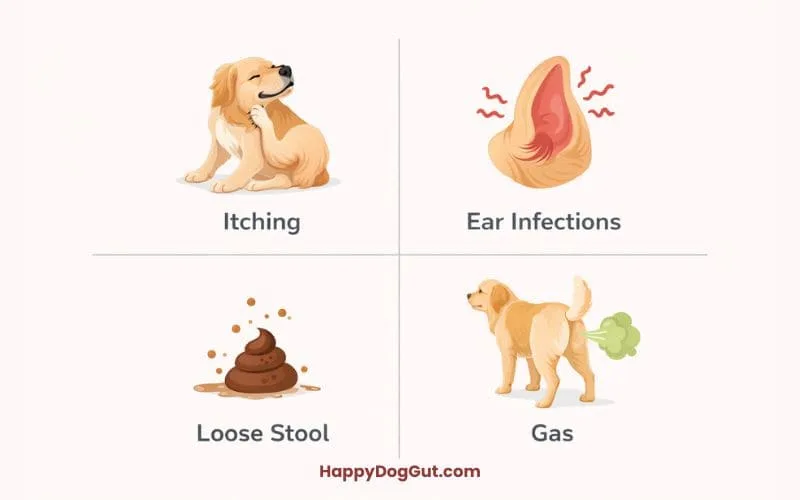
Not every dog needs a novel protein diet—but for dogs with persistent allergy or digestive symptoms, switching to one of the best novel protein dog foods can be a practical next step. Novel proteins are best when common diet changes haven’t resolved symptoms and food sensitivity is strongly suspected. Below are the most common signs that indicate a novel protein diet may help.
🐕 Chronic itching or skin flare-ups
If your dog is constantly scratching, licking paws, or developing hot spots—especially without seasonal triggers—food allergies may be involved. Chicken and beef are frequent culprits. In these cases, novel proteins like duck or venison can reduce immune reactions and calm inflammation.
👂 Recurring ear infections
Repeated ear infections, particularly yeast-related ones, are a classic sign of food-related allergies in dogs. If ear infections keep returning despite treatment, eliminating common protein sources and introducing a novel protein diet may help reduce recurring symptoms.
💩 Loose stool, vomiting, or inconsistent digestion
Ongoing digestive issues—such as soft stools, intermittent diarrhea, or vomiting—can point to protein intolerance rather than illness. If your dog has loose stool but otherwise seems healthy, diet may still be the cause. Our guide on Why Dogs Have Soft Stool but are Acting Normal explains this pattern in detail. Many dogs in this situation respond better to simplified diets using novel proteins.
💨 Gas and bloating after meals
Excessive gas or bloating soon after eating often suggests poor digestion or food intolerance. Novel protein diets with limited ingredients can reduce fermentation in the gut and improve overall comfort—especially when paired with easily digestible carbs.
From a clinical standpoint, novel protein diets are most useful after common diet adjustments fail. Dogs that haven’t improved on standard sensitive-stomach formulas may benefit from moving to the best novel protein dog foods, particularly when protein intolerance is suspected. For a broader overview of diet strategies that support digestion, see our guide to the Best Dog Food for Sensitive Stomachs.
Duck vs Venison vs Rabbit – Which Novel Protein Is Best?
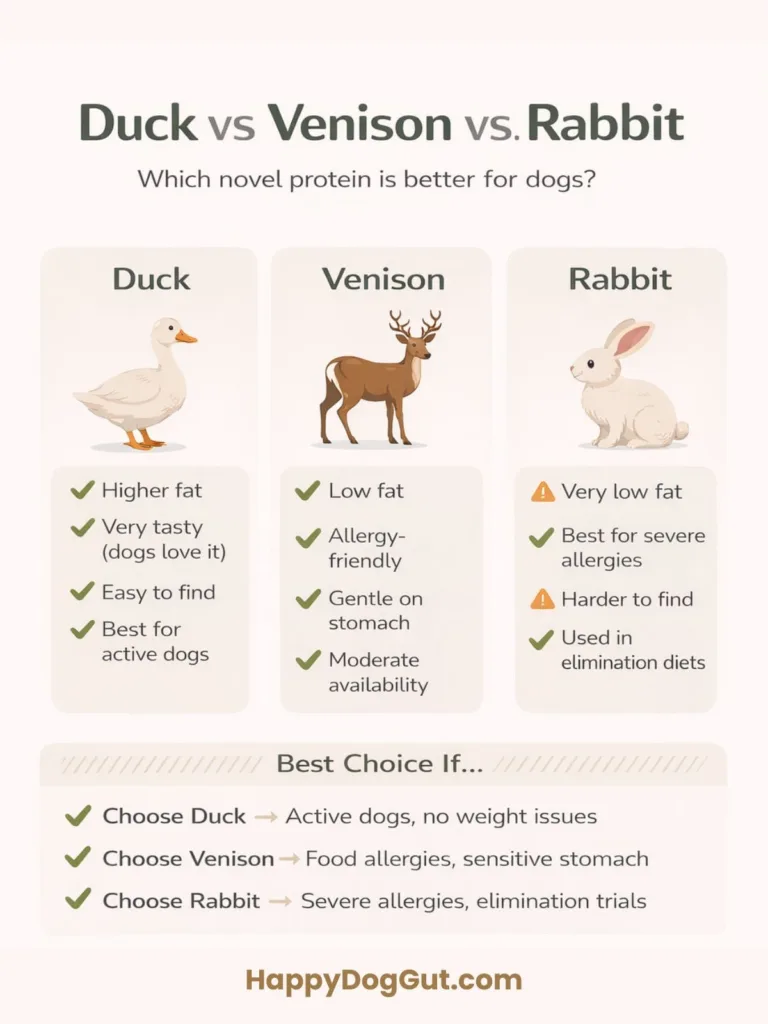
When choosing among the best novel protein dog foods, the right option depends on your dog’s specific allergy history, digestive sensitivity, and overall health. Duck, venison, and rabbit are three of the most commonly recommended novel proteins in the US, but they’re not interchangeable. Each has unique benefits—and limitations—that matter when managing food allergies or sensitive stomachs.
🦆 Duck Dog Food for Allergies
Duck is one of the most popular novel proteins used in commercial dog food, especially for dogs that react poorly to chicken.
Why it works:
Duck is rich in nutrients and provides a highly palatable alternative protein. For dogs with a confirmed or suspected chicken allergy, duck-based formulas often reduce itching, ear issues, and digestive upset.
Pros:
- Excellent alternative to chicken
- Highly palatable for picky eaters
- Widely available in limited-ingredient diets
Cons:
- Naturally higher in fat
- May not suit dogs with pancreatitis or fat sensitivity
Best for:
Dogs with chicken intolerance but normal fat digestion
Avoid if:
Your dog has a history of fat-triggered diarrhea or pancreatitis
Duck-based recipes are often included in Limited Ingredient Dog Foods, which can further reduce allergy triggers.
🦌 Venison Dog Food for Sensitive Stomachs
Venison is considered a leaner novel protein, making it a strong option for dogs with both allergies and digestive sensitivity.
Why it works:
Because venison is rarely used in standard dog foods, most dogs have had little to no exposure—reducing immune reactions. Its lower fat content can also be gentler on sensitive stomachs.
Pros:
- Lean and easy to digest
- Excellent for elimination diets
- Helpful for dogs with loose stool or vomiting
Cons:
- Limited availability in some US regions
- Often more expensive than duck
Best for:
Dogs with food allergies plus digestive issues
Avoid if:
Cost or availability is a concern
Venison diets are frequently recommended when dogs don’t respond to traditional sensitive-stomach formulas. If digestion remains inconsistent, reviewing broader diet strategies in our Best Dog Food for Sensitive Stomachs guide may help.
🐇 Rabbit Dog Food for Severe Allergies
Rabbit is considered a true novel protein and is often reserved for dogs with severe or long-standing food allergies.
Why it works:
Most dogs have never consumed rabbit, making immune reactions far less likely. Rabbit is also very gentle on digestion and commonly used in veterinary elimination diets.
Pros:
- Extremely low allergy risk
- Very digestible
- Ideal for severe food intolerance cases
Cons:
- Expensive
- Harder to find in retail stores
- Fewer commercial options
Best for:
Dogs with multiple protein allergies or failed diet trials
Avoid if:
Budget or availability is a limiting factor
Rabbit diets are often used when symptoms like chronic itching or loose stool persist despite multiple food changes. Understanding the Signs of Food Intolerance in Dogs can help determine whether this level of diet change is necessary.
Key Takeway
There is no single “best” protein for every dog. Among the best novel protein dog foods, duck works well for chicken allergies, venison suits dogs with both allergies and digestive sensitivity, and rabbit is ideal for severe or complex cases. The best choice is the one your dog has never eaten before—and tolerates well once introduced slowly and consistently.
Best Novel Protein Dog Foods for Allergies
For dogs with persistent food allergies or protein sensitivity, switching to one of the best novel protein dog foods can significantly reduce symptoms like itching, ear infections, and digestive upset. The options below were selected for their uncommon protein sources, simplified ingredient lists, and balanced nutrition, making them suitable for many dogs with food allergies or sensitive digestion.
1. Zignature Duck Limited Ingredient Formula
Protein source: Duck
Fiber: ~4%
Calories: ~390 kcal/cup
Why it works:
Single animal protein + limited ingredients reduce immune reactions.
Pros:
- True limited ingredient diet
- Good stool consistency support
Cons:
- Slightly higher fat content
Best for: Chicken allergy, skin + gut sensitivity
Avoid if: Fat-sensitive dogs
Duck is a widely accepted novel protein for dogs allergic to chicken or beef.
2. Zignature Venison Limited Ingredient Formula
Protein source: Venison
Fiber: ~4%
Calories: ~400 kcal/cup
Why it works:
Low-exposure protein + simple carb sources improve digestion.
Pros:
- Lean novel protein
- Helps loose stool and vomiting
Cons:
- Limited retail availability
Best for: Allergies + sensitive stomach
Avoid if: Budget is a concern
Venison is lean and rarely fed, making it ideal for elimination diets.
3. Zignature Rabbit Limited Ingredient Formula
Protein source: Rabbit
Fiber: ~5%
Calories: ~350 kcal/cup
Why it works:
Extremely low allergy risk and gentle digestion.
Pros:
- Excellent for severe allergies
- Supports elimination trials
Cons:
- Expensive
- Harder to find
Best for: Multiple protein allergies
Avoid if: Cost or availability limits you
Rabbit is considered a true novel protein in veterinary nutrition.
4. Instinct Limited Ingredient Diet (Duck or Rabbit)
Protein source: Duck or Rabbit
Fiber: ~3.5%
Calories: ~410 kcal/cup
Why it works:
Clean label, minimal ingredients, no common allergens.
Pros:
- Highly palatable
- Good for picky eaters
Cons:
- Can be rich for some dogs
Best for: Moderate allergies, active dogs
Avoid if: Chronic diarrhea
Instinct LID formulas balance novel proteins with digestive support.

5. Natural Balance LID Venison & Sweet Potato
Protein source: Venison
Fiber: ~4%
Calories: ~375 kcal/cup
Why it works:
Balanced fiber + single protein supports stool firmness.
Pros:
- Widely available in the US
- Consistent quality
Cons:
- Uses sweet potato (not ideal for all dogs)
Best for: First-time novel protein trial
Avoid if: Carb sensitivity
6. Rayne Nutrition Rabbit-Maint or Kangaroo-Maint
Protein source: Rabbit or Kangaroo
Fiber: ~4–5%
Calories: ~330–360 kcal/cup
Why it works:
Veterinary-grade novel proteins with strict quality control.
Pros:
- Excellent for severe allergy cases
- Used in clinical elimination trials
Cons:
- Prescription-based
- Higher cost
Best for: Dogs failing OTC diets
Avoid if: Vet access is limited
Rayne diets are formulated specifically for food-allergic dogs.
7. ACANA Singles Limited Ingredient (Duck or Lamb)
Protein source: Duck or Lamb
Fiber: ~5%
Calories: ~340 kcal/cup
Why it works:
High-quality ingredients + gentle fiber sources.
Pros:
- Strong ingredient sourcing
- Supports digestion
Cons:
- Not ideal for very low-fat needs
Best for: Sensitive digestion with allergies
Avoid if: Fat-restricted diets
Single-animal protein diets reduce immune stimulation.
8. Canidae PURE Limited Ingredient (Duck or Lamb)
Protein source: Duck or Lamb
Fiber: ~4%
Calories: ~400 kcal/cup
Why it works:
Short ingredient list minimizes allergy triggers.
Pros:
- Easy transition food
- Budget-friendly LID option
Cons:
- Moderate protein levels
Best for: Mild to moderate allergies
Avoid if: High-protein diet needed
Canidae PURE focuses on simplicity and digestibility.
Most of the best novel protein dog foods are also Limited Ingredient Diets, which further reduces the risk of reactions. Many are naturally grain-free, making them suitable for dogs that also react poorly to grains.
If your dog prefers dry food and struggles with digestion, reviewing the Best Kibble for Sensitive Stomachs can help narrow down compatible formats.
Key Takeaway
Novel protein dog foods are most effective when chosen based on what your dog has never eaten before, not brand popularity alone. When used correctly and introduced slowly, the best novel protein dog foods can dramatically improve allergy symptoms and digestive comfort in sensitive dogs.
Best Wet Novel Protein Dog Foods
For dogs struggling with food allergies or sensitive digestion, wet food can be a valuable part of an allergy-friendly diet—especially when paired with novel proteins. Many US dog owners searching for the best novel protein dog foods find that wet formulas are easier to tolerate, more appealing to picky eaters, and gentler on the digestive system than dry kibble alone.
🥣 Why Wet Food Helps Allergic Dogs
Wet dog food naturally contains higher moisture, which supports hydration and makes digestion easier—an important benefit for dogs dealing with vomiting, loose stool, or reduced appetite. Wet formulas also tend to use simpler ingredient lists and fewer binders, which helps minimize exposure to potential allergens. When made with novel proteins like duck, venison, or rabbit, wet food can be especially effective during elimination diets or allergy flare-ups.
Below are best wet options that use novel proteins and are commonly well tolerated by sensitive dogs in the US.
🦆 1. Zignature Duck Limited Ingredient Wet Food
Why it works:
Single novel protein + smooth texture reduces digestive irritation.
Best for:
Dogs with skin allergies and mild digestive sensitivity
Avoid if:
Fat-restricted diets are required
Duck is a proven alternative for dogs allergic to chicken or beef.
🦌 2. Natural Balance LID Venison Wet Formula
Venison is lean and rarely fed, making it ideal for allergy management.
Why it works:
Limited ingredients support easier digestion and fewer immune reactions.
Best for:
Elimination diets and chronic itching
Avoid if:
Your dog reacts poorly to sweet potato
🐇 3. Rayne Nutrition Rabbit-Maint
Why it works:
Extremely low allergy risk and highly digestible consistency.
Best for:
Severe or multi-protein allergies
Avoid if:
Budget or vet access is limited
Rabbit is considered a true novel protein in clinical nutrition.
🦆 4. Instinct Limited Ingredient Duck Wet Food
Why it works:
High palatability + minimal ingredients help sensitive dogs eat consistently.
Best for:
Picky eaters with allergies
Avoid if:
History of fat-triggered diarrhea
Instinct balances novel proteins with clean ingredient profiles.
Wet food can be used as a full diet, mixed with dry food, or fed short-term during flare-ups. Many owners rotate wet and dry options once symptoms stabilize. For a broader comparison of textures and formats, see our guide to the Best Wet Dog Foods for Sensitive Stomachs.
Key Takeaway
Wet formulas made with novel proteins can be an excellent tool for managing food allergies—especially when appetite, hydration, or digestion are concerns. When chosen carefully, wet options can complement the best novel protein dog foods and provide relief without overcomplicating the diet.
Novel Protein Diets and Elimination Trials
When dogs suffer from ongoing food-related symptoms, veterinarians often rely on elimination diets to identify the true dietary trigger. In clinical nutrition, elimination trials are considered one of the most reliable ways to diagnose food allergies and intolerances—and this is where the best novel protein dog foods play a critical role.
🧪 How Elimination Diets Work
An elimination diet involves feeding your dog a single, carefully selected protein source that they have never eaten before, along with a limited number of simple ingredients. During the trial period:
- All previous foods, treats, flavored medications, and table scraps are removed
- The dog eats only the prescribed novel protein diet
- Symptoms are closely monitored for improvement
Novel protein diets are commonly used during an Elimination Diet for food Allergies, where limiting exposure to previously fed proteins helps clarify whether food is contributing to symptoms.
If itching, digestive upset, or ear infections improve during the trial, food allergy is strongly suspected. This process helps narrow down whether diet—rather than environment or parasites—is the root cause. If you’re unsure whether symptoms are food-related, reviewing the Signs of Food Intolerance in Dogs can help clarify whether an elimination diet is appropriate.
🦆🦌 Why Novel Proteins are the Gold Standard
Novel proteins such as duck, venison, or rabbit are rarely found in standard dog foods. Because most dogs haven’t been exposed to them repeatedly, their immune systems are less likely to recognize these proteins as threats. This makes novel proteins far more reliable for elimination trials than simply switching between common proteins like chicken or beef.
Starting with commercially prepared limited-ingredient, novel protein diets, as these reduce the risk of accidental exposure. This approach is especially useful when dogs haven’t improved on standard sensitive-stomach or grain-free foods.
⏳ Timeline: What to Expect (8–12 weeks)
Elimination diets require patience:
- Minimum 8 weeks, ideally 10–12 weeks for full assessment
- Gradual symptom improvement rather than instant results
- Consistent feeding with no “cheat” treats
Digestive symptoms such as loose stool or gas often improve first, followed by skin and ear symptoms. If you’re transitioning foods for this process, following a structured approach—like a slow food switch—can prevent unnecessary digestive upset.
Elimination diets using the best novel protein dog foods are not just a feeding trend—they’re a diagnostic tool. When done correctly and consistently, they can uncover hidden food allergies and guide long-term dietary decisions. Skipping steps or switching foods too quickly can invalidate results, so careful planning and consistency are essential.
Homemade Novel Protein Options (Short-Term Only)
Homemade meals can be helpful short-term for dogs with food allergies—especially during flare-ups, elimination trials, or recovery periods. Some dog owners temporarily use homemade options alongside the best novel protein dog foods to calm symptoms while identifying triggers. However, homemade diets are not nutritionally complete unless carefully formulated by a veterinarian.
⚠️ Important warning: These options are meant for short-term use only. Long-term feeding without professional guidance can lead to nutrient deficiencies.
🦆🍠 Duck & Sweet Potato (Gentle, Allergy-Friendly Option)
Why it helps:
Duck is a novel protein for many dogs allergic to chicken or beef, while sweet potato provides gentle, soluble fiber that supports digestion and stool consistency.
How to prepare:
- Cook duck thoroughly (no skin, bones, seasoning)
- Steam or boil sweet potato until soft
- Mix lightly (about 2:1 protein to carb)
Best for:
Dogs with suspected chicken allergies and mild digestive sensitivity
Avoid if:
Your dog is fat-sensitive or has a history of pancreatitis
🦌🎃 Venison & Pumpkin (Lean + Stool-Supporting)
Why it helps:
Venison is lean and rarely fed, making it ideal during allergy trials. Pumpkin adds soluble fiber that helps firm loose stool and calm the gut.
How to prepare:
- Cook lean venison thoroughly
- Add plain canned pumpkin (not pie filling)
- Start with small portions
Best for:
Dogs with food allergies plus loose stool
Avoid if:
Venison isn’t truly novel for your dog
Homemade meals often work best as a bridge, not a destination. Once symptoms stabilize, transitioning back to a complete commercial diet—preferably one of the best novel protein dog foods—helps ensure balanced nutrition. For dogs that tolerate bland diets better initially, our guide to Homemade Chicken & Rice for Dogs with Diarrhea explains when grain-inclusive options may still be appropriate.
If your dog is recovering from digestive upset, follow a structured plan in What to Feed a Dog After Diarrhea.

Supplements That Support Dogs on Novel Protein Diets
Even with carefully chosen novel protein foods, some dogs benefit from targeted supplements—especially during transitions or elimination trials. Used appropriately, supplements can support gut balance, improve stool quality, and reduce digestive stress when paired with the best novel protein dog foods.
🦠 Probiotics
Why they help:
Probiotics replenish beneficial gut bacteria, which is critical for dogs with allergies or sensitive digestion. They can help reduce gas, improve stool consistency, and support immune balance during diet changes.
When to use:
- During transition to a novel protein diet
- With mild loose stool or bloating
- After antibiotics or digestive stress
For best options and dosing guidance, see our guide to the Best Probiotics for Dogs.
⚙️ Digestive Enzymes
Why they help:
Digestive enzymes assist in breaking down proteins, fats, and carbohydrates—useful for dogs with chronic digestive sensitivity or poor nutrient absorption during allergy management.
When to consider:
- Persistent loose stool despite diet changes
- Signs of maldigestion (gas, bloating)
- Under veterinary guidance
For authoritative veterinary guidance, refer to VCA Hospitals’ Overview on Digestive Enzymes in Pets.
Key Takeaway
Homemade meals and supplements can be effective support tools, but they work best when used strategically and temporarily. For long-term management of allergies and sensitive digestion, transitioning to one of the best novel protein dog foods ensures complete nutrition while minimizing allergic triggers.
How to Transition Your Dog to a Novel Protein Food Safely
Switching to one of the best novel protein dog foods can be highly effective for allergies and sensitivity—but only if the transition is done slowly and correctly. Sudden food changes are a common cause of loose stool, vomiting, and refusal to eat, especially in dogs with already sensitive digestion. A structured transition gives your dog’s gut time to adapt to the new protein source.
📆 11 Day Transition Plan
- Days 1–3: 75% old food + 25% novel protein food
- Days 4–6: 50% old food + 50% novel protein food
- Days 7–10: 25% old food + 75% novel protein food
- Day 11: 100% novel protein food
🐾 Key rules during the transition
- 🚫 No treats, chews, or table scraps (even “hypoallergenic” ones)
- 💧 Ensure fresh water at all times
- 🍽️ Feed smaller, more frequent meals if digestion is sensitive
During the transition, it’s normal to see minor changes—but worsening diarrhea, vomiting, or itching means you should slow down. Digestive symptoms often improve first, followed by skin and ear symptoms over several weeks. If you need a more detailed breakdown of food switching mistakes to avoid, follow our complete Dog Food Transition Guide.
Consistency matters. Even a single flavored treat can disrupt results when trialing the best novel protein dog foods, especially during allergy elimination periods.
When Novel Protein Diets Are NOT Enough
While novel protein diets are a powerful tool, they are not a cure-all. Some dogs continue to show symptoms despite eating one of the best novel protein dog foods—because the underlying cause isn’t food-related. Knowing when diet alone isn’t enough helps avoid delays in proper treatment.
🌿 Environmental Allergies
Dogs can react to pollen, dust mites, mold, or grasses just like humans. These allergies often cause seasonal itching, paw licking, and ear issues that don’t fully resolve with diet changes alone. If symptoms worsen during certain times of year, environmental factors may be involved.
🪱 Parasites or Infections
Intestinal parasites, bacterial imbalances, or yeast overgrowth can mimic food allergy symptoms—causing diarrhea, gas, or vomiting. In these cases, dietary changes may help temporarily but won’t address the root problem without veterinary treatment.
🧬 Hormonal or Metabolic Issues
Conditions such as hypothyroidism or other hormonal imbalances can affect skin, coat, and digestion. Dogs with these issues may not respond to diet changes until the medical condition is properly managed.
Novel protein diets work best when food is truly the problem. When symptoms persist despite using the best novel protein dog foods, it’s a strong sign that non-dietary factors may be involved. Partnering with a veterinarian ensures allergies are managed correctly—without relying on diet alone.
If your dog continues to struggle despite careful diet selection, understanding the broader Causes of Sensitive Stomach in Dogs can guide next steps and prevent unnecessary food switching.
FAQs – Novel Protein Dog Foods
What is the best novel protein for dogs with allergies?
There is no single “best” protein for every dog, but duck, venison, and rabbit are among the most effective options. The best novel protein dog foods use proteins your dog has never eaten before, which reduces immune reactions. Duck works well for chicken allergies, venison is lean and gentle for sensitive stomachs, and rabbit is ideal for severe or multiple allergies. The best choice depends on your dog’s history and tolerance.
Is duck better than salmon for dogs with food allergies?
Duck is often better than salmon for true food allergies because it’s less commonly fed and more likely to be novel. Salmon is still a good option for some dogs, but it’s no longer considered “novel” in many US diets. Dogs that react to common proteins may respond better to duck-based novel protein dog foods, especially during elimination trials.
How long does it take for allergy symptoms to improve on a novel protein diet?
Most dogs show improvement within 4–6 weeks, but full results can take 8–12 weeks. Digestive symptoms like loose stool often improve first, followed by skin and ear symptoms. Consistency is critical—feeding even small treats or flavored medications can delay results when using the best novel protein dog foods.
Are novel protein dog foods safe for long-term feeding?
Yes, high-quality novel protein dog foods can be safe long-term if they are complete and balanced. Many commercial formulas are designed for extended feeding, not just short trials. Regular vet checkups help ensure your dog maintains a healthy weight, digestion, and nutrient balance over time.
Can novel protein dog food help with chronic ear infections?
Yes, recurrent ear infections are a common sign of food allergies in dogs. When ear problems are food-related, switching to one of the best novel protein dog foods may reduce inflammation and yeast overgrowth. Improvement often takes several weeks and should be monitored alongside veterinary treatment if needed.
Do novel protein diets help dogs with sensitive stomachs and loose stool?
They can, especially when protein intolerance is the cause. Novel protein diets reduce immune-driven inflammation in the gut, which can improve stool consistency and reduce gas. Dogs that haven’t responded to standard sensitive-stomach formulas may benefit from novel protein options.
Is rabbit dog food better for severe allergies than duck or venison?
Rabbit is considered a true novel protein and is often used when other proteins fail. It’s highly digestible and rarely fed, which lowers allergy risk. However, rabbit-based foods are more expensive and harder to find, so they’re typically reserved for severe or complex allergy cases.
Can puppies eat novel protein dog food?
Puppies can eat novel protein food only if the formula is labeled for growth or all life stages. Puppies have specific nutritional needs, so adult-only diets aren’t appropriate. Always consult a veterinarian before starting a puppy on a novel protein diet.
Are grain-free novel protein dog foods better for allergies?
Grain-free and novel protein diets address different issues. Novel proteins target protein allergies, while grain-free diets remove certain carbs. Many of the best novel protein dog foods are also grain-free, but grain removal alone doesn’t treat protein allergies.
Can I rotate between different novel proteins?
Rotation should be done carefully and not during an elimination trial. Once allergies are under control, some dogs tolerate rotation between novel proteins. However, frequent switching can confuse results and trigger digestive upset, so changes should be slow and intentional.
Do I need a prescription for novel protein dog food?
Most novel protein foods are available over the counter, but veterinary-only brands exist for severe cases. Prescription diets offer tighter ingredient control, while OTC options are suitable for many dogs. Your vet can help determine which level is appropriate.
What mistakes should I avoid when feeding novel protein dog food?
The biggest mistakes are switching too fast, feeding treats, and not giving the diet enough time. Even small deviations can cause symptoms to persist. To get accurate results, the best novel protein dog foods must be fed consistently and exclusively.
Final Thoughts: Are Novel Protein Dog Foods Right for Your Dog?
🦆🦌 Novel protein diets can be powerful tools for managing food allergies and digestive sensitivity—especially when common proteins like chicken or beef continue to cause problems. For many US dogs, switching to one of the best novel protein dog foods leads to noticeable improvements in itching, ear infections, gas, or loose stools. By reducing immune system reactions, novel proteins help calm inflammation and give the digestive system a chance to reset.
That said, novel protein diets are not magic fixes. They work best when food is truly the root cause of your dog’s symptoms. If allergies stem from environmental triggers, parasites, or hormonal conditions, diet changes alone may not fully resolve the issue. This is why careful observation—and patience during transitions—matters just as much as the food you choose.
🩺 Veterinary guidance makes the difference. A vet can help confirm whether food intolerance is likely, recommend appropriate elimination trials, and ensure your dog’s diet remains nutritionally balanced. If you’re unsure whether your dog’s symptoms are food-related, our in-depth Food Intolerance Guide for Dogs explains how to recognize diet-driven problems.
For dogs that need simpler ingredient lists, pairing novel proteins with Limited Ingredient Dog Foods can further reduce digestive stress. And if your dog also reacts poorly to grains, exploring Grain-Free Foods for Sensitive Stomachs may offer additional relief when used appropriately.
The novel protein diets are most effective when chosen thoughtfully, introduced slowly, and supported by veterinary insight. With the right approach, they can become a key part of a long-term plan for healthier digestion, clearer skin, and a more comfortable life for your dog.

Hi, I’m Maddy, the writer behind HappyDogGut.com.I’m passionate about helping dog parents better understand gut health, sensitive stomachs, and nutrition through clear, practical, and research-based content. Every article is carefully researched using trusted veterinary and pet health resources, so you can make more informed decisions for your dog’s digestive health.Happy Gut = Happy Dog! 🐾
All content on Happy Dog Gut follows our Editorial Policy.




Pingback: Protein Rotation Strategy for Sensitive Dogs: Duck, Venison & Rabbit Guide