

When a dog has a sensitive stomach, most owners focus carefully on main meals—but treats are often overlooked. Surprisingly, treats are one of the most common triggers for digestive upset. Even dogs that do well on a carefully chosen diet can experience loose stools, gas, or discomfort shortly after eating certain treats.
Dogs with sensitive stomachs tend to react faster to treats than to regular food. That’s because treats are often more concentrated, highly processed, or higher in fat than daily meals. A single ingredient that doesn’t agree with your dog can cause noticeable digestive changes within hours.
It’s also important to understand the difference between food allergies and food intolerance. Allergies involve the immune system and may cause symptoms like itching or ear issues, while intolerance is usually digestive—showing up as soft stool, gas, or vomiting. Many dogs fall somewhere in between, which is why choosing the best dog treats for sensitive stomachs often comes down to ingredient simplicity rather than trendy labels. If you’re unsure whether your dog may be reacting to certain foods, our guide on Signs of Food Intolerance in dogs explains what to watch for.
This guide focuses on education and safer treat choices—not diagnosis. You’ll learn what makes a treat easier to digest, which ingredients commonly cause problems, and how to make better decisions for sensitive dogs. For a deeper look at problematic additives, see our list of Dog Food Ingredients to Avoid for sensitive stomachs.
This guide is informational and does not replace veterinary care.
Why Dog Treats Commonly Cause Digestive Problems
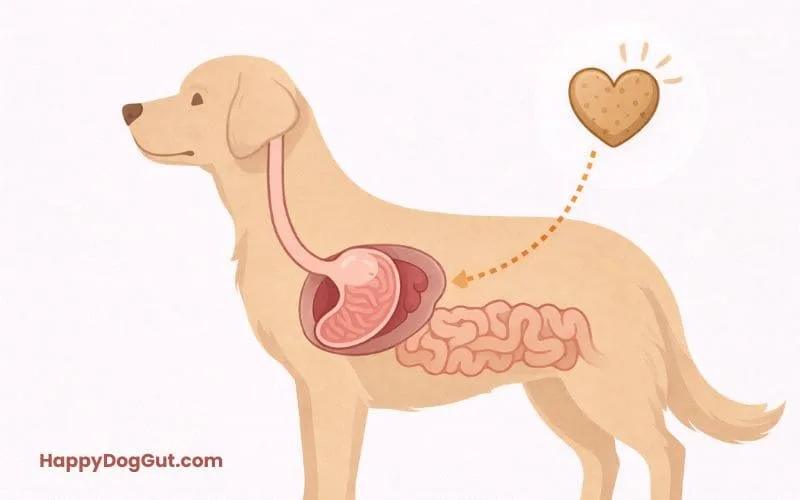
Dog treats may seem harmless, but for many dogs—especially those with digestive sensitivity—they are a frequent cause of stomach upset. Even when a dog does well on a regular diet, certain treats can quickly lead to loose stools, gas, or discomfort. Understanding why this happens helps explain why choosing the best dog treats for sensitive stomachs matters more than most owners realize.
🏭 Highly Processed Ingredients
Many commercial treats are heavily processed to improve shelf life and flavor. This processing can make ingredients harder to digest, especially for dogs with sensitive stomachs. The more processed a treat is, the more work the digestive system has to do.
🎨 Artificial flavors, Colors, and Fillers
Artificial additives are common in treats but offer no nutritional benefit. For sensitive dogs, these ingredients can irritate the gut and contribute to digestive imbalance. Fillers may also add bulk without supporting digestion, increasing the risk of soft stools.
🧈 High Fat Content
Treats are often higher in fat than regular dog food. While fat adds flavor, too much can overwhelm a sensitive digestive system and lead to loose stools or greasy stool. Dogs with digestive sensitivity usually do better with low-fat, simple treats.
🍽️ Overfeeding Treats
Even gentle treats can cause problems if given too often. Overfeeding treats can disrupt calorie balance and digestion, making stool quality unpredictable. Some dogs may develop loose stools but still act normal, which can be confusing. If that sounds familiar, our guide on Why dogs have loose Stool but are acting normal explains this pattern in more detail.
Digestive upset from treats isn’t always about one “bad” ingredient—it’s often the combination of processing, fat content, and portion size. That’s why the best dog treats for sensitive stomachs focus on simplicity, moderation, and digestibility rather than strong flavors or flashy labels.
Sensitive Stomach vs Food Allergy – What’s the Difference?
When choosing the best dog treats for sensitive stomachs, many owners wonder whether their dog has a food allergy, a sensitive stomach, or something in between. While the symptoms can look similar, the underlying reasons are often very different—and understanding this difference helps you make safer treat choices.
🍽️ Food Intolerance = Digestion issue
A sensitive stomach or food intolerance usually means a dog has trouble digesting certain ingredients. Common signs include loose stools, gas, bloating, or occasional vomiting. These reactions are typically related to how the gut processes food rather than the immune system. For many dogs, simplifying ingredients and avoiding rich treats helps reduce digestive upset.
🛡️ Food Allergy = Immune response
A food allergy involves the immune system reacting to a specific protein. Symptoms may include itching, ear infections, or skin issues, sometimes alongside digestive signs. True food allergies are less common than intolerance, but they require more careful ingredient control when selecting both meals and treats.
🔍 Why Many Dogs fall in between
In real life, many dogs don’t fit neatly into one category. A dog might digest most foods well but react poorly to certain ingredients or highly processed treats. This gray area is why the best dog treats for sensitive stomachs often focus on limited ingredients, single proteins, and gentle processing, regardless of whether the issue is labeled an allergy or intolerance.
If you’re unsure what’s triggering your dog’s digestive sensitivity, understanding What causes sensitive stomachs in dogs can provide helpful context and next steps.
You don’t always need a label to make better choices. Whether the issue is intolerance, allergy, or a mix of both, simpler treats with fewer ingredients are often the safest starting point.
What to Look for in the Best Dog Treats for Sensitive Stomachs
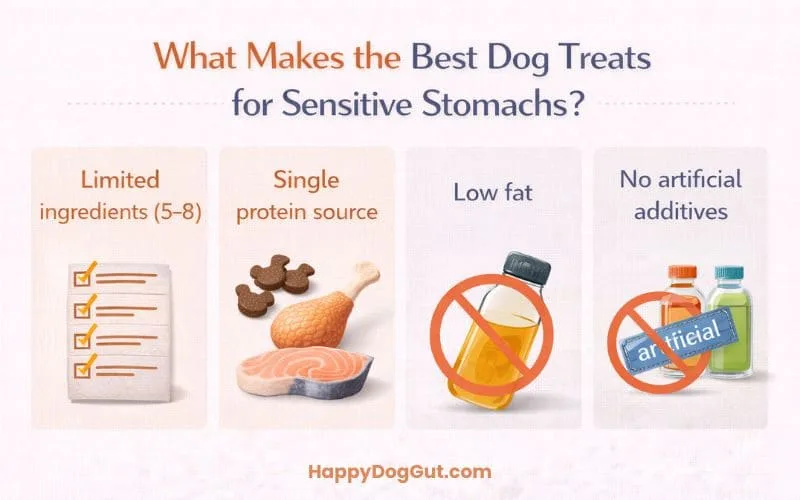
Not all treats are created equal—especially for dogs with digestive sensitivity. Choosing the best dog treats for sensitive stomachs comes down to keeping things simple, predictable, and easy for the gut to handle. Here’s what actually matters when reading treat labels.
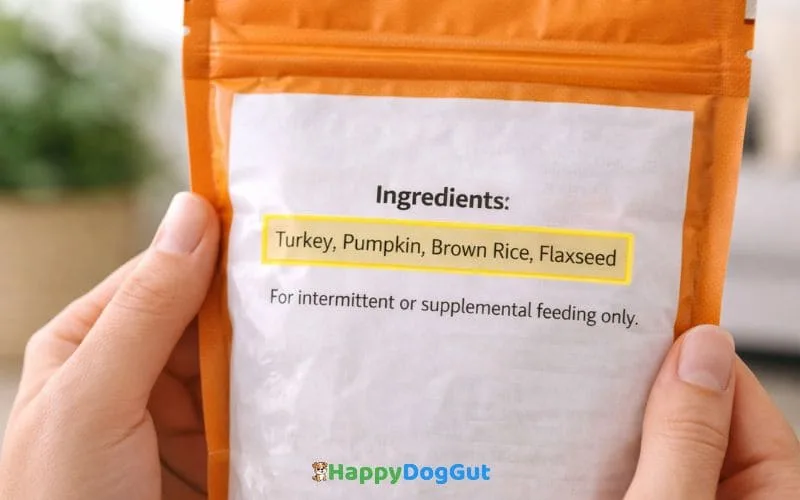
🧾 Limited Ingredients (ideally 5–8 max)
Fewer ingredients mean fewer chances for digestive irritation. Treats with long ingredient lists often include fillers, flavor enhancers, or unnecessary additives that sensitive dogs struggle to digest. A short, clear ingredient list makes it easier to identify what your dog tolerates well. This same principle applies to meals too—our guide on limited ingredient dog foods explains why simplicity supports digestive comfort.
🍗 Single Protein Treats
Single-protein treats reduce the risk of reactions and make it easier to spot problem ingredients. For example, treats made with only chicken, turkey, or salmon are generally easier to evaluate than mixed-protein recipes. This is especially helpful for dogs that experience loose stools or gas after eating treats.
🧈 Low-fat formulas
High fat is one of the most common triggers for digestive upset. Even healthy dogs can struggle with rich treats, and sensitive dogs react even faster. Choosing low-fat treats helps reduce digestive strain and supports more consistent stool quality.
🌾 Grain-free vs Grain-inclusive (neutral approach)
Some dogs do well with grain-free treats, while others tolerate gentle grains like rice or oats just fine. Grains themselves aren’t automatically bad—it depends on the individual dog. Instead of focusing on trends, focus on how your dog responds. The same balanced approach applies when choosing meals, as discussed in our guide to Best Dog Foods for sensitive stomachs.
The best dog treats for sensitive stomachs prioritize simplicity over marketing claims. Limited ingredients, a single protein source, low fat, and a calm approach to grains give sensitive dogs the best chance at enjoying treats without digestive trouble.
Ingredients to Avoid in Treats for Sensitive Dogs
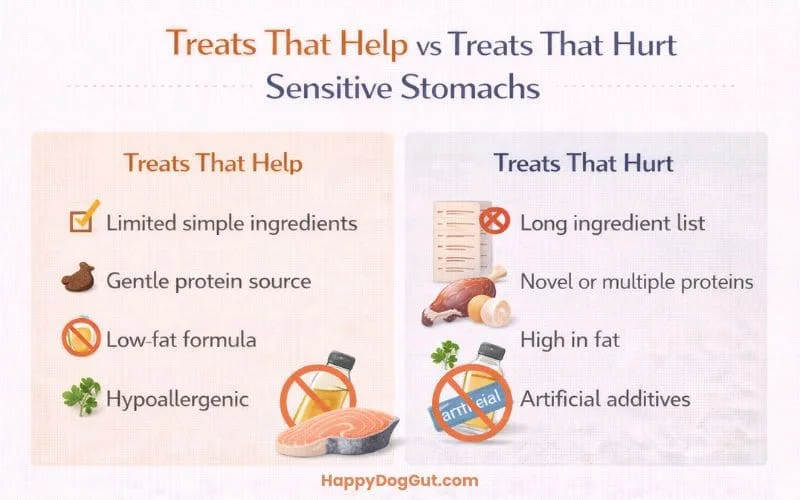
When searching for the best dog treats for sensitive stomachs, knowing what to avoid is just as important as knowing what to include. Many digestive issues linked to treats come from common additives that offer little nutritional value but place extra stress on a sensitive gut.
🎨 Artificial Colors and Preservatives
Artificial dyes and chemical preservatives are often added to improve appearance and shelf life, not digestion. Sensitive dogs may react with loose stools, gas, or discomfort after consuming these additives. Choosing treats with natural preservation methods or minimal processing is usually gentler on digestion.
🧪 Glycerin
Glycerin is frequently used to keep treats soft and moist, but it can draw water into the intestines. For dogs with digestive sensitivity, this may worsen loose stools or cause unpredictable digestion. Treats without glycerin are often better tolerated.
🥩 By-Products
Meat by-products can vary widely in quality and digestibility. While not always harmful, they’re less predictable for sensitive dogs. Treats made with clearly identified protein sources tend to be easier on the stomach and simpler to evaluate.
🧀 Dairy Ingredients
Many dogs have difficulty digesting lactose. Even small amounts of dairy in treats can lead to bloating, gas, or soft stool. For sensitive stomachs, dairy-free treats are generally a safer option.
🧈 Excess Fat
High-fat treats are one of the most common triggers for digestive upset. Fat slows digestion and can overwhelm sensitive systems, increasing the risk of diarrhea. Low-fat treats are usually a better match for dogs with ongoing stomach sensitivity.
The best dog treats for sensitive stomachs avoid unnecessary additives and focus on clean, simple ingredients. Reading labels carefully can make a noticeable difference in how your dog’s digestive system responds to treats.
For a deeper look at ingredients that commonly cause digestive issues across both food and treats, our guide to Dog Food Ingredients to Avoid for sensitive stomachs provides helpful context.
Best Dog Treats for Sensitive Stomachs (Top Picks)
Finding treats that don’t upset digestion can feel tricky, especially when a dog already has a sensitive stomach. The best dog treats for sensitive stomachs are usually simple, low-fat, and made with clearly identified ingredients. Below are top treat options that many owners consider when trying to reduce digestive reactions. These are supportive choices, not treatments, and every dog responds differently.
1. Zuke’s Mini Naturals
Key ingredients: Chicken or Peanut Butter, Oats
Why it may be easier to digest:
Small size and simple ingredient profile reduce digestive workload.
Pros:
- ✔ Low calorie
- ✔ Easy portion control
Cons:
- ✖ Not ideal for chicken sensitivity
Best for:
Training treats for mildly sensitive dogs
Avoid if:
Known poultry intolerance
2. Blue Buffalo Basics Limited Ingredient Treats
Key ingredients: Turkey, Potato
Why it may be easier to digest:
Limited ingredients help reduce exposure to common irritants.
Pros:
- ✔ No artificial flavors
- ✔ Simple recipe
Cons:
- ✖ Texture may be firm for some dogs
Best for:
Dogs with ingredient sensitivity
Avoid if:
Turkey intolerance
3. Natural Balance LID Treats
Key ingredients: Duck or Lamb (varies by recipe)
Why it may be easier to digest:
Single protein and minimal additives support calmer digestion.
Pros:
- ✔ Clear protein source
- ✔ Grain-free options
Cons:
- ✖ Slightly richer than training treats
Best for:
Dogs with food intolerance history
Avoid if:
Fat sensitivity
4. Wellness Simple Treats
Key ingredients: Salmon or Lamb, Potato
Why it may be easier to digest:
Limited ingredient approach with gentle processing.
Pros:
- ✔ Simple formulas
- ✔ No artificial colors
Cons:
- ✖ Higher calorie per treat
Best for:
Occasional rewards
Avoid if:
Fish intolerance
5. Hill’s Hypo Treats (Use Carefully)
Key ingredients: Hydrolyzed Protein, Simple Starches
Why it may be easier to digest:
Designed to complement sensitive-stomach or elimination diets.
Pros:
- ✔ Very controlled ingredients
- ✔ Often tolerated during diet trials
Cons:
- ✖ Less palatable for some dogs
Best for:
Dogs on veterinary-guided diets
Avoid if:
Not part of a controlled feeding plan
6. Single-Ingredient Dehydrated Treats (Sweet Potato)
Key ingredients: Sweet Potato
Why it may be easier to digest:
One ingredient keeps digestion predictable.
Pros:
- ✔ No additives
- ✔ Naturally low fat
Cons:
- ✖ Higher carb content
Best for:
Dogs with multiple sensitivities
Avoid if:
Carb-restricted diets
7. Freeze-Dried Single Protein Treats
Key ingredients: Chicken, Turkey, or Salmon (single source)
Why it may be easier to digest:
Minimal processing and clear protein source.
Pros:
- ✔ High palatability
- ✔ Simple ingredient list
Cons:
- ✖ Can be rich if overfed
Best for:
Occasional high-value rewards
Avoid if:
Fat-sensitive digestion
8. Homemade-Style Baked Treats (Limited Ingredient)
Key ingredients: Oats, Pumpkin, Single protein
Why it may be easier to digest:
Short ingredient lists and low fat support sensitive stomachs.
Pros:
- ✔ Transparent ingredients
- ✔ Gentle digestion
Cons:
- ✖ Shelf life shorter
Best for:
Owners seeking ingredient control
Avoid if:
Grain sensitivity
The best dog treats for sensitive stomachs focus on simplicity, moderation, and ingredient clarity. Treats should support—not undo—the progress made with a gentle, consistent diet.
If your dog already follows a carefully selected meal plan, pairing treats thoughtfully matters. Many dogs do best when treats align with the same principles used in choosing Dog foods for sensitive stomachs.
Best Hypoallergenic & Novel Protein Dog Treats
For dogs with ongoing digestive sensitivity or suspected food reactions, hypoallergenic and novel protein treats can be a helpful option. Many of the best dog treats for sensitive stomachs focus on proteins that dogs are less likely to have eaten before, which may reduce digestive stress and unwanted reactions.
🦌 Why Novel Proteins Help Some Dogs
Dogs often develop sensitivities to common proteins like chicken or beef due to repeated exposure. Novel proteins—such as duck, venison, or salmon—are less familiar to the digestive system and may be easier for some dogs to tolerate. This approach is commonly used in both meals and treats when food reactions are suspected.
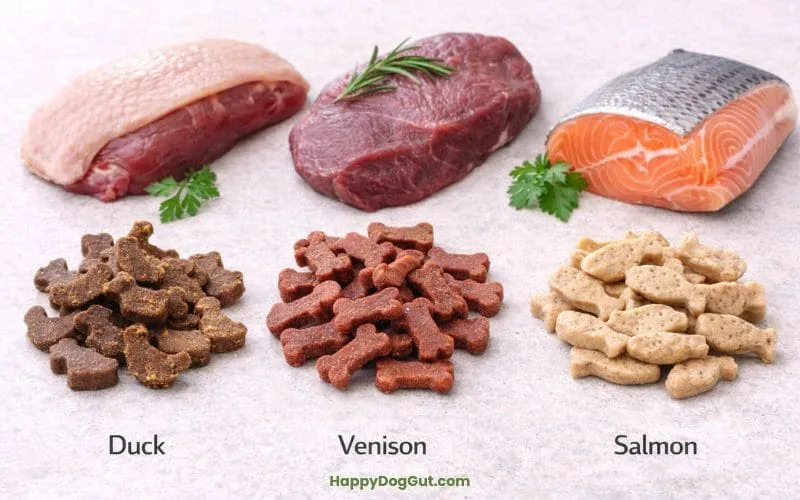
🦆 Duck-Based Treats
Duck treats are often richer in flavor but can still be gentle when kept low in fat. They’re commonly used for dogs that react to chicken. Portion control is important, as duck can be heavier than other proteins.
🦌 Venison Treats
Venison is a lean, novel protein that many sensitive dogs tolerate well. Treats made with venison are often chosen during elimination-style feeding plans because of their simplicity and low allergen profile.
🐟 Salmon Treats
Salmon treats offer a different protein option and may be easier to digest for some dogs. They’re often used when land-based proteins cause reactions, though moderation matters since fish-based treats can still be rich.
The best dog treats for sensitive stomachs aren’t always the most popular ones—they’re often the simplest. Hypoallergenic and novel protein treats can be a smart option for dogs that react to common ingredients, especially when used consistently and in moderation.
For dogs with more complex sensitivities, aligning treat choices with overall diet strategy helps maintain digestive stability. Our guide to Best Hypoallergenic Dog Foods for Sensitive Stomachs explains how hypoallergenic approaches are commonly used in meals. If you’re exploring protein alternatives more broadly, our breakdown of Novel Protein Diets for Dogs provides deeper context on when and why these proteins are considered.
Are Homemade Treats Better for Sensitive Stomachs?
Homemade treats can be a helpful option for some dogs with digestive sensitivity—but they aren’t automatically better in every situation. When chosen carefully, simple homemade treats can complement the best dog treats for sensitive stomachs, especially for dogs that react poorly to commercial additives or highly processed ingredients.
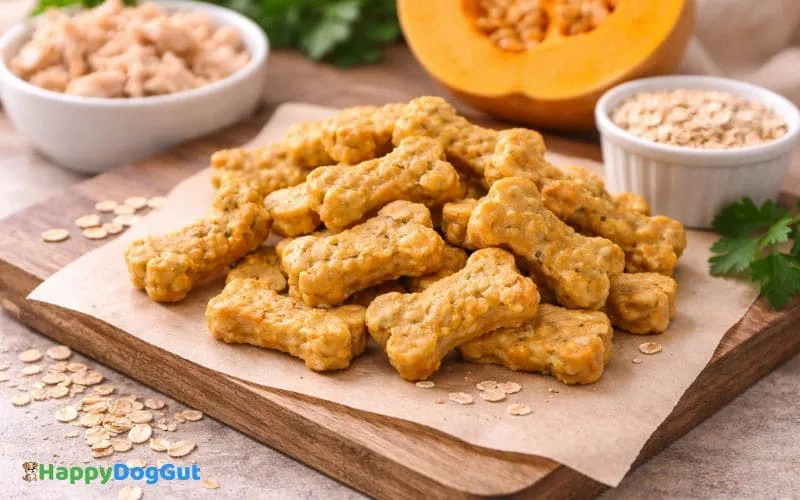
✅ When Homemade Treats can Help
Homemade treats work best when a dog’s stomach reacts to long ingredient lists, artificial flavors, or preservatives. Making treats at home allows you to control exactly what goes into them, which can be reassuring for dogs with food intolerance or mild digestive sensitivity. These treats are often used as occasional rewards, not daily staples.
🍗 Simple, Gentle Homemade Options
Some of the easiest homemade treat ideas include:
- Baked Plain Chicken (no seasoning, skin removed)
- Pumpkin Bites made from plain canned pumpkin
- Simple Oat-based Treats with one protein
Pumpkin, in particular, is commonly used to support digestion when prepared correctly. Our guide on using pumpkin for sensitive stomachs in dogs explains how it may help and when to avoid it.
⚠️ Why Moderation Matters
Even homemade treats can cause problems if given too often. Overfeeding treats—homemade or store-bought—can disrupt digestion and lead to loose stools. Homemade treats also lack balanced nutrition, so they should never replace complete meals. For a broader understanding of when homemade food fits into a dog’s diet, see our Homemade Dog Food Guide.
Homemade treats can be a useful tool, but they’re not a cure-all. The best dog treats for sensitive stomachs—whether homemade or commercial—are those given in moderation, made with simple ingredients, and matched to your dog’s individual tolerance.
How Many Treats Can a Sensitive Dog Have?
Even when you choose the best dog treats for sensitive stomachs, quantity matters just as much as quality. Sensitive dogs often tolerate treats well in small amounts—but too many can quickly upset digestion, even if the ingredients are gentle.
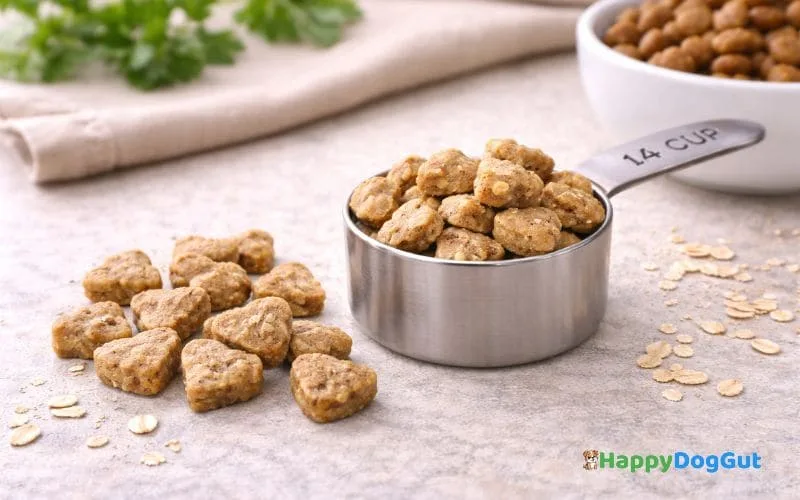
📊 Follow the 10% Calorie Rule
A good general guideline is that treats should make up no more than 10% of your dog’s daily calories. The remaining 90% should come from a complete, balanced diet. Going beyond this—even with “healthy” treats—can throw off digestion and lead to soft stools or gas.
🚫 Limit Treats during Digestive flare-ups
When a dog is experiencing loose stools, diarrhea, or stomach upset, it’s best to pause treats altogether. This gives the digestive system a chance to settle and makes it easier to see whether food changes are helping. Once stools normalize, treats can be reintroduced slowly and in small amounts. Our guide on What to feed a dog after diarrhea explains how to safely return to normal feeding routines.
🎓 Use Training Alternatives
For sensitive dogs in training, treats don’t always have to be traditional snacks. Many owners successfully use:
- A portion of the dog’s regular kibble
- Very small pieces of a tolerated treat
- Verbal praise or play as rewards
These alternatives help reinforce behavior without overwhelming digestion.
When deciding how many treats to offer, following established canine nutrition guidelines can help protect digestive health. Reputable dog nutrition resources commonly advise that treats should account for no more than 10 percent of a dog’s total daily calorie intake. Staying within this range helps prevent digestive overload and allows treats to complement a balanced diet rather than disrupt it—an especially important consideration when choosing the best dog treats for sensitive stomachs.
The best dog treats for sensitive stomachs work best when used sparingly. Small portions, thoughtful timing, and consistency help treats remain a positive experience—without undoing digestive progress.
When Treats Should Be Avoided Completely
Even the best dog treats for sensitive stomachs aren’t appropriate in every situation. There are times when a dog’s digestive system needs a full break from treats so it can settle and recover. Knowing when to pause treats can help prevent setbacks and make it easier to identify what’s actually helping.
💩 Active Diarrhea
If a dog is experiencing ongoing loose stools or diarrhea, it’s best to stop all treats temporarily. Introducing extra ingredients—even gentle ones—can interfere with digestion and make stool patterns harder to track. During this time, focus only on meals your dog already tolerates well.
🤢 Vomiting or Nausea
Vomiting is a sign that the stomach may be irritated or overwhelmed. Adding treats during these episodes can worsen symptoms or delay recovery. Waiting until vomiting has fully resolved helps protect the digestive system from further stress.
🧪 Elimination Diet Phases
When a dog is on an elimination or limited-ingredient diet, treats can unintentionally reintroduce problem ingredients. Even a single off-diet treat can confuse results. During these phases, treats should be avoided unless they’re specifically designed to match the elimination diet.
If digestive symptoms don’t improve, worsen, or keep returning despite careful feeding, professional guidance is always the safest next step. Treats are meant to enhance quality of life—not complicate digestive recovery.
FAQs: Dog Treats for Sensitive Stomachs & Allergies
What are the safest treats for dogs with sensitive stomachs?
The safest options are treats with short ingredient lists, a single protein source, and low fat content. Many dogs tolerate simple treats like baked chicken, sweet potato, or limited-ingredient commercial treats well. The best dog treats for sensitive stomachs avoid artificial colors, glycerin, and rich fillers that can irritate digestion.
Are grain-free treats better for digestion?
Not always. Some dogs digest grain-free treats well, while others tolerate gentle grains like rice or oats without any issue. Digestive sensitivity is usually more about individual ingredient tolerance than grains alone. It’s best to focus on how your dog responds rather than choosing grain-free by default.
Can dog treats cause chronic diarrhea?
Yes, treats can absolutely contribute to ongoing loose stools—especially when they’re high in fat, overfed, or contain ingredients your dog doesn’t tolerate. Even small amounts of the wrong treat can trigger digestive upset. That’s why treat selection matters just as much as choosing the right food.
How do I know if a treat is causing stomach upset?
Common signs include loose stool, gas, bloating, or stomach noises appearing within hours or the next day after giving a new treat. The easiest way to tell is to stop treats completely for a short period and then reintroduce one type at a time, watching for changes.
Are homemade treats safer than store-bought ones?
Homemade treats can be helpful because you control the ingredients, but they aren’t automatically safer. Even homemade treats can cause issues if they’re too rich or given too often. Moderation and simplicity matter more than whether a treat is homemade or commercial.
How many treats can a dog with a sensitive stomach have per day?
A good rule is that treats should make up no more than 10% of daily calories. Sensitive dogs often do best with fewer treats than average. During digestive flare-ups, it’s usually best to pause treats entirely until stools normalize.
Are hypoallergenic or novel protein treats worth trying?
They can be helpful for dogs that react to common proteins like chicken or beef. Treats made with duck, venison, or salmon may be easier for some dogs to tolerate. While not a guarantee, these options are often included among the best dog treats for sensitive stomachs when food reactions are suspected.
Can puppies with sensitive stomachs have treats?
Yes, but puppies have even more delicate digestion than adult dogs. Treats should be very small, simple, and used sparingly. Many trainers use portions of the puppy’s regular food instead of separate treats to reduce digestive risk.
Should I stop treats completely if my dog has allergies or digestive issues?
Not always—but timing matters. During active diarrhea, vomiting, or elimination diet phases, it’s best to avoid treats entirely. Once digestion stabilizes, carefully chosen treats can usually be reintroduced slowly and in small amounts.
Final Thoughts: Choosing Treats That Truly Support Digestive Comfort
Treats often feel like a small part of a dog’s routine—but for dogs with digestive sensitivity, treats can matter just as much as meals. Many stomach upsets linked to sensitive digestion don’t come from food bowls, but from well-intentioned snacks given in between. That’s why choosing the best dog treats for sensitive stomachs deserves just as much attention as selecting the right diet.
🍽️ Simpler is usually safer. Treats with short ingredient lists, a single protein source, and low fat content are easier for sensitive digestive systems to handle. Flashy packaging and long ingredient lists don’t necessarily mean better quality—digestibility and consistency matter far more.
👀 Observation makes the difference. Every dog is unique, and even gentle treats can trigger reactions in some dogs. Watching how your dog responds after treats—changes in stool, gas, or comfort—helps guide better choices over time.
🔁 Diet consistency comes first; treats come second. Treats should support your dog’s routine, not disrupt it. When digestion is stable, carefully chosen treats can fit in. When it’s not, stepping back from treats is often the smartest move.
If your dog struggles with ongoing digestive sensitivity, pairing thoughtful treat choices with a supportive diet is key. You may find it helpful to explore Foods formulated for sensitive stomachs, learn more about Signs of Food Intolerance in Dogs, or review dietary approaches used for Chronic Diarrhea Support.
When digestive symptoms persist, worsen, or become unpredictable, professional guidance is always the safest next step.
With patience, consistency, and informed choices, treats can remain a positive part of your dog’s life—without compromising digestive comfort.

Hi, I’m Maddy, the writer behind HappyDogGut.com.I’m passionate about helping dog parents better understand gut health, sensitive stomachs, and nutrition through clear, practical, and research-based content. Every article is carefully researched using trusted veterinary and pet health resources, so you can make more informed decisions for your dog’s digestive health.Happy Gut = Happy Dog! 🐾
All content on Happy Dog Gut follows our Editorial Policy.