

Inflammatory Bowel Disease (IBD) in dogs is often misunderstood. In simple terms, IBD refers to ongoing inflammation inside a dog’s digestive tract, which can interfere with digestion, nutrient absorption, and overall comfort. Many dogs with IBD are initially labeled as having “just a sensitive stomach,” especially when symptoms like loose stools, vomiting, or appetite changes come and go. Over time, those recurring issues can point to something more chronic than occasional digestive upset.
Diet plays a supportive—but important—role in managing IBD. While food alone is not a cure, choosing the best dog foods for IBD can help reduce digestive stress, support stool consistency, and make daily symptoms easier to manage. This is especially relevant for dogs that experience frequent flare-ups or have not improved with standard sensitive-stomach diets.
This guide is designed to provide clear education and practical diet guidance, not hype or medical claims. You’ll learn how certain food characteristics may support dogs with IBD, which ingredients are commonly avoided, and how diet fits into a bigger gut-health picture.
If your dog has long-lasting diarrhea or recurring digestive issues, it’s helpful to understand how those patterns connect to broader gut health. Our guide on Chronic Diarrhea in Dogs explains how ongoing symptoms differ from short-term upset. You may also want to review Common Causes of Sensitive Stomachs in Dogs to see how IBD is often mistaken for milder digestive sensitivity.
This article is for educational purposes only and does not replace veterinary care.
What Is IBD in Dogs?
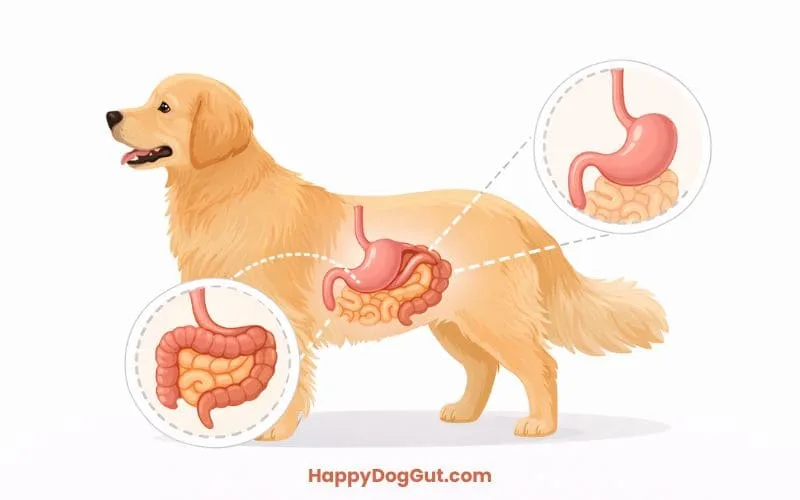
IBD, or Inflammatory Bowel Disease, refers to long-term inflammation inside a dog’s gastrointestinal (GI) tract. Instead of a brief upset that clears on its own, IBD involves ongoing irritation of the stomach and/or intestines, which can interfere with digestion and nutrient absorption over time. Dogs with IBD may appear fine for a while and then suddenly experience flare-ups—this stop-and-start pattern is one reason the condition is often misunderstood.
Inflammatory bowel disease in dogs is a broad term used to describe chronic inflammation of the gastrointestinal tract. While online guides often focus on diet and daily management, understanding the condition itself is also important. For a high-level, non-clinical overview of how inflammatory bowel disease affects animals, Wikipedia’s educational summary on inflammatory bowel disease in animals provides background information that can help owners better understand the condition without replacing professional veterinary care.
It’s important to distinguish IBD from a sensitive stomach or food intolerance. A sensitive stomach usually causes mild, short-lived issues after diet changes or rich treats. Food intolerance often involves reactions to specific ingredients and may improve once that trigger is removed. IBD, on the other hand, reflects persistent gut inflammation that doesn’t fully resolve with simple switches—though diet can still play a meaningful supportive role. That’s why choosing the best dog foods for IBD focuses on calming the gut and maintaining consistency rather than constantly changing ingredients.
Another hallmark of IBD is that symptoms can come and go. Stress, treats, or diet changes may trigger flare-ups, while careful feeding routines can help periods of stability last longer. Understanding these patterns helps owners make steadier choices and avoid unnecessary food hopping.
If you’re trying to separate intolerance from a more chronic issue, reviewing the Signs of Food Intolerance in Dogs can clarify where symptoms overlap and where they differ.
Common Symptoms of IBD in Dogs

Dogs with IBD often show recurring digestive signs rather than a single, short-lived episode. These symptoms can vary in intensity and may improve temporarily before returning, which is why the condition is sometimes overlooked early on. Recognizing patterns—not just one bad day—can help owners understand when supportive diet choices, like the best dog foods for IBD, may play a role in overall gut comfort.
🔹 Chronic Diarrhea:
Loose or watery stools that persist or keep coming back are one of the most common signs. Unlike occasional stomach upset, IBD-related diarrhea tends to recur despite routine diet changes.
🔹 Unexplained Weight Loss:
When the gut is inflamed, nutrient absorption can be less efficient. Even dogs that seem to be eating normally may slowly lose weight over time.
🔹 Vomiting or Regurgitation:
Some dogs experience intermittent vomiting, especially during flare-ups. This may happen alongside diarrhea or appear on its own, adding to digestive strain.
🔹 Poor or Inconsistent Appetite:
Dogs with IBD may eat well on some days and refuse food on others. This on-and-off appetite often reflects how their gut feels at different times.
🔹 Mucus in the Stool:
A slimy coating on stool can indicate irritation in the lower intestines. While not exclusive to IBD, it’s commonly reported during active flare-ups.
It’s also possible for dogs to have Loose Stools yet seem otherwise normal, especially early on. If this sounds familiar, our guide on Loose Stool but Acting Normal explains why outward behavior doesn’t always reflect what’s happening in the gut.
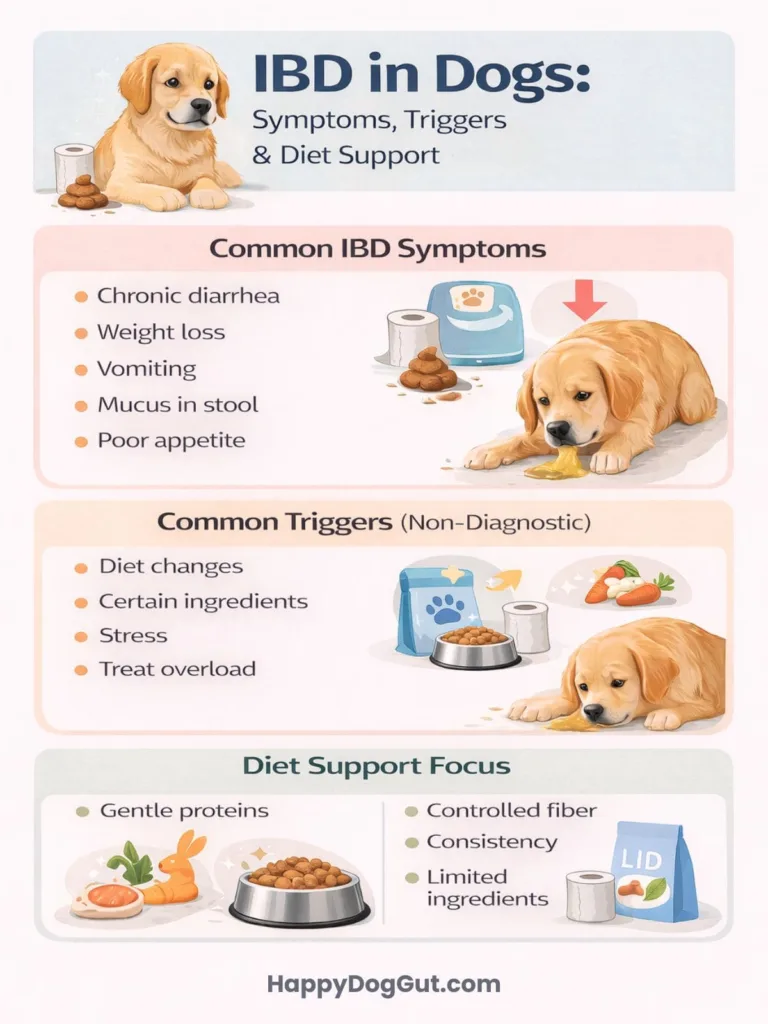
Understanding these symptoms helps owners focus on consistency, observation, and supportive feeding rather than constant trial-and-error.
Why Diet Matters for Dogs With IBD
When a dog has IBD, the digestive tract is already dealing with ongoing inflammation, which means food choices can either add to that irritation or help calm it. While diet is not a cure, selecting the best dog foods for IBD can play a meaningful role in supporting daily comfort and gut stability.
🥣 Reducing Gut Irritation
Certain ingredients—such as overly rich proteins, excess fat, or long ingredient lists—can increase digestive stress. Diets commonly used for IBD support focus on simplicity and digestibility, helping reduce unnecessary irritation in an already sensitive gut.
🔄 Improving Nutrient Absorption
Inflammation can interfere with how well nutrients are absorbed. Foods designed to be easier to digest allow the gut to do its job more efficiently, which may help maintain weight and energy levels even during sensitive periods.
💩 Supporting Stool Consistency
IBD often leads to inconsistent stools, ranging from soft to watery. Carefully balanced fiber and digestible ingredients can help support firmer, more predictable stools—one of the most noticeable improvements owners look for when adjusting diet.
📌 Why Consistency Matters More than Variety
Frequent food changes can confuse an inflamed digestive system. Sticking with one well-tolerated formula gives the gut time to settle and makes it easier to spot real improvements. This is why rotating foods “just to try something new” often backfires in dogs with IBD.
Many of the principles used in IBD-friendly diets overlap with those found in Dog Foods Formulated for Sensitive Stomachs, which prioritize gentle digestion and limited irritation. Building on that foundation—while maintaining strict consistency—often provides the best support for dogs managing IBD-related digestive challenges.
What to Look for in the Best Dog Foods for IBD
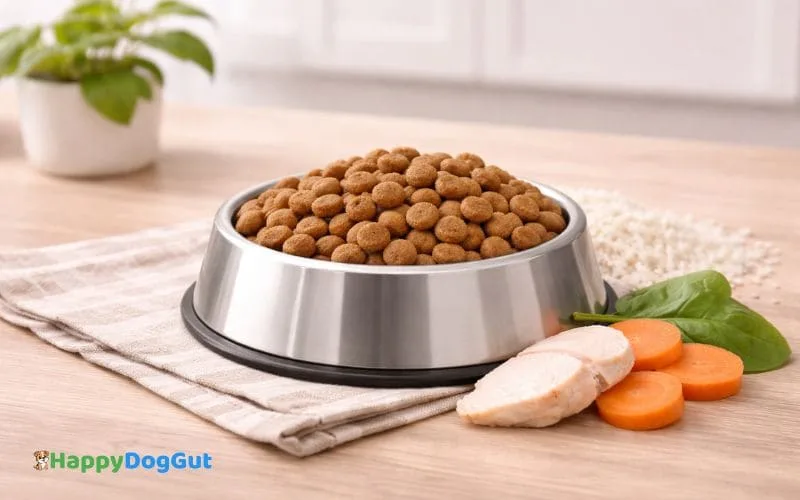
Choosing the best dog foods for IBD is less about chasing trends and more about understanding what an inflamed digestive system can realistically tolerate. Dogs with IBD benefit from diets that reduce workload on the gut while supporting steady digestion and nutrient uptake. Below are the most important food characteristics to look for.
🍗 Easily Digestible Proteins
Proteins should be simple and gentle, as complex or heavy proteins can increase gut irritation. Many dogs with IBD do better with highly digestible options that the body can break down with less effort. The goal is to nourish without overstimulating an already sensitive digestive tract.
🌾 Moderate Soluble Fiber
Fiber plays a balancing role in IBD diets. Soluble fiber, in particular, can help regulate stool consistency and support beneficial gut bacteria. Too little fiber may worsen diarrhea, while too much can increase gas or discomfort. Our guide on High-fiber Dog Foods for Firm Stool explains how fiber balance affects digestion.
🥄 Low to Moderate Fat Content
High-fat foods can be harder to digest and may trigger flare-ups in dogs with chronic gut inflammation. Diets with controlled fat levels are often easier on the digestive system and help reduce episodes of loose stools or nausea.
📋 Limited Ingredient Formulas
Fewer ingredients mean fewer potential triggers. Limited ingredient diets simplify digestion and make it easier to identify what a dog tolerates well. This simplicity is especially helpful for dogs whose symptoms worsen with frequent food changes.
🦠 Prebiotics and Probiotics (support role)
Gut-supporting bacteria can help maintain balance in the digestive tract, but they should be used thoughtfully. In IBD, probiotics are meant to support gut health—not overwhelm it. Choosing appropriate strains and amounts matters. You can learn more about how these supplements fit into digestive care in our guide to the Best Probiotics for Dogs.
Overall, the most effective IBD-supportive diets focus on gentle digestion, controlled ingredients, and consistency over time—not on constantly switching foods in search of quick fixes.
Best Dog Foods for IBD
Dogs with IBD don’t benefit from “one-size-fits-all” food. The best dog foods for IBD are typically chosen for their digestibility, controlled ingredients, and consistency, not marketing claims. Below are trusted food categories and commonly used options that are often discussed for IBD diet support. These are educational examples, not endorsements or prescriptions.
1. Hydrolyzed Protein Diets
Key ingredients: Hydrolyzed Soy or Poultry Protein, Controlled Carbohydrates
Why it may help:
Proteins are broken into smaller fragments, making them less likely to trigger immune reactions that worsen gut inflammation.
Pros:
- Minimal immune stimulation
- Useful when multiple foods cause reactions
Cons:
- Higher cost
- Not always needed long-term
Best for / Avoid if:
✔ Best for dogs reacting to many proteins
✖ Avoid if symptoms improve on simpler diets
Good to Know:
Often used as a structured starting point before transitioning to other options.
Learn more → Hydrolyzed Protein Dog Food.
2. Limited Ingredient Diets (LID)
Key ingredients: Single Protein + Single Carb Source
Why it may help:
Fewer ingredients reduce potential triggers and digestive workload.
Pros:
- Easier to identify triggers
- Simpler digestion
Cons:
- Still contains intact proteins
- Not suitable for all allergy patterns
Best for / Avoid if:
✔ Best for mild-to-moderate IBD
✖ Avoid if reactions persist despite ingredient control
Good to Know:
Often tried before or after hydrolyzed diets.
Learn More → Limited ingredient diets.
3. Novel Protein Diets
Key ingredients: Duck, Venison, Rabbit, or Other Novel Proteins
Why it may help:
Uses proteins the dog hasn’t eaten before, reducing immune familiarity.
Pros:
- Less restrictive than hydrolyzed diets
- Often better palatability
Cons:
- Not helpful if dog has tried many proteins
- Availability can vary
Best for / Avoid if:
✔ Best for dogs with known common-protein reactions
✖ Avoid if symptoms don’t improve after trials
Good to Know:
Common step when standard proteins fail.
Learn More → Novel Protein Diets.
4. Sensitive-Stomach Formulas
Key ingredients: Easily Digestible Proteins, Balanced Fiber Blends
Why it may help:
Designed for easier digestion with controlled fat and fiber.
Pros:
- Widely available
- Less restrictive
Cons:
- May not be enough for advanced IBD
Best for / Avoid if:
✔ Best for early or mild symptoms
✖ Avoid if chronic flare-ups persist
Good to Know:
Often overlaps with IBD support principles.
5. Gastrointestinal Support Diets
Key ingredients: Moderate Soluble Fiber, Controlled Fat
Why it may help:
Formulated to support stool quality and nutrient absorption.
Pros:
- Supports stool consistency
- Gentle on digestion
Cons:
- Not tailored to allergies
Best for / Avoid if:
✔ Best for diarrhea-dominant IBD patterns
✖ Avoid if food allergy is primary concern
6. Low-Fat Digestive Diets
Key ingredients: Lean Proteins, Digestible Carbs
Why it may help:
Lower fat reduces digestive stress during inflammation.
Pros:
- Easier digestion during flare-ups
Cons:
- Not ideal for all body conditions
Best for / Avoid if:
✔ Best when fat sensitivity is suspected
✖ Avoid if weight loss is severe
7. Fiber-Balanced Diets
Key ingredients: Soluble Fiber sources like Beet Pulp or Psyllium
Why it may help:
Supports stool form and gut bacteria balance.
Pros:
- Helps regulate stool
- Supports colon health
Cons:
- Too much fiber can worsen gas
Best for / Avoid if:
✔ Best for inconsistent stools
✖ Avoid if fiber worsens symptoms
8. Wet or Moist Diet Options
Key ingredients: Soft Proteins, Simple Formulas
Why it may help:
Higher moisture improves digestibility and hydration.
Pros:
- Gentler texture
- Often better tolerated
Cons:
- Shorter shelf life
- Cost considerations
Best for / Avoid if:
✔ Best for picky or dehydrated dogs
✖ Avoid if dental or cost issues arise
9. Combination Feeding (Wet + Dry)
Key ingredients: IBD-friendly Dry Food + Compatible Wet Food
Why it may help:
Balances moisture with calorie control.
Pros:
- Improves acceptance
- Flexible feeding
Cons:
- Requires careful consistency
Best for / Avoid if:
✔ Best for dogs needing encouragement to eat
✖ Avoid if frequent changes cause flare-ups
10. Vet-Monitored Custom Diets
Key ingredients: Case-Specific
Why it may help:
Tailored to individual tolerance patterns.
Pros:
- Highly personalized
Cons:
- Requires close supervision
Best for / Avoid if:
✔ Best for complex cases
✖ Avoid without professional guidance
The best dog foods for IBD are chosen based on tolerance, consistency, and response over time—not brand popularity. Many dogs improve with structured diet support, whether that’s hydrolyzed, limited-ingredient, or novel protein-based, as long as changes are slow, deliberate, and consistent.
Dogs with Inflammatory Bowel conditions often need carefully planned diets to support digestive comfort. In cases where inflammation primarily affects the colon, understanding What to feed a dog with Colitis can help owners focus on gentler food choices that reduce irritation and support stool consistency.
Wet Dog Foods for Dogs With IBD
Wet food can play a helpful role when supporting dogs with IBD, especially during periods when digestion feels more fragile. While not every dog requires a fully wet diet, wet options are often included among the best dog foods for IBD because of how they interact with an inflamed digestive system.
💧 Why Moisture Helps Digestion
Wet dog foods contain significantly more moisture than dry kibble, which can make nutrients easier to break down and absorb. For dogs with IBD, this added hydration may help support smoother digestion and reduce strain on the gastrointestinal tract, particularly during flare-ups when stools are loose or appetite is reduced.
🍽️ When Wet Food is Preferred
Wet food is often considered when dogs struggle to maintain hydration, show decreased interest in dry food, or experience repeated digestive discomfort with firmer textures. Some owners find that dogs with IBD tolerate softer foods better, especially when symptoms include vomiting or inconsistent stools.
🔄 Mixing Wet and Dry Safely
Many dogs do well on a combination feeding approach, using compatible wet and dry foods with similar ingredient profiles. Mixing small amounts of wet food into a consistent dry base can improve palatability without introducing unnecessary dietary changes. The key is keeping proteins and overall formulas aligned to avoid triggering flare-ups.
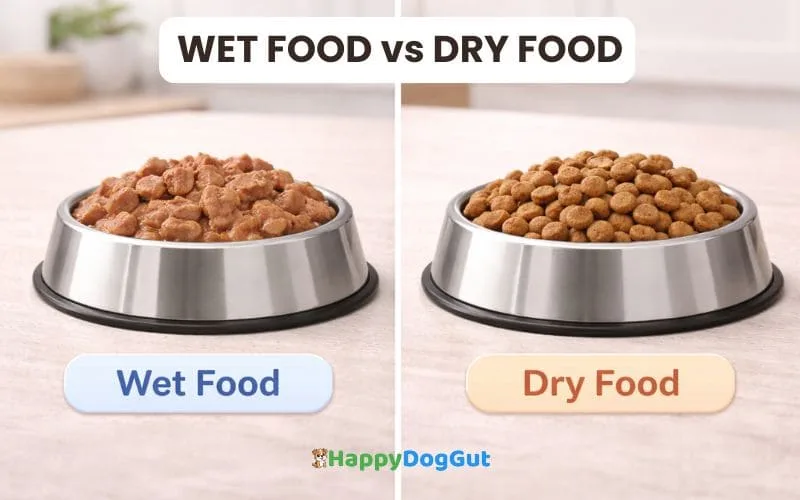
If you’re exploring moisture-rich options, our guide to Best Wet Dog Foods for Sensitive Digestion provides additional context on how wet diets are commonly used and when they may be appropriate.
Wet food isn’t a requirement for every dog with IBD, but for some, it can be a gentle and practical way to support digestion—especially when used thoughtfully and consistently as part of an overall feeding plan.
Homemade Diets for IBD (Short-Term Support Only)
Homemade meals are often one of the first things dog owners consider when digestive symptoms flare up. In dogs with IBD, simple homemade diets can offer short-term relief, but they’re best viewed as temporary support, not a complete long-term solution. Even when using the best dog foods for IBD, there are moments—such as flare-ups—when very bland meals help calm the gut.
🍚 Chicken & Rice (short-term use)
A plain chicken-and-rice diet is commonly used because it’s easy to digest and gentle on the stomach. The goal is to reduce irritation while the gut settles. Portions should be small and meals spaced out to avoid overwhelming digestion. For step-by-step preparation and safety tips, see our guide to Homemade Chicken & Rice for Dogs with Diarrhea.
🥣 Low-fat, Bland Meals
Low-fat meals are especially important for dogs with chronic gut inflammation, as excess fat can worsen symptoms. Boiled, skinless chicken paired with plain white rice is a typical example. Seasonings, oils, and extras should be avoided entirely. Simplicity is what helps here—not variety.
⚠️ Why Homemade isn’t a Long-term Plan without Guidance
While bland homemade diets can help during sensitive periods, they don’t provide complete nutrition if fed for extended time. Dogs with IBD need balanced vitamins, minerals, and consistent nutrient intake to maintain weight and overall health. That’s why homemade meals are usually used as a bridge, not a destination. When transitioning back to a balanced diet after digestive upset, our guide on What to Feed a Dog After Diarrhea explains how to move forward safely.
Homemade diets can be useful during IBD flare-ups, but they work best as short-term support alongside a clear feeding plan. For long-term management, consistency and nutritional balance matter more than keeping meals homemade.
Supplements That May Support Dogs With IBD
Supplements are sometimes used alongside dietary changes to support dogs living with IBD, but they should be approached carefully and conservatively. Even when feeding the best dog foods for IBD, adding too many supplements—or using them incorrectly—can increase digestive stress rather than reduce it. The goal is gentle support, not aggressive intervention.
🦠 Probiotics (Use Thoughtfully)
Probiotics are often discussed for gut health because they help support beneficial bacteria in the digestive tract. For some dogs with IBD, carefully selected probiotic strains may help promote balance and stool consistency. However, more is not always better. Introducing probiotics too quickly or using high doses can actually worsen gas or loose stools.
🌾 Fiber Supplements
Fiber can play a supportive role by helping regulate stool and feeding beneficial gut bacteria. Soluble fiber is generally preferred, as it tends to be gentler on inflamed intestines. That said, fiber needs to be balanced—too little may worsen diarrhea, while too much can increase bloating or discomfort. Our overview of Fiber Supplements for Dogs with Sensitive Digestion breaks down when fiber may help and when it may backfire.
⚠️ What Not to Overuse
Dogs with IBD are especially sensitive to excess supplementation. Digestive enzymes, multiple probiotics at once, or combining several fiber sources can overwhelm the gut. Supplements should be introduced one at a time, in small amounts, with careful observation over several days.
Supplements can complement the best dog foods for IBD, but they are not substitutes for a well-chosen, consistent diet. Used thoughtfully, they may support digestion—but overuse or rapid changes can undo the benefits of even the best feeding plan.
When Diet Alone Is NOT Enough
While choosing the best dog foods for IBD can make a meaningful difference in daily comfort, there are times when diet support by itself isn’t enough. IBD is a complex condition, and some signs suggest that additional guidance may be needed beyond food adjustments alone.
⚖️ Persistent or Unexplained Weight Loss
If a dog continues to lose weight despite eating consistently, it may indicate that nutrients aren’t being absorbed effectively. In these cases, even highly digestible diets may not fully address the underlying issue.
🔥 Severe or Frequent Flare-ups
Occasional digestive setbacks can happen, but repeated flare-ups—especially when diet hasn’t changed—can signal that gut inflammation is more active than usual. Food alone may not be sufficient to stabilize symptoms during these periods.
🍽️ Ongoing Appetite Loss
Dogs with IBD often have fluctuating appetites, but prolonged refusal to eat or noticeable disinterest in food is a red flag. Appetite changes can quickly impact energy levels and overall health.
💊 When Medication becomes Part of the Plan
In some situations, medications to help manage inflammation or control symptoms. Diet continues to play a supportive role, but it becomes one piece of a broader management approach, not the only tool.
If symptoms worsen, persist, or interfere with your dog’s quality of life, it’s important to consult your veterinarian. Dietary guidance is valuable, but professional input helps ensure that food choices and overall care remain aligned with your dog’s needs.
The best dog foods for IBD can support digestion and reduce stress on the gut, but they work best as part of a balanced, responsive plan—especially when symptoms move beyond what diet alone can manage.
Feeding & Transition Tips for Dogs With IBD
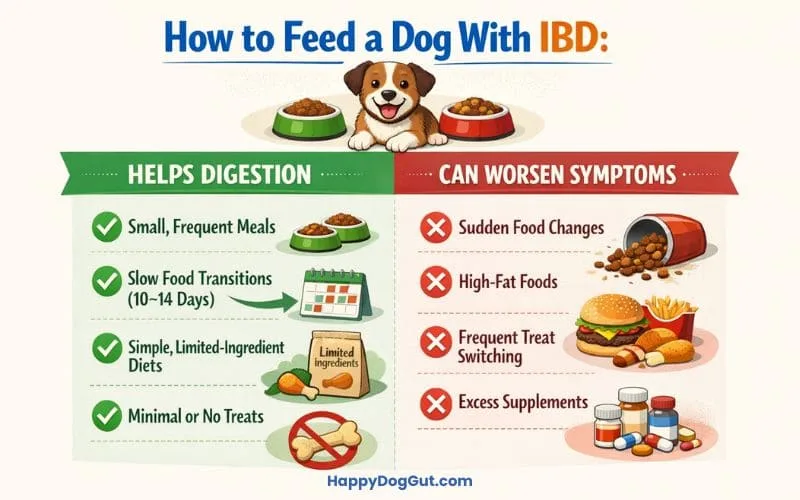
How food is fed can be just as important as what is fed when managing IBD. Even the best dog foods for IBD can cause problems if meals are too large, changes happen too quickly, or extras are added without care. Thoughtful feeding routines help reduce stress on an already sensitive digestive system.
🍽️ Small, Frequent Meals
Instead of one or two large meals, dividing food into smaller portions throughout the day can make digestion easier. Smaller meals place less demand on the gut at one time, which may help reduce nausea, bloating, and stool inconsistency—common concerns for dogs with IBD.
⏳ Slow Transitions (11- days)
Dogs with chronic gut inflammation need extra time to adjust to new foods. Gradually introducing a new diet over 11 days allows the digestive system to adapt without triggering flare-ups. Rushing this process—even when switching to a well-chosen food—can undo progress. For a step-by-step approach, follow our Dog Food Transition Guide.
🚫 Avoid Treat Overload
Treats, table scraps, and sudden add-ons can quickly destabilize digestion. For dogs with IBD, treats should be limited, carefully chosen, or avoided altogether during sensitive periods. Consistency in the main diet is far more important than variety.
The best dog foods for IBD work best when paired with structured feeding habits. Small meals, slow transitions, and minimal extras give the gut time to settle and make it easier to spot what truly helps your dog feel better.
FAQs: Best Dog Foods for IBD
What is the best diet for dogs with IBD?
The best diet for dogs with IBD is one that’s highly digestible, consistent, and well tolerated by the individual dog. Many dogs do better on diets with controlled ingredients, moderate soluble fiber, and low to moderate fat. There is no single “best” food for every dog—success depends on how your dog’s gut responds over time, not on brand popularity.
Can grain-free dog food help dogs with IBD?
Grain-free diets can help some dogs with IBD, especially if grains trigger digestive irritation. However, grain-free is not automatically better for IBD. Some dogs tolerate grains well, while others react more to proteins or fats. The focus should be on digestibility and tolerance, not just whether a food contains grains.
Is IBD the same as a food allergy in dogs?
No, IBD and food allergies are not the same, though symptoms can overlap. Food allergies involve an immune reaction to specific ingredients, while IBD refers to chronic inflammation of the gastrointestinal tract. Diet changes can support both conditions, but IBD often requires longer-term management and closer observation.
How long does it take for diet changes to help IBD symptoms?
Most dogs need several weeks on a consistent diet before meaningful improvement is seen. Some dogs show gradual changes in stool quality or appetite within 2–4 weeks, while others may take longer. Frequent food switching can delay progress, so patience and consistency are important.
Can dogs with IBD live a normal life?
Many dogs with IBD live comfortable, active lives with the right combination of diet support, routine, and monitoring. While flare-ups can occur, long periods of stability are common when triggers are minimized. Managing expectations and focusing on long-term patterns helps owners support quality of life.
Should dogs with IBD eat high-fiber food?
Fiber can help some dogs with IBD, particularly soluble fiber that supports stool consistency. However, too much fiber can increase gas or discomfort in certain dogs. Fiber levels should be balanced and adjusted based on how your dog responds, rather than increased aggressively.
Can treats make IBD symptoms worse?
Yes. Treats are a common cause of flare-ups in dogs with IBD, especially if they are high in fat or contain unfamiliar ingredients. Even small amounts can disrupt digestion. Many owners find that limiting or eliminating treats helps maintain more consistent stools.
Is wet food better than dry food for IBD?
Wet food can be easier to digest for some dogs due to higher moisture and softer texture. That said, many dogs with IBD do well on dry food or a wet–dry combination. The best option is the one your dog tolerates consistently without triggering symptoms.
Do supplements replace diet for IBD?
No. Supplements may support digestion, but they cannot replace a well-chosen, consistent diet. In dogs with IBD, adding too many supplements can actually worsen symptoms. Diet remains the foundation, with supplements used carefully if needed.
When should I worry that diet isn’t helping?
If your dog continues to lose weight, refuses food, or experiences frequent severe flare-ups despite consistent feeding, diet alone may not be enough. In those cases, it’s important to seek veterinary guidance to reassess the overall management plan.
Final Thoughts: Choosing the Best Dog Foods for IBD
Living with IBD can feel overwhelming at first, but the good news is that IBD is often manageable—even if it isn’t something that can be “fixed” overnight. For many dogs, the right dietary approach helps calm the gut, reduce flare-ups, and support a more comfortable daily routine. Choosing the best dog foods for IBD isn’t about chasing the newest formula or switching foods frequently—it’s about finding what your dog tolerates and sticking with it.
🥣 Diet Plays a Supportive role
Food doesn’t cure IBD, but it can significantly influence how the digestive system behaves. Gentle ingredients, balanced fiber, and controlled fat levels help reduce unnecessary irritation and support steadier digestion over time.
🔁 Consistency Matters more than constant changes
One of the most common setbacks owners face is switching foods too often. Even well-intentioned changes can trigger symptoms. Once you find a diet that works, giving it time is often more helpful than continually searching for something “better.”
Diet choices are most effective when they’re part of a broader, informed plan. If symptoms persist, worsen, or don’t respond to consistent feeding, professional input helps ensure your dog’s needs are fully supported.
To explore related diet strategies and deepen your understanding, you may find these guides helpful:
- Foods Commonly Discussed for Chronic Diarrhea Support
- Hydrolyzed Diets Explained and When They’re Used
- Sensitive Stomach Dog Foods and Gentle Diet Options
With patience, observation, and the right dietary support, many dogs with IBD can enjoy stable digestion and a good quality of life. Focus on what works for your dog—and build from there.

Hi, I’m Maddy, the writer behind HappyDogGut.com.I’m passionate about helping dog parents better understand gut health, sensitive stomachs, and nutrition through clear, practical, and research-based content. Every article is carefully researched using trusted veterinary and pet health resources, so you can make more informed decisions for your dog’s digestive health.Happy Gut = Happy Dog! 🐾
All content on Happy Dog Gut follows our Editorial Policy.


Pingback: What to Feed a Dog With Colitis: Gentle Diet & Gut Support Tips
Pingback: How Chronic GI Issues in Dogs Are Diagnosed: Tests Explained
Pingback: Omega-3 for Gut Health in Dogs (EPA, DHA & Benefits)