
If you’ve ever wrinkled your nose and thought, “Why does my dog’s poop smell so bad?”, you’re not alone. Smelly dog poop is one of the most common concerns dog owners talk about—especially when the odor suddenly feels stronger or more unpleasant than usual. While dog poop is never supposed to smell like roses, there’s a big difference between normal stool odor and poop that smells unusually foul, sour, or even rotten.
In many cases, stool smell is closely connected to digestion and gut balance. What your dog eats, how well nutrients are absorbed, and how gut bacteria break down food can all influence how strong or offensive the smell becomes. Sometimes it’s a simple dietary issue; other times, it can reflect a deeper digestive imbalance that deserves attention.
It’s also important to remember that not every smelly stool is an emergency. One bad-smelling bowel movement after new food or extra treats is very different from a pattern of consistently foul-smelling poop. Looking at stool color, texture, and frequency together often gives a clearer picture than smell alone—something we explain in our Dog Poop Color & Texture Chart.
In this guide, we’ll focus on education and diet-focused fixes, not diagnosis. You’ll learn what causes smelly dog poop, how food choices affect stool odor, and when it’s worth paying closer attention—especially if your dog has Loose Stool but is otherwise acting normal.
⚠️ This article is informational and does not replace veterinary care.
Why Does Dog Poop Smells Bad?
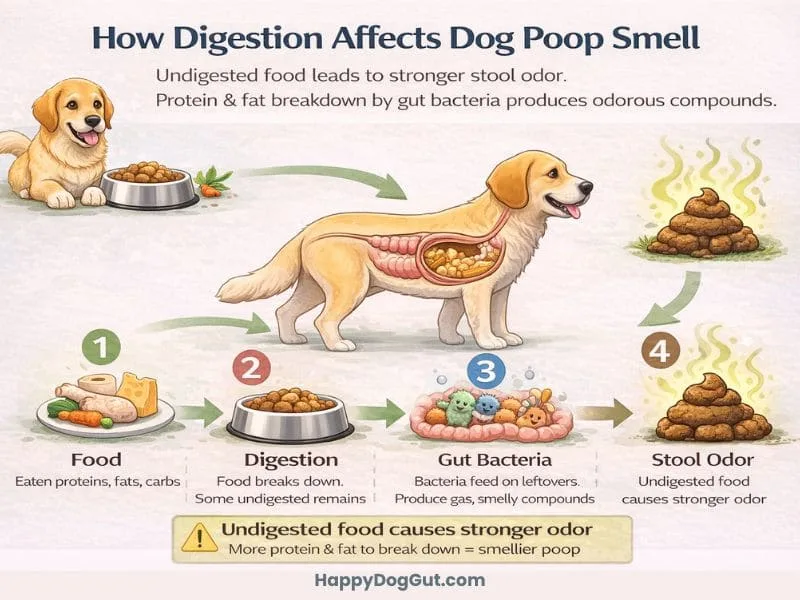
When dog poop smells bad, it’s usually tied to how food is being digested—not just what ends up in the yard. Understanding a few digestion basics can help explain why stool odor changes and what your dog’s gut might be struggling with.
🍽️ Digestion Basics
After your dog eats, food is broken down in the stomach and intestines so nutrients can be absorbed. Ideally, most of that process is efficient and clean. When digestion runs smoothly, stool still smells—but not overwhelmingly so.
🧪 Undigested Food & Fermentation
If food isn’t fully digested, it can ferment as it passes through the gut. This fermentation releases gases that create strong, unpleasant odors. Diets that are hard to digest, sudden food switches, or overeating can all increase the amount of undigested material—making poop smell noticeably worse.
🦠 Gut Bacteria Imbalance
Your dog’s intestines are home to billions of bacteria that help break down food. When that balance is off—sometimes called a gut imbalance—odor-producing bacteria may become more active. This is one reason smelly dog stool often appears alongside gas, bloating, or inconsistent stools.
🥩 Protein & Fat Breakdown
Protein and fat naturally produce stronger odors as they’re digested. Diets very high in protein or fat can lead to poop that smells especially foul, particularly if your dog has a sensitive digestive system. This is common in dogs that do better on gentler diets designed for easier digestion, like those discussed in our guide to Best Dog Foods for Sensitive Stomachs.
When dog poop smells bad, it’s often a sign that digestion isn’t as efficient as it could be. Looking at diet quality, ingredient balance, and gut health together helps explain why odor changes—and what might help improve it over time.
Common Causes of Foul-Smelling Dog Poop
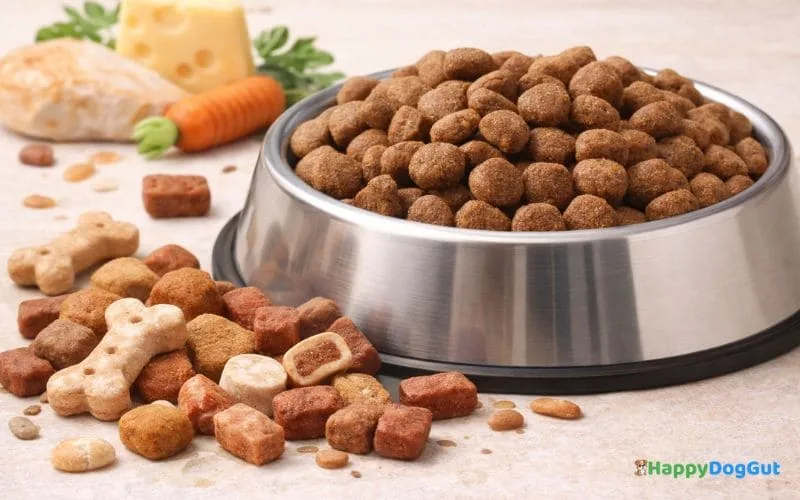
If your dog poop smells bad on a regular basis, the cause is often hiding in everyday habits—especially diet and digestion. While occasional odor changes are normal, consistently foul-smelling stool usually points to something your dog’s gut isn’t handling well.
Diet-Related Causes
🥣 Low-Quality Ingredients
Dog foods made with hard-to-digest fillers, by-products, or artificial additives can pass through the gut without being properly broken down. When nutrients aren’t absorbed efficiently, leftover material ferments in the intestines, leading to strong-smelling dog poop. Learning which ingredients commonly cause digestive trouble can help reduce odor over time; see Dog Food Ingredients to Avoid.
🥩 Too Much Protein
High-protein diets aren’t always bad, but excess protein—especially from lower-quality sources—can increase stool odor. Protein breakdown naturally produces sulfur-like smells, which is why poop can start smelling rotten or eggy when protein intake exceeds what your dog can comfortably digest.
🔄 Sudden Food Changes
Switching dog food too quickly doesn’t give the digestive system time to adapt. This often results in incomplete digestion, gas, and noticeably smelly stools. A slow, structured transition helps gut bacteria adjust and reduces odor spikes. Our Dog Food Transition Guide explains how to switch foods without upsetting digestion.
Digestive Imbalance
🧬 Poor Nutrient Absorption
Even with good food, some dogs struggle to absorb nutrients properly. When digestion is inefficient, more waste remains in the stool, increasing smell.
🦠 Gut Bacteria Imbalance
An imbalance in gut bacteria can allow odor-producing microbes to dominate. This often shows up alongside gas, bloating, or inconsistent stools—and is a common reason dog poop smells unusually bad.
Treat & Table Scrap Overload
🍖 High-Fat Treats
Rich, fatty treats are a frequent cause of foul-smelling poop. Fat is harder to digest and can overwhelm sensitive stomachs, leading to greasy, strong-smelling stools.
🍽️ Human Food
Table scraps may seem harmless, but many human foods disrupt digestion. Even small amounts can cause your dog’s poop to smell significantly worse the next day.
When dog poop smells bad, diet and digestion are usually the biggest contributors. Simplifying ingredients, transitioning food slowly, and limiting treats often make a noticeable difference in stool odor within a few weeks.
What Dog Poop Smell Can Tell You About Diet
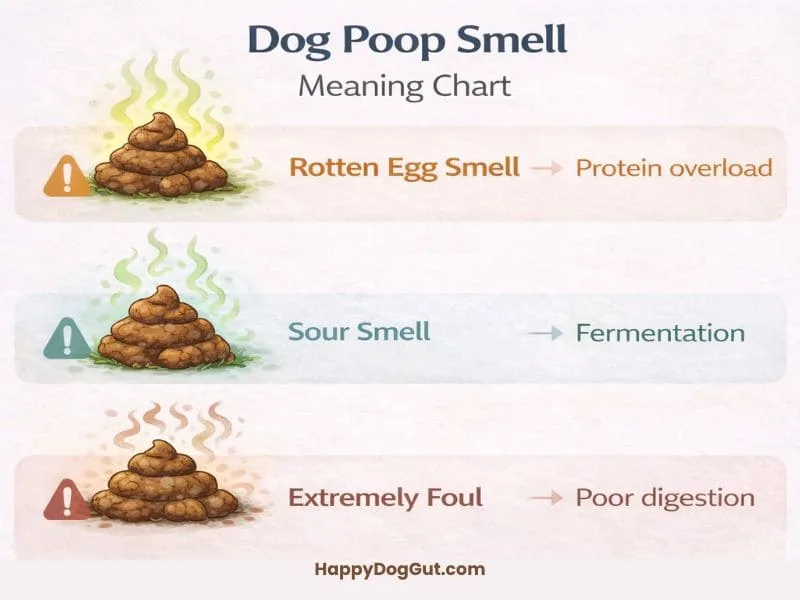
When dog poop smells bad, the type of smell often gives useful clues about how well your dog is digesting their food. While smell alone doesn’t diagnose a problem, patterns in odor—especially when they repeat—can point toward specific diet-related issues.
🥚 Rotten Egg or Sulfur-like Smell → Possible Protein Overload
A strong smell similar to rotten eggs is often linked to protein breakdown. Diets that are very high in protein, or that use protein sources your dog struggles to digest, can produce excess sulfur compounds during digestion. This is common in dogs that do better on gentler protein levels rather than “high-protein” formulas marketed for all dogs.
🍋 Sour or Acidic Smell → Fermentation in the Gut
If your dog’s poop smells sour or unusually sharp, it may be a sign that food is fermenting in the intestines instead of being fully digested. This can happen when carbohydrates or fibers aren’t well tolerated, or when gut bacteria are out of balance. Fermentation often goes hand in hand with gas and soft stools.
💥 Extremely Strong or Overwhelming Odor → Poor Overall Digestion
When stool odor becomes consistently overpowering, it often points to inefficient digestion overall. Nutrients may be passing through without being absorbed properly, leading to more waste and stronger smells. In these cases, dogs often respond better to simpler, highly digestible diets designed to reduce gut strain—like those discussed in our guide to Best Dog Food for Sensitive Stomachs.
Smell patterns matter more than one bad-smelling stool. If your dog’s poop smells bad repeatedly, paying attention to how it smells can help guide smarter diet choices and improve digestive comfort over time.
Diet Fixes That Can Reduce Smelly Dog Poop
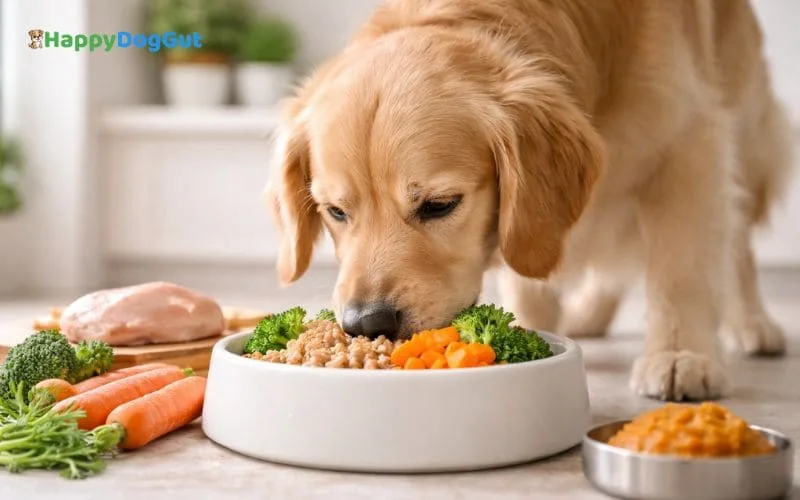
If dog poop smells bad consistently, the most effective place to start is the food bowl. Small, thoughtful diet changes often make a bigger difference than trying multiple foods at once. The goal is to support cleaner digestion, not overwhelm the gut with constant variety.
🥣 Simplify Ingredients
Diets with long ingredient lists can increase the chance of digestive trouble. Simplifying food—fewer proteins, fewer additives, and clearer ingredient sources—helps the digestive system work more efficiently. When there’s less for the gut to struggle with, stool odor often improves naturally.
🍗 Switch to Easily Digestible Proteins
Not all proteins are digested equally. Some dogs produce stronger-smelling stools when they eat protein sources that don’t agree with them. Switching to more digestible proteins can reduce fermentation in the gut and lead to milder stool odor. Many dogs with digestive sensitivity respond well to foods designed for gentler digestion rather than high-protein formulas.
🌾 Focus on Balanced Fiber Intake
Fiber plays an important role in stool quality and odor. Too little fiber can lead to loose, smelly stools, while too much can cause gas and discomfort. Diets with balanced soluble fiber help support beneficial gut bacteria and firmer stools. You can explore how fiber affects digestion in our guide to High-fiber Dog Foods for Firm Stool.
🦠 Support Gut Bacteria
Healthy gut bacteria help break down food more efficiently, which can reduce odor. In some cases, carefully chosen probiotics may support this balance—but overuse can backfire. Learning which probiotic approaches are appropriate can help avoid making smell or stool issues worse; see Best Probiotics for Dogs.
🔑 Consistency Over Variety
One of the biggest mistakes dog owners make is switching foods too often. Even good-quality food can cause smelly stools if the gut never has time to adapt. Consistency allows digestion to stabilize and gives diet changes time to work.
When dog poop smells bad, simplifying ingredients, choosing digestible proteins, balancing fiber, and sticking with one approach long enough often leads to noticeable improvements in stool odor within a few weeks.
Can Probiotics Help With Smelly Dog Stool?
When dog poop smells bad, many owners wonder if probiotics can help. Because stool odor is closely tied to gut bacteria, probiotics can play a role—but they aren’t a magic fix and don’t work the same way for every dog.
🦠 How Gut Bacteria Affect Stool Odor
Inside your dog’s intestines live trillions of bacteria that help break down food. When this balance is healthy, digestion tends to be cleaner and stool odor is milder. If odor-producing bacteria become dominant, waste products like sulfur compounds increase—leading to strong-smelling dog poop. Supporting a healthier bacterial balance is one reason probiotics are often discussed for digestive issues.
✅ When Probiotics may help
Probiotics may be helpful when smelly stools are linked to recent diet changes, mild digestive imbalance, or antibiotic use. In these cases, the right strains in appropriate amounts can support digestion and improve how food is broken down, which may reduce stool odor over time.
⚠️ Why Overuse Can Backfire
More isn’t always better. Introducing probiotics too quickly or using high doses can overwhelm the gut, sometimes making gas, loose stools, or odor worse instead of better. This is especially common in dogs with sensitive digestion.
Probiotics can help reduce stool odor in some dogs, but only when used thoughtfully and as part of a consistent diet plan. If dog poop smells bad despite probiotic use, it’s often a sign that diet balance—not just bacteria—needs closer attention.
When Smelly Poop Is NOT Just a Diet Issue
While food is the most common reason dog poop smells bad, there are situations where odor changes aren’t caused by diet alone. If strong smells continue despite consistent feeding, it may be helpful to consider other non-diet factors that can influence digestion and stool quality.
😟 Stress and Anxiety
Stress can directly affect the gut. Changes in routine, travel, new environments, or household disruptions may alter digestion and gut bacteria balance. In some dogs, stress-related digestive changes show up as gas, loose stools, or unusually smelly poop—even when the diet hasn’t changed.
🦠 Parasites
Intestinal parasites can interfere with nutrient absorption and digestion, sometimes leading to foul-smelling stools. While this guide isn’t meant to diagnose, persistent odor changes paired with other symptoms may warrant closer attention.
💊 Medications and Supplements
Certain medications—especially antibiotics—can disrupt gut bacteria and digestion. This disruption may temporarily increase stool odor. Supplements taken in excess can have a similar effect by overwhelming the digestive system.
Ongoing digestive issues, such as chronic diarrhea or inflammation, can affect how food is processed long-term. In these cases, stool odor is often just one of several ongoing signs. If smelly poop appears alongside frequent loose stools, exploring diet support for chronic digestive issues may be helpful; see Chronic Diarrhea Diet Support.
When dog poop smells bad, and diet changes don’t help, it’s important to look beyond food alone. Stress, medications, and underlying gut issues can all play a role—and recognizing patterns helps guide next steps.
When to Worry About Smelly Dog Poop (Red Flags)
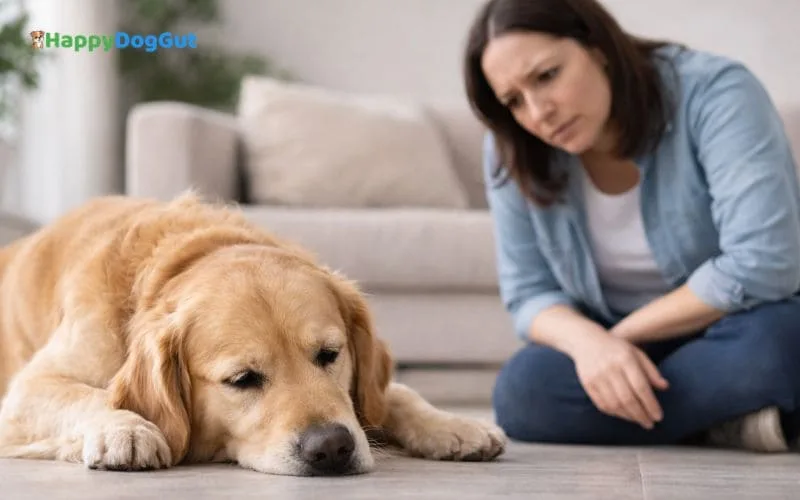
In many cases, dog poop smells bad due to diet or mild digestive imbalance—but there are situations where a sudden or severe change in stool odor deserves closer attention. Paying attention to patterns and accompanying signs is more important than reacting to one unpleasant bowel movement.
🚨 Sudden, Severe Change in Odor
If your dog’s poop suddenly becomes much more foul than usual, especially without any recent diet change, it may signal that digestion has been disrupted beyond normal day-to-day variation. Sharp, rotten, or unusually strong smells that appear out of nowhere are worth monitoring closely.
⚖️ Unexplained Weight Loss
Smelly stools combined with weight loss can suggest that nutrients aren’t being absorbed properly. When food passes through the digestive system without being used efficiently, stool odor often increases along with other signs of poor gut function.
😴 Lethargy or Low Energy
If foul-smelling poop appears alongside fatigue, reduced playfulness, or changes in behavior, it may indicate that something more than simple diet sensitivity is affecting your dog’s overall well-being.
🩸 Blood or Mucus in Stool
Occasional mucus can happen, but frequent mucus or visible blood—especially paired with strong odor—shouldn’t be ignored. These signs point to irritation in the digestive tract and deserve prompt attention.
🤢 Vomiting with Foul-smelling Stool
When vomiting and extremely smelly poop occur together, it suggests broader digestive upset rather than a minor food issue. This combination increases the importance of acting sooner rather than waiting it out.
For additional context, reviewing changes in stool appearance—such as color and texture—can help you spot concerning patterns earlier. Our Dog Poop Color & Texture Chart explains what’s normal versus when to be cautious.
If dog poop smells bad and one or more of these red flags are present, it’s best to consult your veterinarian. Diet plays a major role in digestive health, but professional guidance helps ensure that more serious issues aren’t overlooked.
Feeding & Lifestyle Tips to Improve Stool Odor
When dog poop smells bad, small changes in feeding habits and daily routine can make a noticeable difference. Along with choosing the right food, how and when your dog eats plays an important role in digestion and stool odor.
🍽️ Serve Smaller, More Frequent Meals
Large meals can overwhelm the digestive system, especially in dogs with sensitive stomachs. Breaking daily food portions into smaller meals allows food to be digested more efficiently, reducing fermentation in the gut and helping stool smell milder.
🔄 Transition Foods Slowly
Sudden food changes are a common reason for smelly poop. A gradual transition gives gut bacteria time to adapt and helps prevent incomplete digestion. If your dog recently had digestive upset, following a gentle feeding plan—like those outlined in our guide on What to Feed a Dog after Diarrhea—can support smoother recovery.
🍪 Limit Treats and Extras
Treats, table scraps, and chew items often contribute more to stool odor than owners realize. High-fat or highly processed treats are especially likely to worsen smell. Keeping treats simple and limited helps maintain digestive balance.
💧 Don’t Overlook Hydration
Adequate water intake supports digestion and helps move food through the gut at a healthy pace. Dehydration can slow digestion and increase stool concentration, making odors stronger.
If dog poop smells bad, improving feeding routines—smaller meals, slow transitions, fewer treats, and good hydration—often works hand-in-hand with diet changes to create cleaner digestion and milder stool odor over time.
FAQs: Smelly Dog Poop
Why does my dog’s poop smell worse than other dogs’?
Every dog digests food a little differently. If your dog’s poop smells worse than others, it’s often related to diet quality, ingredient tolerance, and gut bacteria balance. Dogs that struggle to fully digest certain proteins or fats tend to produce stronger-smelling stools. Treat intake, table scraps, and sudden food changes can also make odor much more noticeable compared to dogs on simpler, consistent diets.
Can dog food cause really smelly poop?
Yes, dog food is one of the most common reasons dog poop smells bad. Foods that are hard to digest, very high in protein, or loaded with fillers can increase fermentation in the gut. When nutrients aren’t absorbed properly, waste products become smellier. Switching to a more digestible, balanced diet often improves stool odor within a few weeks.
Is smelly poop always a sign of illness?
Not always. Occasional smelly poop can happen after new food, extra treats, or mild digestive upset. However, when foul-smelling stool becomes frequent, it may signal poor digestion or an ongoing gut imbalance. The key is to look for patterns and watch for other changes like stool consistency, appetite, or energy levels.
How long does it take diet changes to improve stool smell?
Most dogs need 2 to 4 weeks on a consistent diet before stool odor noticeably improves. Gut bacteria need time to adjust, and frequent food switching can delay results. Some dogs show gradual improvement sooner, but patience and consistency are important. If you change foods too often, it becomes harder to tell what’s actually helping.
Can probiotics make poop smell worse?
In some cases, yes. While probiotics can support gut balance, introducing them too quickly or using high doses can increase gas and stool odor at first. This happens when gut bacteria are overwhelmed rather than supported. If dog poop smells bad after starting probiotics, it may be a sign to reduce the amount or pause and reassess.
Why does my dog’s poop smell like rotten eggs?
A rotten egg or sulfur-like smell is often linked to protein breakdown in the gut. This can happen when protein intake is too high or when the protein source isn’t well tolerated. Dogs with sensitive digestion often do better on diets with moderate protein levels and more digestible sources.
Can treats make dog poop smell worse?
Absolutely. Treats—especially high-fat or highly processed ones—are a major contributor to foul-smelling poop. Even when a dog’s main food is well tolerated, frequent treats or table scraps can disrupt digestion and increase stool odor. Limiting treats often leads to noticeable improvement.
Should I worry if my dog’s poop smells bad but looks normal?
If stool looks normal and your dog is acting well, a temporary odor change is usually not urgent. However, if the smell remains strong over time or becomes more intense, it’s worth reviewing diet and feeding habits. Persistent odor changes are often an early sign that digestion could be improved.
Does wet food or dry food affect poop smell more?
It depends on the dog. Some dogs digest wet food more easily due to higher moisture, while others do fine on dry food. The digestibility and ingredient quality matter more than the format itself. Poor digestion—not wet or dry food alone—is what usually drives strong stool odor.
What’s the fastest way to reduce smelly dog poop?
The fastest improvements usually come from simplifying the diet, limiting treats, and sticking with one well-tolerated food long enough to see results. While quick fixes are tempting, steady changes and consistency are more effective than rapid switches when dog poop smells bad repeatedly.
Final Thoughts
If dog poop smells bad, you’re dealing with a concern that’s very common among dog owners—and in many cases, completely manageable. One unpleasant bowel movement doesn’t automatically mean something is wrong, but patterns over time are what truly matter. When strong odor becomes frequent, it’s often a signal that digestion isn’t as smooth as it could be.
Among all the possible factors, diet is the biggest controllable piece of the puzzle. The ingredients your dog eats, how well those ingredients are digested, and how consistently meals are fed all influence stool odor. Simple adjustments—like choosing more digestible foods, limiting treats, and avoiding constant diet changes—often lead to noticeable improvements within a few weeks.
Consistency is key. Jumping from food to food in search of quick fixes usually backfires and keeps the gut in a state of adjustment. Giving one well-chosen approach time to work allows digestion and gut bacteria to stabilize, which helps reduce odor naturally.
It’s also important to look beyond smell alone. Pairing odor changes with stool color and texture can reveal helpful patterns. Our Dog Poop Color & Texture Guide walks through what’s normal and what deserves closer attention. If your dog has ongoing digestive sensitivity, exploring Foods for Sensitive Stomachs or Diet Support for Chronic Diarrhea may offer additional insight.
While diet fixes go a long way, veterinary input matters. If red flags such as weight loss, blood in the stool, vomiting, or ongoing lethargy are present, contacting your veterinarian is the safest next step. With the right balance of observation, consistency, and guidance, even persistent stool odor issues can often be improved safely and effectively.

Hi, I’m Maddy, the writer behind HappyDogGut.com.I’m passionate about helping dog parents better understand gut health, sensitive stomachs, and nutrition through clear, practical, and research-based content. Every article is carefully researched using trusted veterinary and pet health resources, so you can make more informed decisions for your dog’s digestive health.Happy Gut = Happy Dog! 🐾
All content on Happy Dog Gut follows our Editorial Policy.
Pingback: Best Dog Foods for Gas and Bloating in Dogs (Vet-Guided Diet Tips)