
Gas and bloating are very common digestive complaints in dogs, yet they’re often brushed off as “normal.” Occasional gas can happen to any dog, but when bloating, frequent farting, or a gurgling stomach becomes routine, it’s usually a sign that something in the diet isn’t sitting well. Beyond being a little embarrassing for owners, ongoing gas can be uncomfortable for dogs and may affect their appetite, energy, and overall gut health.
Dogs with sensitive stomachs tend to react more strongly than others. Ingredients that might not bother one dog can easily trigger gas, bloating, or soft stools in another. In many cases, the issue isn’t how much a dog eats—it’s what they’re eating and how well their body can digest it. That’s why diet plays the single biggest role in managing excessive gas and bloating.
Strong gas often goes hand in hand with other digestive signs, including unusually smelly stools. If this sounds familiar, you may also find it helpful to read our guide on Why Dog Poop Smells Bad, which explains how digestion and gut balance affect stool odor. Likewise, dogs that struggle with gas frequently benefit from foods designed for gentler digestion, such as those covered in our Sensitive Stomach Dog Food Guide.
In this article, we’ll focus on diet-based solutions—what ingredients help, which foods may worsen gas, and how to feed more thoughtfully. This guide is educational and does not replace veterinary care, but it can help you make more informed choices to support your dog’s digestive comfort.
Why Dogs Get Gas and Bloating
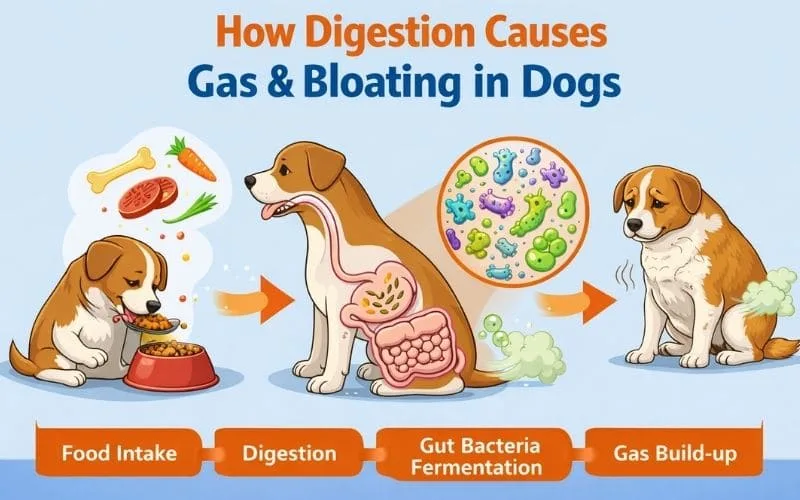
Gas and bloating are part of normal digestion—but problems start when gas production becomes excessive or gas gets trapped in the digestive tract. Understanding the difference helps explain why some dogs pass a little gas occasionally, while others struggle with frequent bloating and discomfort.
🍽️ Normal Digestion vs. Excess Gas
During digestion, small amounts of gas are produced as food breaks down in the stomach and intestines. This is normal. Excess gas happens when food isn’t digested efficiently, allowing more material to ferment in the gut. When this occurs regularly, dogs may experience bloating, pressure, and audible stomach noises.
😮💨 Swallowed Air (Aerophagia)
Some dogs swallow air while eating—especially fast eaters, anxious dogs, or those fed from raised bowls. This extra air can build up in the stomach and intestines, contributing to bloating shortly after meals. Slowing down eating habits often helps reduce this type of gas.
🦠 Fermentation in the Gut
When undigested carbohydrates or fibers reach the lower intestines, gut bacteria ferment them. This fermentation releases gases that can cause bloating and frequent flatulence. Diets that are hard to digest or poorly matched to a dog’s needs tend to increase this process.
🐕 Sensitive Digestion
Dogs with sensitive stomachs are more prone to gas and bloating because their digestive systems react more strongly to certain ingredients. Even minor diet changes or treats can disrupt digestion, leading to excess gas production.
Gas and bloating usually aren’t random—they’re closely tied to digestion quality, eating habits, and ingredient tolerance. Improving how food is digested is often the first step toward reducing uncomfortable gas in dogs.
Common Diet-Related Causes of Dog Gas
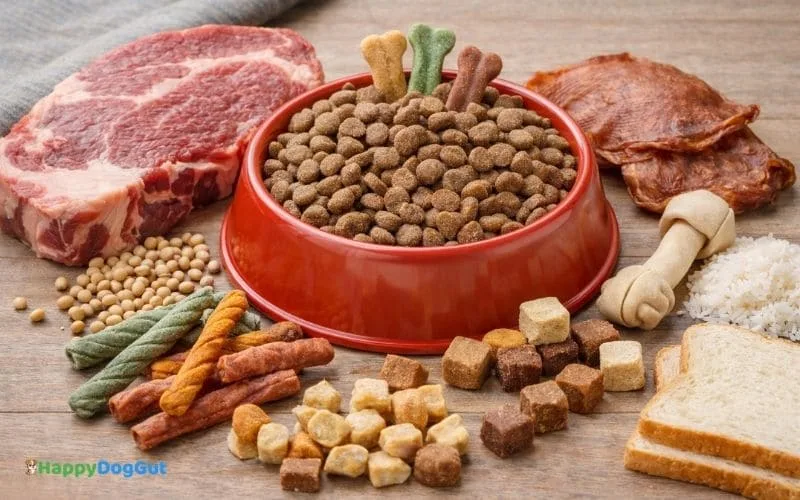
If you’re searching for the best dog foods for gas and bloating, it helps first to understand what commonly causes excess gas in the bowl-to-belly journey. In many dogs, ongoing gas issues are directly linked to how well food ingredients are digested and tolerated.
🔹 Poor Quality Ingredients
Low-quality dog foods often rely on fillers, by-products, artificial flavors, or preservatives that are harder to digest. When ingredients pass through the gut without being properly broken down, they ferment in the intestines—leading to increased gas and bloating.
Learning which ingredients tend to cause digestive trouble can help reduce gas over time; see Dog Food Ingredients to Avoid.
🔹 Hard-to-Digest Proteins
Not all proteins are equal. Some dogs struggle to digest certain protein sources, especially when they’re highly processed or not well matched to a sensitive stomach. Poor protein digestion leaves more material for gut bacteria to ferment, increasing gas and discomfort. Choosing more digestible protein sources is often a key step when switching to the best dog foods for gas and bloating.
🔹 Sudden Food Changes
Quickly switching dog food doesn’t give the digestive system time to adjust. This sudden shift can disrupt the balance of gut bacteria, leading to temporary spikes in gas, bloating, and soft stools. A gradual transition allows digestion to adapt and helps reduce unwanted gas. Our Dog Food Transition Guide explains how to switch foods more gently.
🔹 Excess Fiber or Fat
Fiber and fat both play important roles in digestion—but too much of either can increase gas. Excess fiber may ferment heavily in the gut, while high-fat diets can slow digestion and worsen bloating, especially in sensitive dogs. Balance matters more than extremes when choosing foods that reduce gas.
Excess gas and bloating are often signs that your dog’s gut bacteria are not balanced properly. To understand how gut health affects digestion, check 👉 How Gut Bacteria affects your dog’s overall health.
Diet-related gas is usually fixable. By focusing on ingredient quality, digestible proteins, gradual transitions, and balanced fiber and fat levels, many dogs experience noticeable relief—making it easier to find the best dog foods for gas and bloating that truly support digestive comfort.
Dogs with digestive discomfort or bloating may sometimes eat grass in an attempt to relieve stomach irritation. Learn more in Dog Eats Grass Then Vomits: Should You Worry?.
Signs Your Dog’s Gas Is Diet-Related
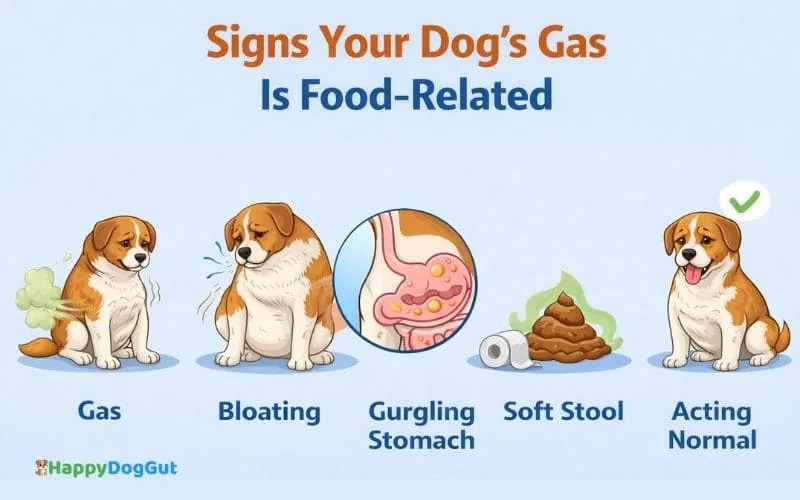
Not all gas is a cause for concern, but certain patterns strongly suggest that diet is the main trigger. Recognizing these signs can help you decide whether switching to the best dog foods for gas and bloating may improve your dog’s comfort.
💨 Excessive Farting
Occasional gas is normal, but frequent or unusually strong-smelling gas often points to food that isn’t being digested well. If gas increases shortly after meals or after certain treats, diet is a likely contributor.
🎈 Bloating After Meals
A visibly tight or distended belly following eating can signal slow digestion or excess gas production. This is especially common in dogs that eat quickly or struggle with certain ingredients.
🔊 Gurgling or Rumbling Stomach
Loud stomach noises (borborygmi) are a classic sign of gas moving through the intestines. When this happens regularly, it often reflects fermentation of undigested food rather than a one-off upset.
💩 Soft Stools or Inconsistent Bowel Movements
Gas and soft stools frequently go hand in hand. If your dog has looser stools but otherwise seems fine, it’s often diet-related rather than a serious illness. You can explore this pattern further in our guide on Loose Stool but Acting Normal.
🐶 Acting Normal Otherwise
One of the biggest clues that gas is food-related is when your dog remains playful, alert, and happy despite digestive symptoms. Normal energy levels alongside gas and bloating usually point toward dietary sensitivity rather than an underlying health problem.
When gas appears alongside meal timing, soft stools, or bloating—but your dog is otherwise acting normal—diet is often the most effective place to focus for relief.
What to Look for in the Best Dog Foods for Gas & Bloating
Choosing the best dog foods for gas and bloating isn’t about chasing trends—it’s about supporting clean digestion and minimizing ingredients that ferment or linger in the gut. These key features help reduce excess gas while keeping sensitive stomachs comfortable.
🍗 Easily Digestible Proteins
Proteins should be gentle on the stomach and easy to break down. When protein isn’t digested efficiently, it becomes fuel for gas-producing bacteria. Look for clearly named protein sources that your dog has tolerated well in the past, rather than heavily processed blends or vague meat meals.
🌾 Moderate Fiber (Not High)
Fiber helps regulate digestion, but too much—especially fermentable fiber—can worsen gas. The goal is balance: enough soluble fiber to support stool quality without overfeeding gut bacteria. Dogs prone to gas often do better on moderate-fiber diets rather than very high-fiber formulas; learn how fiber affects stools in High-fiber Dog Foods.
🥩 Low to Moderate Fat
Fat slows digestion. In sensitive dogs, high-fat foods can lead to bloating and lingering gas after meals. Foods with controlled fat levels tend to move through the gut more smoothly, reducing pressure and discomfort.
🚫 No Artificial Fillers or Additives
Artificial colors, flavors, sweeteners, and low-quality fillers add digestive workload without nutritional benefit. The fewer unnecessary additives, the easier it is for your dog’s system to digest meals cleanly—often resulting in less gas.
🦠 Prebiotics (Support role, Not overload)
Prebiotics can help nourish beneficial gut bacteria, but more isn’t always better. A small, balanced amount supports digestion without excessive fermentation. If you’re considering gut support beyond food, it’s helpful to understand how probiotics and prebiotics work together; see Best Probiotics for Dogs.
The best dog foods for gas and bloating focus on digestibility, balance, and simplicity—moderate fiber, controlled fat, gentle proteins, and minimal fillers—giving the gut what it needs without creating excess gas.
Best Dog Foods for Gas and Bloating

Dogs with frequent gas and bloating often do better on foods that are easy to digest, balanced in fiber and fat, and free from unnecessary fillers. Below are commonly used examples of dog foods commonly chosen for gas-prone and sensitive-stomach dogs. These are educational examples, not treatment recommendations.
1. Hill’s Science Diet Sensitive Stomach & Skin
Key ingredients: Chicken, Rice, Beet Pulp
Why it may reduce gas: Highly digestible ingredients reduce fermentation in the gut
Pros:
- Gentle formula, consistent quality
Cons:
- Not ideal for chicken-sensitive dogs
Best for: Dogs with gas plus sensitive digestion
Avoid if: Chicken intolerance
Good to Know: Often suggested for dogs that struggle with digestion consistency
Related: Sensitive Stomach Foods
2. Purina Pro Plan Sensitive Skin & Stomach (Salmon & Rice)
Key ingredients: Salmon, Rice, Prebiotic Fiber
Why it may reduce gas: Supports gut bacteria balance and smoother digestion
Pros:
- Moderate fiber, good palatability
Cons:
- Fish flavor not liked by all dogs
Best for: Chronic gas with soft stools
Avoid if: Fish intolerance
Good to Know: Frequently used when gas is linked to protein sensitivity
3. Royal Canin Digestive Care
Key ingredients: Highly Digestible Proteins, Targeted Fiber Blend
Why it may reduce gas: Optimized digestion reduces excess intestinal gas
Pros:
- Designed for digestive efficiency
Cons:
- Premium price
Best for: Dogs with frequent bloating after meals
Avoid if: Ingredient sensitivities
Good to Know: Often used when gas is linked to inefficient digestion
4. Wellness Simple Limited Ingredient Diet
Key ingredients: Single Protein, Limited Carbohydrates
Why it may reduce gas: Fewer ingredients = less digestive workload
Pros:
- Clean formula, fewer triggers
Cons:
- Not all dogs thrive on LID long-term
Best for: Ingredient-sensitive dogs
Avoid if: Needs higher fiber
Good to Know: Helpful when gas is linked to ingredient intolerance
Compare with limited-ingredient concepts in sensitive diets.
5. Blue Buffalo Basics Digestive Care
Key ingredients: Turkey, Potato, Pumpkin
Why it may reduce gas: Pumpkin provides gentle, soluble fiber
Pros:
- Supports stool quality
Cons:
- Some dogs react to legumes
Best for: Gas plus inconsistent stools
Avoid if: Legume sensitivity
Good to Know: Fiber balance plays a key role in gas control
6. Iams Advanced Health Digestion
Key ingredients: Chicken, Prebiotic Fiber
Why it may reduce gas: Supports gut bacteria without excess fermentation
Pros:
- Budget-friendly, widely available
Cons:
- Chicken-based
Best for: Mild to moderate gas
Avoid if: Chicken intolerance
Good to Know: Often a good starting option before specialty diets
7. Merrick Healthy Grains Digestive Health
Key ingredients: Deboned Chicken, Oats, Brown Rice
Why it may reduce gas: Gentle grains digest more predictably than some fillers
Pros:
- Balanced fiber, good taste
Cons:
- Higher protein than some sensitive dogs need
Best for: Dogs with gas linked to poor grain tolerance
Avoid if: Needs lower protein
Good to Know: Predictable digestion often means less gas
8. Wellness CORE Digestive Health (Wet Option)
Key ingredients: Turkey, Broth, Digestive Enzymes
Why it may reduce gas: Moisture improves digestion speed and comfort
Pros:
- Easier to digest, less bloating
Cons:
- Higher cost per serving
Best for: Dogs that bloat on dry food
Avoid if: Needs a strictly dry diet
Good to Know: Wet food can be useful for gas-prone dogs
See also: Best Wet Dog Foods.
🔑 Important Notes for Dog Owners
- Even the best dog foods for gas and bloating need 2–4 weeks of consistency to show results
- Switching foods too quickly can worsen gas
- Portion size and treat intake matter just as much as food choice
For dogs that prefer dry food but still struggle with gas, comparing options with our Best Kibble for Sensitive Stomachs guide can help narrow choices.
Best Wet Dog Foods for Gas & Bloating
For some dogs, switching to or adding wet food can noticeably reduce gas and bloating. Moisture-rich meals tend to move through the digestive system more smoothly, which can mean less fermentation in the gut—a common cause of excess gas. This is especially helpful for dogs with sensitive stomachs or those that seem bloated shortly after eating dry kibble.
💧 Moisture Aids Digestion
Wet dog foods contain significantly more water than dry kibble. This added moisture helps soften food during digestion, making it easier for enzymes to break nutrients down efficiently. When digestion is more complete, there’s less leftover material for gut bacteria to ferment—often resulting in less gas and milder stool odor.
🦠 Less Fermentation, Less Bloating
Because wet food is generally easier to digest, it may reduce the amount of gas produced in the intestines. Dogs that experience tight bellies, gurgling stomachs, or gas soon after meals sometimes do better when part of their diet includes wet food.
🥣 Mixing Wet and Dry Safely
You don’t always have to switch completely. Many dogs benefit from a mixed feeding approach, combining a small amount of wet food with their regular kibble. This can improve palatability and digestion without dramatically changing calorie intake. The key is to adjust portions carefully so total daily calories stay balanced.
If you’re considering this approach, reviewing options designed specifically for digestive comfort can help. Our guide to Best Wet Dog Foods for Sensitive Stomachs walks through what to look for and how to choose gentle formulas.
Wet food isn’t a cure-all, but for gas-prone dogs, added moisture and easier digestion often make it a valuable part of a gas- and bloating-friendly feeding plan.
Can Probiotics Help With Dog Gas?
Gut bacteria play a major role in how food is digested—and that directly affects whether dog gas and bloating become a problem. Probiotics are often discussed as a way to support digestion, but they work best when used thoughtfully.
🦠 The role of Gut Bacteria
A healthy balance of gut bacteria helps break down food efficiently and limits excess fermentation. When this balance is off, gas-producing bacteria can dominate, leading to bloating and frequent flatulence. Supporting a more balanced gut environment is why probiotics are sometimes used for gas-prone dogs.
✅ When Probiotics may Help
Probiotics may be useful when gas appears after diet changes, antibiotic use, or mild digestive upset. In these cases, the right strains in appropriate amounts can help digestion normalize over time, which may reduce gas as the gut adjusts.
⚠️ Why Overuse Can Worsen Gas
Adding too many probiotics—or introducing them too quickly—can overwhelm the digestive system. This often leads to more gas, not less, as bacteria compete and ferment food excessively. If you’ve noticed digestive issues after starting supplements, it’s worth understanding whether probiotics could be contributing.
Probiotics can support digestion, but they should complement a suitable diet—not replace it—when managing gas and bloating.
Feeding Tips to Reduce Dog Gas & Bloating

Even the best dog foods for gas and bloating work better when paired with smart feeding habits. Small adjustments in how and when your dog eats can significantly reduce gas buildup.
🍽️ Serve Smaller, More Frequent Meals
Large meals can overwhelm digestion, especially in sensitive dogs. Splitting daily food into smaller portions helps food move through the gut more smoothly, reducing fermentation and pressure.
🐢 Encourage Slow Eating
Fast eaters swallow extra air, which contributes to bloating. Slowing down meals—using puzzle bowls or spreading food out—can help limit air intake and post-meal discomfort.
🔄 Make Gradual Food Changes
Sudden diet switches disrupt gut bacteria and often lead to gas. A slow transition allows digestion to adapt and minimizes bloating. If your dog recently had digestive upset, following gentle feeding guidance—like what we outline in What to Feed a Dog After Diarrhea —can support a smoother adjustment.
🍪 Limit Treats and Table Scraps
Treats and human food are common triggers for gas. High-fat or highly processed extras often ferment in the gut and undo progress made with a good diet. Keeping treats minimal and consistent helps maintain digestive balance.
Reducing dog gas and bloating isn’t just about food choice—it’s about portion control, pacing, consistency, and restraint with extras. Combined, these habits often make a noticeable difference in digestive comfort.
When Gas & Bloating Is NOT Just Food
While diet is the most common reason dogs experience gas and bloating, there are times when food alone isn’t the full explanation. If digestive discomfort continues despite careful feeding, it’s important to consider other contributing factors—without jumping to conclusions.
😟 Stress and Anxiety
Stress can directly affect digestion. Changes in routine, travel, new pets, or separation anxiety may alter gut motility and bacterial balance, leading to gas and bloating even when the diet hasn’t changed.
🚫 Food Intolerance (Beyond Simple Gas)
Some dogs develop ongoing intolerance to specific ingredients over time. This can cause repeated gas, bloating, and stool changes rather than occasional discomfort. When intolerance is suspected, symptoms often overlap with loose stools or recurring digestive upset.
🩺 Chronic Gut Issues
Persistent gas and bloating may be part of a broader digestive pattern rather than a standalone problem. Dogs with recurring loose stools, urgency, or long-term digestive sensitivity often need a more structured diet approach. If gas is paired with frequent diarrhea, reviewing Diet Support for Chronic Diarrhea can provide helpful context.
When gas and bloating don’t improve with diet changes alone, looking at stress levels and longer-term gut patterns can help clarify next steps.
When to See a Vet (Red Flags)
Most gas-related issues are mild, but certain signs suggest it’s time to seek professional guidance rather than continuing to adjust food at home.
🚨 Painful or Severe Bloating
A hard, distended abdomen—especially if your dog seems uncomfortable or restless—should never be ignored.
🤢 Vomiting Alongside Gas
Gas paired with repeated vomiting points to more than simple digestive sensitivity and deserves prompt attention.
⚖️ Unexplained Weight Loss
If bloating or gas occurs alongside gradual weight loss, it may indicate poor nutrient absorption rather than a minor food issue.
😴 Lethargy or Behavior Changes
Low energy, withdrawal, or changes in behavior along with digestive symptoms can signal that something more is going on internally.
If any of these red flags appear, consult your veterinarian. Diet plays a powerful role in digestive comfort, but professional input helps ensure more serious issues aren’t overlooked.
FAQs: Dog Gas & Bloating
What dog food causes the least gas?
Dog foods that cause the least gas are usually those made with highly digestible proteins, moderate fiber, and minimal fillers. Simple ingredient lists tend to ferment less in the gut, which reduces gas production. Many dogs with sensitive stomachs do better on foods specifically formulated for easier digestion rather than high-protein or heavily processed diets.
Can grain-free food reduce gas in dogs?
Grain-free food can help some dogs, but it’s not a guarantee. Gas often improves when a dog avoids an ingredient they don’t tolerate—whether that ingredient is a grain or something else. Some grain-free foods are high in legumes, which can actually increase gas. Digestibility matters more than whether a food contains grains.
Why does my dog fart so much at night?
Nighttime gas is common because digestion continues while your dog is resting. Lying down can make gas movement more noticeable, and meals eaten later in the day may ferment overnight. Fast eating, rich dinners, or late-night treats often contribute to increased nighttime flatulence.
How long before diet changes help gas and bloating?
Most dogs need 2 to 4 weeks on a consistent diet before gas noticeably improves. Gut bacteria take time to adjust, and frequent food switching can delay results. Gradual improvements are normal, and patience usually leads to better long-term digestion.
Are treats a common cause of dog gas?
Yes, treats are a very common trigger. High-fat, highly processed treats or table scraps often ferment in the gut and undo the benefits of a good main diet. Reducing treat quantity or switching to simpler options frequently leads to less gas.
Is dog gas always something to worry about?
Occasional gas is normal and usually harmless. Concern arises when gas is persistent, painful, or paired with other symptoms like bloating, vomiting, or weight loss. In those cases, diet review and professional guidance are important.
Final Thoughts
Gas and bloating are very common digestive issues in dogs, and in most cases they’re more uncomfortable than serious. The key is understanding that occasional gas happens—but ongoing or excessive gas usually points to how food is being digested, not just how much your dog eats.
Among all the factors involved, diet matters the most. Ingredient quality, digestibility, portion size, and feeding habits all influence how much gas builds up in the gut. Choosing the best dog foods for gas and bloating, then sticking with them long enough to see results, often makes a noticeable difference.
Consistency is just as important as food choice. Constantly switching diets, adding extra treats, or reacting to every symptom can actually worsen gas. Instead, focus on observing patterns over time—when gas happens, what your dog ate, and whether other signs like bloating or soft stools appear alongside it.
If your dog also struggles with other digestive sensitivities, exploring Foods for Sensitive Stomachs can provide helpful guidance. For related issues like stool odor, our Dog Poop Smell Guide explains how digestion affects bowel movements. And when gas appears alongside ongoing loose stools, reviewing Diet Support for Chronic Diarrhea may help you connect the dots.
Most gas improves with the right diet and feeding habits, but veterinary guidance matters if symptoms worsen, become painful, or are paired with weight loss or lethargy. With patience, consistency, and thoughtful choices, many dogs find real relief from gas and bloating.

Hi, I’m Maddy, the writer behind HappyDogGut.com.I’m passionate about helping dog parents better understand gut health, sensitive stomachs, and nutrition through clear, practical, and research-based content. Every article is carefully researched using trusted veterinary and pet health resources, so you can make more informed decisions for your dog’s digestive health.Happy Gut = Happy Dog! 🐾
All content on Happy Dog Gut follows our Editorial Policy.