Colitis is a fairly common gut-related issue in dogs, especially those with sensitive digestive systems. Many dog owners first notice changes like loose stools, mucus in the poop, or sudden urgency to go outside. These symptoms can be confusing and stressful, particularly when a dog otherwise seems active and alert. It often leaves owners wondering what’s really going on — and more importantly, what to feed a dog with colitis to help support calmer digestion.
Diet plays a major role in how colitis symptoms show up day to day. While medications are sometimes discussed by veterinarians, food choices often have the biggest impact on stool consistency and overall gut comfort. This is where many owners feel stuck. Knowing what not to feed is one thing, but figuring out what to feed feels far more overwhelming, especially when symptoms flare unpredictably.
🟢 Dogs with colitis tend to do better with simple, consistent diets that reduce irritation in the colon. Understanding how diet supports gut health is also closely connected to broader Diet Support for Dogs with IBD, since these conditions often overlap in how they affect digestion.
🐾 Paying attention to stool details can also offer helpful clues. Changes in color, texture, or frequency often reflect how well a diet is being tolerated. Using a Dog Poop Color and Texture Guide can help owners better understand what they’re seeing.
This guide focuses on educational, diet-based support for dogs with colitis — not diagnosis or treatment — to help owners make calm, informed feeding decisions.
⚠️ This article is for educational purposes only and does not replace veterinary advice.
What Is Colitis in Dogs?
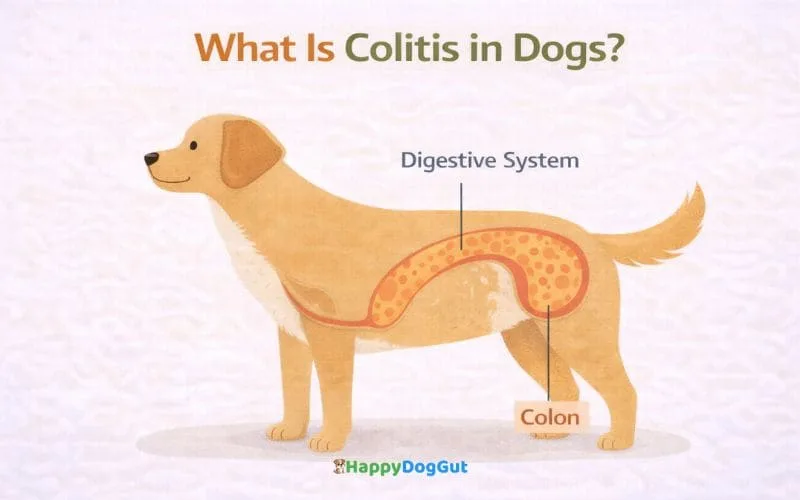
Colitis in dogs refers to inflammation of the colon, which is the lower part of the digestive tract responsible for absorbing water and forming stool. When the colon becomes irritated, it can struggle to do its job properly, leading to symptoms like loose stools, mucus in the poop, or an urgent need to go outside.
🟢 Colitis can involve Digestive Irritation, Immune-related Sensitivity, or a mix of both. In simple terms, the colon becomes more reactive than usual. For some dogs, this irritation is triggered by diet changes or food sensitivities. For others, stress or underlying gut imbalance may play a role. The exact cause can vary, which is why symptoms don’t look the same in every dog.
Colitis affects the lower digestive tract and can make stool formation more difficult when the colon is irritated. For a broader veterinary overview of Colitis in Dogs and its Digestive Impact, the American Kennel Club offers a helpful explanation based on clinical insight.
🐾 This is also why Diet matters so much for dogs with colitis. The colon is especially sensitive to what passes through it. Foods that are hard to digest, high in fat, or overly complex can increase irritation, while simple, gentle diets often help calm the digestive system.
Rather than focusing on labels or quick fixes, many owners find that supporting the gut with consistent, easily tolerated foods makes the biggest difference. Understanding colitis at this basic level helps explain why feeding choices are often the foundation of managing digestive comfort over time.
Why Diet Matters So Much for Dogs With Colitis
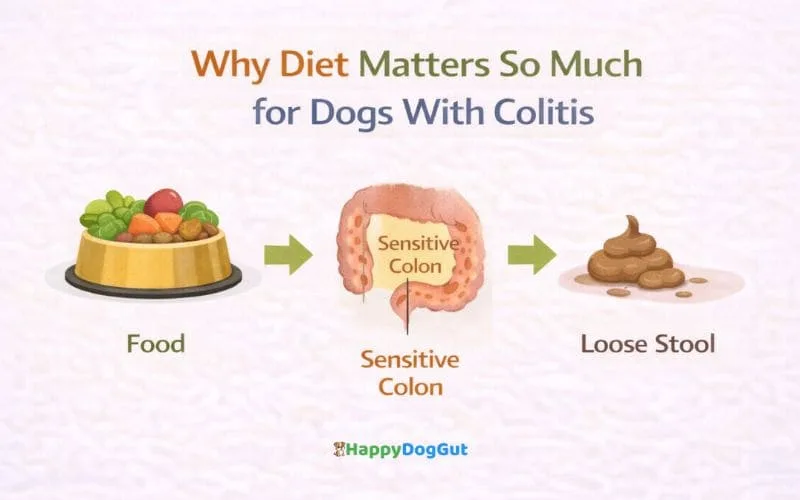
The colon plays a delicate role in digestion, and in dogs with colitis, it becomes especially sensitive. Because the colon is responsible for absorbing water and shaping stool, even small dietary changes can have a noticeable impact on stool consistency and urgency.
🟢 Certain foods can increase irritation in the colon. Ingredients that are harder to digest, higher in fat, or overly complex may cause stool to become looser or trigger mucus and discomfort. When the colon is already inflamed, it has less tolerance for dietary stress.
🐾 This is why Consistency and Simplicity are so important. Feeding the same gentle diet consistently allows the digestive system to settle and reduces the chances of repeated irritation. Frequent food changes or too many ingredients can keep the colon in a constant state of reaction.
Many dogs with colitis also show signs of general digestive sensitivity. Understanding the Causes of Sensitive Stomach in Dogs can help explain why certain foods lead to flare-ups while others feel easier on the gut.
By focusing on simple, well-tolerated foods and sticking with a steady feeding routine, owners can support calmer digestion and give the colon the best chance to recover from irritation over time.
Best Foods to Feed a Dog With Colitis
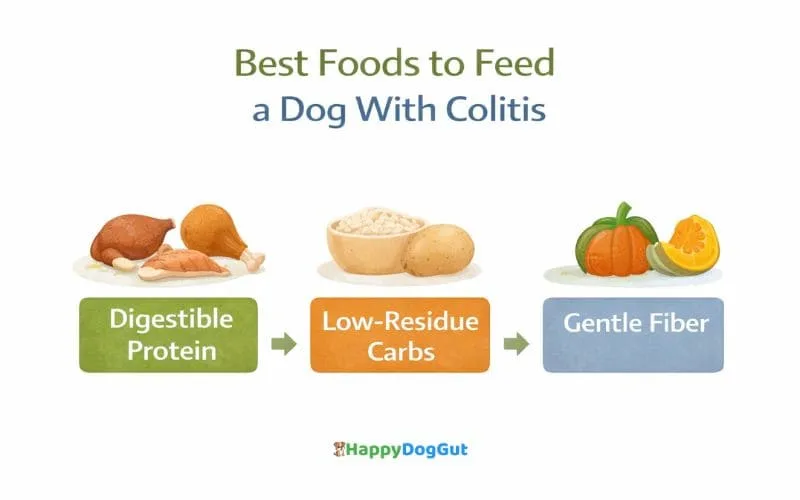
When a dog has colitis, the goal of feeding is to reduce irritation in the colon while supporting steady digestion. Simple, gentle foods are often better tolerated than complex or rich formulas.
🔹 Easily Digestible Proteins
🐾 Proteins that are easy to break down tend to be gentler on an inflamed colon. Simple options like chicken or turkey are commonly used because they’re mild and less likely to overwhelm digestion. These proteins help support muscle and energy needs without adding unnecessary digestive stress.
The key is keeping protein sources simple and consistent, rather than rotating frequently.
🔹 Simple, Low-Residue Carbohydrates
🟢 Low-residue carbohydrates create less waste in the digestive tract, which can help reduce stool volume and urgency. Ingredients like rice or potato are often included in colitis-friendly diets because they’re easy to digest and provide steady energy.
These carbs help form stool without overworking the colon, making them useful during periods of digestive sensitivity.
🔹 Moderate, Gentle Fiber
🧬 Fiber plays an important role in stool regulation, but balance matters. Too little fiber can worsen loose stools, while too much can increase irritation. Moderate amounts of gentle fiber can help add structure to stool and support more predictable bowel movements.
Some owners explore High-fiber Dog Foods for Firm Stool or look into Best Dog Foods for Chronic Diarrhea when finding the right balance for dogs with ongoing digestive issues.
Focusing on digestibility, simplicity, and moderation gives dogs with colitis the best chance at calmer, more consistent digestion.
Foods That May Worsen Colitis Symptoms
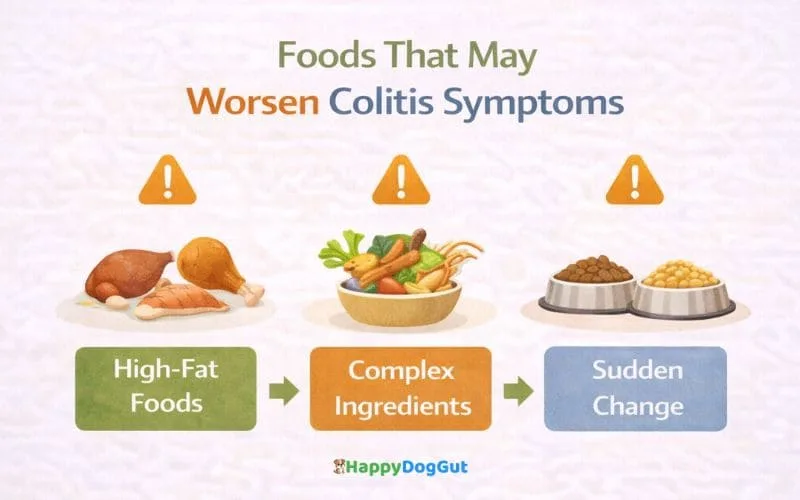
When a dog has colitis, certain foods can make symptoms worse by increasing irritation in the colon. Being aware of these common triggers helps owners avoid unnecessary flare-ups and keep digestion calmer.
🔹 High-Fat Foods
🟡 High-fat foods can be difficult for dogs with colitis to digest. Excess fat may speed up gut movement and reduce the colon’s ability to absorb water properly, leading to looser stools and increased urgency. Even foods that are otherwise healthy for some dogs can be too rich for a sensitive colon.
🔹 Too Many Ingredients
🐾 Diets with long ingredient lists can overwhelm an already irritated digestive system. Multiple proteins, fillers, or additives increase the chances of triggering a reaction. Dogs with colitis often do better on simpler formulas that reduce digestive workload and make it easier to identify what’s being tolerated.
Understanding Dog Food Ingredients to Avoid for Sensitive Stomachs can help owners recognize which components are more likely to cause irritation.
🔹 Sudden Diet Changes
⚠️ Abrupt food switches are a common trigger for colitis flare-ups. The colon needs time to adjust, and rapid changes can disrupt digestion, even when switching to a higher-quality food. Gradual transitions support smoother digestion and reduce stress on the gut.
Avoiding these common dietary pitfalls helps create a more stable feeding routine and gives dogs with colitis a better chance at consistent, comfortable digestion.
Wet Food vs Dry Food for Dogs With Colitis
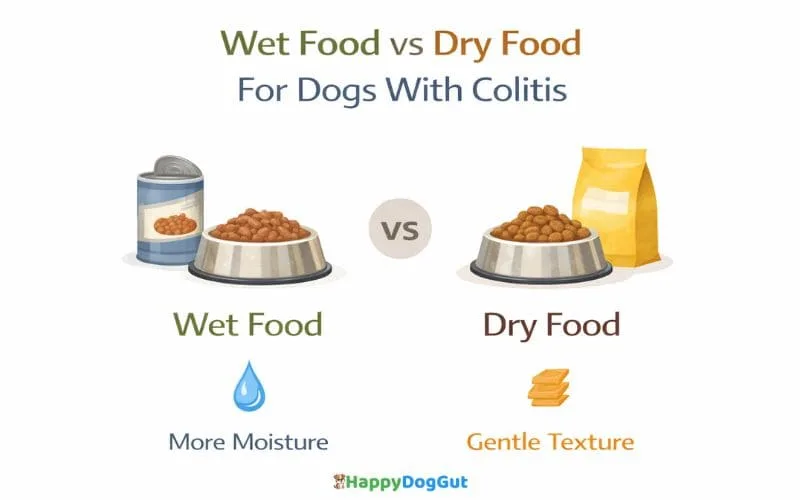
Choosing between wet and dry food can be challenging when a dog has colitis, as each option affects digestion differently. The best choice often depends on how an individual dog responds rather than one format being universally better.
🟢 Moisture Benefits of Wet Food
Wet food naturally contains more moisture, which can help soften stool and support hydration. For some dogs with colitis, added moisture makes digestion easier and reduces strain on the colon. Wet diets may also be gentler during flare-ups when stools are loose or frequent.
Many owners explore Best Wet Dog Foods for Sensitive Stomachs when looking for moisture-rich options that are easier on digestion.
🐾 Texture Tolerance and Chewing Comfort
Texture matters more than many owners realize. Some dogs tolerate the softer texture of wet food better, while others prefer the crunch of kibble, which can slow down eating. Texture tolerance can influence how food moves through the digestive system and how comfortable digestion feels overall.
⚖️ Individual Response Differences
There’s no one-size-fits-all answer for dogs with colitis. Some dogs do well on dry food when it’s simple and gentle, especially options designed for digestive sensitivity. Owners often compare Best Dog Kibble for Sensitive Stomachs to find formulas that balance digestibility and consistency.
Paying attention to your dog’s stool, comfort, and appetite over time helps guide whether wet food, dry food, or a combination works best.
Role of Fiber and Probiotics in Colitis Diets
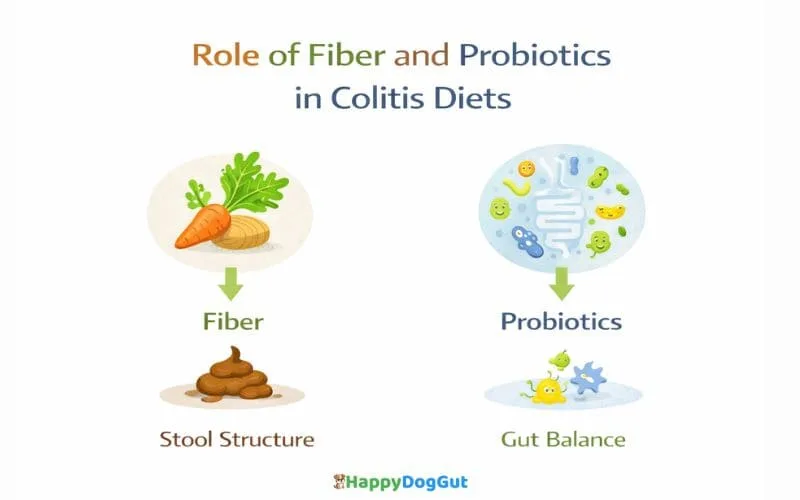
When managing colitis through diet, fiber and probiotics often come up as supportive tools. While they don’t work the same way for every dog, understanding their role can help owners make more informed feeding choices.
🟢 Soluble Fiber Support
Soluble fiber absorbs water and forms a gel-like substance in the gut, which can help regulate stool consistency. For dogs with colitis, this type of fiber may support more formed stools without irritating the colon. The key is moderation — too little fiber may worsen loose stools, while too much can increase discomfort.
Some owners look into Fiber Supplements for Dogs with Sensitive Stomachs to better understand how gentle fiber sources fit into a colitis-friendly diet.
🐾 Probiotics as Gut Balance Support
Probiotics are often used to support overall gut balance by introducing beneficial bacteria into the digestive system. In dogs with colitis, probiotics may help support digestive stability over time, especially when the gut microbiome feels unsettled.
It’s important to view probiotics as supportive, not corrective. Responses vary, and some dogs adjust quickly while others need a slower introduction. Learning more about Best Probiotics for Dogs with Sensitive Stomachs can help owners understand what gentle gut support typically looks like.
Together, fiber and probiotics may complement a simple, consistent diet — but observation and patience remain essential when supporting dogs with colitis.
Feeding Schedule & Portion Tips for Colitis Dogs
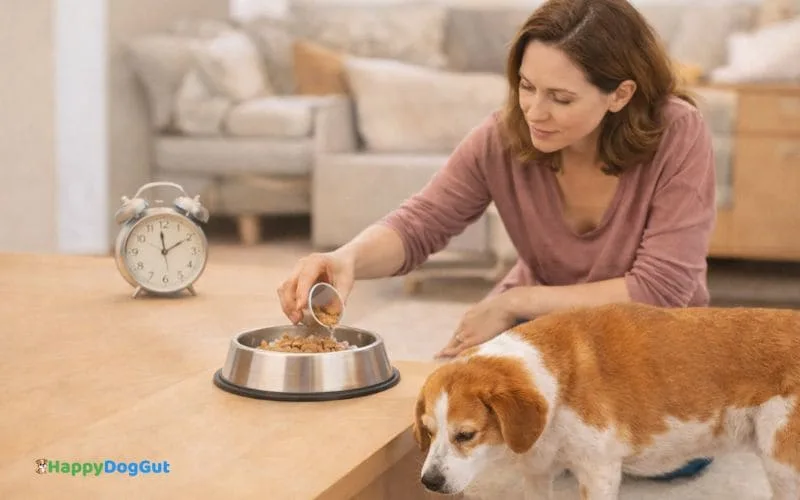
When a dog has colitis, how and when you feed can be just as important as what you feed. Thoughtful feeding routines help reduce stress on the colon and support steadier digestion.
🟢 Smaller, More Frequent Meals
Feeding smaller portions spread throughout the day can be gentler on the digestive system. Large meals may overload an already sensitive colon, increasing urgency or loose stools. Smaller meals allow food to move through the gut more gradually, which many dogs with colitis tolerate better.
🐾 The Importance of a Consistent Routine
Dogs with colitis often respond best to predictable routines. Feeding at the same times each day helps regulate digestion and bowel movements. Sudden schedule changes can disrupt gut rhythm and trigger stool changes, even if the food itself hasn’t changed.
⚖️ Avoiding Overfeeding
Overfeeding can place extra strain on the digestive system and worsen colitis symptoms. Even healthy foods can cause problems if portions are too large. Monitoring portion sizes and adjusting slowly allows you to see how your dog’s digestion responds without overwhelming the gut.
Watching stool consistency, energy levels, and appetite over time provides valuable clues about whether feeding amounts and timing are working well. Small, thoughtful adjustments often lead to steadier digestive comfort.
Dogs That May Need Extra Diet Caution With Colitis
Not all dogs experience colitis the same way. Some dogs may need extra care and closer observation when it comes to diet choices, as their digestive systems tend to react more quickly to change.
🐾 Dogs With a History of Chronic Diarrhea
Dogs that have dealt with ongoing or recurring diarrhea often have a more sensitive colon. Even gentle diet changes can temporarily affect stool consistency. For these dogs, sticking to simple foods and making slow adjustments is especially important to avoid triggering flare-ups.
🟡 Dogs Showing Signs of Food Intolerance
Food intolerance can overlap with colitis symptoms, making digestion more unpredictable. Dogs that react to certain ingredients may experience loose stools, gas, or discomfort after eating. Understanding the Signs of Food Intolerance in Dogs can help owners recognize patterns and avoid ingredients that may worsen colitis-related symptoms.
⚖️ Stress-Sensitive Dogs
Stress can have a strong impact on gut health. Dogs that are sensitive to routine changes, travel, or environmental stress may show digestive symptoms even when their diet hasn’t changed. In these cases, owners may notice Loose Stool but Acting Normal, which can be confusing but is fairly common in stress-related gut reactions.
For dogs in these groups, consistency, patience, and careful observation play a key role in supporting calmer digestion and managing colitis more effectively.
When Diet Alone May Not Be Enough
Diet plays an important role in supporting dogs with colitis, but it’s not always the complete answer. In some cases, symptoms may continue despite careful feeding and consistent routines.
🟡 Persistent Symptoms
If loose stools, mucus, or urgency continue over time without improvement, it may signal that additional factors are affecting your dog’s digestive health. Ongoing symptoms suggest that diet support alone may not be enough to fully address what’s going on in the gut.
🐾 Why veterinary guidance matters
A veterinarian can help evaluate the broader picture, including diet history, symptom patterns, and overall health. Professional guidance helps ensure that dietary strategies are appropriate and that important factors aren’t being overlooked.
⚖️ Diet as Support, Not a Cure
It’s important to view diet as a supportive tool rather than a cure for colitis. Feeding choices can help reduce irritation and promote calmer digestion, but they work best as part of a thoughtful, balanced approach.
When symptoms continue despite careful dietary changes, it may help to understand how vets diagnose chronic GI issues in dogs, including which tests are used to rule out deeper inflammatory or structural causes.
🩺 Vet Reminder: If symptoms persist or worsen, a veterinarian can help determine the most appropriate next steps while supporting your dog’s long-term digestive comfort.
FAQs: What to Feed a Dog With Colitis
What should I feed a dog with colitis flare-ups?
During flare-ups, dogs with colitis often tolerate simple, gentle foods best. Easily digestible proteins paired with low-residue carbohydrates can help reduce irritation in the colon. Keeping meals consistent and avoiding extra ingredients is important. Sudden diet changes during flare-ups can make symptoms worse, so simplicity and routine usually work better than variety.
Is Chicken and Rice good for dogs with colitis?
Chicken and Rice are commonly used because they are easy to digest and gentle on the gut. For some dogs, this combination can help calm digestion during short-term flare-ups. However, not every dog responds the same way, and this approach may not be ideal long-term. Observation helps determine whether stool quality improves or remains unchanged.
Can Dry Food worsen colitis?
Dry food can worsen colitis in some dogs, but not in all cases. Lower moisture content and certain ingredient combinations may be harder for sensitive colons to tolerate. Some dogs do well on dry food when it’s simple and designed for digestive sensitivity. Others may benefit from added moisture or softer textures, depending on individual tolerance.
How long does diet take to help colitis?
Dietary changes don’t usually work overnight. Many dogs need several weeks of consistent feeding before improvements become noticeable. Gradual stool changes, reduced urgency, or less mucus are often early signs of progress. Patience is important, as frequent changes can interrupt the gut’s ability to settle.
Can stress affect colitis in dogs?
Yes, stress can have a significant impact on colitis symptoms. Changes in routine, travel, new environments, or anxiety can trigger digestive upset even when the diet stays the same. Stress-related colitis often appears as loose stool without other signs of illness. Maintaining predictable routines can help reduce stress-related flare-ups.
Are Probiotics helpful for colitis?
Probiotics may support gut balance in some dogs with colitis, but results vary. They are often used as supportive tools rather than standalone solutions. Some dogs adjust well, while others may experience temporary stool changes. Introducing probiotics slowly and observing your dog’s response is usually the most helpful approach.
Should dogs with colitis avoid treats?
Many dogs with colitis do better when treats are limited or carefully chosen. Extra treats can introduce new ingredients that irritate the colon. If treats are used, keeping them simple and consistent with the main diet helps reduce digestive surprises. Sudden treat changes can trigger stool changes even when meals stay the same.
Can Puppies get colitis?
Yes, puppies can experience colitis, and their digestive systems are often more sensitive to changes. Diet consistency is especially important during growth. Because puppies are still developing, stool changes can happen quickly, making observation and gradual feeding adjustments particularly important.
Final Thoughts
Diet plays a key supportive role in helping dogs with colitis feel more comfortable day to day. While food choices don’t replace professional care, the right diet can help reduce irritation in the colon and support steadier digestion over time.
🟢 Simplicity and Consistency Matter Most.
Dogs with colitis often respond better to simple diets fed consistently, rather than frequent changes or complex ingredient lists. Giving the gut time to adjust helps avoid unnecessary flare-ups.
🐾 Observation works Better than Fast Changes.
Small improvements in stool texture, urgency, or comfort often appear gradually. Watching patterns over time provides clearer guidance than making quick switches based on a single bad day.
⚖️ Every Dog’s Gut responds differently.
What feels gentle for one dog may not work the same way for another. Finding the right balance usually takes patience, routine, and a willingness to adjust slowly.
If your dog’s digestive issues overlap with broader gut inflammation, learning more about Diet Support for Dogs with IBD can add helpful context. For owners ready to explore practical food options, Best Dog Foods for Chronic Diarrhea offers targeted guidance. And when gut balance needs extra support, understanding Probiotics for Dogs with Sensitive Stomachs can help you approach supplementation thoughtfully.
Taking a calm, informed approach gives most dogs with colitis the best chance at long-term digestive comfort.

Hi, I’m Maddy, the writer behind HappyDogGut.com.I’m passionate about helping dog parents better understand gut health, sensitive stomachs, and nutrition through clear, practical, and research-based content. Every article is carefully researched using trusted veterinary and pet health resources, so you can make more informed decisions for your dog’s digestive health.Happy Gut = Happy Dog! 🐾
All content on Happy Dog Gut follows our Editorial Policy.