
An upset stomach is one of the most common digestive issues dogs experience at some point in their lives. Vomiting once or twice, loose stools, gurgling sounds, or a temporarily reduced appetite can catch dog owners off guard—especially when these signs appear suddenly. While many cases are mild, they often leave owners asking the same question: how long does a dog’s upset stomach last?
The confusion usually comes from not knowing what’s normal versus what might be a cause for concern. A brief stomach upset after a diet change or stressful event can look very different from digestive issues that linger or worsen. Without clear timelines, it’s easy to worry too early—or wait too long—before taking action.
In many dogs, mild stomach upset resolves on its own with time and gentle support. However, the duration can vary depending on the cause, your dog’s digestive sensitivity, and how their gut responds to changes. This is why understanding timelines matters just as much as recognizing symptoms.
It’s also common for dogs to experience digestive changes while still behaving normally. Many owners notice loose stools while their dog remains active and playful.
This guide breaks down typical recovery timelines, common causes, and what owners can safely observe at home. You’ll also find gentle guidance on How to Calm a Dog’s Upset Stomach Naturally —all with education in mind, not diagnosis.
⚠️ This article is for educational purposes only and does not replace veterinary advice.
What Counts as an Upset Stomach in Dogs?
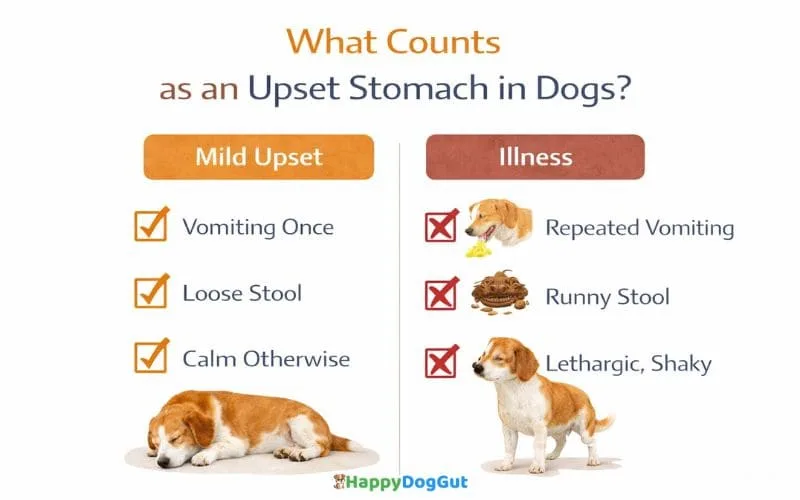
An upset stomach in dogs usually refers to mild, short-term digestive discomfort rather than a serious illness. These episodes are common and often happen when the digestive system is temporarily irritated but still functioning overall.
🟢 Mild Digestive upset may include signs such as:
- Vomiting once or twice within a short period
- Loose or softer-than-usual stool
- Gurgling or rumbling sounds from the stomach
- A brief drop in appetite or skipping a meal
In many cases, dogs with a mild upset stomach still seem alert, responsive, and interested in their surroundings. These signs often improve on their own as the digestive system settles.
Mild stomach upsets in dogs are often caused by irritation of the digestive tract, similar to gastroenteritis, and many cases improve within a short time with supportive care; you can learn more about Gastroenteritis and Upset Stomach in dogs from trusted veterinary resources.
⚠️ How this differs from illness
Digestive illness usually involves symptoms that are more intense, last longer, or affect your dog’s overall behavior. Ongoing vomiting, persistent diarrhea, lethargy, or a noticeable decline in appetite may suggest that something more than a simple upset stomach is going on.
The key difference is duration and progression. Mild stomach upset tends to be short-lived and gradually improves, while illness often worsens or fails to resolve over time.
Understanding what counts as a typical upset stomach helps owners stay calm, observe symptoms thoughtfully, and avoid unnecessary worry when digestive changes are brief and mild.
Common Causes of a Dog’s Upset Stomach
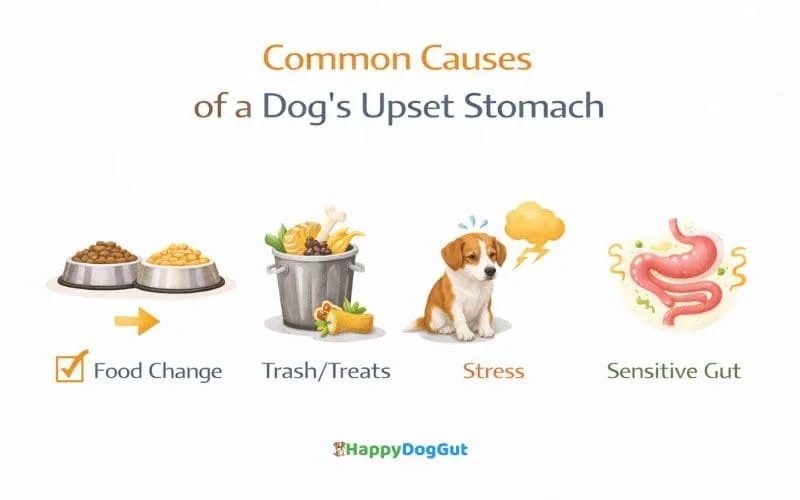
An upset stomach in dogs can happen for many everyday reasons. In most cases, it’s triggered by temporary digestive stress rather than a serious problem.
🟡 Sudden Food Change
Dogs thrive on consistency. Switching dog food too quickly — even to a higher-quality option — can disrupt digestion. The gut needs time to adjust to new ingredients, and without a gradual transition, vomiting or loose stools may appear.
🟡 Dietary Indiscretion (Trash, Treats, Table Scraps)
Eating something unusual is one of the most common causes of stomach upset. Getting into the trash, eating unfamiliar treats, or consuming rich table scraps can overwhelm the digestive system and lead to short-term discomfort. 🐾
🟡 Mild Stress or Routine Changes
Stress doesn’t just affect behavior — it can impact digestion too. Travel, visitors, schedule changes, or environmental stress can trigger stomach upset in some dogs, even when their diet hasn’t changed.
🟡 Underlying Gut Sensitivity
Some dogs simply have more sensitive digestive systems. These dogs may react to minor changes that other dogs tolerate easily. Understanding What Causes Sensitive Stomach in Dogs can help explain why stomach upset happens more frequently in certain dogs.
Recognizing these common causes helps owners respond calmly and focus on observation rather than assuming the worst.
How Long Does a Dog’s Upset Stomach Last on Average?
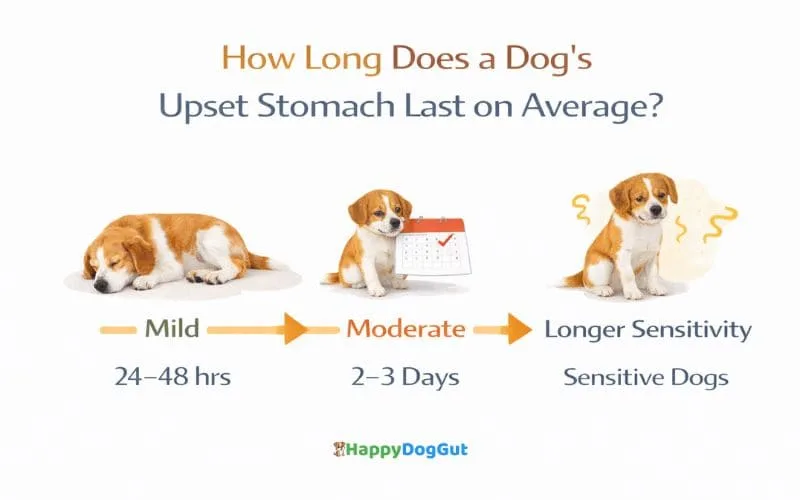
The length of a dog’s upset stomach can vary depending on the cause, overall gut health, and how the digestive system responds. Looking at general timelines can help owners understand what’s typical and when closer observation is needed.
🔹 Mild Upset (Diet or Stress Related)
🟢 Typical Duration: 24–48 hours
Mild stomach upset caused by a quick food change, mild stress, or eating something unusual often resolves within a day or two. During this time, symptoms like soft stool or brief vomiting usually improve on their own as the gut settles.
Dogs often remain active and alert during mild upsets, which is a reassuring sign.
🔹 Moderate Digestive Upset
🟡 Typical Duration: 2–3 days with gradual improvement
Moderate upset may involve ongoing loose stools or reduced appetite for a couple of days. Improvement tends to happen gradually rather than suddenly. As long as symptoms are easing and your dog’s energy remains fairly normal, this timeframe is often still considered within a normal range.
Supporting digestion with gentle food choices can be helpful. Some owners explore Dog Foods for Loose Stool when stool consistency takes longer to normalize.
🔹 Ongoing Digestive Sensitivity
⚠️ Longer timelines are possible
Dogs with sensitive stomachs or a history of digestive issues may take longer to recover. In these cases, stomach upset may come and go rather than resolving quickly, especially if triggers aren’t fully identified.
Understanding these timelines helps owners stay calm, track progress, and avoid rushing into unnecessary changes when digestion simply needs time to rebalance.
While many upset stomachs resolve on their own, diarrhea that follows certain patterns may need closer attention. Learning when to worry about diarrhea in dogs helps owners know when observation is enough and when it’s time to take the next step.
Signs Your Dog’s Stomach Is Improving
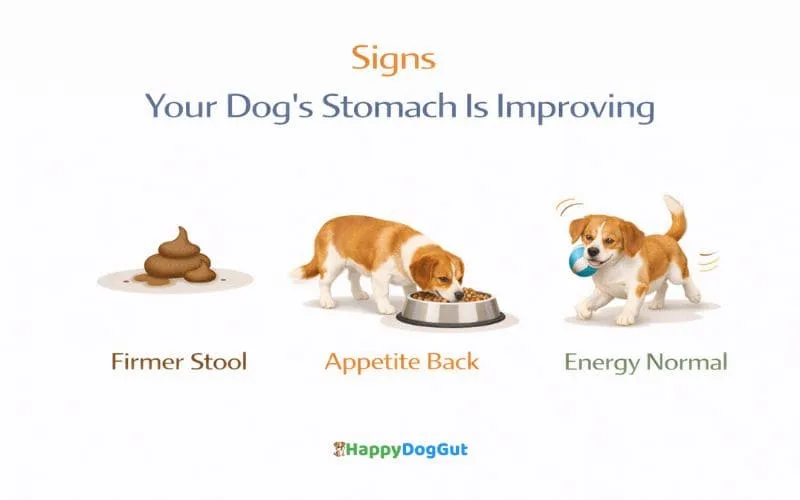
When a dog is getting over an upset stomach, improvement usually shows up in small, steady ways. These signs help owners feel reassured that digestion is moving in the right direction.
🟢 Firmer Stool
One of the clearest signs of improvement is stool becoming more formed. It may not look perfect right away, but less watery stool or fewer urgent bowel movements usually means the gut is settling.
🍽️ Normal Appetite Returning
As stomach discomfort eases, most dogs begin eating more normally. Showing interest in meals and finishing food is often a positive sign, even if digestion isn’t fully back to normal yet.
🐾 Energy Levels Normalizing
Dogs whose stomachs are improving tend to act like themselves again. Normal playfulness, alertness, and engagement with daily routines suggest that discomfort is easing.
These signs don’t always appear all at once. Looking for gradual progress — rather than instant results — helps owners stay calm and recognize when recovery is underway.
Home Care Support During a Mild Upset Stomach
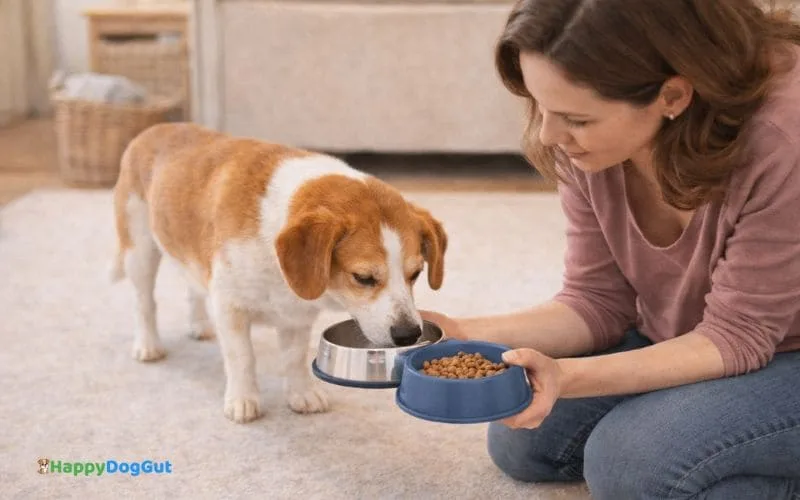
When a dog has a mild upset stomach, gentle home care and observation are often enough to support recovery. The goal is to reduce digestive workload while allowing the gut time to settle.
⏸️ Short Food breaks
In some mild cases, a brief pause from regular meals may help calm the digestive system. This isn’t about withholding food for long periods, but rather giving the stomach a short reset so irritation can ease. Every dog responds differently, so close observation is important.
🍚 Bland, Gentle Diet concept
Once eating resumes, simple foods are often easier to tolerate than rich or complex meals. Bland diets focus on digestibility and consistency, helping the gut return to normal function gradually. Learning What to feed a Dog after Diarrhea can provide helpful guidance during this stage.
💧 Hydration is especially important
Loose stools or vomiting can affect hydration levels, even during mild stomach upset. Making sure your dog has consistent access to fresh water supports digestion and overall comfort as recovery progresses.
Some owners also explore simple home-prepared options like Homemade Chicken and Rice for Dogs with diarrhea to better understand gentle feeding approaches, keeping changes minimal and temporary.
Supporting digestion calmly at home helps many dogs recover without unnecessary stress or rushed decisions.
When an Upset Stomach Is NOT Considered Normal
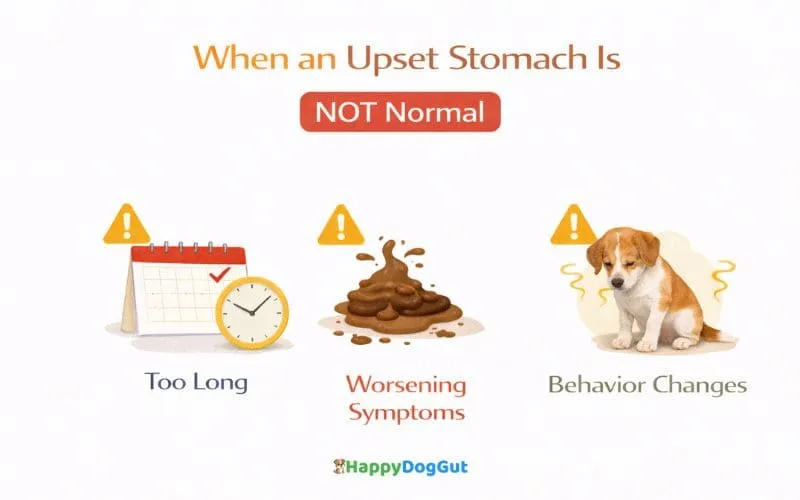
Most mild upset stomachs in dogs resolve on their own, but there are situations where digestive symptoms go beyond what’s typically expected. Knowing these signs helps owners decide when closer attention is needed.
⚠️ Symptoms lasting longer than expected
If vomiting or loose stools continue beyond the usual recovery window and show little improvement, it may indicate that the stomach upset isn’t resolving on its own. Duration often matters more than severity when deciding whether something is normal.
⚠️ Worsening Diarrhea or Vomiting
Digestive upset that becomes more frequent, more watery, or more intense over time deserves closer monitoring. Symptoms that escalate instead of gradually improving are not typical of a mild upset stomach.
⚠️ Noticeable behavior changes
Changes in behavior can be an important clue. Lethargy, disinterest in food for an extended period, or reduced interaction may suggest that digestive discomfort is affecting your dog more than expected.
Staying calm and observing patterns over time is key. When symptoms don’t follow a typical improvement path, it’s reasonable to pause and consider whether additional support may be needed.
When to See a Veterinarian
Most mild upset stomachs in dogs improve with time and gentle care, but there are situations where reaching out to a veterinarian is the right next step. Knowing when to do so helps owners act thoughtfully rather than out of worry.
🕒 Timeline-based triggers
If digestive symptoms continue beyond the expected recovery window without improvement, it may be time to seek professional guidance. A stomach upset that lingers longer than typical can signal that additional factors are involved.
🔁 Repeated Vomiting
Vomiting that happens repeatedly, especially over a short period, places extra stress on the digestive system. When vomiting doesn’t slow down or return to normal eating habits, it’s a sign that closer evaluation may be helpful.
💧 Signs of Dehydration
Loose stools or vomiting can affect hydration levels. Reduced water intake, dry gums, or less frequent urination may suggest dehydration, which deserves attention even when other symptoms seem mild.
🩺 A veterinarian can help assess whether symptoms are within a normal range or whether further support is needed, especially when digestive upset doesn’t follow a typical recovery pattern.
Dogs That May Take Longer to Recover
Not all dogs recover from an upset stomach at the same pace. Some dogs naturally need more time for their digestive system to settle, even when symptoms are mild.
Dogs with sensitive stomachs often react more strongly to small dietary or routine changes. Their digestion may take longer to normalize after an upset, and symptoms like soft stool can linger. Feeding consistency plays a big role for these dogs, which is why many owners look into Best Dog foods for Sensitive Stomachs to support steadier digestion.
Puppies and senior dogs may also take longer to bounce back. Puppies have developing digestive systems that can be easily disrupted, while senior dogs often digest food more slowly. In both cases, even mild stomach upset can last a bit longer than expected without indicating a serious problem.
Dogs with chronic gut issues may experience repeated or prolonged digestive upset. When the gut is already sensitive, recovery timelines tend to stretch out, especially if triggers aren’t fully controlled. Owners managing ongoing stool issues often explore Best Dog foods for Chronic Diarrhea to help support long-term digestive balance.
Understanding these differences helps set realistic expectations and reduces unnecessary worry when recovery takes longer for certain dogs.
During digestive upset, some dogs may start eating grass and vomit shortly afterward. To understand whether this is normal, Check Dog eats Grass then Vomits: Should you worry?.
FAQs: Dog Upset Stomach Timeline & Care
How long is too long for a dog’s upset stomach?
For most dogs, a mild upset stomach improves within 24–48 hours. If symptoms continue beyond a few days without any improvement, it may no longer be considered typical. Duration matters more than intensity—ongoing signs suggest the digestive system may need additional support or evaluation.
Can stress cause stomach upset in dogs?
Yes, stress can absolutely affect digestion. Changes in routine, travel, visitors, or anxiety can trigger loose stools or vomiting, even when diet stays the same. Stress-related stomach upset often resolves once routines return to normal, though sensitive dogs may take longer to settle.
Should I withhold food if my dog vomits?
In some mild cases, a short break from regular meals may help the stomach calm down. This is not about long-term food restriction, but rather giving digestion time to reset. Observation is important—appetite usually returns as the stomach feels better.
How long does diarrhea from a food change last?
Diarrhea caused by a sudden food change often improves within 1–3 days once digestion begins to adjust. Gradual improvement is a positive sign. If stool doesn’t start firming up or worsens, it may suggest that the change was too abrupt or not well tolerated.
Can probiotics help upset stomachs?
Probiotics may support gut balance in some dogs, especially when digestion feels unsettled. However, responses vary, and some dogs experience temporary stool changes during adjustment. Probiotics are best viewed as supportive tools rather than quick fixes.
Is one day of vomiting normal for dogs?
Occasional vomiting—especially once or twice—can happen with mild stomach upset. If vomiting stops and your dog otherwise seems comfortable, it’s often not a cause for concern. Repeated vomiting or lack of improvement over time is more important to watch.
When should I worry about Dehydration?
Dehydration becomes a concern if vomiting or diarrhea continues and your dog isn’t drinking normally. Signs like dry gums, reduced urination, or low energy may indicate fluid loss. Even mild digestive upset can affect hydration if it lasts long enough.
Do puppies recover slower from stomach upset?
Puppies can take longer to recover because their digestive systems are still developing. They also react more quickly to changes in diet or environment. Close observation and gentle feeding routines are especially important for younger dogs.
Final Thoughts
Most upset stomachs in dogs are short-lived and resolve with time, especially when symptoms are mild and your dog otherwise seems comfortable. While digestive changes can be unsettling to watch, they’re often part of how the gut responds to everyday triggers like diet changes or mild stress.
🟢 Observation Matters more than panic.
Watching trends—such as whether stool is gradually firming, appetite is returning, and energy levels are normalizing—provides far more insight than reacting to a single episode. Small improvements over time usually signal that recovery is underway.
🐾 Diet Consistency supports recovery.
Keeping meals simple and consistent helps the digestive system settle. Frequent switches or overcorrections can slow progress. When gentle support is needed, learning How to Calm a Dog’s upset Stomach Naturally can offer practical, observation-based guidance.
⚖️ Every Dog’s gut responds differently.
Some dogs bounce back quickly, while others need a bit more time—especially those with sensitive digestion. If stool changes linger, exploring Dog foods for Loose Stool may help support steadier digestion. And for dogs that benefit from extra gut balance, understanding Probiotics for Dogs with Sensitive Stomachs can help you approach supplementation thoughtfully.
Taking a calm, informed approach helps most dogs recover comfortably—and helps owners feel confident along the way.

Hi, I’m Maddy, the writer behind HappyDogGut.com.I’m passionate about helping dog parents better understand gut health, sensitive stomachs, and nutrition through clear, practical, and research-based content. Every article is carefully researched using trusted veterinary and pet health resources, so you can make more informed decisions for your dog’s digestive health.Happy Gut = Happy Dog! 🐾
All content on Happy Dog Gut follows our Editorial Policy.