

Some dogs do well on a single protein for months—or even years—before subtle issues begin to appear. Maybe stools become softer, itching increases slightly, or ear flare-ups return without an obvious cause. This pattern often leads owners to wonder whether repeated exposure to the same protein could be contributing to new sensitivities.
That’s where the idea of a protein rotation strategy for sensitive dogs comes into the conversation. Many pet parents hear that rotating proteins like duck, venison, and rabbit may help reduce food sensitization. But there’s often confusion about how rotation should work—and whether it’s truly helpful or just another trend.
It’s important to understand the difference between random food switching and a structured rotation plan. Changing foods every few weeks without a strategy can actually create more digestive instability. A thoughtful rotation, on the other hand, is planned, gradual, and based on confirmed tolerance—not guesswork.
If you’re already exploring options like Best Novel Protein Dog foods or have completed an Elimination diet for food Allergies, rotation may be something you’re considering next.
In this guide, we’ll walk through how protein rotation works, when it makes sense, and when it doesn’t—so you can make informed decisions without unnecessary changes.
⚠️ This article is for educational purposes only and does not replace veterinary advice.
What Is a Protein Rotation Strategy for Sensitive Dogs?
A protein rotation strategy for sensitive dogs is a structured feeding approach where tolerated protein sources are rotated on a planned schedule to reduce prolonged exposure to a single ingredient. The goal isn’t constant change—it’s controlled variety.
🔄 A Planned Rotation schedule—not random switching
In a structured rotation plan, each protein is fed consistently for a defined period—often 8 to 12 weeks—before transitioning to another well-tolerated protein. For example:
- Duck → 3 months
- Venison → 3 months
- Rabbit → 3 months
Each transition is gradual, allowing the digestive system to adjust smoothly.
✔️ Used after confirmed tolerance
Protein rotation should only begin after you’ve established that your dog tolerates each protein individually. This usually means the dog has completed a stable feeding period—sometimes following an elimination diet—without flare-ups of itching, ear infections, or loose stool.
🚫 Not for active allergy flares
If your dog is currently experiencing active symptoms—such as persistent diarrhea, inflamed ears, or increased itching—rotation is not the first step. Stability must come before variation. Introducing new proteins during a flare can make it harder to identify triggers.
⚠️ Common misuse to avoid
Frequent food changes without a plan are not the same as protein rotation. Switching brands every few weeks or mixing multiple proteins in one formula defeats the purpose and can increase digestive stress.
When done thoughtfully, protein rotation is a maintenance strategy—not a treatment. It supports long-term dietary balance in sensitive dogs who are already stable.
Why Some Dogs Become Sensitive to Repeated Proteins
Not every dog develops food sensitivities—but when they do, repeated exposure to the same protein can sometimes play a role. This doesn’t mean common proteins are “bad.” It simply reflects how the immune system and digestive tract respond over time.
🧠 Immune Exposure Over Time
When a dog eats the same protein daily for months or years, the immune system is repeatedly exposed to that ingredient. In some dogs, this prolonged exposure may increase the likelihood of developing sensitivity. It’s not guaranteed—but it’s possible, especially in dogs already prone to allergies.
🔥 Chronic Low-level Inflammation
Some dogs live with mild digestive irritation that goes unnoticed at first. Over time, small changes—like softer stools or occasional itching—may gradually become more frequent. This can happen when the body begins reacting more strongly to a protein it once tolerated.
🧬 Gut Barrier Function Matters
The lining of the digestive tract acts as a protective barrier. If that barrier becomes compromised due to stress, illness, or ongoing gut imbalance, proteins may interact more directly with the immune system. This can increase the chance of sensitivity developing.
🧬 Genetic Predisposition
Certain breeds and individual dogs are simply more allergy-prone. For these dogs, repeated protein exposure may contribute to sensitivity patterns more easily than in others.
🥩 Limited Ingredient Overuse
Ironically, feeding one “safe” protein long term—especially in limited ingredient formulas—can sometimes increase exposure concentration. While limited ingredient diets are helpful tools, using the same single protein for years without variation may not suit every sensitive dog.
If your dog is showing subtle changes like intermittent itching or soft stool, reviewing the Signs of Food Intolerance in dogs can help you identify early patterns.
Protein sensitivity doesn’t happen overnight. It usually develops gradually—and understanding the underlying factors helps you make calmer, more informed decisions about diet strategy.
Can Protein Rotation Reduce Long-Term Exposure to One Protein?
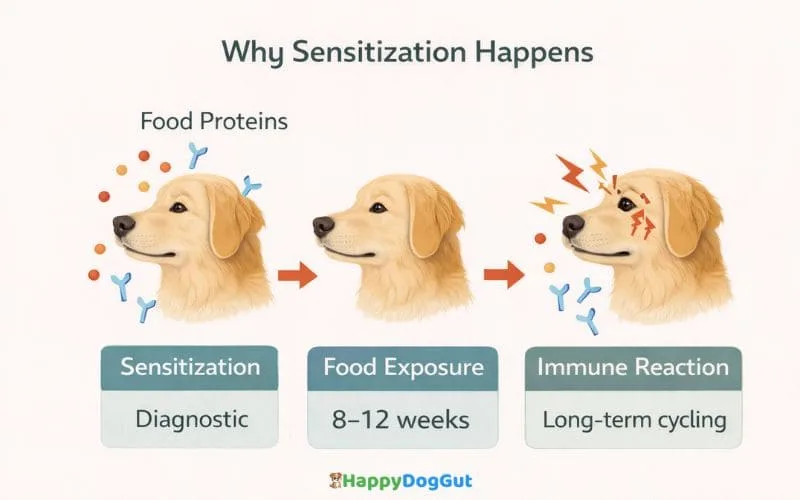
The idea behind protein rotation is fairly simple: by varying protein sources over time, you may reduce prolonged exposure to any single ingredient. But does that actually prevent food sensitization? The answer is nuanced.
🧠 The Theory behind Rotation
The concept is based on immune exposure. When a dog eats the same protein every day for years, the immune system repeatedly encounters that ingredient. In theory, rotating proteins may reduce the chance of the body becoming overly reactive to one source.
🌈 Exposure Diversity Concept
Some veterinarians believe that offering dietary diversity—once tolerance is confirmed—may support immune balance. Instead of concentrating exposure on a single protein like chicken for life, a planned rotation between duck, venison, and rabbit spreads exposure across multiple tolerated sources.
However, diversity must be controlled. Random, frequent switching can destabilize digestion rather than support it.
🔬 What Science Supports—and what it doesn’t confirm
Currently, there isn’t strong clinical evidence proving that protein rotation definitively prevents food allergies. Most support for rotation comes from practical experience and immune theory rather than large controlled studies.
That means rotation should be viewed as a strategic option—not a guaranteed prevention tool.
⚖️ Realistic Expectations
Protein rotation may help reduce prolonged exposure in sensitive dogs, but it does not eliminate genetic predisposition or environmental triggers. It’s also not necessary for every dog.
When used appropriately—after stability is established—rotation can be part of a thoughtful long-term plan. The key is structure, patience, and observation rather than frequent reactive changes.
How to Build a Protein Rotation Plan (Duck → Venison → Rabbit)
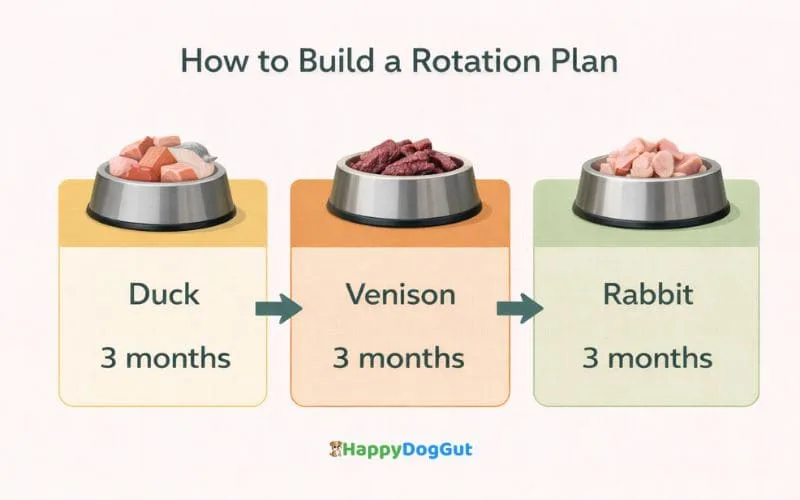
A successful protein rotation plan is structured and slow—not reactive. The goal is long-term stability, not frequent change. Before rotating, your dog should already be stable on a single tolerated protein with firm stool, calm skin, and no active flare-ups.
⏳ Use 8–12 week blocks
Each protein should be fed consistently for about 8–12 weeks. This gives the digestive system enough time to fully adjust and allows you to observe subtle changes in stool, itching, ear health, and overall comfort.
Rotating too quickly—such as every 3–4 weeks—can create confusion and digestive instability.
✔️ Rotate only After Stability
Never introduce a new protein during a flare-up. If your dog is experiencing loose stool or increased itching, focus on restoring stability first. Rotation is a maintenance strategy, not a troubleshooting tool.
📋 Example Structured Sequence
Here’s what a practical rotation might look like once tolerance is confirmed:
- Duck – 3 months
- Venison – 3 months
- Rabbit – 3 months
After completing the sequence, you can cycle back to duck—provided no symptoms appeared during previous exposure.
🐶 Monitor Stool and Skin closely
During each block, track:
- Stool consistency
- Frequency of bowel movements
- Paw licking or scratching
- Ear redness or odor
- Coat quality
If symptoms return during a specific protein phase, that protein may need to be removed from the rotation.
For dogs using simplified formulas during rotation, exploring Best Limited Ingredient Dog foods can help you identify options that minimize unnecessary additives and mixed proteins.
A protein rotation plan works best when it’s calm, gradual, and documented. The structure—not the speed—is what protects sensitive dogs long term.
When NOT to Use a Protein Rotation Strategy
Protein rotation can be helpful in stable dogs—but there are clear situations where it’s not appropriate. Using rotation at the wrong time can delay progress and make symptoms harder to interpret.
🚫 During An Active Elimination Diet Phase
If your dog is currently completing an elimination diet, rotation should not be introduced. The purpose of an elimination trial is to isolate a single protein and observe the body’s response. Adding variety during this phase defeats the diagnostic process and creates unnecessary variables.
💩 When Diarrhea or Symptoms are Unstable
If your dog has ongoing loose stool, frequent diarrhea, or increasing itching, focus on stabilizing digestion first. Introducing new proteins during active symptoms can make it difficult to determine what’s helping—or worsening—the situation.
🥩 Confirmed Allergy to Multiple Proteins
Some dogs have reacted to several protein sources over time. In these cases, rotation may increase exposure rather than reduce it. A more controlled approach, sometimes involving hydrolyzed formulas, may be more appropriate.
🧬 Dogs on Hydrolyzed Diets
If your dog requires a hydrolyzed protein diet due to confirmed sensitivities, rotation between intact proteins is generally not advised. Hydrolyzed diets work differently by breaking proteins into smaller components to reduce immune recognition. You can learn more about this approach in Hydrolyzed Protein Dog Food Explained.
Protein rotation is a maintenance strategy for stable dogs—not a solution during flare-ups or diagnostic phases. Timing and context matter just as much as the protein choice itself.
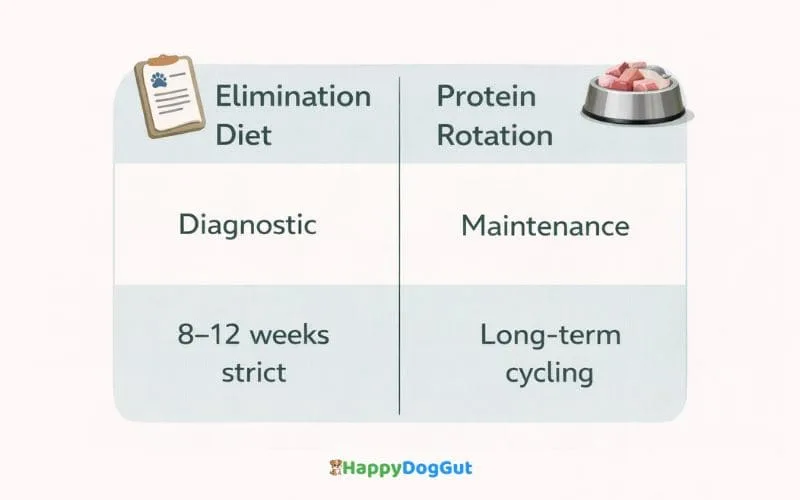
Protein Rotation Strategy for Sensitive Dogs vs Elimination Diet — What’s the Difference?
The protein rotation strategy for sensitive dogs is often confused with an elimination diet—but they serve very different purposes. Understanding that difference prevents costly mistakes.
🔍 Elimination diet = Diagnostic tool
An elimination diet is used to identify whether a specific ingredient is triggering symptoms. It involves feeding one controlled protein and carbohydrate source for 8–12 weeks with strict rules and no extras. The goal is clarity—confirming or ruling out food allergies.
If you’re unfamiliar with the structure of this process, our guide on Elimination Diet for Food Allergies explains how it works step-by-step.
🔄 Protein Rotation = Maintenance Strategy
Rotation, on the other hand, is used after stability has already been established. It involves cycling between proteins your dog has already proven to tolerate. The goal is long-term dietary diversity—not diagnosis.
⏰ Timing Matters
Rotation should never begin during an active elimination trial or flare-up. Diagnosis always comes first. Maintenance strategies only follow once symptoms are under control.
⚠️ Common Confusion
Some owners start rotating proteins when symptoms appear, thinking variety will fix the issue. In reality, that often adds confusion. If you don’t know which protein is safe yet, rotation can mask patterns rather than clarify them.
In simple terms:
- Elimination diet finds the trigger.
- Protein rotation manages exposure long-term.
Used in the right order, both strategies can complement each other. Used incorrectly, they can delay progress and create uncertainty.
Mistakes That Can Backfire
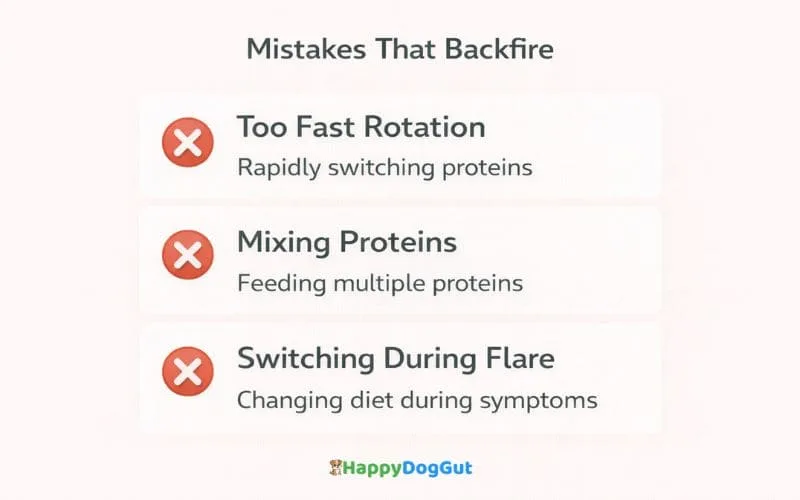
Protein rotation can be helpful when done correctly—but certain mistakes can undo the benefits and create more digestive instability than protection.
⏩ Rotating Too Quickly
Switching proteins every few weeks doesn’t give the gut enough time to adapt. Sensitive dogs need stability before variety. Most structured plans use 8–12 week blocks for a reason. Rapid rotation can lead to softer stool, increased gas, or subtle skin changes that are hard to interpret.
🔥 Switching During a Flare
Introducing a new protein while your dog is already experiencing Itching, Ear Inflammation, or Diarrhea adds confusion. It becomes difficult to know whether symptoms are worsening because of the flare—or because of the new protein.
Stability should always come first.
🥩 Mixing Proteins
Combining duck and venison in the same formula—or feeding two different protein-based foods together—defeats the purpose of rotation. The goal is controlled exposure to one protein at a time, not variety within the same meal.
📦 Using Multi-Protein Blends
Some commercial foods list multiple protein sources in one recipe. While these formulas may work for healthy dogs, they make monitoring reactions nearly impossible in sensitive dogs. Limited, clearly defined protein sources are easier to evaluate.
📊 Not Tracking Symptoms
Without tracking stool consistency, itching levels, and ear health, it’s easy to overlook subtle patterns. A simple weekly log can reveal whether a specific protein is truly tolerated or quietly contributing to symptoms.
Protein rotation works best when it’s intentional, patient, and documented. Without structure, it turns into random switching—which rarely supports sensitive digestion long term.
Is Protein Rotation Safe for Puppies?
Protein rotation can be considered in some young dogs—but extra care is needed during growth. Puppies are not just “small adults.” Their nutritional requirements are higher and more specific.
🐾 Growth Nutrition Comes First
Puppies need carefully balanced levels of protein, fat, calcium, phosphorus, and essential nutrients to support bone development and immune health. Any rotation plan must ensure that each formula used is complete and balanced for growth—not just labeled for “all life stages” without verification.
🔒 Stability Before Variety
Before thinking about rotation, a puppy should first demonstrate stable digestion on one well-tolerated diet. Frequent changes during early development can create unnecessary digestive disruption. Stability helps the gut mature properly.
🩺 Veterinary Guidance is Strongly Recommended
Because puppies have narrower nutritional margins, most veterinarians prefer to oversee diet adjustments. If protein rotation is considered, it should be slow, structured, and based on confirmed tolerance—not trial-and-error switching.
In short, protein rotation isn’t automatically unsafe for puppies—but growth nutrition and digestive stability must always take priority. Careful planning matters more in young dogs than in adults.
FAQs: Protein Rotation Strategy for Sensitive Dogs
Does rotating proteins prevent allergies?
Protein rotation may reduce prolonged exposure to a single ingredient, which in theory could lower the risk of developing sensitivity. However, there is no strong scientific evidence proving that rotation completely prevents food allergies. It should be viewed as a maintenance strategy—not a guaranteed prevention tool.
How often should I rotate dog food?
For sensitive dogs, rotation is typically done in structured 8–12 week blocks. This allows enough time to evaluate tolerance before transitioning. Rotating too frequently can create digestive instability and make it difficult to identify patterns.
Can I rotate every month?
Monthly rotation is usually too fast for sensitive dogs. Short intervals don’t allow the digestive system to fully adjust. Unless guided by a veterinarian for a specific reason, longer stability periods are generally preferred.
Is duck better than chicken long-term?
No protein is automatically “better” long-term. Duck may be helpful if a dog has reacted to chicken, but if chicken is well tolerated, it isn’t inherently harmful. The key factor is your individual dog’s tolerance—not the popularity of a specific protein.
What if my dog reacts during rotation?
If symptoms like itching, loose stool, or ear irritation appear after introducing a new protein, pause the rotation. Return to the last well-tolerated protein and allow symptoms to settle. That protein may need to be removed from future rotation cycles.
Should I rotate grains too?
Grain rotation is generally less critical than protein rotation. Most food sensitivities are linked to protein sources rather than carbohydrates. If your dog tolerates a carbohydrate well, constant changes are usually unnecessary.
Is rotation needed for all dogs?
No. Many healthy dogs do perfectly well on a single balanced diet for years. Protein rotation is primarily considered for dogs with known sensitivities or those prone to food-related flare-ups—not as a requirement for every pet.
Can rotation help chronic diarrhea?
If chronic diarrhea is related to protein sensitivity, rotation—after stability is achieved—may help manage long-term exposure. However, active chronic diarrhea should be stabilized first. Rotation is not a treatment for ongoing GI distress but may support maintenance once triggers are identified.
Final Thoughts
When it comes to sensitive digestion, structured decisions always work better than random switching. A thoughtful plan provides clarity. Frequent, reactive food changes usually create more confusion than solutions.
Stability should always come first. Before considering rotation, your dog should be doing well on a single, tolerated protein with firm stool, healthy skin, and no active flare-ups. Once that foundation is in place, rotation becomes a maintenance strategy—not a troubleshooting tool.
It’s also important to remember that protein rotation is not a cure for food allergies or chronic digestive issues. It doesn’t eliminate genetic predisposition or environmental triggers. Instead, it helps manage long-term exposure in dogs that have already demonstrated tolerance to specific proteins.
The key is observation. Monitor stool consistency, itching patterns, ear health, and overall energy. Small changes over time often tell a clearer story than dramatic shifts.
If you’re exploring options to build a stable rotation plan, reviewing Best Novel protein dog foods can help you compare suitable protein sources. For simplified formulas, Best Limited Ingredient Dog foods may support clearer ingredient control. And for dogs dealing with deeper inflammatory patterns, understanding Diet Support for Dogs with IBD provides additional long-term perspective.
With structure, patience, and monitoring, protein rotation can become a steady part of your dog’s long-term gut health strategy—not just another trend.

Hi, I’m Maddy, the writer behind HappyDogGut.com.I’m passionate about helping dog parents better understand gut health, sensitive stomachs, and nutrition through clear, practical, and research-based content. Every article is carefully researched using trusted veterinary and pet health resources, so you can make more informed decisions for your dog’s digestive health.Happy Gut = Happy Dog! 🐾
All content on Happy Dog Gut follows our Editorial Policy.



Pingback: Common Mistakes During Dog Food Transition (Don’t Do These)