
As dogs age, it’s common for digestion to change. Many owners begin noticing softer stool, occasional gas, or mild stomach upset in their senior years—even when the diet hasn’t changed. This often raises an important question: is this just normal aging, or does my dog now need a different approach to food?
A well-balanced senior dog diet for sensitive stomachs becomes especially important during this stage of life. Aging digestion naturally slows down. Stomach acid levels may decrease, enzyme production can shift, and the gut microbiome may become less diverse. These changes don’t automatically mean illness—but they can make older dogs more sensitive to heavy meals, high-fat foods, or sudden diet switches.
Many pet parents feel unsure whether they should move to a “senior formula” or simply adjust portions and ingredients. It’s also easy to confuse normal digestive aging with more persistent concerns. If your dog has softer stools but still seems playful and energetic, reviewing Why Does My Dog Have Soft Stools but is Acting Normal can provide helpful context. You can also explore broader options in Best Dog Foods for Sensitive Stomachs.
In this guide, we’ll walk through how digestion changes with age and what to feed senior dogs with sensitive stomachs—focusing on structured, practical guidance rather than guesswork.
⚠️ This article is for educational purposes only and does not replace veterinary advice.
Why Senior Dogs Develop Sensitive Stomachs
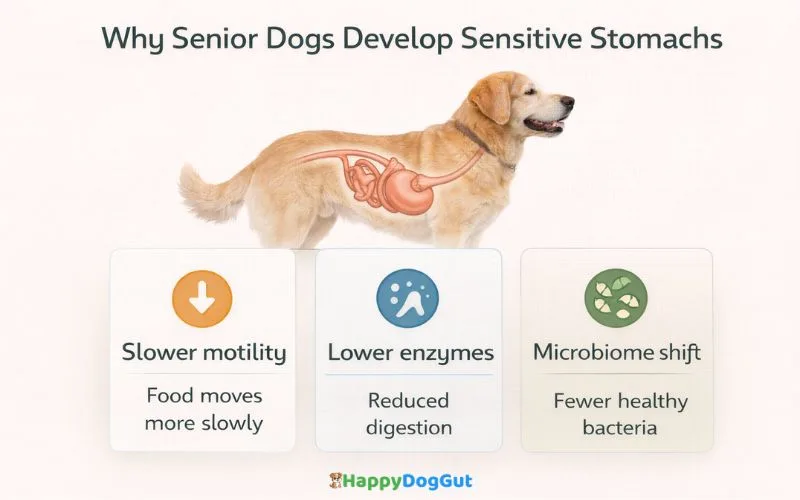
As dogs move into their senior years, digestive changes are common. These shifts are usually gradual—not sudden—but they can make older dogs more prone to softer stool, gas, or mild stomach upset.
🕒 Slower Digestive Motility
Aging can slow the movement of food through the gastrointestinal tract. When digestion takes longer, nutrients may be processed differently, and stool consistency can change. Slower motility may also increase sensitivity to rich or high-fat meals.
🧪 Reduced Enzyme Efficiency
Digestive enzymes help break down protein, fat, and carbohydrates. In senior dogs, enzyme production may become less efficient, making heavier meals harder to process. This can contribute to bloating or softer stool over time.
🦠 Changes in the Gut Microbiome
The balance of “good” bacteria in the gut often shifts with age. A less diverse microbiome can reduce digestive resilience, meaning older dogs may not tolerate sudden food changes as well as they once did.
🍽️ Lower Stomach Acid Levels
Stomach acid plays an important role in digestion and nutrient absorption. Some senior dogs produce less acid, which can affect how well food is broken down and how efficiently nutrients are absorbed.
💪 Reduced Muscle tone in the GI tract
The muscles that help move food through the intestines may weaken slightly with age. This can influence stool regularity and consistency.
💊 Medication Impact
Many senior dogs take medications for joint pain, heart conditions, or other chronic issues. Some medications can affect appetite, gut balance, or stool quality, indirectly contributing to digestive sensitivity.
None of these changes automatically signal illness. In many cases, they simply reflect normal aging. Understanding these factors helps owners make thoughtful diet adjustments rather than reacting to every minor digestive shift.
What Is the Ideal Senior Dog Diet for Sensitive Stomachs?
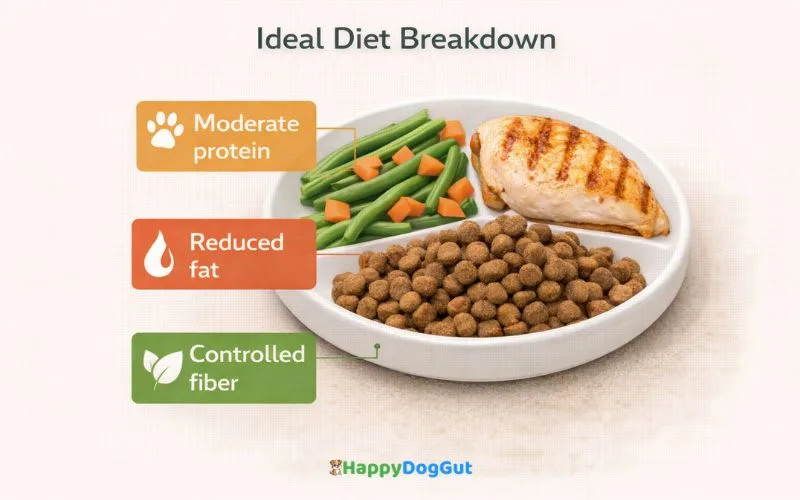
Choosing the right senior dog diet for sensitive stomachs means focusing on balance and digestibility—not drastic restriction. Older dogs still need high-quality nutrition, but their digestive system often benefits from a gentler approach.
🥩 Moderate, High-quality Protein
Senior dogs still require adequate protein to maintain muscle mass, immune function, and overall vitality. The key is quality over excess. Highly digestible protein sources are easier on aging digestion than heavy, multi-protein blends.
🥑 Reduced Fat—without going extreme
Fat digestion can slow with age, and overly rich meals may lead to softer stools. A moderately reduced-fat diet often works well for senior dogs with sensitive stomachs. However, fat shouldn’t be drastically cut unless recommended by a veterinarian, as it still supports energy and nutrient absorption.
🍚 Easily Digestible Carbohydrates
Simple carbohydrates—such as rice or potato—are often better tolerated than complex, heavily processed blends. Easily digestible carbs can support stool consistency without overwhelming the digestive tract.
🌾 Controlled, Balanced Fiber
Too little fiber may contribute to irregular stool, while too much can cause gas or loose stool. A moderate amount of soluble fiber often supports better stool formation and gut balance in seniors.
🚫 Avoid Heavy Multi-protein formulas
Diets containing multiple protein sources in a single recipe can make digestion more complicated for sensitive seniors. Simpler ingredient lists are often easier to tolerate. Exploring options in Best Limited Ingredient Dog Foods can help identify formulas with fewer unnecessary additions.
The ideal diet for a senior dog with digestive sensitivity is not about cutting everything out—it’s about simplifying ingredients while maintaining complete, balanced nutrition. Stability and consistency matter more than constant experimentation.
The Role of Lower Fat Diets in Aging Dogs
As dogs age, their ability to digest fat can change. While fat is an essential nutrient that supports energy, skin health, and nutrient absorption, it may not be processed as efficiently in senior years.
🧪 Fat Digestion often slows with age
The pancreas produces enzymes that help break down fat. In older dogs, enzyme efficiency may decrease slightly, making rich meals harder to tolerate. This doesn’t mean seniors can’t eat fat—it just means moderation becomes more important.
💩 High-fat Meals can contribute to Softer stool
Meals that are too rich may lead to looser stool, gas, or mild digestive discomfort in sensitive seniors. Some owners notice that switching to a moderately lower-fat formula improves stool consistency within a few weeks.
⚠️ Pancreatic Sensitivity Risk
Older dogs can be more sensitive to sudden high-fat meals, especially if they’ve been on a consistent diet for years. While not all seniors develop pancreatic issues, avoiding heavy, greasy treats and abrupt diet changes can help reduce digestive stress.
⚖️ Balanced vs. Ultra low-fat
It’s important not to overcorrect. Extremely low-fat diets are rarely necessary unless specifically recommended by a veterinarian. Fat still plays a key role in maintaining coat health and energy levels. The goal is balance—not elimination.
For many senior dogs with sensitive stomachs, a moderately reduced-fat, highly digestible diet offers the best compromise between digestive comfort and nutritional adequacy.
Food Texture Matters for Senior Digestion
As dogs age, texture can play a bigger role in how well they tolerate food. It’s not just about ingredients—how the food is presented can influence digestion, hydration, and overall comfort.
🥣 Wet vs. Dry Tolerance
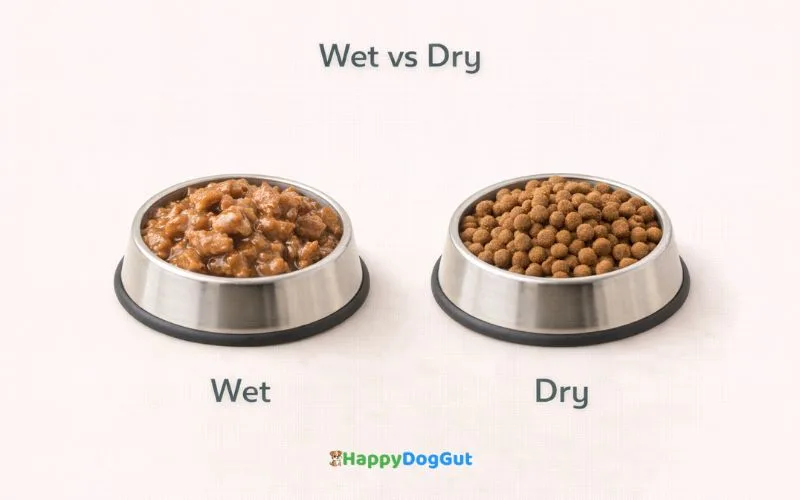
Some senior dogs digest wet food more comfortably because of its higher moisture content and softer texture. Wet food can be easier to chew and may feel gentler on slower digestion. If you’re comparing options, reviewing Best Wet dog foods for sensitive stomachs can help you evaluate suitable formulas.
On the other hand, many older dogs continue to do well on dry food—especially if the formula is highly digestible. Our guide to Best Dog Kibble for sensitive stomachs explores balanced dry options designed for digestive support.
💧 Hydration Benefits
Senior dogs are at higher risk of mild dehydration, especially if they’re less active or take medications. Wet food naturally increases moisture intake, which may support stool consistency and overall gut function.
🦷 Dental Comfort
Dental sensitivity or worn teeth can make hard kibble uncomfortable. If chewing becomes difficult, dogs may swallow food quickly, which can contribute to gas or mild stomach upset. Softer textures can reduce that strain.
🔹 Smaller Kibble size
Even when feeding dry food, smaller kibble pieces may be easier for senior dogs to chew thoroughly. Better chewing supports smoother digestion.
Ultimately, the best texture depends on your dog’s comfort and tolerance. Monitoring how stool, appetite, and chewing behavior respond to different textures helps you choose what works best—not just what’s labeled for seniors.
Joint + Gut Support in Senior Dogs
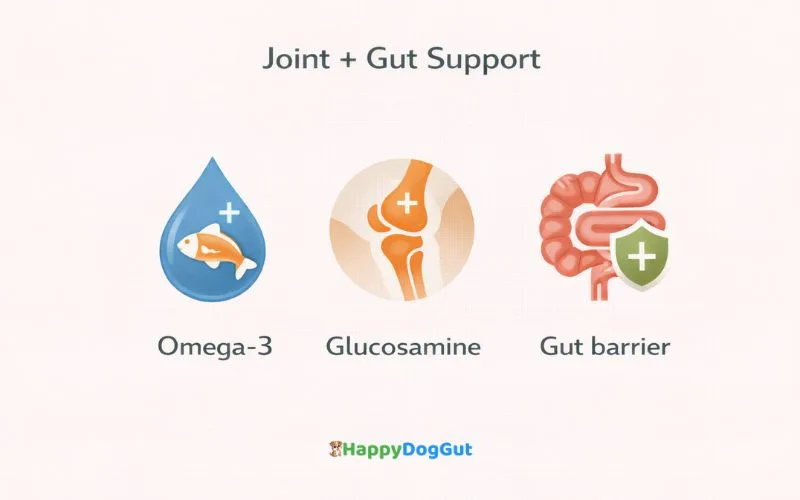
In senior dogs, joint health and gut health are more connected than many owners realize. Aging often brings low-grade, chronic inflammation that can affect both mobility and digestion.
🔥 The link between Chronic Inflammation and Digestion
As dogs age, inflammatory processes may become more active. This can influence joint stiffness as well as gut sensitivity. Supporting overall inflammatory balance can benefit both systems at the same time.
🐟 The role of Omega-3 Fatty acids
Omega-3s, particularly from fish oil, are known for their anti-inflammatory properties. In senior dogs, they may help support joint comfort while also promoting a healthier gut lining. Balanced omega-3 intake can contribute to better stool consistency and overall digestive stability.
🦴 Glucosamine and Chondroitin
These joint-support nutrients are commonly included in senior formulas. While they primarily target cartilage and mobility, improved joint comfort can indirectly support digestion by encouraging regular movement and activity—both of which help maintain healthy bowel motility.
🛡️ Gut Barrier Integrity
The intestinal lining acts as a protective barrier between food particles and the immune system. In aging dogs, maintaining this barrier becomes increasingly important. Diets that include balanced fiber, omega-3s, and high-quality protein may help support gut integrity.
🥩 Protein Quality Matters
Senior dogs still need adequate protein to preserve muscle mass and immune strength. Poor-quality or overly processed proteins can be harder to digest. Choosing highly digestible, well-sourced protein supports both joint tissue maintenance and digestive comfort.
As dogs age, both joint health and digestive sensitivity become more common. Nutrients that support inflammation balance can play a role in both areas. Omega-3 fatty acids are often included in senior diets for this reason. Learn more in our guide on omega-3 for gut health in dogs.
When planning a diet for an aging dog, it’s helpful to think beyond just stool quality. Supporting joints and gut health together creates a more complete approach to senior wellness.
Supplements That May Support Senior Dogs With Sensitive Stomachs
For some senior dogs, diet adjustments alone are enough. In other cases, carefully selected supplements may provide additional digestive support. The goal is gentle reinforcement—not overcorrection.
🦠 Probiotics
As dogs age, the diversity of beneficial gut bacteria can shift. Probiotics may help support microbial balance and improve stool consistency in some seniors. They are not a cure for chronic disease, but they can be a useful supportive tool when chosen thoughtfully. If you’re exploring options, our guide to Best Probiotics for dogs with sensitive stomachs reviews common formulations and what to look for.
🧪 Digestive Enzymes
Digestive enzyme supplements are sometimes considered when aging dogs appear to struggle with fat or protein digestion. These enzymes help break down nutrients more efficiently. However, not every senior dog needs enzyme supplementation, and unnecessary use isn’t recommended without professional input.
🌾 Fiber Balance
Fiber plays an important role in stool formation and gut stability. Some senior dogs benefit from a small increase in soluble fiber to help regulate softer stools. Reviewing Best Fiber Supplements for dogs with Sensitive stomachs can help you understand different fiber types and how they work.
🐟 Omega-3 Fatty Acids
Omega-3s support joint comfort and may help maintain gut lining integrity. They are commonly included in senior diets, but supplemental forms are sometimes added for additional support—especially in dogs with both joint stiffness and digestive sensitivity.
Supplements should complement a balanced diet—not replace it. For senior dogs with sensitive stomachs, a measured, evidence-informed approach works best.
Feeding Schedule Adjustments for Older Dogs
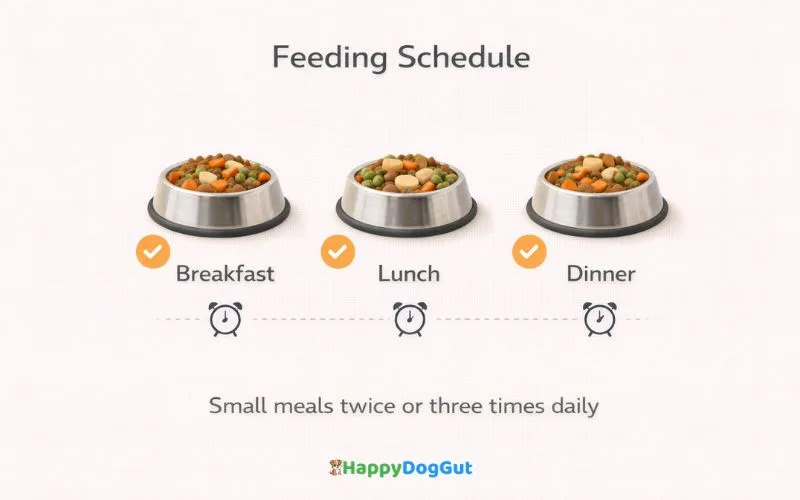
As dogs age, how they’re fed can matter just as much as what they’re fed. Adjusting meal timing and portion size often improves digestive comfort in senior dogs with sensitive stomachs.
🍽️ Smaller, More frequent meals
Instead of one or two large meals, many seniors benefit from smaller portions divided into two or even three feedings per day. Smaller meals are easier to digest and may reduce post-meal bloating or soft stool.
⏰ Consistent Timing
Older dogs tend to do best with routine. Feeding at the same times each day helps regulate digestive rhythms and may support more predictable bowel movements. Sudden schedule changes can sometimes trigger mild GI upset.
🌙 Avoid Large Evening Meals
Heavy late-night meals can be harder for senior dogs to digest, especially if activity levels drop in the evening. A lighter dinner may reduce overnight discomfort and morning stool irregularity.
⚖️ Monitor Weight Closely
Aging dogs may gain weight more easily due to lower activity levels, while others may lose weight if digestion becomes less efficient. Regular weight checks help ensure portions remain appropriate. Even small adjustments can make a noticeable difference in stool quality and overall energy.
For senior dogs with sensitive stomachs, steady portions and predictable timing often provide the stability that aging digestion needs.
When Digestive Issues in Seniors Are NOT Just Age
Mild digestive changes can be part of aging—but some symptoms deserve closer attention. The key is looking at patterns, not just isolated events.
🤢 Persistent Vomiting
An occasional upset stomach may not be unusual. However, repeated vomiting over several days or frequent episodes that keep returning are not typically explained by age alone. Ongoing vomiting can signal deeper digestive stress.
💧 Ongoing Watery Diarrhea
Soft stool can happen in senior dogs, but consistently watery diarrhea or stool that never firms up should not be dismissed as “just getting older.” Duration and severity matter. If you’re unsure about the threshold, reviewing When to See a Vet for Loose Stool can help clarify timing and red flags.
⚖️ Unexplained Weight Loss
Gradual muscle loss is common in seniors, but noticeable weight loss without intentional calorie reduction may suggest absorption issues or chronic inflammation. Digestive efficiency should not decline dramatically without cause.
🐾 Behavior Changes
If your senior dog becomes lethargic, avoids food, or “doesn’t seem like themselves,” that context matters more than stool alone. Appetite and energy shifts often provide stronger signals than mild digestive changes.
When symptoms persist, veterinarians may take a layered approach to evaluation. Understanding How Vets diagnose Chronic GI Issues in dogs can provide helpful perspective on what that process may involve.
Aging digestion deserves thoughtful adjustments—but persistent or worsening symptoms deserve professional evaluation. Calm observation, combined with timely guidance, supports better outcomes for senior dogs.
Common Diet Mistakes With Senior Dogs
As dogs age, small diet missteps can have a bigger impact than they did in younger years. Senior digestion often responds best to stability and moderation—not frequent changes or extreme adjustments.
🔄 Switching Foods Too Quickly
Older dogs may not tolerate rapid diet changes well. Sudden protein swaps or brand changes can trigger softer stool or temporary GI upset. Gradual transitions over 7–10 days (or longer for sensitive seniors) help reduce unnecessary digestive stress.
🏃 Feeding Puppy or High-Performance formulas
Puppy and performance diets are typically higher in fat and calories. While they’re excellent for growth or athletic activity, they can be too rich for aging dogs with slower metabolism and more delicate digestion. Senior dogs generally benefit from moderate calorie density and balanced fat levels.
🍖 Excess Treats
Treats often contain richer ingredients than regular meals. Even small daily extras can significantly increase fat intake and disrupt stool consistency. In seniors with sensitive stomachs, simplifying treat choices—or reducing frequency—can make a noticeable difference.
💊 Over-Supplementation
It’s tempting to add multiple supplements for joints, gut health, skin, and immunity. However, stacking products without clear purpose can overwhelm digestion and create new issues. Supplements should complement a balanced diet—not replace thoughtful nutrition planning.
For senior dogs, less is often more. A consistent, moderate diet with careful adjustments tends to support long-term digestive comfort better than constant experimentation.
FAQs: Senior Dog Diet for Sensitive Stomachs
What is the best food for senior dogs with a sensitive stomach?
The best option is typically a highly digestible formula with moderate protein, balanced fiber, and slightly reduced fat. Simple ingredient lists are often easier for aging digestion to tolerate. There isn’t a single universal “best” food—your dog’s stool consistency, energy level, and weight stability help determine what works best.
Should senior dogs eat low fat?
Many senior dogs benefit from moderately reduced fat levels, especially if they experience softer stool after rich meals. However, extremely low-fat diets are rarely necessary unless recommended by a veterinarian. Fat still supports energy and nutrient absorption, so balance—not elimination—is the goal.
Is wet food better for older dogs?
Wet food can be helpful for seniors due to its higher moisture content and softer texture. It may support hydration and be easier to chew for dogs with dental sensitivity. That said, many older dogs tolerate high-quality dry food well, especially when digestion is stable.
Why does my senior dog have soft stool?
Soft stool in senior dogs can result from slower digestion, reduced enzyme efficiency, mild microbiome changes, or higher fat intake. Occasional softness may reflect normal aging, but persistent loose stool should be monitored for patterns or additional symptoms.
Do older dogs need probiotics?
Not all senior dogs require probiotics, but some may benefit from added digestive support if stool consistency fluctuates. Probiotics can help maintain microbial balance in the gut, especially when diet changes or medications affect digestion.
How many times a day should I feed my senior dog?
Most senior dogs do well with two smaller meals per day. Some benefit from dividing food into three smaller portions to reduce digestive load. Consistent feeding times often support more predictable bowel movements.
Can aging cause diarrhea?
Aging itself doesn’t directly cause chronic diarrhea, but slower digestion and dietary sensitivity can contribute to softer stools. Persistent watery diarrhea or worsening symptoms should not be attributed to age alone and may require evaluation.
Is grain-free better for senior dogs?
Grain-free formulas are not automatically better for older dogs. Most sensitivities are linked to protein sources rather than grains. If your senior dog tolerates grains well, there’s usually no need to remove them without a specific reason.
Final Thoughts
Digestive changes are a normal part of aging. Slower motility, mild stool softness, or occasional sensitivity doesn’t automatically signal a serious problem. In many cases, thoughtful adjustments—not drastic overhauls—make the biggest difference.
For senior dogs with sensitive stomachs, stability matters more than constant experimentation. Gradual transitions, moderate fat levels, and highly digestible ingredients often provide better long-term comfort than repeatedly switching formulas.
Pay attention to patterns. Stool consistency, appetite, weight, and energy levels together tell a more complete story than one isolated symptom. Small, consistent improvements are usually more meaningful than quick fixes.
If you’re evaluating options, reviewing Best Dog Foods for Sensitive Stomachs can help you compare digestibility-focused formulas. For seniors with more persistent gut concerns, Diet Support for Dogs with IBD provides a broader perspective. And for added digestive balance, exploring Best Probiotics for Dogs with Sensitive Stomachs may offer supportive insights.
When symptoms are persistent or worsening, professional guidance adds clarity. Aging digestion deserves patience, structure, and steady monitoring—not panic.

Hi, I’m Maddy, the writer behind HappyDogGut.com.I’m passionate about helping dog parents better understand gut health, sensitive stomachs, and nutrition through clear, practical, and research-based content. Every article is carefully researched using trusted veterinary and pet health resources, so you can make more informed decisions for your dog’s digestive health.Happy Gut = Happy Dog! 🐾
All content on Happy Dog Gut follows our Editorial Policy.