Soft stool, excess gas, and occasional bloating are common concerns for dogs with sensitive stomachs. When these symptoms keep showing up, many owners start searching for solutions beyond basic diet changes. Probiotics are usually the first supplement people try—but when improvement is limited, attention often turns to digestive enzymes for dogs.
Digestive enzymes are frequently misunderstood. Some believe they’re a cure-all for diarrhea or chronic stomach problems, while others assume every sensitive dog automatically needs them. In reality, healthy dogs already produce their own digestive enzymes through the pancreas. Supplements are typically considered when digestion isn’t breaking down fats, proteins, or carbohydrates efficiently—not simply because a dog has one episode of soft stool.
It’s also important to understand the difference between true enzyme deficiency and normal digestive variation. Occasional gas or mild stool changes don’t automatically mean your dog lacks enzymes. Diet quality and ingredient digestibility often play a much larger role. Before exploring supplements, reviewing Best Probiotics for dogs with sensitive stomachs and evaluating options in Best Dog foods for sensitive stomachs can provide helpful context.
In this guide, we’ll break down when digestive enzymes may help, when they may not, and how to think about them clearly—without hype or medical claims.
⚠️ This article is for educational purposes only and does not replace veterinary advice.
What Are Digestive Enzymes for Dogs?
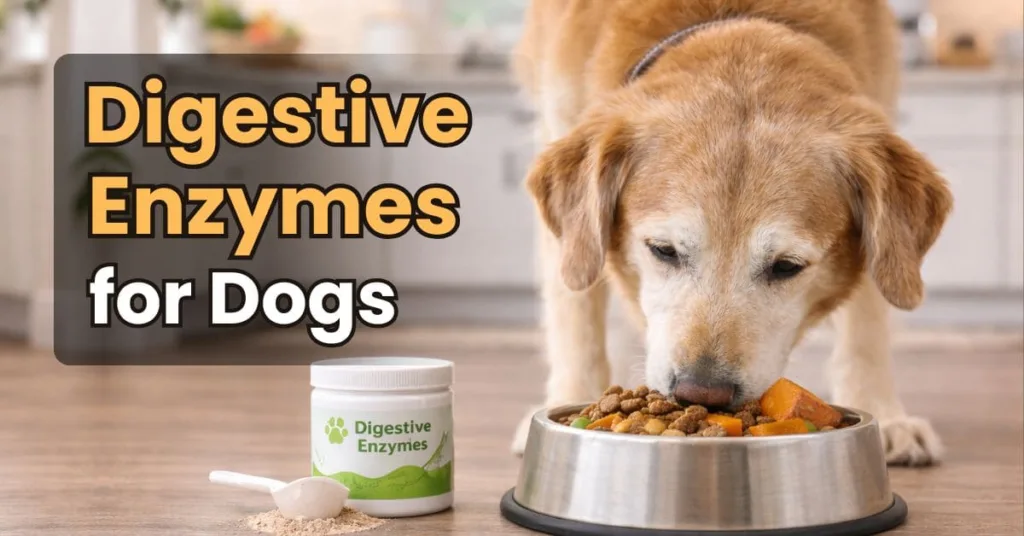
Digestive Enzymes for dogs are natural proteins that help break down food into smaller, absorbable nutrients. Without these enzymes, the body would struggle to properly digest fats, proteins, and carbohydrates from everyday meals.
🧪 They are produced naturally by the Pancreas
In healthy dogs, the pancreas releases digestive enzymes into the small intestine during meals. These enzymes work behind the scenes to break food down into usable building blocks—amino acids from protein, fatty acids from fat, and simple sugars from carbohydrates.
🥩 Some Enzymes are also found in food
Certain raw ingredients and minimally processed foods contain naturally occurring enzymes. However, many commercial diets rely primarily on the dog’s own pancreatic enzyme production for digestion.
💊 Why do Enzyme Supplements exist?
Supplemental digestive enzymes are typically used when a dog’s body may not be producing enough enzymes or when digestion appears inefficient. They are often considered in cases of chronic soft stool, excessive gas, aging digestion, or confirmed pancreatic conditions (evaluated by a veterinarian).
🦠 Digestive Enzymes are not the same as Probiotics
This is a common point of confusion. Digestive enzymes break down food. Probiotics support the balance of beneficial bacteria in the gut. They serve different roles and are not interchangeable.
Digestive enzymes help break down food efficiently, but they don’t directly address inflammation within the gut. For dogs with ongoing sensitivity, combining digestive support with anti-inflammatory nutrients may be beneficial. You can explore this further in our article on omega-3 for gut health in dogs.
Types of Digestive Enzymes for Dogs
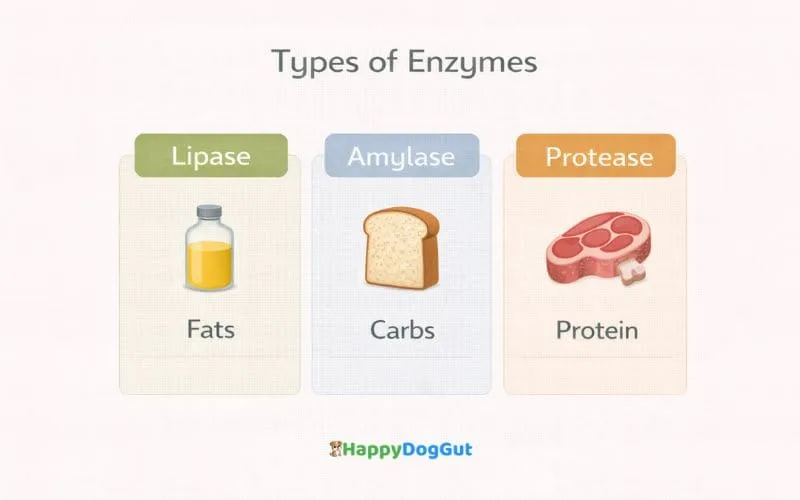
Not all digestive enzymes do the same job. Each enzyme targets a specific type of nutrient. Understanding the difference helps clarify when supplementation may or may not be useful.
🔹 Lipase — Breaks Down Fats
Lipase is responsible for breaking dietary fat into smaller components that the body can absorb.
Fat is energy-dense, and many commercial dog foods contain moderate to high fat levels. In some sensitive dogs—especially seniors or dogs prone to soft stool—high-fat meals can be harder to digest efficiently. When fat isn’t broken down properly, it may contribute to greasy stool, gas, or loose consistency.
Lipase support is most relevant when fat tolerance seems low, not simply when a dog has occasional digestive upset.
🔹 Amylase — Breaks Down Carbohydrates
Amylase helps digest carbohydrates by converting complex starches into simpler sugars.
Dogs can digest carbs, but individual tolerance varies. Some dogs handle rice or potatoes easily, while others may experience bloating or softer stool with certain carbohydrate sources. Differences in carb processing can depend on ingredient type, portion size, and overall gut balance.
Amylase plays a supporting role in maintaining smoother digestion when carbohydrate levels are moderate.
🔹 Protease — Breaks Down Proteins
Protease breaks protein into amino acids, which are essential for muscle maintenance, immune support, and tissue repair.
Protein digestion is especially important in dogs eating high-protein or novel protein diets. If protein isn’t efficiently broken down, it may ferment in the gut and contribute to gas or stool changes in sensitive dogs.
Protease support may be considered when protein-heavy diets seem difficult to tolerate.
🔹 Cellulase — Fiber Digestion Support
Cellulase is sometimes included in supplements to help break down plant fibers. While dogs don’t naturally produce cellulase in large amounts, gut bacteria assist with fiber fermentation. Supplemental cellulase may help with certain plant-based ingredients, but it’s not essential for most dogs.
Each enzyme has a specific function. The goal isn’t to overload digestion with supplements—but to understand which nutrient category might be contributing to sensitivity
Digestive enzymes can support food breakdown, but they work best when the gut is already stable. If your dog is currently experiencing digestive upset, it may be helpful to first reset the system before adding supplements. Our guide on Dog Gut Reset Protocol explains how to do this effectively.
When Digestive Enzymes May Help Dogs
Digestive enzymes are not necessary for every dog with an upset stomach. However, there are specific situations where they may offer supportive benefits—especially when digestion appears less efficient over time.
🕒 Aging Digestion Slowdown
As dogs enter their senior years, enzyme production may naturally decrease. Slower digestion can lead to softer stool, mild bloating, or reduced appetite. In some aging dogs, enzyme supplementation is explored as a supportive measure alongside dietary adjustments.
🥑 High-fat Diet Intolerance
If a dog consistently develops loose stool after richer meals, fat digestion may be part of the issue. Since lipase breaks down fat, enzyme support may be considered when dietary fat reduction alone doesn’t fully resolve symptoms.
🌾 Mild Malabsorption Patterns
Dogs that maintain appetite but struggle with inconsistent stool or difficulty maintaining weight may be evaluated for absorption efficiency. Enzymes help break nutrients into smaller, usable components, which may support improved digestion in mild cases.
💩 Chronic Soft Stool Cases
For dogs experiencing long-term soft stool without clear food intolerance triggers, enzyme supplementation is sometimes trialed after diet stabilization. It’s not the first step—but it can be part of a structured digestive support plan.
🧪 Pancreatic Insufficiency
In cases of confirmed pancreatic insufficiency—where the pancreas does not produce adequate enzymes—enzyme replacement becomes medically necessary. Diagnosis typically involves veterinary testing. If you’re curious about how these evaluations are approached, our guide on How Vets Diagnose Chronic GI Issues in dogs explains the layered testing process.
In confirmed cases of pancreatic enzyme deficiency—known as exocrine pancreatic insufficiency (EPI)—dogs require enzyme replacement as part of medical management. According to the Merck Veterinary Manual’s overview of Exocrine Pancreatic Insufficiency in dogs, inadequate enzyme production can significantly affect nutrient absorption and stool quality. In these cases, supplementation is not optional but medically necessary.
Digestive enzymes may be helpful in targeted situations—but they are not designed to replace proper diet management or professional evaluation when symptoms persist.
When Digestive Enzymes May Not Be Helpful
It’s important to keep expectations realistic. Not every digestive issue points to an enzyme problem, and many dogs do perfectly well without supplementation.
🟢 Normal Digestion doesn’t require Extra Enzymes
Healthy dogs naturally produce the enzymes they need. If your dog maintains firm stool, steady weight, and normal appetite, adding digestive enzymes typically offers no added benefit. More supplements do not automatically mean better digestion.
🍗 Food Intolerance won’t be solved by Enzymes
If soft stool is triggered by a specific ingredient—such as a protein sensitivity or additive intolerance—digestive enzymes won’t remove that trigger. In those cases, identifying the offending ingredient through a structured plan, such as an Elimination Diet for Food Allergies, is often more effective than layering supplements.
⚖️ Overuse isn’t helpful
Using digestive enzymes long-term without a clear reason may not improve outcomes. In some cases, unnecessary supplementation can complicate symptom tracking by adding another variable.
🩺 Diagnosis-first Mindset
If symptoms are persistent, worsening, or paired with weight loss or behavioral changes, guessing with supplements isn’t the best first step. Understanding the root cause—diet-related, inflammatory, or pancreatic—matters more than adding products.
Digestive enzymes can play a supportive role in the right context. But they are not a universal solution for every dog with a sensitive stomach.
Digestive Enzymes vs Probiotics — What’s the Difference?
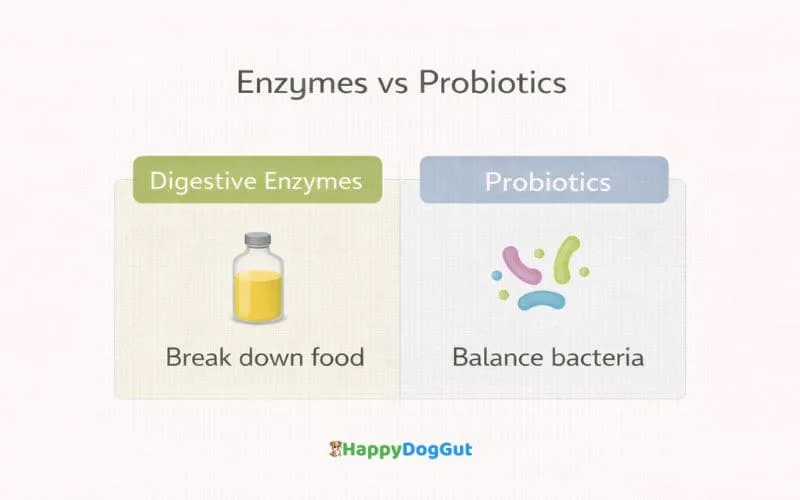
This is one of the most common areas of confusion for dog owners. While both support digestion, they work in completely different ways.
🔬 Digestive Enzymes Break Down Food
Digestive enzymes help physically break nutrients into smaller pieces. Lipase breaks down fats. Protease breaks down proteins. Amylase breaks down carbohydrates. Their job happens during digestion—mainly in the small intestine—so nutrients can be absorbed properly.
🦠 Probiotics Balance Gut Bacteria
Probiotics are beneficial bacteria that help maintain a healthy gut microbiome. They don’t break down food directly. Instead, they support microbial balance, which can influence stool quality, gas levels, and overall digestive stability.
🔄 Different Roles, Sometimes Paired
In some cases, enzymes and probiotics are used together—but they serve separate purposes. Enzymes assist with nutrient breakdown. Probiotics support bacterial balance. One does not replace the other.
If you’re considering probiotic support specifically for sensitive digestion, our guide to Best Probiotics for Dogs with Sensitive Stomachs explains how they differ from enzyme supplements and when they may be helpful.
Understanding this distinction prevents unnecessary supplement stacking and helps you choose support based on your dog’s actual digestive needs—not marketing claims.
Best Food Pairings With Digestive Enzymes for Dogs
When using digestive enzymes for dogs, diet quality still matters just as much as the supplement itself. Enzymes are designed to support nutrient breakdown—but pairing them with the right type of food improves overall digestive stability.
🥑 Moderate Fat Diets
Since lipase works to break down fat, extremely rich or high-fat meals can still overwhelm sensitive digestion—even with enzyme support. Choosing a moderately reduced-fat formula often leads to more predictable stool consistency and less post-meal bloating.
🥩 Highly Digestible Protein
Protease helps process protein, but overly complex or heavy protein blends may still challenge sensitive dogs. Single-source or simpler protein formulas are generally easier to tolerate. Exploring Best Limited Ingredient Dog Foods can help identify cleaner formulas with fewer competing ingredients.
🚫 Avoid Rich Multi-Protein Blends
Recipes containing several protein sources in one formula may complicate digestion and make it harder to identify tolerance patterns. If long-term dietary diversity is desired, it’s better to rotate tolerated proteins in structured phases rather than mixing multiple sources at once. Our guide on Protein Rotation Strategy for Sensitive Dogs explains how that works safely.
⏳ Consistency Matters
Digestive enzymes work best when paired with a stable feeding routine. Frequent food changes, random treats, or inconsistent portions can disrupt digestion more than enzyme support can compensate for.
Enzymes should complement a well-structured diet—not compensate for an overly rich or constantly changing feeding plan.
Are Digestive Enzymes Safe for Senior Dogs?
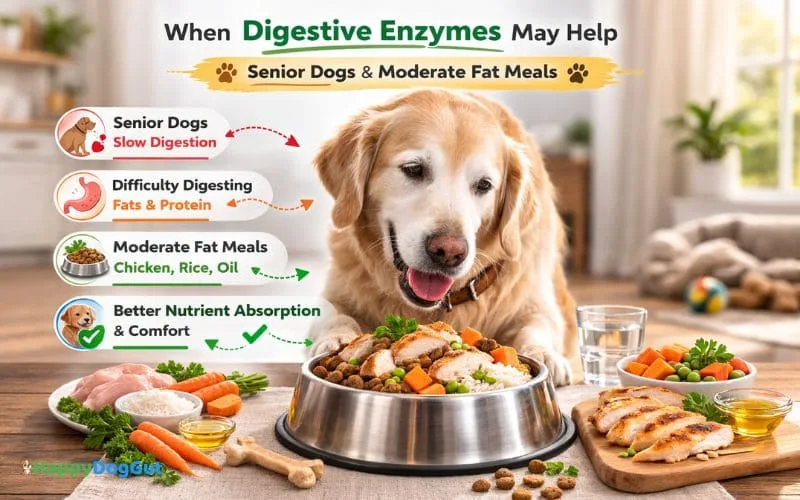
As dogs age, questions about supplement safety naturally come up. In many cases, digestive enzyme support can be used cautiously in senior dogs—but context matters.
🕒 Aging Enzyme Production
Some older dogs may produce digestive enzymes less efficiently than they did in younger years. This can contribute to softer stool or mild bloating after meals. In select cases, supplemental enzymes are considered as part of a broader nutrition plan.
✔ When They May be Beneficial
Senior dogs that experience ongoing difficulty digesting moderate-fat meals, or those with confirmed pancreatic concerns, may benefit from enzyme support under guidance. However, enzymes should complement—not replace—a properly balanced diet.
⚠️ Avoid DIY Mega-dosing
More is not better. Over-supplementing digestive enzymes without clear need or proper dosing guidance can disrupt digestion or mask underlying issues. Supplements should always follow label directions and professional input when necessary.
🩺 Consultation Matters for Seniors
Because older dogs are more likely to be on medications or managing chronic conditions, it’s especially important to consider the full health picture. Reviewing overall diet structure—such as what’s discussed in our guide to Senior Dog Diet for Sensitive Stomachs—often provides foundational improvements before adding supplements.
For senior dogs, digestive enzymes can be a supportive tool—but only when used thoughtfully and as part of a stable, well-managed diet plan.
Signs Enzymes Might Be Helping
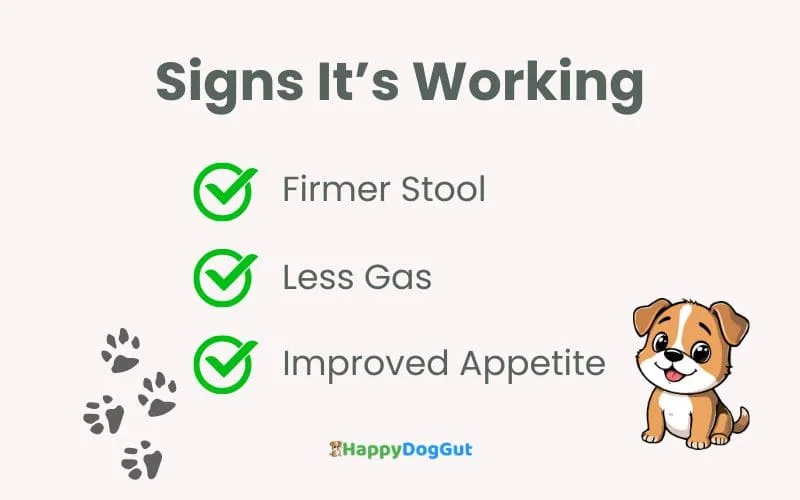
When digestive enzymes are introduced appropriately, improvements are usually subtle and gradual—not dramatic overnight changes. Watching for patterns over time is more helpful than expecting instant results.
💩 Firmer Stool
One of the first positive signs may be improved stool consistency. If fat, protein, or carbohydrate digestion becomes more efficient, stools may gradually become better formed and easier to pass.
🌬️ Reduced Gas
Excess gas can occur when food isn’t broken down completely and begins fermenting in the gut. Improved nutrient breakdown may lead to less bloating and fewer episodes of noticeable gas.
🍽️ Improved Appetite
Some dogs with mild digestive discomfort may seem hesitant at mealtime. When digestion feels smoother, appetite may normalize. This doesn’t mean enzymes stimulate hunger—it may simply reflect improved comfort.
⏳ Gradual Improvement, Not Overnight
It’s important to set realistic expectations. Digestive balance typically improves over several days to a few weeks. Sudden dramatic changes are uncommon. Tracking stool consistency, meal response, and energy over time provides a clearer picture of whether enzyme support is truly helping.
Consistency in diet and routine remains essential—enzymes work best when paired with stable feeding habits.
Signs Digestive Enzymes May Not Be the Right Fit
Digestive enzymes are not a universal fix. If they’re not addressing the root cause, continuing supplementation without improvement may delay more appropriate action.
⏳ No Improvement After Several Weeks
If stool consistency, gas, or appetite hasn’t improved after a reasonable trial period, enzymes may not be targeting the actual issue. At that point, reassessing diet quality or underlying causes becomes more important than increasing supplements.
💧 Persistent Diarrhea
Ongoing watery diarrhea is unlikely to resolve through enzymes alone—especially if symptoms are frequent or worsening. Duration and severity matter more than supplement use.
⚖️ Unexplained Weight Loss
If a dog is eating normally but losing weight, that can suggest absorption issues or chronic inflammation that require proper evaluation. Enzymes may support digestion, but they do not replace diagnostic assessment.
🐾 Behavioral Changes
Low energy, reduced appetite, or a dog simply “not acting like themselves” should not be overlooked. Whole-dog changes often signal something beyond simple digestive inefficiency.
If you’re unsure about symptom thresholds, reviewing When to See a Vet for Loose Stool can help clarify when observation is appropriate and when professional evaluation is recommended.
Digestive enzymes should support stability—not mask persistent or progressive symptoms.
🟢 FAQs: Digestive Enzymes for Dogs
Do Digestive Enzymes help dogs with sensitive stomachs?
Digestive enzymes for dogs may help in certain cases—especially when digestion of fat, protein, or carbohydrates appears inefficient. They can support nutrient breakdown and sometimes improve stool consistency. However, they are not a cure for food intolerance, infections, or inflammatory conditions. Diet quality and ingredient selection still play a central role.
Are Digestive Enzymes safe for daily use?
When used as directed and under appropriate circumstances, digestive enzymes are generally considered safe for daily use. That said, not every dog needs them long term. If there’s no noticeable improvement after a reasonable trial period, continued use may not provide added benefit.
Can I give digestive enzymes with probiotics?
Yes, digestive enzymes and probiotics can be used together because they serve different purposes. Enzymes help break down food during digestion, while probiotics support the balance of beneficial bacteria in the gut. Pairing them can be appropriate in some cases, but stacking supplements without clear need isn’t always necessary.
How long before digestive enzymes start working?
Improvements are usually gradual rather than immediate. Some dogs may show changes in stool consistency or reduced gas within a few days, while others may take a couple of weeks. Tracking patterns over time gives a more accurate picture than expecting overnight results.
Are enzymes better than probiotics?
They aren’t “better”—they’re different. Enzymes assist with nutrient breakdown, while probiotics help maintain microbial balance. The right choice depends on the underlying digestive concern. In some cases, diet adjustments alone are more effective than either supplement.
Do puppies need digestive enzymes?
Most healthy puppies produce sufficient digestive enzymes naturally. Routine supplementation is typically unnecessary unless a specific medical condition has been diagnosed. Growth-stage nutrition should always be balanced carefully, especially in young dogs.
Can digestive enzymes stop diarrhea?
Digestive enzymes may help if diarrhea is linked to poor nutrient breakdown. However, they won’t resolve diarrhea caused by food intolerance, infections, parasites, or inflammatory disease. Persistent or worsening diarrhea should not be managed solely with supplements.
Are plant-based enzymes effective?
Some supplements use plant-derived enzymes such as bromelain or papain. These can assist with nutrient breakdown, but effectiveness depends on the formulation and the dog’s specific digestive needs. Quality, dosing, and context matter more than whether enzymes are plant- or animal-based.
Final Thoughts
Digestive enzymes can be a helpful tool—but they are not a cure-all. Their role is to support nutrient breakdown, not to replace proper diet management or resolve every digestive issue.
For many dogs, the foundation is still the food itself. Highly digestible ingredients, moderate fat levels, and consistent feeding routines often make a bigger difference than layering multiple supplements. Enzymes work best when paired with the right diet—not as a substitute for it.
It’s also important to avoid supplement stacking. Adding probiotics, enzymes, fiber, and other products all at once can make it difficult to track what’s actually helping. Stability and clarity usually lead to better long-term results than rapid experimentation.
Pay attention to patterns. Stool consistency, appetite, energy, and weight trends over time provide more insight than a single off day. If you’re considering broader digestive support, reviewing Best Probiotics for Dogs with Sensitive Stomachs may offer additional perspective.
For dogs with more persistent concerns, including recurring loose stool, exploring Best Dog foods for Chronic Diarrhea or learning about Diet Support for Dogs with IBD can help you understand structured, long-term approaches.
When symptoms are ongoing or worsening, professional guidance adds clarity. Supplements should support digestive balance—not replace thoughtful evaluation.

Hi, I’m Maddy, the writer behind HappyDogGut.com.I’m passionate about helping dog parents better understand gut health, sensitive stomachs, and nutrition through clear, practical, and research-based content. Every article is carefully researched using trusted veterinary and pet health resources, so you can make more informed decisions for your dog’s digestive health.Happy Gut = Happy Dog! 🐾
All content on Happy Dog Gut follows our Editorial Policy.