
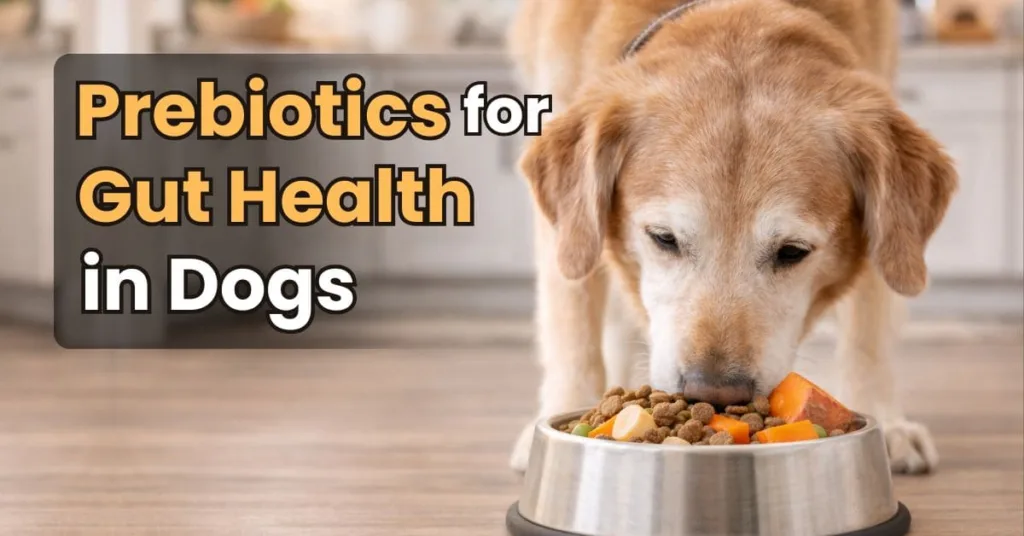
Many dog owners are familiar with probiotics. These supplements are often recommended for Soft stool, Gas, or General Digestive support. But fewer people understand the role of Prebiotics for gut health in dogs—and how they differ from probiotics.
The gut microbiome can feel confusing. You may hear terms like “good bacteria,” “fiber,” or “enzymes,” and wonder how they all fit together. When dogs experience irregular digestion, mild bloating, or inconsistent stool, it’s common to try probiotics first. While probiotics introduce beneficial bacteria, prebiotics actually serve as food for those bacteria, helping them grow and thrive inside the digestive tract.
That distinction matters. A healthy gut environment depends not just on adding bacteria, but on supporting the ecosystem that allows beneficial microbes to stay balanced. If you’re already exploring Best Probiotics for dogs with Sensitive Stomachs or learning about Digestive Enzymes for dogs, understanding where prebiotics fit can help you make more informed decisions.
In this guide, we’ll break down what prebiotics are, how they work, and when they may support digestive balance—without hype, exaggerated claims, or medical diagnosis.
⚠️ This article is for educational purposes only and does not replace veterinary advice.
What Are Prebiotics for Gut Health in Dogs?
Prebiotics for gut health in dogs are non-digestible fibers that help nourish beneficial bacteria already living in the digestive tract. Unlike probiotics, which introduce live bacteria into the gut, prebiotics act as fuel for the good microbes that are naturally present.
🌾 Non-Digestible Fibers
Prebiotics pass through the stomach and small intestine without being broken down. Because dogs cannot digest these fibers directly, they travel to the colon intact—where they serve an important purpose.
🦠 They feed Beneficial Bacteria
In the colon, prebiotics are fermented by helpful gut bacteria. This fermentation process supports the growth and activity of those beneficial microbes. A well-fed microbiome is generally more stable and resilient.
📍 They work Primarily in the Colon
Most of the action happens in the large intestine. When bacteria ferment prebiotic fibers, they produce short-chain fatty acids that help support the colon lining and overall digestive balance.
❌ They are not Bacteria themselves
This is a key distinction. Prebiotics are not living organisms. They do not add new bacteria to the gut. Instead, they help strengthen the environment where good bacteria already exist.
🧬 Part of the Microbiome Ecosystem
Think of the gut as an ecosystem. Probiotics add helpful organisms. Prebiotics feed them. Together, they contribute to a balanced microbiome—but each plays a different role.
Prebiotics feed beneficial gut bacteria, helping support a healthier digestive environment. However, gut health is influenced by more than just fiber and bacterial balance. Inflammation control is another key factor, which is where nutrients like omega-3 fatty acids come in. Our guide on omega-3 for gut health in dogs explains this connection in more detail.
Understanding this foundation helps prevent confusion and sets realistic expectations about how prebiotics support digestive health.
Prebiotics vs Probiotics — What’s the Difference?
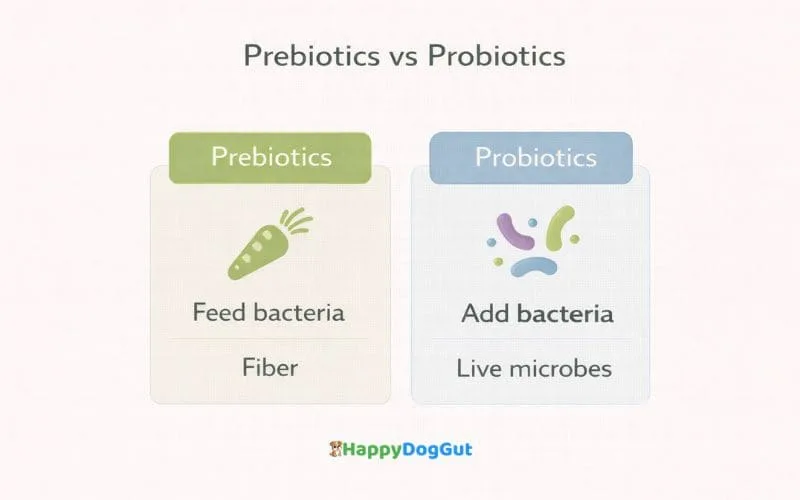
This is one of the most common points of confusion in dog digestive care. The names sound similar—but they do very different jobs.
🦠 Probiotics = Live Beneficial Bacteria
Probiotics are living microorganisms added to support the gut microbiome. When introduced in appropriate amounts, they may help maintain microbial balance, especially during stress, diet changes, or mild digestive upset. If you want a deeper look at strains and formulations, our guide to Best Probiotics for dogs with Sensitive Stomachs explains how they’re typically used.
The American Kennel Club also explains how probiotics support beneficial gut bacteria and overall digestive balance, highlighting the importance of maintaining a healthy microbiome in dogs. While probiotics add live bacteria, prebiotics provide the fuel those bacteria need to thrive.
🌾 Prebiotics = Food for those Bacteria
Prebiotics are non-digestible fibers that feed the beneficial bacteria already living in your dog’s gut. Instead of adding new microbes, they help nourish and strengthen the existing good bacteria.
🔄 They can work together (The “synbiotic” concept)
When probiotics and prebiotics are combined, the pairing is sometimes called a synbiotic. The probiotic introduces beneficial bacteria, and the prebiotic provides the fuel those bacteria need to thrive. This combination may help create a more stable digestive environment.
⚖️ One doesn’t replace the other
Prebiotics do not substitute for probiotics, and probiotics do not replace prebiotics. They support different parts of the digestive ecosystem. Choosing between them—or using them together—depends on your dog’s specific digestive needs.
Understanding this difference helps prevent unnecessary supplement stacking and encourages a more targeted approach to gut health.
Types of Prebiotics Commonly Used in Dog Food
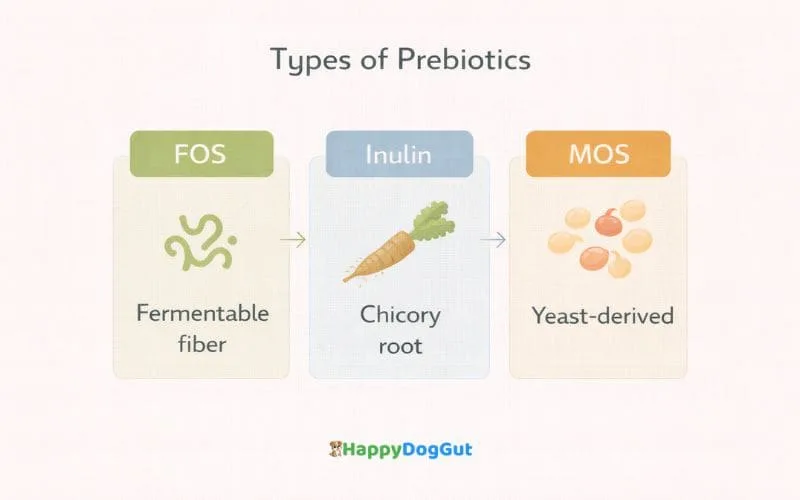
Not all prebiotics are the same. Different types of fibers serve slightly different roles in supporting the gut microbiome. Below are the most common prebiotics you’ll see listed on dog food or supplement labels.
🔹 FOS (Fructooligosaccharides)
FOS are a fermentable fiber commonly added to dog food in small amounts. Because dogs cannot digest it directly, it travels to the colon where beneficial bacteria ferment it.
This fermentation process helps support the growth of helpful microbes like Lactobacillus and Bifidobacterium. When used in appropriate amounts, FOS may contribute to improved stool consistency and overall microbial balance.
However, too much fermentable fiber at once can lead to gas or bloating, which is why balance matters.
🔹 Inulin
Inulin is a plant-derived prebiotic fiber often sourced from chicory root. It functions similarly to FOS and is sometimes considered a broader category of fermentable fiber.
You may see “chicory root” or “chicory root extract” on ingredient labels—that’s typically a source of inulin. Like FOS, it helps feed beneficial bacteria in the colon and supports a stable gut environment.
Because inulin is natural and widely studied, it’s one of the most common prebiotic ingredients in commercial dog food formulas.
🔹 MOS (Mannan-oligosaccharides)
MOS is derived from yeast cell walls rather than plants. While it also acts as a prebiotic, it works a bit differently.
In addition to feeding beneficial bacteria, MOS may help bind certain unwanted bacteria in the digestive tract, potentially limiting their attachment to the gut lining. This dual role makes it a popular addition in both puppy and adult dog foods.
Each of these prebiotics supports the gut ecosystem in its own way. The key is appropriate dosage and balance—not simply adding more fiber than a dog can comfortably tolerate.
Prebiotics help feed beneficial bacteria, but understanding overall digestive balance is essential. Our Dog Sensitive Stomach Guide explains how all these factors work together.
How Prebiotics Support Gut Health in Dogs
Prebiotics don’t act directly on the digestive tract. Instead, they work by feeding beneficial bacteria in the colon—supporting the entire gut environment over time.
🧪 Promote Short-chain Fatty Acids (SCFAs)
When good bacteria ferment prebiotic fibers like FOS or inulin, they produce short-chain fatty acids. These compounds help nourish the cells lining the colon and support overall digestive balance. Think of SCFAs as fuel for the gut itself.
🛡️ Support the Colon Lining
A well-nourished microbiome helps maintain the integrity of the intestinal lining. While prebiotics are not a treatment for disease, a stable gut environment may contribute to better resilience against everyday digestive stress.
💩 Help Regulate Stool Consistency
Balanced fermentation in the colon can support more regular stool patterns. For some dogs, this may mean fewer fluctuations between overly firm and overly soft stools—especially when introduced gradually.
🦠 May help Limit Harmful Bacterial Overgrowth
By feeding beneficial bacteria, prebiotics help them compete with less desirable microbes. A balanced microbiome is generally more stable and less prone to imbalance.
Prebiotics work quietly in the background. They’re not a quick fix, but when used appropriately, they can support long-term digestive stability as part of a balanced diet.
When Prebiotics May Be Helpful
Prebiotics are not necessary for every dog, but there are situations where they may provide meaningful digestive support—especially when the goal is long-term gut balance rather than a quick fix.
🌿 Mild Digestive Imbalance
Dogs that experience occasional soft stool, mild gas, or irregular bowel patterns may benefit from prebiotic support. By feeding beneficial bacteria, prebiotics can help stabilize the gut environment over time. They work best when paired with a consistent diet and portion control.
💊 Post-Antibiotic Recovery
Antibiotics can disrupt the natural balance of gut bacteria. During recovery, prebiotics may help nourish the remaining beneficial microbes and support microbiome rebuilding. This approach is often paired with probiotics, depending on individual needs.
🐾 Senior Dogs
As dogs age, their microbiome diversity may decrease. Some senior dogs experience slower digestion or increased stool sensitivity. Supporting microbial balance can be part of a broader plan discussed in our guide to Senior Dog Diet for Sensitive Stomachs.
🥣 Dogs on Limited Ingredient Diets
Dogs eating simpler, single-protein formulas sometimes benefit from added fiber diversity to support microbial balance. If you’re using simplified formulas, reviewing Best Limited Ingredient Dog Foods can help ensure fiber sources are appropriate and balanced.
🧠 Sensitive Stomach support
For dogs with sensitive digestion—without chronic or severe symptoms—prebiotics may help maintain stability when introduced gradually. They are not a replacement for identifying food intolerances, but they can complement a structured diet approach.
Prebiotics tend to work best in mild to moderate digestive situations. Persistent or worsening symptoms should always prompt broader evaluation rather than supplement-only management.
Natural Food Sources of Prebiotics
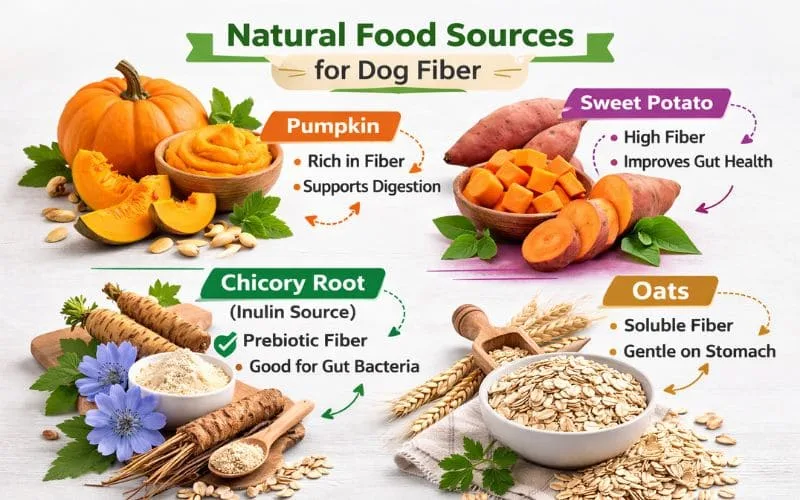
Prebiotics don’t only come in supplement form. Many dog foods include natural fiber sources that act as prebiotics and help support a balanced gut microbiome. The key is using them in appropriate amounts.
🌿 Chicory Root
Chicory root is one of the most common natural sources of inulin, a well-known prebiotic fiber. It’s often listed directly on dog food labels and is widely used because it reliably feeds beneficial gut bacteria.
🎃 Pumpkin
Pumpkin contains soluble fiber that can help regulate stool consistency. While it’s often recommended for occasional digestive upset, it also has mild prebiotic properties when used in small, balanced portions.
🍠 Sweet Potato
Sweet potatoes provide fermentable fiber along with nutrients like vitamin A. In moderate amounts, they can support beneficial bacteria growth. However, large portions may contribute to excess fermentation and gas in sensitive dogs.
🌾 Beet Pulp
Beet pulp is a common ingredient in commercial dog foods. It contains a mix of soluble and insoluble fiber, which helps support stool formation and microbial balance in the colon.
🌾 Oats
Oats contain beta-glucans, a type of fiber that may support digestive health. They’re often included in grain-inclusive diets and can contribute to overall fiber diversity.
Even beneficial fibers can cause bloating or loose stool if introduced too quickly or fed in excess. Prebiotic-rich foods should always be part of a balanced formula—not added randomly in large amounts.
Natural sources can support gut health when thoughtfully included in a consistent, well-formulated diet.
Prebiotic Supplements vs Natural Diet Sources
When considering prebiotics for gut health in dogs, it’s important to understand the difference between naturally occurring food sources and concentrated supplement forms. Both can support the microbiome—but they’re not always used the same way.
🥣 Food-first Approach
Many complete and balanced dog foods already contain prebiotic fibers like chicory root, beet pulp, or inulin. For dogs with stable digestion, this built-in support is often sufficient. A consistent, well-formulated diet usually provides enough fermentable fiber without the need for extra supplementation.
💊 When Supplements may be considered
Prebiotic supplements may be considered when a dog has mild digestive sensitivity, limited ingredient feeding patterns, or reduced microbiome diversity. In these cases, targeted fiber support may complement the base diet—but it should be introduced gradually.
🔎 Reading Ingredient Labels matters
Look for specific fiber sources such as FOS, inulin, or MOS on the label. Vague terms like “fiber blend” don’t always clarify what type or how much is included. Understanding what’s already in your dog’s food can help prevent unnecessary stacking of similar ingredients.
⚠️ Over-Supplementation Risk
More fiber is not always better. Excess fermentable fiber can lead to gas, bloating, or loose stool—especially in sensitive dogs. Layering multiple supplements on top of prebiotic-rich food can unintentionally create imbalance.
A balanced approach works best. In many cases, thoughtful diet selection provides adequate prebiotic support without needing additional supplements.
Can Prebiotics Cause Gas or Loose Stool?
Yes — in some dogs, prebiotics can temporarily cause gas or softer stool. This doesn’t automatically mean something is wrong. It usually relates to how fermentation works in the colon.
🌬️ The Fermentation Process
Prebiotics are fermented by beneficial bacteria in the large intestine. During fermentation, gases are naturally produced. In moderate amounts, this is normal. But if the dose is too high or introduced too quickly, gas and bloating may become noticeable.
🐢 Gradual Introduction Matters
Adding prebiotic fiber slowly gives the gut microbiome time to adjust. A sudden increase can overwhelm sensitive digestive systems, leading to loose stool or increased flatulence for a few days.
⚖️ Too much Fiber can Backfire
Even beneficial fibers can cause discomfort when overused. Excess fermentable fiber may pull more water into the colon, contributing to softer stool consistency.
🧬 Individual Tolerance Varies
Some dogs tolerate added fiber easily. Others—especially those with sensitive stomachs—may need very small amounts or may do better without extra supplementation.
If loose stool continues beyond the typical adjustment window, reviewing timelines in our guide on How Long Does Diarrhea Last in Dogs can help determine whether symptoms are part of a short-term adjustment or something that needs further evaluation.
Balanced introduction and observation are key. Prebiotics support the gut—but only when used thoughtfully.
Are Prebiotics Safe for Puppies and Seniors?
Prebiotics can be safe for many dogs, but age matters. Puppies and senior dogs have different digestive needs, and fiber tolerance can vary.
🐶 Growth-Stage Caution in Puppies
Puppies are still developing their digestive systems and microbiome. While some high-quality puppy foods already include balanced prebiotic fibers, adding extra supplements without guidance isn’t always necessary. Too much fermentable fiber in young dogs may cause loose stool or gas more easily than in adults.
🐾 Aging Microbiome in Seniors
As dogs age, microbiome diversity may decrease. Some senior dogs benefit from gentle prebiotic support to help maintain digestive balance. However, older dogs may also have slower digestion or medication-related sensitivity, so moderation is important.
🐢 Introduce Slowly at any Age
Whether feeding a puppy or a senior, prebiotics should be introduced gradually. Small amounts allow the digestive tract to adjust and reduce the chance of bloating or stool changes.
🩺 Veterinary Guidance when needed
If a puppy has persistent diarrhea, poor growth, or ongoing digestive upset—or if a senior dog has chronic GI issues—dietary changes should be discussed with a veterinarian first. Prebiotics are supportive tools, not standalone solutions for underlying conditions.
Used thoughtfully, prebiotics can be part of a balanced diet at any life stage—but stability and observation always come first.
Signs Prebiotics Are Supporting Digestive Balance
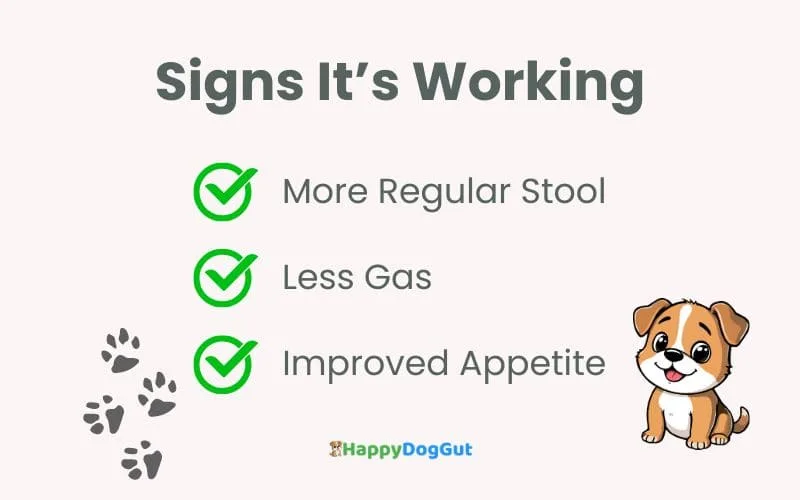
Prebiotics don’t work overnight. Their benefits tend to appear gradually as the gut microbiome stabilizes over time. Here are signs that digestive balance may be improving:
💩 More Regular Stool
You may notice stool becoming more consistent in shape and texture. Instead of frequent fluctuations between firm and soft, bowel movements may look steadier and easier to predict.
🌬️ Reduced Odor
As the balance of gut bacteria improves, stool odor and excessive gas may decrease. While some odor is normal, extreme or persistent foul smell can sometimes signal imbalance.
🐾 Less Gas or Bloating
Mild gas can happen during the adjustment phase, but over time, excessive bloating may decrease if the microbiome stabilizes and fermentation becomes more balanced.
🥣 Improved Appetite
Some dogs show steadier appetite patterns when digestion feels more comfortable. This doesn’t mean increased hunger—just more consistent eating habits.
⏳ Gradual Improvement is Key
Prebiotic support works quietly in the background. Noticeable changes often take several weeks, not days. Slow, steady progress is more realistic than dramatic overnight results.
As always, if symptoms worsen or persist despite dietary adjustments, broader evaluation may be necessary. Prebiotics support balance—but they are not a cure-all.
When Prebiotics Are Not the Right Solution
Prebiotics can support mild digestive imbalance—but they are not appropriate for every situation. Certain symptoms suggest that a simple fiber adjustment may not be enough.
💧 Chronic Watery Diarrhea
If stool is persistently watery rather than just slightly soft, adding fermentable fiber may not solve the root issue. Ongoing fluid loss can point to deeper digestive disruption that needs proper evaluation.
⚖️ Unexplained Weight Loss
Losing weight despite normal eating habits can signal malabsorption or underlying gastrointestinal problems. Prebiotics alone won’t correct conditions that affect nutrient absorption.
🩸 Blood in the Stool
Occasional mild mucus can happen with colon irritation, but visible blood—especially if recurring—requires closer attention. Fiber support should not delay appropriate assessment.
🧬 Suspected Underlying GI Disease
Conditions like chronic inflammation, infections, or structural digestive issues require structured diagnosis and management. In these cases, relying only on supplements may mask symptoms without addressing the cause.
If you’re unsure whether symptoms fall within normal digestive fluctuation or something more concerning, review the warning signs in When to Worry about Diarrhea in dogs. Clear boundaries help prevent unnecessary panic—while ensuring important signals aren’t overlooked.
Prebiotics are supportive tools. When symptoms are persistent, severe, or progressive, a broader approach is more appropriate than supplement-only strategies.
FAQs About Prebiotics for Dogs
Are Prebiotics good for dogs with sensitive stomachs?
Prebiotics may support digestive balance in dogs with mild sensitivity, especially when stool consistency fluctuates. By feeding beneficial bacteria, they can help stabilize the gut environment over time. However, they are not a fix for food intolerances or chronic GI disease. Introduction should always be gradual.
Do dogs need Prebiotics daily?
Not all dogs require separate prebiotic supplements. Many complete and balanced dog foods already contain natural prebiotic fibers like chicory root or beet pulp. Daily supplementation is typically considered only when there is a specific digestive reason—not as a universal requirement.
What is FOS in dog food?
FOS (Fructooligosaccharides) are a type of fermentable fiber commonly added to dog food. It travels to the colon where beneficial bacteria ferment it. This process supports microbial balance but must be used in appropriate amounts to avoid excess gas.
Can prebiotics replace Probiotics?
No. Prebiotics and probiotics serve different roles. Probiotics introduce live beneficial bacteria, while prebiotics feed the bacteria already present. They can complement each other, but one does not replace the other.
Do prebiotics help diarrhea?
Prebiotics may help regulate mild stool inconsistency by supporting microbial balance. However, they are not appropriate for severe or persistent watery diarrhea. Chronic symptoms should be evaluated before adding fiber-based supplements.
Are Prebiotics safe long term?
When included in balanced amounts within a complete diet, prebiotics are generally safe long term. Problems usually occur when excessive supplemental fiber is added without monitoring tolerance.
Is pumpkin a Prebiotic?
Pumpkin contains soluble fiber and can act as a mild prebiotic when fed in moderation. It may help regulate stool consistency, but large amounts can cause bloating or loose stool in sensitive dogs.
What’s the difference between inulin and FOS?
Both inulin and FOS are fermentable fibers that feed beneficial bacteria. Inulin is often derived from chicory root and can contain shorter chains like FOS. Functionally, they work in similar ways within the colon to support gut balance.
Final Thoughts
Prebiotics play a simple but important role: they feed beneficial bacteria already living in your dog’s gut. By nourishing those microbes, they help support a more balanced digestive environment over time.
They work best as part of a complete, balanced diet—not as a standalone fix. Adding prebiotic fiber without considering protein quality, fat levels, and overall ingredient balance won’t create lasting digestive stability.
It’s also important to remember that prebiotics are not a cure-all. They may support mild digestive imbalance, but they won’t resolve chronic inflammation, true food allergies, or underlying GI disease on their own.
Small, gradual adjustments tend to work better than large, sudden changes. Monitor stool consistency, gas levels, and appetite patterns over several weeks rather than expecting overnight results.
If you’re building a broader gut-support strategy, you may also want to review:
- Best Probiotics for Dogs with Sensitive Stomachs
- Digestive Enzymes for Dogs
- Diet Support for Dogs with IBD
A stable gut is usually the result of consistent diet choices, thoughtful supplementation, and patient observation—not quick fixes.

Hi, I’m Maddy, the writer behind HappyDogGut.com.I’m passionate about helping dog parents better understand gut health, sensitive stomachs, and nutrition through clear, practical, and research-based content. Every article is carefully researched using trusted veterinary and pet health resources, so you can make more informed decisions for your dog’s digestive health.Happy Gut = Happy Dog! 🐾
All content on Happy Dog Gut follows our Editorial Policy.