
Diarrhea in dogs isn’t just messy—it can quickly lead to fluid and mineral loss, especially if it lasts more than a day or two. Along with water, the body loses essential electrolytes like sodium and potassium, which play a key role in hydration, energy levels, and normal body function. This is why many pet owners start looking into electrolytes for dogs with diarrhea as a way to support recovery.
The concern becomes even more important for puppies and senior dogs, who can dehydrate faster and may not tolerate fluid loss as well as healthy adults. At the same time, there’s a lot of confusion. Should you give plain water? Are electrolyte solutions safe? Can you use something like Pedialyte—or is that risky?
It’s also important to understand how long symptoms are expected to last. Reviewing How long does Diarrhea last in dogs can help set realistic expectations, while When to worry about diarrhea in dogs explains when symptoms may need closer attention.
In this guide, we’ll walk through safe rehydration options, when electrolytes may help, and when they may not be appropriate—using a clear, structured approach without guesswork.
⚠️ This article is for educational purposes only and does not replace veterinary advice.
What Are Electrolytes for Dogs With Diarrhea?
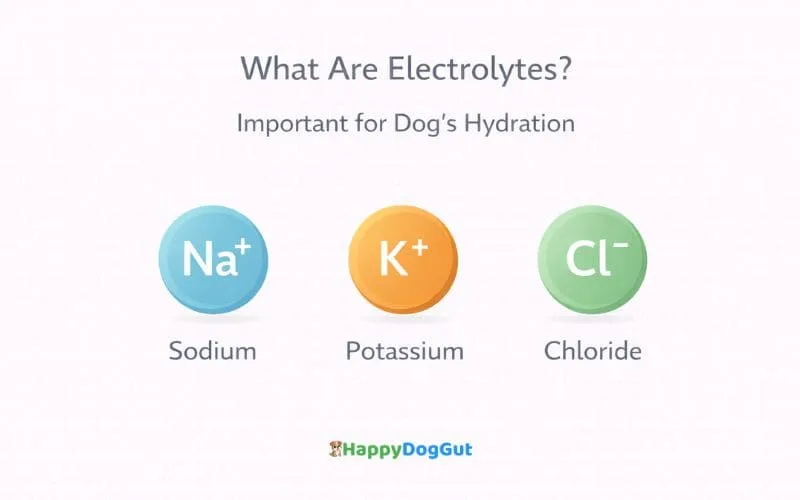
Electrolytes for dogs with diarrhea refer to essential minerals—primarily sodium, potassium, and chloride—that help maintain fluid balance and normal body function. These minerals are dissolved in body fluids and play a critical role in keeping cells, nerves, and muscles working properly.
⚡ Key Electrolytes: Sodium, Potassium, and Chloride
These minerals help regulate how fluids move in and out of cells. They also support nerve signaling and muscle function, including the muscles involved in digestion.
💧 Support Hydration and Body Balance
Electrolytes don’t just replace lost fluids—they help the body actually retain and use that fluid effectively. Without proper electrolyte balance, hydration can remain incomplete even if a dog is drinking water.
💩 Lost during Diarrhea
When a dog has diarrhea, both water and electrolytes are lost through loose stool. This loss can disrupt the body’s balance, especially if diarrhea continues over time.
🚰 Why Water alone may not be enough
While fresh water is essential, it doesn’t replace lost electrolytes. In some cases, relying only on water may not fully restore hydration, particularly if losses are ongoing or the dog is already showing signs of weakness.
Understanding this helps explain why electrolyte support is sometimes considered—not to stop diarrhea, but to support hydration while the body recovers.
Why Electrolytes Matter During Diarrhea
Diarrhea affects more than just stool consistency—it can quickly disrupt your dog’s fluid and mineral balance. This is why electrolyte support is sometimes considered alongside hydration.
💧 Fluid loss adds up quickly
Loose stool means the body is losing water faster than normal. If this continues, dehydration can develop—especially if the dog isn’t drinking enough to keep up with the loss.
😴 Weakness and Lethargy
Electrolytes play a role in muscle and nerve function. When levels drop, dogs may appear tired, less active, or slower to respond. This isn’t just fatigue—it can be a sign that the body’s balance is off.
🐶 Higher risk in Puppies and Seniors
Younger and older dogs are more vulnerable to dehydration. Puppies have smaller reserves, and senior dogs may already have underlying sensitivities. Even short periods of fluid loss can affect them more quickly than healthy adults.
🌡️ Heat + Dehydration = Higher risk
If diarrhea occurs during warm weather or after activity, the risk increases further. Panting and heat exposure already cause fluid loss—adding diarrhea on top of that can accelerate dehydration.
Electrolytes help support the body during this imbalance—but they work best when used early and alongside proper monitoring.
Signs Your Dog May Need Electrolyte Support
Not every episode of diarrhea requires electrolyte supplementation, but certain signs may suggest your dog is losing fluids faster than they can replace them. Watching for these early indicators can help you act before dehydration becomes more serious.
😴 Lethargy or Low Energy
If your dog seems unusually tired, less playful, or reluctant to move, it may reflect fluid and electrolyte imbalance rather than simple fatigue.
👅 Dry or Tacky Gums
Healthy gums should feel moist. If they appear dry or sticky, it can be an early sign of dehydration.
👁️ Sunken or Dull-looking Eyes
Changes in eye appearance—such as slight sinking or lack of brightness—can indicate fluid loss, especially when combined with other symptoms.
🍽️ Reduced Appetite
Dogs dealing with dehydration or electrolyte imbalance may lose interest in food or eat less than usual.
💩 Continued Loose Stool
Ongoing diarrhea increases the risk of both fluid and mineral loss. The longer it continues, the more important it becomes to monitor hydration status closely.
If these signs persist or worsen, it’s important not to rely on home care alone. Reviewing when to see a vet for loose stool can help you decide when professional evaluation is the safer next step.
Electrolyte support may help in mild cases—but recognizing warning signs early is just as important.
Safe Rehydration Protocol for Dogs With Diarrhea
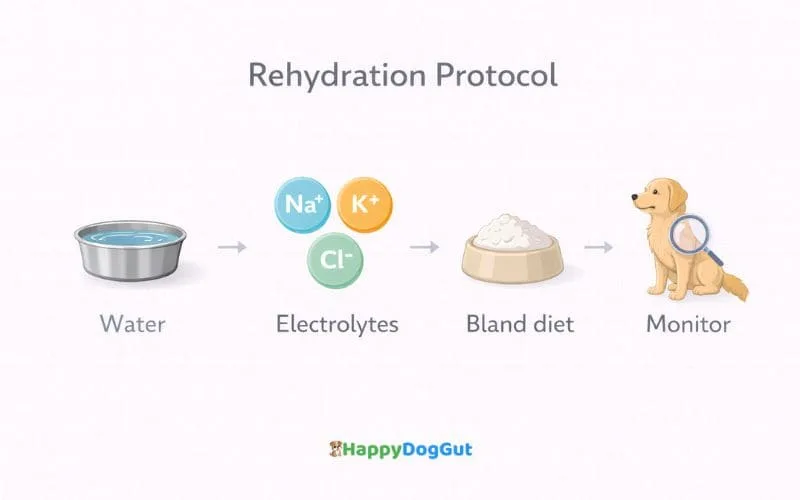
When a dog has diarrhea, the goal isn’t just to stop the stool—it’s to restore hydration safely and gradually. A calm, step-by-step approach works best, especially for sensitive dogs.
🥤 1. Offer Small, Frequent Amounts of Water
Instead of allowing large gulps, encourage small sips every 30–60 minutes. Drinking too much at once can sometimes trigger vomiting or worsen discomfort.
⚡ 2. Introduce Electrolytes Gradually
If you’re using an electrolyte solution, start with small amounts mixed into water or offered separately. Sudden, concentrated intake can upset the stomach. Gradual introduction helps the body adjust more comfortably.
🤢 3. Monitor for Vomiting
If your dog begins vomiting after drinking, pause intake briefly and reintroduce fluids slowly. Vomiting alongside diarrhea increases dehydration risk and may require closer attention.
🍚 4. Transition to a Bland diet
Once hydration is improving and vomiting isn’t present, introduce a simple, easily digestible diet (such as plain, low-fat food). This helps support recovery without overloading the digestive system.
👀 5. Observe Hydration Status closely
Check for signs like moist gums, normal energy levels, and regular urination. Improvement in these areas suggests hydration is stabilizing.
The key is consistency and patience. Rehydration is a gradual process—rushing it can sometimes make symptoms worse rather than better.
Homemade Electrolyte Solution vs Veterinary ORS
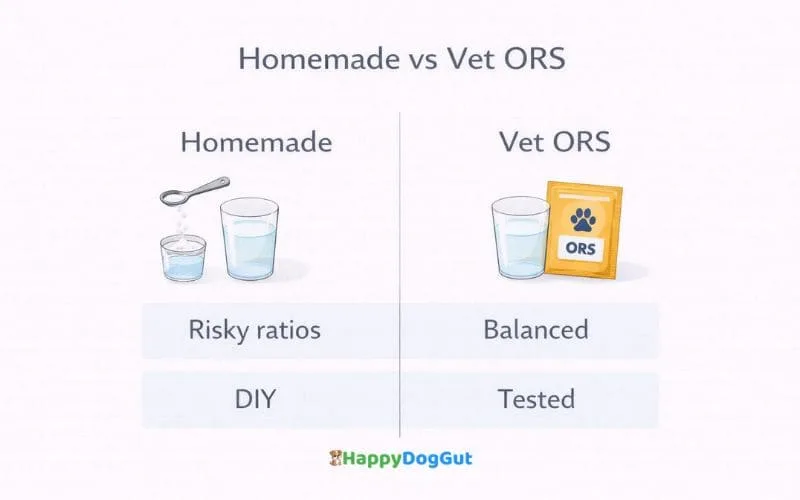
When dealing with diarrhea, many owners consider making a quick electrolyte mix at home. While this can seem convenient, there are important differences between homemade solutions and veterinary oral rehydration solutions (ORS).
🏠 Homemade Electrolyte Mix
A simple homemade mix usually includes water, a small amount of salt, and a glucose source (like sugar). The idea is to replace both fluids and essential minerals.
However, the biggest concern is accuracy. Even small mistakes in salt or sugar levels can lead to an imbalance. Too much salt may strain the body, while too little may not provide effective support. For sensitive dogs, incorrect ratios can sometimes worsen digestive upset.
🏥 Veterinary Oral Rehydration Solutions (ORS)
Veterinary ORS products are specifically formulated with balanced levels of sodium, potassium, and glucose. These solutions are designed to match what the body needs during fluid loss, making absorption more efficient and predictable.
They are also tested for safety and consistency, which is especially important for puppies, seniors, or dogs already dealing with digestive sensitivity.
In most cases, Veterinary ORS is the safer and more reliable option compared to homemade mixtures. While homemade solutions may be used cautiously in mild situations, they require careful preparation and are not always ideal for every dog.
When hydration is a concern, precision matters—and that’s where veterinary-formulated solutions have a clear advantage.
Can You Give Pedialyte to Dogs?
Pedialyte is often mentioned when dogs have diarrhea, but it should be used carefully and only in limited situations.
🥤 Occasional use in Small amounts
Plain, unflavored Pedialyte may be given in small, diluted amounts for short-term hydration support. It can help replace some lost electrolytes during mild cases, but it should not replace water as the primary fluid source.
🚫 Avoid flavored or Artificial versions
Many flavored Pedialyte products contain artificial sweeteners, added sugars, or dyes that may upset a dog’s stomach. Always choose plain, unflavored versions if used at all.
⚠️ Sodium levels matter
Pedialyte is formulated for humans, not dogs. Its sodium content may not match canine needs, especially for smaller dogs or those with underlying health conditions. This is why portion control and dilution are important.
⏳ Not a long-term solution
Pedialyte is best used as a short-term support during mild dehydration. It is not designed for ongoing use or for managing chronic digestive issues.
If symptoms persist or worsen, it’s better to move beyond home remedies and consider more appropriate veterinary guidance.
When NOT to Use Electrolytes for Dogs
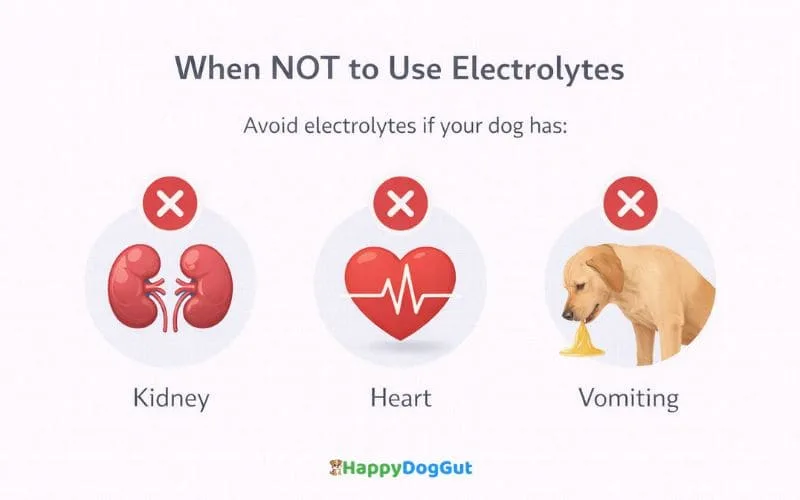
Electrolytes can support hydration in mild cases—but there are situations where using them without guidance may not be appropriate. Knowing these limits is just as important as knowing when to use them.
⚠️ Kidney Disease
Dogs with kidney issues often require carefully controlled mineral intake. Adding electrolytes without guidance may disrupt this balance and place additional strain on the body.
❤️ Heart Conditions
Electrolytes—especially sodium—can influence fluid retention and circulation. In dogs with heart conditions, improper use may worsen existing problems.
🤢 Severe or Ongoing Vomiting
If your dog cannot keep fluids down, adding electrolytes won’t be effective and may increase discomfort. In these cases, hydration support may need to be managed differently.
❓ Unknown or Persistent cause of Diarrhea
If diarrhea continues without improvement or is linked to an unclear cause, relying only on electrolyte support may delay proper evaluation. Understanding the underlying issue matters more than managing symptoms alone. Our guide on How Vets Diagnose Chronic GI Issues in Dogs explains how veterinarians approach these situations step by step.
Electrolytes are a supportive tool—not a substitute for proper diagnosis when symptoms are severe, ongoing, or unclear.
Electrolytes for Puppies vs Adult Dogs
Electrolyte support can look different depending on your dog’s age. Puppies and adult dogs don’t handle fluid loss the same way, and that affects how quickly you need to act.
🐶 Higher Dehydration risk in Puppies
Puppies have smaller fluid reserves and higher metabolic rates. This means they can become dehydrated much faster than adult dogs—even with short episodes of diarrhea.
💧 Faster fluid loss impact
Because their bodies are still developing, fluid and electrolyte imbalances can affect puppies more quickly. What might be mild in an adult dog can escalate faster in a young puppy.
⚠️ More caution is needed
Electrolyte use in puppies should be approached carefully. Small amounts, gradual introduction, and close monitoring are important to avoid overloading their system.
🩺 Lower threshold for Veterinary care
With puppies, it’s better to act sooner rather than later. If diarrhea continues beyond a short period, or if signs like lethargy or poor appetite appear, veterinary guidance is recommended earlier than it would be for a healthy adult dog.
Adult dogs generally tolerate mild dehydration better, but they still require monitoring. Age changes how quickly things can shift—especially in younger dogs.
Signs Rehydration Is Working
As your dog begins to recover, hydration improvements are usually gradual but noticeable. Watching for small, consistent changes can help you understand whether your approach is working.
⚡ Improved Energy levels
Your dog may start acting more alert, responsive, and willing to move around. Increased interest in surroundings or play is often an early positive sign.
👅 Moist, Healthy gums
Gums should feel soft and moist—not dry or sticky. This is one of the simplest ways to check hydration status at home.
💩 Better Stool consistency
While diarrhea may not resolve immediately, stool may begin to look more formed over time. This suggests the digestive system is stabilizing alongside improved hydration.
🥤 Normal Drinking behavior
Your dog begins drinking water regularly without hesitation or excessive thirst. Balanced intake—not constant drinking—is a good sign that fluid levels are stabilizing.
Recovery doesn’t happen instantly. Steady improvement across these areas usually indicates that hydration support is moving in the right direction.
When Electrolytes Are Not Enough
Electrolytes can support hydration, but they don’t address the underlying cause of diarrhea. Certain symptoms signal that additional care is needed beyond home rehydration.
💧 Persistent Diarrhea
If loose stool continues for more than a couple of days without improvement, hydration support alone may not be enough. Ongoing fluid loss can lead to worsening imbalance.
🩸 Blood in the Stool
Visible blood—whether bright red or dark—should not be ignored. This may indicate irritation, infection, or another underlying issue that requires proper evaluation.
⚖️ Unexplained Weight loss
If your dog is eating but losing weight, it can suggest poor nutrient absorption or a deeper digestive problem. Electrolytes won’t correct this on their own.
🤢 Vomiting alongside Diarrhea
When both vomiting and diarrhea occur together, the risk of dehydration increases significantly. In these cases, maintaining hydration at home becomes more difficult and less reliable.
If you’re unsure whether symptoms fall within a normal recovery window, reviewing When to worry about diarrhea in dogs can help you recognize when it’s time to seek additional support.
Electrolytes are helpful—but they are not a replacement for proper care when symptoms are persistent, severe, or worsening.
FAQs: Electrolytes for Dogs With Diarrhea
Can I give my dog electrolytes for diarrhea?
Yes, in mild cases, electrolyte solutions may help support hydration when your dog is losing fluids. They don’t treat diarrhea itself but help replace lost minerals. Use small amounts and monitor closely—especially if symptoms continue.
Is Pedialyte safe for dogs?
Plain, unflavored Pedialyte can be used occasionally in small, diluted amounts. However, it’s not designed for dogs, and sodium levels may not be ideal for all sizes or health conditions. It should not be used as a long-term solution.
How much electrolyte solution should I give?
Amounts vary based on body weight and the dog’s condition. Instead of giving large amounts at once, offer small, frequent portions. For ongoing symptoms or uncertainty, it’s best to seek veterinary guidance rather than guessing quantities.
Can dehydration kill a dog?
Severe dehydration can become dangerous if not addressed, especially in puppies, senior dogs, or when vomiting is also present. Early intervention and proper hydration support significantly reduce risk.
What are signs of dehydration in dogs?
Common signs include dry or sticky gums, lethargy, sunken eyes, reduced appetite, and decreased skin elasticity. These signs often develop gradually but should be taken seriously if they persist.
Can I make electrolyte water at home?
A simple homemade mix can be made using water, a small amount of salt, and a glucose source. However, incorrect ratios can cause imbalance. Veterinary oral rehydration solutions are generally safer and more reliable.
Are electrolytes safe for daily use?
Electrolytes are intended for short-term support during fluid loss, not daily use. Regular use without need may disrupt normal balance, especially in dogs with underlying health conditions.
Do puppies need electrolytes faster?
Yes, puppies can become dehydrated more quickly due to smaller fluid reserves. If a puppy has diarrhea, hydration should be monitored closely, and intervention may be needed sooner than in adult dogs.
Final Thoughts
Electrolytes can be a helpful tool during episodes of diarrhea—but it’s important to remember they support hydration, not cure the cause. Their role is to replace lost fluids and minerals while the body recovers.
Use electrolytes carefully and in appropriate situations. Not every case requires supplementation, and overuse or incorrect use can create additional imbalance rather than improvement.
In many cases, commercially available veterinary oral rehydration solutions (ORS) provide a more consistent electrolyte balance than homemade mixtures.
Always watch symptoms closely. Energy levels, gum moisture, stool consistency, and appetite can help you understand whether your dog is improving or needs additional support.
If symptoms persist or worsen, early action matters. Reviewing When to See a Vet for loose stool can help guide your next step. For longer-term digestive support, exploring Best Dog Foods for Chronic diarrhea and understanding supplement roles like Digestive Enzymes for dogs can provide a more complete approach.
Hydration support works best when combined with awareness, patience, and timely decisions—not guesswork.

Hi, I’m Maddy, the writer behind HappyDogGut.com.I’m passionate about helping dog parents better understand gut health, sensitive stomachs, and nutrition through clear, practical, and research-based content. Every article is carefully researched using trusted veterinary and pet health resources, so you can make more informed decisions for your dog’s digestive health.Happy Gut = Happy Dog! 🐾
All content on Happy Dog Gut follows our Editorial Policy.


Pingback: 7 Signs Your Dog Has a Sensitive Stomach (Don’t Ignore These)