

Many digestive symptoms in dogs look “normal” at first glance. Occasional soft stool, a bit of gas, or even picky eating are often brushed off as minor quirks. Because dogs can still act active and playful, it’s easy for owners to assume everything is fine. But these subtle changes can actually be early signs your dog has a sensitive stomach.
One of the biggest reasons these signs get ignored is psychology. If your dog is eating sometimes, playing normally, and not showing obvious distress, it’s natural to think, “he’s acting fine, so it’s okay.” However, gut issues don’t always appear suddenly—they often build gradually through small, consistent patterns.
For example, recurring soft stool or mild digestive fluctuations may seem harmless in isolation. But when they happen repeatedly, they may point to underlying sensitivity. If you’ve ever wondered about situations like Why does my dog have soft stools but is acting normal, you’re not alone.
In this guide, we’ll walk through the most common signs in a clear, checklist-style format so you can better understand what to watch for—and what it may mean. You can also explore Best dog foods for sensitive stomachs if you’re already considering dietary adjustments.
⚠️ This article is for educational purposes only and does not replace veterinary advice.
What Does a Sensitive Stomach Mean in Dogs?
A “sensitive stomach” in dogs is not a specific disease—it’s a general term used to describe how easily a dog’s digestive system reacts to certain foods, ingredients, or changes.
🩺 Not a disease, but a pattern
Dogs with sensitive stomachs don’t necessarily have a diagnosed condition. Instead, they show recurring signs like soft stool, gas, or occasional vomiting when something doesn’t agree with them.
📊 Part of a Digestive Sensitivity Spectrum
Sensitivity exists on a spectrum. Some dogs may only react to sudden food changes, while others may have ongoing issues with multiple ingredients. On the more severe end, this can overlap with chronic conditions—but many cases remain mild and manageable.
🧬 Food, Gut, and Immune connection
The digestive system is closely linked to the immune system. When a dog reacts to certain foods or ingredients, it can trigger mild inflammation or imbalance in the gut. This is why symptoms may show up not only in stool, but also in skin or energy levels.
⚖️ Mild vs Chronic sensitivity
Mild sensitivity might include occasional soft stool or gas after diet changes. Chronic sensitivity involves more frequent or persistent symptoms that don’t resolve easily. Understanding where your dog falls on this spectrum helps guide how much attention or adjustment is needed.
Recognizing sensitive stomach patterns early makes it easier to manage them before they become more persistent or disruptive.
7 Signs Your Dog Has a Sensitive Stomach
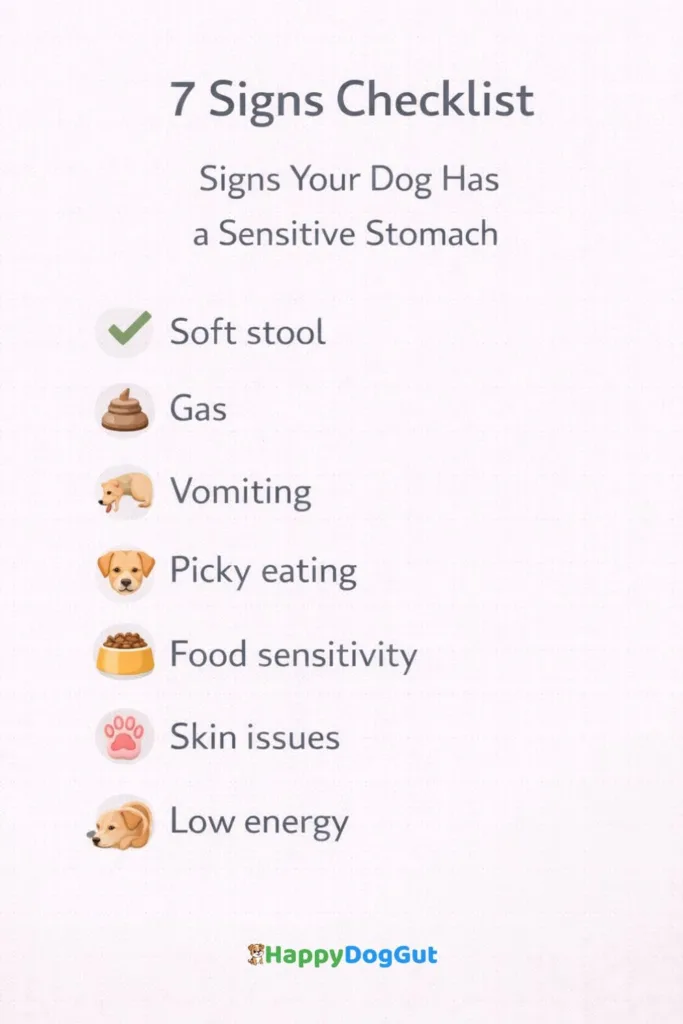
If you’re unsure whether your dog’s digestion is normal or slightly off, this checklist can help. These signs your dog has a sensitive stomach are often subtle—and easy to overlook when they happen occasionally.
1️⃣ Frequent Soft Stool (Not Always Diarrhea)
💩 Inconsistent Stool Texture
Instead of firm, well-formed stool, you may notice it’s often softer than normal—sometimes formed, sometimes loose.
⚖️ Not fully formed But not severe diarrhea
This is the gray area many owners ignore. It’s not watery enough to feel urgent, but not firm enough to be ideal either.
👀 Common but often overlooked
Because it doesn’t look severe, this pattern is easy to dismiss. However, frequent soft stool can be one of the earliest signs of digestive sensitivity.
If your dog frequently experiences loose stool, it may be a sign of underlying digestive sensitivity. While identifying the cause is important, supporting hydration during episodes also matters. Our article on Electrolytes for dogs with diarrhea explains when electrolyte support may be helpful.
If stool consistency continues to fluctuate or worsen, it’s important to understand when it may need attention. Our guide on When to See a Vet for loose stool explains when to monitor and when to take the next step.
This first sign alone doesn’t confirm a problem—but when it appears consistently, it’s worth paying closer attention.
2️⃣ Excess Gas or Bloating
🌬️ Smelly or Frequent Gas
Occasional gas can be normal, but frequent or unusually foul-smelling gas may suggest that food isn’t being digested efficiently.
🍽️ Discomfort After Meals
You might notice your dog’s abdomen feels slightly bloated, or they seem restless, stretch more, or appear uncomfortable after eating.
⚠️ A Sign of Poor digestion
Excess gas often results from fermentation of undigested food in the gut. This can indicate that certain ingredients aren’t being tolerated well.
Like soft stool, gas alone isn’t always a problem—but when it happens regularly, it can point toward underlying digestive sensitivity.
3️⃣ Occasional Vomiting
🤢 Not frequent, But recurring
This isn’t constant vomiting—it happens occasionally, maybe once every few weeks or after certain meals. Because it’s not frequent, it’s often ignored.
🍽️ After Eating or on An Empty stomach
Some dogs may vomit shortly after meals if food doesn’t sit well, while others may vomit bile early in the morning when the stomach is empty.
⚠️ A subtle Digestive signal
Occasional vomiting can indicate that the stomach is sensitive to certain ingredients, feeding timing, or portion sizes.
On its own, it may not seem serious—but when combined with other signs like soft stool or gas, it can point toward an underlying sensitivity pattern.
4️⃣ Picky Eating or Food Avoidance
🍽️ Eats sometimes, Skips sometimes
You may notice your dog eats one meal eagerly and then ignores the next. This inconsistency can feel confusing, especially when there’s no obvious reason.
🤔 Not always just behavior
Picky eating is often assumed to be a habit or training issue, but it can also be linked to how the dog feels after eating. If certain foods cause mild discomfort, dogs may start avoiding them.
⚠️ A possible Sign of Digestive sensitivity
When eating patterns become inconsistent—especially alongside other signs like gas or soft stool—it may reflect underlying digestive discomfort rather than simple fussiness.
Understanding the reason behind food avoidance helps avoid unnecessary food switching, which can sometimes make sensitivity worse.
5️⃣ Stool Changes With Food Switching
🔄 Sudden Sensitivity After Diet Change
If your dog’s stool becomes soft or irregular soon after switching food, it may indicate that the new ingredients aren’t being tolerated well.
⚠️ Poor Tolerance to new formulas
Dogs with sensitive stomachs often struggle with ingredient changes—especially when proteins, fat levels, or additives vary significantly.
🧪 May Signal underlying Food sensitivity
Frequent reactions to different foods can suggest that certain ingredients are triggering digestive responses.
If you notice consistent issues after food changes, a more structured approach can help. Our guide on Elimination diet for Food Allergies explains how to identify potential triggers more clearly instead of guessing.
6️⃣ Skin Issues Linked to Diet
🐾 Itching and Scratching
Frequent scratching—especially around the paws, belly, or ears—can sometimes be linked to dietary sensitivity rather than just environmental factors.
👂 Recurring Ear Infections
Chronic or repeated ear issues may also be connected to underlying food-related reactions in some dogs.
🔗 The Gut–Skin Connection
The digestive system and skin are closely linked through the immune system. When the gut is irritated or imbalanced, it can show up externally as skin problems.
If you’re noticing both digestive changes and skin symptoms together, it may be worth exploring patterns more closely. Our guide on Signs of Food Intolerance in dogs explains how diet-related reactions can present in multiple ways.
Skin issues don’t always start at the skin—sometimes, the root cause is deeper in the gut.
7️⃣ Inconsistent Appetite or Energy
⚡ Eats, but seems Low on Energy
Your dog may still eat regularly, but you notice they’re less active, less playful, or tire more easily than usual.
🔍 Subtle behavioral changes
These changes are often gradual—slightly less enthusiasm for walks, more resting, or reduced engagement. Because they’re mild, they’re easy to overlook.
⚠️ May reflect underlying digestive discomfort
When digestion isn’t optimal, nutrient absorption and overall comfort can be affected. This can show up as lower energy even if food intake looks normal.
Recognizing early symptoms is the first step in managing digestive issues. However, these signs are often part of a broader pattern rather than isolated problems. For a complete understanding, refer to our Dog Sensitive Stomach Guide, which explains causes, symptoms, and solutions in detail.
On its own, this sign may not seem significant—but when combined with other patterns like soft stool, gas, or picky eating, it can point toward a sensitive stomach.
Why Many Owners Miss These Signs
One of the biggest reasons digestive issues go unnoticed is simple: dogs often appear “normal” even when something is slightly off.
🐾 “He’s acting fine” Mindset
If your dog is still eating, playing, and responding normally, it’s easy to assume everything is okay. Mild digestive discomfort doesn’t always change behavior dramatically, so early signs get overlooked.
⚖️ Symptoms feel too mild to matter
Soft stool, occasional gas, or picky eating don’t seem urgent. Because they aren’t severe, they rarely trigger immediate concern—even when they happen regularly.
⏳ Gradual changes are easy to ignore
Digestive sensitivity often develops slowly. Small shifts in stool consistency, appetite, or energy can blend into daily routine, making them harder to recognize as a pattern.
🧠 Normalization of Recurring patterns
When something happens often enough, it starts to feel “normal.” Many owners adjust expectations instead of questioning why it’s happening in the first place.
If you’ve ever thought, “it’s probably nothing because my dog seems fine,” you’re not alone. Our guide on Why does my dog have soft stools but is acting normal explores this exact situation in more detail.
Recognizing these subtle patterns early can make a big difference in long-term digestive health.
When It’s Just Sensitivity vs Something More Serious
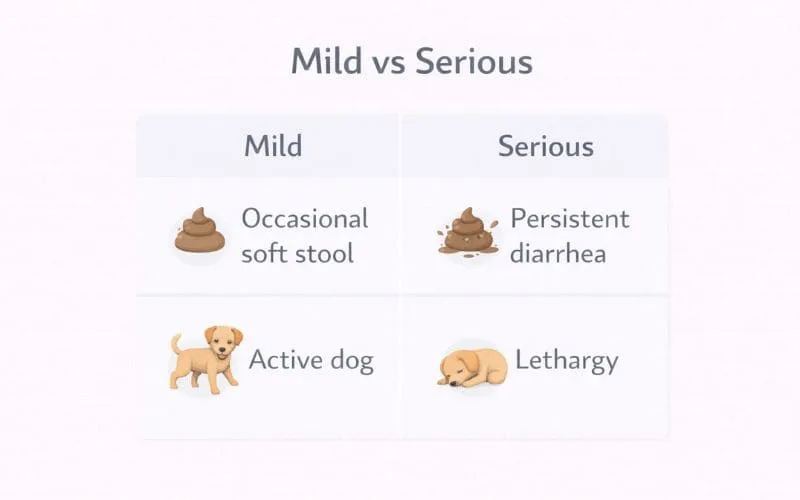
Not every digestive issue means something serious—but it’s important to understand where normal sensitivity ends and when deeper evaluation may be needed.
⚖️ Mild vs Chronic patterns
Mild sensitivity usually shows up as occasional soft stool, gas, or minor appetite changes. Chronic issues tend to be more frequent, persistent, and harder to manage with simple diet adjustments.
⏳ Duration matters
A short-term digestive upset may resolve on its own within a day or two. But if symptoms continue, repeat often, or worsen over time, it may indicate something beyond simple sensitivity.
🐾 Behavior changes are important signals
If your dog becomes lethargic, loses appetite consistently, or shows signs of discomfort, it suggests the issue may be more than just mild digestive sensitivity.
🚨 Watch for Red flags
Signs like persistent diarrhea, vomiting, weight loss, or blood in the stool should not be ignored. These may require more structured evaluation rather than home adjustments alone.
If you’re unsure where your dog’s symptoms fall, reviewing When to worry about Diarrhea in dogs can help you understand when it’s appropriate to monitor—and when to take action.
The goal isn’t to overreact—but also not to overlook patterns that may need attention.
What Causes Sensitive Stomach in Dogs?
A sensitive stomach doesn’t usually come from a single cause. In most cases, it’s the result of multiple factors affecting how well your dog’s digestive system handles food and changes.
🍗 Food Intolerance
Some dogs react poorly to specific ingredients, such as certain proteins, fats, or additives. Unlike true allergies, these reactions are often milder but can still lead to soft stool, gas, or occasional vomiting.
🥣 Ingredient Quality and Complexity
Highly processed foods, multiple protein sources, or rich formulations can be harder to digest—especially for sensitive dogs. Simpler, more consistent ingredients are often easier on the gut.
🦠 Gut Imbalance (Microbiome changes)
The balance of bacteria in the digestive tract plays a key role in digestion. When this balance is disrupted—due to diet changes, stress, or medication—digestive sensitivity can increase.
😟 Stress and Environmental changes
Dogs can experience digestive upset from stress, including changes in routine, travel, or new environments. The gut and nervous system are closely connected, so emotional stress can affect digestion.
🐾 Age-related changes
Puppies and senior dogs may both have more sensitive digestion. Puppies are still developing their gut systems, while older dogs may experience slower digestion or reduced tolerance over time.
Understanding the cause helps guide the right approach—whether that’s diet consistency, ingredient adjustments, or broader digestive support.
What You Can Do If Your Dog Has a Sensitive Stomach
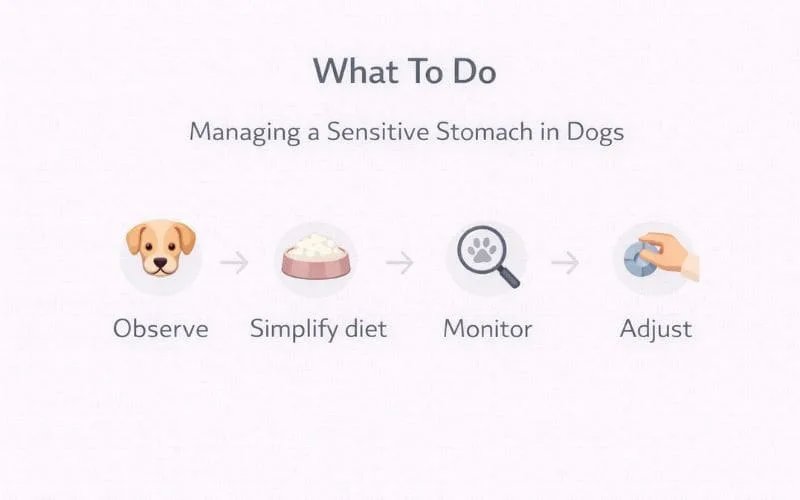
If you’re noticing consistent signs of digestive sensitivity, small, structured changes often make a bigger difference than frequent trial-and-error.
🥣 Focus on Diet consistency
Frequent food changes can make sensitivity worse. Stick to one well-tolerated formula and give your dog time to adjust. Stability helps the digestive system reset and function more predictably.
🍗 Choose simple, Easy-to-digest ingredients
Foods with fewer ingredients and single protein sources are often easier to tolerate. If you’re exploring options, our guide on Best Limited Ingredient dog foods can help you identify simpler formulas.
🔄 Make Slow transitions when changing food
Switching food too quickly is a common cause of digestive upset. Gradually transition over 7–10 days to allow the gut to adapt without triggering symptoms.
If your dog shows signs of digestive sensitivity, reviewing how you transition foods is an important step. Many symptoms are triggered by avoidable mistakes during diet changes. Our guide on Common mistakes during dog food transition explains this in detail.
🧪 Support Gut balance when needed
In some cases, adding targeted support can help. For example, Prebiotics for Gut Health in dogs may support beneficial bacteria, while Digestive Enzymes for dogs can help with nutrient breakdown. These should complement—not replace—a stable diet.
📊 Monitor patterns, Not just single events
Look for trends over time—stool consistency, gas, appetite, and energy levels. One off-day isn’t as important as repeated patterns.
Improving a sensitive stomach is usually about consistency, simplicity, and observation—not quick fixes.
FAQs: Sensitive Stomach in Dogs
How do I know if my dog has a sensitive stomach?
A sensitive stomach is usually identified through patterns rather than a single symptom. Signs like frequent soft stool, occasional vomiting, gas, picky eating, or changes after food switching often point toward digestive sensitivity. If these issues happen repeatedly—even if mild—it suggests the gut is reacting to something. Tracking consistency over time is more helpful than focusing on one isolated episode.
Is soft stool always a problem?
Not necessarily. Occasional soft stool can happen due to temporary changes like stress, minor diet variation, or environmental factors. However, if stool is consistently soft, poorly formed, or fluctuates frequently, it may indicate underlying sensitivity. The key difference is frequency—what happens once in a while is usually normal, but repeated patterns deserve attention.
Can a sensitive stomach go away?
In many cases, yes—especially when the cause is diet-related or linked to temporary imbalance. With consistent feeding, appropriate ingredients, and gradual transitions, many dogs improve significantly. However, some dogs have long-term sensitivity and require ongoing management rather than a complete “cure.” The goal is stability, not perfection.
What foods commonly cause sensitivity in dogs?
Common triggers include certain proteins (like chicken or beef for some dogs), high-fat foods, artificial additives, and complex multi-ingredient formulas. Sudden diet changes can also trigger symptoms. Every dog is different, so identifying triggers often requires observation or structured approaches like elimination diets rather than guessing.
Are probiotics necessary for dogs with sensitive stomachs?
Probiotics are not always necessary, but they can be helpful in certain cases. They support the balance of gut bacteria, which may improve stool consistency and digestion. However, they work best as part of a broader plan that includes proper diet and consistency—not as a standalone solution.
Can stress cause digestive issues in dogs?
Yes, stress can directly affect digestion. Changes in routine, travel, new environments, or even separation anxiety can lead to soft stool, reduced appetite, or mild GI upset. The gut and nervous system are closely connected, so emotional stress can show up as physical digestive symptoms.
Should I switch my dog’s food often?
Frequent food switching is usually not recommended, especially for dogs with sensitive stomachs. Constant changes can disrupt the gut microbiome and make symptoms worse. It’s generally better to find a well-tolerated food and stick with it, making changes only when necessary and always gradually.
Is a sensitive stomach common in certain dog breeds?
Yes, some breeds may be more prone to digestive sensitivity due to genetics or metabolism. However, any dog—regardless of breed—can develop a sensitive stomach based on diet, environment, or health factors. Breed can play a role, but daily management and diet are usually more important.
Final Thoughts
The early signs of a sensitive stomach in dogs are often subtle. Occasional soft stool, mild gas, or small changes in appetite can seem harmless on their own—but over time, these patterns can reveal a bigger picture.
What matters most is consistency. One off-day isn’t a concern, but repeated digestive changes shouldn’t be ignored. Paying attention to patterns—rather than isolated symptoms—helps you understand what your dog’s body is trying to tell you.
Diet plays a major role in digestive health. The right balance of ingredients, consistency in feeding, and gradual transitions can make a significant difference in how your dog feels day to day. If you’re considering adjustments, exploring Best Dog foods for sensitive stomachs is a good place to start.
For dogs with more persistent or complex issues, structured approaches like Diet Support for dogs with IBD can provide deeper insight into long-term management.
And if symptoms become frequent, worsen, or raise concern, knowing When to See a Vet for loose stool ensures you take the right step at the right time.
Digestive health isn’t about perfection—it’s about awareness, consistency, and making informed choices that support your dog over time.

Hi, I’m Maddy, the writer behind HappyDogGut.com.I’m passionate about helping dog parents better understand gut health, sensitive stomachs, and nutrition through clear, practical, and research-based content. Every article is carefully researched using trusted veterinary and pet health resources, so you can make more informed decisions for your dog’s digestive health.Happy Gut = Happy Dog! 🐾
All content on Happy Dog Gut follows our Editorial Policy.




Pingback: What NOT to Feed Dogs With Sensitive Stomach (Avoid These!)
Pingback: Dog Sensitive Stomach Guide (Causes, Symptoms & Best Diet)
Pingback: Common Mistakes During Dog Food Transition (Don’t Do These)
Pingback: Why Does My Dog Have Soft Stools but Is Acting Normal?