
Switching dog food is something almost every owner does at some point—whether it’s for better nutrition, budget, or addressing digestive issues. But what many don’t realize is that common mistakes during dog food transition are one of the biggest reasons dogs develop problems like diarrhea, gas, or even food refusal.
In most cases, the issue isn’t the new food itself—it’s how the transition is done. Many owners assume that if a new food is “better,” it should be introduced immediately. This mindset often leads to sudden changes that the digestive system isn’t prepared for.
Symptoms like loose stool, bloating, or inconsistent appetite are often transition-related rather than signs of a serious condition. If you’re unsure what’s normal during this period, understanding How long does diarrhea last in dogs can help set expectations. You may also recognize early patterns discussed in Signs your dog has a sensitive stomach.
In this guide, we’ll break down the most common mistakes owners make during food transitions—and how to avoid them with a simple, structured approach.
⚠️ This article is for educational purposes only and does not replace veterinary advice.
Why Dog Food Transitions Matter More Than You Think
Switching dog food isn’t just about changing what’s in the bowl—it directly affects how your dog’s digestive system functions. Even a high-quality food can cause problems if introduced too quickly.
🦠 Gut Microbiome needs time to adjust
Your dog’s digestive system relies on a balance of beneficial bacteria to break down food efficiently. When you change food, especially proteins or ingredients, this microbiome needs time to adapt. Sudden changes can disrupt this balance.
⚙️ Digestive System adapts gradually
Enzymes and digestive processes adjust based on what your dog eats regularly. A new formula—different protein, fat level, or fiber—requires time for the body to adapt properly.
⚡ Sudden changes can shock the gut
Switching food too quickly can overwhelm the digestive system. This “shock” often shows up as diarrhea, gas, or refusal to eat—not because the food is bad, but because the transition was too abrupt.
🐾 Sensitive dogs react more strongly
Dogs with sensitive stomachs are especially prone to transition issues. Even small changes can trigger noticeable symptoms if not introduced slowly.
Gradual food transitions are important because a dog’s digestive system needs time to adjust to new ingredients and nutrient profiles. The ASPCA’s Dog Nutrition Guidance also highlights the importance of proper feeding practices to support digestion and overall health, especially when making dietary changes.
Understanding this process helps explain why transitions need to be gradual—not rushed.
Common Mistakes During Dog Food Transition
Understanding these common mistakes during dog food transition can help you avoid unnecessary digestive issues and make the process smoother for your dog.
❌ 1. Switching Too Fast
⚡ 1–2 day transition
Many owners switch food within a day or two, assuming the new food will be better immediately.
💥 Causes “gut shock”
The digestive system doesn’t have time to adapt, leading to imbalance in gut bacteria.
💩 Often results in diarrhea
Loose stool, gas, or discomfort are common when the transition is rushed.
❌ 2. Mixing Foods Incorrectly
⚖️ Random ratios
Adding “some new food” without a clear plan can create inconsistency in digestion.
🔄 Inconsistent feeding patterns
Changing ratios daily without structure confuses the digestive system.
⚠️ Leads to unstable digestion
This often results in fluctuating stool quality and unpredictable reactions.
❌ 3. Choosing the Wrong Protein Too Quickly
🍗➡️🥩➡️🐟 Rapid protein switching
Moving from chicken to beef to fish in a short time doesn’t allow the body to adapt or identify tolerance.
🚨 Can trigger sensitivity
Different proteins affect digestion differently. Rapid changes increase the chance of reactions.
📊 No baseline established
Without sticking to one protein long enough, it becomes difficult to understand what your dog tolerates well.
If your dog is sensitive, a structured approach is much safer. Our guide on Protein rotation strategy for sensitive dogs explains how to introduce proteins without triggering digestive issues.
❌ 4. No Observation Period
⏳ Changing before results appear
Switching foods again too quickly—before seeing how your dog responds—prevents the digestive system from stabilizing.
💩 Not tracking stool or symptoms
Without observing stool consistency, appetite, or energy, it’s hard to know whether the new food is working.
🔍 Missing important patterns
Digestive sensitivity often shows up over time. Skipping an observation period makes it difficult to identify what’s helping or causing issues.
❌ 5. Switching During Existing Digestive Issues
⚠️ Already diarrhea or upset present
Changing food while your dog is already experiencing diarrhea or digestive discomfort can make things worse.
💥 Adds more stress to the gut
The digestive system is already unstable—introducing new food increases the workload instead of reducing it.
🛑 Stabilize first, then transition
In these situations, it’s better to calm the gut before making changes. Our guide on Dog Gut Reset Protocol explains how to do this step by step.
❌ 6. Adding Too Many New Things at Once
🧪 New food + Probiotics + Toppers
Introducing multiple changes at the same time makes it impossible to know what’s actually helping—or causing a reaction.
⚖️ Too many variables
If symptoms appear, you won’t be able to identify the trigger.
🎯 Keep it simple
Introduce one change at a time to clearly track your dog’s response.
❌ 7. Ignoring Early Warning Signs
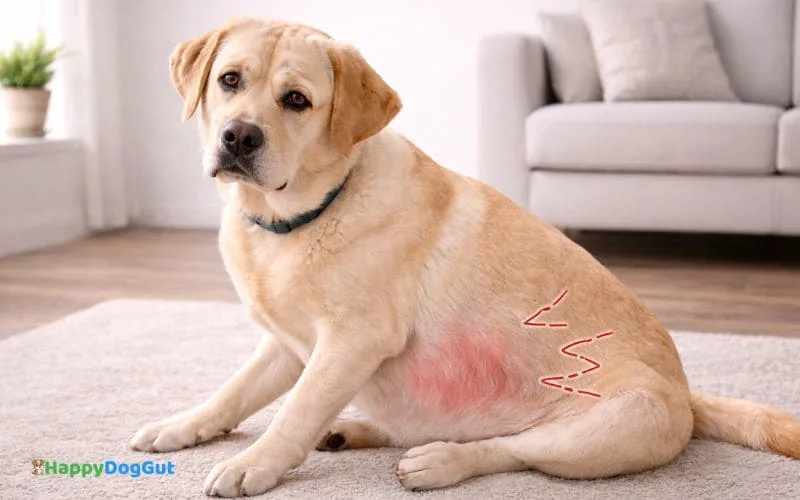
💩 Soft Stool gets ignored
Many owners wait until diarrhea becomes severe before taking action.
🌬️ Gas and Discomfort overlooked
Early signs like bloating or mild digestive changes are often dismissed.
🚨 Small issues can escalate
Ignoring early signals can lead to more persistent or serious digestive problems.
Many digestive problems start with improper food transitions, but understanding the full context of gut health is equally important. Our Dog Sensitive Stomach Guide explains how these mistakes fit into the bigger picture.
If you’re unsure when symptoms need attention, reviewing When to Worry about Diarrhea in dogs can help you decide when to act.
Avoiding these mistakes makes transitions smoother—and helps prevent unnecessary digestive setbacks.
What a Proper Dog Food Transition Should Look Like
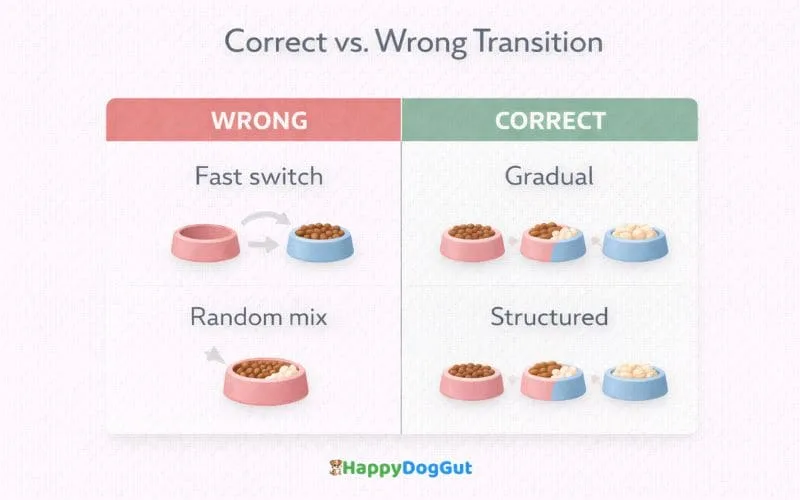
A smooth transition is less about the new food—and more about how gradually and consistently you introduce it. A structured approach helps the digestive system adjust without unnecessary stress.
📅 Follow a 7–10 day transition
Most dogs benefit from a gradual transition over at least a week. This gives the gut microbiome and digestive enzymes time to adapt to the new ingredients.
⚖️ Increase New Food Step by Step
Start with a small portion of the new food mixed into the current diet, then slowly increase it over several days. This controlled progression reduces the risk of diarrhea or gas.
🔄 Maintain Consistency
Feed at the same times, use consistent portions, and avoid adding extra foods during the transition. Stability helps the digestive system adjust more predictably.
🥣 Choose a Simple, Digestible formula
Switching to a complex or rich formula can make transitions harder. If your dog is sensitive, consider options from Best dog foods for sensitive stomachs, which focus on easier digestion and simpler ingredients.
A proper transition isn’t rushed—it’s steady, predictable, and based on how your dog responds over time.
Transition Timeline Example (Day-by-Day)
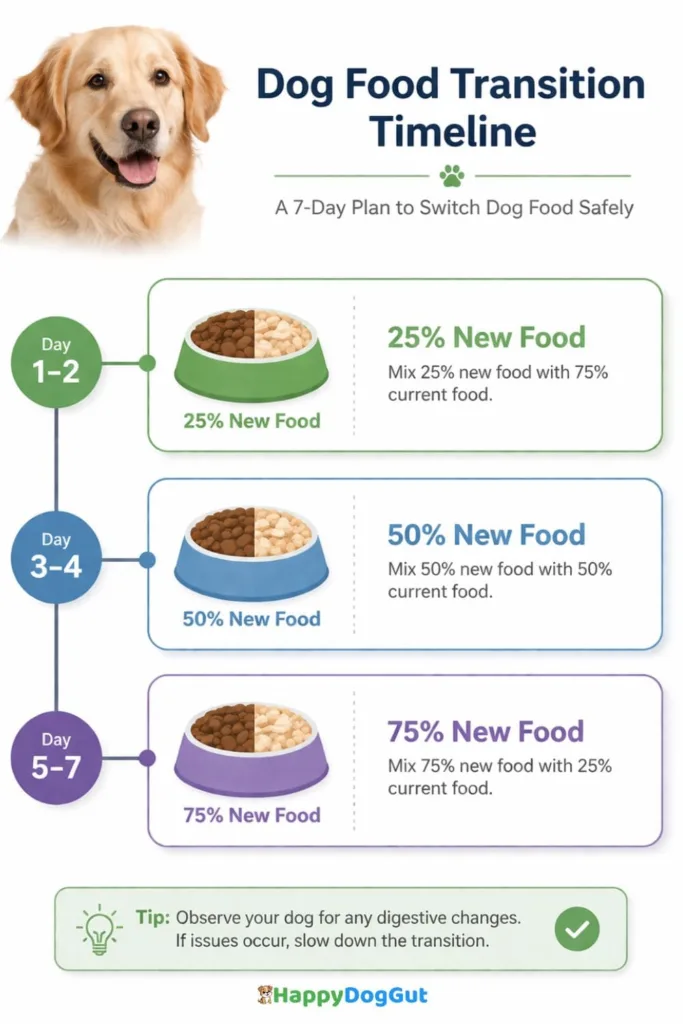
A structured timeline makes food transitions predictable and much easier on your dog’s digestion. Instead of guessing, following a clear ratio plan helps reduce the risk of diarrhea, gas, or food refusal.
📅 Day 1–2 → 75% Old food / 25% New food
Start by introducing a small portion of the new food while keeping most of the current diet the same. This allows the digestive system to begin adjusting without stress.
⚖️ Day 3–4 → 50% Old / 50% New
Gradually increase the new food while reducing the old. At this stage, monitor stool consistency, appetite, and energy closely.
🔄 Day 5–7 → 25% Old / 75% New
By now, your dog should be adapting to the new food. Continue increasing the new portion while phasing out the old food slowly.
🐾 After Day 7 → 100% New food (if well tolerated)
If there are no signs of digestive upset, you can fully transition to the new food. If mild symptoms appear, slow the process instead of pushing forward.
⏳ Adjust based on your Dog’s response
Some dogs—especially those with sensitive stomachs—may need a longer transition (up to 10–14 days). Slowing down is always safer than rushing.
A clear timeline reduces guesswork and helps ensure a smoother, more stable transition.
Signs the Transition Is Going Well
A successful food transition shows up through consistency and comfort, not sudden changes. Watching these signs helps you know whether to continue as planned or slow down.
💩 Normal, Well-formed stool
Stool should remain firm and consistent without sudden looseness or fluctuation. This is one of the clearest indicators that the digestive system is adapting well.
🍽️ Steady Appetite
Your dog continues eating meals regularly without hesitation or refusal. A consistent appetite suggests the new food is being tolerated.
🌬️ Little to no Gas
Minimal bloating or gas indicates that food is being digested efficiently and not fermenting excessively in the gut.
⚡ Stable Energy levels
Your dog remains active, alert, and engaged. No noticeable drop in energy or behavior changes means the transition isn’t causing discomfort.
⏳ Consistency over time matters
These signs should remain stable across several days—not just one good meal. Consistency is what confirms the transition is working.
If all these signs are present, you can continue the transition confidently.
Signs You Should Slow Down or Stop
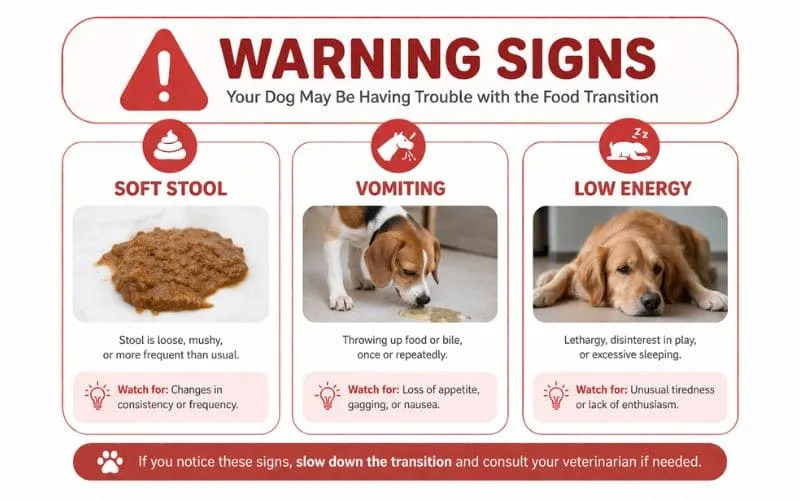
Not every transition goes smoothly—and that’s okay. The key is recognizing early signs that your dog’s digestive system needs more time or a different approach.
💩 Loose Stool or Diarrhea
If stool becomes soft, watery, or inconsistent, it’s a clear sign the transition may be too fast. Slow down the process or pause at the current ratio until things stabilize.
🤢 Vomiting
Even occasional vomiting during a transition shouldn’t be ignored. It may indicate that the new food isn’t being tolerated well or was introduced too quickly.
🍽️ Food Refusal
If your dog suddenly stops eating or avoids the new food, it could be due to digestive discomfort or dislike. Forcing the transition can make things worse.
😴 Lethargy or Low Energy
A noticeable drop in energy or activity may suggest your dog isn’t feeling well during the transition. This goes beyond normal adjustment and needs attention.
⚠️ Know when to take the next step
If symptoms persist or worsen, it’s important not to rely on trial and error. Our guide on When to See a vet for loose stool can help you decide when professional evaluation is needed.
Slowing down—or temporarily stopping—is often the smartest move when these signs appear.
FAQs: Dog Food Transition
How long should a dog food transition take?
A proper dog food transition typically takes 7–10 days, but some dogs—especially those with sensitive stomachs—may need up to 14 days. The goal is not to rush the process but to allow the digestive system and gut bacteria time to adapt. If your dog shows any signs of discomfort, slowing down the transition is always the safer option.
Can I switch dog food immediately?
Switching food immediately is generally not recommended. Sudden changes can disrupt the gut microbiome and lead to diarrhea, gas, or vomiting. Even if the new food is high quality, the digestive system still needs time to adjust. Gradual transitions reduce the risk of these issues significantly.
Why does my dog get diarrhea after switching food?
Diarrhea after switching food is often caused by rapid changes in ingredients, protein sources, or fat levels. The gut bacteria need time to adapt, and sudden shifts can create imbalance. In many cases, it’s not the food itself—but the speed of the transition—that causes the reaction.
What is the best way to transition dog food?
The best approach is a gradual mixing method over 7–10 days, starting with mostly old food and slowly increasing the new food. Keeping feeding times consistent, avoiding extra treats, and monitoring stool daily are also important parts of a successful transition.
Can I mix two dog foods long term?
Yes, some owners mix two foods long term, but it should be done carefully. Both foods should be compatible in terms of ingredients and nutrition. However, for sensitive dogs, sticking to one consistent formula is often better to avoid confusion in digestion and easier symptom tracking.
Should I add probiotics during transition?
Probiotics can be helpful during a transition, especially for dogs with sensitive stomachs. They may support gut bacteria balance and reduce digestive upset. However, they should be introduced gradually and not combined with too many other changes at once.
What if my dog refuses the new food?
Food refusal can happen due to taste preference or mild digestive discomfort. Instead of forcing the switch, slow down the transition and try smaller portions mixed more gradually. Sometimes warming the food slightly or maintaining a consistent feeding schedule can help.
Can I switch proteins frequently?
Frequent protein switching is not ideal, especially during transitions. It prevents the digestive system from establishing tolerance and makes it harder to identify what works best. It’s better to stick with one protein long enough to observe how your dog responds before making changes.
Final Thoughts
Most digestive issues during a food switch aren’t caused by the food itself—they’re caused by transition mistakes. Rushing the process, adding too many changes, or ignoring early signs can quickly lead to problems like diarrhea, gas, or food refusal.
The safest approach is simple: Slow = Safe. Giving your dog’s digestive system time to adapt makes a significant difference in how well the new food is tolerated.
Pay attention to patterns, not just one-off reactions. Stool consistency, appetite, and energy levels provide valuable signals about how your dog is responding. Observing these patterns helps you adjust before small issues turn into bigger ones.
Keeping things simple is just as important. Avoid unnecessary extras, stick to a structured plan, and introduce changes one at a time. This makes it easier to identify what’s working—and what isn’t.
If you’re building a more complete digestive support plan, you can explore:
Fixing small mistakes early often prevents bigger problems later. A careful, consistent approach leads to smoother transitions and better long-term digestive health.

Hi, I’m Maddy, the writer behind HappyDogGut.com.I’m passionate about helping dog parents better understand gut health, sensitive stomachs, and nutrition through clear, practical, and research-based content. Every article is carefully researched using trusted veterinary and pet health resources, so you can make more informed decisions for your dog’s digestive health.Happy Gut = Happy Dog! 🐾
All content on Happy Dog Gut follows our Editorial Policy.
Pingback: Best Dog Food for Sensitive Stomachs (Vet-Approved)
Pingback: Dog Sensitive Stomach Guide (Causes, Symptoms & Best Diet)