

Many owners try to improve their dog’s digestion with better food—but sometimes, the problem isn’t what you’re feeding, it’s what you shouldn’t be feeding. Understanding what not to feed dogs with sensitive stomach is just as important as choosing the right diet.
A common mistake is assuming that “healthy” human foods or occasional treats are harmless. In reality, even small amounts of the wrong foods can trigger soft stool, gas, or vomiting—especially in dogs with sensitive digestion. This is where psychology plays a role. It’s easy to think, “it’s just a small treat,” but repeated small triggers can build into ongoing digestive issues.
Many of the early warning signs—like mild stool changes or occasional discomfort—are often overlooked. If you’re unsure whether your dog’s symptoms point to sensitivity, reviewing Signs your dog has a sensitive stomach can help you recognize patterns.
In this guide, we’ll break down a clear, practical list of foods to avoid so you can reduce digestive triggers and support more stable gut health. You can also explore Best dog foods for sensitive stomachs for safer feeding options.
⚠️ This article is for educational purposes only and does not replace veterinary advice.
Why Some Foods Trigger Sensitive Stomach in Dogs
Not all foods are processed the same way by every dog. What works well for one dog may cause discomfort in another—especially when digestion is already sensitive.
⚙️ Digestibility Matters
Some ingredients are easier for the body to break down than others. Highly digestible foods are absorbed efficiently, while harder-to-digest ingredients can sit longer in the gut and lead to gas or loose stool.
🥓 Fat content plays a major role
High-fat foods can slow digestion and place extra strain on the digestive system. In sensitive dogs, this often shows up as diarrhea, bloating, or discomfort after meals.
🧪 Ingredient Complexity
Foods with multiple proteins, additives, or fillers can make digestion more difficult. The more complex the formula, the harder it can be for a sensitive gut to process everything smoothly.
🔥 Gut Inflammation response
Certain foods may trigger mild inflammation in the digestive tract. This doesn’t always cause immediate symptoms, but over time it can lead to recurring issues like soft stool or irritation.
🐾 Individual Tolerance varies
Every dog is different. Some tolerate dairy or certain proteins well, while others react quickly. Sensitivity is often about the individual dog—not just the ingredient itself.
Understanding these factors helps explain why avoiding certain foods can make a noticeable difference in digestive stability.
What NOT to Feed Dogs With Sensitive Stomach
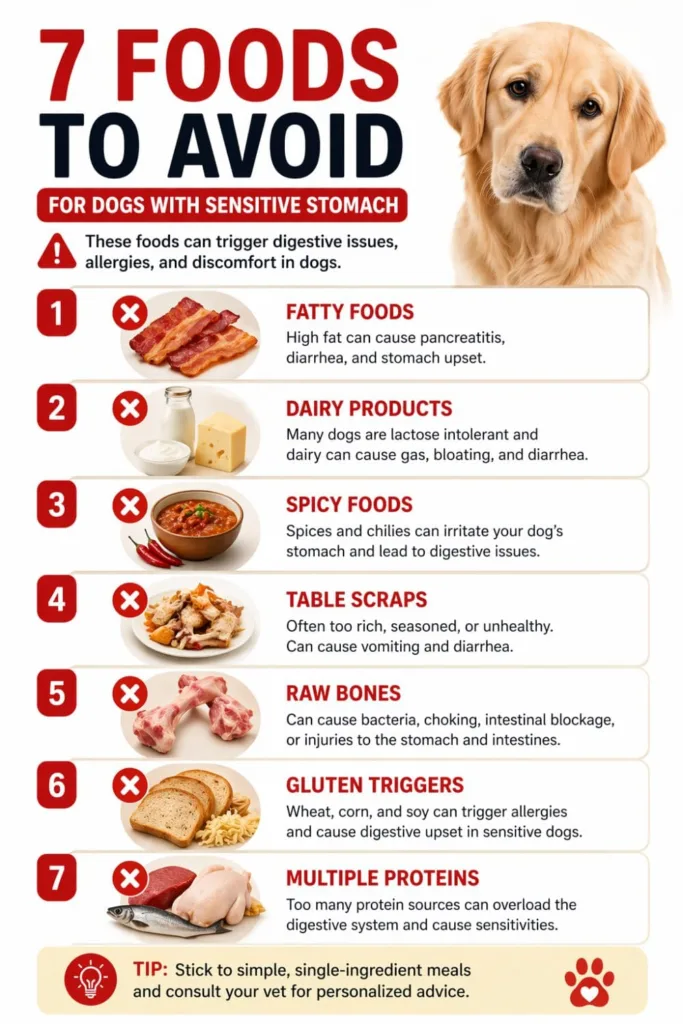
Understanding what not to feed dogs with sensitive stomach is essential if you want to prevent recurring digestive issues like soft stool, gas, or vomiting. Even small amounts of the wrong foods can trigger noticeable reactions.
❌ 1. High-Fat Foods
🥓 Fat slows digestion
High-fat foods take longer to process, which can overload a sensitive digestive system.
💩 Common trigger for diarrhea
Excess fat often leads to loose stool or greasy stool in dogs with sensitivity.
⚠️ Pancreatic stress risk
In some cases, very fatty foods can put strain on the pancreas, especially in dogs prone to digestive issues.
❌ 2. Dairy Products
🥛 Many dogs are lactose intolerant
Unlike humans, many dogs lack sufficient lactase—the enzyme needed to properly break down lactose found in milk, cheese, and other dairy products.
🌬️ Gas and Bloating
When lactose isn’t digested properly, it ferments in the gut, leading to gas buildup, bloating, and discomfort.
💩 Loose stool and Digestive upset
Dairy can easily trigger soft stool or diarrhea in sensitive dogs, even in small amounts.
⚠️ Often mistaken as “safe treats”
Foods like cheese or yogurt are commonly given as treats, but for sensitive dogs, they can quietly contribute to ongoing digestive instability.
❌ 3. Spicy or Seasoned Foods
🌶️ Irritates the gut lining
Spices, oils, and seasonings can irritate the digestive tract and worsen sensitivity.
🚫 Not designed for dogs
Human food seasoning is not suitable for canine digestion.
🔥 Can increase inflammation
These foods may contribute to gut irritation and discomfort over time.
❌ 4. Table Scraps
🍽️ Inconsistent ingredients
Table scraps vary widely in ingredients, making it difficult for the digestive system to adapt.
🧂 Hidden Fats and Spices
Even small portions may contain oils, salt, or seasonings that trigger issues.
⚠️ Leads to digestive confusion
Irregular feeding patterns and mixed foods can disrupt gut stability.
❌ 5. Raw Bones (In Some Dogs)
🦴 Harder to digest
Some dogs struggle to process raw bones, especially if their digestion is already sensitive.
⚠️ Risk of irritation
Bones can irritate the digestive tract or lead to inconsistent stool.
🐾 Not suitable for every dog
Tolerance varies—what works for one dog may not work for another.
❌ 6. Gluten or Grain Triggers (Some Dogs)
🌾 Not all dogs are affected
Grains are not inherently harmful, but some dogs may have sensitivity to certain types.
🔍 Individual tolerance matters
Wheat and gluten-containing ingredients may trigger symptoms in sensitive dogs.
💩 Can lead to digestive changes
Reactions may include soft stool, gas, or mild irritation.
❌ 7. Multiple Protein Mixes
🍗🥩🐟 Harder to digest
Foods with multiple protein sources can be more complex for the gut to process.
⚠️ Increases reaction risk
If a dog reacts, it becomes difficult to identify which protein is the cause.
📊 No clear baseline
Simpler diets make it easier to track tolerance and manage sensitivity.
For better digestive stability, many owners prefer simpler diets. Our guide on Best limited ingredient dog foods explains how fewer ingredients can make digestion more predictable.
Avoiding trigger foods is important, but it’s only one part of managing digestive sensitivity. To understand the bigger picture, including causes and treatment options, see our Dog Sensitive Stomach Guide.
Avoiding these foods doesn’t mean restricting your dog—it means reducing unnecessary digestive stress and creating a more stable feeding routine.
Foods That Are Often Mistaken as “Safe” but Aren’t
Many digestive issues come from foods that seem harmless. These are the ones most owners give without a second thought—yet they often trigger problems in sensitive dogs.
🧀 Cheese (and Dairy-based Treats)
Cheese is commonly used for training or as a reward, but many dogs struggle to digest lactose. Even small amounts can lead to gas, bloating, or soft stool. It may seem like a “safe” treat, but for sensitive stomachs, it’s often a hidden trigger.
🥩 Fatty Meats
Cooked meats like bacon, sausage, or fatty cuts of beef are frequently shared as treats. While dogs may love them, the high fat content can overwhelm digestion and quickly lead to diarrhea or discomfort.
🍽️ Leftovers from Human Meals
Leftovers often contain oils, spices, sauces, and mixed ingredients that aren’t suitable for dogs. Even if the base ingredient seems safe, the added seasoning can irritate the gut and create inconsistent digestion.
🍪 Treat Overload
Giving too many treats—especially different types throughout the day—can disrupt digestive balance. Even if each treat is “dog-safe,” the combined effect can overload the system and lead to soft stool or gas.
⚠️ Why this matters
These foods are tricky because they don’t always cause immediate problems. But over time, repeated exposure can lead to ongoing digestive sensitivity.
Being mindful of these “hidden triggers” can make a noticeable difference in your dog’s gut stability.
What You SHOULD Feed Instead
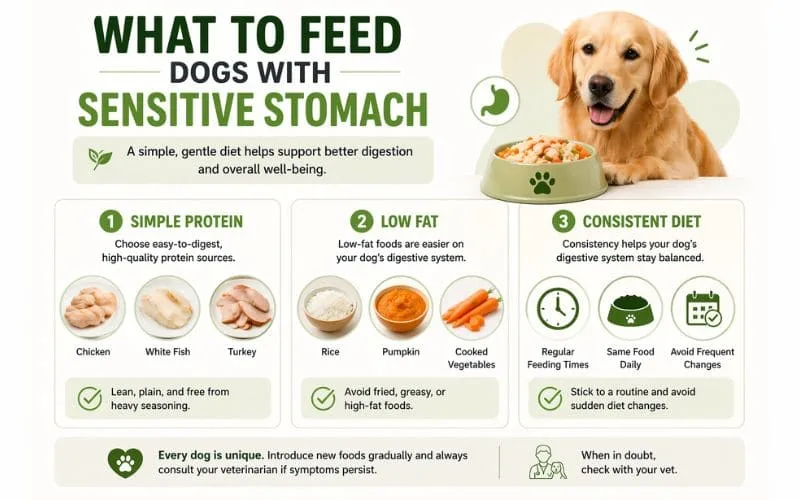
When managing a sensitive stomach, the goal isn’t just avoiding triggers—it’s choosing foods that are easy to digest, consistent, and gentle on the gut.
🍗 Simple, Single Protein sources
Stick to one primary protein (like chicken, turkey, or lamb) rather than multiple blends. Simpler formulas are easier for the digestive system to process and help you track tolerance more clearly.
🥣 Low-fat, Balanced diets
Moderate to low-fat foods are generally better tolerated by sensitive dogs. They reduce digestive strain and lower the risk of loose stool or discomfort.
🔄 Consistent Feeding routine
Feed the same food at the same times each day. Avoid frequent switching, random treats, or adding extras. Consistency helps stabilize the gut over time.
⚙️ Focus on Easy digestion
Choose foods designed for digestibility—simple ingredients, minimal additives, and balanced nutrition. If you’re exploring options, our guide on Best Dog foods for sensitive stomachs can help you find suitable choices.
🛑 Use reset approach when needed
If your dog is already experiencing digestive upset, it’s better to stabilize first before introducing new foods. Our Dog Gut Reset Protocol explains a structured way to calm the digestive system before transitioning.
The right approach isn’t complicated—it’s about keeping things simple, predictable, and aligned with your dog’s tolerance.
How to Test Food Sensitivity Safely
Figuring out which foods your dog tolerates—or reacts to—requires a structured and patient approach, not guesswork.
🔍 Use an Elimination approach
Start by feeding a very simple diet with limited ingredients (usually a single protein and carbohydrate). This creates a clean baseline so you can identify what your dog tolerates without interference.
➕ Introduce one change at a time
Add new ingredients slowly—one at a time—and give each change several days before introducing another. This helps you clearly identify which food is causing a reaction, if any.
💩 Observe Stool and Behavior closely
Track stool consistency, gas, appetite, and energy levels daily. Even small changes can provide useful clues about how your dog is responding.
⏳ Patience is Key
Food sensitivity testing takes time. Rushing the process or adding multiple foods at once can confuse results and delay progress.
If you want a more detailed, step-by-step method, our guide on Elimination Diet for Food Allergies explains how to do this safely and effectively.
A careful, consistent approach makes it much easier to identify triggers and build a stable, well-tolerated diet.
Signs Food Is Triggering Digestive Issues
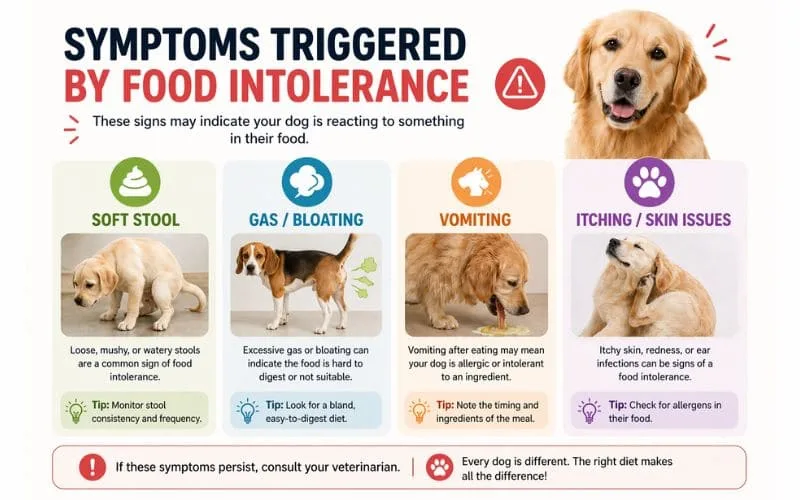
When a dog reacts poorly to certain foods, the signs are often subtle at first—but they tend to repeat. Recognizing these early patterns can help you adjust the diet before issues become more persistent.
💩 Soft or Inconsistent Stool
Frequent soft stool, loose stool, or changes in consistency are one of the most common signs of food-related sensitivity.
🌬️ Gas and Bloating
Excess gas—especially if it’s frequent or unusually strong—can indicate that food isn’t being digested properly.
🤢 Vomiting (Occasional or Recurring)
Even occasional vomiting after meals or on an empty stomach may suggest the food isn’t being tolerated well.
🐾 Itching or Skin Irritation
Digestive sensitivity can sometimes show up through the skin. Scratching, ear irritation, or recurring skin issues may be linked to food reactions.
🔍 Patterns matter more than single events
One off-day isn’t always a concern, but repeated symptoms—especially after certain foods—are a strong signal.
If you’re noticing multiple signs together, our guide on Signs of Food Intolerance in dogs explains how these reactions develop and what to look for in more detail.
Identifying these signals early helps you adjust the diet before discomfort becomes ongoing.
FAQs: Feeding Dogs With Sensitive Stomach
What foods upset a dog’s stomach the most?
Foods that are high in fat, heavily processed, or difficult to digest are the most common triggers. This includes fatty meats, dairy products, spicy or seasoned foods, and table scraps. In many cases, it’s not just one food—but repeated exposure to these types—that leads to ongoing digestive issues. Simpler, consistent diets are usually better tolerated.
Can dogs with sensitive stomach eat chicken?
Yes, many dogs with sensitive stomachs tolerate chicken well because it’s a lean, easily digestible protein. However, not all dogs react the same way. Some may develop sensitivity to chicken over time. The key is to observe how your dog responds and stick with what works rather than frequently switching proteins.
Is rice always safe for dogs?
Plain white rice is commonly used because it’s easy to digest and helps support stool formation. However, it’s not “perfect” for every dog. Some dogs may not tolerate it well long term, especially if overused. Rice works best as part of a short-term bland diet rather than a permanent solution.
Can treats cause diarrhea in dogs?
Yes, especially if treats are high in fat, contain multiple ingredients, or are given in excess. Even if each treat seems harmless, giving too many or mixing different types can overload the digestive system. For sensitive dogs, it’s best to keep treats minimal and consistent.
Is dairy bad for dogs?
Many dogs have difficulty digesting lactose, which makes dairy a common trigger for gas, bloating, and loose stool. While some dogs tolerate small amounts, sensitive dogs often react even to minor servings. It’s generally safer to avoid dairy unless you’re sure your dog tolerates it.
Are raw diets good for dogs with sensitive stomachs?
Raw diets can work for some dogs, but they are not universally suitable—especially for sensitive stomachs. They can be harder to digest for certain dogs and may introduce variability that makes it difficult to track reactions. A simple, consistent, cooked diet is often easier to manage in sensitive cases.
Should I avoid grains completely?
Not necessarily. Grains are not harmful to most dogs, but some may have specific sensitivities to certain grains like wheat. It’s important to focus on your dog’s individual tolerance rather than removing entire categories of food unnecessarily.
What is the safest diet for a dog with a sensitive stomach?
The safest diet is one that is simple, consistent, and well-tolerated by your dog. This usually includes a single protein source, moderate fat levels, and minimal additives. Stability matters more than constantly trying new foods. Observing your dog’s response over time helps you build the most suitable long-term diet.
Final Thoughts
Managing a sensitive stomach starts with one simple principle: avoid unnecessary triggers. Many digestive issues come from foods that seem harmless but don’t suit your dog’s system.
Simplicity matters more than variety. Sticking to a consistent, easy-to-digest diet is often far more effective than constantly trying new foods or adding extras.
It’s also important to remember that every dog is different. What works perfectly for one dog may not work for another. The key is to observe how your dog responds and adjust accordingly.
Pay attention to patterns over time—stool quality, appetite, energy, and skin changes all provide valuable signals. These patterns help you make informed decisions rather than guessing.
Ultimately, prevention is better than treatment. Avoiding problematic foods is much easier than managing ongoing digestive issues later.
If you’re building a more complete gut-health plan, you can explore:
A thoughtful, consistent approach leads to better digestion—and a healthier, more comfortable dog.

Hi, I’m Maddy, the writer behind HappyDogGut.com.I’m passionate about helping dog parents better understand gut health, sensitive stomachs, and nutrition through clear, practical, and research-based content. Every article is carefully researched using trusted veterinary and pet health resources, so you can make more informed decisions for your dog’s digestive health.Happy Gut = Happy Dog! 🐾
All content on Happy Dog Gut follows our Editorial Policy.




Pingback: Dog Sensitive Stomach Guide (Causes, Symptoms & Best Diet)