
Digestive issues are one of the most common concerns dog owners face, yet they’re often misunderstood or overlooked. This dog sensitive stomach guide is designed to help you make sense of what’s normal, what’s not, and what you can actually do about it.
Many symptoms start small—soft stool, occasional gas, or even mild vomiting. Because dogs often continue acting “normal,” these signs are easy to ignore. Over time, however, these patterns can point to an underlying sensitivity that needs attention.
One of the biggest challenges is confusion. Owners often struggle to tell the difference between a simple food-related issue and something more serious. Is it the ingredients? The feeding routine? Or something deeper? If you’re unsure whether your dog is showing early warning signs, our guide on Signs your dog has a sensitive stomach can help you recognize common patterns.
In this complete guide, we’ll break down everything you need to know—from causes and symptoms to diet, supplements, and when to take the next step. You’ll also learn what to avoid, including key triggers explained in What not to feed dogs with sensitive stomach.
⚠️ This article is for educational purposes only and does not replace veterinary advice.
What Is a Sensitive Stomach in Dogs?
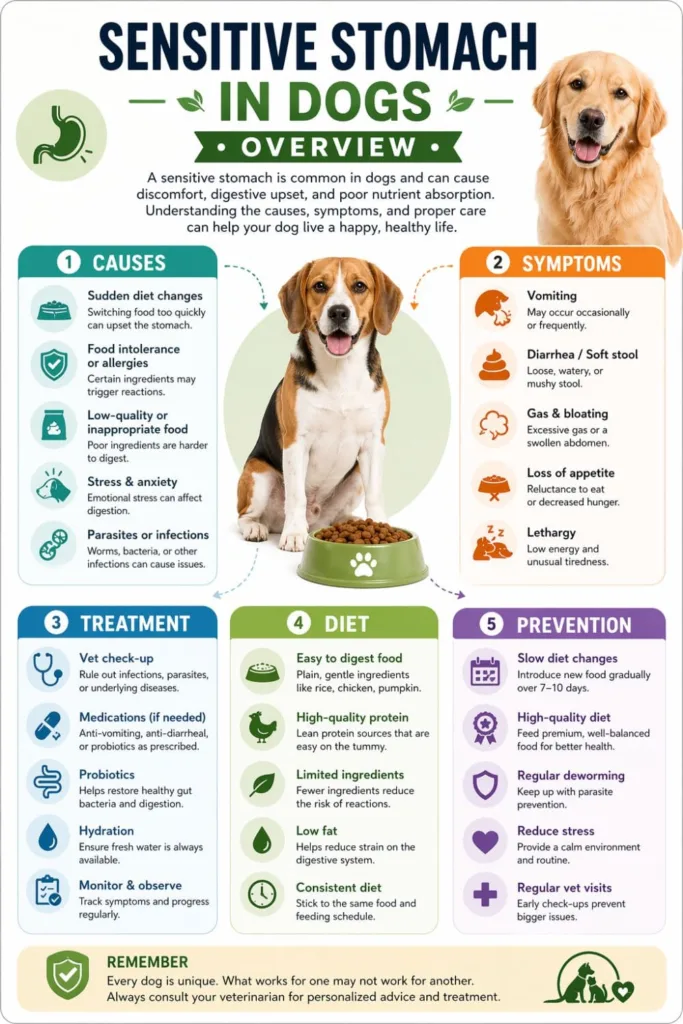
In this dog sensitive stomach guide, it’s important to understand that a sensitive stomach is not a specific disease—it’s a pattern of digestive sensitivity that can vary from mild to more persistent issues.
🩺 Not a Disease, But a condition pattern
Dogs with sensitive stomachs don’t always have a diagnosed illness. Instead, they show recurring signs like soft stool, gas, or occasional vomiting when their digestion is easily disrupted.
📊 Digestive Sensitivity Spectrum
Sensitivity exists on a spectrum. Some dogs react only to sudden food changes, while others experience ongoing issues with certain ingredients. Mild cases may be occasional, while chronic sensitivity can require long-term management.
🧬 Gut + Immune System Connection
The digestive system plays a key role in immune health. When the gut is irritated or imbalanced, it can trigger symptoms not only in digestion but also in skin, energy, and overall well-being.
⚖️ Mild vs Chronic Sensitivity
Mild sensitivity might show up as occasional soft stool or gas. Chronic cases involve more frequent or persistent symptoms that don’t resolve easily without diet or lifestyle adjustments.
Understanding this concept helps shift the focus from “fixing a problem” to managing patterns and improving digestive stability over time.
Causes of Sensitive Stomach in Dogs
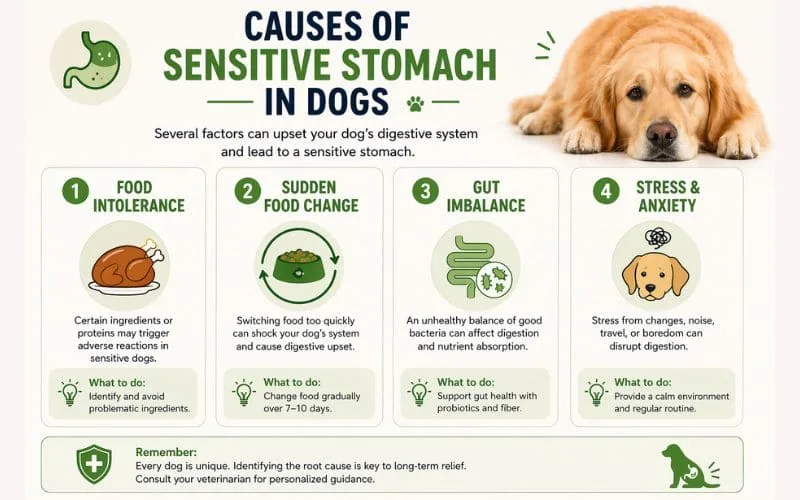
A sensitive stomach usually isn’t caused by just one factor—it’s often a combination of diet, environment, and how your dog’s digestive system responds over time.
🍗 Food Intolerance
Some dogs react poorly to specific ingredients like certain proteins, fats, or additives. These reactions are usually mild but can lead to recurring soft stool, gas, or discomfort.
🔄 Sudden Food Changes
Switching food too quickly is one of the most common causes of digestive upset. The gut needs time to adjust, and rapid changes can disrupt this balance. Our guide on Common mistakes during dog food transition explains how this often happens.
🥣 Poor Ingredient Quality or Complex Formulas
Foods with low-quality ingredients, fillers, or multiple protein sources can be harder to digest—especially for sensitive dogs.
🦠 Gut Imbalance (Microbiome Disruption)
Changes in gut bacteria—due to diet, stress, or medication—can affect digestion and lead to sensitivity.
😟 Stress and Environmental Changes
Travel, new routines, or changes in the home environment can impact digestion. The gut and nervous system are closely connected.
🐾 Age-related Changes
Puppies may have developing digestive systems, while senior dogs may experience reduced tolerance over time.
📊 Lack of Structured Protein Exposure
Frequent switching between proteins without a plan can increase sensitivity. A more controlled approach is explained in Protein Rotation Strategy for Sensitive dogs.
Understanding these causes helps you focus on prevention—not just reaction.
Symptoms of Sensitive Stomach in Dogs
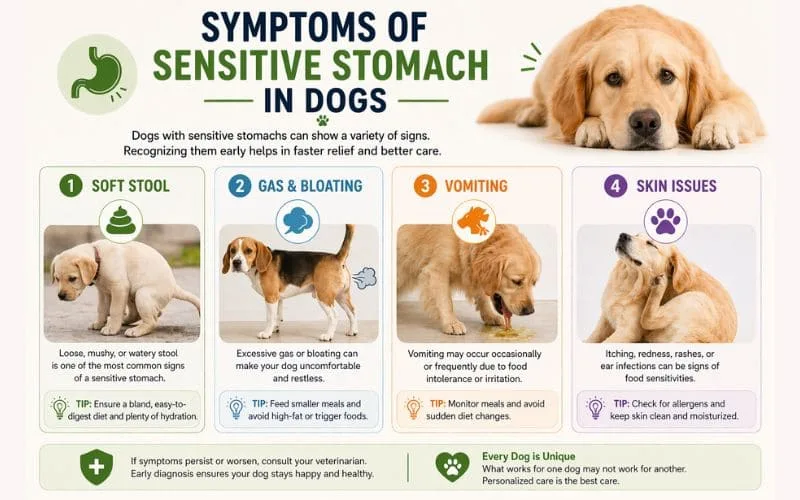
In this dog sensitive stomach guide, recognizing symptoms early is key. Most signs are subtle at first and often dismissed—but when they repeat, they point to an underlying digestive sensitivity.
💩 Soft or Inconsistent Stool
Frequent soft stool or changes in consistency are one of the most common indicators. It may not be full diarrhea, but it’s not fully formed either.
🌬️ Gas and Bloating
Excess gas—especially if it’s frequent or has a strong odor—can signal that food isn’t being digested efficiently.
🤢 Occasional or Recurring Vomiting
Even if it happens infrequently, vomiting after meals or on an empty stomach can be linked to sensitivity.
🍽️ Picky Eating or Inconsistent Appetite
Dogs may eat one meal eagerly and skip the next. This isn’t always behavioral—it can be linked to how they feel after eating.
🐾 Skin-related Symptoms
Digestive issues can sometimes show up externally as itching, ear irritation, or skin flare-ups due to the gut–immune connection.
🔍 Patterns matter more than single events
These symptoms are most meaningful when they occur repeatedly—not just once in a while.
If you’re unsure whether your dog’s symptoms match this pattern, our guide on Signs your dog has a sensitive stomach breaks it down in a simple checklist format.
Identifying these signs early helps prevent mild issues from becoming ongoing problems.
How Vets Diagnose Digestive Issues
When digestive problems persist or become more severe, veterinarians use a structured approach to understand the root cause rather than guessing.
📝 Detailed Medical History
The first step is understanding your dog’s patterns—diet, recent food changes, frequency of symptoms, and overall behavior. This helps narrow down whether the issue is likely diet-related or something deeper.
💩 Stool Testing
Stool samples are often checked for parasites, infections, or abnormal bacteria. This helps rule out common causes of diarrhea and digestive upset.
🩸 Blood Work
Blood tests can provide insight into organ function, inflammation, and overall health. This helps identify conditions that may affect digestion beyond the gut itself.
🥣 Elimination Diet Trials
If food sensitivity is suspected, vets may recommend a controlled elimination diet. This involves feeding a limited, simple diet and gradually reintroducing ingredients to identify triggers.
🔍 Step-by-Step Evaluation
Diagnosis is usually a process—not a single test. Vets rule out possibilities systematically to find the most likely cause.
For a deeper breakdown of this process, our guide on How vets Diagnose Chronic GI issues explains each step in more detail.
This structured approach ensures that treatment is based on evidence—not guesswork.
Treatment Options for Sensitive Stomach in Dogs
Managing a sensitive stomach is usually about supporting the digestive system and removing triggers, rather than relying on a single quick fix. The right approach depends on the severity and pattern of symptoms.
🥣 Diet Correction (Foundation of Treatment)
Adjusting the diet is often the most important step. This includes switching to simpler, highly digestible foods with limited ingredients and appropriate fat levels. Consistency matters just as much as food choice.
🛑 Gut Rest (Short-term Support)
In mild cases of digestive upset, giving the gut a short break can help it stabilize. A structured approach like the Dog Gut Reset Protocol explains how to safely rest and reintroduce food step by step.
💧 Hydration Support
When diarrhea is present, maintaining hydration becomes critical. Water alone may not always be enough, especially if fluids and electrolytes are being lost. Our guide on Electrolytes for Dogs with Diarrhea explains how to support hydration safely.
💊 Medications (When needed, Vet-guided)
In more persistent or severe cases, veterinarians may recommend medications to manage inflammation, infection, or other underlying issues. These should always be used under professional guidance—not self-prescribed.
⚖️ Combination approach works best
Most cases improve with a combination of diet, consistency, and supportive care. The goal is not just symptom relief—but long-term digestive stability.
Treatment isn’t about doing more—it’s about doing the right things in the right order.
Best Diet for Dogs With Sensitive Stomach
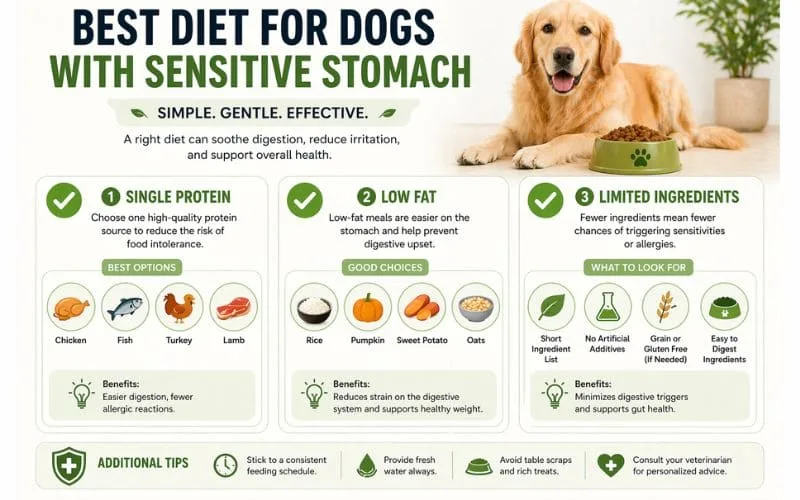
Choosing the right diet is one of the most effective ways to manage digestive sensitivity. The goal is to reduce digestive workload, improve tolerance, and maintain consistency over time.
🥣 Limited Ingredient Formulas
Foods with fewer ingredients are easier for the gut to process and reduce the risk of reactions. They also make it easier to identify potential triggers if symptoms occur. You can explore options in Best Limited Ingredient Dog foods.
🍗 Single Protein Source
Using one primary protein (like chicken, turkey, or lamb) helps create a stable baseline. Multiple protein blends can make digestion more complex and increase the chance of sensitivity.
🥓 Low to Moderate Fat levels
High-fat diets can slow digestion and trigger loose stool in sensitive dogs. Choosing balanced, moderate-fat foods helps reduce digestive stress.
🔄 Consistency is Key
Even the best food won’t work if it’s constantly changed. Feeding the same diet consistently—at regular times—helps stabilize the gut and prevent unnecessary fluctuations.
📊 Focus on Digestibility, Not Trends
Grain-free, raw, or specialty diets aren’t automatically better. What matters most is how well your dog tolerates the food over time.
If you’re looking for practical options, our guide on Best Dog Foods for Sensitive Stomachs breaks down what to look for in a suitable diet.
Some dogs do well on dry food, while others benefit from the extra moisture and soft texture of canned diets. If you’re comparing wet food options, our guide to Best Canned Dog Food for Sensitive Stomachs reviews the top choices and explains what to look for when choosing a formula.
Supplements That May Help
Supplements can support digestion—but they work best as add-ons to a stable diet, not replacements for it. The goal is to support gut balance, not overload the system.
🦠 Probiotics (Beneficial Bacteria Support)
Probiotics help maintain a healthy balance of gut bacteria, which can improve digestion and stool consistency. They’re especially useful after digestive upset or antibiotic use. Learn more in Best Probiotics for dogs with sensitive stomachs.
🌱 Prebiotics (Food for Good Bacteria)
Prebiotics are fibers that feed beneficial gut bacteria, helping them thrive. They support long-term gut stability and may improve overall digestive balance. See Prebiotics for Gut Health in dogs.
⚙️ Digestive enzymes (Nutrient Breakdown Support)
Enzymes help break down proteins, fats, and carbohydrates, making food easier to digest. They can be helpful for dogs that struggle with food processing or absorption. Explore Digestive Enzymes for dogs.
🐟 Omega-3 Fatty Acids (Inflammation Support)
Omega-3s, especially EPA, may help support inflammation balance in the gut and improve overall digestive health. They’re often used alongside diet changes. Learn more in Omega-3 for Gut Health in dogs.
⚠️ Keep Supplementation Simple
Avoid adding multiple supplements at once. Introduce one at a time and monitor how your dog responds.
The right supplement can help—but consistency and simplicity remain the foundation of digestive health.
How to Prevent Digestive Issues
Preventing digestive problems is often easier than treating them. A few consistent habits can significantly reduce the chances of recurring stomach sensitivity.
🔄 Use slow, Structured Food Transitions
One of the most common triggers of digestive upset is switching food too quickly. Gradual transitions allow the gut to adapt without stress. If you want to avoid common errors, our guide on Common Mistakes during Dog Food transition explains what to watch for.
🚫 Avoid known Trigger foods
Foods like high-fat meals, dairy, spicy items, and table scraps can easily disrupt digestion. Being mindful of what you feed daily makes a big difference. Our guide on What not to feed dogs with sensitive stomach breaks this down in detail.
⏰ Maintain a consistent feeding routine
Feeding at the same times each day with the same food helps stabilize the digestive system. Irregular feeding or frequent changes can lead to imbalance.
😟 Manage Stress and Environmental changes
Stress can directly impact digestion. Changes in routine, travel, or new environments may trigger mild digestive issues. Keeping routines predictable helps support gut stability.
📊 Focus on consistency over experimentation
Trying too many foods or supplements too quickly can make things worse. A simple, steady approach is usually the most effective.
Preventive care is about reducing variables—when the routine is stable, digestion becomes more predictable.
When to See a Vet
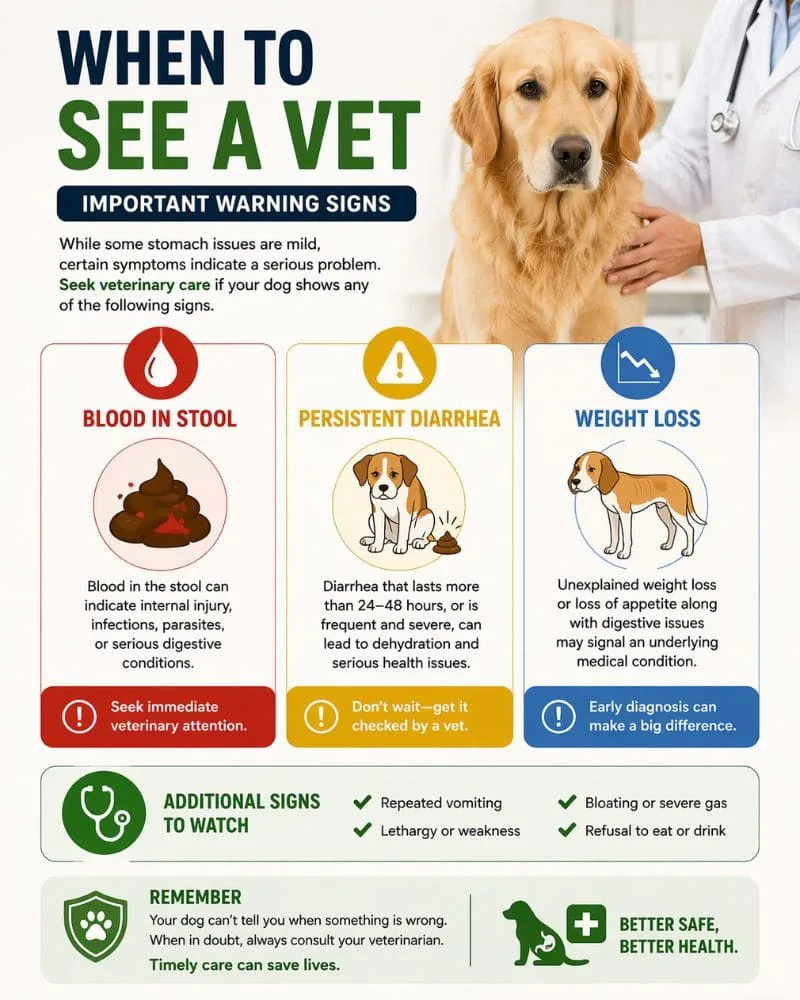
While many mild digestive issues can be managed with diet and routine adjustments, some symptoms require prompt attention. Knowing when to move beyond home care is essential for your dog’s safety.
🚨 Persistent Diarrhea
If diarrhea lasts more than a few days or keeps recurring, it may indicate an underlying issue rather than a temporary upset. Understanding When to worry about diarrhea in dogs can help you assess urgency.
🩸 Blood in Stool
Visible blood—whether bright red or dark—should never be ignored. This can signal irritation, infection, or more serious digestive conditions.
⚖️ Unexplained Weight Loss
If your dog is losing weight despite eating, it may suggest poor nutrient absorption or a deeper health concern that needs evaluation.
😴 Lethargy or Low Energy
A noticeable drop in energy, reduced activity, or lack of interest in food can indicate that your dog is not feeling well beyond simple digestive sensitivity.
⚠️ Don’t delay when symptoms escalate
If multiple symptoms appear together or worsen over time, it’s important to act quickly rather than continue trial-and-error at home.
For a clearer decision-making guide, our article on When to See a Vet for loose stool explains when professional evaluation is the safest next step.
Early action helps prevent minor issues from becoming more serious.
Recovery Timeline — What to Expect
Recovery from digestive issues depends on the cause, severity, and how quickly the right adjustments are made. Understanding realistic timelines helps set proper expectations and avoid unnecessary changes.
⏱️ Mild Cases: 2–3 days
For simple digestive upset—such as a minor food reaction or temporary imbalance—symptoms like soft stool or mild gas often improve within a few days. With proper diet adjustment and hydration, recovery is usually quick.
📅 Moderate Cases: Around 1 week
If symptoms are more persistent or triggered by food intolerance or transition issues, recovery may take several days to a week. During this time, consistency in diet and routine is key.
📊 Chronic Cases: Long-term management
Dogs with ongoing sensitivity or underlying digestive conditions may not “recover” fully in the short term. Instead, they require long-term management through diet, routine, and sometimes supplements.
🔍 Progress should be gradual, Not instant
Improvement usually happens step by step—firmer stool, reduced gas, better appetite. Sudden changes are less common than steady progress.
If you want a deeper understanding of timelines and what’s normal, our guide on how long does diarrhea last in dogs explains different scenarios in detail.
Patience and consistency play a major role in successful recovery.
FAQs: Sensitive Stomach in Dogs
What causes sensitive stomach in dogs?
A sensitive stomach can be caused by multiple factors rather than a single issue. Common causes include food intolerance, sudden diet changes, poor ingredient quality, gut microbiome imbalance, stress, and age-related changes. In many cases, it develops gradually due to repeated exposure to triggers rather than one specific event. Understanding patterns over time is more helpful than looking for a single cause.
Can a sensitive stomach in dogs be cured?
In some cases, yes—especially if the issue is linked to temporary factors like a recent food change or mild gut imbalance. However, many dogs have long-term sensitivity that requires ongoing management rather than a complete cure. The goal is to reduce symptoms, improve digestion, and maintain stability through the right diet and routine.
What food is best for dogs with a sensitive stomach?
The best food is one that is simple, consistent, and well-tolerated by your dog. Typically, this includes limited ingredient diets with a single protein source and moderate fat levels. Highly digestible foods with minimal additives tend to work best. Instead of following trends, focus on how your dog responds over time.
Are probiotics necessary for dogs with sensitive stomachs?
Probiotics are not always necessary, but they can be helpful in certain situations—especially after digestive upset or antibiotic use. They support gut bacteria balance, which may improve stool consistency and digestion. However, they should be used as part of a broader plan, not as a standalone solution.
How long does recovery take?
Recovery depends on the severity of the issue. Mild cases may improve within 2–3 days, while moderate issues can take about a week. Chronic sensitivity may require long-term management rather than a fixed recovery timeline. Consistency in diet and routine plays a major role in how quickly improvement happens.
Can stress cause digestive issues in dogs?
Yes, stress can directly affect digestion. Changes in routine, environment, travel, or anxiety can disrupt the gut and lead to symptoms like soft stool, reduced appetite, or gas. The gut and nervous system are closely connected, which is why emotional stress can show up as physical digestive issues.
Are grains bad for dogs with sensitive stomachs?
Not necessarily. Grains are not harmful for most dogs, and many tolerate them well. However, some dogs may have sensitivity to certain grains like wheat. The key is individual tolerance—removing grains without reason may not solve the problem if the trigger lies elsewhere.
Can puppies have sensitive stomachs?
Yes, puppies can have sensitive stomachs, often due to their developing digestive systems. They may react more strongly to food changes or new ingredients. Because they are more vulnerable to dehydration and nutrient imbalance, careful feeding and gradual transitions are especially important.
When should I worry about my dog’s digestion?
You should be concerned if symptoms are persistent, worsening, or accompanied by warning signs like blood in stool, frequent vomiting, weight loss, or lethargy. Occasional mild symptoms may not be serious, but recurring patterns or severe changes should not be ignored.
What is the best treatment for a sensitive stomach in dogs?
The most effective treatment is usually a combination of diet correction, consistency, and supportive care. This may include switching to a simpler diet, managing feeding routines, and using supplements when appropriate. In more serious cases, veterinary guidance is important to address underlying causes.
Final Thoughts
A sensitive stomach in dogs is more common than many owners realize—and in most cases, it’s manageable with the right approach.
The most important factor is diet. Choosing the right food, keeping ingredients simple, and avoiding unnecessary changes can make a significant difference in digestive stability.
Just as important is consistency. Frequent food switching, random treats, or irregular feeding routines often do more harm than good. A stable routine allows the digestive system to function more predictably.
Pay close attention to patterns. Stool consistency, appetite, energy levels, and even skin changes can provide valuable insights into how your dog is responding. These patterns are often more meaningful than isolated symptoms.
If you’re building a complete digestive care plan, you can explore:
- Best Dog foods for sensitive stomachs
- Dog Gut Reset Protocol
- Best Probiotics for dogs with sensitive stomachs
With the right combination of diet, routine, and observation, most dogs with sensitive stomachs can live comfortably and maintain long-term digestive health.

Hi, I’m Maddy, the writer behind HappyDogGut.com.I’m passionate about helping dog parents better understand gut health, sensitive stomachs, and nutrition through clear, practical, and research-based content. Every article is carefully researched using trusted veterinary and pet health resources, so you can make more informed decisions for your dog’s digestive health.Happy Gut = Happy Dog! 🐾
All content on Happy Dog Gut follows our Editorial Policy.




Pingback: What NOT to Feed Dogs With Sensitive Stomach (Avoid These!)
Pingback: Dog Gut Reset Protocol (48–72 Hour Plan That Works)
Pingback: Prebiotics for Gut Health in Dogs: Benefits & Safe Use
Pingback: Bland Diet for Dogs: Complete Vet-Approved Feeding Guide (What to Feed, Recipes & Recovery Tips)
Pingback: Best Canned Dog Food for Sensitive Stomachs: Top 10 Picks