

If your dog struggles with soft stools, gas, bloating, or frequent diarrhea, you’re not alone. Sensitive stomach issues have increased significantly among dogs in the US over the last few years — and one of the most overlooked causes is low-quality kibble. Many pet parents assume all dry dog foods are the same, but the truth is that the ingredients, protein source, processing method, and digestibility vary massively between brands. And for dogs with delicate digestion, this difference can make or break their gut health.
That’s why choosing the best dog kibble for sensitive stomachs matters more than ever. High-quality sensitive-stomach kibble is designed with gentle proteins, easy-to-digest carbohydrates, and fewer irritants, helping reduce inflammation, firm up loose stools, and support long-term gut balance. On the other hand, cheap grocery-store kibble often contains fillers like corn, wheat, soy, artificial preservatives, and by-products — which commonly lead to diarrhea, stomach upset, itching, and poor nutrient absorption.
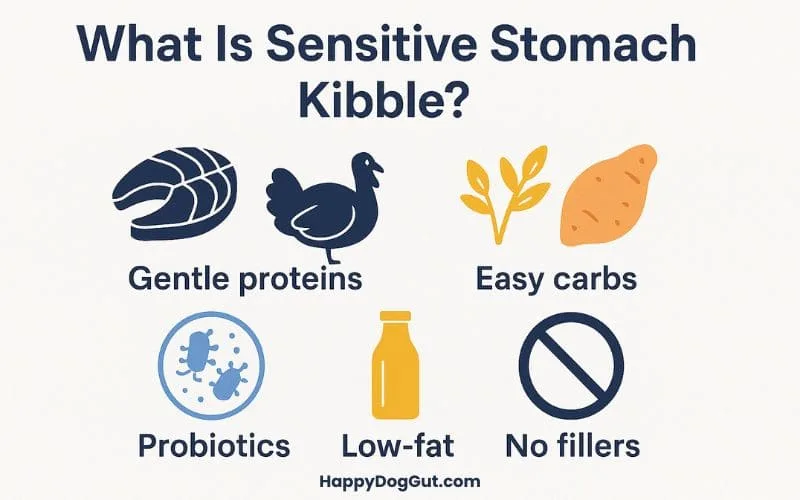
In this guide, you’ll learn exactly what to look for in a stomach-friendly kibble and which vet-approved formulas truly work. Because when your dog stops struggling with tummy troubles, everything improves — energy, mood, skin, stool quality, and overall well-being.
Before diving in, you may also want to understand why stomach issues happen in the first place. Here are two helpful resources:
- If your dog often has unexplained digestive issues, read What Causes Sensitive Stomach in Dogs?.
- If your dog has soft stools but seems normal otherwise, check our guide on Signs of Food Intolerance in Dogs for early warning signs.
This post will help you confidently choose a kibble that keeps your dog’s belly calm, happy, and healthy.
Why Kibble Quality Matters for Sensitive Stomachs (Vet Explanation)
When your dog has a sensitive stomach, the quality of the kibble you choose can make or break their digestion. Many US pet parents don’t realize that the wrong kibble—often loaded with cheap fillers and overprocessed proteins—can trigger gas, bloating, diarrhea, and chronic soft stool. That’s exactly why choosing the best dog kibble for sensitive stomachs matters. The right formula provides gentle nutrition, while the wrong one inflames the gut and disrupts the microbiome.
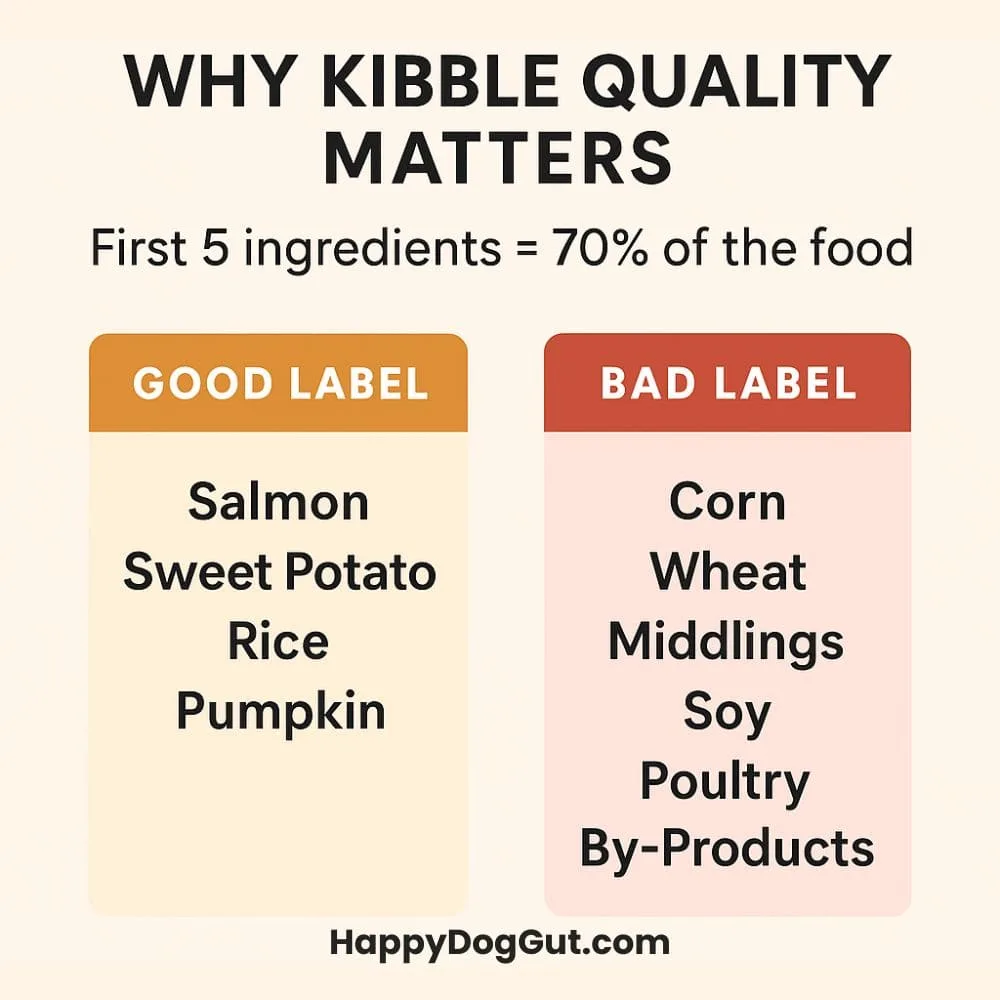
High-quality sensitive-stomach kibble uses easy-to-digest proteins (like salmon, turkey, or lamb) paired with gentle carbohydrates such as rice, oatmeal, or sweet potato. These ingredients break down smoothly, reduce inflammation, and support normal stool formation. Poor-quality kibble, on the other hand, often contains corn, wheat, soy, artificial preservatives, unnamed meat meals, and excessive fat—all of which can irritate the digestive system and trigger recurring stomach issues.
Another factor many dog owners overlook is kibble structure. Dogs with gut issues often do better with kibble that is:
- Smaller in size
- Cooked at lower temperatures
- Low to moderate fat
- Made with a single animal protein source
These characteristics make the kibble easier for your dog’s GI tract to process—especially if your pup struggles with food intolerance or mild digestive disorders.
🧾 How to Read a Kibble Label (Pet-Parent Friendly Guide)
When choosing the best dog kibble for sensitive stomachs, keep these simple rules in mind:
✔ First 5 ingredients = 70% of the food
If you see corn, wheat, soy, or “meat by-product” here, skip it.
✔ Avoid cheap fillers
Ingredients like corn gluten meal, wheat middlings, soy protein concentrate, and animal digest are red flags for sensitive dogs.
✔ Choose a clean, single protein kibble
Turkey, salmon, lamb, duck, or venison work best for reducing irritation.
✔ Look for gentle carbs
Rice, oatmeal, barley, and sweet potato are great for stomach-sensitive pups.
✔ Skip artificial preservatives & colors
These additives often trigger digestive flare-ups.
Many stomach issues actually come from food intolerances rather than simple sensitivity. If your dog frequently has mushy stool or reacts to certain proteins, check out our full guide on the best foods for food intolerance:
👉 Best Dog Foods for Food Intolerance (Guide)
Signs Your Dog Needs Sensitive Stomach Kibble
If your dog is struggling with digestive discomfort, their kibble may be the problem—not their stomach. Many dogs in the U.S. show early warning signs that they need a gentler, easily digestible formula, but most pet parents miss these clues until symptoms get worse. Switching to the best dog kibble for sensitive stomachs can dramatically improve digestion, stool quality, and overall comfort.
Below are the most common signs your dog needs a sensitive-stomach kibble, broken into categories for clarity.
A. Digestive Signs (Most Important)
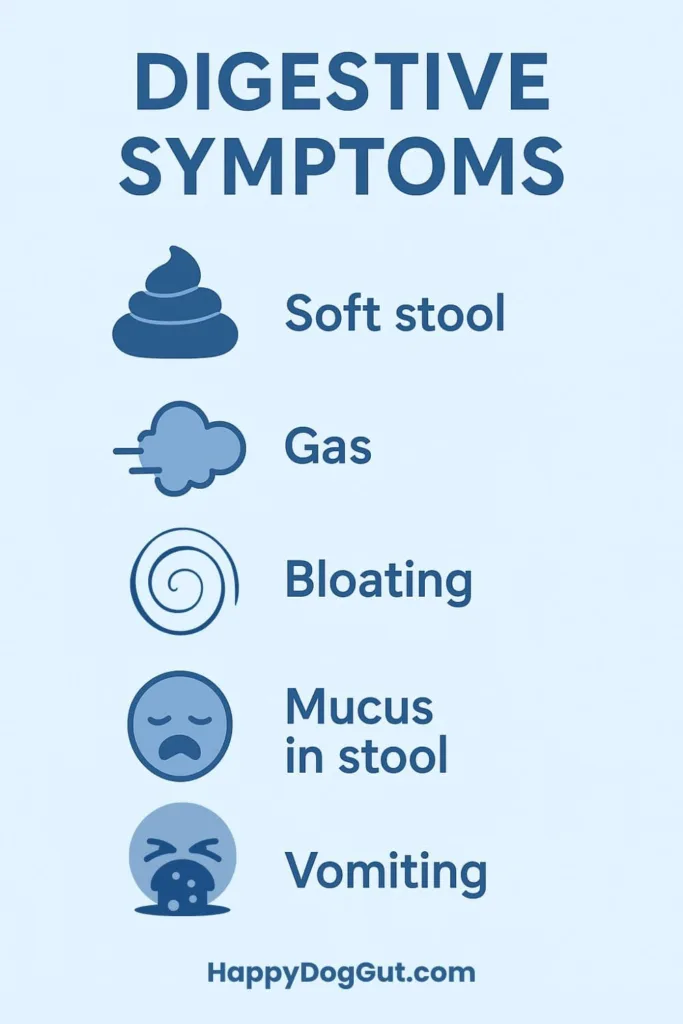
Digestive issues are the biggest indicator that your dog’s current kibble isn’t working. If you notice any of these:
- Soft stool or mushy poop
- Recurring diarrhea, especially after meals
- Gas, bloating, or stomach gurgling
- Mucus in stool (a sign of gut irritation)
- Vomiting after meals
These symptoms typically mean your dog needs a more digestible diet. If your dog is already dealing with diarrhea, you can support them temporarily with simple recovery meals—here’s a guide that helps:
👉 Try a gentle recovery meal: What to Feed a Dog After Diarrhea
And if you’re considering a cooked option for temporary relief, this recipe is a lifesaver for upset stomachs:
👉 Homemade Chicken & Rice for Dogs with Diarrhea
When digestive symptoms repeat weekly, it’s a clear sign your dog may benefit from switching to the best dog kibble for sensitive stomachs containing gentle proteins and low-fat formulas.
B. Skin + Coat Signs (Often Misdiagnosed!)
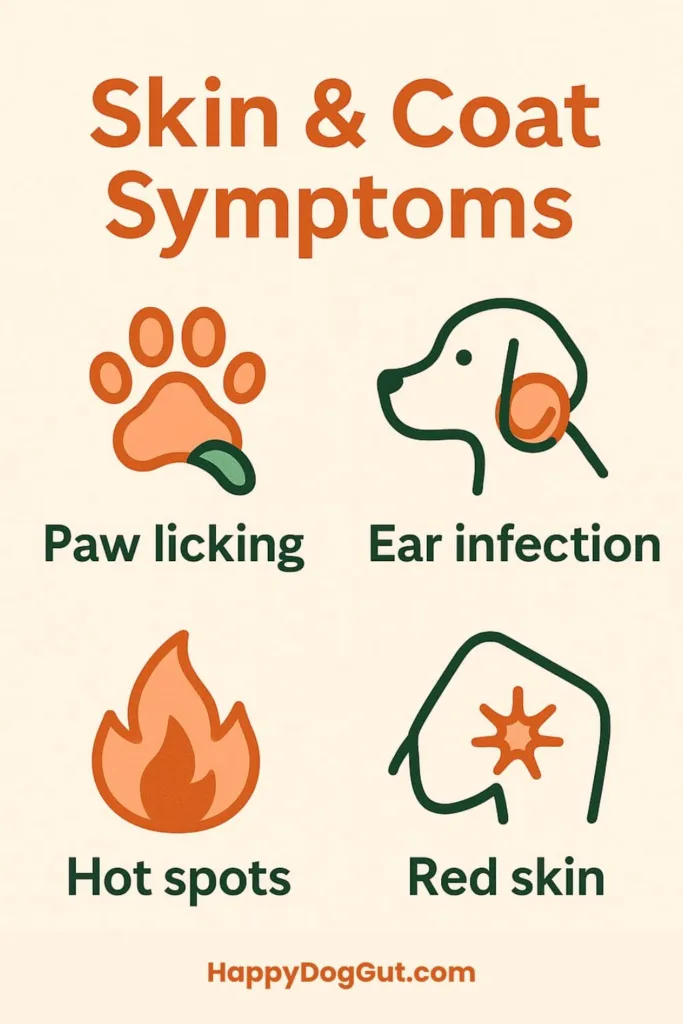
Many U.S. pet parents assume skin issues are seasonal allergies, but food-related stomach irritation often shows up first on the skin:
- Itchy paws or constant licking
- Hot spots or red patches
- Recurring ear infections
These symptoms suggest gut inflammation, and switching to a cleaner, hypoallergenic kibble is often the fastest solution.
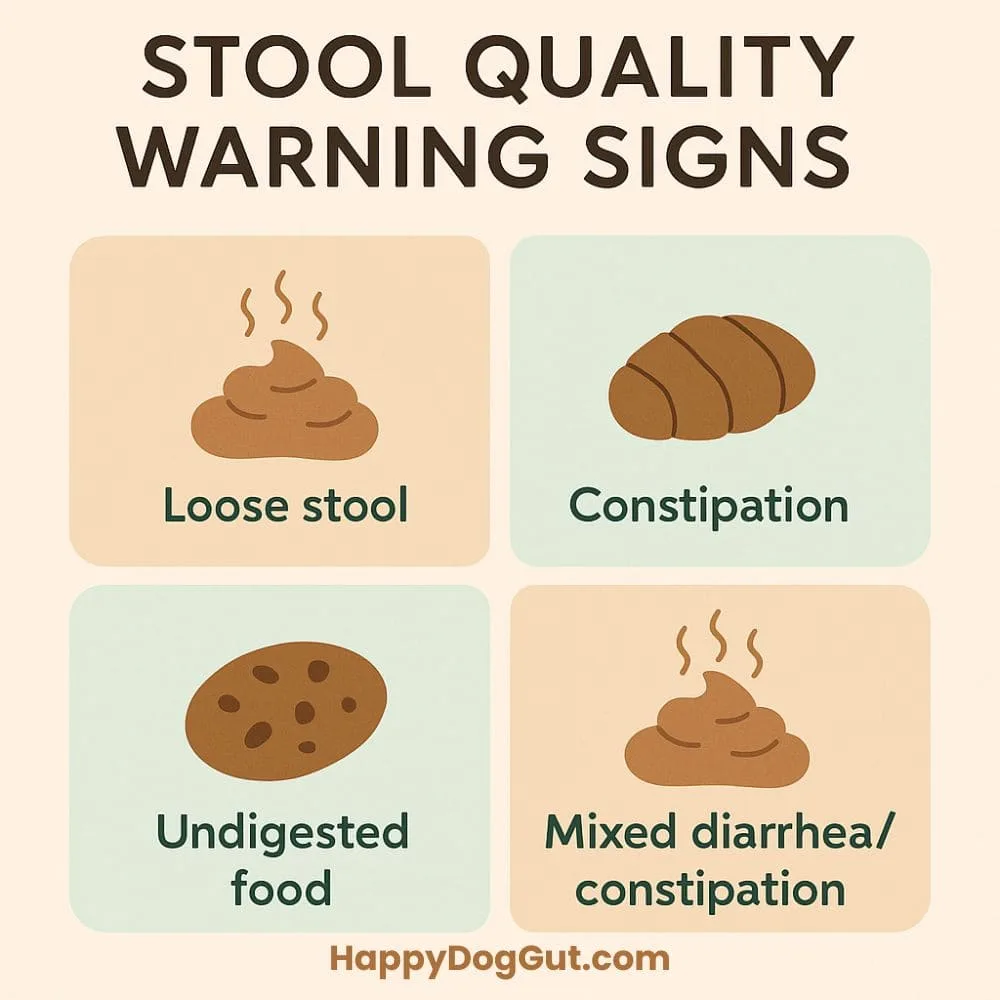
C. Stool Quality Warning Signs
Your dog’s poop gives the clearest signal that their kibble isn’t digesting properly:
- Undigested food pieces in stool
- Stool switching between diarrhea and constipation
- Soft stool but acting normal (a classic early sensitivity sign)
If these symptoms appear consistently, it’s time to reassess your food. Dogs with these patterns often have underlying food sensitivities—here’s a full list so you can compare your dog’s symptoms:
👉 Full Guide: Signs of Food Intolerance in Dogs
What Makes a Kibble Good for Sensitive Stomachs? (Vet-Approved Criteria)
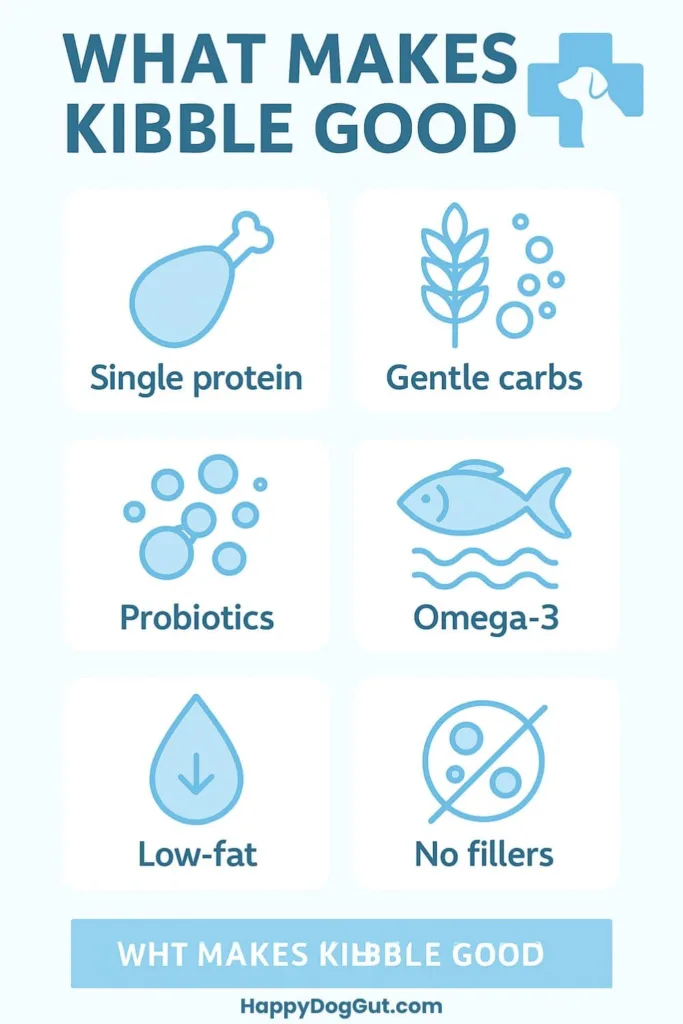
When choosing the best dog kibble for sensitive stomachs, ingredients matter — but so does the overall formulation. Sensitive-stomach dogs can’t handle heavy proteins, greasy fats, or complex fillers. Instead, they need a kibble that is clean, digestible, and gentle on the gut. Veterinarians agree that the right kibble can reduce diarrhea, support a healthy microbiome, and prevent flare-ups caused by food intolerance.
Here’s what a high-quality sensitive-stomach kibble MUST include:
✔ Single-Protein Formula (Avoid mixed or mystery meats)
Dogs with chronic soft stools or recurring digestive upset often react to protein blends. A single-protein kibble — such as turkey, salmon, or lamb — makes digestion smoother and reduces food intolerance triggers. It also helps pet parents identify what protein works best.
✔ Gentle, Easily Digestible Carbohydrates
Look for kibble made with:
- White rice
- Oatmeal
- Barley
- Sweet potato
These carbs digest slowly and help firm up stools. Avoid harsh fillers like corn, wheat, and soy — which you already learned about in our guide on dog food ingredients to avoid for sensitive stomachs.
✔ Added Probiotics for Gut Support
The best dog kibble for sensitive stomachs always includes guaranteed live probiotics. They help balance gut flora, reduce inflammation, and prevent recurring digestive flare-ups — especially in dogs prone to diarrhea or gas.
✔ Low-Fat, High-Digestibility Recipes
High-fat kibbles are one of the biggest triggers for:
- Loose stool
- Acid reflux
- Pancreatitis
- Stomach sensitivity
Vet-approved sensitive-stomach diets keep fat levels low while maintaining high digestibility.
✔ Omega-3s for Gut + Skin Health
Omega-3 fatty acids (from fish oil) help soothe inflammation inside the gut AND improve skin irritation linked to food sensitivity. Dogs with itchy paws, ear issues, or dry skin often respond well to omega-rich kibbles.
✔ Small & Uniform Kibble Size
Easier chewing → easier digestion.
Small and consistent kibble pieces reduce gulping, air intake, and bloating — all common issues in sensitive dogs.
Veterinary nutrition guidelines from the World Small Animal Veterinary Association (WSAVA) emphasize that ingredient quality, digestibility, and consistent formulation are key factors in selecting kibble for dogs with sensitive stomachs. Diets made with highly digestible proteins, appropriate fiber levels, and limited unnecessary additives help reduce digestive stress and support long-term gut health.
Best Dog Kibble for Sensitive Stomachs
Choosing the best dog kibble for sensitive stomachs can feel overwhelming — especially when every brand claims to be “gut-friendly.” The truth is, only a handful of kibbles are truly formulated for dogs with diarrhea, chronic soft stool, food intolerance, gas, bloating, or itchy-skin reactions after eating. Below is your complete, vet-approved list of the highest-performing kibbles for GI health, using clean proteins, gentle carbohydrates, and digestion-supporting nutrients.
I’ve included why each formula works, the ideal dog type, pros/cons, and a buyer-intent callout so you know exactly which kibble fits your dog’s symptoms.
For deeper ingredient guidance, you can also compare these to our detailed breakdown in
👉 Best Limited Ingredient Dog Foods for Sensitive Stomachs
and
👉 Best Dog Food for Sensitive Stomachs (Guide).
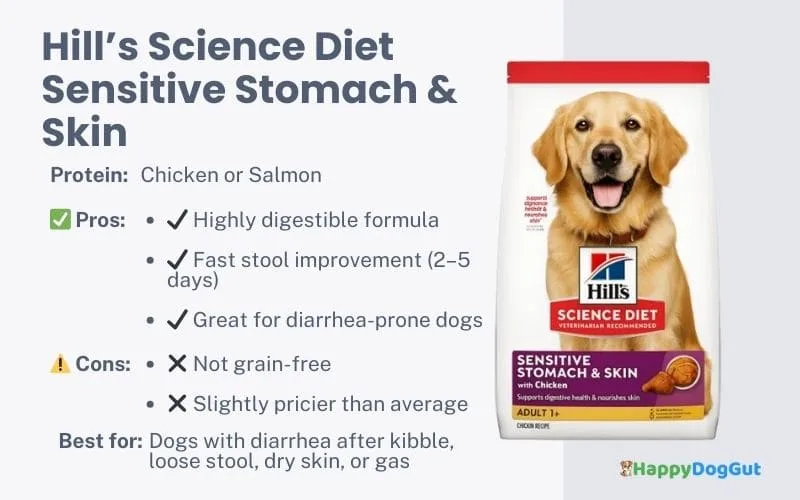
1. Hill’s Science Diet Sensitive Stomach & Skin
Best for: Dogs with chronic soft stool, vomiting, or skin irritation
Protein: Chicken or Salmon
Why it’s great:
Hill’s consistently ranks as one of the best dog kibble for sensitive stomachs because it uses highly digestible proteins, prebiotics, and precise fiber levels that help normalize stool quickly. Omega-6 + vitamin E support skin and coat health — ideal for dogs with gut + skin sensitivities revolving around food.
Pros:
✔ Highly digestible formula
✔ Fast stool improvement (2–5 days)
✔ Great for diarrhea-prone dogs
Cons:
✖ Not grain-free
✖ Slightly pricier than average
Best for dogs with: diarrhea after kibble, loose stool, dry skin, or gas.
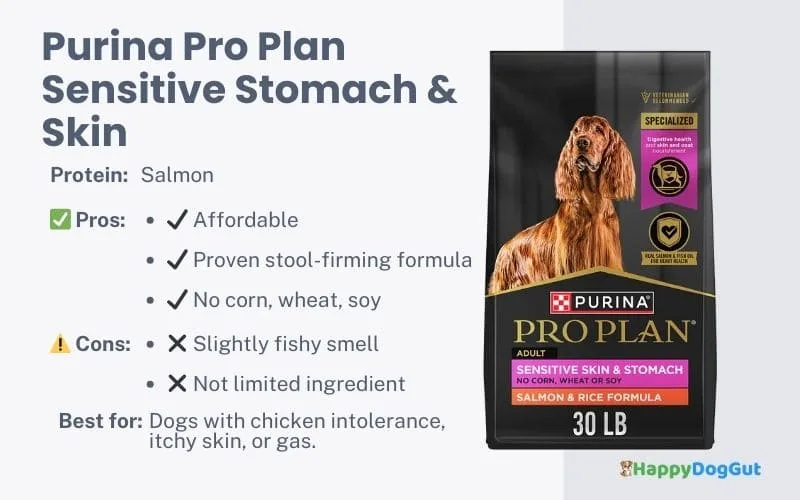
2. Purina Pro Plan Sensitive Stomach & Skin (Salmon)
Best for: Dogs with chicken intolerance + digestive issues
Protein: Salmon
Why it works:
A top choice for dogs needing gentle kibble with a single animal protein. Contains oatmeal + barley (great GI carbs), omega-3 for gut inflammation, and guaranteed probiotics to stabilize digestion.
Pros:
✔ Affordable
✔ Proven stool-firming formula
✔ No corn, wheat, soy
Cons:
✖ Slightly fishy smell
✖ Not limited ingredient
Best for: dogs with chicken intolerance, itchy skin, or gas.
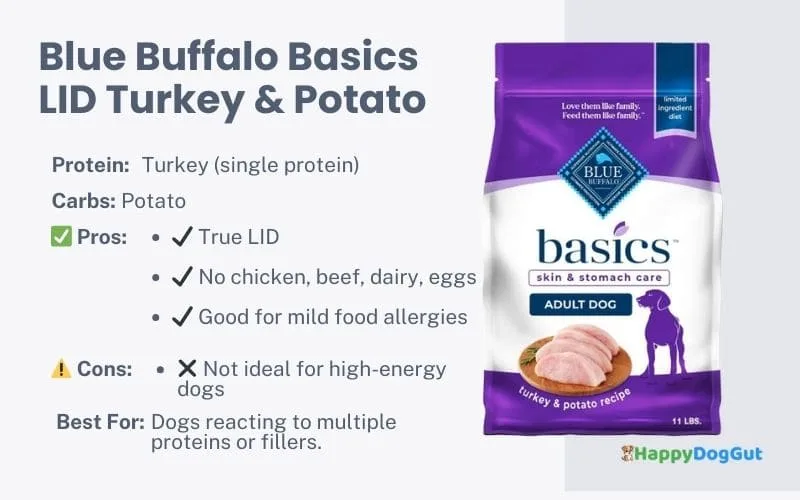
3. Blue Buffalo Basics LID Turkey & Potato
Best for: Dogs needing a Limited Ingredient Diet (LID)
Protein: Turkey (single protein)
Why it works:
Designed specifically for dogs who struggle with food intolerance or overexposure to common proteins. Uses turkey + potatoes to reduce gut triggers.
Pros:
✔ True LID
✔ No chicken, beef, dairy, eggs
✔ Good for mild food allergies
Cons:
✖ Not ideal for high-energy dogs
Great for dogs reacting to multiple proteins or fillers.
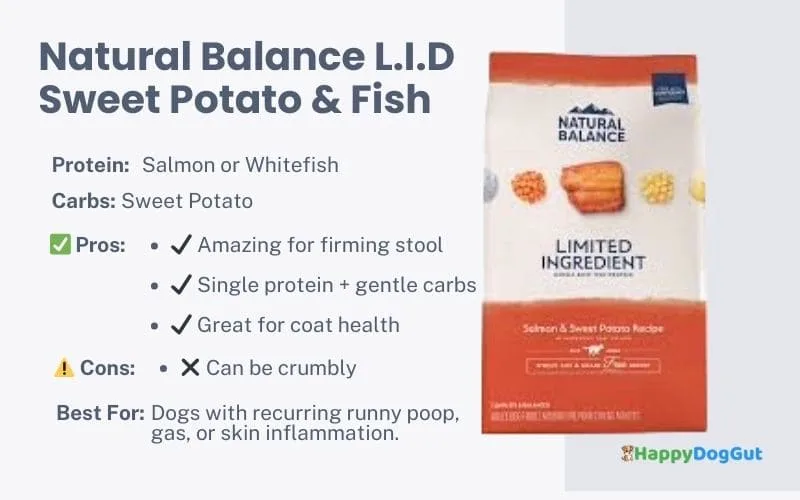
4. Natural Balance L.I.D Sweet Potato & Fish
Best for: Chronic soft stool + itchy skin
Protein: Salmon or Whitefish
Why it works:
Fish-based diets are ideal for dogs with gut + skin sensitivities. This formula uses carbohydrate-light sweet potato for stable digestion.
Pros:
✔ Amazing for firming stool
✔ Single protein + gentle carbs
✔ Great for coat health
Cons:
✖ Can be crumbly
Ideal for dogs with recurring runny poop, gas, or skin inflammation.
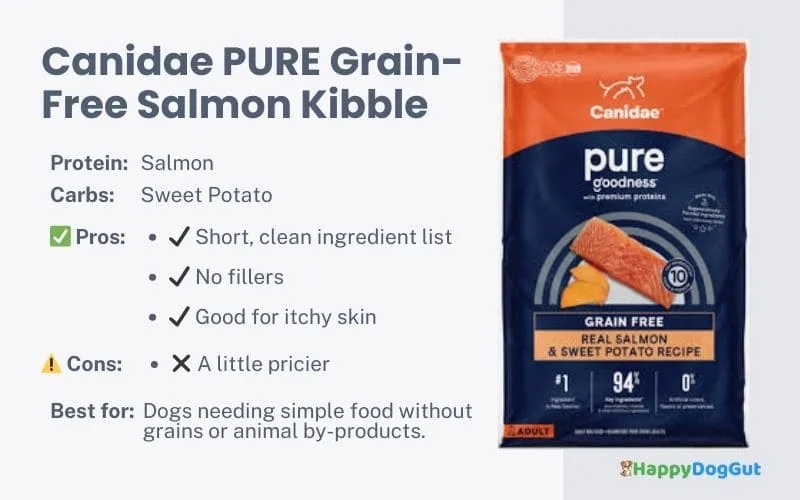
5. Canidae PURE Grain-Free Salmon Kibble
Best for: Grain-sensitive dogs
Protein: Salmon
Why it works:
Made with only 7–10 core ingredients, making it one of the cleanest grain-free kibbles for sensitive stomachs. Probiotics and low-fat salmon keep digestion smooth.
Pros:
✔ Short, clean ingredient list
✔ No fillers
✔ Good for itchy skin
Cons:
✖ A little pricier
Great for dogs needing simple food without grains or animal by-products.
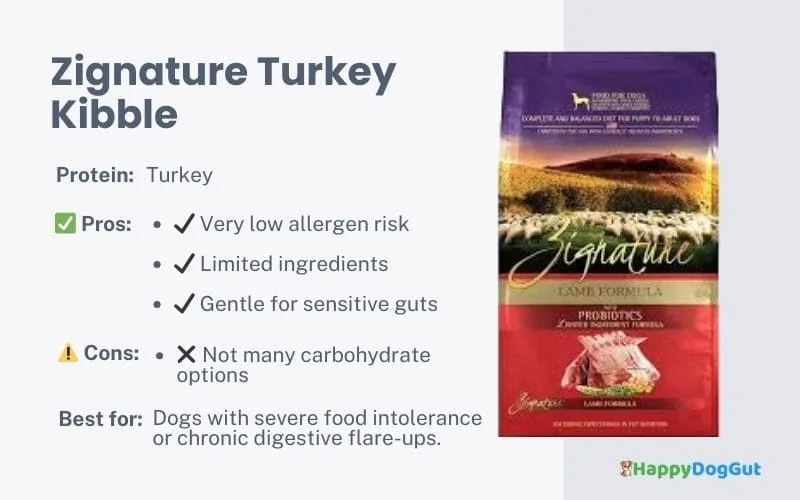
6. Zignature Turkey Kibble
Best for: Dogs with chicken, beef, or lamb intolerance
Protein: Turkey
Why it works:
Zignature is known for novel-protein formulas ideal for food-intolerant dogs. Uses turkey as the only animal protein — perfect for GI-reset diets.
Pros:
✔ Very low allergen risk
✔ Limited ingredients
✔ Gentle for sensitive guts
Cons:
✖ Not many carbohydrate options
Ideal for dogs with severe food intolerance or chronic digestive flare-ups.
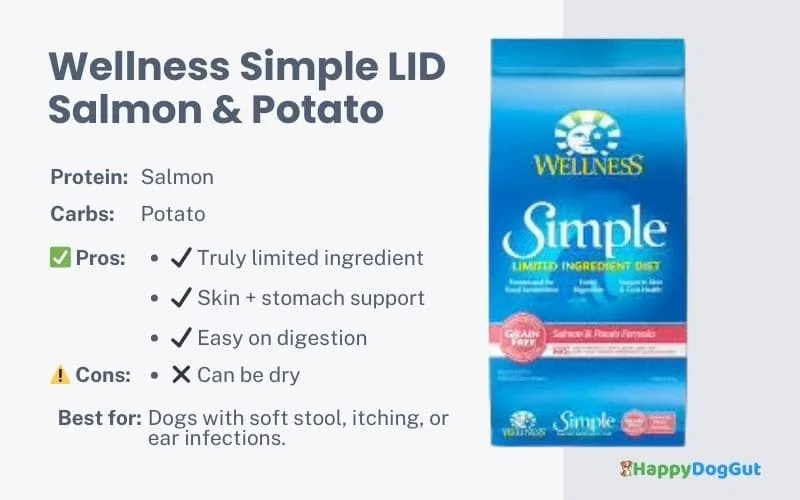
7. Wellness Simple LID Salmon & Potato
Best for: Dogs with diarrhea + skin allergies
Protein: Salmon
Why it works:
One of the top best dog kibble for sensitive stomachs because it uses minimal ingredients and adds natural prebiotics + probiotics for digestive stability.
Pros:
✔ Truly limited ingredient
✔ Skin + stomach support
✔ Easy on digestion
Cons:
✖ Can be dry
Great for dogs with soft stool, itching, or ear infections.
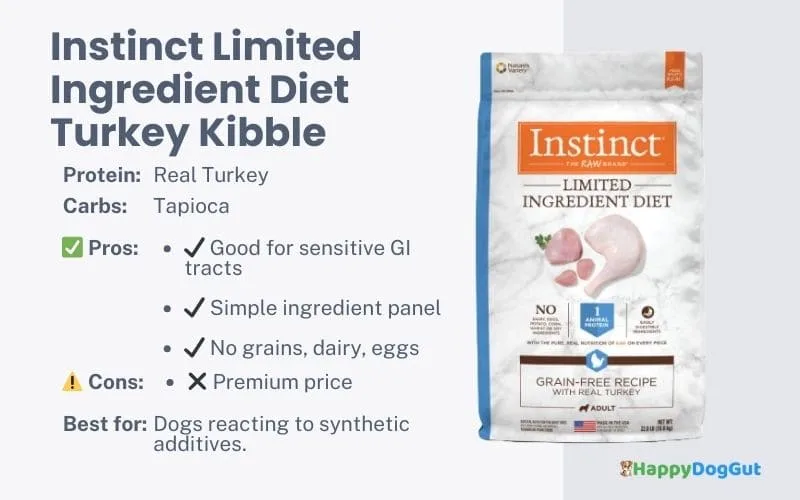
8. Instinct Limited Ingredient Diet Turkey Kibble
Best for: Dogs needing clean, natural kibble
Protein: Turkey
Why it works:
A raw-inspired limited ingredient formula with premium nutrient retention. Helps dogs with intolerance, gas, or poor stool consistency.
Pros:
✔ Good for sensitive GI tracts
✔ Simple ingredient panel
✔ No grains, dairy, eggs
Cons:
✖ Premium price
Perfect for dogs reacting to synthetic additives.
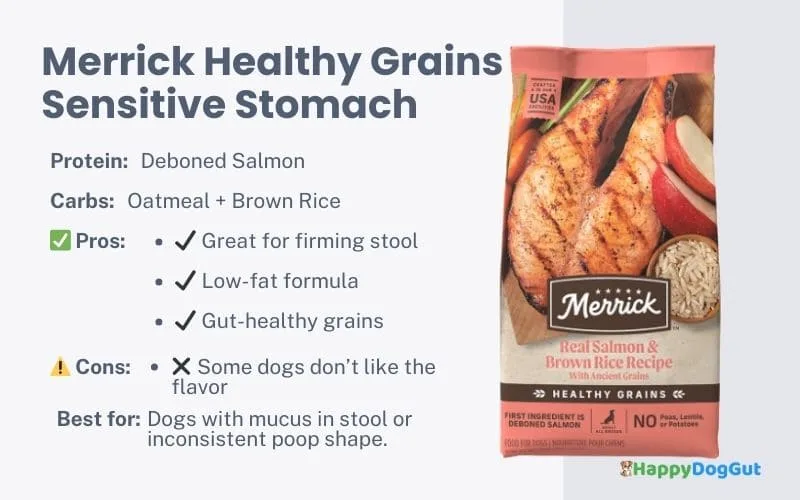
9. Merrick Healthy Grains Sensitive Stomach
Best for: Dogs who need grains for stool stability
Protein: Deboned Salmon
Why it works:
Contains oatmeal + brown rice — two of the most gut-friendly grains for dogs with digestive trouble.
Pros:
✔ Great for firming stool
✔ Low-fat formula
✔ Gut-healthy grains
Cons:
✖ Some dogs don’t like the flavor
Great for dogs with mucus in stool or inconsistent poop shape.
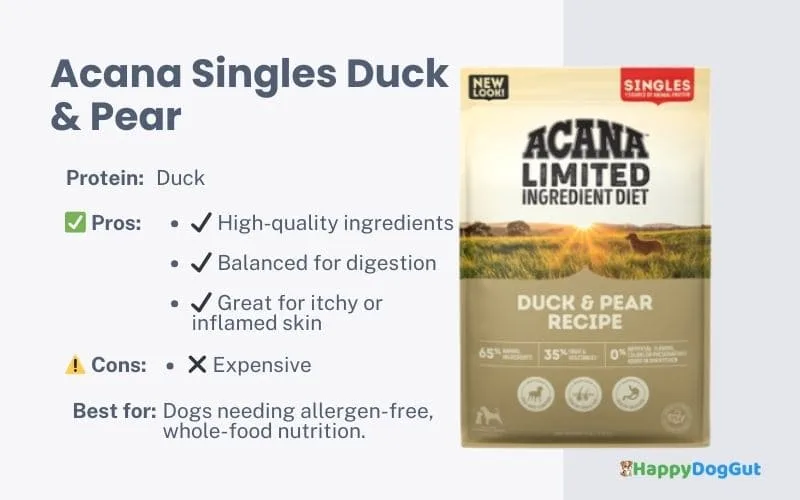
10. Acana Singles Duck & Pear
Best for: Novel protein rotation for food-intolerant dogs
Protein: Duck
Why it works:
Duck is a mild, novel protein ideal for dogs with chicken or beef intolerance. Rich in prebiotics + gentle fiber.
Pros:
✔ High-quality ingredients
✔ Balanced for digestion
✔ Great for itchy or inflamed skin
Cons:
✖ Expensive
Great for dogs needing allergen-free, whole-food nutrition.
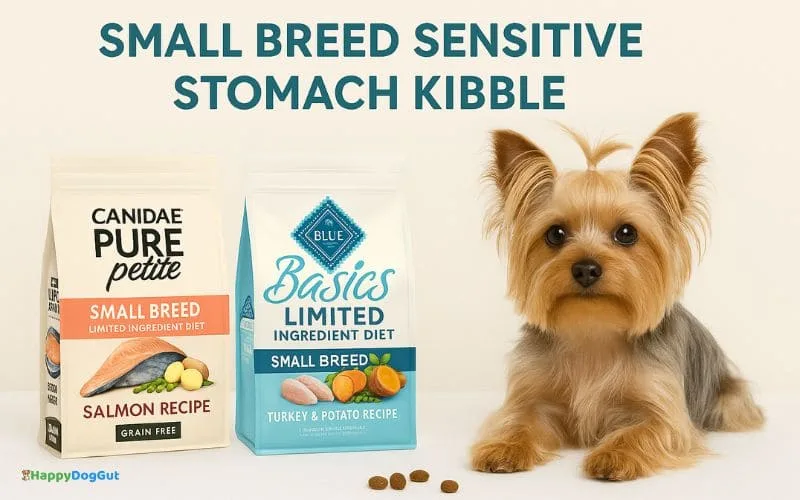
Best Kibble for Small Breeds
Small breeds often struggle the most with digestive issues because their stomachs are smaller, more sensitive, and react quickly to poor-quality ingredients. That’s why choosing the best dog kibble for sensitive stomachs specifically formulated for small dogs makes a huge difference in digestion, stool consistency, and overall energy levels. The right kibble must be small-sized, ultra-digestible, and low in fat, since small breeds can experience diarrhea or soft stool even with slight dietary changes.
Below are the best small-breed sensitive stomach kibble options:
⭐ Canidae PURE Petite (Grain-Free Salmon Recipe)
Why it’s great for small dogs:
This formula uses single-source salmon, making it extremely gentle for dogs with chicken intolerance. The kibble size is tiny, crunchy, and designed specifically for toy and small breeds.
Benefits:
- Limited ingredient recipe
- Highly digestible
- Good for gas + soft stool
- Perfect for picky eaters
⭐ Blue Buffalo Basics LID Small Breed (Turkey & Potato)
Why it works:
Turkey is one of the most gentle proteins for digestion, and the single-protein LID formula helps reduce food intolerance issues.
Benefits:
- No chicken, beef, dairy, or eggs
- Great for small dogs with itching + stomach issues
- Added pumpkin supports stool firmness
⭐ Merrick Small Breed Sensitive Stomach
Why it’s good:
Uses high-quality deboned fish and oatmeal—both excellent for digestion and for stabilizing soft stool.
Benefits:
- Added probiotics
- Oatmeal for gut comfort
- Ideal for small dogs with recurring diarrhea
If your small dog also struggles during the puppy stage, check out our vet-approved guide to the Best Puppy Foods for Sensitive Stomachs to transition your dog properly.
Best Kibble for Large Breeds
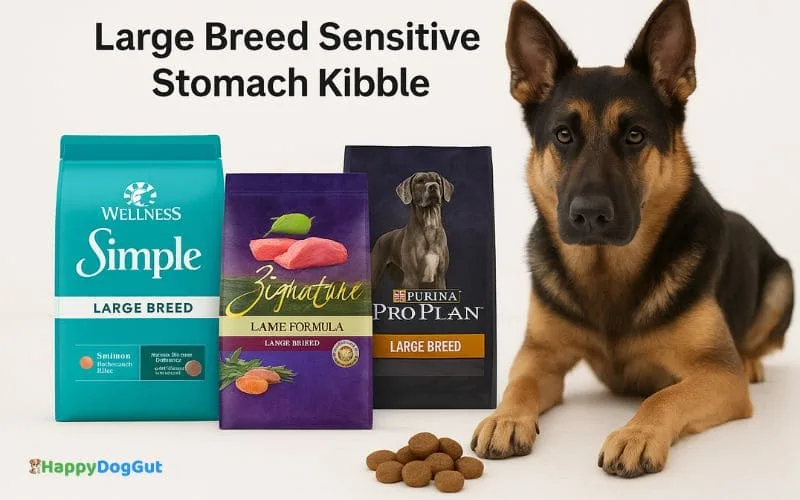
Large dogs have different digestive needs—they require slower-digesting ingredients, joint-support nutrients, and moderate-fat formulas to prevent stomach upset. The best dog kibble for sensitive stomachs for large breeds should be rich in omega-3s, easy on the gut, and designed to prevent bloating, diarrhea, and loose stool.
Here are the top large-breed kibble choices for sensitive stomachs:
⭐ Wellness Simple Limited Ingredient Large Breed (Salmon & Potato)
Why it works:
This LID formula focuses on salmon as the only animal protein, which is excellent for dogs that struggle with chicken intolerance or chronic digestive upset.
Benefits:
- Supports joint health with glucosamine
- Gentle carbs for stable digestion
- Helps reduce gas & bloating
⭐ Zignature Lamb Large Breed Formula
Why it’s great:
Lamb is a highly digestible, anti-inflammatory protein, perfect for large dogs that experience itchy skin, vomiting, or loose stools after eating common proteins like chicken or beef.
Benefits:
- Limited ingredients
- Good for allergies + sensitive stomachs
- Very high digestibility
⭐ Purina Pro Plan Sensitive Skin & Stomach (Large Breed Salmon)
Why it’s ideal for large breeds:
This formula is a favorite among vets because of its consistent results. Salmon provides a gentle protein source, while oatmeal supports smooth digestion.
Benefits:
- Omega-3 for joint + digestive support
- Live probiotics for firm stool
- Balanced fat for large breed metabolism
If your dog’s stomach issues are linked to specific ingredients, you can compare more gentle diet options in our guide to the Best Limited Ingredient Dog Foods for Sensitive Stomachs—a great resource for dogs with chronic intolerance or allergies.
Grain-Free vs Grain-Inclusive Kibble — What’s Better?
Choosing between grain-free kibble and grain-inclusive kibble can feel confusing, especially when your pup struggles with digestive upset. Many US dog owners assume grain-free is automatically healthier — but that’s not always true. When you’re specifically shopping for the best dog kibble for sensitive stomachs, what matters most is how digestible and gentle the formula is, not simply whether it includes grains.
Grain-free kibble typically removes corn, wheat, and soy — which is helpful if your dog has known grain sensitivities, loose stool triggered by gluten, or chronic gas after eating traditional kibble. Grain-free options often use sweet potatoes, peas, or lentils as carbohydrates. While these can work well for dogs with food intolerances, they may be too heavy or starchy for dogs with delicate digestion.
On the other hand, many dogs with sensitive stomachs digest grain-inclusive kibble much better — especially when it uses gentle, gut-friendly grains like rice, barley, and oats. These grains help stabilize stool, improve nutrient absorption, and soothe irritated intestines. In fact, many vets recommend starting with a limited-ingredient, grain-inclusive kibble before trying grain-free diets, because gentle grains can actually support firmer stool and better digestive balance.
If your dog struggles with soft stool, diarrhea flares, or bloating after eating, comparing these two options can help you choose the best dog kibble for sensitive stomachs for your pup’s individual needs.
Looking for a deeper comparison?
Check our full guide here: 👉 Grain-Free vs Grain-Inclusive Dog Foods
Homemade Kibble Alternatives
If your dog struggles even with the best dog kibble for sensitive stomachs, you’re not alone — many sensitive dogs do better with gentle, homemade kibble-style meals made from fresh, limited ingredients. These options offer full control over protein sources, carb quality, and fat levels, making them ideal for pups with chronic soft stool, gas, or food intolerance.
Here are a few simple, vet-friendly homemade kibble alternatives:
🍣 Salmon + Rice “Dehydrated Kibble”
A gentle, omega-rich homemade option where cooked salmon and rice are mixed, shaped into small bites, and dehydrated until crisp. It’s naturally low-irritant and easy on digestion.
🦃 Turkey + Oats Baked Nuggets
Lean turkey mixed with rolled oats and baked into crunchy pieces provides a mild, high-digestibility alternative for dogs who can’t handle store-bought kibble.
🐑 Lamb + Sweet Potato Kibble Bites
Perfect for dogs with chicken intolerance — lamb offers a novel protein source, while sweet potato delivers soothing, fiber-rich carbs.
If you want more gentle, gut-friendly recipes, check out our complete vet-reviewed guide here:
👉 Homemade Dog Food for Sensitive Stomachs
These homemade options aren’t meant to replace commercial kibble long-term, but they can help stabilize digestion while you evaluate which sensitive-stomach kibble works best for your dog.
Supplements That Improve Kibble Digestion
Even when you choose one of the best dog kibble for sensitive stomachs, some dogs still need extra digestive support — especially those with long-term gut inflammation, chronic diarrhea, or food intolerance. The right supplements can make kibble significantly easier to digest and help firm stool, reduce gas, and support a healthier gut lining.
Here are the top vet-approved supplements to pair with sensitive-stomach kibble:
🦠 Probiotics
Probiotics restore beneficial gut bacteria and help reduce inflammation triggered by irritating ingredients. They are especially helpful for dogs with recurring soft stool, diarrhea, or gas.
👉 Best Probiotics for Dogs with Sensitive Stomachs
🎃 Pumpkin Powder
Rich in soluble fiber, pumpkin stabilizes stool consistency and supports gentle digestion. It’s one of the fastest-acting remedies for loose stool.
🐟 Omega-3 Fish Oils
Omega-3s reduce gut inflammation and support skin health — a huge benefit for dogs with allergies or food intolerance.
🌾 Fiber Supplements
Fiber helps regulate bowel movements, reduce bloating, and support microbiome balance. Perfect for dogs who get soft stool after eating kibble.
👉 Best Fiber Supplements for Dogs
🔬 Digestive Enzymes
These break down proteins, fats, and carbohydrates more efficiently, which helps dogs absorb nutrients without digestive discomfort.
When paired with high-quality, easily digestible kibble, these supplements can dramatically improve gut health and make even sensitive dogs tolerate kibble comfortably.
How to Switch to a New Kibble (11-Day Transition Plan)
Switching too fast is one of the biggest reasons dogs get diarrhea, vomiting, or sudden soft stools — even if you’re feeding one of the best dog kibble for sensitive stomachs. A proper transition gives your dog’s gut microbiome time to adjust, reduces inflammation, and prevents food-related flare-ups.
Here’s the vet-approved 11-day transition chart:
| Day | Old Food | New Kibble |
|---|---|---|
| 1–2 | 75% | 25% |
| 3–4 | 60% | 40% |
| 5–7 | 50% | 50% |
| 8–10 | 25% | 75% |
| 11+ | 0% | 100% |
Pro Tips for Sensitive-Stomach Dogs:
✔ Add 1–2 tbsp of pumpkin during the switch to support stool firmness.
✔ Avoid switching multiple foods at once.
✔ Use the same protein type your dog tolerates (salmon, turkey, lamb).
If your dog develops soft stool during the transition, go back one step and slow down.
For a more detailed breakdown on switching safely, see our full Dog Food Transition Guide — perfect for dogs with sensitive guts.
When to See a Vet Immediately
Most dogs improve quickly once they switch to a gentle, gut-friendly formula — especially when using the best dog kibble for sensitive stomachs.
But certain symptoms should NEVER be ignored because they may indicate infection, parasites, pancreatitis, or internal bleeding.
Red-Flag Symptoms
🚩 Bloody stool (bright red or jelly-like)
🚩 Black, tarry stool (may signal internal bleeding)
🚩 Chronic vomiting — especially right after meals
🚩 No appetite for 24+ hours
🚩 Severe bloating or crying when touching the belly
🚩 Diarrhea lasting more than 3 days
🚩 Rapid weight loss
🚩 Puppies with diarrhea (always urgent)
If you see ANY of these signs, stop the transition immediately and call your veterinarian.
For medically reviewed information on serious digestive symptoms, check the American Kennel Club’s official guide: AKC: Dog Diarrhea Overview
FAQs – About the Best Dog Kibble for Sensitive Stomachs
What is the best dog kibble for sensitive stomachs?
The best dog kibble for sensitive stomachs is one made with easily digestible proteins (like turkey or salmon), gentle carbs (rice, oatmeal, barley), and added probiotics for gut support. Top vet-recommended formulas include Hill’s Science Diet Sensitive Stomach, Purina Pro Plan Sensitive Skin & Stomach (Salmon), and Blue Buffalo Basics LID Turkey & Potato. These kibbles avoid harsh fillers like corn, wheat, and soy and are clinically shown to improve stool firmness, reduce gas, and support smoother digestion.
Is grain-free kibble better for dogs with sensitive stomachs?
Not always. Many US dogs with sensitive stomachs actually digest gentle grains (rice, oats, barley) better than grain-free formulas. Grain-free kibble is only helpful if your dog has a true grain intolerance, which is far less common than protein intolerance. For most dogs with soft stool or recurring diarrhea, a grain-inclusive sensitive stomach kibble can be easier on the gut. Always test one formula for 2–3 weeks before switching again.
Can kibble cause soft stool in dogs?
Yes — low-quality kibble is one of the most common causes of soft stool in US dogs. Cheap formulas contain fillers, high-fat ingredients, artificial additives, and multiple mixed proteins that overwhelm the digestive system. If your dog’s stool improves after switching to high-digestibility kibble, it’s a strong sign the old ingredients were the problem.
Which kibble helps dogs with diarrhea the most?
Dogs with diarrhea often respond best to single-protein kibble made with gentle carbohydrates and added probiotics. Top choices include Hill’s Sensitive Stomach (Chicken-free options), Natural Balance LID Sweet Potato & Fish, and Canidae PURE Salmon. These formulas help firm up stool in 3–7 days by reducing triggers and supporting the gut microbiome.
What protein is easiest to digest in kibble for sensitive dogs?
The easiest proteins for dogs with sensitive stomachs are:
✔ Turkey
✔ Salmon
✔ Lamb
✔ Duck (for severe sensitivities)
These proteins are naturally lower in fat, gentler on digestion, and less likely to trigger allergies or food intolerance. Chicken and beef are still the #1 cause of stomach issues in many dogs.
Does chicken cause sensitive stomach problems in dogs?
Yes — chicken is the most common intolerance among dogs in the US. Many dogs can eat chicken for years and suddenly develop diarrhea, gas, itching, or mushy stools. This is why many of the best dog kibble for sensitive stomachs now come in chicken-free LID formulas such as turkey, lamb, or salmon.
Should sensitive dogs eat limited-ingredient kibble?
Absolutely. LID (Limited Ingredient Diet) kibble is one of the safest and most effective options for dogs with soft stool, diarrhea, stomach gurgling, or food-related itching. With fewer ingredients, it’s easier to identify triggers and reset digestion. LID formulas like Blue Buffalo Basics, Natural Balance LID, and Instinct LID Turkey are especially effective.
Can switching kibble too fast cause digestive upset?
Yes — switching dog kibble too quickly is a major cause of diarrhea, vomiting, and gas. Always follow a 10-day transition (25% → 50% → 75% → 100%). Sensitive stomach dogs sometimes need 2–3 weeks. If diarrhea worsens after switching slowly, the new protein or ingredient may be the trigger.
Is wet food better than kibble for sensitive stomachs?
Wet food can be easier to digest because it’s softer, higher in moisture, and less processed. But many sensitive dogs still do extremely well on properly chosen kibble—especially formulas with probiotics and gentle carbohydrates. The best approach is often a mix: kibble + a spoon of wet food for hydration and digestive comfort.
Can puppies have sensitive stomach kibble?
Yes — but they must eat a formula specifically labeled “Puppy” or “All Life Stages.” Puppies digest food differently and need more fat and protein than adults. Great sensitive-stomach puppy options include Blue Buffalo Basics Puppy LID and Canidae PURE Puppy. Avoid adult-only sensitive stomach kibble unless your vet recommends it due to severe intolerance.
Final Thoughts: The Right Kibble Can Transform Your Dog’s Digestive Health
Finding the best dog kibble for sensitive stomachs isn’t just about choosing a premium brand — it’s about choosing the right ingredients, the right protein, and the right formula that your dog’s gut can truly tolerate. Sensitive digestion is incredibly common in US dogs today, and many pups struggle silently with soft stool, gas, bloating, itching, or inconsistent bowel movements simply because their kibble doesn’t match their digestive needs.
The good news?
When you switch to a high-quality, easily digestible kibble, most dogs show noticeable improvement within days to weeks. Cleaner ingredients reduce inflammation, probiotics support a healthier microbiome, gentle carbs prevent flare-ups, and single-protein formulas make digestion predictable and stable. For many dogs, the right kibble becomes a long-term fix that leads to firmer stool, less stomach upset, and a happier, more energetic life.

If your dog has been dealing with chronic digestive issues, chicken intolerance, or unpredictable bathroom habits, choosing a scientifically backed formula truly matters. And if you want to go deeper into diets that remove even more irritants, your next step is to explore highly targeted limited-ingredient diets.
Some kibble formulas are too harsh for dogs prone to loose stool or mushy poop. If your dog continues to have inconsistent stool texture, you may get better results from the Best Dog Foods for Loose Stool designed for easier digestion and firmer stools.
👉 For more gentle, allergy-friendly food options, check out our full guide:
Best Limited Ingredient Dog Foods for Sensitive Stomachs
Your dog’s gut will thank you — one happy, healthy poop at a time. 🐶💛💩

Hi, I’m Maddy, the writer behind HappyDogGut.com.
I’m passionate about helping Dog parents understand Gut Health, Sensitive Stomachs, and Natural Nutrition for dogs.
Every article I create is vet-approved, research-backed, and experience-driven, so your pup can enjoy a healthier, happier gut.
Happy Gut = Happy Dog!
All content on Happy Dog Gut follows our Editorial Policy.