

If your dog often struggles with soft stools, constipation, or digestive issues, you’re not alone. Many dogs have sensitive stomachs that react to even small dietary changes. While probiotics and bland diets can help, there’s another key nutrient that often gets overlooked — fiber.
The best fiber supplements for dogs with sensitive stomachs don’t just firm up stool; they also support a healthy gut microbiome, improve nutrient absorption, and help regulate digestion naturally.
In this vet-approved guide, we’ll break down:
- Why fiber is essential for gut health
- Signs your dog needs more fiber
- The best fiber supplements on the market
- Natural high-fiber food alternatives
- Vet-backed tips on how to feed fiber safely
Let’s get your dog’s tummy back on track — the natural way. 🦴
💡 If your dog’s stool is soft but they’re acting normal, you might want to read our post — Why Does My Dog Have Soft Stools but Is Acting Normal?
Why Fiber Is Essential for Dogs with Sensitive Stomachs
Fiber is one of the most important nutrients for maintaining a healthy digestive system — especially for dogs prone to upset stomachs, loose stools, or irregular bowel movements.
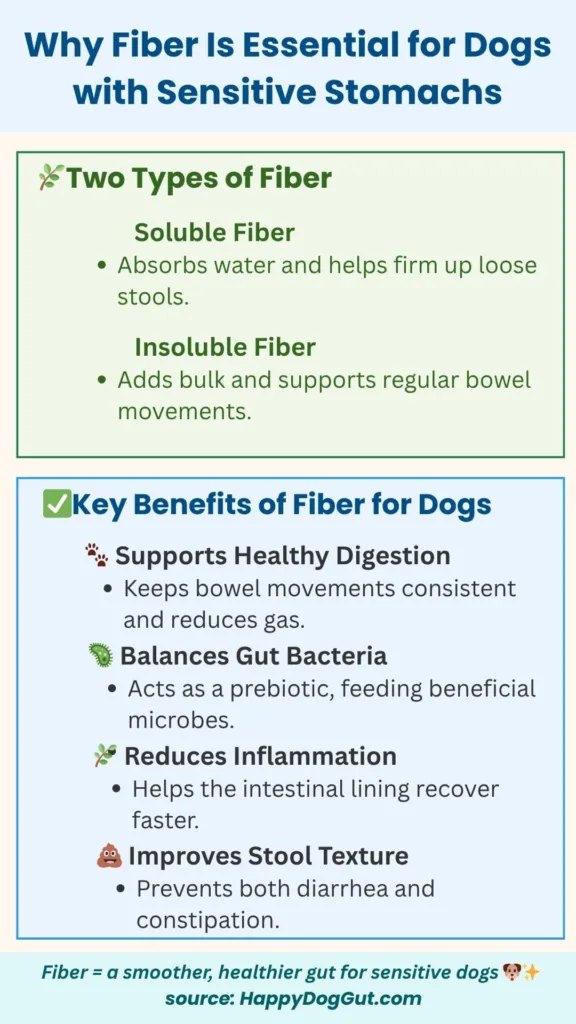
There are two main types of fiber:
- Soluble fiber absorbs water, forming a gel-like texture that helps firm up soft stool and soothe the gut.
- Insoluble fiber adds bulk, stimulating regular bowel movements and keeping things moving smoothly.
✅ Key Benefits of Fiber for Dogs
- Supports healthy digestion: Keeps bowel movements consistent and reduces gas.
- Balances gut bacteria: Acts as a prebiotic, feeding beneficial microbes.
- Reduces inflammation: Helps the intestinal lining recover faster.
- Improves stool texture: Prevents both diarrhea and constipation.
According to the American Kennel Club (AKC), moderate fiber intake is essential for dogs with mild digestive problems, as it helps restore stool consistency within 48 hours when paired with hydration.
Signs Your Dog Needs More Fiber
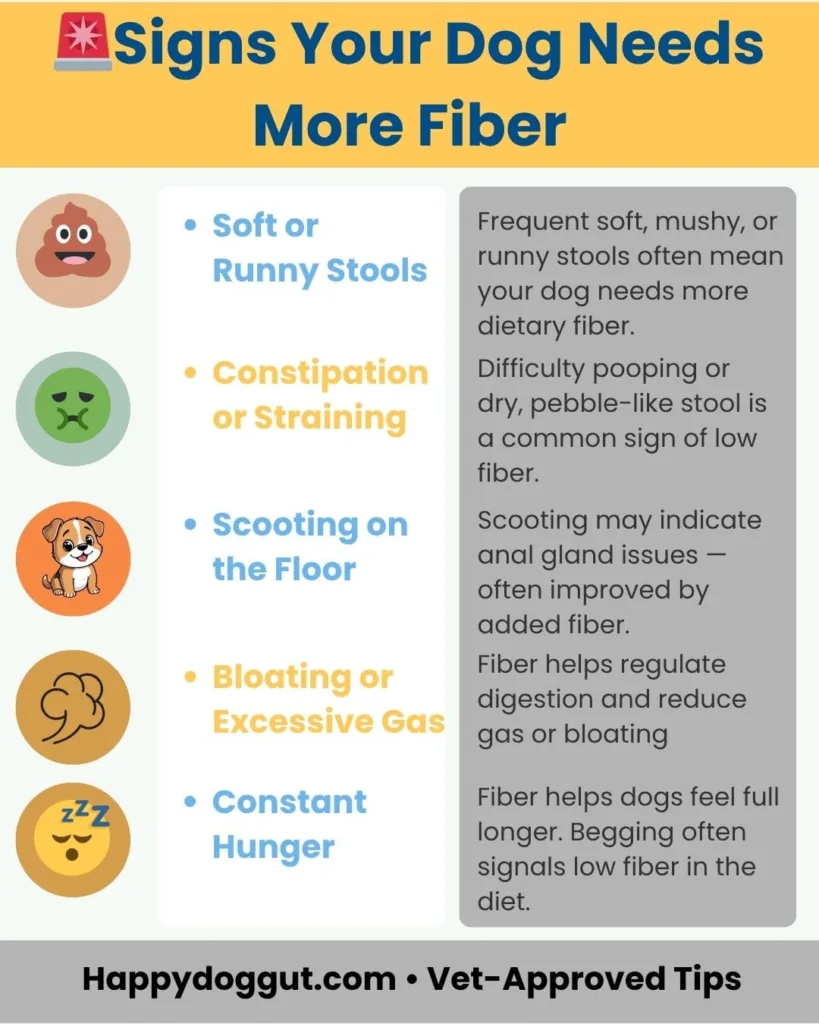
How can you tell if your pup’s diet is lacking fiber? Here are the common red flags veterinarians look for:
🐾 Frequent soft or runny stools
🐾 Constipation or straining during bowel movements
🐾 Scooting behavior (may indicate anal gland issues)
🐾 Bloating or excessive gas
🐾 Overeating or begging for food constantly (fiber helps dogs feel full)
If you notice one or more of these signs, your dog might benefit from a fiber supplement or a diet rich in natural fiber. These digestive symptoms also overlap with the digestive signs of food intolerance.
For dogs reacting to food ingredients, the right diet matters. Here are the best dog foods for food intolerance.
Best Vet-Approved Fiber Supplements for Dogs
Top 5 Fiber Products for Dogs With Sensitive Stomachs, Loose Stool & Gut Issues
These are the most effective, vet-recommended fiber supplements for improving stool firmness, soothing digestive sensitivity, and supporting long-term gut health. Each option is reviewed for ingredients, benefits, pros/cons, and best uses — to help you choose the right one for your dog.
1️⃣ Zesty Paws Probiotic + Fiber Bites
⭐ Best Chewable Fiber Supplement for Dogs With Sensitive Stomachs
Main Ingredients: Flaxseed, inulin (prebiotic fiber), probiotic strains
Best For: Dogs that refuse powders or need tasty chewable supplements.
These soft chews combine fiber + probiotics + digestive enzymes, making them one of the easiest ways to support gut health in picky eaters. They help bulk up stool within 2–3 days, reduce gas, and support long-term digestive balance.
Benefits:
- Dual-action support: fiber + probiotics
- Soft, chicken-flavored chews that dogs enjoy
- Promotes firm stool and healthy gut flora
- Great for daily digestive maintenance
Pros: Highly palatable, fast-acting, great for picky dogs
Cons: Slightly higher calorie count per chew
🔗 Compare against probiotics alone in our detailed guide:
Best Probiotics for Dogs with Sensitive Stomachs (Review)
➡️ Perfect for: Dogs refusing powders, picky eaters, mild digestive sensitivity.

2️⃣ Glandex Fiber Supplement for Dogs
⭐ Best Fiber Supplement for Anal Gland & Stool Support
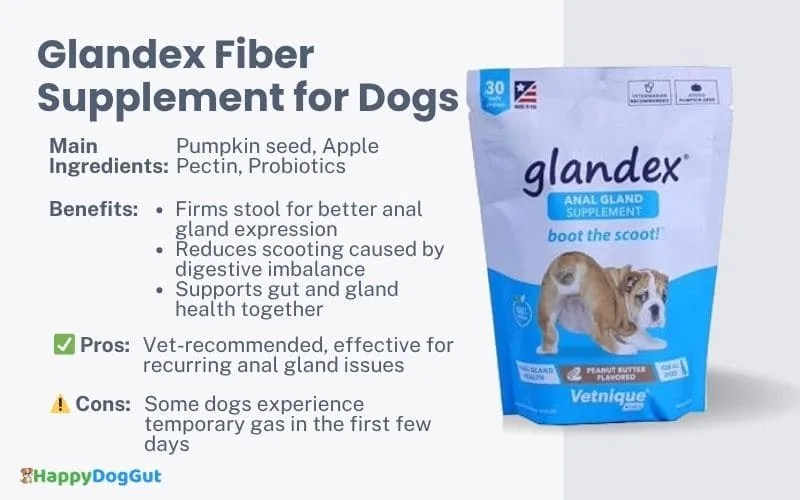
Main Ingredients: Pumpkin seed, apple pectin, probiotics
Best For: Dogs with scooting, anal gland buildup, and soft stool.
Glandex is one of the most widely used supplements for anal gland issues, thanks to its ability to bulk up stool naturally. Firmer stools help the anal glands express as dogs defecate — reducing scooting, inflammation, and discomfort.
Benefits:
- Firms stool for better anal gland expression
- Reduces scooting caused by digestive imbalance
- Supports gut and gland health together
- Contains both soluble and insoluble fiber
Pros: Vet-recommended, effective for recurring anal gland issues
Cons: Some dogs experience temporary gas in the first few days
➡️ Perfect for: Dogs with frequent scooting or soft stool that doesn’t firm up easily.
3️⃣ Firm Up! Pumpkin Fiber for Dogs
⭐ Best 100% Natural & Limited-Ingredient Fiber Supplement
Main Ingredients: Dehydrated pumpkin, apple fiber
Best for: Dogs with food sensitivities, allergies, or strict dietary requirements.
Firm Up! is one of the cleanest, simplest fiber supplements, containing only pumpkin and apple fiber. This makes it ideal for dogs who don’t tolerate multi-ingredient formulas. It’s great for diarrhea, constipation, or transitioning between foods.
Benefits:
- Simple and natural — no artificial additives
- Helps firm stools quickly
- Easy to store and has a long shelf life
- Safe for dogs with allergies or limited-ingredient diets
Pros: Very gentle, mixes easily, excellent for sensitive dogs
Cons: Needs to be rehydrated before serving
➡️ Perfect for: Dogs with allergies, ingredient sensitivities, or who need a minimal, clean ingredient list.

4️⃣ PetHonesty Fiber + Prebiotic Chews
⭐ Best All-in-One Chew for Daily Gut Support
Main Ingredients: Flaxseed, inulin, probiotics
Best For: Dogs needing daily digestive support & stool consistency.
PetHonesty’s fiber chews offer a well-balanced blend of fiber + prebiotics + probiotics, making them excellent for long-term gut support. They help regulate digestion, reduce loose stool, and support healthy skin and coat.
Benefits:
- Combines essential gut-support ingredients
- Improves stool quality and overall digestion
- Helps reduce gas, bloating, or mild food intolerance
- Dog-friendly taste and texture
Pros: Great taste, multi-benefit formula, works for all breeds
Cons: Not recommended for young puppies under 6 months
➡️ Perfect for: Dogs needing daily stool consistency and digestive balance.

5️⃣ Protexin Pro-Fibre for Dogs
⭐ Top Fiber & Gut-Health Supplement for Sensitive Stomachs
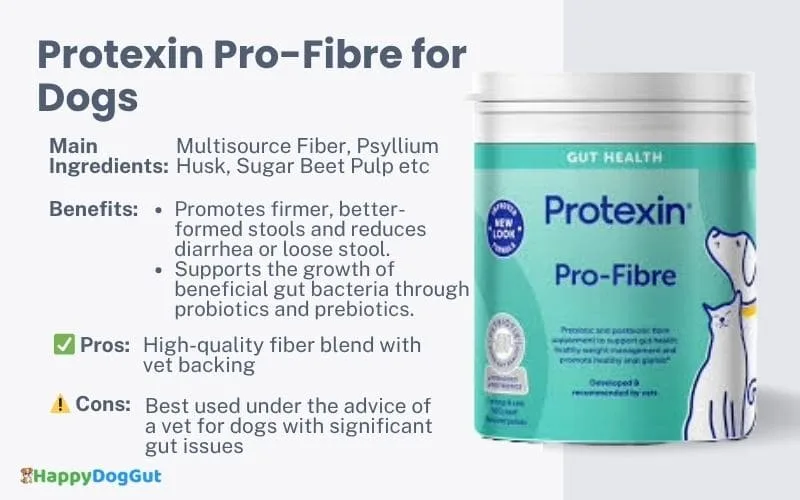
Main Ingredients: Multisource fiber (both soluble and insoluble), psyllium husk, sugar beet pulp, prebiotics (FOS), probiotic Enterococcus faecium.
Best For: Dogs with soft or loose stools, inconsistent bowel movements, or minor digestive upsets — especially when you’re looking for a clean-ingredient formula.
Why It Stands Out:
- Contains a high level of dietary fiber (~ 45% fiber) designed to bulk and firm stools while supporting overall gut microbiome health.
- Includes both soluble and insoluble fiber sources — ideal for dogs needing dual-action digestive support.
- Developed for pets with sensitive digestion, mild gut issues, or recovery after diarrhea.
Benefits:
- Promotes firmer, better-formed stools and reduces episodes of diarrhea or loose stool.
- Supports the growth of beneficial gut bacteria through probiotics and prebiotics, which aid in long-term digestive resilience.
- Easy to mix with regular food and suitable for daily use under vet guidance.
Pros:
- High-quality fiber blend with vet backing
- Strong ingredient transparency
- Works well for dogs with diet sensitivities
Cons:
- May be slightly more expensive than generic fiber powders
- Need to monitor hydration when using high-fiber products
- Best used under the advice of a vet for dogs with significant gut issues
➡️ Perfect for: Dogs whose digestive systems respond slowly to simpler fiber options, or dogs needing a stronger formulation when dealing with both stool firmness issues and microbiome imbalance.
For dogs whose stomach troubles are triggered by ingredients rather than fiber, shifting to hypoallergenic diets for sensitive digestion can provide lasting relief
Natural High-Fiber Foods for Dogs
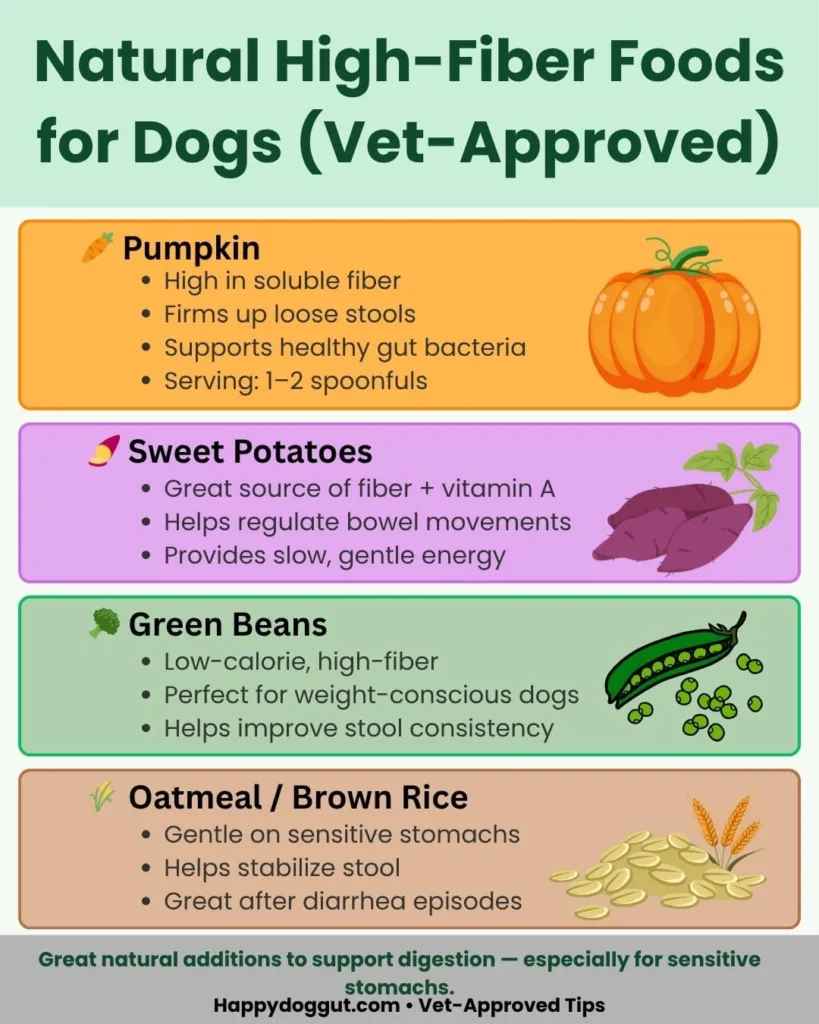
If you prefer a more natural or homemade approach instead of supplements, several high-fiber whole foods can support digestion and improve stool quality — especially for dogs with sensitive stomachs. These foods are safe, easy to prepare, and work beautifully alongside or in place of the best fiber supplements for dogs with sensitive stomachs.
🥕 Pumpkin
Pumpkin is one of the most effective natural fiber sources for dogs with sensitive stomachs. Its soluble fiber helps absorb excess moisture, firm up loose stools, and support healthy gut bacteria. Even 1–2 spoonfuls can make a noticeable improvement in digestion.
If you want exact serving sizes and vet-approved tips, check out our full guide here:
👉 Can I Give My Dog Pumpkin for a Sensitive Stomach? (Vet Answered)
🍠 Sweet Potatoes
Rich in fiber, vitamin A, and antioxidants, sweet potatoes help regulate bowel movements while providing gentle energy for recovering dogs.
🥦 Green Beans
Low in calories but high in fiber, green beans are an ideal choice for dogs that require digestive support without extra fat or grains.
🌾 Oatmeal or Brown Rice
These soothing, slow-digesting carbs add bulk to the stool and help keep the digestive system stable — especially helpful after diarrhea or a minor stomach upset.
💡 Want more homemade, digestion-friendly meal ideas?
Check out our vet-approved guide: Homemade Dog Food for Sensitive Stomachs (Vet-Approved Guide) — it includes simple recipes using these same ingredients.
How to Add Fiber to Your Dog’s Diet Safely
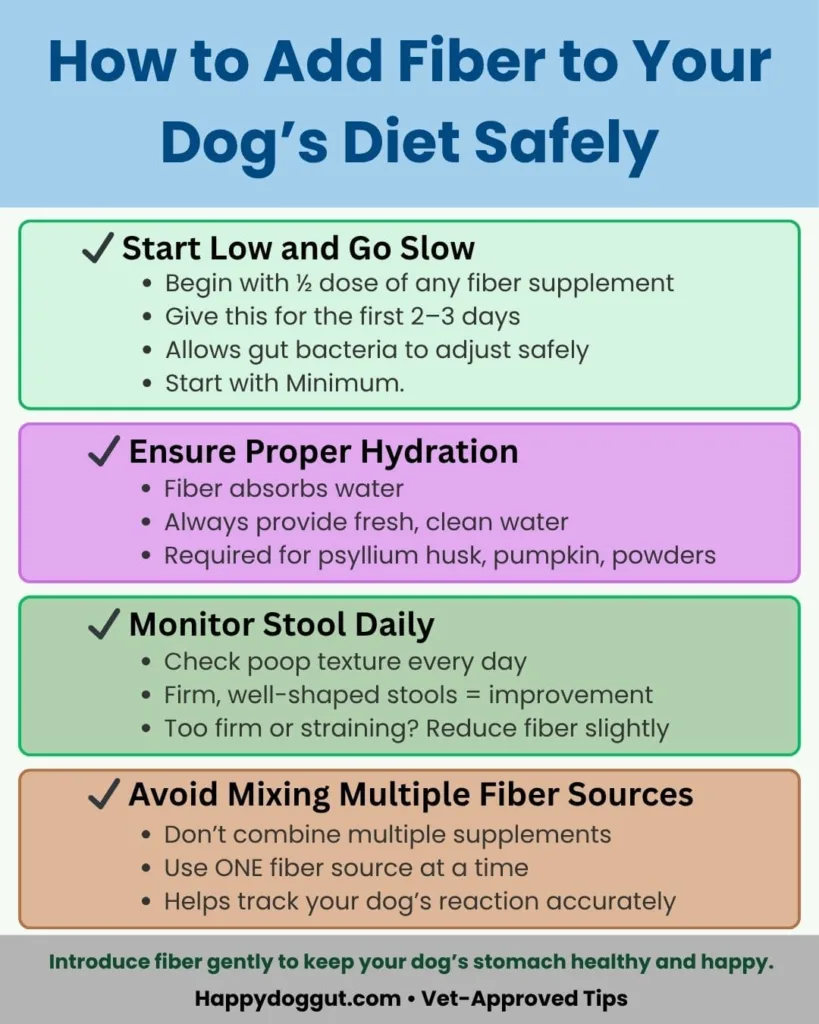
Adding fiber can be beneficial for dogs with digestive issues, but it must be introduced slowly — especially for pups with sensitive stomachs. Even the best fiber supplements for dogs with sensitive stomachs can cause temporary gas, bloating, or discomfort if the dose increases too quickly.
Follow these vet-approved guidelines to keep your dog’s gut safe and stable:
✔️ Start Low and Go Slow
Begin with half the recommended dose of any fiber supplement or high-fiber food for the first 2–3 days. This allows your dog’s gut bacteria to adjust without irritation.
✔️ Ensure Proper Hydration
Fiber absorbs water. Always ensure your dog has access to fresh, clean water, especially when using psyllium husk, pumpkin, or any powdered supplement.
✔️ Monitor Stool Daily
Check your dog’s poop consistency each day. Firmer, well-shaped stools are a sign that the fiber is helping. If stools become too firm or your dog strains, reduce the amount slightly.
✔️ Avoid Mixing Multiple Fiber Sources
Don’t combine more than one fiber supplement at the same time. Stick to one product or one natural food source until you understand your dog’s response.
💡 Planning to switch your dog’s food too?
Follow the vet-approved method outlined in our Dog Food Transition Guide: How to Switch Without Stomach Upset for a smooth transition that protects gut health.
When to Talk to Your Vet
Fiber supplements can support digestion, but some signs indicate a deeper gut issue:
🚨 Contact your vet if your dog shows:
- Diarrhea lasting more than 3 days
- Blood or mucus in stool
- Lethargy or vomiting
- Refusal to eat or drink
- Rapid weight loss
For more professional insight, check the PetMD Guide on Digestive Issues in Dogs.
FAQs About Fiber Supplements for Dogs
What’s the best fiber supplement for dogs with sensitive stomachs?
The best fiber supplements for dogs with sensitive stomachs are those made with pumpkin, psyllium husk, and prebiotic fibers — such as NaturVet Advanced Fiber or Zesty Paws Probiotic + Fiber Bites. These formulas are specifically designed to support digestion without irritating. They promote firmer stools, reduce gas, and help safely rebalance beneficial gut bacteria.
Can too much fiber upset my dog’s stomach?
Yes. Although fiber is beneficial, consuming too much can cause the opposite effect — bloating, abdominal discomfort, excessive gas, or even constipation. Dogs with sensitive stomachs are especially prone to overreaction. Always introduce fiber slowly and follow the recommended dosage for your dog’s size and condition.
How long does it take for fiber to improve a dog’s stool?
Most dogs begin seeing improvements within 48–72 hours, especially when using high-quality supplements. However, results depend on hydration, the type of fiber used (soluble vs. insoluble), and how quickly the dog’s gut adjusts. Consistency is key — offering fiber daily is more effective than large, infrequent doses.
Can dogs take human fiber supplements such as Metamucil?
Generally, no. Many human fiber supplements contain artificial sweeteners, especially xylitol, which is extremely toxic to dogs. Even unsweetened versions may be too strong for sensitive stomachs. It’s safest to choose dog-formulated fiber supplements that are properly dosed and free from harmful additives.
Is pumpkin really a good natural fiber source for dogs?
Yes — plain pumpkin (not pie filling) is one of the best natural fiber sources for dogs with digestive sensitivity. It provides gentle soluble fiber that absorbs excess moisture, firms soft stool, and supports a healthy gut lining. Many vets recommend pumpkin as a first-line home remedy for mild digestive upset.
How much fiber should a dog get per day?
Most dogs do well with a diet that contains 2–5% fiber, but this varies based on age, breed, weight, and health conditions. Dogs with chronic digestive issues or anal gland problems may need slightly more. Always start with small amounts and increase only if your vet recommends it.
Can fiber help dogs with anal gland issues or scooting?
Yes — fiber adds bulk to stool, which naturally helps express the anal glands during bowel movements. Many dogs with recurring scooting or smelly gland issues get relief from fiber supplements containing pumpkin seed, psyllium husk, or apple pectin. Glandex is especially effective for this purpose.
What’s the safest way to introduce fiber to a dog’s diet?
Start with half the recommended dose for 2–3 days and gradually increase to the full amount. Ensure your dog drinks plenty of water, as fiber absorbs moisture. Monitor stool consistency daily and avoid using multiple fiber sources simultaneously. Slow, steady introduction prevents gas and stomach upset.
Final Thoughts
A sensitive stomach doesn’t have to be a lifelong challenge for your dog. With the best fiber supplements for dogs with sensitive stomachs, paired with a gentle and consistent diet, you can dramatically improve digestion, support gut health, and reduce flare-ups of soft stools or diarrhea.
The key is consistency:
🥣 Start with small amounts of fiber and increase slowly.
💧 Keep your dog well-hydrated to prevent constipation and support fiber absorption.
🧬 Combine fiber with probiotics for stronger, long-term gut balance.
🩺 Choose vet-approved, high-quality supplements—your dog’s digestive system will feel the difference.
If your dog is recovering from diarrhea or still has soft stools, you may also find this helpful:
👉 What to Feed a Dog After Diarrhea (Vet-Approved Recovery Diet)
With the right approach, your dog can return to normal digestion — one firm, happy poop at a time. 💩❤️

Hi, I’m Maddy, the writer behind HappyDogGut.com.
I’m passionate about helping Dog parents understand Gut Health, Sensitive Stomachs, and Natural Nutrition for dogs.
Every article I create is vet-approved, research-backed, and experience-driven, so your pup can enjoy a healthier, happier gut.
Happy Gut = Happy Dog!
All content on Happy Dog Gut follows our Editorial Policy.




Pingback: What Causes Sensitive Stomach in Dogs? Vet-Approved Explanation