

Probiotics have become a popular option for dog owners looking to support digestive balance, especially when their dog has a sensitive stomach or inconsistent stool. Many owners start probiotics hoping to see firmer poop, smoother digestion, and fewer tummy troubles. But when stool suddenly becomes loose, it often leads to a common concern: Can Probiotics cause Diarrhea in Dogs?
This situation can feel confusing. Probiotics are often described as “good bacteria,” so seeing diarrhea instead of improvement makes owners question whether probiotics are actually helping or making things worse. In reality, probiotics don’t affect every dog the same way. A dog’s gut may react differently depending on existing digestive sensitivity, overall diet, and how quickly probiotics are introduced.
🟢 Dogs with a history of stomach upset or food sensitivity may respond more noticeably during the adjustment phase. This is why Probiotics for Dogs with Sensitive Stomachs are typically introduced slowly rather than all at once.
🐾 It’s also important to look at the whole picture. Many dogs experience stool changes while still eating well, staying active, and behaving normally. If you’ve ever noticed Soft Stools but Acting Normal, probiotics may simply be part of a temporary digestive shift rather than a sign of a serious issue.
In this guide, we’ll take a calm, vet-informed look at whether probiotics can cause diarrhea in dogs, why it happens in some cases, and how dog owners can observe and support gut health thoughtfully — without panic, diagnosis, or rushed decisions.
How Probiotics Work in a Dog’s Digestive System
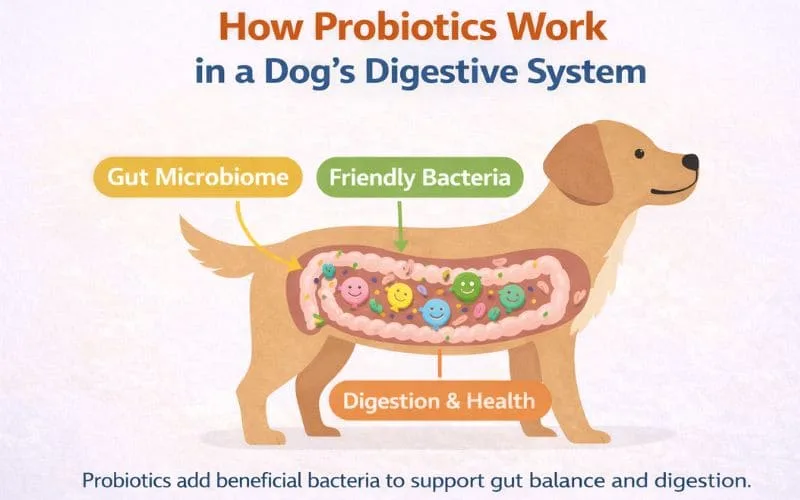
A dog’s digestive system is home to trillions of microorganisms, often referred to as the gut microbiome. These bacteria play an important role in breaking down food, supporting nutrient absorption, and helping maintain normal stool consistency. When this balance is stable, digestion tends to run smoothly.
🧬 Probiotics are live beneficial bacteria designed to support that balance. They don’t replace digestion or “fix” problems overnight. Instead, probiotics work by adding helpful bacteria that may support digestive harmony over time, especially in dogs with sensitive or easily disrupted stomachs.
Probiotics are often used to support digestive balance by introducing beneficial bacteria that interact with the gut microbiome. For a broader explanation of How Probiotics affect a Dog’s Digestive System, the American Kennel Club provides a helpful overview based on veterinary guidance.
🟢 When new bacteria are introduced, the gut often needs time to adjust. During this adjustment phase, some dogs may experience short-term stool changes such as softer poop or mild diarrhea. This helps explain why owners sometimes ask, can probiotics cause diarrhea in dogs, even though the goal is digestive support.
🐾 Dogs with sensitive stomachs tend to react more noticeably because their gut balance is already delicate. Even small changes — including probiotics — can temporarily shift how stool looks or feels. This is why Probiotics for dogs with sensitive stomachs are usually introduced gradually rather than all at once.
Understanding how probiotics interact with the gut microbiome helps set realistic expectations. Probiotics support digestive balance over time, but the adjustment period is a normal part of how many dogs’ digestive systems respond.
Can Probiotics Really Cause Diarrhea in Dogs?
The short answer is yes — probiotics can cause temporary diarrhea in some dogs, especially when they’re first introduced. This doesn’t happen to every dog, and when it does, it’s often mild and short-lived rather than a sign of a serious problem.
🟢 Every dog’s digestive system responds differently. Some dogs adjust smoothly with no stool changes at all, while others may develop softer stools for a few days. Factors like gut sensitivity, diet consistency, and how quickly probiotics are added can all influence this response. That’s why many owners end up asking, can probiotics cause diarrhea in dogs, after seeing unexpected stool changes.
🐾 It’s important to understand that a digestive reaction does not automatically mean probiotics are harmful. In many cases, loose stool reflects the gut adjusting to new bacteria rather than rejecting them. This adjustment phase is similar to how digestion can change after a diet shift or other routine change.
⚖️ The key difference is adjustment versus long-term issues. Temporary diarrhea often improves as the gut microbiome stabilizes. Ongoing or worsening diarrhea, however, suggests that the current approach may not be the right fit for your dog and deserves closer observation.
By viewing stool changes through this lens, owners can stay calm, avoid rushed decisions, and focus on supporting digestive balance rather than assuming probiotics are the problem.
Common Reasons Probiotics May Trigger Loose Stool
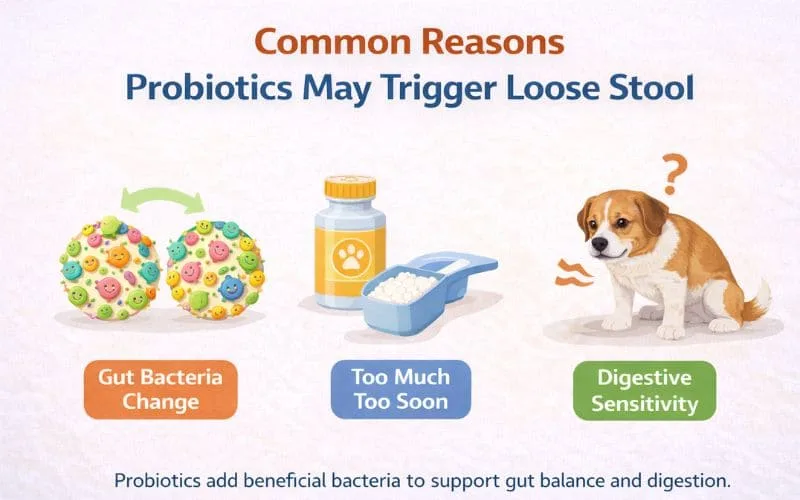
Not all dogs react the same way to probiotics. When loose stool appears, it’s often connected to how a dog’s digestive system adjusts rather than a problem with probiotics themselves. Below are the most common reasons this can happen.
🔹 Sudden Changes in Gut Bacteria
A dog’s gut microbiome prefers stability. When probiotics introduce new bacteria, the digestive system may go through a short adjustment period. During this time, stool consistency can temporarily change as the gut works to rebalance itself. This microbiome shift is one of the most common reasons owners wonder whether can probiotics cause diarrhea in dogs during the first few days.
🔹 Starting With Too Much Too Soon
Dosage sensitivity plays a big role. Starting probiotics at a full amount right away can overwhelm a sensitive digestive system.
🐾 This is especially common in:
- Small-breed dogs
- Dogs with a history of digestive upset
- Dogs already prone to loose stools
Introducing probiotics gradually gives the gut time to adapt.
🔹 Underlying Digestive Sensitivity
Dogs that already have digestive sensitivity may respond more strongly to any change, including probiotics. A history of loose stools, mild gut imbalance, or frequent stomach upset can make reactions more noticeable. Understanding the Causes of Sensitive Stomach in Dogs can help explain why some dogs experience stool changes while others don’t.
Recognizing these factors helps owners respond calmly and avoid assuming probiotics are automatically the problem.
Is Probiotic-Related Diarrhea Normal or a Concern?
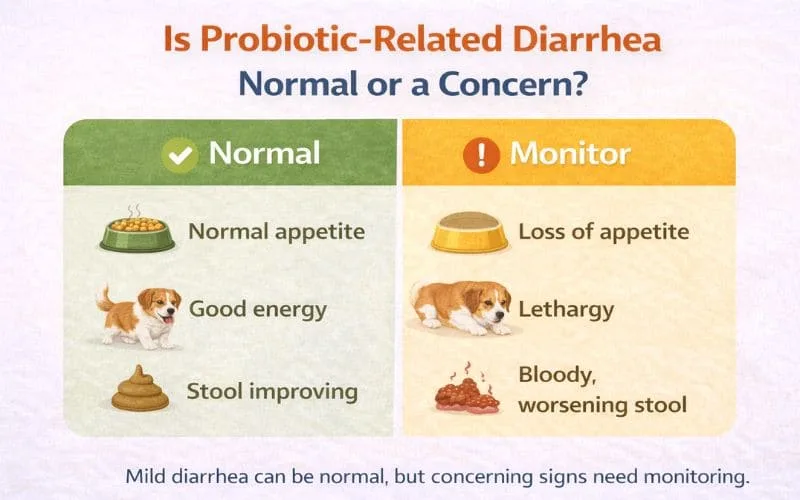
When loose stool shows up after starting probiotics, it’s natural for dog owners to wonder whether it’s normal or something to worry about. In many cases, the answer depends on how your dog is acting overall and how long the stool changes last.
🟢 Often Considered Normal
Temporary stool changes can be part of the gut’s adjustment process. If your dog is still energetic, eating well, and behaving normally, mild diarrhea may simply reflect the digestive system adapting to new bacteria.
Common signs that are usually considered normal include:
- Your dog remains active and playful
- Appetite stays normal
- Stool is only slightly softer and improves within a short time
In these situations, probiotics may still be supporting gut balance, even if stool isn’t perfect right away.
⚠️ Worth Monitoring More Closely
Some signs suggest that stool changes deserve closer attention. Diarrhea that continues for several days or becomes more frequent may indicate that your dog’s digestive system needs additional support.
Things to watch for include:
- Loose stool that doesn’t improve over time
- Increased gas or bloating
- Digestive discomfort that seems to persist
In these cases, focusing on diet consistency can be helpful. Exploring Dog Foods for Loose Stool may offer guidance on supporting firmer digestion while observing how probiotics affect your dog.
🩺 If digestive changes continue, a veterinarian can help evaluate whether probiotics, diet, or another factor is contributing to the issue.
Looking at the full picture — behavior, appetite, and stool trends — helps owners stay calm and make thoughtful decisions rather than reacting to a single symptom.
How Long Does Diarrhea From Probiotics Usually Last?
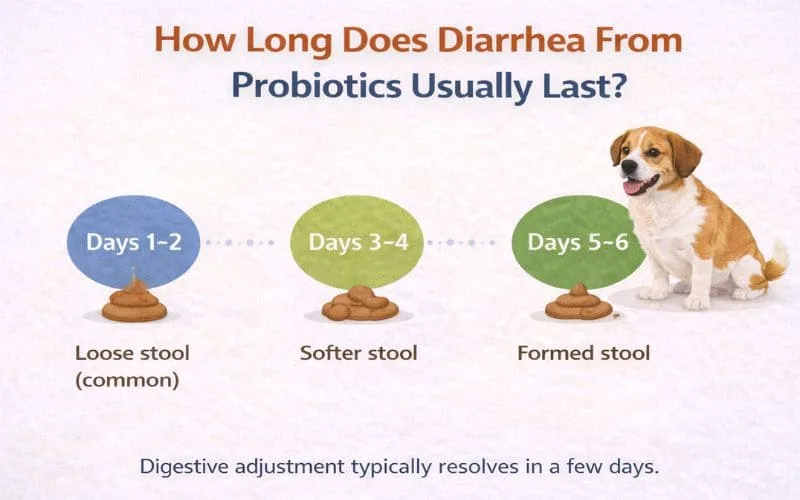
For most dogs, diarrhea related to probiotics is temporary. When it happens, it’s usually part of the gut’s adjustment period as new bacteria settle into the digestive system.
🟢 Typical Adjustment Window
In many cases, stool changes last just a few days. During this time, the gut microbiome is adapting, and digestion may feel slightly off before stabilizing. Some dogs adjust quickly, while others take a bit longer — especially if they have a sensitive stomach.
🐾 Gradual Stool Improvement
As the digestive system balances out, stool often becomes firmer on its own. This improvement tends to happen gradually rather than overnight. Seeing small signs of progress, such as less watery stool or more consistent bowel movements, is often a positive sign.
⚖️ Why Consistency Matters
Consistency is important when observing digestive changes. Switching foods, adding multiple supplements, or stopping probiotics too quickly can make it harder to tell what’s actually helping. Keeping everything else stable allows you to better understand how your dog’s gut is responding.
The key is observation over panic. Paying attention to trends — rather than reacting to a single loose stool — helps owners support gut health calmly and make thoughtful decisions without rushing to conclusions.
How to Support Your Dog’s Gut When Starting Probiotics
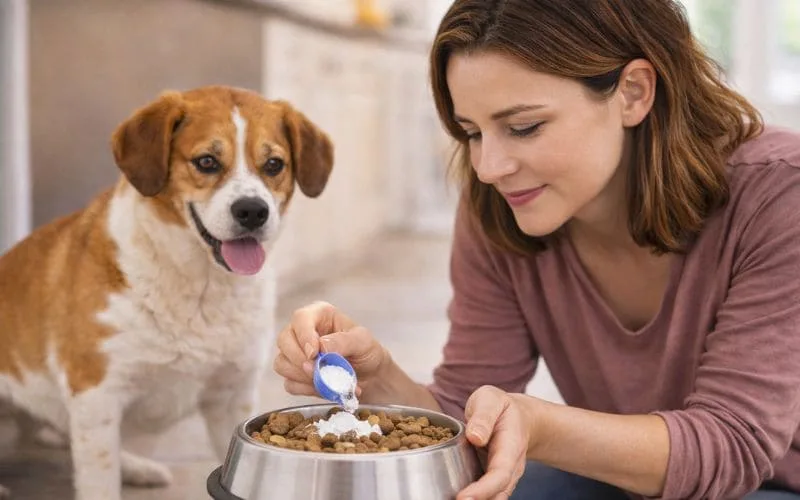
Starting probiotics thoughtfully can make a big difference in how your dog’s digestive system responds. Small, steady steps help the gut adjust without unnecessary disruption.
🔹 Start Low and Go Slow
🟢 Gradual introduction is key. Beginning with a smaller amount allows your dog’s gut microbiome to adapt to new bacteria over time. Jumping in too quickly can overwhelm a sensitive digestive system and lead to loose stools that might otherwise be avoided.
🐾 Dogs with a history of stomach upset often benefit most from a slow approach, giving their gut time to find balance.
🔹 Avoid Changing Foods at the Same Time
⚖️ Making multiple changes at once can create confusion. Switching dog food while also starting probiotics makes it difficult to tell which change is affecting stool consistency. Keeping the diet stable while introducing probiotics helps you observe how your dog truly responds.
Consistency reduces guesswork and supports clearer decision-making.
🔹 Fiber Can Help Firm Stool Balance
🧬 Fiber plays a supportive role in digestion by helping regulate stool consistency. In some dogs, gentle fiber support can complement probiotics by adding structure to loose stools.
Owners exploring this option may find helpful guidance in Fiber Supplements for Dogs with Sensitive Stomachs or by learning more about High-fiber Dog Foods for Firm Stool. These resources focus on balance rather than drastic dietary changes.
Taking a steady, thoughtful approach allows probiotics and gut-supportive strategies to work together without overwhelming your dog’s digestive system.
Dogs That May Be More Sensitive to Probiotics
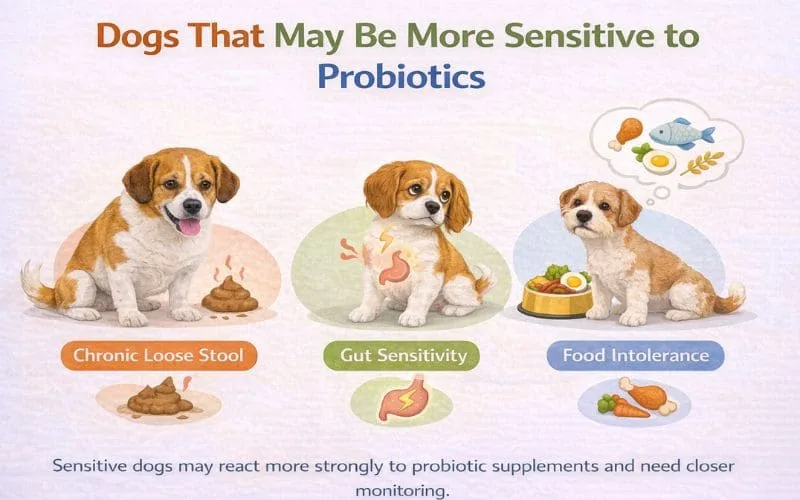
While many dogs tolerate probiotics well, some may respond more strongly due to existing digestive challenges. Understanding which dogs are more sensitive can help owners introduce probiotics more thoughtfully and avoid unnecessary concern.
🐾 Dogs with Chronic Loose Stools
Dogs that regularly struggle with loose or inconsistent stools often have an underlying digestive imbalance. Adding probiotics can temporarily shift stool consistency as the gut adjusts. In these cases, focusing on supportive diets — such as those discussed in Dog Foods for Chronic Diarrhea — can help provide a more stable foundation alongside probiotics.
🟢 Dogs with a history of Gut Inflammation
Dogs that have experienced ongoing gut irritation or inflammation may react more noticeably to changes in their digestive routine. Even helpful additions like probiotics can cause short-term changes as the gut microbiome rebalances. Exploring gentle Diet Support for Dogs with IBD can offer insight into why these dogs often need a slower, more cautious approach.
⚖️ Food-Sensitive Dogs
Dogs with known food sensitivities may have less digestive flexibility overall. New supplements, ingredients, or dietary changes can trigger stool changes more easily, even when the goal is digestive support.
Recognizing these sensitivities allows owners to focus on gradual changes, careful observation, and gut-friendly strategies rather than assuming probiotics are automatically the problem.
Should You Stop Probiotics If Diarrhea Happens?
Seeing diarrhea after starting probiotics can make dog owners wonder whether they should stop right away. In many cases, the answer depends on whether the reaction appears temporary or persistent.
🟢 Temporary Reactions
Mild, short-term stool changes often happen during the gut’s adjustment period. If your dog is otherwise acting normal, eating well, and the stool shows gradual improvement, stopping probiotics immediately may not be necessary. These early changes can simply reflect the digestive system adapting to new bacteria.
⚠️ Persistent Reactions
If diarrhea continues without improvement, becomes more frequent, or starts to affect your dog’s comfort, it’s worth slowing down and reassessing the situation. Persistent changes suggest that the current approach may not be the best fit for your dog’s digestive system at this time.
🐾 Observation First, Not Reaction
Rather than rushing to stop or switch supplements, focusing on observation helps provide clarity. Watching patterns — such as how long stool changes last and whether behavior or appetite changes — offers more useful insight than reacting to a single symptom.
🧘 A Calm Adjustment Mindset
Digestive support works best when approached patiently. Small adjustments, consistency, and time often reveal whether probiotics are helping or simply need a gentler introduction. Staying calm allows owners to make thoughtful decisions without assuming probiotics are automatically harmful.
FAQs: Probiotics and Diarrhea in Dogs

Can Probiotics make diarrhea worse in dogs?
Yes, in some dogs probiotics can temporarily make diarrhea appear worse, especially during the early adjustment period. This usually happens as new bacteria interact with the existing gut microbiome. It doesn’t automatically mean probiotics are harmful. If the stool change is mild and your dog is acting normal, it’s often part of short-term digestive adjustment rather than a negative reaction.
How soon do Probiotics change dog stool?
Stool changes can appear within a few days of starting probiotics. Some dogs show softer stools almost immediately, while others take longer to respond. Improvement is often gradual rather than instant. Watching stool trends over several days is more helpful than judging probiotics based on one or two bowel movements.
Are Probiotics safe for dogs with sensitive stomachs?
Probiotics are generally considered safe for dogs with sensitive stomachs, but those dogs may react more noticeably at first. A sensitive gut tends to respond quickly to any change, even supportive ones. Introducing probiotics slowly and keeping the rest of the diet consistent often helps minimize digestive disruption.
Should probiotics be given daily?
Many probiotics are designed for daily use, but consistency matters more than frequency alone. Giving probiotics regularly helps the gut microbiome stabilize over time. However, daily use should feel supportive — not stressful — for your dog’s digestion. Observing stool quality and comfort helps guide whether daily use feels appropriate.
Can puppies get diarrhea from probiotics?
Yes, puppies can experience diarrhea from probiotics more easily than adult dogs. Their digestive systems are still developing, which makes them more sensitive to changes in gut bacteria. For puppies, gentle introductions and close observation are especially important, as stool changes can happen quickly.
Should Probiotics be given with food?
Giving probiotics with food is often gentler on the digestive system. Food can help buffer the introduction of new bacteria and reduce the chance of stomach upset. Many dog owners find that probiotics are better tolerated when paired with a regular meal rather than given on an empty stomach.
Can switching probiotic brands cause diarrhea?
Yes, switching probiotic brands can sometimes cause diarrhea. Different brands contain different bacterial strains and concentrations, which can trigger another adjustment period. Even if a dog tolerated one probiotic well, changing formulas may briefly affect stool consistency as the gut adapts again.
Final Thoughts
Probiotics are widely used to support digestive balance in dogs, and for many, they play a helpful role in maintaining gut health over time. However, it’s important to remember that introducing new bacteria doesn’t always lead to instant results. In some dogs, temporary diarrhea can be part of the adjustment process as the gut microbiome adapts.
🟢 Observation and patience matter. Watching how your dog’s stool, appetite, and behavior change over several days provides more meaningful insight than reacting to a single loose bowel movement. Small shifts often tell a clearer story than quick decisions or sudden changes.
🐾 Every dog’s digestive system is unique. What works smoothly for one dog may take more time for another, especially if there’s a history of digestive sensitivity. Supporting gut health is often about finding the right pace and approach rather than expecting immediate perfection.
If you’re exploring digestive support options, learning more about Best Probiotics for Dogs with Sensitive Stomachs can help you understand what gentle gut support looks like. For dogs that experience stool changes while otherwise feeling fine, understanding Why Dogs have Soft Stools but Act Normal may bring helpful clarity. And if loose stools are ongoing, focusing on Long-term Diet Support for Chronic Diarrhea can offer additional guidance.
Taking a calm, informed approach gives most dogs the best chance at long-term digestive comfort.

Hi, I’m Maddy, the writer behind HappyDogGut.com.
I’m passionate about helping Dog parents understand Gut Health, Sensitive Stomachs, and Natural Nutrition for dogs.
Every article I create is vet-approved, research-backed, and experience-driven, so your pup can enjoy a healthier, happier gut.
Happy Gut = Happy Dog!
All content on Happy Dog Gut follows our Editorial Policy.


Pingback: Best Probiotics for Dogs with Sensitive Stomachs (Vet-Reviewed)