

Food allergies and sensitivities are becoming increasingly common in dogs, and many pet owners are struggling to pinpoint what’s really causing their dog’s symptoms. Issues like chronic itching, recurring ear infections, loose stools, gas, or frequent stomach upset often lead owners to wonder whether food is the culprit — and if so, which ingredient is to blame.
This confusion has fueled the popularity of dog food allergy test, especially online kits that promise quick answers using blood, saliva, or even hair samples. At first glance, these tests seem like a convenient way to identify problem ingredients without changing your dog’s diet. However, many owners are left frustrated when results don’t align with real-world symptoms, or when diet changes based on test results fail to improve digestion or skin health.
So, dog food allergy tests actually work? And how reliable are they when it comes to identifying true food allergies versus digestive intolerances? In this guide, we take a realistic, vet-informed look at dog food allergy testing — without hype, fear, or medical diagnosis.
You’ll learn what these tests are designed to measure, where their limitations lie, and why many veterinarians still rely on careful observation and dietary trials instead. This article is meant to educate, not diagnose, and to help you make more informed decisions if your dog is showing Signs of Food Intolerance or reacting to common ingredients that often appear on lists of Dog Food Ingredients to Avoid.
⚠️ This article is for educational purposes only and does not replace veterinary advice.
What Is a Dog Food Allergy Test?
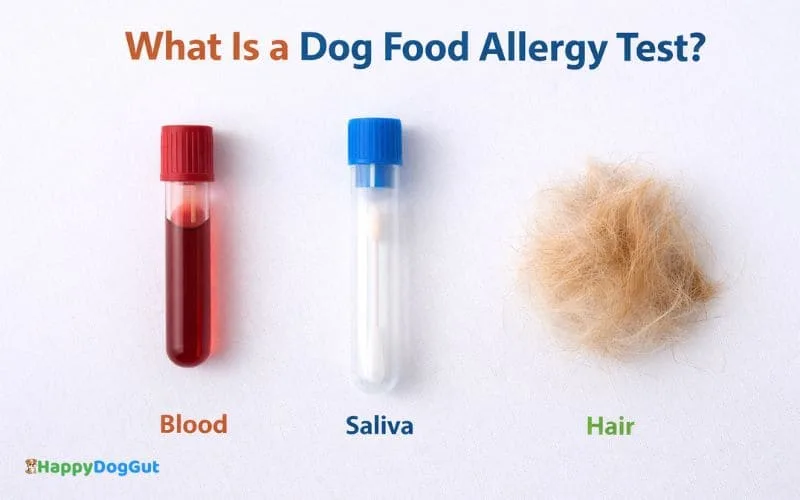
A dog food allergy test is designed to suggest which ingredients might be causing reactions like itching, stomach upset, or loose stools. These tests are often marketed as a quick way to identify problem foods without changing your dog’s diet for weeks.
🐾 What do these tests claim to measure?
Most tests say they detect your dog’s “reaction” to specific foods by looking at immune or biological markers. The idea is that a strong reaction may signal an allergy or sensitivity.
🧪 Common types of Dog Food Allergy Tests include:
- Blood Tests – look for antibodies linked to food reactions
- Saliva Tests – analyze markers found in oral samples
- Hair Analysis Tests – claim to detect sensitivities through hair samples
These tests are usually promoted as:
- Fast and Convenient
- Non-invasive
- Easier than Diet Changes or Elimination Trials
While this sounds appealing, it’s important to understand that these tests are screening tools, not definitive answers. They may provide clues, but they don’t always reflect how your dog’s digestive system actually handles food over time.
Keeping expectations realistic helps owners avoid unnecessary food changes and focus on approaches that truly support long-term gut health.
Do Dog Food Allergy Tests Really Work? (Vet Perspective)
Many dog owners ask whether a dog food allergy test can truly identify the cause of their dog’s symptoms. From a veterinary perspective, the answer is often “with limitations.” These tests are not useless, but they are also not as precise as many people expect.
🔬 Scientific Limitations (In Simple terms)
Most tests measure immune markers, not actual digestion. A dog can show a “reaction” on a test even if they eat that food daily without problems. This makes it hard to link results directly to real-world symptoms.
🔁 Why results can be inconsistent
Immune responses naturally fluctuate. Stress, recent meals, environmental allergens, or gut imbalance can influence test readings. As a result, two tests taken weeks apart may show different outcomes.
⚠️ False positives are common
Many dogs test “positive” for ingredients they tolerate well. This can lead owners to remove foods unnecessarily, sometimes making diets overly restricted or nutritionally unbalanced.
🩺 Why veterinarians remain cautious
Most vets view these tests as supportive information at best, not a diagnostic tool. That’s why they’re often used carefully — or not at all — when deciding on long-term diet changes.
Understanding these limits helps owners avoid frustration and focus on methods that reflect how their dog actually feels day to day.
Types of Dog Food Allergy Tests Explained
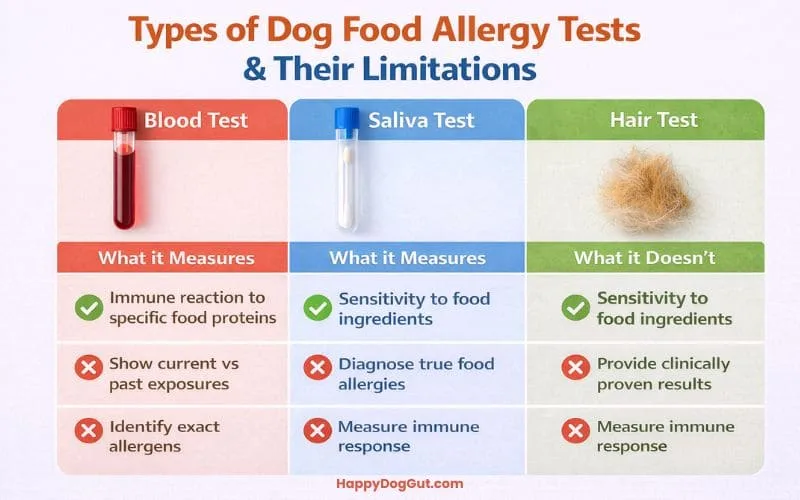
Below are the most common dog food allergy tests owners come across. Each works differently—and each has important limitations to understand before relying on the results.
🔹 Blood (Serum) Tests
🧪 How they’re supposed to work
Blood tests measure certain antibodies that are believed to be linked to allergic responses. The idea is that higher antibody levels may suggest a reaction to specific foods.
⚠️ Known limitations
These antibodies don’t always reflect true food allergies. Dogs can have antibodies to foods they eat regularly and tolerate well, which can lead to misleading results.
🤔 When they may confuse owners
Owners may remove multiple foods based on results, even when those foods weren’t causing symptoms—sometimes making diets unnecessarily restrictive.
🔹 Saliva-Based Tests
💧 How they’re supposed to work
Saliva tests analyze immune markers in a dog’s saliva and compare reactions to different food ingredients.
⚠️ Known limitations
Saliva markers can be influenced by stress, oral health, and recent eating. Results may change without any real change in symptoms.
🤔 When they may confuse owners
Results can suggest sensitivities that don’t match digestive or skin symptoms, leading to trial-and-error food changes.
🔹 Hair Analysis Tests
🧬 How they’re supposed to work
Hair tests claim to detect food sensitivities through hair samples, often using non-traditional analysis methods.
⚠️ Known limitations
There is little scientific evidence linking hair analysis to true food reactions in dogs.
🤔 When they may confuse owners
These tests can flag many foods at once, leaving owners unsure what their dog can safely eat.
While these tests may offer clues, they don’t always reflect how a dog actually digests food. That’s why many vets rely more on careful diet observation than test results alone.
Why Results Often Don’t Match Real Symptoms
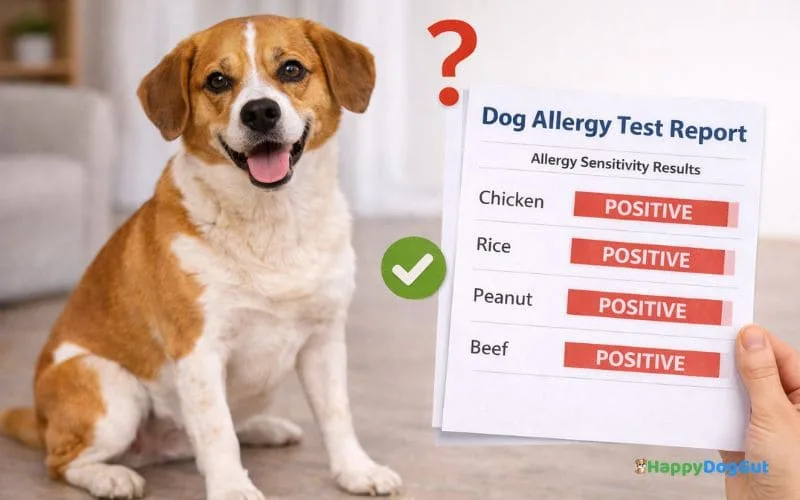
One of the biggest frustrations dog owners face with a dog food allergy test is when the results don’t line up with what they see at home. This mismatch is more common than many people realize, and it usually comes down to how these tests measure reactions versus how digestion actually works.
🧠 Immune response is not the same as Digestion
Most allergy tests look at immune markers, not how well a dog digests food. A dog may show an immune “response” on paper while digesting that food without any real problems like gas, itching, or loose stools.
🔀 Allergy vs. Intolerance Confusion
True food allergies involve the immune system, while food intolerances are digestive issues. Many dogs with sensitive stomachs struggle with digestion—not allergies—yet test results may suggest multiple “allergies” that don’t explain digestive symptoms. Understanding the Causes of Sensitive Stomachs can help clarify this difference.
🌿 Environmental Cross-reactions
Dogs exposed to pollen, dust, or seasonal allergens may show immune activity that affects test results. This can make it seem like food is the problem when environmental factors are playing a role.
🦠 Gut Health Influences reactions
An imbalanced gut can amplify immune signals. When gut health is compromised, test readings may appear more severe than a dog’s actual reaction to food.
When test results don’t match real-life symptoms, it’s often because the test is measuring something different than digestion. That’s why observing your dog’s response to food over time is often more reliable than test data alone.
What Vets Consider the Gold Standard Instead
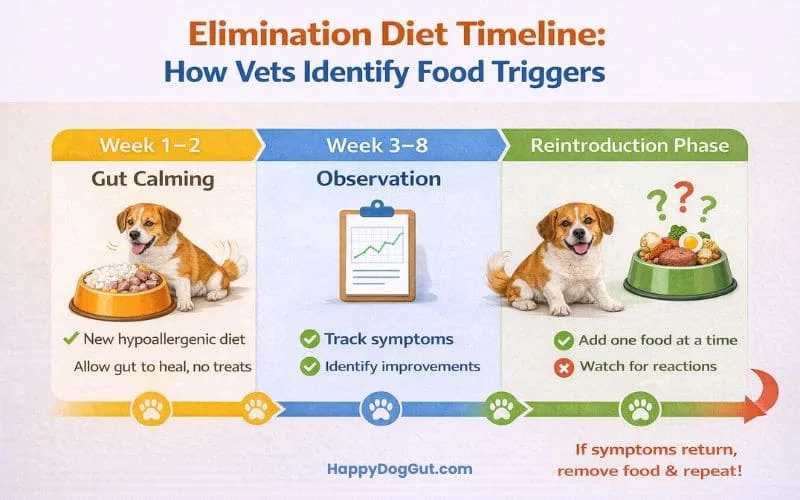
When it comes to identifying food-related reactions, most veterinarians agree that dietary trials, not tests, give the clearest answers. This approach focuses on real-world results, not lab markers.
🥣 What is an Elimination Diet?
An elimination diet involves feeding your dog a very simple, controlled diet—usually with either a novel protein your dog hasn’t eaten before or a hydrolyzed protein that’s unlikely to trigger immune reactions. All treats, table scraps, and extras are removed during this period.
While allergy tests can offer clues, most veterinarians still consider a properly structured Elimination diet for food Allergies the gold standard for confirming true food reactions.
⏳ Why time and observation matter
Unlike allergy tests that give instant results, elimination diets take 8–12 weeks. This time allows the gut and immune system to calm down. If symptoms improve and later return when an ingredient is reintroduced, it provides a much clearer connection between food and symptoms.
🛡️ Why this approach is considered safer
Elimination diets reduce guesswork. Instead of removing many foods based on test results, owners focus on one controlled change at a time, which helps maintain balanced nutrition and avoids unnecessary restrictions.
Many vets start with Novel Protein Diets for dogs suspected of food reactions. In more complex cases, especially when dogs react to multiple proteins, Hydrolyzed Protein Dog Food may be recommended as a next step.
Elimination diets require patience, but they reflect how your dog actually responds to food—making them the most trusted method for identifying food-related issues.
Safer Alternatives to Dog Food Allergy Tests

If allergy test results feel confusing or unreliable, there are practical diet-based approaches that many vets and owners trust more. These methods focus on how your dog actually responds to food over time—not just test data.
🔹 Elimination Diets
🥣 What they involve
An elimination diet feeds your dog a very simple, controlled formula for several weeks, with no treats or extras. This helps calm the gut and reduces variables.
✅ Why they’re safer
Instead of removing many foods at once, you observe real symptom changes. Improvements (or flare-ups after reintroduction) provide clearer answers than test results.
🔹 Limited Ingredient Diets (LID)
📋 What makes them different
Limited ingredient diets use fewer components, usually one protein and one main carb source. This reduces the chance of hidden triggers.
🔍 When they help most
Dogs with ongoing digestive sensitivity or mild food reactions often do better on simpler formulas. Many owners explore Limited Ingredient Dog Foods as a first step before more restrictive diets.
🔹 Novel Protein Foods
🦆 Why Novel Proteins Matter
Novel protein diets use proteins your dog hasn’t eaten before, lowering the chance of an immune or digestive reaction.
🐶 Who Benefits Most
Dogs with recurring stomach upset or suspected intolerances often respond well to these foods, especially when paired with gentle formulations designed for sensitive digestion. You can explore options in our guide to Best Dog Foods for Sensitive Stomachs.
While dog food allergy tests may offer clues, diet-based alternatives like elimination diets, limited ingredient formulas, and novel protein foods tend to be more reliable—and easier to interpret—when managing food-related issues in dogs.
When Allergy Tests May Be Considered (With Caution)
In some situations, a dog food allergy test may be used as supportive information, but it should never be treated as a final answer on its own. These tests can sometimes help guide conversations, not decisions.
Allergy test results may offer general clues about possible ingredients to watch, but they don’t confirm what is truly causing symptoms. They’re best viewed as background information rather than a diet roadmap.
🚫 Not a Standalone Diagnosis
Test results alone can’t distinguish between a true food allergy, a digestive intolerance, or a temporary gut imbalance. Making major diet changes based only on test results often leads to confusion or unnecessary restrictions.
🩺 Why Veterinary guidance matters
A veterinarian can help interpret test results in context—alongside symptoms, diet history, and response to food changes. This reduces the risk of misreading results or overlooking more appropriate diet strategies.
If allergy testing is considered, it should be one small part of a bigger picture, not a replacement for careful diet observation or professional guidance.
Common Mistakes Owners Make With Allergy Tests
Dog food allergy tests often create more confusion when they’re used without context. Below are some of the most common mistakes owners make—usually with good intentions.
🔄 Switching Foods Too Fast
After getting test results, many owners change foods immediately or repeatedly. Rapid switches don’t give the gut time to adjust and can actually worsen digestive symptoms.
📄 Trusting Results Blindly
Test reports can look very convincing, but results don’t always match real-life reactions. Removing multiple foods based solely on a report can lead to overly restricted or unbalanced diets.
💩 Ignoring Stool and Skin Signs
Your dog’s stool quality, gas, itching, and skin condition often tell a clearer story than test results. Overlooking these day-to-day signs can delay finding what truly helps.
🔥 Testing during Flare-ups
Running tests while symptoms are already severe may skew results. Stress and inflammation can influence immune markers, making reactions appear more extreme than they actually are.
Allergy tests don’t replace observation. Paying attention to how your dog looks, feels, and digests food over time is often more reliable than relying on a single test report.
FAQs: Dog Food Allergy Tests
Are dog food allergy tests accurate?
Dog food allergy tests can provide general information, but they are not consistently accurate. Many tests measure immune markers rather than true digestive or allergic reactions. This means results don’t always match real-life symptoms like itching or stomach upset. That’s why vets rarely rely on these tests alone when making diet decisions.
Do vets recommend Dog Allergy tests?
Most veterinarians approach allergy tests with caution. While they may review results as background information, vets typically prefer diet trials and symptom observation. These methods show how a dog actually responds to food over time, which is often more reliable than test data.
Is hair testing reliable for Dog Allergies?
Hair analysis tests are popular because they’re non-invasive, but scientific support for them is limited. There’s little evidence that hair samples can accurately identify food allergies in dogs. Results may flag many foods without explaining which ones truly cause symptoms.
How long does an Elimination Diet take?
An elimination diet usually lasts 8 to 12 weeks. This timeframe allows the digestive and immune systems to settle before assessing improvement. Shorter trials often don’t provide clear answers, which is why patience is important.
Can puppies take Allergy tests?
Puppies can technically be tested, but results are often unreliable. Their immune systems and digestion are still developing, which can affect test accuracy. Vets usually focus on simple diets and observation instead of testing at a young age.
Can allergy tests identify Food Intolerances?
Most tests are designed to look at immune responses, not digestive tolerance. Because food intolerances don’t involve the immune system, tests may miss them entirely or mislabel them as allergies.
Why do allergy test results change over time?
Immune markers can fluctuate due to stress, environment, or gut health. This is why the same dog may receive different results from the same test at different times.
Are Elimination Diets better than Allergy tests?
For many dogs, yes. Elimination diets reflect real symptom changes and help owners identify triggers through observation rather than lab markers. This is why many vets consider them the gold standard.
Final Thoughts
Dog food allergy tests can seem like a simple shortcut, but it’s important to remember that an allergy test is not a diagnosis. Many tests measure immune signals that don’t always match what’s actually happening in your dog’s digestive system. As a result, results can be misleading and sometimes lead owners to remove foods that weren’t causing any real problems.
For many dogs, diet trials work better than test reports. Carefully choosing a diet, sticking with it long enough, and watching how your dog responds often provides clearer, more practical answers than any lab result. Small improvements in stool quality, itching, or overall comfort can say more than a list of “reactive” ingredients on paper.
This is where observation matters more than quick answers. Paying attention to patterns—what your dog eats, how they digest it, and how their skin and energy levels respond—helps you make informed decisions without unnecessary diet restrictions.
If you’re navigating this process, understanding the Signs of Food Intolerance is a strong starting point. From there, structured options like Novel Protein Diets or, in more complex cases, Hydrolyzed Diets may offer clearer paths forward.
When symptoms persist or choices feel overwhelming, veterinary guidance matters. Combining professional input with thoughtful diet changes gives most dogs the best chance at long-term digestive comfort.

Hi, I’m Maddy, the writer behind HappyDogGut.com.
I’m passionate about helping Dog parents understand Gut Health, Sensitive Stomachs, and Natural Nutrition for dogs.
Every article I create is vet-approved, research-backed, and experience-driven, so your pup can enjoy a healthier, happier gut.
Happy Gut = Happy Dog!
All content on Happy Dog Gut follows our Editorial Policy.


Pingback: Elimination Diet for Food Allergies in Dogs (8–12 Week Guide)