

If your dog struggles with soft stools, gas, bloating, or frequent stomach upset, you’re not alone. Sensitive stomach issues are rising rapidly among US dogs, and one of the biggest reasons is not the brand of food — it’s the ingredients inside it. Many commercial dog foods contain fillers, low-quality proteins, artificial additives, and hard-to-digest grains that can irritate the gut and trigger chronic digestive problems. That’s why understanding the dog food ingredients to avoid for sensitive stomachs is one of the most important steps you can take as a pet parent.
Most dog owners don’t carefully read ingredient labels — but a dog’s gut health depends on it. Foods containing hidden allergens, cheap by-products, or inflammatory additives can slowly damage your dog’s digestive lining, cause inconsistent stool quality, and increase the risk of long-term sensitivities. Knowing what to avoid helps you prevent stomach problems before they become serious.
Dogs with sensitive stomachs often show early warning signs like soft stool, mucus in poop, itching, or vomiting after meals. If your dog shows similar symptoms, it may be related to the ingredients they’re eating. You can learn more about common causes in our guide on what causes sensitive stomach in dogs. And if your dog shows digestive or skin reactions after eating, see our full vet-approved list of signs of food intolerance.
In this 2025 vet-approved guide, we break down the exact dog food ingredients to avoid for sensitive stomachs, what they do to the digestive system, and how to pick safer alternatives that support long-term gut health.
Why Ingredients Matter More Than the Brand
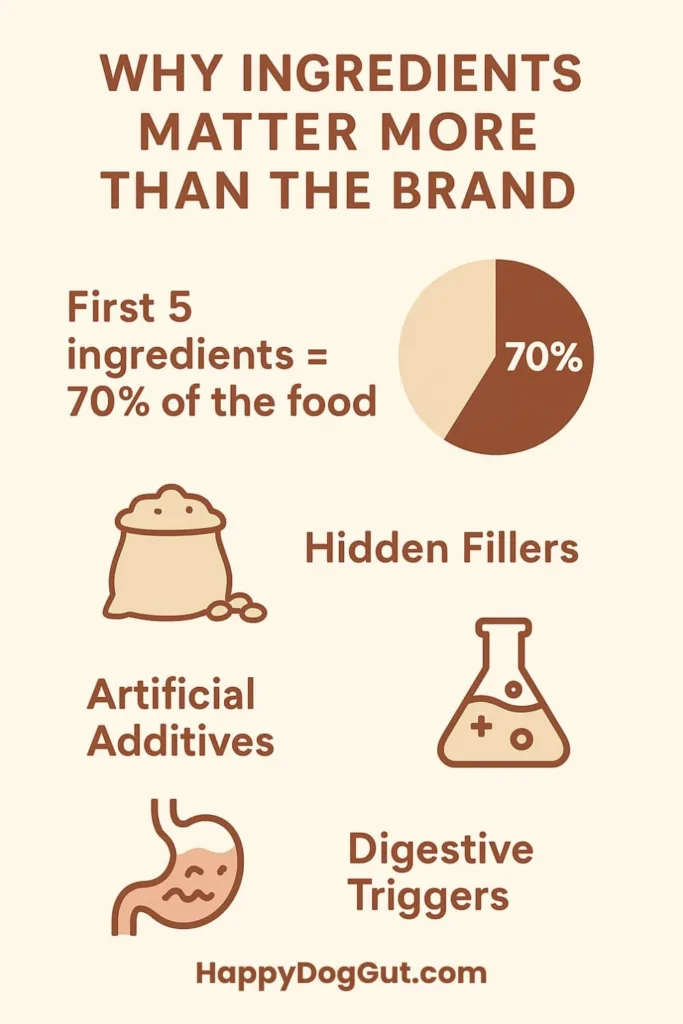
When it comes to dogs with sensitive digestion, the brand name on the bag matters far less than what’s actually inside it. Many popular “premium” dog foods still contain low-quality fillers, artificial additives, and cheap protein by-products that can trigger stomach issues — even if the packaging looks healthy or “natural.” That’s why understanding dog food ingredients to avoid for sensitive stomachs is far more important than choosing whatever brand is trending online.
For dogs prone to soft stools, gas, bloating, vomiting, or chronic food intolerance, even a single irritating ingredient can disrupt digestion. Sensitive dogs often react to hidden triggers like wheat, soy, rendered meat meals, artificial colors, or certain proteins they’ve eaten for years. These ingredients increase inflammation, irritate the gut lining, and cause stool inconsistency — something many owners mistake for “random stomach episodes.”
Learning how to read a dog-food label protects your dog from these triggers. A simple rule to remember:
The first 5 ingredients make up about 70% of the food.
If those items include vague terms like “meat by-product,” “animal meal,” or cheap fillers, it’s a red flag — especially for dogs with digestion issues.
Dogs with repeated soft stool or mild stomach problems often have underlying sensitivity to specific ingredients. If you’re noticing symptoms like mushy poop, diarrhea, or frequent stomach upset, review the ingredient list immediately. You can also check our vet-reviewed guide on what causes sensitive stomachs in dogs to understand how ingredients affect gut health.
And if your dog shows both digestive and skin symptoms, such as itching or paw licking, this may point toward food intolerance triggered by harmful ingredients. Learn the early warning signs in our full guide on food intolerance symptoms.
By understanding which ingredients trigger discomfort — rather than relying on brand marketing — you can choose foods that truly support healthy digestion, firmer stools, balanced gut bacteria, and long-term stomach comfort.
Top Dog Food Ingredients to Avoid for Sensitive Stomachs
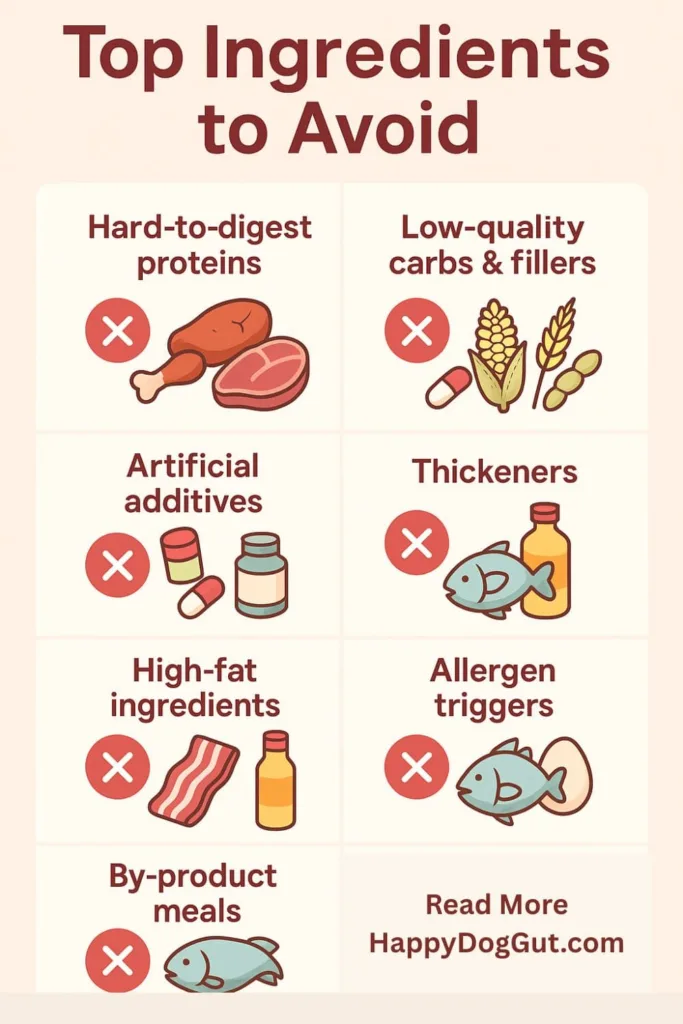
Identifying the dog food ingredients to avoid for sensitive stomachs is the single most important step in preventing soft stools, gas, bloating, vomiting, and chronic digestive flare-ups. Many U.S. pet parents unknowingly feed their dogs ingredients that seem “normal” on the label but are actually highly irritating — especially for dogs prone to food intolerance or GI sensitivity. Below is the complete, vet-approved breakdown of ingredients that commonly trigger stomach issues, inflammation, allergies, and inconsistent stool quality.
A. Hard-to-Digest Proteins
(Most common cause of digestive flare-ups in U.S. dogs)
Certain proteins are highly reactive for sensitive-stomach dogs and are frequently linked to soft stool, vomiting, and skin irritation.
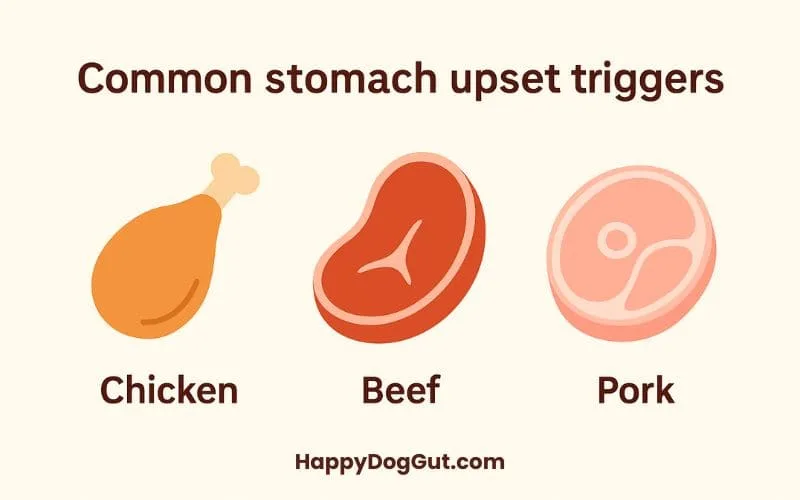
🚫 1. Chicken
Chicken is the #1 most common protein intolerance in dogs. Even premium foods that claim to be limited ingredient may contain hidden chicken fat or chicken meal.
🚫 2. Beef
Beef is harder to digest and often causes bloating, smelly gas, and mushy stools in dogs with weaker gut flora.
🚫 3. Pork
High in fat and difficult to process, pork commonly triggers loose stool and digestive discomfort.
Why these proteins are a problem:
- They frequently trigger food intolerance
- Overexposed proteins → more inflammation
- Harder for sensitive guts to break down
- Increase risk of soft stool + diarrhea
If your dog reacts to common proteins, switching to hypoallergenic diets with novel proteins can help. See our full guide: Best Hypoallergenic Dog Foods for Sensitive Stomachs.
B. Low-Quality Carbs & Fillers
(Major cause of gas, bloating, inflammation & diarrhea)
These cheap carbohydrate sources are often used to bulk up dog foods but offer little nutritional value:
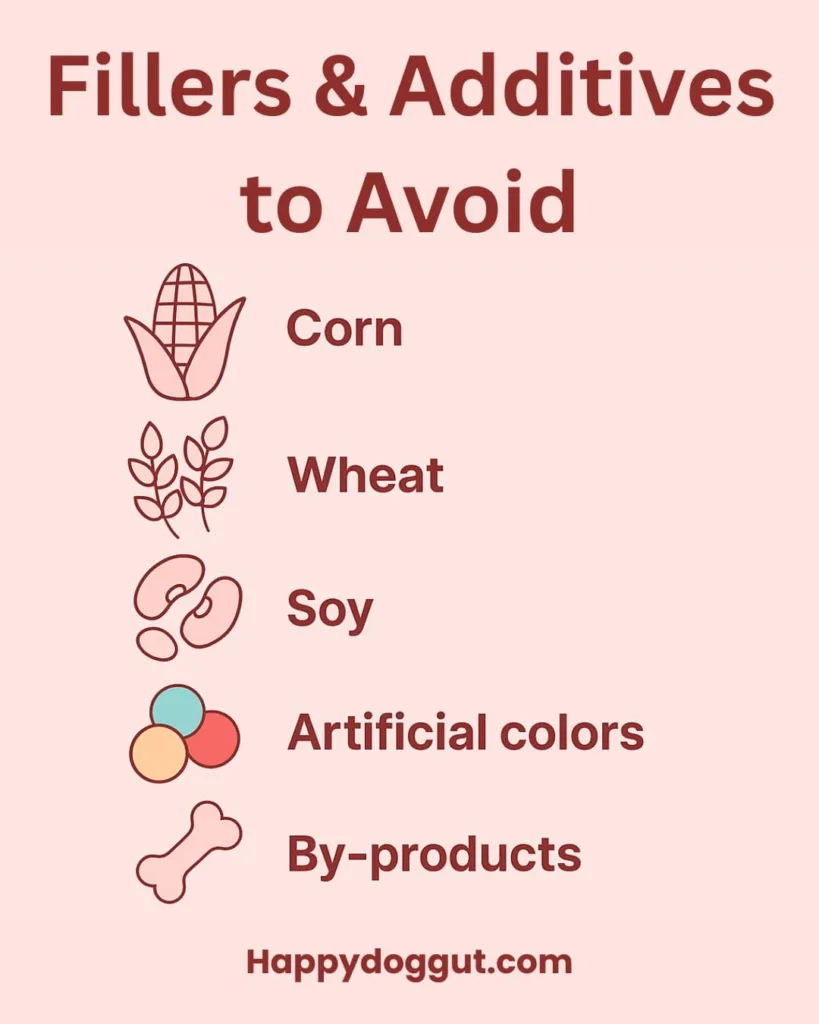
🚫 Corn
Very hard to digest — often causes bloating & loose stool.
🚫 Wheat
Common irritant responsible for gut inflammation in sensitive dogs.
🚫 Soy
Triggers gas, mucus-filled stool, and stomach cramps.
🚫 By-product meals
Highly processed and low quality → irritates the stomach lining.
🚫 Gluten meals (wheat gluten, corn gluten)
Sticky proteins that ferment in the gut → gas & inflammation.
Why avoid them:
- They produce rapid fermentation = gas
- Can trigger allergies
- Lead to smelly farts & soft stool
- Provide low digestible nutrition
Dogs with sensitive stomachs thrive on gentle carbs like sweet potato, pumpkin, brown rice, oats, or tapioca — not cheap fillers.
C. Artificial Additives to Avoid
(Huge trigger for vomiting, diarrhea & itching)
🚫 Artificial colors
Provide no nutritional benefit and often irritate the GI tract.
🚫 Synthetic preservatives (BHA, BHT, ethoxyquin)
Linked to gut inflammation & hypersensitivity.
🚫 Flavor enhancers (MSG-like additives)
Can overstimulate the gut → diarrhea, gas, and nausea.
Why they matter:
Dogs with sensitive stomachs react strongly to chemicals, additives, and artificial enhancers — often resulting in chronic GI upsets.
D. High-Fat Ingredients
(Top cause of loose stools and pancreatitis flare-ups)
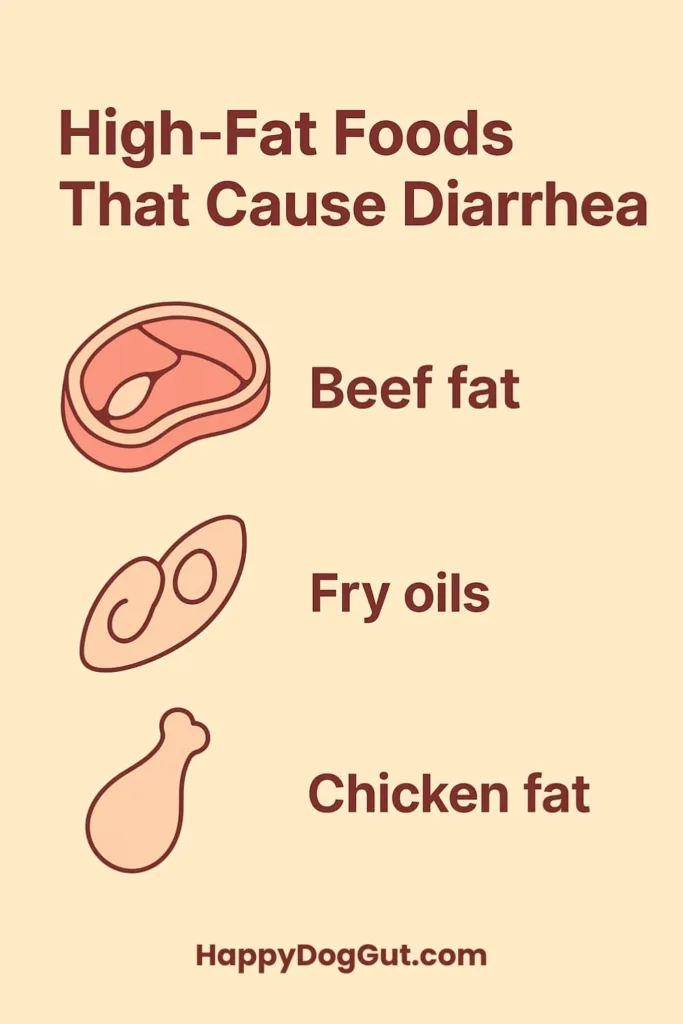
🚫 Beef fat
Hard on digestion → leads to mushy stool.
🚫 Chicken fat
Hidden trigger in many “allergy-friendly” foods.
🚫 Fry oils or recycled oils
Extremely inflammatory → cause diarrhea & vomiting.
Why avoid them:
High-fat ingredients overwhelm a sensitive digestive system and lead directly to soft stool, pancreatitis risk, and stomach pain.
E. Gum Thickeners That Cause Loose Stools
(Common in wet foods)
🚫 Carrageenan
Major cause of mucus in stool & stomach irritation.
🚫 Guar gum
Ferments in the gut → gas & diarrhea.
🚫 Xanthan gum
Triggers bloating and loose stool in sensitive dogs.
Wet foods often rely on these thickeners, which makes them problematic for dogs with chronic soft stool or diarrhea.
F. Ingredients Linked to Food Allergies
(Especially for itchy, gassy, or diarrhea-prone dogs)
🚫 Dairy
Many dogs cannot digest lactose.
🚫 Eggs
Common allergen → skin + stomach symptoms.
🚫 Brewer’s yeast
Known to trigger gas & digestive discomfort.
🚫 Gelatin proteins
Low-quality binder that irritates the gut.
These ingredients often trigger both skin symptoms (itching, redness) and GI symptoms (diarrhea, gurgling stomach).
G. Highly Processed Meat Meals
(Bottom-tier ingredients you must avoid)
🚫 Animal digest
A highly processed, low-quality meat derivative.
🚫 Meat meal (unspecified)
You never know the protein source → major risk for sensitive dogs.
🚫 Low-quality by-products
Hard to digest and often contaminated with irritants.
These ingredients can cause immediate vomiting, diarrhea, or long-term inflammation in sensitive-stomach dogs.
According to guidance from the U.S. Food and Drug Administration (FDA), dog foods made with low-quality fillers, artificial colors, preservatives, and unnecessary additives may irritate the digestive tract and contribute to gastrointestinal discomfort. For dogs with sensitive stomachs, avoiding poorly regulated ingredients and choosing foods formulated with digestible, clearly labeled components is essential for maintaining gut health.
Why These Ingredients Harm Sensitive Stomachs (Vet Explanation)
Understanding why certain ingredients irritate your dog’s digestive system is just as important as knowing which ones to avoid. Many pet owners assume loose stool, gas, or occasional vomiting are “normal,” but vets confirm these are often early signs of dietary irritation — especially when a dog regularly consumes dog food ingredients to avoid for sensitive stomachs.
1. They Irritate the Gut Lining
Ingredients like corn, soy, wheat, artificial preservatives, and cheap meat by-products can inflame the intestinal lining. When the gut becomes irritated, food passes through too quickly, resulting in soft stool, mucus in the poop, or watery diarrhea.
Dogs with naturally sensitive GI tracts react even more strongly because their digestive enzymes are easily overwhelmed.
2. They Disrupt the Microbiome (Good Gut Bacteria)
Artificial additives, low-quality fillers, and high-fat ingredients disrupt the delicate balance of your dog’s microbiome. Once this bacterial balance is thrown off, symptoms begin quickly:
- excessive gas
- stomach gurgling
- inconsistent stools
- bloating
Many of these reactions are also tied to early food intolerance, which we cover deeply in our guide:
👉 Signs of Food Intolerance in Dogs
3. Undigested Proteins → Diarrhea & Soft Stools
Proteins like chicken, beef, pork, and dairy are common triggers. If your dog’s stomach cannot fully break down these proteins, the undigested material ferments in the gut — leading to:
- loose stool
- smelly poop
- inflammation
- stomach pain
This is why many veterinarians recommend switching to gentler proteins or novel proteins.
4. Excess Carbs & Fillers Cause Gas, Bloating, and Sugar Spikes
Cheap fillers (corn, wheat, gluten meals, brewer’s yeast) are difficult to digest. Sensitive dogs experience:
- rapid fermentation → gas
- bloating after meals
- stool inconsistency
- itchy skin (from chronic inflammation)
These reactions make fillers some of the top dog food ingredients to avoid for sensitive stomachs in 2025.
5. High-Fat Diets Trigger Loose Stool & Pancreatitis
Fat sources like beef fat, chicken fat, fry oils, and greasy gravies overwhelm the digestive system. Dogs with sensitive stomachs often lack enough enzymes to break these down, resulting in:
- explosive diarrhea
- regurgitation
- nausea
- long-term pancreatic stress
6. Gum Thickeners in Wet Food = Loose Stool
Most wet dog foods contain carrageenan, guar gum, or xanthan gum, which act as thickeners. These ingredients can irritate the GI lining and increase stool moisture. Many pet owners see a huge improvement when switching to gum-free formulas.
If you want to see which foods avoid these ingredients and are actually safe for sensitive dogs, check our vet-reviewed list:
👉 Best Dog Food for Sensitive Stomachs (2025 Guide)
Many of these ingredients irritate the gut and may lead to diarrhea. The American Kennel Club’s diarrhea guide notes that poor-quality foods are a common trigger.
Ingredients SAFE for Sensitive Stomachs (Vet-Approved List)
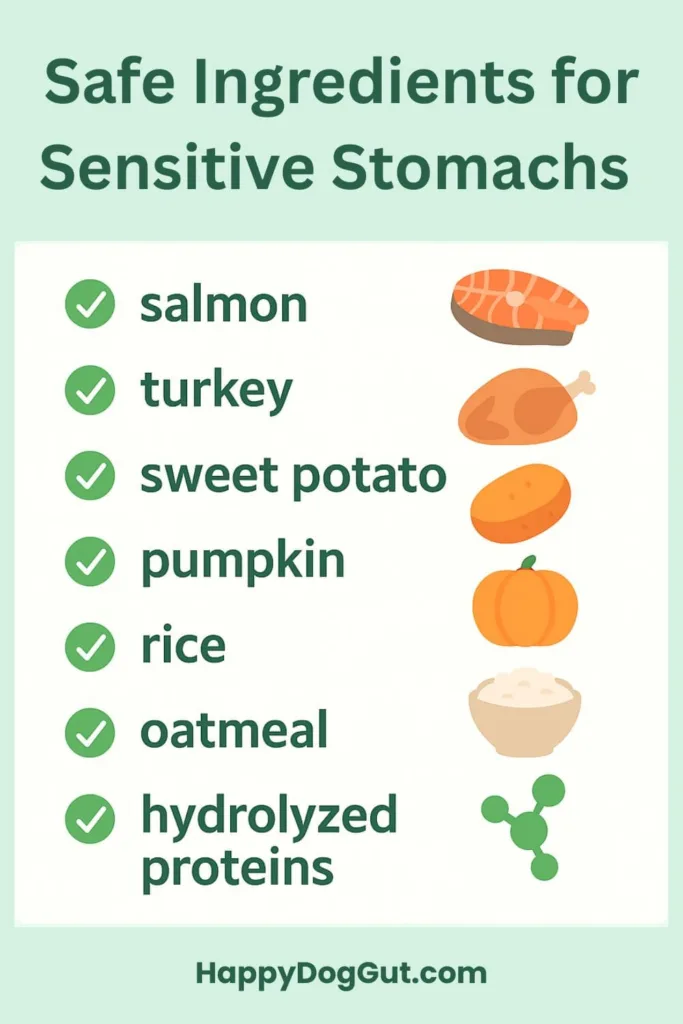
When you’re learning which dog food ingredients to avoid for sensitive stomachs, it’s just as important to know which ingredients are safe, gentle, and recommended by veterinarians. Dogs with digestive issues need simple, highly digestible foods that support the gut lining, reduce inflammation, and promote firm, healthy stools. That’s exactly what the ingredients below offer.
Here’s a vet-approved list of dog-friendly ingredients that are ideal for sensitive stomachs and work beautifully in recovery diets, elimination diets, and daily feeding:
✅ Best PROTEINS for Sensitive Stomachs
These proteins are gentle, less processed, and less likely to trigger stomach upset or food intolerance:
- Turkey – Lean, mild protein that’s easy on digestion
- Salmon – Great for gut + skin; rich in omega-3s
- Lamb – Less common allergen and easier on sensitive dogs
- Hydrolyzed proteins – Broken down into tiny particles so the body doesn’t react (best for food allergies)
✅ Best CARBS for Sensitive Stomachs
These ingredients are slow-digesting, soothing, and recommended to help stabilize stool:
- Sweet potato – High in soluble fiber; excellent for firming stools
- Pumpkin – Supports gut motility; reduces diarrhea & constipation
- Rice (white or brown) – Very gentle and stomach-friendly
- Oatmeal – Soft, soluble fiber source great for sensitive digestion
- Barley – Easy on the gut and supports stable energy
💚 Why These Ingredients Work So Well
These gentle ingredients provide:
- Easy-to-digest nutrition
- Natural prebiotic fiber for gut health
- Stable stool formation
- Reduced inflammation
- Fewer digestive triggers
They are ideal alternatives when removing harmful dog food ingredients to avoid for sensitive stomachs such as corn, soy, artificial additives, high-fat fillers, or irritating proteins.
If you want a ready-made food that avoids all these harmful ingredients, try switching to formulas designed specifically for gut sensitivity. I’ve already reviewed the Best Dog Kibble for Sensitive Stomachs that use clean proteins and gentle carbs for easier digestion.
For a full guide to gentle, simple recipes and commercial foods, see our in-depth breakdown:
👉 Best Limited Ingredient Dog Foods for Sensitive Stomachs
Best Dog Foods That Avoid These Harmful Ingredients
Choosing a dog food that automatically avoids all the harmful, hard-to-digest ingredients is the easiest way to protect your pup’s gut. Instead of checking every label, you can pick trusted formulas already designed without chicken, beef, corn, soy, artificial additives, or high-fat fillers — the most common dog food ingredients to avoid for sensitive stomachs.
Below are the vet-recommended dog foods that stay clear of irritants and support firm stools, healthy digestion, and smooth transitions.

1. Hill’s Science Diet Sensitive Stomach & Skin
Best For: Dogs with chronic soft stool, vomiting, or mild food intolerance
Why It Avoids Stomach Triggers:
Hill’s uses highly digestible ingredients and avoids irritating fillers like corn, soy, wheat, and artificial preservatives. The protein sources are gentle, and the fat content is controlled — ideal when you want to avoid dog food ingredients that upset sensitive stomachs.
Pros:
✔ Great for stool firmness
✔ Improves skin + gut health
✔ Very digestible
Cons:
❌ Not suitable for severe protein allergies
❌ Slightly higher cost
Perfect for dogs with frequent loose stools, gassy bellies, or mild sensitivities.
2. Blue Buffalo Basics Limited Ingredient Diet
Best For: Dogs needing a single-protein formula + no fillers
Why It Avoids Trigger Ingredients:
This LID blend excludes chicken, beef, dairy, soy, wheat, corn, by-products and uses simple proteins like turkey or salmon. Since it avoids most dog food ingredients to avoid for sensitive stomachs, it’s excellent for dogs reacting to common proteins.
Pros:
✔ Single protein source
✔ No artificial preservatives
✔ Great for diarrhea-prone dogs
Cons:
❌ Can be too bland for picky eaters
Best for dogs with itching + gut issues needing a clean, limited ingredient recipe.
3. Natural Balance L.I.D Sweet Potato & Fish
Best For: Dogs with chronic diarrhea or soft stool
Why It Avoids Trigger Ingredients:
Made with no corn, wheat, soy, chicken, artificial additives, and uses sweet potato as an extremely gentle carb. This is one of the safest foods for pups sensitive to common dog food ingredients to avoid for sensitive stomachs.
Pros:
✔ Very gentle on digestion
✔ Great for firming stool
✔ Good for skin allergies
Cons:
❌ Not the best choice for very active or working dogs
Ideal for dogs who get mucus in stool, diarrhea after eating, or gassy stomachs.
4. Canidae PURE Grain-Free Salmon Recipe
Best For: Dogs with grain sensitivity & chicken intolerance
Why It Avoids Trigger Ingredients:
Canidae PURE keeps the ingredient list extremely short — 8 ingredients only. No grains, soy, corn, or cheap fillers. Contains salmon as a gentle, anti-inflammatory protein.
Pros:
✔ Shortest ingredient list
✔ Great for bloating & gas
✔ Supports skin health
Cons:
❌ Some dogs may need time adjusting to salmon flavor
Great for dogs needing a simple food free from most stomach-triggering ingredients.
5. Zignature Turkey or Lamb
Best For: Dogs needing novel proteins to avoid allergies
Why It Avoids Trigger Ingredients:
Zignature stays away from the biggest culprits — chicken, beef, dairy, soy, corn, and artificial additives. Uses novel proteins like lamb or turkey, making it excellent for avoiding the most common dog food ingredients to avoid for sensitive stomachs.
Pros:
✔ Excellent for itchy dogs
✔ Highly digestible
✔ Grain-free options available
Cons:
❌ Premium price
Best for dogs with food allergies + stomach sensitivities who can’t tolerate common proteins.
⭐ Quick Summary Table
| Brand | Avoids Harmful Ingredients? | Best For |
|---|---|---|
| Hill’s Sensitive Stomach | Yes | Soft stool, gas, vomiting |
| Blue Buffalo LID | Yes | Mild allergies + gut issues |
| Natural Balance LID | Yes | Chronic diarrhea |
| Canidae PURE | Yes | Grain-free + chicken-free needs |
| Zignature | Yes | Protein allergies + itchy skin |
Homemade Ingredient Alternatives (Gentle & Easy)
If you prefer feeding fresh, whole-food meals instead of commercial kibble, the good news is that homemade diets naturally avoid most dog food ingredients to avoid for sensitive stomachs. These simple recipes use clean proteins, gentle carbohydrates, and gut-soothing vegetables that are proven to help dogs with chronic soft stools, bloating, or mild food intolerance.
Homemade meals also help you control exactly what goes into your dog’s bowl — no fillers, no artificial additives, and no hidden irritants. These vet-friendly combinations are ideal for dogs that don’t tolerate chicken, beef, corn, or high-fat formulas commonly found in commercial food.
✅ Vet-Approved Gentle Meal Ideas
- Turkey + Pumpkin
- A perfect low-fat combination that supports digestion and firms stool naturally. Pumpkin is rich in soluble fiber that helps stabilize gut movement.
- Salmon + Rice
- Great for dogs who react to chicken or beef. Salmon provides anti-inflammatory omega-3s, while rice is easy to digest and gentle on the stomach.
- Lamb + Sweet Potato
- A good option for dogs needing a novel protein. Sweet potatoes deliver fiber and steady energy without irritating the gut.
These homemade alternatives can work alongside commercial diets or as a temporary elimination approach to identify problematic ingredients.
For full recipes and vet-approved safe portions, check out our guide:
👉 Homemade Dog Food for Sensitive Stomachs

Supplements That Help When Ingredients Cause Digestive Issues
Some dogs still struggle with loose stools, gas, or bloating — even after removing the dog food ingredients to avoid for sensitive stomachs. In these cases, targeted supplements can help repair the gut lining, balance microbiome health, and support smoother digestion.
These supplements are vet-recommended and work especially well for dogs with ingredient-triggered stomach issues or mild food intolerance.
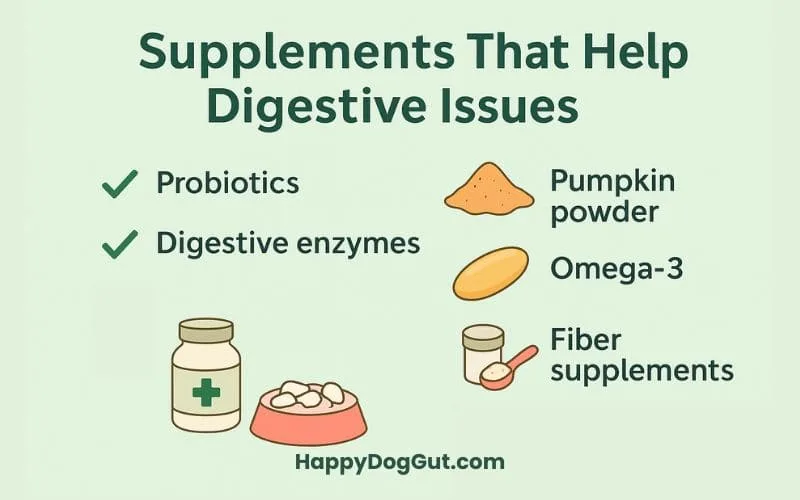
🔬 Vet-Approved Supplements to Support Sensitive Stomachs
1️⃣ Probiotics
Probiotics are one of the most effective ways to support a dog’s sensitive stomach — especially when certain ingredients trigger digestive flare-ups. These beneficial bacteria help restore gut balance, reduce inflammation, and support smoother digestion. If your dog struggles with recurring diarrhea, soft stool, gas, or mucus in poop, adding a high-quality probiotic can make a big difference.
For a complete vet-approved list of safe probiotic formulas, check out our guide on the best probiotics for dogs with sensitive stomachs.
2️⃣ Digestive Enzymes
Digestive enzymes help dogs break down proteins, fats, and carbs more efficiently. They’re extremely helpful when poor-quality or irritating ingredients have already caused gut irritation.
3️⃣ Omega-3 Fish Oil
Omega-3s reduce intestinal inflammation and soothe skin reactions caused by food intolerance. They’re especially beneficial for dogs with both stomach and skin symptoms.
4️⃣ Pumpkin Powder
Pumpkin is rich in soluble fiber, which absorbs excess liquid in the colon and improves stool consistency. Great choice for dogs reacting to fillers like soy, corn, or wheat.
5️⃣ Fiber Supplements
When harmful dog food ingredients irritate the digestive system, fiber supplements can help stabilize everything again. Fiber works by regulating bowel movements, firming loose stool, reducing bloating, and supporting a healthier gut lining. Many dogs with ingredient-triggered sensitivities see improvement within just a few days of adding a gentle fiber source.
If you need help choosing the right option, explore our in-depth guide to the best fiber supplements for dogs, reviewed with sensitive-stomach dogs in mind.
Why Supplements Matter:
Dogs with sensitive stomachs often struggle because their gut lining becomes irritated by ingredients they can’t tolerate. Supplements help rebuild digestive balance and create a stronger foundation — so even if they accidentally consume one of the dog food ingredients to avoid for sensitive stomachs, their reaction is far less severe.
How to Check Ingredients on Dog Food Labels (Pet-Parent Friendly Guide)
If your dog has a sensitive stomach, reading ingredient labels is more important than reading the marketing on the front of the bag. Many “premium” dog foods still contain hidden triggers like chicken by-products, artificial additives, or vague meat meals. Understanding how to read a label helps you instantly spot dog food ingredients to avoid for sensitive stomachs, so you can prevent gas, bloating, diarrhea, and chronic soft stools.
Here’s what vets recommend checking first:
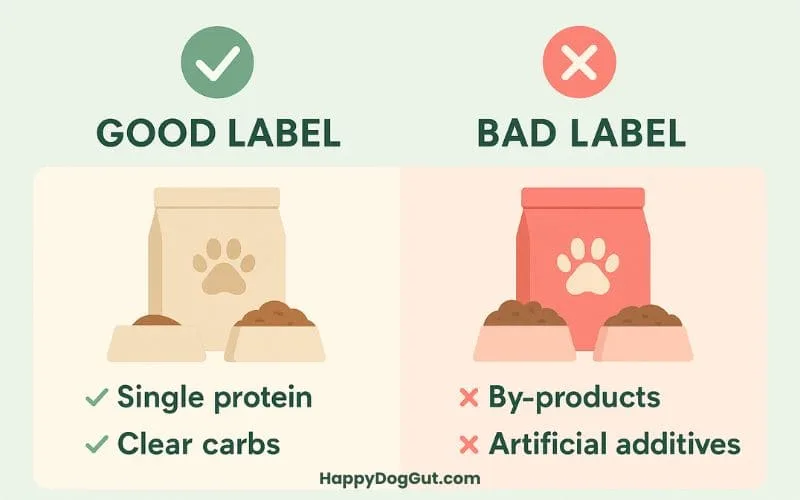
✔ 1. Look at the first 5 ingredients
These ingredients make up 60–70% of the entire food.
If you see things like corn, wheat, soy, chicken by-product meal, or animal digest, that’s a red flag for sensitive-stomach dogs.
✔ 2. Avoid vague meat terms
Good: “Salmon meal,” “Turkey meal,” “Lamb meal”
Avoid: “Meat meal,” “Animal digest,” “Poultry by-products”
Vague terms usually mean low-quality, highly processed scraps that can irritate your dog’s gut.
✔ 3. Skip long ingredient lists
Sensitive-stomach dogs do best with short, simple formulas — the longer the list, the higher the chance of hidden irritants.
✔ 4. Watch out for artificial additives
Red flag additives include artificial dyes, long chemical names, and synthetic preservatives. These often appear in foods that cause loose stool or stomach upset.
✔ 5. Choose formulas with 1 protein + 1 carb
Turkey + rice, salmon + sweet potato, or lamb + oatmeal are safe, gentle, and predictable options for sensitive dogs.
If you’re unsure how to switch to a cleaner formula, follow this safe step-by-step plan:
👉 Check our Dog Food Transition Guide (helps prevent digestive upset)
This simple habit alone prevents 70% of ingredient-related stomach flare-ups in dogs.
When to Switch Foods Immediately (Vet Red Flags)
Even if you’re slowly eliminating dog food ingredients to avoid for sensitive stomachs, there are certain symptoms that mean your dog needs a diet change right now — no waiting, no experimenting. These warning signs indicate that your dog’s gut is reacting aggressively to an ingredient, or that inflammation has already started.
🚨 Switch immediately if you notice:
1. Bloody stool (red or streaks)
Often linked to irritation from harsh fillers, artificial additives, or poor-quality proteins.
2. Black, tarry stool
A sign of digestive bleeding (melena). Needs immediate vet care.
3. Diarrhea lasting more than 48–72 hours
Persistent diarrhea means your dog is not tolerating an ingredient in their current food.
4. Forceful vomiting after meals
Common with food intolerances or rich fats like chicken fat or beef fat — both major triggers.
5. Sudden weight loss or refusing to eat
Often caused by chronic inflammation from allergens like chicken, dairy, wheat, soy, or by-products.
6. Severe itching, ear infections, or paw chewing
These symptoms often occur with digestive issues and are triggered by food allergies.
If these symptoms appear, switch to a gentle, predictable formula ASAP and follow a structured transition plan:
👉 Dog Food Transition Guide (to avoid worsening stomach issues)
These signs should NEVER be ignored, especially in puppies, senior dogs, or dogs with chronic soft stools.
FAQs – About the Dog Food Ingredients to Avoid for Sensitive Stomachs
What ingredients upset a dog’s stomach the most?
The most common ingredients that upset a dog’s stomach include chicken, beef, wheat, soy, corn, dairy, and artificial preservatives. These ingredients are harder to digest and often trigger gas, bloating, soft stools, diarrhea, and inflammation—especially in dogs with sensitive GI systems. Many US dogs also react to cheap fillers and unnamed meat meals found in low-quality kibble.
If your dog has recurring digestive problems, switch to a cleaner formula that avoids irritants and uses gentle proteins like turkey, salmon, or lamb. You can also compare safe formulas in our vet-reviewed guide on best foods for sensitive stomachs.
Is chicken bad for dogs with sensitive stomachs?
Not always—but chicken is the #1 most common protein intolerance in US dogs. Because chicken appears in nearly every commercial kibble, many dogs develop overexposure sensitivity, which leads to symptoms like soft stool, paw licking, ear infections, gas, and inconsistent digestion.
If your dog has stomach issues and eats chicken daily, it’s smart to eliminate it for 4–6 weeks and switch to a novel protein (turkey, salmon, lamb, duck). Many pet parents notice firmer stools and calmer digestion once chicken is removed.
Are grains bad for dogs with sensitive stomachs?
No — grains aren’t automatically bad for sensitive dogs. The real issue is poor-quality grains like low-grade corn, wheat, and gluten meals. These fillers are linked to bloating, gas, and soft stool.
But gentle grains like rice, oatmeal, and barley are actually beneficial and often recommended by vets because they’re easy to digest and help firm up stool. If your dog struggles with digestion, the goal isn’t “grain-free”—it’s choosing the right type of grain.
Which dog food ingredients cause diarrhea the most?
The biggest diarrhea triggers in dogs with sensitive stomachs include:
Chicken & beef (common intolerances)
Corn, soy, and wheat
High-fat ingredients (beef fat, fry oils)
Gums and thickeners (carrageenan, guar gum, xanthan gum)
Dairy and eggs
Artificial flavors and preservatives
When these ingredients inflame the gut, they lead to loose stool, mucus, and watery diarrhea. Switching to a gentle formula with clean proteins + limited ingredients often solves the issue within 1–2 weeks.
Do fillers cause stomach issues in dogs?
Yes — fillers like corn, wheat, soy, meat by-products, and artificial additives are major causes of digestive trouble. They provide little nutrition, pass through the gut quickly, and create symptoms like:
Excess gas
Bloating
Soft stool
Food intolerance
Upset stomach after eating
Dogs with sensitive stomachs thrive on foods that avoid fillers and use simple, whole-food ingredients instead.
What dog food ingredients are hardest to digest?
Dogs with sensitive stomachs struggle most with:
High-fat meats
Chicken by-products
Beef meals
Pork
Dairy
Soy
Artificial flavor enhancers
These ingredients sit heavier in the stomach and can irritate the gut lining. For better digestion, vets typically recommend turkey, salmon, lamb, sweet potato, rice, pumpkin, and other low-irritant ingredients.
How do I find the best food for a sensitive-stomach dog?
Look for dog foods that:
✔ Avoid the major irritants (chicken, beef, corn, soy, wheat)
✔ Use single-protein formulas
✔ Have short, clean ingredient lists
✔ Include gentle carbs like pumpkin, rice, or sweet potato
✔ Are labeled “Limited Ingredient,” “Sensitive Stomach,” or “Hypoallergenic”
Then match the formula to your dog’s symptoms:
Soft stool → turkey or lamb LID diet
Itching → hypoallergenic / novel protein
Chronic diarrhea → hydrolyzed or salmon-based diet
👉 Try a cleaner formula listed in our guide to the best dog foods for food intolerance.
Can artificial additives cause soft stool in dogs?
Absolutely. Artificial preservatives (BHA, BHT), synthetic colors, flavor enhancers, and chemical additives are major triggers for soft stool and gut inflammation.
These chemicals irritate sensitive stomachs, disrupt gut bacteria, and often lead to:
Loose stools
Gas
Stomach gurgling
Poor nutrient absorption
Choosing foods without artificial additives and switching to a natural or limited-ingredient diet usually results in firmer, healthier poop within 7–10 days.
Do gums in wet dog food cause diarrhea?
Yes — gums like carrageenan, guar gum, and xanthan gum are common in wet dog food and can cause loose stool, mucus in stool, and stomach irritation, especially in sensitive dogs.
If your dog reacts poorly to wet food, switch to formulas labeled:
“Carrageenan-free”
“Gum-free”
“Limited ingredient wet food”
Wet foods made with pumpkin, turkey, or salmon are gentler options.
Is chicken fat or beef fat bad for sensitive stomach dogs?
High-fat ingredients can trigger pancreatitis, diarrhea, soft stool, and vomiting, especially in sensitive dogs or small breeds. Chicken fat isn’t always bad, but dogs with stomach issues generally do better with lower-fat, easily digestible diets.
If your dog frequently has mushy stools, a low-fat LID or hypoallergenic diet is often the best solution.
Final Thoughts
Choosing the right dog food isn’t just about picking a “good brand”—it’s about avoiding the wrong ingredients that quietly cause gas, bloating, diarrhea, itching, and long-term stomach irritation. For dogs with digestive issues, knowing the dog food ingredients to avoid for sensitive stomachs is one of the most powerful steps a pet parent can take.
When you eliminate triggers like low-quality fillers, high-fat additives, and artificial preservatives, you’re giving your dog’s gut a chance to heal. Pair that with gentle proteins (such as turkey, salmon, or lamb), simple carbohydrates, and a clean ingredient list, and you’ll see improvements in stool quality, appetite, skin health, and overall comfort—often within just a few weeks.
Remember:
🥣 Simpler diets = happier stomachs
🧬 Fewer irritants = stronger gut microbiome
💩 Clean ingredients = firmer, more consistent stool
If your dog is dealing with ongoing digestive problems, soft stools, or food-related sensitivities, switching to a cleaner, limited-ingredient diet can make a dramatic difference. Avoiding these harmful ingredients is the first step—but choose foods that support digestion, not stress it.
👉 For your next step, compare our full list of vet-approved sensitive-stomach diets in this guide:
Best Limited Ingredient Dog Foods for Sensitive Stomachs
Your dog’s stomach will thank you—with calmer digestion, happier mealtimes, and healthier poops. 🐶💛

Hi, I’m Maddy, the writer behind HappyDogGut.com.
I’m passionate about helping Dog parents understand Gut Health, Sensitive Stomachs, and Natural Nutrition for dogs.
Every article I create is vet-approved, research-backed, and experience-driven, so your pup can enjoy a healthier, happier gut.
Happy Gut = Happy Dog!
All content on Happy Dog Gut follows our Editorial Policy.




Pingback: Best Novel Protein Dog Foods for Allergies (Vet Guide 2025)