Sudden digestive upset in dogs is more common than most owners expect. One day everything seems fine, and the next—soft stool, gas, or mild diarrhea appears without warning. In response, many owners panic and start switching foods, adding supplements, or trying multiple fixes at once. Unfortunately, this often makes things worse instead of better.
In many cases, the gut doesn’t need more inputs—it needs less. A structured dog gut reset protocol focuses on giving the digestive system a short break and gradually reintroducing simple, easy-to-digest nutrition. This approach helps reduce stress on the gut rather than overwhelming it with constant changes.
Understanding timing also matters. Some digestive issues resolve quickly, while others need closer attention. Reviewing How long does diarrhea last in dogs can help set expectations, and When to Worry about diarrhea in dogs explains when symptoms may require more than a home-based approach.
In this guide, you’ll learn a clear, step-by-step 48–72 hour plan designed to support digestive balance in mild cases—without guesswork or unnecessary complexity.
⚠️ This article is for educational purposes only and does not replace veterinary advice.
What Is a Dog Gut Reset Protocol?
A dog gut reset protocol is a short-term, structured approach designed to give the digestive system a break and support recovery after mild upset. Instead of adding more foods or supplements, the focus is on simplifying everything the gut has to process.
🔄 Short-term Digestive reset approach
This protocol typically lasts 48–72 hours and uses controlled steps like brief fasting, simple proteins, and bland foods to reduce digestive workload.
⚠️ Not a Cure
A gut reset does not treat underlying disease or chronic conditions. It’s a supportive strategy meant for mild digestive issues like soft stool, gas, or temporary diarrhea.
🛑 Goal: Reduce stress on the Gut
By removing complex foods and unnecessary inputs, the digestive system gets a chance to stabilize. This can help calm irritation and improve tolerance to food again.
🧬 Helps restore balance
The protocol supports a more stable gut environment by reintroducing food gradually, allowing the digestive system to adjust step by step.
⏳ Temporary strategy, not long-term diet
This is not meant to replace a complete and balanced diet. Once symptoms improve, dogs should be transitioned back to their regular food carefully.
Used appropriately, a gut reset can help bring digestion back on track—but only when applied in the right situations.
When Should You Use a Dog Gut Reset Protocol?
A dog gut reset protocol is best used in mild, short-term digestive situations—not as a solution for every problem. Knowing when to use it (and when not to) is key.
💩 Mild Diarrhea
If your dog has loose stool but is still active, eating, and otherwise behaving normally, a short reset may help support recovery.
⚖️ Frequent Soft stool
When stool is consistently soft but not severe, simplifying the diet can give the gut time to stabilize.
🔄 After a Food change reaction
Sudden switches in diet can trigger digestive upset. A reset helps calm the system before transitioning more carefully.
😟 Mild Gut Upset (Gas, Discomfort)
If your dog shows signs like mild bloating or irregular digestion without serious symptoms, a reset can reduce digestive stress.
🚫 NOT for severe or concerning symptoms
A gut reset should NOT be used if your dog has persistent vomiting, severe diarrhea, blood in stool, extreme lethargy, or rapid weight loss. These require proper evaluation, not home-based protocols.
If you’re unsure whether your dog’s condition is mild or needs attention, reviewing When to See a Vet for loose stool can help you make a safer decision.
Using a gut reset at the right time makes it helpful—using it in the wrong situation can delay proper care.
48–72 Hour Dog Gut Reset Protocol (Step-by-Step)
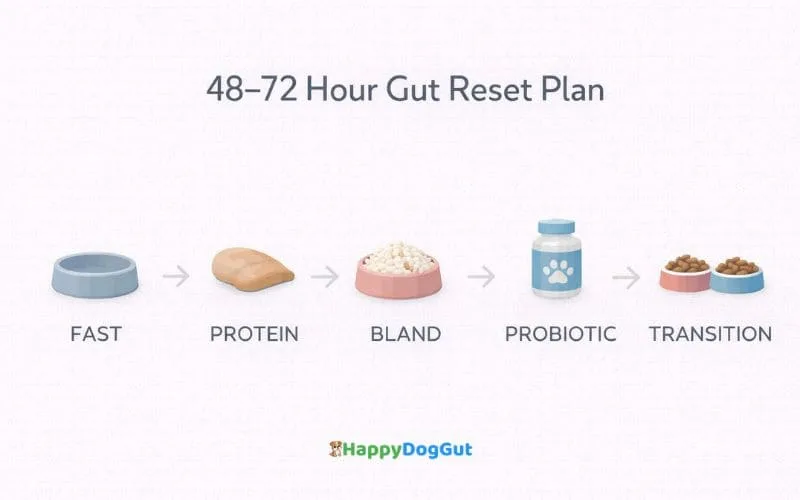
⏱️ Phase 1: 12–24 Hour Fast
The first step in a dog gut reset protocol is giving the digestive system a short break. This helps reduce irritation and allows the gut to settle before reintroducing food.
🛑 Rest the Digestive system
Fasting temporarily stops the constant processing of food, which can help calm inflammation and reduce ongoing irritation in the gut.
💧 Water only (Hydration is Essential)
Fresh water should always be available during this phase. Small, frequent sips are better than large amounts at once, especially if the stomach is sensitive.
🐶 Use caution with Puppies
Puppies should not be fasted for long periods due to their higher energy needs and risk of dehydration. If a puppy has digestive upset, a shorter fasting window—or skipping fasting altogether—may be safer.
⚠️ Skip fasting if your dog is Weak or Unwell
If your dog is lethargic, not drinking, vomiting frequently, or showing concerning symptoms, fasting is not appropriate. In such cases, supportive care or veterinary guidance is more important than withholding food.
This phase is about reducing load—not restricting unnecessarily. When used correctly, it sets the foundation for a smoother recovery in the next steps.
🍗 Phase 2: Introduce Boiled Protein
After the short fasting phase, the next step in the dog gut reset protocol is to gently reintroduce food using a simple, easy-to-digest protein source.
🍗 Plain Chicken or Turkey (No Additives)
Use boiled, skinless chicken or turkey with all fat removed. These proteins are generally well-tolerated and provide essential nutrients without overloading the digestive system.
🚫 No Seasoning or Extras
Do not add salt, oil, spices, or broth. Even small amounts of seasoning can irritate a sensitive gut and slow recovery.
🥄 Start with Small Portions
Offer small amounts (a few bites at a time) and observe how your dog responds. If tolerated well, portions can be gradually increased over the next meals.
⏳ Watch for Tolerance
If vomiting or worsening stool occurs after reintroducing protein, pause and reassess before continuing.
This phase is about gentle reintroduction, not full feeding. Keeping it simple helps the digestive system ease back into processing food.
🍚 Phase 3: Add Bland Diet
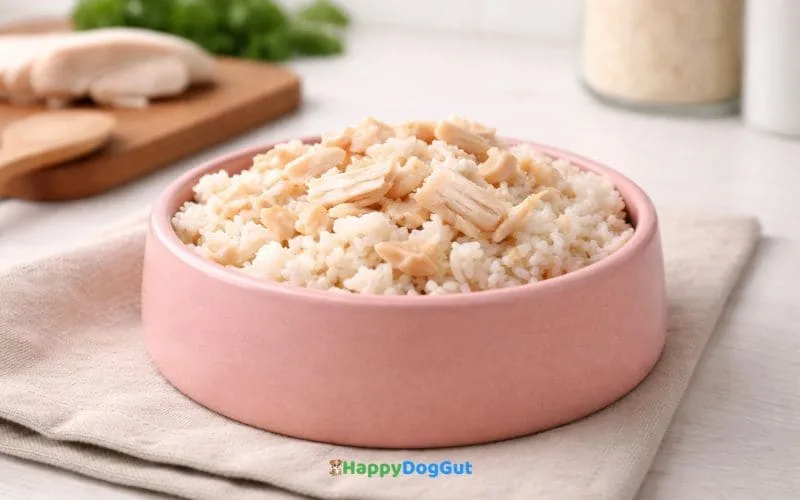
Once your dog tolerates plain protein, the next step in the dog gut reset protocol is to add a simple carbohydrate source to create a balanced, easy-to-digest meal.
🍚 Add Rice or Potato
Plain white rice or boiled potato (without skin, salt, or butter) is commonly used. These are gentle on the stomach and help provide energy while supporting stool formation.
⚖️ Keep it low in fat
Fat slows digestion and can worsen symptoms in sensitive dogs. This phase should remain very low-fat to avoid putting extra strain on the gut.
🥣 Combine with Protein in small amounts
Mix the boiled protein with rice or potato in small, balanced portions. Start light and gradually increase the quantity if your dog tolerates it well.
💩 Supports easier Digestion
Bland diets reduce digestive workload, allowing the gut to stabilize while still providing basic nutrition.
This phase helps transition from fasting to normal feeding—without overwhelming the digestive system.
🦠 Phase 4: Probiotic Support
As your dog begins tolerating food again, the next step in the dog gut reset protocol is supporting the gut microbiome.
🧬 Help restore Beneficial Bacteria
Digestive upset—especially diarrhea—can disrupt the balance of good bacteria in the gut. Probiotics may help reintroduce and support these beneficial microbes, contributing to more stable digestion over time.
🐢 Introduce Gradually
Start with a small amount rather than a full dose. This allows the gut to adjust without triggering additional gas or discomfort. Gradual introduction is especially important for sensitive dogs.
📊 Use alongside Stable Diet
Probiotics work best when paired with a consistent, bland diet during recovery. Adding too many supplements at once can make it harder to track what’s helping.
If you’re considering options, our guide to Best Probiotics for dogs with sensitive stomachs explains how they’re typically used and what to look for.
This phase focuses on rebuilding balance—not rushing recovery.
🔄 Phase 5: Transition Back to Regular Diet
The final step in the dog gut reset protocol is gradually returning your dog to their normal food. This phase is critical—rushing it can undo the progress you’ve made.
🔄 Slow Mixing Approach
Start by mixing a small amount of your dog’s regular food with the bland diet. Gradually increase the proportion of regular food over several days.
📅 Follow a 5–7 Day Transition
A typical transition timeline looks like:
- Day 1–2: 75% bland diet + 25% regular food
- Day 3–4: 50% bland + 50% regular
- Day 5–7: 25% bland + 75% regular
This allows the digestive system to adjust without shock.
⚠️ Avoid Sudden Switching
Jumping straight back to regular food can trigger a relapse of soft stool or digestive upset. Even if your dog seems fine, gradual change is safer.
🥣 Choose appropriate long-term food
If your dog showed sensitivity before, it may be worth reviewing options like Best Dog foods for sensitive stomachs to support long-term stability.
This phase ensures the reset leads to lasting improvement—not just temporary relief.
What NOT to Do During a Gut Reset
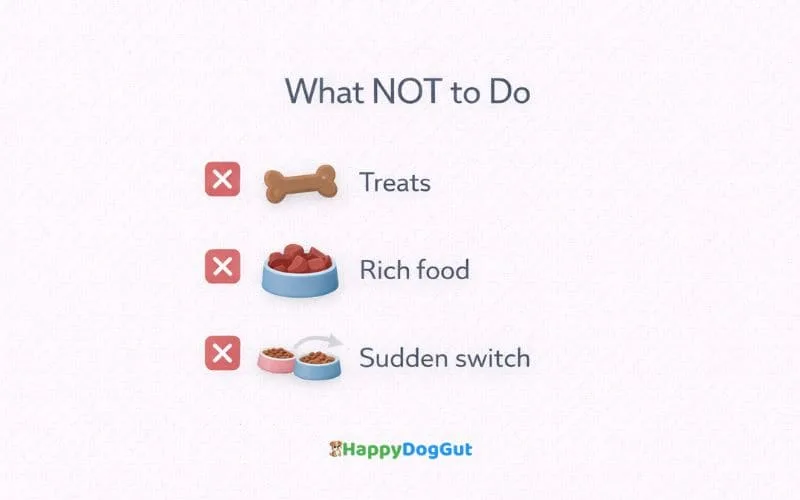
A dog gut reset protocol works best when you keep things simple and controlled. Small mistakes during this phase can easily slow recovery or trigger symptoms again.
🚫 No Treats or Extras
Even small treats can introduce new ingredients, fats, or additives that disrupt the reset process. Stick strictly to the planned diet during this period.
🔄 No Sudden Food changes
Switching foods mid-reset confuses the digestive system and can worsen symptoms. Consistency is more important than trying multiple options.
🍖 Avoid Rich or High-fat foods
Foods that are fatty, heavily processed, or complex can be difficult to digest. These increase the workload on the gut and may lead to softer stool or discomfort.
💊 Avoid Over-supplementation
Adding multiple supplements at once—probiotics, enzymes, fiber, etc.—can make it hard to identify what’s helping and may overwhelm the system. Keep support minimal and targeted.
⚖️ Keep it Simple and Controlled
The goal of a gut reset is to reduce digestive stress—not introduce new variables. Simplicity, consistency, and patience are what make this approach effective.
Signs the Gut Reset Is Working
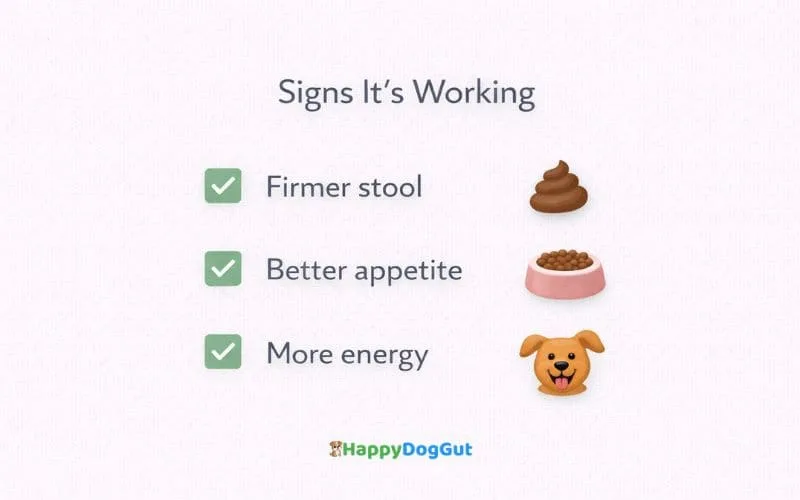
As your dog moves through the dog gut reset protocol, improvements usually appear gradually rather than all at once. Watching for consistent changes can help you confirm that the process is working.
💩 Firmer, More consistent stool
One of the first signs of improvement is better stool structure. Instead of loose or inconsistent stool, you may notice it becoming more formed and predictable.
🌬️ Reduced Gas and Bloating
Less frequent or less intense gas can indicate that food is being digested more efficiently and the gut is stabilizing.
🍽️ Improved Appetite
Dogs often regain a more regular interest in food as their digestion becomes more comfortable. Eating patterns may become more consistent.
⚡ Better Energy Levels
As digestion improves, your dog may appear more active, alert, and engaged in normal activities.
⏳ Progress should be Steady, not Instant
These changes typically develop over a few days. Gradual improvement is a positive sign that the gut is recovering without being overloaded.
Tracking these signs helps you decide when it’s safe to continue transitioning back to a regular diet.
When the Dog Gut Reset Protocol Doesn’t Work
A dog gut reset protocol is designed for mild, short-term digestive issues. If your dog isn’t improving—or symptoms are getting worse—it’s important to shift from home care to proper evaluation.
⏳ No Improvement After 72 hours
If stool consistency, appetite, or energy hasn’t improved within 2–3 days, the issue may go beyond simple digestive upset. Continuing the same approach without progress can delay needed care.
📉 Worsening Symptoms
If diarrhea becomes more frequent, vomiting starts, or your dog appears more lethargic, the situation is no longer mild. These changes suggest the gut is not stabilizing.
🩸 Blood in the Stool
Visible blood—whether bright red or dark—should not be managed with a reset protocol. This can indicate irritation, infection, or other underlying conditions that need attention.
⚖️ Unexplained Weight loss
If your dog is eating less or losing weight during this period, it may signal poor nutrient absorption or a deeper issue.
If any of these signs appear, it’s important to understand what’s happening beneath the surface. Our guide on How Vets Diagnose Chronic GI issues in dogs explains how veterinarians evaluate ongoing digestive problems step by step.
A gut reset is a helpful tool—but knowing when to stop and seek further guidance is just as important.
Is a Gut Reset Safe for Puppies and Seniors?
A gut reset can be helpful in some situations, but puppies and senior dogs require extra caution due to their different nutritional and hydration needs.
⚠️ Extra Caution is Essential
Both puppies and older dogs are more vulnerable to dehydration and nutrient imbalance. What is mild for an adult dog can escalate more quickly in these age groups.
⏱️ Shorter or Modified fasting
Puppies should not be fasted for long periods, as they need consistent energy intake. In many cases, fasting may be shortened or skipped entirely. Senior dogs may also tolerate fasting less well, especially if they have underlying health conditions.
🩺 Lower threshold for Veterinary guidance
If a puppy or senior dog shows ongoing diarrhea, reduced appetite, or lethargy, it’s safer to seek guidance earlier rather than relying solely on a reset protocol.
🥣 Focus on gentle, Consistent feeding
For both age groups, the emphasis should be on easily digestible food, gradual transitions, and close monitoring rather than strict restriction.
A gut reset can still be used—but it should be adapted carefully, with safety taking priority over following a strict protocol.
Common Mistakes That Make Things Worse
A dog gut reset protocol is simple by design—but small mistakes can easily slow recovery or trigger symptoms again. Avoiding these common errors makes a big difference.
🍽️ Overfeeding After Fasting
After a fasting phase, it’s tempting to give a full meal right away. This can overwhelm the digestive system and lead to vomiting or loose stool. Start with small portions and increase gradually.
🔄 Switching Food too Early
Introducing new food before the gut has stabilized can undo progress. Even if your dog seems better, transitioning too quickly can bring symptoms back.
💊 Adding too many Supplements at once
Using probiotics, enzymes, fiber, and other supplements together can overload the system and make it difficult to track what’s actually helping. Keep support simple and targeted.
👀 Ignoring Ongoing Symptoms
If diarrhea continues, worsens, or new symptoms appear, continuing the same protocol without reassessment can delay proper care. Monitoring changes closely is essential.
⚖️ Simplicity = Success
The most effective gut reset is controlled, gradual, and consistent. Avoiding these mistakes helps the digestive system recover without unnecessary setbacks.
FAQs: Dog Gut Reset Protocol
How long should I reset my dog’s gut?
A typical gut reset lasts 48–72 hours, depending on how your dog responds. The goal is not to follow a fixed timeline but to observe improvement in stool, appetite, and energy. Once things stabilize, you can begin transitioning back to a regular diet gradually.
Can I fast my dog for diarrhea?
Short fasting (12–24 hours) may help rest the digestive system in mild cases. However, fasting is not suitable for all dogs—especially puppies, seniors, or dogs that are weak or vomiting. Always consider your dog’s condition before using this step.
What is the best bland diet for dogs?
A simple combination of boiled chicken or turkey with white rice or potato is commonly used. The key is keeping it plain, low-fat, and easy to digest. Avoid seasoning, oils, or complex ingredients during this phase.
Do probiotics help during a gut reset?
Probiotics may support the restoration of beneficial gut bacteria, especially after diarrhea. They should be introduced gradually and used alongside a stable diet—not added all at once with multiple supplements.
Can I give treats during a gut reset?
No. Treats can introduce extra ingredients, fats, or additives that disrupt the reset process. It’s best to avoid all treats until your dog’s digestion has stabilized and normal feeding has resumed.
Is rice good for dogs with diarrhea?
Yes, plain white rice is commonly used because it is easy to digest and helps support stool formation. It works best when combined with a simple protein and fed in small, controlled portions.
Can I skip fasting?
In some cases, yes. If your dog is very young, older, or not tolerating fasting well, you can move directly to small portions of bland food. The goal is to reduce digestive stress—not force fasting unnecessarily.
What if symptoms return after the reset?
If symptoms come back after transitioning to regular food, it may indicate an underlying sensitivity or trigger in the diet. At that point, a more structured approach—like ingredient evaluation or veterinary guidance—may be needed.
Final Thoughts
A dog gut reset protocol is meant to provide short-term support—not a long-term solution. It helps calm the digestive system and restore balance, but it doesn’t replace proper diagnosis or ongoing diet management.
The key to success is simplicity. Keeping meals plain, portions controlled, and changes gradual allows the gut to recover without unnecessary stress. Overcomplicating the process with too many foods or supplements can slow progress.
Slow transitions matter just as much as the reset itself. Moving too quickly back to regular food is one of the most common reasons symptoms return. A careful, step-by-step approach helps maintain the improvements you’ve achieved.
Pay attention to patterns. Stool consistency, appetite, energy, and overall behavior provide better insight than isolated changes. These patterns help you decide whether your dog is improving or needs additional support.
If you’re building a more complete gut-health plan, you may also find value in:
- Best Probiotics for dogs with sensitive stomachs
- Digestive Enzymes for dogs
- When to Worry about Diarrhea in dogs
Most importantly, don’t ignore warning signs. A reset works best for mild issues—persistent or worsening symptoms should always be taken seriously.

Hi, I’m Maddy, the writer behind HappyDogGut.com.
I’m passionate about helping Dog parents understand Gut Health, Sensitive Stomachs, and Natural Nutrition for dogs.
Every article I create is vet-approved, research-backed, and experience-driven, so your pup can enjoy a healthier, happier gut.
Happy Gut = Happy Dog!
All content on Happy Dog Gut follows our Editorial Policy.