For many dog owners in the United States, changes in poop color or texture are one of the first things that raise concern. It’s completely normal to worry when your dog’s stool suddenly looks different—after all, poop can tell you a lot about what’s happening inside your dog’s digestive system. In fact, stool appearance is often one of the earliest visible indicators of gut health.
That’s why understanding a dog poop color chart can be so helpful. Color, consistency, and frequency can offer clues about digestion, diet tolerance, hydration, and even stress levels. However, it’s important to remember that not every poop change is an emergency. A temporary shift in color or texture can happen after a diet change, new treats, mild stress, or even something your dog picked up on a walk.
This guide is designed to help you recognize patterns, not panic over a single abnormal stool. Many dogs experience soft or loose stools from time to time while otherwise acting completely normal. If that sounds familiar, our article on Why Dogs have Loose Stool but Are Acting Normal explains this common situation in more detail.
Throughout this guide, we’ll walk through what different poop colors and textures may indicate, when it’s okay to monitor at home, and when it’s smarter to seek professional advice. We’ll also touch on how digestive sensitivity and diet can influence stool changes—topics we cover more deeply in our breakdown of What Causes Sensitive Stomachs in Dogs.
Why Dog Poop Is a Window Into Gut Health
A dog’s stool offers a surprisingly clear snapshot of what’s happening inside the digestive system. From how food is broken down to how well nutrients are absorbed, changes in color and texture can reflect shifts in gut balance long before other symptoms appear. That’s why veterinarians often start with stool observation—and why a dog poop color chart is such a useful educational tool for pet owners.
🔄 A Simple look at Digestion
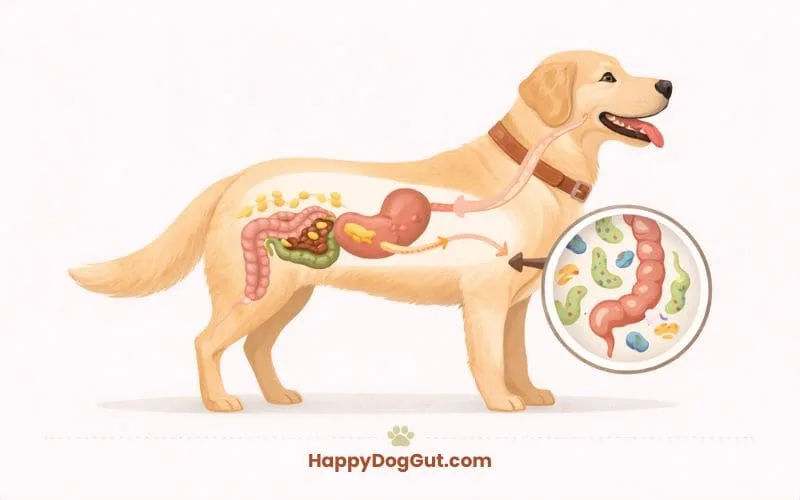
After your dog eats, food travels through the stomach and intestines where enzymes, stomach acids, and beneficial bacteria work together to digest nutrients. The final appearance of stool—its color, firmness, and moisture—depends on how smoothly this process runs. When digestion is balanced, stool tends to be brown, formed, and easy to pass. Disruptions anywhere along the way can change how poop looks.
🩺 Why Vets look at Stool first
Veterinarians often ask about stool quality early in an exam because it can hint at diet tolerance, hydration, gut bacteria balance, and stress levels. While stool alone can’t diagnose a condition, patterns over time help guide next steps. This is why tracking changes using a dog poop color chart—rather than reacting to a single stool—can be more informative.
How diet, stress, and bacteria affect stool
- Diet🥣: Sudden food changes, treats, or ingredients your dog doesn’t tolerate can quickly alter stool color or softness.
- Stress 😰: Travel, boarding, or schedule changes can speed up digestion, leading to softer stools.
- Gut bacteria🦠: An imbalance in beneficial bacteria may affect stool consistency and odor.
For a deeper understanding of how digestion works and what supports a healthy gut, explore our vet-informed overview of Dog Gut Health.
🩺 Remember: Stool observation is a helpful guide—but persistent or severe changes should always be discussed with your veterinarian.
Dog Poop Color Chart – What Each Color Means
Understanding stool color is one of the easiest ways for dog owners to spot potential digestive changes early. A dog poop color chart doesn’t diagnose illness, but it helps you recognize what’s generally normal, what may be diet-related, and what deserves closer attention. The key is to look for patterns over time, not just a single bowel movement.
🟤 Brown (Normal & Healthy) ✅
What it usually means:
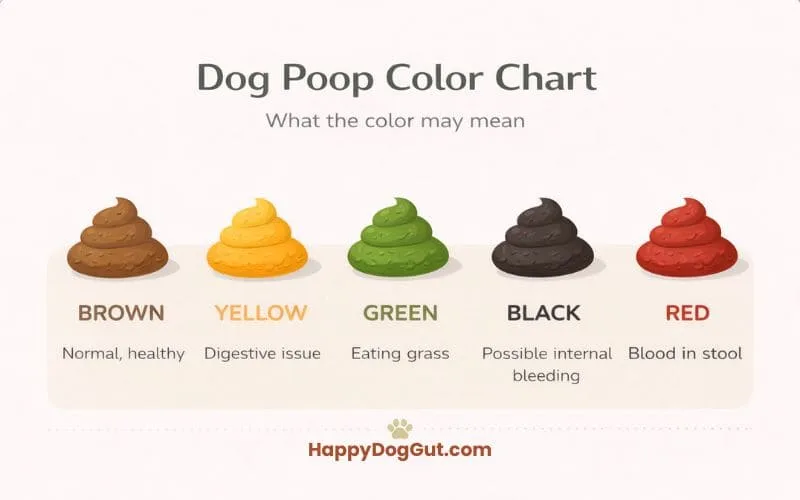
Brown is the most common and healthy stool color for dogs. It typically indicates that digestion is functioning well and bile is being processed normally.
Ideal texture:
- Firm but not hard
- Log-shaped
- Easy to pick up
Occasional variation in shade (light to dark brown) is normal, especially with diet changes.
🟫 Light Brown or Tan Stool
What it may indicate:
Lighter brown or tan stool is often diet-related. It can appear when:
- Fiber intake is low or suddenly increased
- Your dog switches food too quickly
- Treats or table scraps are introduced
If your dog otherwise feels fine, monitoring diet consistency is usually the first step.
🟡 Yellow Stool
What it may suggest:
Yellow stool is commonly linked to faster digestion, meaning food moves through the gut more quickly than usual.
Possible contributing factors include:
- Sudden food changes
- Fat-rich meals
- Mild digestive sensitivity
⚠️ This is observational only and not a diagnosis. Repeated yellow stools are a sign to slow diet changes and monitor closely.
🟢 Green Stool
What it often means:
Green poop commonly appears when dogs:
- Eat grass
- Consume green treats or foods
- Experience a sudden diet change
Short-term green stool is usually harmless. Persistent green stool, however, should be discussed with a veterinarian—especially if appetite or energy levels change.
⚫ Black or Tarry Stool 🚨
Why this matters:
Black, tar-like stool can indicate digested blood from higher up in the gastrointestinal tract.
⚠️ This is a red-flag sign.
If you notice black or sticky stool, veterinary attention is strongly recommended—especially if paired with weakness, vomiting, or lethargy.
🔴 Red Streaks or Blood in Stool 🚨
What it may be from:
- Straining due to constipation or diarrhea
- Rectal irritation
- Sudden dietary upset
Small streaks can occur with irritation, but repeated or heavy blood should never be ignored. When blood appears alongside vomiting, pain, or behavior changes, a vet visit becomes urgent.
🩺 Key Reminder
A dog poop color chart helps you observe trends—not self-diagnose. If unusual colors persist for more than a day or two, or appear with other symptoms, consulting your veterinarian is always the safest choice.
Dog Poop Texture Chart – What’s Normal vs Concerning
While color provides important clues, stool texture often gives even clearer insight into how well your dog’s digestive system is functioning. When used alongside a dog poop color chart, texture helps you understand whether digestion is balanced, mildly irritated, or under stress. As with color, it’s best to look at patterns over several bowel movements, not just one isolated stool.
🟤 Firm & Log-Shaped Stool (Ideal) ✅
What it usually means:
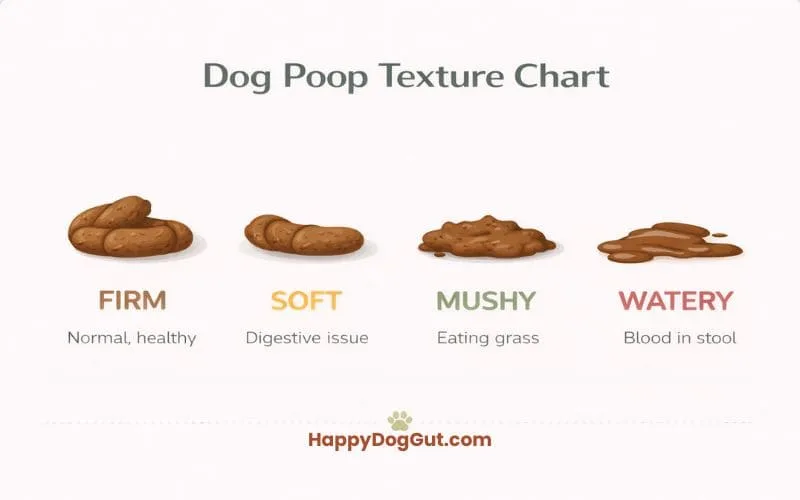
This is the gold standard of healthy digestion. Firm, log-shaped stool suggests a balanced diet, proper hydration, and a well-functioning gut.
What you’ll notice:
- Holds shape but isn’t hard
- Easy to pick up
- Passed without straining
Dogs producing this type of stool consistently are typically tolerating their food well.
🟠 Soft but Formed Stool
What it may indicate:
Slightly soft stool that still holds shape is often a sign of mild digestive sensitivity rather than illness.
Common causes include:
- Recent food or treat changes
- Mild stress (travel, schedule changes)
- Slight fiber imbalance
If your dog is energetic and eating normally, monitoring is usually appropriate.
🟡 Mushy or Pudding-Like Stool
What it often suggests:
Mushy stool points to gut imbalance and is frequently linked to food intolerance or rapid diet changes. It’s one of the most common stool concerns reported by US dog owners.
Dogs with this texture may otherwise act normal, which can be confusing. If that’s the case, our guide on Why Dogs have Soft Stool but are Acting Normal explains this scenario in more detail.
If this texture persists, reviewing diet ingredients and feeding consistency is important.
💧 Watery Diarrhea 🚨
Why it matters:
Watery diarrhea indicates acute digestive upset and increases the risk of dehydration—especially in puppies and senior dogs.
Potential triggers include:
- Sudden food changes
- Dietary indiscretion
- Stress or illness
Short-term episodes may resolve with supportive care, but ongoing watery stool should always be discussed with a veterinarian.
🧪 Mucus-Covered Stool
What it may point to:
Mucus often signals colon irritation, which can be triggered by:
- Stress or anxiety
- Sudden diet changes
- Low or poorly balanced fiber intake
Texture changes are common and often temporary, but persistent patterns deserve attention. Using a dog poop color chart together with texture observations gives you a clearer picture of your dog’s gut health—without jumping to conclusions.
Tracking stool color and texture over time can help identify patterns that matter more than a single bad day. When loose or watery stools persist despite routine changes, diet often becomes a key factor in digestive support. For dogs experiencing ongoing issues, our guide on Best Dog Foods for Chronic Diarrhea explains how nutrition may help support more consistent stool quality.
In many cases, improving fiber balance helps regulate stool texture. Our vet-reviewed list of High-fiber Dog Foods for Firm Stool explores options that may support colon health.
What Dog Poop Texture Says About Diet
Your dog’s stool texture is often a direct reflection of how well their diet matches their digestive needs. When reviewed alongside a dog poop color chart, texture changes can help you identify whether fiber levels, protein sources, or fat content may need adjustment. Small dietary tweaks—done thoughtfully—often make a noticeable difference in stool quality.
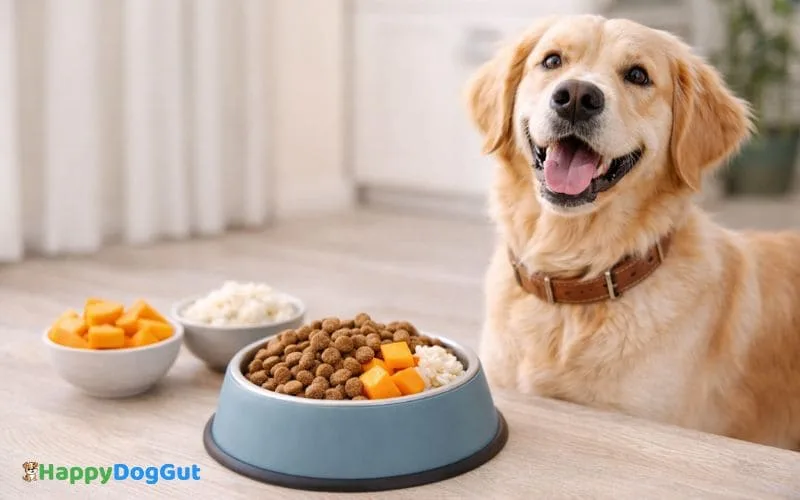
🌾 Fiber Balance
Fiber plays a key role in stool formation.
- Too little fiber can lead to loose, mushy stools.
- Too much fiber may cause bulky or overly frequent bowel movements.
Soluble fiber helps bind stool, while insoluble fiber adds bulk. Diets formulated for digestive sensitivity typically aim for a balanced mix. If your dog frequently produces soft or inconsistent stools, a gentle, digestion-focused formula may help see Best Dog Food for Sensitive Stomachs.
🍗 Protein Tolerance
Protein is essential, but not all proteins agree with every dog. Poor tolerance to certain proteins can show up as soft stool, gas, or intermittent diarrhea. Common triggers include heavily processed proteins or ingredients a dog has eaten repeatedly for years. If stool texture worsens after meals, evaluating the protein source—and simplifying ingredients—can be a practical next step.
🧈 Fat Sensitivity
Fat is calorie-dense and palatable, but excess fat can overwhelm sensitive digestive systems. Signs of fat sensitivity may include greasy stool, loose consistency, or urgency after eating. Dogs with a history of digestive upset often do better on moderate-fat diets with clearly defined ingredients.
To reduce diet-related stool issues, it’s also important to avoid fillers and additives that can irritate digestion. Our guide on Dog Food Ingredients to Avoid for Sensitive Stomachs explains which components commonly contribute to stool problems.
If stool texture consistently falls outside the “ideal” range on a dog poop color chart, diet composition—not just quantity—deserves a closer look. Gradual changes and careful ingredient choices can support steadier digestion over time.
How Diet Changes Affect Dog Stool (Very Common)
Changes in your dog’s diet are one of the most common reasons for sudden shifts in stool color and texture. When reviewed alongside a dog poop color chart, these changes often point to what changed in the diet rather than a serious health issue. The good news is that many diet-related stool problems are temporary and resolve with better feeding habits.
🔄 Sudden Food Switches
Switching dog food too quickly is a top cause of loose or mushy stools. Your dog’s gut bacteria need time to adjust to new ingredients, proteins, and fiber levels. A sudden change can overwhelm digestion, leading to diarrhea or color changes. This is why a slow, structured transition matters—especially for dogs with sensitive stomachs. Our Dog Food Transition Guide explains how to switch foods safely without upsetting digestion.
🍪 Treat Overload
Treats add up faster than most owners realize. Too many treats—especially rich or flavored ones—can disrupt nutrient balance and soften stool. Even “healthy” treats can cause issues when fed in excess. A general rule is to keep treats under 10% of daily calories.
🍗 Table Scraps
Human foods are often higher in fat, salt, or seasoning than a dog’s digestive system can handle. Table scraps can quickly change stool texture and color, particularly in smaller dogs. Even occasional scraps may show up clearly on a dog poop color chart the next day.
If stool changes appear soon after diet changes and your dog otherwise feels well, diet is often the first place to look.
When Abnormal Poop Is NOT a Diet Issue
While diet plays a major role in stool quality, not every abnormal bowel movement is food-related. Using a dog poop color chart helps identify patterns, but persistent or unexplained changes may point to other factors that require attention beyond diet alone.
😰 Stress & Anxiety
Dogs are highly sensitive to routine changes. Travel, boarding, new pets, loud environments, or schedule disruptions can speed up digestion, leading to softer stools or mucus. Stress-related stool changes often resolve once routines normalize.
🦠 Parasites
Intestinal parasites can affect stool consistency and appearance, sometimes causing diarrhea or mucus. Because these issues can’t be confirmed visually, ongoing stool problems should be evaluated by a veterinarian rather than guessed at based on appearance alone.
💊 Medications
Certain medications—such as antibiotics or anti-inflammatory drugs—may temporarily alter gut bacteria and digestion. This can result in softer stools or color changes during treatment.
If stool abnormalities continue despite consistent feeding and routine, it’s important to look beyond diet. Our overview of Gut Problems and Remedies in Dogs explores other non-diet factors that can affect digestion.
A dog poop color chart is a helpful observation tool, but when changes persist or appear alongside other symptoms, professional veterinary guidance is always the safest next step.
When to See a Vet (Clear Red Flags)
A dog poop color chart is meant to help you observe changes—not replace professional care. While many stool changes are mild and temporary, certain signs should never be ignored. These red flags suggest that monitoring at home may no longer be enough and that veterinary guidance is important.
⚫ Black Stool
Black or tarry-looking stool can indicate digested blood from higher in the gastrointestinal tract. This is not considered normal and should be evaluated promptly, especially if it appears more than once.
🔴 Blood in Stool combined with Lethargy
Small streaks of blood can sometimes appear with straining, but blood paired with low energy, weakness, or loss of appetite is more concerning. This combination warrants a veterinary visit rather than watchful waiting.
🤢 Vomiting and Diarrhea together
Occasional vomiting or loose stool can happen on its own, but when both occur at the same time—especially repeatedly—it increases the risk of dehydration and signals a more serious digestive upset.
💧 Signs of Dehydration
Watery diarrhea can quickly lead to fluid loss. Warning signs include:
- Dry gums
- Sunken eyes
- Reduced urination
- Extreme fatigue
Dehydration can escalate quickly, particularly in smaller dogs.
🐾 Puppies and Senior Dogs
Very young and older dogs have less physiological reserve. Stool changes that might be mild in a healthy adult dog can become serious much faster in puppies and seniors, making early veterinary input especially important.
For veterinarian-informed educational guidance on canine health concerns, Cornell University’s College of Veterinary Medicine provides trusted resources for dog owners. Ongoing vomiting or diarrhea, black or bloody stool, signs of dehydration, sudden weakness, or noticeable behavior changes are commonly recognized warning signs that should be evaluated by a veterinarian rather than monitored at home.
A dog poop color chart helps identify patterns, but if any of the signs above appear—or if you’re unsure—it’s always safer to consult your veterinarian sooner rather than later.
How to Improve Stool Quality Naturally (Diet Support)
When stool changes show up on a dog poop color chart, diet support is often the first—and safest—place to start. Many dogs experience softer stools due to mild digestive imbalance rather than illness. Focusing on hydration, fiber balance, and gut bacteria support can help improve stool quality naturally over time, without rushing into drastic changes.
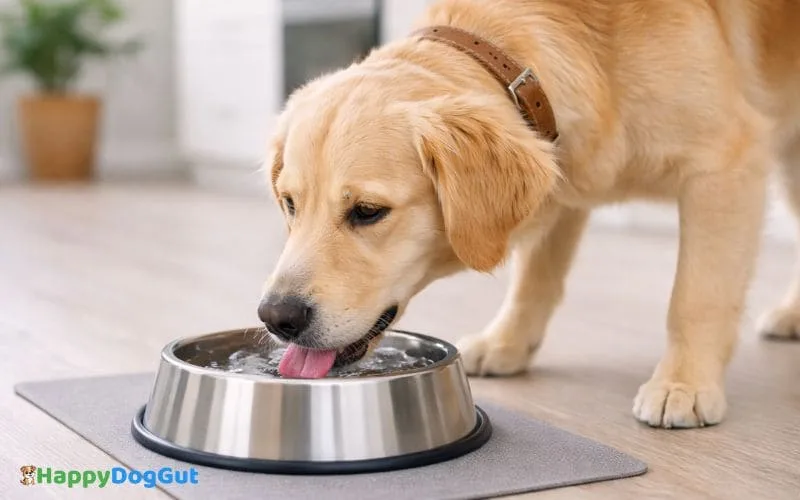
💧 Hydration Matters more than you think
Adequate water intake helps regulate digestion and stool consistency. Mild dehydration can make stool harder, while sudden overconsumption of rich foods without enough water can lead to loose stools. Make sure fresh water is always available, especially during warmer months, increased activity, or periods of diarrhea recovery.
🌾 Fiber for Stool formation
Fiber plays a central role in shaping stool.
- Soluble fiber helps bind loose stool.
- Insoluble fiber adds bulk and promotes regular movement.
Dogs with inconsistent stools often benefit from diets that strike the right fiber balance. Our vet-reviewed guide to High-fiber Dog Foods for Firm Stool explores food options that may support better stool texture.
🦠 Probiotics to Support Gut Balance
Healthy gut bacteria help regulate digestion and stool quality. Stress, antibiotics, or diet changes can disrupt this balance, leading to softer or irregular stools. Adding probiotics may help support a more stable digestive environment in some dogs. For guidance on strains and usage, see our resource on the Best Probiotics for Dogs.
🍚 Gentle feeding After Digestive Upset
If your dog is recovering from diarrhea, gradual reintroduction of regular food is key. Simple, easily digestible meals can help stabilize stools before transitioning back to a complete diet. Our vet-informed guide on What to Feed a Dog after Diarrhea outlines a step-by-step recovery approach.
Using a dog poop color chart alongside thoughtful diet support helps you respond calmly and effectively to stool changes. Small, consistent adjustments—rather than quick fixes—often lead to the most reliable improvement.
FAQs: Dog Poop Color, Texture & Gut Health
What should healthy dog poop look like?
Healthy dog poop is typically medium to dark brown, firm, and log-shaped, with a smooth surface. It should be easy to pick up and not leave residue behind. When comparing stool to a dog poop color chart, healthy poop falls squarely in the “brown and formed” range. Minor day-to-day variation is normal, but consistent texture and color are key signs of good digestion.
How long is loose stool normal in dogs?
Occasional loose stool for 24–48 hours can be normal, especially after diet changes, new treats, or mild stress. If your dog remains active, eating, and hydrated, monitoring is usually appropriate. However, if loose stool persists beyond two days or worsens, it’s no longer considered normal and should be discussed with a veterinarian.
Can dog food change poop color and texture?
Yes—diet is one of the most common reasons for stool changes. New proteins, increased fat, low fiber, or sudden food switches can all affect digestion. A dog poop color chart often reflects these changes within a day or two. That’s why gradual food transitions and consistent feeding routines are important for gut stability.
What does yellow dog poop usually mean?
Yellow stool often indicates faster-than-normal digestion, where food moves quickly through the intestines. This can happen after sudden food changes or meals that are harder to digest. While an occasional yellow stool isn’t always concerning, repeated yellow stools suggest it’s time to review diet consistency and feeding habits.
Is mucus in dog poop something to worry about?
Small amounts of mucus can appear when the colon is mildly irritated, often due to stress, diet changes, or fiber imbalance. If mucus appears occasionally and your dog otherwise feels fine, monitoring may be enough. Persistent mucus, especially with diarrhea or discomfort, should be evaluated by a veterinarian.
Why does my dog have soft stool but act completely normal?
This is very common. Many dogs experience soft stool due to diet sensitivity, mild gut imbalance, or treat overload without showing other symptoms. A dog poop color chart helps track whether this is a short-term issue or a recurring pattern. If soft stool continues despite diet consistency, further evaluation may be helpful.
When is blood in dog poop an emergency?
Small streaks of blood can sometimes occur with straining, but blood combined with lethargy, vomiting, or repeated diarrhea is more concerning. Black or tarry stool is especially serious and should never be ignored. When blood appears more than once or with other symptoms, veterinary care is recommended promptly.
Can stress alone cause diarrhea or soft stool in dogs?
Yes. Stress can speed up digestion, leading to softer stools or mucus. Common stressors include travel, boarding, routine changes, or new environments. Stress-related stool changes often resolve once routines normalize, but ongoing issues should not be attributed to stress alone without veterinary input.
How can I improve my dog’s stool quality naturally?
Supporting hydration, feeding a balanced diet with appropriate fiber, and maintaining a slow transition between foods can help stabilize digestion. Probiotics may support gut balance in some dogs. When reviewing changes on a dog poop color chart, focus on trends over time rather than single stools.
When should I stop monitoring and see a vet about stool changes?
You should consult a veterinarian if stool changes last more than 48 hours, worsen, or appear alongside symptoms like vomiting, dehydration, weight loss, or behavior changes. Puppies and senior dogs should be evaluated sooner. A dog poop color chart is a helpful guide—but professional advice is essential when red flags appear.
Final Thoughts: Using a Dog Poop Color Chart the Smart Way
Changes in your dog’s poop can be unsettling—but they’re also very common. Diet shifts, treats, stress, and even routine changes can all show up in stool color or texture from time to time. That’s why using a dog poop color chart as an observation tool—not a diagnostic shortcut—is so valuable for US pet owners.
The most important takeaway is this: patterns matter more than a single stool. One off-color or soft bowel movement doesn’t usually signal a serious problem. But repeated changes in color, consistency, or frequency may point to an underlying digestive imbalance that deserves attention.
🍽️ Diet plays a major role in stool quality. Many dogs experience ongoing stool issues due to food intolerance or digestive sensitivity rather than illness. If loose stools become frequent, exploring diet options designed for digestive support can be helpful. Our upcoming guide on foods commonly used to support dogs with chronic diarrhea will dive deeper into long-term diet strategies. For now, our vet-informed breakdown of Sensitive Stomach Diets offers a practical starting point.
If your dog often has soft stool while otherwise acting normal, you’re not alone. This is one of the most common concerns among US dog owners, and our detailed guide on Loose Stool in Dogs who seem otherwise Healthy explains why it happens and what to monitor.
Always consult your veterinarian if symptoms persist or worsen.
Using a dog poop color chart thoughtfully—combined with diet awareness and professional guidance when needed—helps you respond calmly, confidently, and responsibly to changes in your dog’s gut health.

Hi, I’m Maddy, the writer behind HappyDogGut.com.
I’m passionate about helping Dog parents understand Gut Health, Sensitive Stomachs, and Natural Nutrition for dogs.
Every article I create is vet-approved, research-backed, and experience-driven, so your pup can enjoy a healthier, happier gut.
Happy Gut = Happy Dog!
All content on Happy Dog Gut follows our Editorial Policy.