

Chronic itching, repeated ear infections, and ongoing loose stool can leave dog owners feeling confused and frustrated. When symptoms come and go—or seem to improve briefly before returning—it’s natural to suspect food. Many owners respond by switching brands, trying grain-free formulas, or rotating proteins, hoping something will finally “work.”
The problem is that random food changes rarely provide clear answers. Without a structured plan, it’s almost impossible to know which ingredient may be triggering the reaction—or whether food is even the cause. That’s where an elimination diet for food allergies becomes important.
Veterinarians consider a properly structured elimination diet the gold standard for identifying food-related allergies. It’s not just another diet change—it’s a controlled, step-by-step diagnostic process designed to remove potential triggers and observe how the body responds over time.
If your dog is showing ongoing digestive or skin concerns, reviewing the Signs of Food Intolerance in Dogs can help you understand common patterns. In some cases, vets may recommend specialized formulas such as those discussed in Hydrolyzed Protein Dog food Explained as part of the trial process.
In this guide, you’ll learn exactly how an elimination diet works, how long it should last, what foods are allowed, and how to reintroduce ingredients safely—without guesswork or self-diagnosis.
⚠️ This article is for educational purposes only and does not replace veterinary advice.
What Is an Elimination Diet for Food Allergies?
An elimination diet for food allergies is a structured feeding trial used to identify whether specific ingredients are triggering allergic or intolerance-related symptoms in dogs. It is not a trendy diet change or a weight-loss plan. Instead, it’s a controlled diagnostic tool designed to remove potential triggers and observe how the body responds over time.
🔍 A Diagnostic process—not just a Diet
Unlike casually switching from one brand to another, an elimination diet follows strict rules. The goal isn’t variety or convenience. The goal is clarity. By limiting ingredients, veterinarians can determine whether symptoms improve when certain proteins or carbohydrates are removed.
🥩 Why One Protein and One Carbohydrate?
Most elimination trials use a single novel protein and a single simple carbohydrate source. This minimizes variables. If your dog eats multiple proteins or mixed-ingredient formulas, it becomes difficult to pinpoint which component may be causing a reaction.
📋 Why Strict Control matters
Even small exposures—like treats, flavored medications, or table scraps—can interfere with results. Consistency is critical. The effectiveness of the trial depends on eliminating all outside variables during the testing window.
🔄 How this differs from simply “switching food”
Switching brands without a plan often introduces new ingredients while leaving old triggers in place. An elimination diet removes guesswork by creating a clean starting point. Improvement—or lack of improvement—provides meaningful information rather than confusion.
Understanding this difference is what makes an elimination diet powerful. It’s not about trying something new—it’s about creating a clear, controlled test for your dog’s immune and digestive response.
When Vets Recommend an Elimination Diet
Veterinarians don’t suggest an elimination diet for every minor skin flare-up or short episode of loose stool. It’s usually recommended when symptoms are persistent, recurring, or affecting both the skin and digestive system.
🐶 Chronic Itching that doesn’t fully resolve
If your dog continues scratching, licking paws, or rubbing their face despite routine care, food may be considered as a possible trigger—especially when itching is year-round rather than seasonal.
👂 Recurrent Ear Infections
Repeated ear inflammation without a clear environmental cause can sometimes be linked to food reactions. When infections keep returning after treatment, vets may explore dietary triggers.
💩 Persistent Loose Stool or Digestive Upset
Ongoing soft stool, intermittent diarrhea, or mild vomiting that doesn’t respond to simple diet changes may prompt a structured elimination trial. Random food switching rarely provides clear answers.
🧴 Skin and Gut Symptoms together
When itching, ear issues, and digestive problems appear at the same time, the likelihood of a food-related component increases. This combination often strengthens the case for a controlled trial.
🧪 Negative or Inconclusive Initial testing
If early evaluations—including exams or screening tests—don’t identify a clear cause, an elimination diet may be the next logical step. In fact, many veterinarians consider it more reliable than relying solely on a Dog Food Allergy Test, especially when test results don’t align with real-world symptoms.
An elimination diet is typically recommended when patterns suggest food may play a role—but clarity requires structure, patience, and consistency rather than guesswork.
Step-by-Step Plan: How to Do an Elimination Diet for Food Allergies Correctly
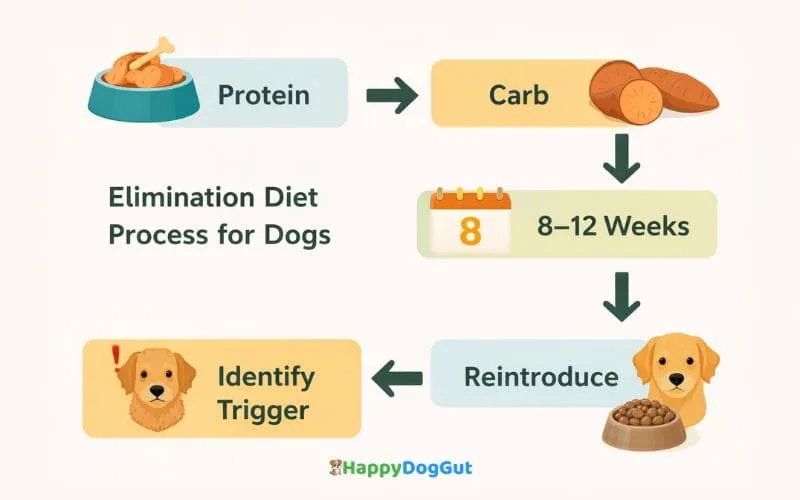
An elimination diet only works when it’s structured and consistent. Random food changes won’t provide clear answers. The process needs to follow specific steps in the right order so you can accurately identify (or rule out) food triggers.
Veterinarians typically approach elimination trials in phases:
- Choosing the correct protein source
- Selecting a simple carbohydrate
- Following a strict 8–12 week timeline
- Avoiding common mistakes that invalidate results
- Reintroducing ingredients methodically
Each step builds on the one before it. Skipping phases, mixing ingredients, or stopping too early can make the entire trial inconclusive.
Below, you’ll find a clear breakdown of how to implement an elimination diet for food allergies in a way that produces meaningful results—without confusion or guesswork.
Step 1 — Choosing the Right Protein
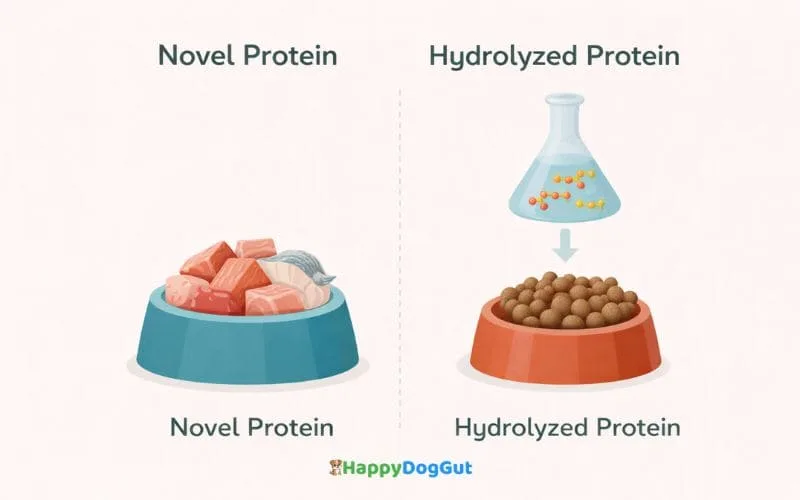
Selecting the correct protein is one of the most important parts of an elimination diet. The goal is to feed a protein your dog’s immune system is unlikely to recognize as a trigger.
🥩 Novel Protein Options
Novel proteins are meat sources your dog hasn’t eaten before. Common examples include duck, venison, rabbit, and sometimes kangaroo. Because the body hasn’t been repeatedly exposed to these proteins, they’re less likely to provoke an immune response during the trial.
If you want help comparing options, our guide to Best Novel Protein Dog foods breaks down how these formulas are typically structured for sensitive dogs.
🧬 Hydrolyzed Protein Diets Explained
Hydrolyzed protein diets take a different approach. Instead of introducing a new protein, they break proteins down into very small components. These fragments are less likely to trigger an immune reaction because the body doesn’t easily recognize them as whole allergens. For a deeper understanding of how this works, see Hydrolyzed Protein Dog food Explained.
🔍 When to choose Novel vs. Hydrolyzed
Vets often start with a novel protein if your dog hasn’t tried many different meats in the past. Hydrolyzed diets are more commonly used when dogs have already been exposed to multiple protein sources or when previous diet trials haven’t worked.
🚫 Avoid Previously fed Proteins
It’s essential to avoid any protein your dog has eaten regularly before—even if it seemed well tolerated. Long-term exposure can still allow sensitivities to develop over time, which defeats the purpose of the trial.
Choosing the right protein sets the foundation for the entire elimination diet. Without that careful first step, the rest of the process won’t provide reliable answers.
Step 2 — Selecting a Simple Carbohydrate
Once the protein is chosen, the next step in an elimination diet is selecting a simple carbohydrate source. Just like the protein, the goal is to reduce variables and keep the ingredient list as controlled as possible.
🥔 Common Simple Carbohydrate Options
Veterinarians often recommend plain, easily digestible carbohydrates such as white rice, potato, or sweet potato during elimination trials. These ingredients are typically well tolerated and provide energy without adding unnecessary complexity to the diet.
The key is not which carb is “best,” but which one your dog has had minimal exposure to—and that can be fed consistently without additional additives.
📋 Why Simplicity Matters
The success of an elimination diet depends on clarity. The more ingredients included, the harder it becomes to identify what may be causing a reaction. A short, predictable ingredient list makes it easier to track improvements or flare-ups.
If symptoms improve on a simple protein-and-carb combination, you gain meaningful insight. If symptoms persist, the limited ingredient structure makes next steps clearer.
🚫 Avoid Multi-Ingredient Formulas
Commercial foods that contain multiple proteins, added flavorings, fillers, or long ingredient panels can interfere with results. Even small additions—like chicken fat in a “duck” formula—can complicate the trial.
During this phase, less is more. Keeping the carbohydrate source simple supports digestive stability and preserves the integrity of the elimination diet process.
How Long Does an Elimination Diet for Food Allergies Last?
One of the most common questions owners ask is how long an elimination diet for food allergies should last before they see results. In most cases, veterinarians recommend a strict trial period of 8 to 12 weeks.
⏳ The Typical 8–12 week window
Food-related immune reactions don’t calm down overnight. The digestive tract and skin need time to reduce inflammation and stabilize. An 8–12 week timeframe allows the body enough time to show measurable improvement—if food is truly the trigger.
❌ Why two weeks isn’t enough
It’s common for owners to expect changes within 10–14 days. While some dogs may show early improvement, two weeks is usually not long enough to confirm or rule out a food allergy. Stopping too early can lead to false conclusions and unnecessary food switching.
🧠 Immune System “reset” in simple terms
When a dog reacts to a food, the immune system remains activated for a period of time. Even after removing the suspected ingredient, it takes several weeks for inflammation to settle. This is why patience is critical during the trial.
📈 What Improvement usually looks like
Progress is often gradual. You might notice:
- Reduced Itching intensity
- Fewer Ear flare-ups
- Firmer Stool consistency
- Improved Coat quality
Clear improvement by the 8–12 week mark strongly suggests that food was contributing to symptoms. If little or no change occurs, your veterinarian may reassess the protein choice or explore non-food causes.
Consistency—not speed—is what makes an elimination diet reliable.
Strict Rules During the Trial
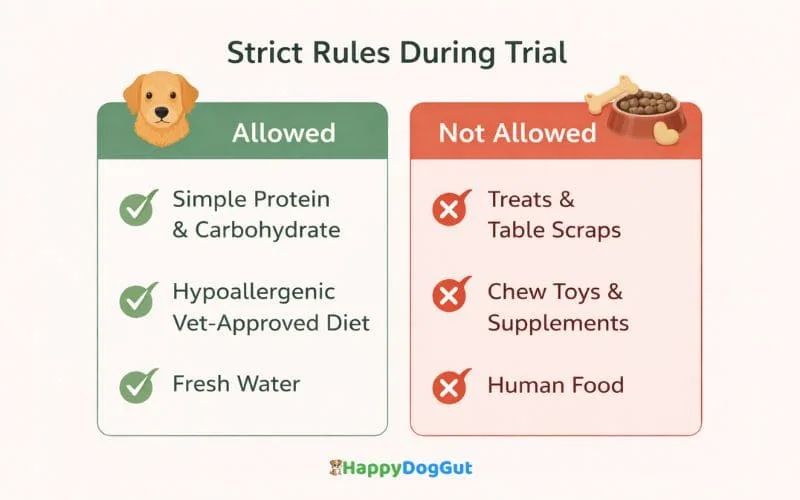
An elimination diet only works if it’s truly controlled. Even small “exceptions” can interfere with results and make the trial inconclusive. Think of this phase as a scientific test—every variable matters.
Below is a clear checklist to help you stay on track.
✅ What’s Allowed
- ✔️ Only the Selected Elimination Diet formula (Novel or Hydrolyzed)
- ✔️ Plain Water
- ✔️ Unflavored Medications approved by your Veterinarian
- ✔️ Single-Ingredient treats that are part of the trial protein (If your Vet approves)
❌ What’s NOT Allowed
- 🚫 No Commercial treats (Even “limited ingredient” ones unless prescribed for the trial)
- 🚫 No Flavored medications (many contain beef, chicken, or pork flavoring)
- 🚫 No Table scraps or Leftovers
- 🚫 No Dental chews or Rawhide
- 🚫 No supplements unless your veterinarian specifically approves them
Even a small bite of chicken or a flavored chew can restart the immune response and set the clock back weeks.
🏷️ Read Ingredient Labels Carefully
Ingredient lists can be misleading. Some “duck” formulas still contain chicken fat. Some supplements use beef flavoring. Always check labels closely, especially for hidden proteins.
Consistency during these 8–12 weeks determines whether the elimination diet provides clear answers. The stricter the trial, the more reliable the results will be.
Common Mistakes That Ruin Elimination Diet Trials
An elimination diet only works when it’s done correctly. Unfortunately, many trials fail—not because the diet was wrong, but because small mistakes made the results unreliable. Avoiding the issues below can make the difference between clarity and confusion.
⏳ Stopping Too Early
Many owners expect visible improvement within two weeks. While early changes can happen, most elimination diets require 8–12 full weeks to provide meaningful results. Ending the trial too soon often leads to false conclusions and unnecessary food changes.
Patience isn’t optional—it’s part of the diagnostic process.
🍪 Giving “Just One Treat”
It’s common to think a small treat won’t matter. But even one flavored chew, table scrap, or dental stick can re-trigger the immune response. That exposure can reset progress and make it harder to know whether the diet is working.
Consistency must be 100%.
🔄 Switching Brands Mid-Trial
Changing from one novel protein formula to another halfway through the trial introduces new variables. Even similar ingredients can alter results. If a change is necessary, it should be done under veterinary guidance with the clock essentially restarting.
🥩 Mixing Proteins
Feeding multiple protein sources at once defeats the purpose of isolation. Combining duck with salmon—or adding a “backup” protein—makes it impossible to determine which ingredient may be triggering symptoms.
The trial should always use one clearly defined protein source.
📊 Not Tracking Symptoms
Without tracking Itching levels, Stool consistency, Ear flare-ups, or Appetite changes, progress can feel unclear. Keeping simple weekly notes helps you see patterns that might otherwise go unnoticed.
A successful elimination diet depends on structure, discipline, and observation. Avoiding these common mistakes dramatically increases the chance of identifying (or ruling out) a food-related trigger with confidence.
The Reintroduction Phase (Critical Step Most Owners Skip)
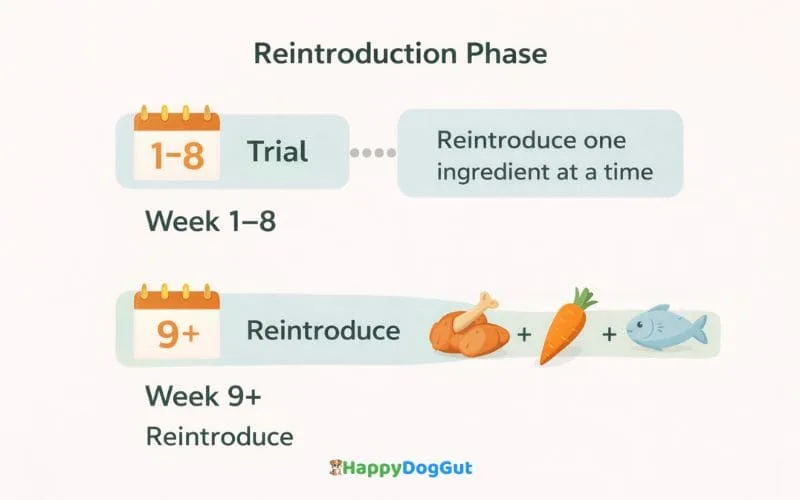
Many owners complete the elimination period and stop there—but the reintroduction phase is what actually confirms a food allergy. Without it, you can’t be certain which ingredient caused the problem.
🔁 One Ingredient at a time
After your dog has completed the 8–12 week elimination diet and symptoms have improved, previously removed ingredients are added back one at a time. This keeps the process controlled and prevents confusion.
⏳ Allow 1–2 weeks per Ingredient
Each new protein or ingredient should be fed consistently for about one to two weeks before introducing another. Some reactions appear quickly, while others take several days to surface.
👀 Watch Closely for Flare-ups
During this period, monitor:
- Return of Itching
- Ear redness or Discharge
- Soft stool or Diarrhea
- Increased paw licking
- Changes in Appetite or Behavior
If symptoms reappear after introducing a specific ingredient, that ingredient is likely contributing to the reaction.
✔️ How Confirmation Works
When symptoms improve during the elimination phase and then return after reintroducing a specific food, that pattern strongly supports a food allergy or intolerance. If no symptoms return, that ingredient may be tolerated.
This step transforms the elimination diet from a “guess” into evidence-based confirmation. Skipping reintroduction leaves uncertainty. Completing it provides clarity—allowing you to build a long-term diet plan with confidence rather than restriction based on assumption.
Once a protein is confirmed safe and symptoms remain stable, some owners later consider a protein rotation strategy for sensitive dogs to reduce long-term repetitive exposure. Rotation is a maintenance approach—not part of the diagnostic elimination phase—and should only begin after full stability.
What If Symptoms Don’t Improve?
Not every dog responds to the first elimination diet—and that doesn’t mean the process failed. When symptoms don’t improve after a full, well-controlled trial, it’s a signal to reassess the approach rather than abandon it.
🔄 Re-evaluate the Protein choice
If a novel protein was used, your dog may have already been exposed to it in the past (sometimes unknowingly through treats or previous foods). In that case, the protein may not have been truly “novel,” which can limit results.
🧬 Consider a Hydrolyzed Protein Diet
When multiple proteins may be involved—or when diet history is complex—vets often move to hydrolyzed diets. These formulas reduce immune recognition by breaking proteins into smaller components, which can help clarify whether food is still playing a role.
🌿 Environmental Allergies may be contributing
If skin symptoms persist without meaningful digestive improvement, environmental factors (like pollen, dust, or seasonal triggers) may be involved. Food may still contribute, but it may not be the primary driver.
🩺 Vet Reassessment matters
At this stage, veterinarians often review the full picture—diet history, response patterns, and any additional symptoms. Some dogs with ongoing GI signs may need broader gut support strategies, such as those discussed in Diet Support for Dogs with IBD.
Lack of improvement doesn’t mean you’ve wasted time. A properly done elimination diet still provides valuable information—it helps rule food in or out, guiding the next step with more confidence and less guesswork.
Is an Elimination Diet Safe for Puppies?
Elimination diets can be used in puppies—but they require extra caution. Growing dogs have different nutritional needs than adults, and restricting ingredients without a plan can affect development.
🐾 Growth Nutrition matters
Puppies need balanced levels of protein, fat, calcium, phosphorus, and other nutrients to support bone growth and immune development. An improperly designed elimination diet—especially a homemade one—can create nutritional gaps if it isn’t carefully formulated.
🩺 Veterinary Supervision is Strongly recommended
Because puppies are still developing, most veterinarians prefer to guide elimination trials in young dogs. Prescription novel or hydrolyzed diets are often used because they are nutritionally complete and designed to meet growth requirements.
⚠️ Avoid extreme DIY restriction
Removing multiple ingredients or feeding a very limited homemade combination without professional input can lead to deficiencies over time. Elimination diets should be controlled—but not nutritionally unbalanced.
In short, elimination diets can be safe for puppies when structured properly. The key difference is oversight. For growing dogs, careful planning and veterinary guidance help ensure that diagnosing food allergies doesn’t interfere with healthy development.
FAQs: Elimination Diet for Food Allergies in Dogs
How long before I see results?
Some dogs show mild improvement within the first 2–3 weeks, especially with digestive symptoms like loose stool. However, skin issues such as itching and ear inflammation often take longer to calm down. Most veterinarians recommend completing the full 8–12 week trial before drawing conclusions. Stopping early can lead to unclear or misleading results.
Can I use treats during an elimination diet?
Treats are usually not allowed unless they contain only the exact protein used in the trial and are approved by your veterinarian. Many commercial treats contain hidden proteins or flavorings that can interfere with results. Even small exposures can restart the immune response and delay progress.
What proteins are best for an elimination diet?
The best protein is one your dog has never eaten before. Common novel options include duck, venison, rabbit, and sometimes kangaroo. In more complex cases—especially when dogs have been exposed to many proteins—hydrolyzed protein diets may be recommended instead.
Can an elimination diet cure food allergies?
An elimination diet does not “cure” allergies. Instead, it helps identify which ingredients trigger symptoms. Once confirmed, those ingredients can be avoided long term, which often keeps symptoms controlled. The diet is a diagnostic and management tool—not a permanent cure.
What if my dog refuses the novel protein?
Transitioning gradually over several days may help improve acceptance. If refusal continues, your veterinarian may recommend trying a different novel protein or a hydrolyzed diet. Consistency is important, so finding a formula your dog will reliably eat is key to completing the trial.
Do I need prescription food for an elimination diet?
Not always—but many veterinarians prefer prescription diets because they are carefully formulated and less likely to contain cross-contaminated proteins. Over-the-counter options may work in some cases, but ingredient transparency and manufacturing controls vary.
Can I do a homemade elimination diet?
Homemade elimination diets are possible, but they must be nutritionally balanced—especially for long trials. Without proper formulation, nutrient deficiencies can develop over time. If considering homemade options, veterinary guidance is strongly recommended.
Is 8 weeks mandatory?
While some dogs show early improvement, 8–12 weeks is generally considered the most reliable timeframe. Shorter trials may not allow enough time for immune-related inflammation to settle. Completing the recommended window gives you the clearest possible results.
Final Thoughts
An elimination diet works best when it’s structured, consistent, and patient. Random food changes rarely provide clear answers—but a carefully controlled trial can reveal patterns that guessing never will.
The key is commitment to the full 8–12 week window. Improvement may be gradual, especially with skin symptoms. Stopping early often creates confusion instead of clarity.
Just as important is the reintroduction phase. Adding ingredients back one at a time is what confirms the trigger. Without this step, you may avoid foods unnecessarily or miss the real cause altogether.
Remember, an elimination diet is a diagnostic tool. It’s designed to help identify or rule out food-related triggers—not to permanently restrict your dog’s diet without evidence.
If you’re building a long-term plan after completing a trial, exploring Best Limited Ingredient Dog foods can help simplify ingredient exposure. For dogs needing alternative proteins, reviewing Best Novel Protein Dog foods may offer suitable options. And in more complex cases, understanding how specialized formulas work through Hydrolyzed Protein Dog food Explained can guide next steps.
With patience, structure, and observation, an elimination diet can provide the clarity needed to support long-term gut and skin health—without unnecessary restriction or guesswork.

Hi, I’m Maddy, the writer behind HappyDogGut.com.
I’m passionate about helping Dog parents understand Gut Health, Sensitive Stomachs, and Natural Nutrition for dogs.
Every article I create is vet-approved, research-backed, and experience-driven, so your pup can enjoy a healthier, happier gut.
Happy Gut = Happy Dog!
All content on Happy Dog Gut follows our Editorial Policy.