
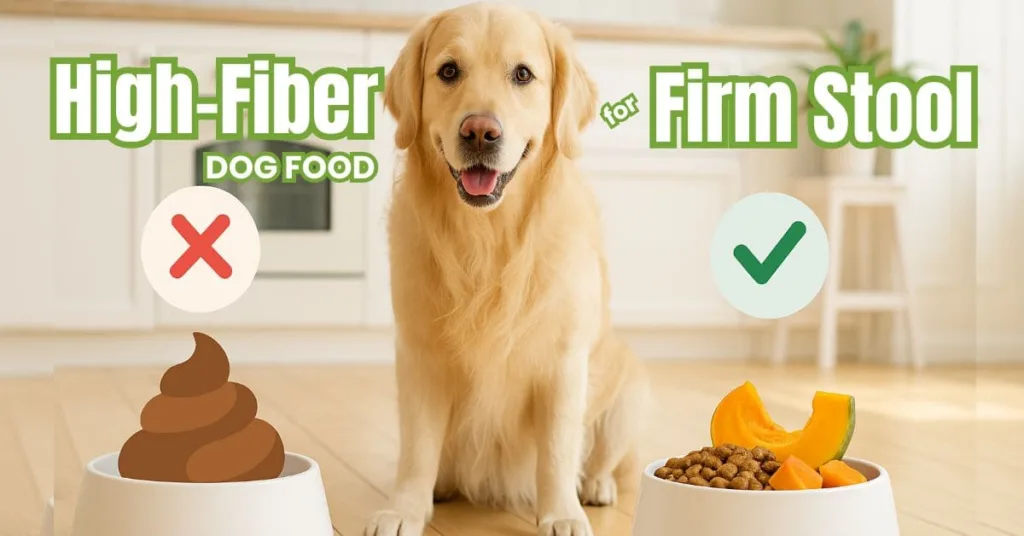
High-fiber dog foods for firm stool are becoming one of the most searched topics among US pet parents—and for good reason. Soft stool, loose poop, and unpredictable bowel movements have become extremely common in dogs across the United States. In many cases, the issue isn’t a serious disease… it’s the food. Low-fiber diets, high-fat commercial kibble, artificial additives, and hard-to-digest ingredients can disrupt the gut microbiome and lead to chronic mushy stool.
Fiber plays a critical role in your dog’s digestive health. It absorbs excess moisture, improves stool shape, supports regular bowel movements, and even helps the beneficial bacteria in your dog’s gut thrive. Vets now consider fiber one of the most effective, gentle, and natural ways to firm up a dog’s stool without causing irritation. That’s why choosing the best high-fiber dog foods for firm stool can make an immediate and noticeable difference—especially for dogs with sensitive stomachs, colitis tendencies, or recurring loose stools.
Most pet owners don’t realize that digestive problems can start long before the symptoms become obvious. Diets low in natural fiber sources (like pumpkin, sweet potato, oats, barley, and specific prebiotic fibers) can slowly weaken stool quality and create inflammation in the digestive tract. When this continues for weeks or months, dogs may develop gas, inconsistent stools, or even anal gland issues.
If your dog often has soft stool but otherwise seems okay, you’ll find our guide especially useful. You can also read our detailed digestive breakdown here:
👉 What Causes Sensitive Stomach in Dogs? Symptoms & Vet Advice
And if your dog frequently has mushy poop but no major symptoms, this guide is a must-read alongside our resource:
👉 Why Does My Dog Have Soft Stools but Is Acting Normal?
In this vet-approved guide, we’ll break down the best high-fiber dog foods for firm stool, how fiber works, and which formulas can safely stabilize digestion for dogs of all ages, sizes, and sensitivities. Let’s get into it.
This vet-reviewed guide was updated in January 2026 to reflect current dietary recommendations and U.S. product availability.
Why Fiber Is Essential for Firm Stool (Vet Explanation)
For dogs with chronic mushy poop or irregular bowel movements, fiber is one of the most effective, vet-approved solutions—and it’s the reason high-fiber dog foods for firm stool are becoming so popular among U.S. pet parents. Fiber plays two different but equally important roles in your dog’s digestive system. Soluble fiber (found in pumpkin, oats, and sweet potatoes) absorbs excess water inside the intestines, which naturally firms up loose stool and helps prevent messy accidents. Insoluble fiber (like cellulose or beet pulp) adds structure and bulk, helping stool maintain its shape while regulating how quickly food moves through the gut.

A balanced fiber intake also supports a healthy microbiome, which is essential for preventing chronic digestive flare-ups, gas, bloating, and unpredictable stool quality. When the gut bacteria are stable, your dog produces well-formed, consistent stools that are easy to pass and far less smelly. Fiber also plays a huge role in anal gland health, since firm stool naturally presses against and empties the glands—reducing scooting, irritation, and vet visits.
Think of it this way:
- Stool too soft or mushy? Your dog may not be getting enough fiber.
- Stool too dry or hard? Fiber levels may be too high or not paired with enough hydration.
This balance is exactly why choosing high-fiber dog foods for firm stool—instead of random high-fiber treats or supplements—creates the safest, most predictable results for dogs with ongoing digestive sensitivity.
Signs Your Dog Needs a High-Fiber Diet
Many pet parents in the US don’t realize their dog actually needs more fiber until the symptoms become consistent. Dogs with low-fiber diets often struggle with unstable digestion, mushy stool, smelly poop, and inconsistent bowel movements — all of which can be dramatically improved by switching to high-fiber dog foods for firm stool. Veterinarians explain that fiber helps regulate water in the stool, feeds good gut bacteria, and provides natural bulk that keeps the digestive system running smoothly. So if you’re noticing any of the symptoms below, a fiber-rich diet may be exactly what your dog needs.
A. Digestive Symptoms (Most Common Signs of Low Fiber)
Dogs with fiber deficiency often show ongoing digestive discomfort. These symptoms appear gradually and may come and go, but become more frequent with the wrong diet.
Common digestive red flags:
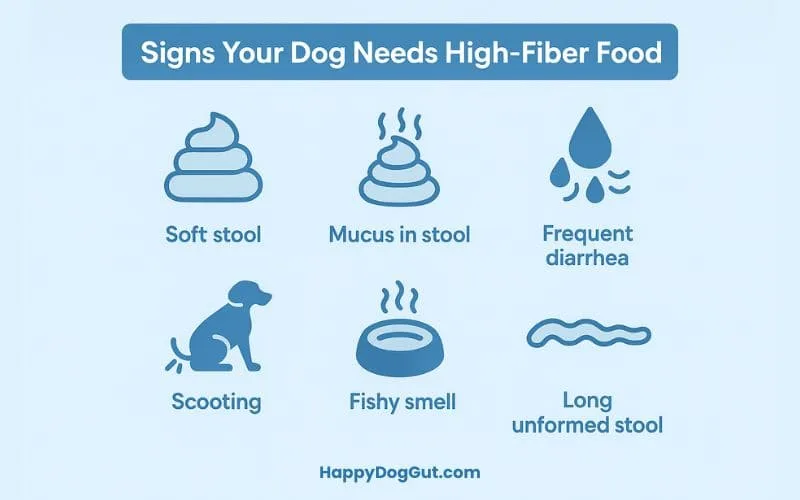
- Soft stool or mushy poop, especially after meals
- Frequent diarrhea — watery or loose stools
- Mucus in stool (indicates irritation or fast transit time)
- Gas, bloating, gurgling stomach sounds
- Extra smelly poop
- Occasional vomiting, especially in the morning or after fatty foods
If your dog shows these signs regularly, it’s a good indicator their gut needs more stability, and switching to high-fiber dog foods for firm stool is one of the fastest ways to improve digestion.
While fiber plays a major role in helping firm up dog stool, some dogs also benefit from switching to a complete digestive-support diet rather than relying on fiber alone. If your dog’s stool remains loose despite adding healthy fiber sources, it may be time to try one of the best dog foods to firm up loose stool. These diets combine balanced fiber, gentle proteins, and prebiotics to provide more comprehensive digestive support than fiber alone.
- For dogs recovering from diarrhea, here’s what to feed them safely: What to Feed a Dog After Diarrhea
- Gentle homemade recovery meals: Homemade Chicken & Rice for Dogs with Diarrhea
B. Stool Quality Symptoms (Clear Fiber Deficiency Indicators)
One of the most accurate ways to assess your dog’s fiber needs is by looking at their stool. Vets often say, “Your dog’s poop tells the truth.” Poor stool quality directly reflects poor digestion or low fiber intake.
Stool signs your dog needs a high-fiber diet:
- Long, soft, unformed stools that don’t hold shape
- Poop that sticks to grass or scoops (a classic fiber issue)
- Inconsistency — one firm poop followed by a mushy one
- Alternating diarrhea and constipation
- Passing multiple small stool pieces throughout the day
If you see these patterns, it likely means your dog is struggling to digest certain ingredients — a common sign of food intolerance as well. You can learn more about digestive triggers here:
📌 Signs of Food Intolerance in Dogs
Switching to high-fiber dog foods for firm stool often stabilizes stool formation within 3–7 days.
C. Anal Gland Symptoms (A Major Indicator of Low Fiber)
Many US dogs suffer from anal gland discomfort because their stool isn’t firm enough to naturally express the glands. Fiber provides bulk and pressure, which helps the anal glands empty during a normal bowel movement.
Anal gland warning signs:
- Scooting on carpet or grass
- Excessive licking under the tail
- A fishy or metallic odor
- Full, swollen, or impacted anal glands
- Painful or strained pooping
These are strong indicators that your dog needs more digestive bulk — and increasing fiber is the #1 vet-recommended fix. High-fiber diets help create firmer stools, which naturally relieve the glands and prevent painful build-up.
If your dog is experiencing any combination of digestive upset, loose stool, stool inconsistency, or anal gland irritation, switching to high-fiber dog foods for firm stool is one of the most effective, gentle, and vet-approved ways to restore healthy digestion.
Types of Fiber That Help Firm Dog Stool
Not all fiber works the same way, which is why choosing the right type of fiber is one of the most important steps when selecting high-fiber dog foods for firm stool. Dogs with soft stool or recurring digestive upset often respond differently to soluble vs insoluble fiber, and understanding the difference helps US pet parents pick the most effective formula for their dog’s gut needs.
A. Soluble Fiber (Best for Diarrhea, Soft Stool & Gut Balance)
Soluble fiber dissolves in water and forms a gentle gel-like texture inside your dog’s digestive tract. This helps slow down digestion, absorb excess moisture, and create firmer, well-shaped stools — exactly what dogs with mushy poop or chronic diarrhea need.
Top soluble fiber sources in high-quality dog foods:
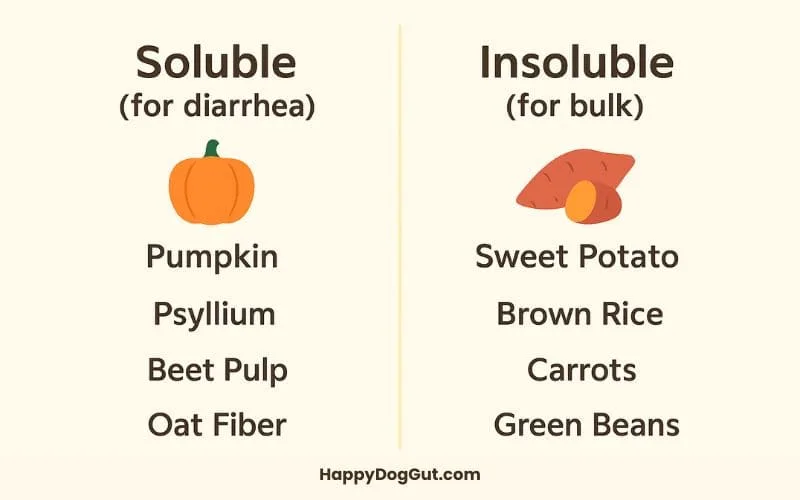
✔ Pumpkin – one of the safest, most effective stool-firmers
✔ Psyllium husk – absorbs extra water + supports microbiome health
✔ Beet pulp – widely used in vet-recommended digestive diets
✔ Inulin – natural prebiotic supporting good gut bacteria
✔ Oat fiber – soothing, gentle, and great for sensitive tummies
Soluble fiber is especially helpful for dogs who:
- Have loose stool every morning
- Produce long, shapeless stools
- Have soft stool but act normal after eating
- Experience diarrhea during food transitions
If your dog’s poop is consistently soft, switching to high-fiber dog foods for firm stool with pumpkin, beet pulp, or psyllium is often the fastest improvement.
B. Insoluble Fiber (Best for Bulk, Firmness & Regularity)
Insoluble fiber doesn’t absorb much water — instead, it adds bulk to your dog’s stool and helps regulate movement through the digestive tract. This supports dogs who struggle with inconsistent stool shape, small stool pieces throughout the day, or alternating diarrhea and constipation.
Top insoluble fiber sources:
✔ Sweet potato – gentle, nutrient-rich, and perfect for sensitive stomachs
✔ Brown rice – great for dogs needing stool firmness + steady energy
✔ Carrots – mild fiber source that supports natural stool texture
✔ Green beans – low-calorie bulking fiber for digestive stability
Insoluble fiber is ideal for dogs who:
- Have thin, rope-like stools
- Produce stool that sticks to grass
- Experience sluggish digestion or mild constipation
- Need more stool volume to support anal gland emptying
For dogs with recurring anal gland issues, choosing high-fiber dog foods for firm stool containing sweet potato or brown rice can dramatically improve comfort.
Which Type of Fiber Does Your Dog Need? (Simple Guide)
| Stool Problem | Best Fiber Type | Why It Works |
|---|---|---|
| Mushy stool / diarrhea | Soluble fiber | Absorbs excess water + regulates speed |
| Alternating loose & firm | Blend of both | Balances moisture + adds bulk |
| Constipation / dry stool | More insoluble fiber | Adds structure + improves motility |
| Anal gland problems | Mix of soluble + insoluble | Firms stool + increases pressure |
| Soft stool but “normal behavior” | Soluble fiber first | Smooth hydration + microbiome support |
A healthy digestive system usually performs best with a balanced combination of both fiber types, which is why many vet-recommended high-fiber dog foods for firm stool blend pumpkin, beet pulp, sweet potato, and brown rice.
High-Fiber Dog Foods to Avoid
While fiber is essential for firm, well-formed stools, not all fiber-rich dog foods are good for digestion. Some formulas contain low-quality ingredients that actually worsen mushy poop, diarrhea, or bloating—especially in dogs with sensitive guts. When choosing high-fiber dog foods for firm stool, pet parents should avoid diets overloaded with fillers, ultra-processed carb sources, or high-fat content that disrupt normal bowel movements.
Many budget kibble formulas rely heavily on low-quality fillers like corn, wheat, soy, and various gluten meals. These ingredients are harder to digest and can trigger inflammation in the gut, leading to soft stools, gas, excessive poop, or inconsistent stool quality. Dogs with sensitive stomachs or mild intolerances often have trouble breaking down these fillers, causing the very symptoms you’re trying to fix with a high-fiber diet.
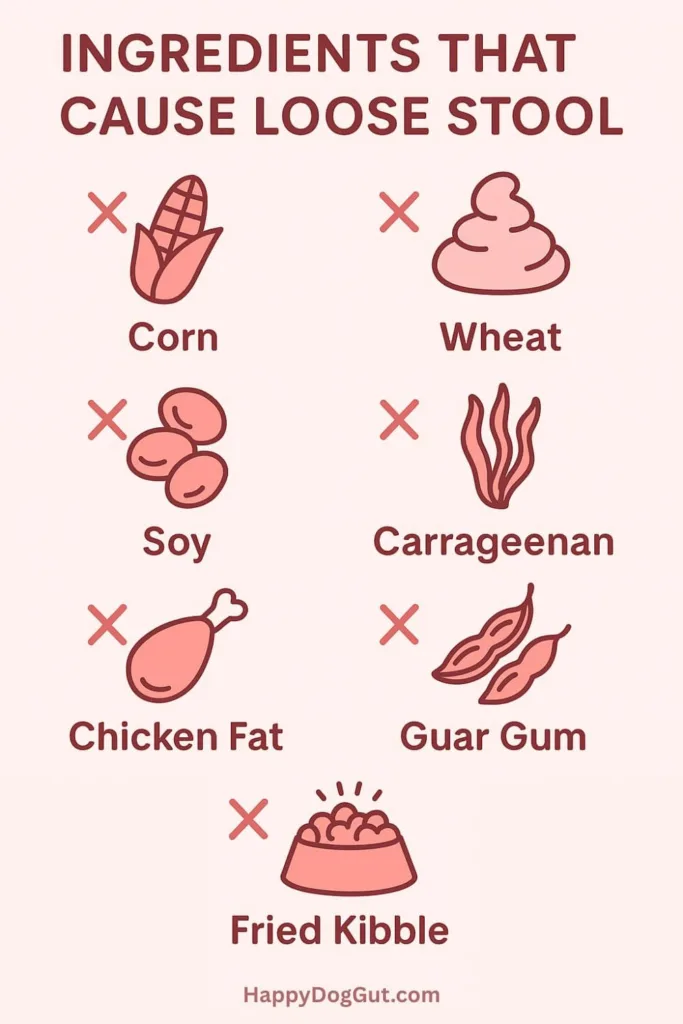
Another major problem is high-fat dog food, especially when the fat source comes from rendered beef fat, chicken fat, fry oils, or unspecified animal fats. High-fat diets move too quickly through the digestive tract, leading to loose stools, diarrhea flare-ups, and even pancreatitis in sensitive dogs. If your dog already struggles with mushy poop or smelly gas, choosing a low-fat, high-fiber dog food is usually far more effective.
Wet dog foods may look gentle, but many contain gum-based thickeners such as carrageenan, guar gum, and xanthan gum. These additives can irritate the gut lining and contribute to softer stool or mucus-filled poop in sensitive dogs. If your dog reacts this way, switching to a cleaner, minimally processed fiber source is often the solution.
For a complete list of ingredients that commonly upset digestion, you can check our detailed guide on problematic ingredients for sensitive stomachs here:
👉 Dog Food Ingredients to Avoid for Sensitive Stomachs
Choosing the right ingredients—and avoiding harmful ones—will make it far easier to find high-fiber dog foods for firm stool that actually improve digestion rather than aggravating it.
Vet-Approved Ratio: How Much Fiber Should Dogs Eat?
When choosing high-fiber dog foods for firm stool, the biggest mistake US pet parents make is guessing how much fiber their dog actually needs. Fiber isn’t a “more is better” nutrient — too little causes mushy poop, but too much can trigger constipation, bloating, and stomach discomfort. That’s why veterinarians recommend sticking to clear, breed-appropriate fiber ranges.
Vet-Approved Fiber Guidelines
Here’s the ideal daily fiber percentage based on your dog’s digestive needs:
- ✔ Normal, healthy dogs: 2–4% crude fiber
This range keeps digestion steady without overwhelming the gut. - ✔ Sensitive-stomach dogs: 5–10% crude fiber
A moderate increase helps regulate bowel movements, reduce mushy stool, and support gut bacteria — making this the sweet spot for most dogs needing firmer stool. - ✔ Dogs with anal gland issues: 8–12% crude fiber
Higher fiber creates bulkier stools, which naturally express the glands during bowel movements. - ⚠️ Warning: Too much fiber can backfire
Excessive fiber may lead to:- Dry, hard stools
- Straining or constipation
- Excessive gas
- Reduced nutrient absorption
This balance is why high-quality, vet-approved high-fiber dog foods for firm stool outperform home guesses or low-quality kibble that uses cheap fillers instead of functional fibers.
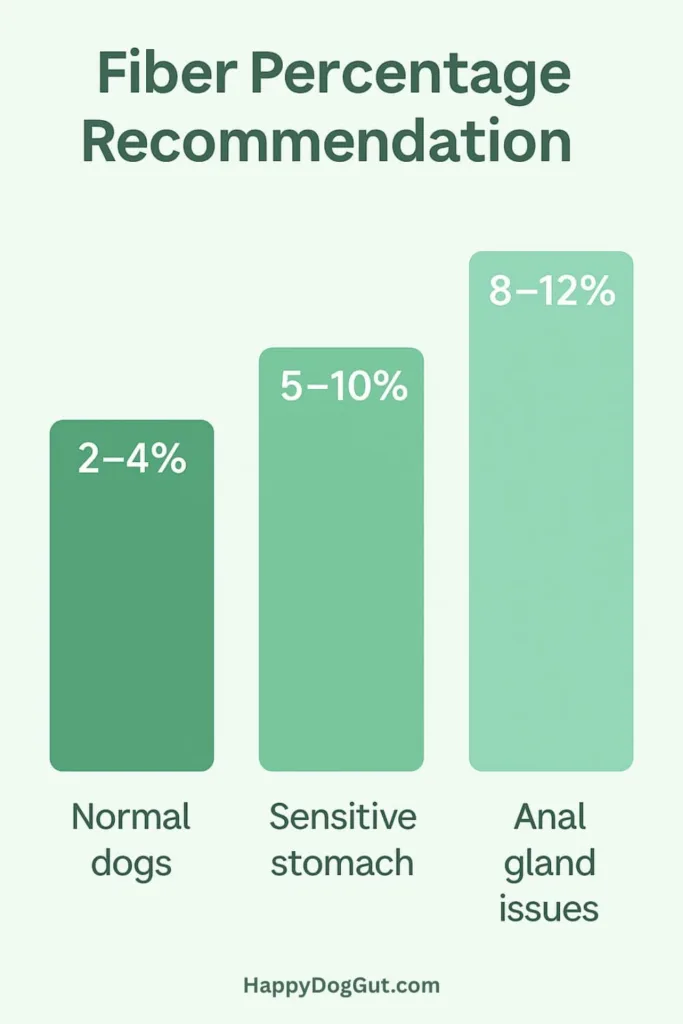
📊 Mini Fiber Comparison Chart
| Dog Type | Ideal Fiber % | What It Helps With |
|---|---|---|
| Normal Dog | 2–4% | Stable digestion |
| Sensitive Stomach | 5–10% | Firm stool, better gut health |
| Anal Gland Issues | 8–12% | Bulky stool, gland support |
If you’re unsure which range your dog falls into, compare the stool quality and symptoms with our earlier sections — or consult your vet for a personalized recommendation.
To avoid choosing foods with misleading fiber levels or irritating fillers, make sure you also check our guide on Dog Food Ingredients to Avoid for Sensitive Stomachs, which explains what can sabotage your dog’s digestion even if the fiber percentage looks “correct.”
Best High-Fiber Dog Foods for Firm Stool (Vet-Approved Picks)
When your dog struggles with chronic soft stool, mushy poop, scooting, or inconsistent bowel movements, choosing the right high-fiber dog food can transform their gut health in just 1–3 weeks. The options below are top vet-recommended, U.S.-market formulas designed to improve stool firmness, support the microbiome, and help prevent recurring anal gland issues.
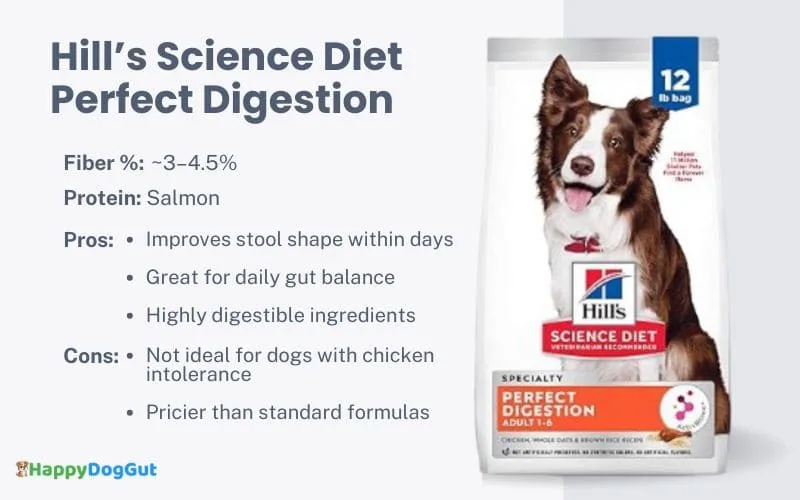
1. Hill’s Science Diet Perfect Digestion (Prebiotic Blend + Balanced Fiber)
Best for: Dogs with chronic soft stool, gas, and irregular bowel movements
Fiber %: ~3–4.5%
Protein: Chicken or Salmon
Why it works:
This formula uses the Hill’s ActivBiome+ prebiotic fiber blend, which nourishes gut bacteria and improves stool quality fast. It contains a balanced mix of soluble and insoluble fiber, ideal for firming loose stool without causing constipation.
Pros:
- Improves stool shape within days
- Great for daily gut balance
- Highly digestible ingredients
Cons:
- Not ideal for dogs with chicken intolerance
- Pricier than standard formulas
Buyer Intent:
Great for dogs with daily mushy poop or unpredictable stool consistency.
2. Blue Buffalo True Solutions Perfect Poop
Best for: Dogs with diarrhea + stool inconsistencies
Fiber %: ~10% (high)
Protein: Chicken
Why it works:
A true high-fiber digestive formula, this blend uses pumpkin, flaxseed, and prebiotic fibers to create firm, easy-to-pass stools — an excellent option for dogs who have tried regular sensitive-stomach diets but still struggle.
Pros:
- One of the highest fiber levels
- Great for anal gland issues
- Supports long-term gut stability
Cons:
- Not for dogs with chicken allergies
- High fiber may be too much for low-activity dogs
Buyer Intent:
Best for dogs needing extra stool firmness + better poop consistency.

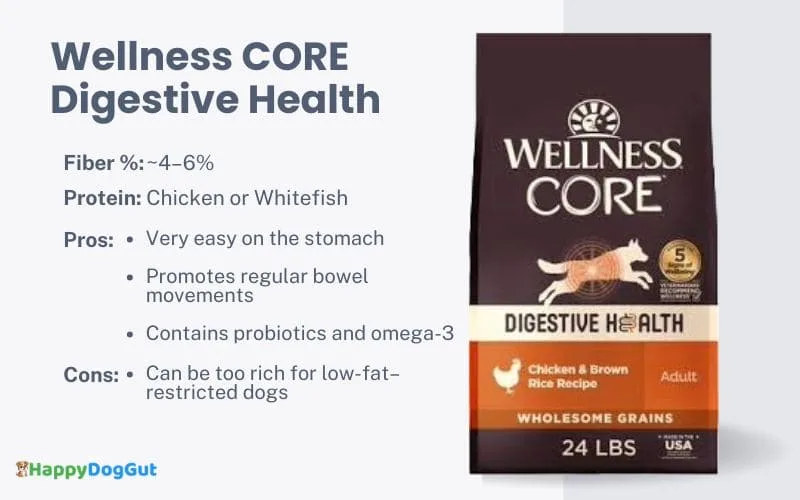
3. Wellness CORE Digestive Health
Best for: Senior dogs & dogs with chronic digestive imbalance
Fiber %: ~4–6%
Protein: Chicken or Whitefish
Why it works:
This formula includes pumpkin, prebiotic fibers, and gentle grains like oatmeal to regulate digestion. The blend supports older dogs whose metabolism slows and stool quality becomes inconsistent.
Pros:
- Very easy on the stomach
- Promotes regular bowel movements
- Contains probiotics and omega-3
Cons:
- Can be too rich for low-fat–restricted dogs
Buyer Intent:
Perfect for seniors or dogs needing everyday digestive support.
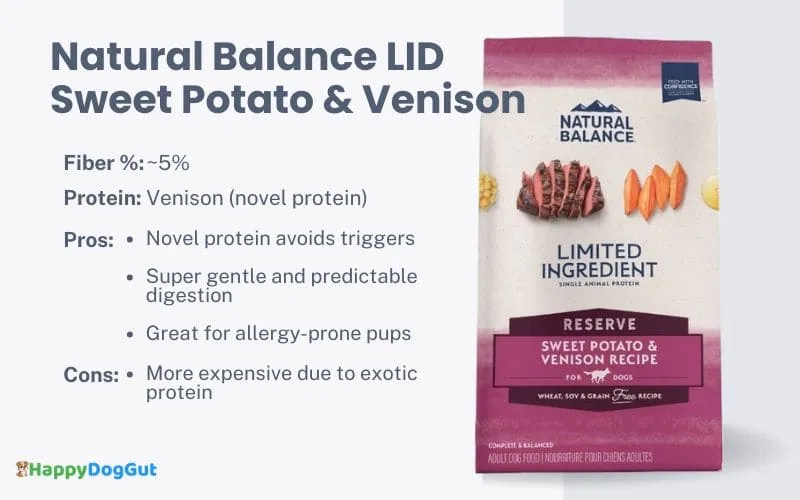
4. Natural Balance LID Sweet Potato & Venison
Best for: Food-intolerant dogs needing gentle, insoluble fiber
Fiber %: ~5%
Protein: Venison (novel protein)
Why it works:
Contains sweet potatoes, a rich source of insoluble fiber that adds bulk to stool. Excellent for dogs prone to ingredient sensitivities — a perfect fit alongside your related article on Best Limited Ingredient Dog Foods for Sensitive Stomachs.
Pros:
- Novel protein avoids triggers
- Super gentle and predictable digestion
- Great for allergy-prone pups
Cons:
- More expensive due to exotic protein
Buyer Intent:
Excellent for dogs with soft stool caused by food intolerances.
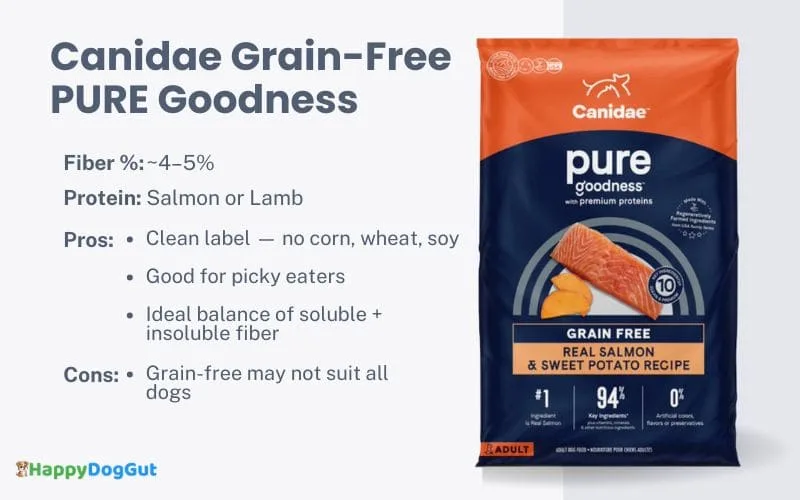
5. Canidae Grain-Free PURE Goodness
Best for: Sensitive stomach + mild allergies
Fiber %: ~4–5%
Protein: Salmon or Lamb
Why it works:
A limited ingredient formula with gentle proteins and no fillers that often upset digestion. The moderate fiber level helps firm stool while avoiding over-bulking.
Pros:
- Clean label — no corn, wheat, soy
- Good for picky eaters
- Ideal balance of soluble + insoluble fiber
Cons:
- Grain-free may not suit all dogs
Buyer Intent:
Ideal for dogs needing simple ingredients + solid stool formation.
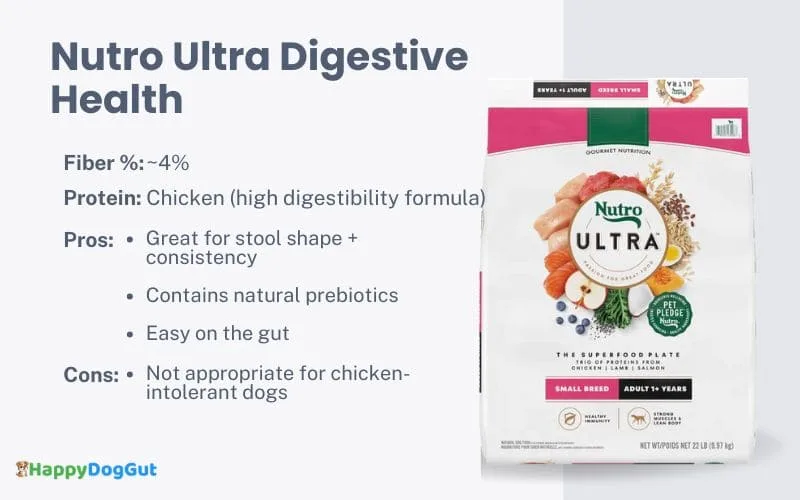
6. Nutro Ultra Digestive Health
Best for: Dogs with gas, bloating, or mucus in stool
Fiber %: ~4%
Protein: Chicken (high digestibility formula)
Why it works:
Uses high-quality digestible proteins and premium grains to minimize gut stress. Excellent for dogs with mild–moderate digestive issues and chronic mushy poop.
Pros:
- Great for stool shape + consistency
- Contains natural prebiotics
- Easy on the gut
Cons:
- Not appropriate for chicken-intolerant dogs
Buyer Intent:
Perfect for everyday digestive maintenance.
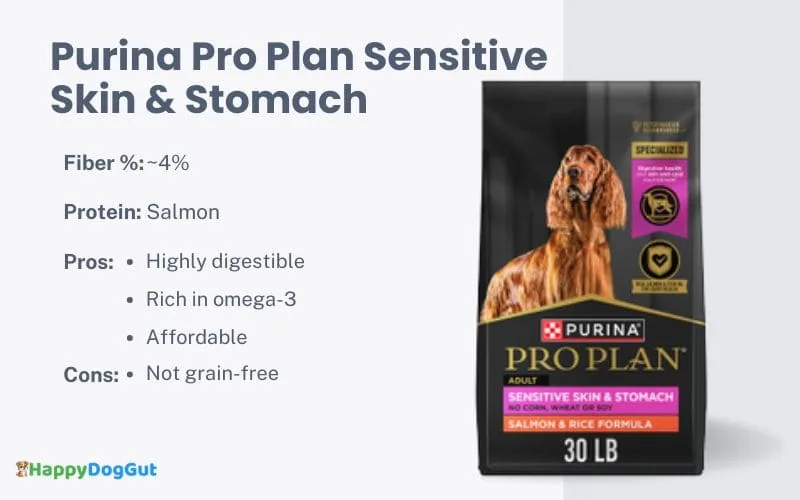
7. Purina Pro Plan Sensitive Skin & Stomach (Salmon)
Best for: Gas, soft stool, and sensitive skin
Fiber %: ~4%
Protein: Salmon
Why it works:
Salmon is a gentle protein that reduces inflammation, while oatmeal and rice support firmer stool formation. Works well for combined stomach + skin issues — ideal for cross-linking to Best Dog Foods for Sensitive Stomachs.
Pros:
- Highly digestible
- Rich in omega-3
- Affordable
Cons:
- Not grain-free
Buyer Intent:
Great for dogs with gut + skin sensitivity.
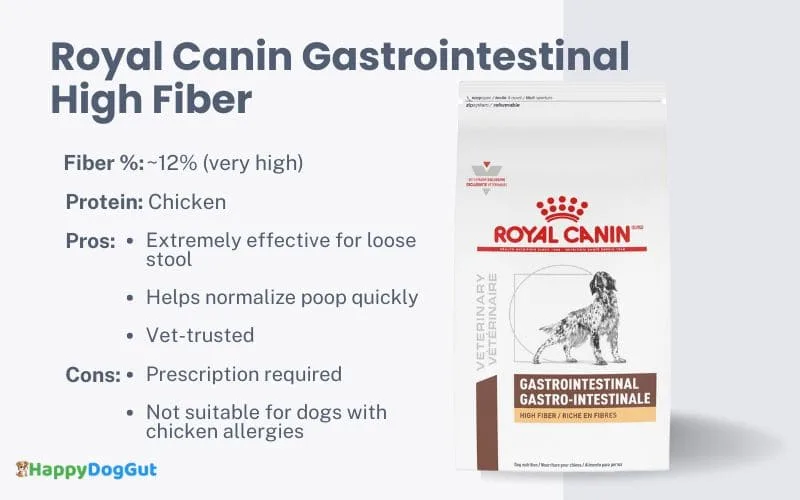
8. Royal Canin Gastrointestinal High Fiber
Best for: Dogs with chronic anal gland problems or persistent loose stool
Fiber %: ~12% (very high)
Protein: Chicken
Why it works:
This veterinary diet is fiber-focused to quickly firm stool, regulate gut movement, and reduce scooting. Excellent for anal gland health.
Pros:
- Extremely effective for loose stool
- Helps normalize poop quickly
- Vet-trusted
Cons:
- Prescription required
- Not suitable for dogs with chicken allergies
Buyer Intent:
Best for severe soft stool or anal gland issues.
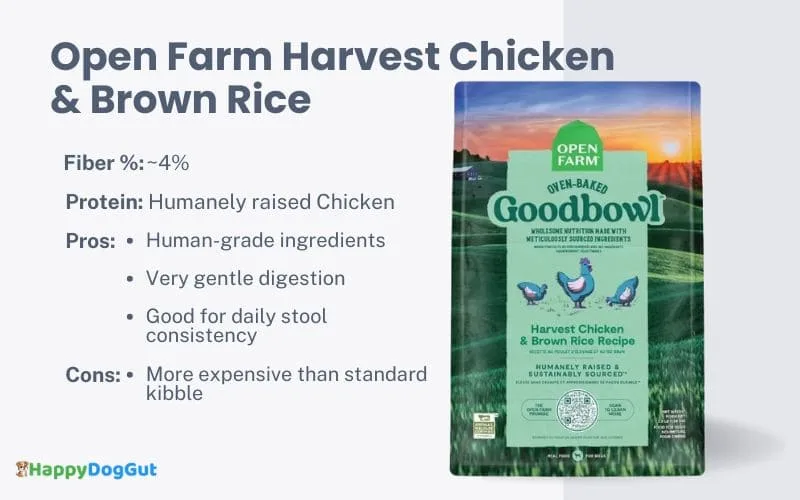
9. Open Farm Harvest Chicken & Brown Rice
Best for: Dogs needing clean ingredients + moderate fiber
Fiber %: ~4%
Protein: Humanely raised chicken
Why it works:
Uses clean whole grains and moderate fiber ingredients to stabilize stool. Great for pet parents who prefer transparent sourcing.
Pros:
- Human-grade ingredients
- Very gentle digestion
- Good for daily stool consistency
Cons:
- More expensive than standard kibble
Buyer Intent:
Perfect for everyday digestive maintenance and firmer stools.
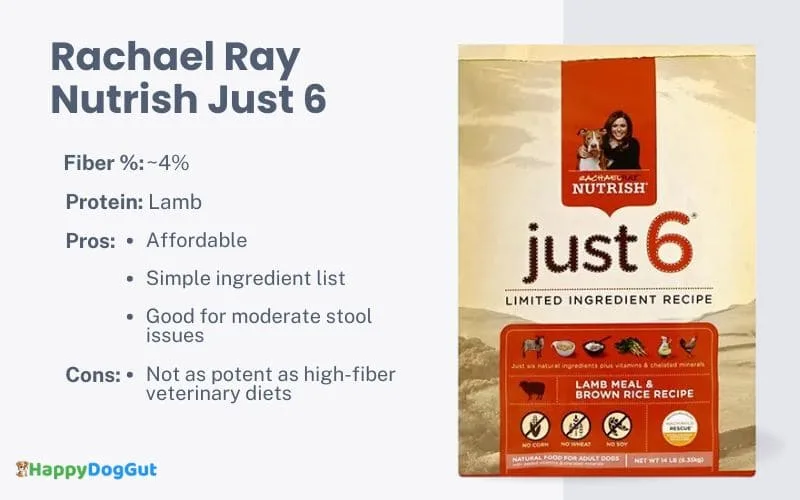
10. Rachael Ray Nutrish Just 6
Best for: Budget-friendly high-fiber option
Fiber %: ~4%
Protein: Lamb
Why it works:
A very simple 6-ingredient formula that avoids fillers and contains enough fiber to improve stool consistency without overloading the gut. Good for mild sensitivities.
Pros:
- Affordable
- Simple ingredient list
- Good for moderate stool issues
Cons:
- Not as potent as high-fiber veterinary diets
Buyer Intent:
Best for pet parents seeking budget-friendly stool support.
Learn More:
👉 Best Dog Foods for Sensitive Stomachs
👉 Best Limited Ingredient Dog Foods for Sensitive Stomachs
👉 Best Dog Foods for Food Intolerance
Best High-Fiber Wet Dog Foods (Easier to Digest)
Wet food can be a game-changer for dogs who struggle with mushy stool, chronic soft poop, or chewing difficulties. Because wet formulas contain more moisture and softer textures, they’re often easier on sensitive stomachs and help deliver fiber in a gentle, digestible way. Many U.S. pet parents find that switching from dry kibble to a high-fiber wet dog food for firm stool results in improved hydration, fewer stomach flare-ups, and more consistent bowel movements.
Here are the vet-approved high-fiber wet dog foods that support firmer stool and better digestion:
1. Wellness CORE Digestive Health Wet Food
Best for: Dogs with diarrhea, loose stool, or poor appetite
Why it works: Uses prebiotic fiber + gentle proteins for smooth digestion
2. Blue Buffalo True Solutions Perfect Poop Wet
Best for: Mushy stool, gas, and inconsistent bowel movements
Why it works: Balanced soluble/insoluble fiber blend for stool formation
3. Natural Balance High-Fiber Wet Formula
Best for: Senior dogs or dogs who need soft-textured, gut-friendly meals
Why it works: High-quality carbs and adequate fiber for stool firmness
If you want a full breakdown of wet formulas that soothe sensitive digestion, check out this guide on the Best Wet Dog Foods for Sensitive Stomachs — it pairs perfectly with this article.

Best High-Fiber Dog Foods for Small Breeds
Small dogs have surprisingly delicate digestive systems, and many struggle with soft stool, intermittent diarrhea, and mucus in poop when their diet doesn’t contain balanced fiber. Since small breeds digest food faster and often require smaller kibble size + moderate fiber levels, choosing the right formula is essential for keeping their gut stable.
The following high-fiber dog foods for firm stool are ideal for Yorkies, Shih Tzus, Chihuahuas, Maltese, and other small breeds:
1. Wellness Small Breed Complete Health (High Fiber)
Best for: Small dogs with inconsistent or mushy stool
Why it works: Uses brown rice + oatmeal + prebiotic fibers for stool formation
2. Blue Buffalo Basics Small Breed (Limited Ingredient)
Best for: Small breed dogs with sensitive stomachs or food intolerance
Why it works: Gentle carbs + single protein + moderate fiber to support digestion
3. Canidae PURE Petite High Fiber
Best for: Dogs needing extra digestive support without fillers
Why it works: High-quality fiber sources + grain-free formulation
Small dogs with ongoing loose stool or gas may also benefit from reviewing the signs of deeper food sensitivities. You can learn more here: Signs of Food Intolerance in Dogs.

Best High-Fiber Dog Foods for Large Breeds
Large-breed dogs (like Labs, Goldens, German Shepherds, and Great Danes) often struggle with loose stool, digestive instability, and sensitive anal glands because their digestive tracts are longer and their body weight puts extra pressure on the gut. That’s why choosing high-fiber dog foods for firm stool is especially important for big dogs. The right blend of soluble + insoluble fiber helps regulate bowel movements, prevent diarrhea flare-ups, and support long-term gut balance.
Large dogs also need:
- Lower-fat formulas to avoid bloating and pancreatitis
- Joint-supporting nutrients like glucosamine & chondroitin
- Highly digestible proteins to reduce stool volume
- Stable fiber sources like sweet potato, brown rice, pumpkin, and beet pulp
Below are the best high-fiber dog foods for large breeds, all vet-approved and ideal for U.S. dogs with chronic loose stool or inconsistent digestion.
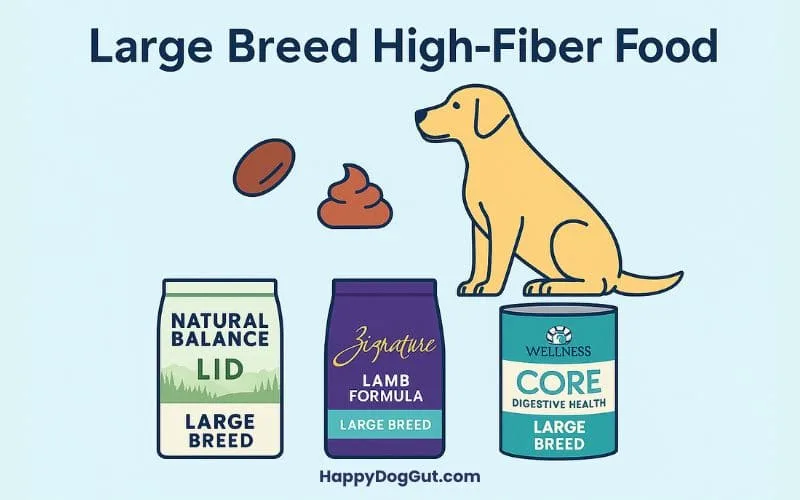
1. Natural Balance LID Sweet Potato & Venison — Best for Firm Stool + Limited Ingredients
Why it works:
This formula uses venison, one of the easiest proteins for digestion, paired with sweet potato, an excellent source of insoluble fiber that helps form firmer stools. It has just a handful of ingredients, making it perfect for dogs with food intolerances and digestive sensitivity.
Best for: large breeds with soft stool, allergies, or chronic diarrhea
Pros: high insoluble fiber, gentle protein, no fillers
Cons: premium pricing
2. Zignature Lamb Large Breed — Best Novel Protein for Stool Firmness
Why it works:
Lamb provides naturally digestible fat + protein while maintaining moderate fiber levels that help create consistent stool shape. This formula avoids common triggers like chicken, corn, soy, and wheat — ideal for sensitive stomach large breeds.
Best for: big dogs with food intolerances or gas
Pros: simple ingredients, gut-friendly carbs, great for skin + stool
Cons: May be rich for dogs needing very low-fat food
3. Wellness CORE Digestive Health Large Breed — Best Overall Digestive Support
Why it works:
Packed with prebiotic fibers, probiotics, pumpkin, and barley, this formula delivers one of the most stable fiber blends on the market. Many U.S. pet parents report firmer stool within 7–10 days. It also includes glucosamine for joints — a major plus for big breeds.
Best for: dogs with long, unformed stools or inconsistent bowel movements
Pros: excellent fiber balance, added probiotics, large-breed kibble size
Cons: not ideal for strict grain-free diets
If your large dog struggles with mushy poop, anal gland problems, or inconsistent stools, switching to a large-breed formula designed for digestion can make a huge difference. These diets use measured fiber levels, gentle proteins, and gut-supportive ingredients — all essential when choosing the best high-fiber dog foods for firm stool for big breeds.
Homemade High-Fiber Dog Food Recipes (Safe & Gentle)
If you want a more natural, whole-food approach, homemade high-fiber meals can be an excellent way to firm your dog’s stool and support healthy digestion. Many US pet parents prefer homemade options because they offer complete control over ingredients—making it easier to avoid fillers, artificial additives, and high-fat components that commonly trigger loose stool. The right combination of soluble and insoluble fiber helps normalize bowel movements, reduces gas and bloating, and keeps the gut microbiome stable. Below are three vet-approved, high-fiber dog food recipes perfect for dogs that need extra digestive support, especially if you’re transitioning away from commercial diets.
Before using any homemade diet long term, it’s smart to compare ingredients and fiber levels with vet-approved options or pair this section with our guide on Homemade Dog Food for Sensitive Stomachs, which explains balancing nutrients safely.
If you want a deeper breakdown of safe ingredients, fiber ratios, and cooking methods, check out our full guide on Homemade Dog Food for Sensitive Stomachs — a great companion to these recipes.
🍗 Recipe 1: Pumpkin + Turkey + Oats (Best for Soft Stool & Diarrhea)
This recipe is perfect for dogs experiencing mushy poop, chronic soft stool, or mild diarrhea. Pumpkin provides soluble fiber, which absorbs excess water in the intestines and firms stool naturally. Turkey is one of the easiest proteins for sensitive dogs to digest, while oats add gentle insoluble fiber that helps regulate bowel movements.
Ingredients:
- Lean ground turkey
- 100% plain canned pumpkin
- Cooked oats
- A small amount of fish oil (optional for omega-3s)
Why it works:
- ✔ Soluble fiber firms stool
- ✔ Gentle protein supports gut recovery
- ✔ Ideal for dogs with sensitive digestion
- ✔ Works quickly for stool stability
Perfect for dogs who need high-fiber dog foods for firm stool but struggle with kibble.
🐟 Recipe 2: Salmon + Sweet Potato (High Insoluble Fiber for Firmer Stool)
For dogs with chronic loose stools, sweet potatoes offer one of the richest natural sources of insoluble fiber, which adds bulk and creates well-formed poop. Salmon provides omega-3 fatty acids that reduce gut inflammation and support anal gland health.
Ingredients:
- Baked salmon (boneless)
- Cooked sweet potato
- Steamed carrots (optional)
Why it works:
- ✔ High insoluble fiber = firm stool
- ✔ Omega-3s help reduce gut + skin inflammation
- ✔ Excellent for dogs with food intolerance or grain sensitivity
- ✔ Supports consistent bowel movements
This works extremely well for dogs needing digestive stability + high-fiber dog foods for firm stool.
🐑 Recipe 3: Lamb + Brown Rice + Green Beans (Balanced Fiber Blend)
This recipe offers a mix of soluble and insoluble fiber for dogs who experience alternating diarrhea and constipation. Lamb is a mild protein that many sensitive dogs tolerate well. Brown rice and green beans provide a balanced fiber blend that helps maintain steady stool formation without causing stomach upset.
Ingredients:
- Lean ground lamb
- Cooked brown rice
- Steamed green beans (chopped)
- A little pumpkin for extra soluble fiber (optional)
Why it works:
- ✔ Balanced fiber mix keeps stool consistent
- ✔ Gentle on the digestive system
- ✔ Helps reduce bloating + gas
- ✔ Great for dogs with food intolerances
This recipe can be a good complement if you’re transitioning from commercial high-fiber dog foods for firm stool but want more control over ingredients.
High-Fiber Supplements That Help Firm Stool (Vet-Approved Support)
Even when you choose the best high-fiber dog foods for firm stool, many dogs still need targeted digestive supplements to fully stabilize their gut. Sensitive-stomach pups—especially those dealing with chronic loose stool, diarrhea episodes, or inconsistent poop texture—often benefit from an added boost of soluble and prebiotic fiber, probiotics, or digestive enzymes. These supplements help the gut absorb nutrients better, regulate transit time, and improve stool formation without upsetting the stomach.
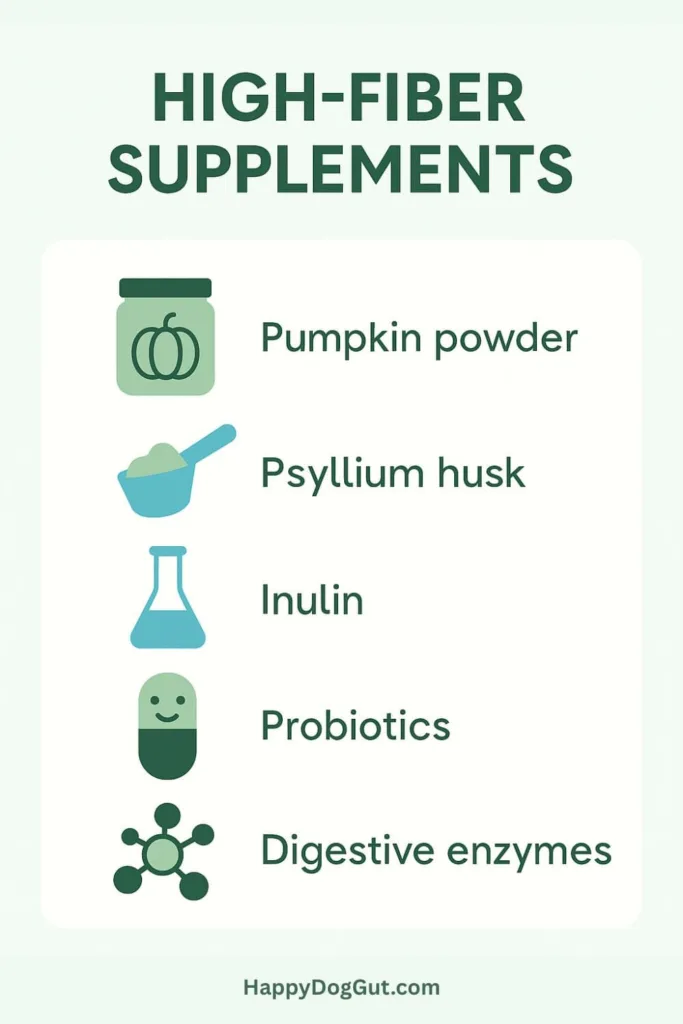
1. Pumpkin Powder (Soluble Fiber Boost)
Pumpkin powder is one of the most effective and gentle fiber sources for dogs with mushy poop. It absorbs excess water, firms loose stool, and helps regulate bowel movements naturally. Many high-fiber diets include pumpkin for this exact reason.
2. Psyllium Husk (Metamucil for Dogs — Vet-Approved in Small Doses)
Psyllium is extremely rich in soluble fiber and is commonly recommended by vets to quickly firm watery stool. It creates a gel-like consistency in the gut, improving stool shape and reducing urgency. Great for dogs who struggle with long, unformed stools or poop that won’t hold shape.
3. Prebiotic Fiber (Inulin, FOS)
Prebiotic fibers support healthy gut bacteria and help rebalance the microbiome—one of the biggest factors behind chronic soft stool. These fibers feed the good bacteria so digestion becomes more consistent. This is especially helpful for dogs who alternate between diarrhea and constipation.
4. Probiotics (Restores Gut Stability)
Probiotics help repopulate healthy bacteria, reduce inflammation, and support digestion—even when your dog is already eating a high-fiber diet for firm stool. They’re especially helpful after food transitions, diarrhea episodes, or antibiotic treatment. You can explore our complete guide here:
👉 Check our vet-reviewed picks for the Best Probiotics for Dogs with Sensitive Stomachs
5. Digestive Enzymes (Better Nutrient Absorption)
For dogs who struggle to digest proteins or fats—which often leads to loose stool—digestive enzymes help break down food more efficiently. They reduce bloating, gas, and undigested food in stool.
If you want faster stool improvement, adding a gentle fiber supplement (like pumpkin fiber or psyllium) alongside a high-fiber diet can help stabilize poop within days. Learn more about safe, vet-approved options here:
👉 Explore the Best Fiber Supplements for Dogs
How to Switch to a High-Fiber Dog Food (11-Day Chart)
Switching to high-fiber dog foods for firm stool has to be done slowly — especially for dogs with sensitive stomachs, soft stool, or chronic diarrhea. A sudden jump in fiber can cause temporary gas, loose stools, or bloating, so veterinarians always recommend a gradual transition. A slow switch allows your dog’s microbiome to adjust to the new fiber levels and prevents digestive flare-ups.
Here’s the vet-approved 11-day transition plan:
✔ 10-Day Fiber Transition Chart
- Days 1–3: 25% new high-fiber food + 75% old food
- Days 4–7: 50% new food + 50% old
- Days 8–10: 75% new food + 25% old
- Day 11: 100% high-fiber formula
During this switch, monitor:
💩 Stool firmness
🌀 Gas / bloating
🐾 Energy levels
If your dog is prone to food intolerance or reacts strongly during food changes, review our complete transition strategies in the Dog Food Transition Guide — it helps prevent bumps during diet upgrades.
This gradual progression is one of the most reliable ways to help dogs adapt to a high-fiber diet for firm stool without digestive setbacks.
When High-Fiber Diets Don’t Work (See a Vet)
Most dogs improve quickly on high-fiber dog foods for firm stool, but there are times when fiber alone isn’t enough. If your dog continues to struggle with diarrhea, mucus-coated stools, belly pain, or stool irregularities even after switching foods, it may signal an underlying condition that requires veterinary care — such as parasites, colitis, pancreatitis, or inflammatory bowel disease.
Watch for these red flags that require immediate vet attention:
🚨 Bloody stool (bright red or streaked)
🚨 Black, tar-like stool (possible internal bleeding)
🚨 Daily vomiting
🚨 Persistent diarrhea lasting more than 3 days
🚨 Rapid weight loss or dehydration
🚨 Puppy diarrhea (always a medical concern)
If any of these symptoms appear, stop experimenting with diet changes and consult your veterinarian promptly. These conditions often need stool tests, bloodwork, or targeted treatment beyond fiber adjustments.
For deeper, medically reviewed guidance on evaluating serious digestive symptoms, check out the AKC’s official Dog Diarrhea Guide.
A high-fiber diet is powerful, but it’s not a cure-all. When symptoms persist, early vet intervention ensures your dog stays safe and gets the correct treatment.
FAQs – About the High-Fiber Dog Foods for Firm Stool
What is the best high-fiber dog food for firm stool?
The best high-fiber dog foods for firm stool are those that use soluble & insoluble fiber from natural sources like pumpkin, sweet potato, oats, and beet pulp. Vet-recommended options such as Hill’s Science Diet Perfect Digestion, Blue Buffalo True Solutions Perfect Poop, and Wellness CORE Digestive Health contain 5–10% fiber, which supports stool formation, gut motility, and microbiome balance. If your dog has chronic mushy poop, loose stool, or scooting, switching to a high-fiber dog food for firm stool may improve digestion within 3–7 days.
Can too much fiber cause constipation in dogs?
Yes — while fiber helps firm stool, too much fiber can cause constipation, straining, bloating, and dry stools. Dogs with sensitive stomachs typically thrive at 5–10% dietary fiber, while anal gland-prone dogs may need up to 12%. Anything beyond this can slow digestion too much. If your dog becomes constipated after switching to a high-fiber food, reduce the fiber level or choose a formula with more soluble fiber like pumpkin or inulin.
Is pumpkin good for firming dog poop?
Absolutely — pumpkin is one of the best natural sources of soluble fiber, which absorbs excess water in the colon and helps create firmer, more formed stools. Just 1–4 tablespoons (depending on dog size) can help dogs with soft stool, diarrhea, mucus in stool, or anal gland issues. Pumpkin works especially well alongside high-fiber dog foods for firm stool, improving consistency and reducing bathroom urgency.
How fast does fiber work for dogs?
Most dogs show improvement within 24–72 hours when starting a balanced high-fiber diet. Soluble fiber begins absorbing water quickly, while insoluble fiber adds bulk within a few days. Anal gland relief may take 1–2 weeks, and microbiome balance may take 2–4 weeks. For chronic loose stool or food intolerance cases, dogs may need a full 10–14 day transition period to avoid digestive upset.
What protein is best for dogs with soft stool?
Dogs with soft stool often respond best to gentle, highly digestible proteins like turkey, salmon, lamb, and whitefish. These proteins place less stress on the gut and pair well with fiber-rich ingredients like sweet potato, brown rice, oats, or pumpkin. Avoid harder-to-digest proteins like chicken, beef, and pork if your dog also has signs of food intolerance or skin issues.
What fiber percentage is ideal for dogs with diarrhea?
For chronic loose stool or diarrhea, veterinarians typically recommend dog foods containing 5–10% total dietary fiber. The sweet spot depends on the dog:
5–7% fiber → best for mild soft stool
7–10% fiber → best for chronic loose stool & anal gland issues
10–12%+ fiber → best only under vet guidance
Foods higher than 12% fiber may cause constipation or nutrient malabsorption.
Does high-fiber dog food help with anal gland problems?
Yes — high-fiber dog foods are one of the most effective solutions for dogs with anal gland issues like scooting, licking, or impaction. Fiber adds bulk and firmness to stool, helping the anal glands express naturally. Soluble fiber (pumpkin, beet pulp) and insoluble fiber (sweet potato, brown rice) work together to reduce inflammation and improve stool quality over time.
Is grain-free high-fiber dog food better for firm stool?
Not always. Many dogs with soft stool actually do better with grain-inclusive formulas containing gentle fibers like oatmeal, barley, and brown rice. Grain-free diets may help dogs with specific grain sensitivities, but they can also be too rich in peas, legumes, or potatoes, which may cause gas or loose stool. The best option is whichever provides soluble + insoluble fiber balance, not simply grain-free.
Can switching to a high-fiber dog food cause temporary soft stool?
Yes — during the first 2–5 days, some dogs may experience mild gas, softer stools, or extra bowel movements as their gut adjusts to the new fiber levels. This is normal during the transition period. Using the 10-day transition method and pairing the food with probiotics often prevents this. If symptoms continue beyond 7–10 days, try a formula with lower fiber or a different protein.
Are high-fiber diets safe for senior dogs?
Yes — in fact, high-fiber dog foods for firm stool are often ideal for senior dogs, who commonly struggle with loose stool, irregular digestion, and anal gland issues. Fiber supports colon health, weight control, and better stool shape. However, senior dogs with kidney disease, dehydration, or pancreatitis may require moderate fiber only, so always check with your vet before switching.
Final Thoughts
Managing soft stool doesn’t have to feel overwhelming — and the good news is that most dogs respond quickly once their diet includes the right type of fiber. High-fiber dog foods help regulate digestion, firm loose stool, support the microbiome, and even improve long-term gut health. For many US pet parents, switching to high-fiber dog foods for firm stool becomes one of the fastest and safest ways to get their dog’s poop back to normal. Most pups show noticeable improvements within 3–7 days, especially when fiber is paired with gentle proteins, balanced fat levels, and vet-recommended digestive support.

If your dog struggles with recurring mushy poop, scooting, inconsistent stool shape, or sensitive digestion, introducing a high-fiber diet is one of the most effective long-term solutions. And if your dog also has food sensitivities or ingredient triggers, pairing fiber with a limited ingredient diet can create even better results.
You can explore those options in our detailed guide on the Best Limited Ingredient Dog Foods for Sensitive Stomachs — a perfect next step if your goal is firmer stool and fewer digestive flare-ups.

Hi, I’m Maddy, the writer behind HappyDogGut.com.
I’m passionate about helping Dog parents understand Gut Health, Sensitive Stomachs, and Natural Nutrition for dogs.
Every article I create is vet-approved, research-backed, and experience-driven, so your pup can enjoy a healthier, happier gut.
Happy Gut = Happy Dog!
All content on Happy Dog Gut follows our Editorial Policy.


Pingback: Best Dog Foods for Loose Stool (Vet-Reviewed Picks)