
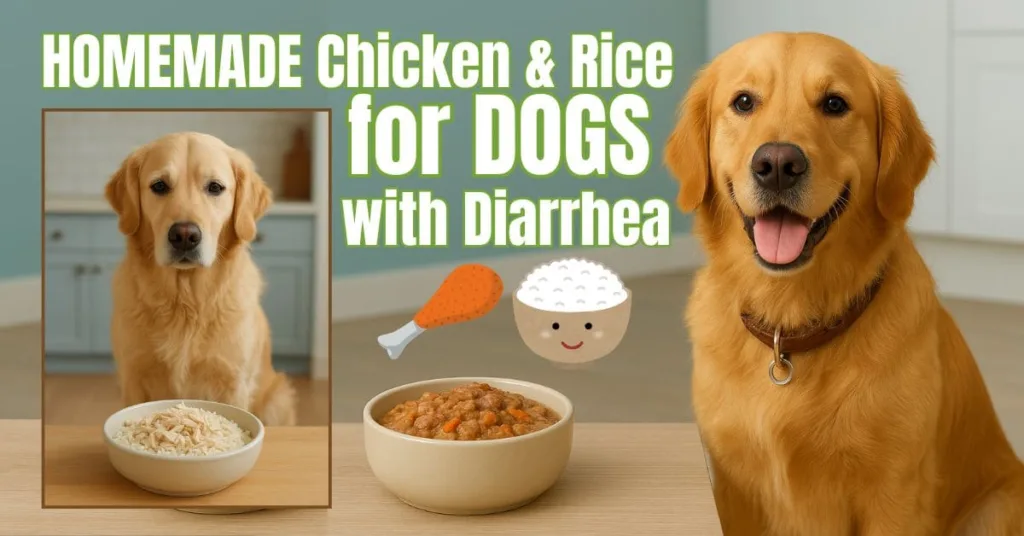
If your dog suddenly has diarrhea or loose stools, it can be stressful — no one likes seeing their pup in discomfort. But here’s some good news: in most mild cases, you can often help your dog feel better right at home with a gentle, vet-approved diet. One of the safest and most effective remedies is a homemade chicken and rice for dogs with diarrhea.
This simple, bland meal works by giving your dog’s digestive system a short break while still providing essential nutrients for recovery. The combination of lean boiled chicken and plain white rice is easy to digest, reduces irritation in the gut, and helps firm up stools naturally — making it a trusted first step recommended by many veterinarians across the U.S.
In this guide, you’ll learn exactly how to make homemade chicken and rice for dogs with diarrhea, the proper ingredient ratios, portion sizes, feeding schedule, and vet-approved recovery tips to get your dog’s stomach back on track quickly and safely. 🐶
💡 Pro Tip: Always start with small, frequent meals and keep your dog hydrated — the right balance of nutrition and fluids can make all the difference in calming your dog’s tummy fast.
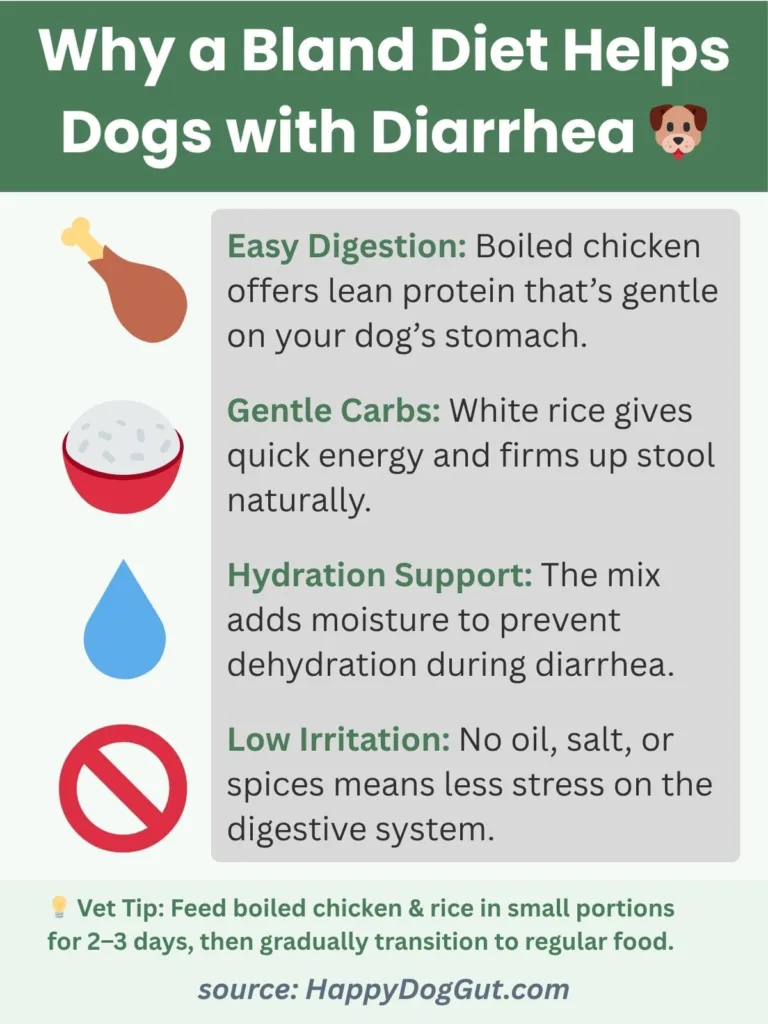
Why a Bland Diet Helps Dogs with Diarrhea
When your dog’s stomach is upset, the intestinal lining becomes inflamed, making it difficult to digest food or absorb nutrients properly. A bland diet — specifically homemade chicken and rice for dogs with diarrhea — gives the digestive system time to rest and heal while still supplying gentle, nourishing energy.
✅ Key Benefits of a Bland Diet:
- Easy digestion: Boiled, skinless chicken provides high-quality, lean protein that’s gentle on sensitive stomachs and supports muscle repair without excess fat.
- Gentle carbs: Plain white rice offers a simple carbohydrate source that firms up stools and restores healthy energy levels.
- Hydration support: This mild, moist mixture helps replace fluids lost during diarrhea and keeps your dog hydrated throughout recovery.
- Low irritation: Because it’s free from spices, oils, dairy, and additives, this diet minimizes inflammation and soothes your dog’s gastrointestinal tract.
AAFCO notes that highly digestible, simple diets are often recommended during temporary digestive upset, as they support nutrient absorption while minimizing irritation to the gastrointestinal tract.
💡 Vet Insight: Keep portions small and frequent — 3–4 light meals per day instead of one or two large ones — to help your dog digest more comfortably and recover faster.
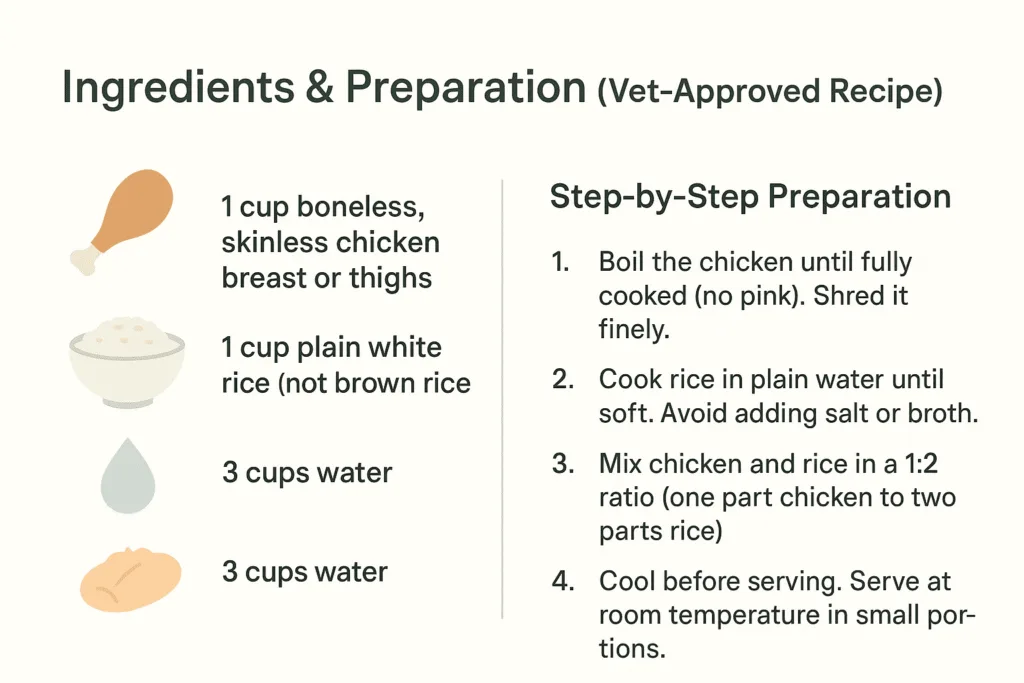
Ingredients & Preparation (Vet-Approved Recipe)
Preparing homemade chicken and rice for dogs with diarrhea is simple, safe, and one of the most effective short-term diets to calm an upset stomach. This gentle, vet-approved recipe uses minimal ingredients that are easy to digest and support your dog’s recovery.
🛒 Ingredients You’ll Need:
- 1 cup boneless, skinless chicken breast or thighs – a lean, high-quality protein that’s gentle on the gut.
- 1 cup plain white rice (not brown rice) – soft, low-fiber carbs that help firm up loose stools.
- 3 cups of water – for boiling and maintaining moisture balance in the food.
⚠️ Avoid salt, butter, oil, onions, garlic, and any kind of seasoning. These additives can irritate your dog’s digestive system and worsen diarrhea.
🔪 Step-by-Step Preparation:
- Boil the chicken in plain water until it’s fully cooked — no pink inside. Once done, shred it finely into small, bite-sized pieces.
- Cook the rice separately in water until soft and fluffy. Avoid adding any salt or broth.
- Combine the cooked chicken and rice in a 1:2 ratio — one part chicken to two parts rice — for the ideal bland diet balance.
- Cool completely before serving. Offer the food at room temperature in small, frequent meals (3–4 times a day).
This mild, hydrating meal helps soothe your dog’s gut, reduce stool looseness, and replenish lost energy without overwhelming the digestive system.
👉 For more easy vet-approved recipes, check out our full guide:
🔗 Homemade Dog Food for Sensitive Stomachs (Complete Vet-Approved Guide)
Portion Sizes & Feeding Schedule
Feeding the right portion helps avoid further stomach upset.
| Dog Weight | Serving per Meal | Meals per Day |
|---|---|---|
| Under 20 lbs | ¼ – ½ cup | 3 small meals |
| 20–50 lbs | ½ – 1 cup | 2–3 meals |
| 50–80 lbs | 1 – 1½ cups | 2 meals |
| 80+ lbs | 1½ – 2 cups | 2 meals |
Feed small, frequent portions for 2–3 days until stool firms up.
💡 Pro Tip: Always provide fresh water — dehydration can make diarrhea worse.
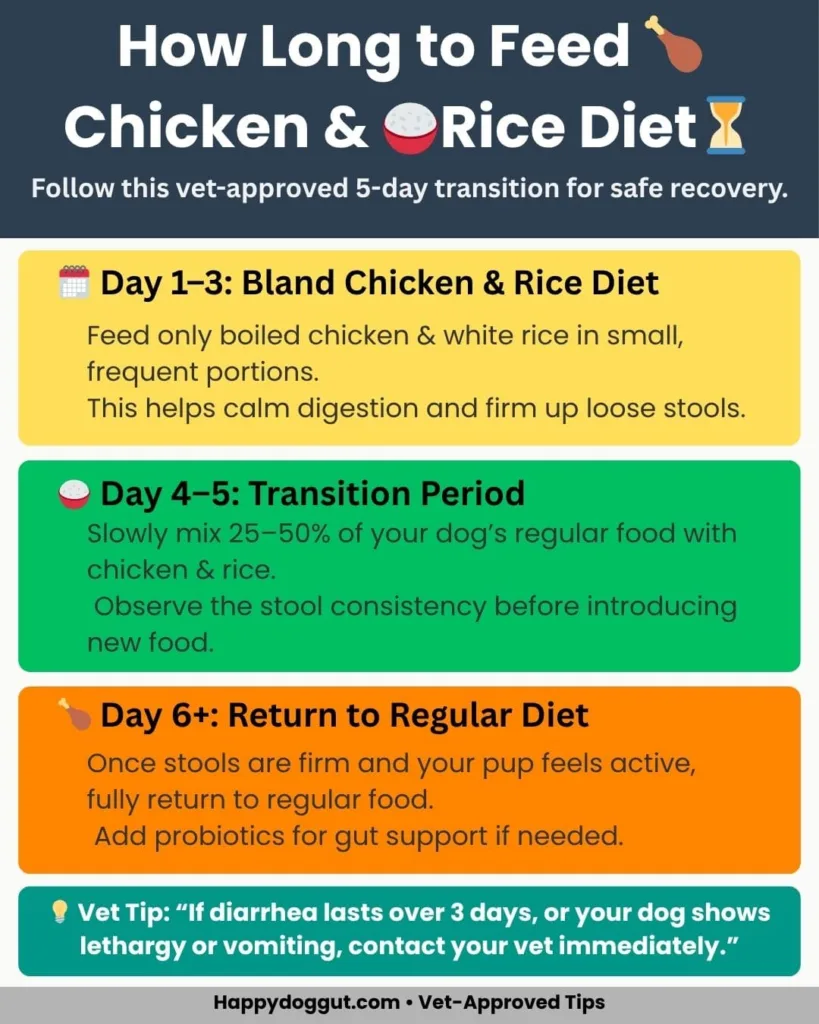
How Long to Feed Chicken & Rice Diet
If your dog is on homemade chicken and rice for dogs with diarrhea, the duration matters as much as the preparation. This bland diet is meant for short-term digestive relief — not long-term feeding.
🐾 Typical Duration:
Feed your dog chicken and rice for 2–3 days, or until their stool becomes firm and well-formed again. Most mild cases of diarrhea improve within this time when paired with proper hydration and rest.
Once your dog’s digestion stabilizes, gradually transition back to regular dog food over 4–5 days to prevent recurrence of stomach upset. Start by mixing 25% of your dog’s normal food with 75% of the bland diet, then slowly increase the regular food portion each day.
When transitioning off the bland diet, adding high-quality fiber can help stabilize digestion. Learn more in our guide to the best fiber supplements for dogs with sensitive stomachs.
👉 For a full step-by-step transition schedule, check out our detailed guide:
🔗 Dog Food Transition Guide: How to Switch Without Stomach Upset
Common Mistakes to Avoid
Even though chicken and rice are gentle, many owners accidentally make mistakes that worsen symptoms.
❌ Adding salt, oil, or seasoning.
❌ Using brown rice — too much fiber for an upset stomach.
❌ Feeding raw or undercooked chicken.
❌ Giving too much food at once.
❌ Skipping hydration or electrolytes.
🔗 For more insight, see What Causes Sensitive Stomach in Dogs? Symptoms & Vet Advice — it explains common digestive triggers and prevention.
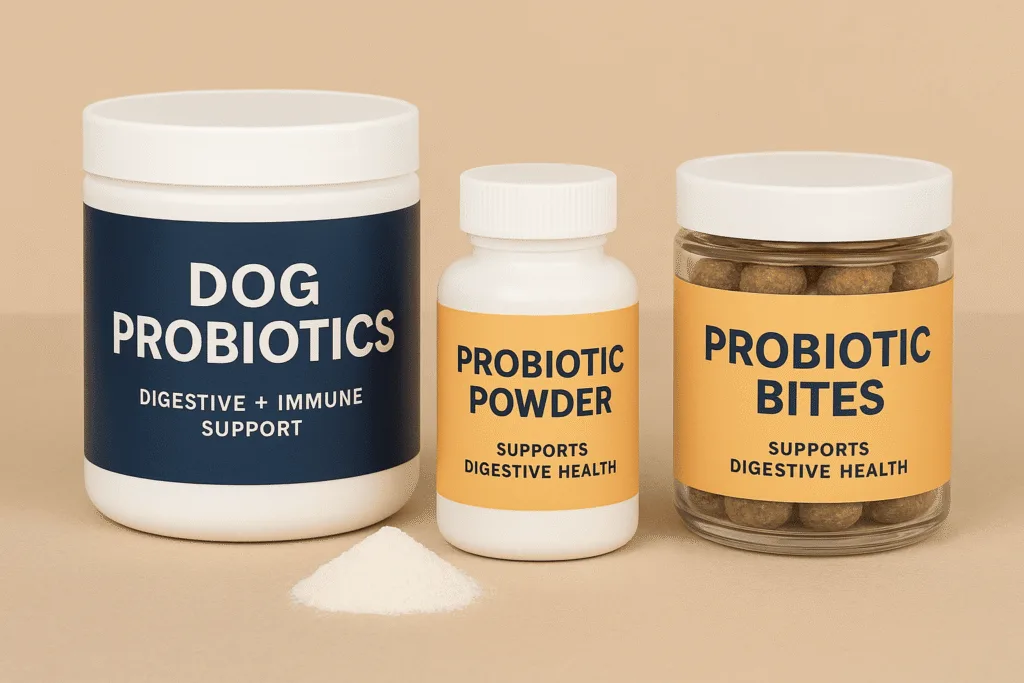
Support Recovery with Probiotics
Feeding your dog homemade chicken and rice for dogs with diarrhea helps calm the stomach — but to truly restore gut balance, adding probiotics is the next important step.
After about 24 hours on the bland diet, you can safely introduce a dog-safe probiotic supplement to replenish healthy gut bacteria, improve nutrient absorption, and reduce the risk of recurring loose stools.
🐾 Why Probiotics Help:
- They restore the natural microbiome after digestive upset.
- They support stronger immunity and smoother digestion.
- They help reduce bloating, gas, and irregularity in stool.
🦠 Top Vet-Approved Probiotic Brands:
- Purina FortiFlora – clinically tested and highly effective for acute diarrhea.
- Nutramax Proviable – ideal for ongoing gut maintenance.
- Zesty Paws Probiotic Bites – tasty chewable option for daily gut health.
👉 Learn more about the safest, most effective options in our detailed guide:
🔗 Best Probiotics for Dogs with Sensitive Stomachs (Guide)
💡 Vet Tip: Always introduce probiotics gradually and continue them for at least 9–11 days after switching back to your dog’s normal food. This helps prevent relapse and supports lasting digestive recovery.
When to See the Vet
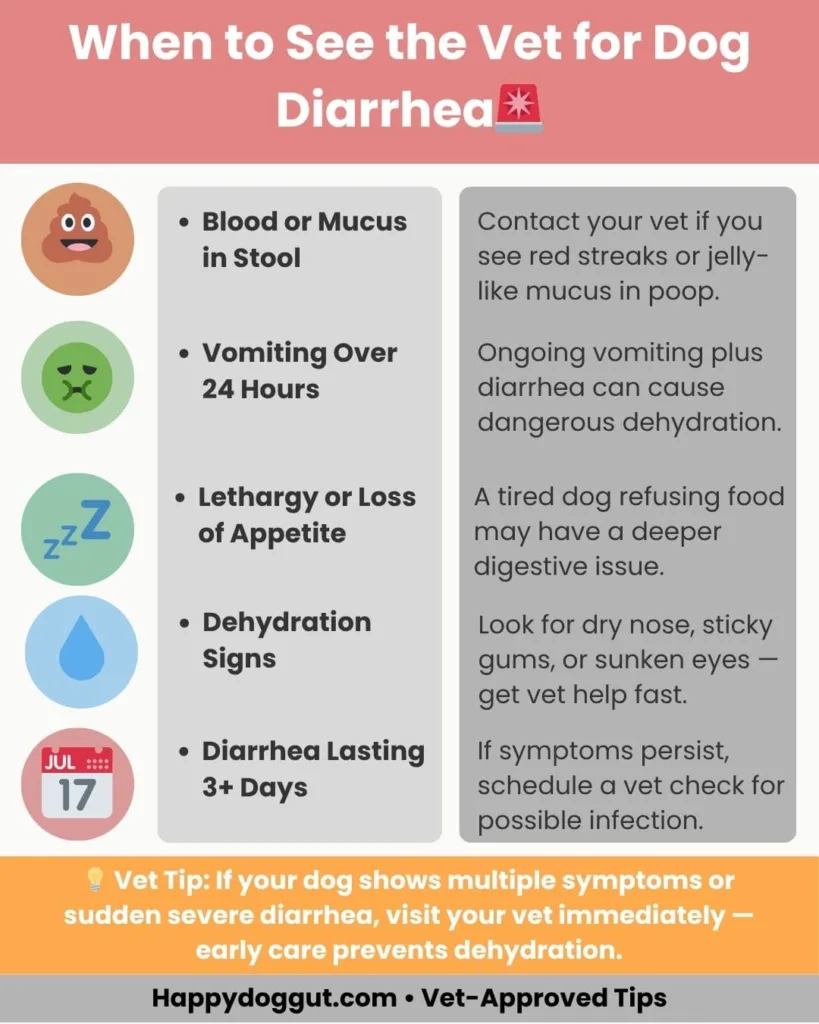
While homemade chicken and rice for dogs with diarrhea works wonders in mild cases, some situations call for professional veterinary care.
If your dog shows any of the following warning signs, stop the bland diet and contact your vet immediately:
🚨 Red Flags to Watch For:
- Blood, mucus, or black color in the stool 🩸
- Vomiting lasting more than 24–48 hours 🤢
- Lethargy, weakness, or total loss of appetite 😞
- Signs of dehydration such as dry nose, sunken eyes, or sticky gums 💧
- Diarrhea persisting for more than 3 consecutive days
If these symptoms appear, it could mean there’s an underlying infection, parasites, or gut inflammation that needs medical attention.
For authoritative guidance, veterinary and regulatory experts advise that dogs experiencing ongoing diarrhea, blood in the stool, vomiting, lethargy, or loss of appetite should be evaluated by a licensed veterinarian. According to animal health guidance from the U.S. Food and Drug Administration (FDA), persistent digestive symptoms may indicate an underlying condition that requires professional diagnosis rather than home care alone.
🐾 Key Takeaway: Gentle, Effective, and Vet-Approved Relief
The homemade chicken and rice for dogs with diarrhea recipe is one of the safest and most effective short-term remedies for canine digestive upset.
It’s easy to prepare, soothing on the gut, and helps your pup recover naturally without harsh medication.
🌿 Final Tip: Always transition back to your dog’s normal food gradually, and support long-term gut health with probiotics and a consistent feeding routine.
💬 If your dog has recurring diarrhea or sensitive digestion, explore our Dog Gut Health section for vet-approved diets, supplements, and recovery plans.
FAQs About Homemade Chicken and Rice for Dogs with Diarrhea
How does homemade chicken and rice help dogs with diarrhea?
The homemade chicken and rice for dogs with diarrhea diet helps by resting your dog’s digestive system while still providing essential nutrients.
Chicken adds lean protein for energy, and white rice helps firm up loose stools. This bland combination allows the gut to heal naturally within a few days.
How long should I feed my dog chicken and rice for diarrhea?
Most veterinarians recommend feeding this bland diet for 2 to 3 days or until your dog’s stool becomes firm again.
After that, gradually transition back to your regular dog food over 4–5 days to prevent another digestive upset.
What ratio of chicken to rice should I use for my dog’s upset stomach?
Use a 1:2 ratio — one part cooked, shredded chicken to two parts plain white rice.
This balance provides enough carbohydrates for energy while keeping the meal easy to digest and gentle on the stomach.
Can I use brown rice instead of white rice for dog diarrhea?
No, brown rice is harder to digest because of its high fiber content.
Stick to plain white rice when making chicken and rice for dogs with diarrhea; it’s softer and easier for sensitive stomachs to process.
How much chicken and rice should I feed my dog per day?
Feed small, frequent meals (3–4 times daily) instead of one large portion.
For medium-sized dogs, start with approximately ½ cup per 10 pounds of body weight per meal, adjusting based on appetite and stool consistency.
Can I add anything else to chicken and rice for dog diarrhea?
You can add vet-approved probiotics like Purina FortiFlora or Nutramax Proviable after 24 hours to restore healthy gut bacteria.
Avoid oils, seasonings, or vegetables until your dog’s stool normalizes completely.
When should I stop feeding chicken and rice and call the vet?
If your dog’s diarrhea lasts more than 3 days, or you notice blood, vomiting, or lethargy, contact your veterinarian immediately.
Persistent symptoms may signal an infection or condition that needs professional treatment.
Is homemade chicken and rice safe for dogs long-term?
No — it’s meant as a temporary recovery diet, not a permanent one.
Long-term use can lead to nutrient deficiencies. Once your dog feels better, return to a balanced, vet-approved dog food formulated for sensitive stomachs.
Final Thoughts: A Simple, Vet-Approved Fix for Dog Diarrhea
If your furry friend is struggling with diarrhea, don’t panic — most mild cases respond beautifully to a short, gentle diet.
The homemade chicken and rice for dogs with diarrhea recipe is a vet-approved, safe, and effective way to soothe an upset stomach while keeping your pup nourished.
It works because it’s bland, hydrating, and easy to digest, giving your dog’s digestive system a well-deserved break.
After a couple of days on chicken and rice, you’ll often see stools firm up and your dog’s energy return to normal.
💡 Key Takeaway:
Feed small, balanced portions, introduce probiotics for gut support, and transition back to regular food slowly over 4–5 days.
If symptoms persist longer than 3 days or you see blood, vomiting, or lethargy, it’s time to call your vet for a deeper checkup.
With patience, proper care, and the right bland diet, your dog’s tummy will be back to normal — happy, healthy, and wagging that tail again. 🐶💛

Hi, I’m Maddy, the writer behind HappyDogGut.com.
I’m passionate about helping Dog parents understand Gut Health, Sensitive Stomachs, and Natural Nutrition for dogs.
Every article I create is vet-approved, research-backed, and experience-driven, so your pup can enjoy a healthier, happier gut.
Happy Gut = Happy Dog!
All content on Happy Dog Gut follows our Editorial Policy.

Pingback: Switch Dog Food Without Stomach Upset (Vet-Approved Transition Tips)