

Caring for a dog with a sensitive stomach can be challenging for any pet parent. Frequent digestive problems, picky eating, or sudden stomach upsets can leave you worried about your pup’s health. That’s why many dog owners are turning to homemade dog food for sensitive stomachs as a safer and more effective solution.
By preparing homemade meals for dogs, you know exactly what goes into your dog’s bowl, and you can choose ingredients that are gentle on the gut, highly digestible, and nutritionally balanced.

Why Homemade Dog Food Matters for Sensitive Stomachs
Many dog parents notice their pup struggling with stomach issues—vomiting after meals, diarrhea, or simply refusing to eat kibble.
Commercial foods often contain fillers, preservatives, and low-quality proteins that irritate a dog’s digestive system.
Switching to homemade dog meals gives you:
- Full control over ingredients
- Fresh, digestible recipes
- Ability to customize nutrition
- Fewer stomach upsets and happier dogs
Common Signs of a Sensitive Stomach in Dogs
A sensitive stomach in dogs can show up in many ways, and recognizing the early signs helps prevent bigger health issues later. Here is the list of the most common symptoms to look out for:
- Frequent vomiting or regurgitation – If your dog often throws up after meals, it may be struggling with digestion.
- Loose stools or diarrhea – Persistent soft stools are one of the clearest signs of stomach sensitivity.
- Excessive gas and bloating – Dogs with gut imbalances may appear uncomfortable or have foul-smelling flatulence.
- Loss of appetite or picky eating – A dog refusing food or being very selective can indicate stomach discomfort.
- Weight loss or poor body condition – In severe cases, sensitive stomach issues may lead to poor nutrient absorption.
- Lethargy and low energy – Digestive distress can affect overall energy and activity levels.
- Skin and coat problems – Sometimes, food sensitivities show up as itchy skin, dull coat, or excessive shedding.
👉 If your dog shows these signs often, a sensitive stomach diet could help.
According to global veterinary guidance from the World Small Animal Veterinary Association (WSAVA), dogs with sensitive digestion commonly show signs such as vomiting, diarrhea, loose or inconsistent stools, gas, and occasional loss of appetite. These symptoms often indicate gastrointestinal sensitivity and may worsen if dietary triggers are not identified and managed appropriately.

Benefits of Homemade Food vs. Commercial Kibble
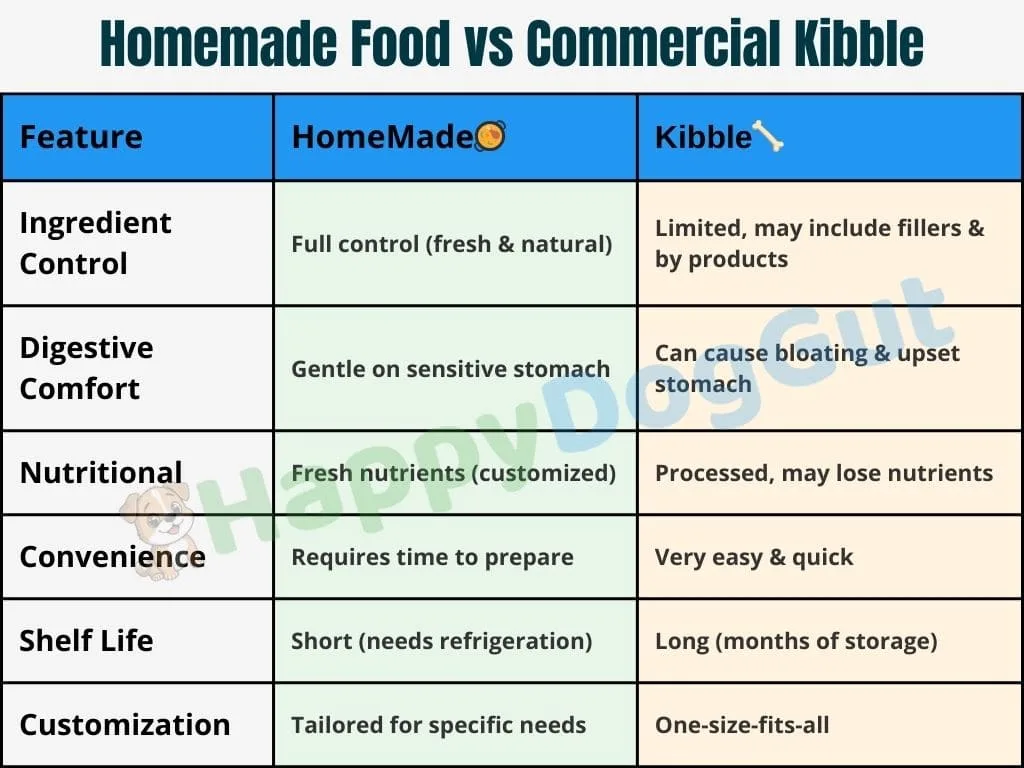
Many dog owners wonder whether homemade dog food for sensitive stomachs is truly better than commercial kibble. While kibble is convenient, it often contains fillers and additives that can upset digestion and trigger gut issues.
Homemade meals, on the other hand, allow you to control ingredients and tailor nutrition for dogs with sensitive stomachs. Here’s how homemade food compares:
Benefits of Homemade Food
- Ingredient Control: You choose exactly what goes into your dog’s bowl, avoiding harmful fillers, preservatives, or allergens.
- Digestive Comfort: Fresh, simple recipes are easier on the gut and reduce the risk of bloating, diarrhea, or vomiting.
- Customization: Meals can be tailored for specific needs, such as sensitive stomachs, weight management, or allergies.
- Nutrient Freshness: Whole ingredients like chicken, rice, and vegetables retain more nutrients than processed kibble.
- Bonding & Care: Preparing meals at home strengthens the emotional connection with your pet.
Downsides of Homemade Food
- Time-Consuming: Requires preparation and cooking time.
- Nutrient Balance: Without guidance, it’s easy to miss essential vitamins and minerals.
- Short Shelf Life: Homemade meals don’t last as long as kibble.
Benefits of Commercial Kibble
- Convenience: Easy to store, portion, and serve.
- Balanced Nutrition (in premium brands): Many high-quality kibbles are formulated to meet dogs’ nutritional needs.
- Long Shelf Life: Can be stored for months without spoilage.
Downsides of Commercial Kibble
- Hidden Fillers & Preservatives: Many brands use corn, soy, or by-products that upset sensitive stomachs.
- Lower Digestibility: Highly processed ingredients can be harder to absorb.
- Artificial Additives: Flavors and colors may trigger allergies or gut irritation.
Homemade food is usually gentler on sensitive stomachs, but it requires planning to stay nutritionally complete. Premium kibble offers convenience but may still cause stomach upset in sensitive dogs.
If you prefer a ready-made option instead of home cooking, explore the best dry dog foods for sensitive stomachs in small breeds — balanced, easy to digest, and ideal for everyday feeding.
The best option is often a balanced approach — using homemade meals alongside high-quality kibble with vet guidance.
Best Ingredients for Homemade Dog Food for Sensitive Stomachs
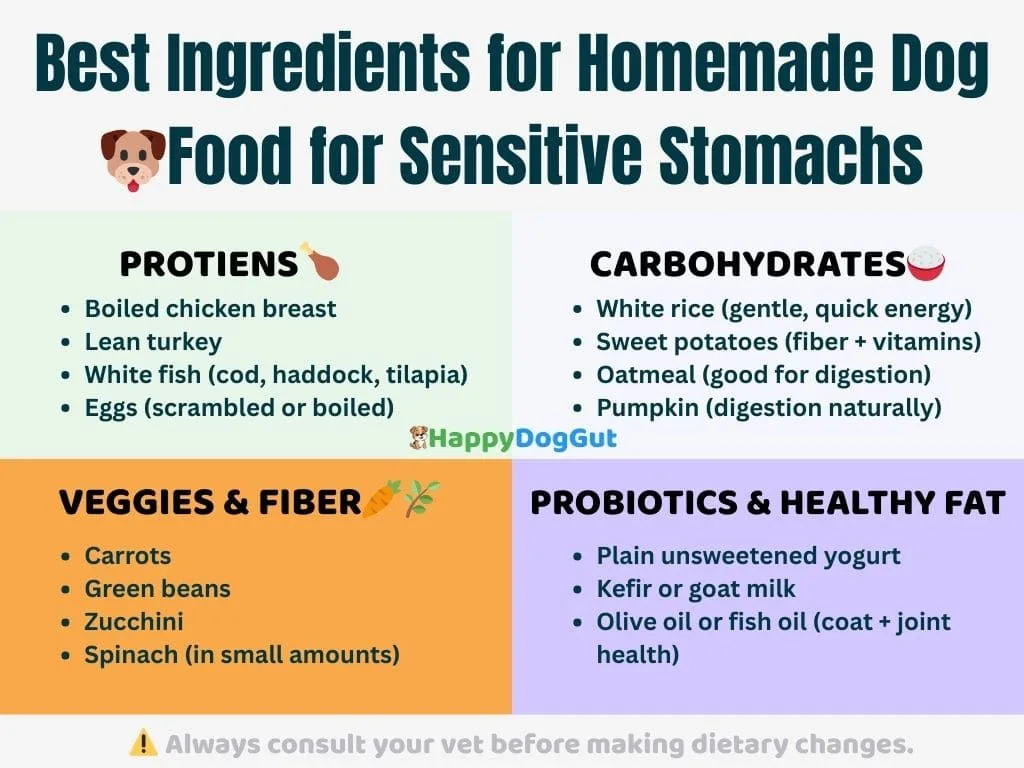
Proteins
- Boiled chicken breast
- Lean turkey
- White fish (cod, haddock, tilapia)
- Eggs (scrambled or boiled)
Carbohydrates
- White rice (gentle, quick energy)
- Sweet potatoes (fiber + vitamins)
- Oatmeal (good for digestion, gluten-free if needed)
- Pumpkin (soothes digestion naturally)
Veggies & Fiber
- Carrots
- Green beans
- Zucchini
- Spinach (in small amounts)
Probiotics & Healthy Fats
- Plain unsweetened yogurt
- Kefir or goat milk
- Olive oil or fish oil (coat + joint health)
5 Vet-Approved Homemade Dog Food Recipes for Sensitive Stomachs
Homemade dog food for sensitive stomachs can be a safe and natural solution for dogs. The key is to keep the meals simple, nutritious, and easy to digest.
Each recipe below is balanced with proteins, fiber, and gut-friendly ingredients, making them gentle on digestion while still tasty for your pup.
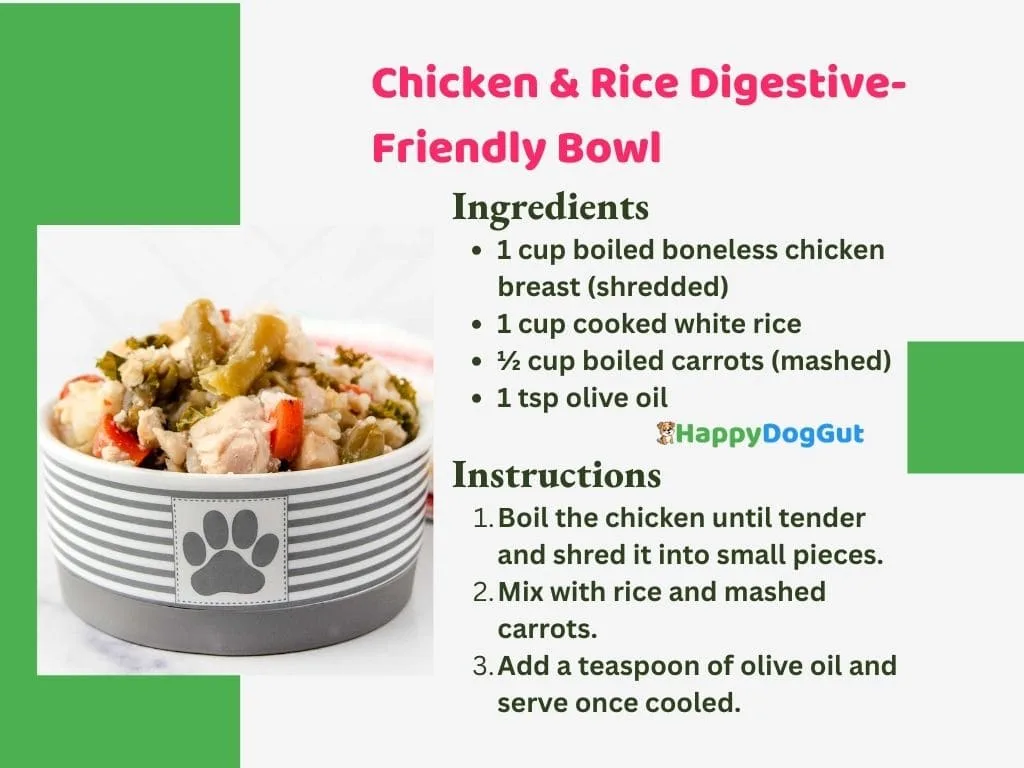
1. Chicken & Rice Digestive-Friendly Bowl
- Ingredients:
- 1 cup boiled boneless chicken breast (shredded)
- 1 cup cooked white rice
- ½ cup boiled carrots (mashed)
- 1 tsp olive oil
- Instructions:
- Boil the chicken until tender and shred it into small pieces.
- Mix with rice and mashed carrots.
- Add a teaspoon of olive oil and serve once cooled.
- Benefits: Light, bland, and easy to digest — often recommended for upset stomachs.
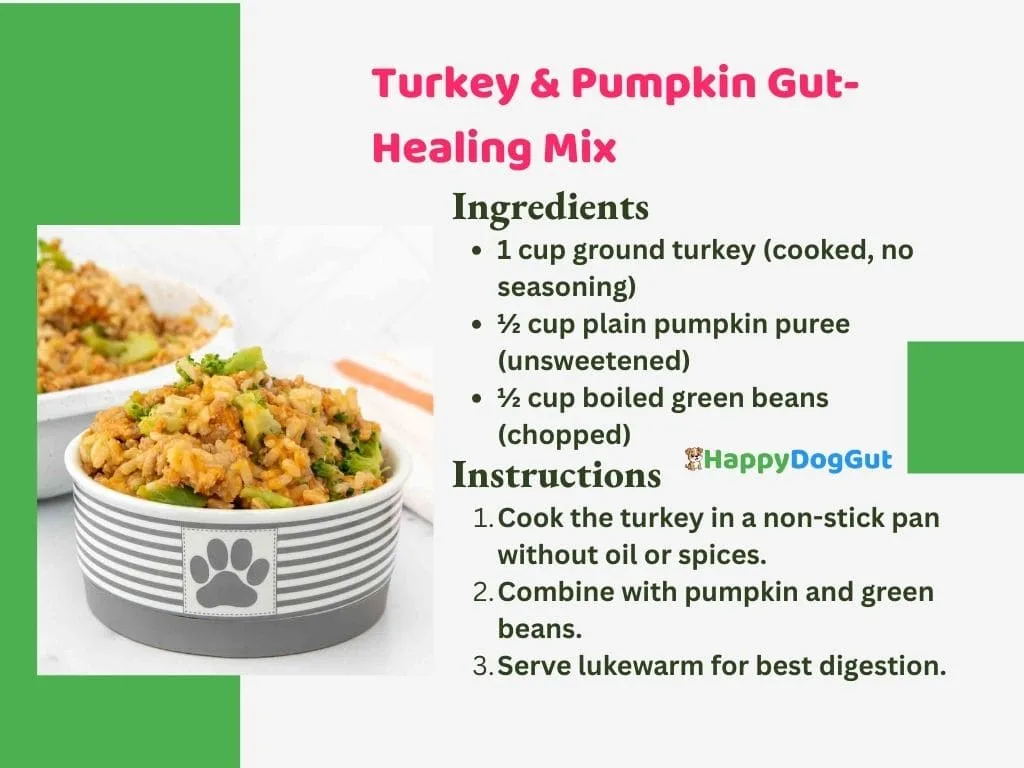
2. Turkey & Pumpkin Gut-Healing Mix
- Ingredients:
- 1 cup ground turkey (cooked, no seasoning)
- ½ cup plain pumpkin puree (unsweetened)
- ½ cup boiled green beans (chopped)
- Instructions:
- Cook the turkey in a non-stick pan without oil or spices.
- Combine with pumpkin and green beans.
- Serve lukewarm for best digestion.
- Benefits: Pumpkin provides fiber that helps regulate digestion and reduce loose stools.
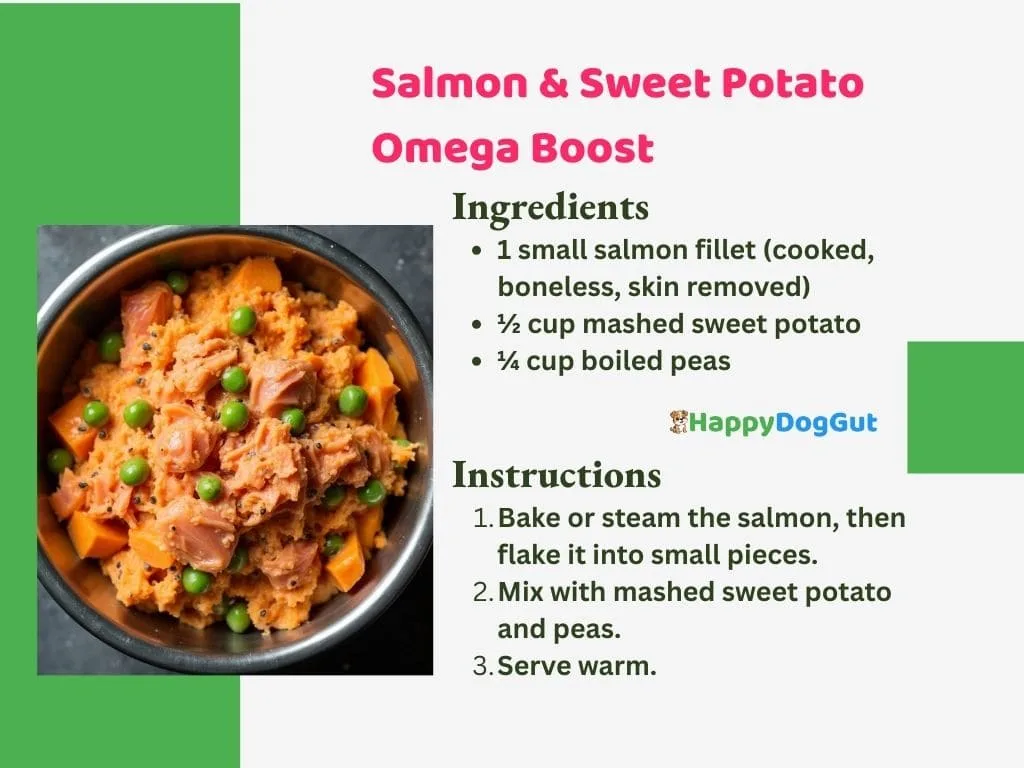
3. Salmon & Sweet Potato Omega Boost
- Ingredients:
- 1 small salmon fillet (cooked, boneless, skin removed)
- ½ cup mashed sweet potato
- ¼ cup boiled peas
- Instructions:
- Bake or steam the salmon, then flake it into small pieces.
- Mix with mashed sweet potato and peas.
- Serve warm.
- Benefits: Rich in omega-3 fatty acids, this meal supports gut health, skin, and coat.
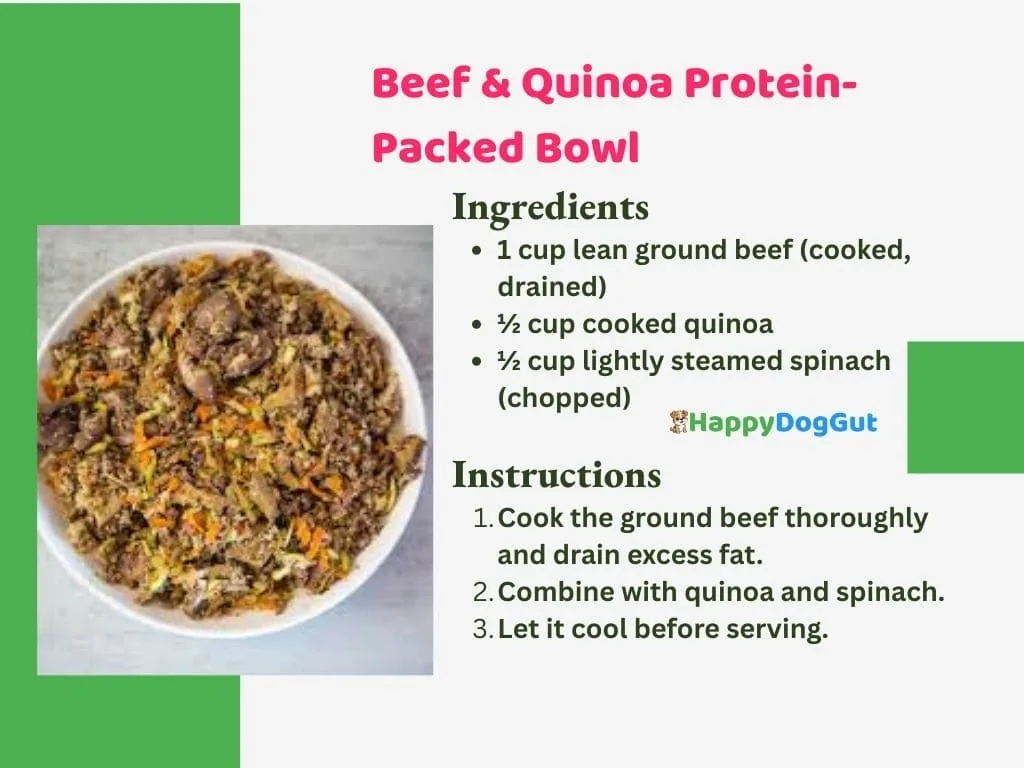
4. Beef & Quinoa Protein-Packed Bowl
- Ingredients:
- 1 cup lean ground beef (cooked, drained)
- ½ cup cooked quinoa
- ½ cup lightly steamed spinach (chopped)
- Instructions:
- Cook the ground beef thoroughly and drain excess fat.
- Combine with quinoa and spinach.
- Let it cool before serving.
- Benefits: A high-protein meal with quinoa as a gluten-free alternative to rice.
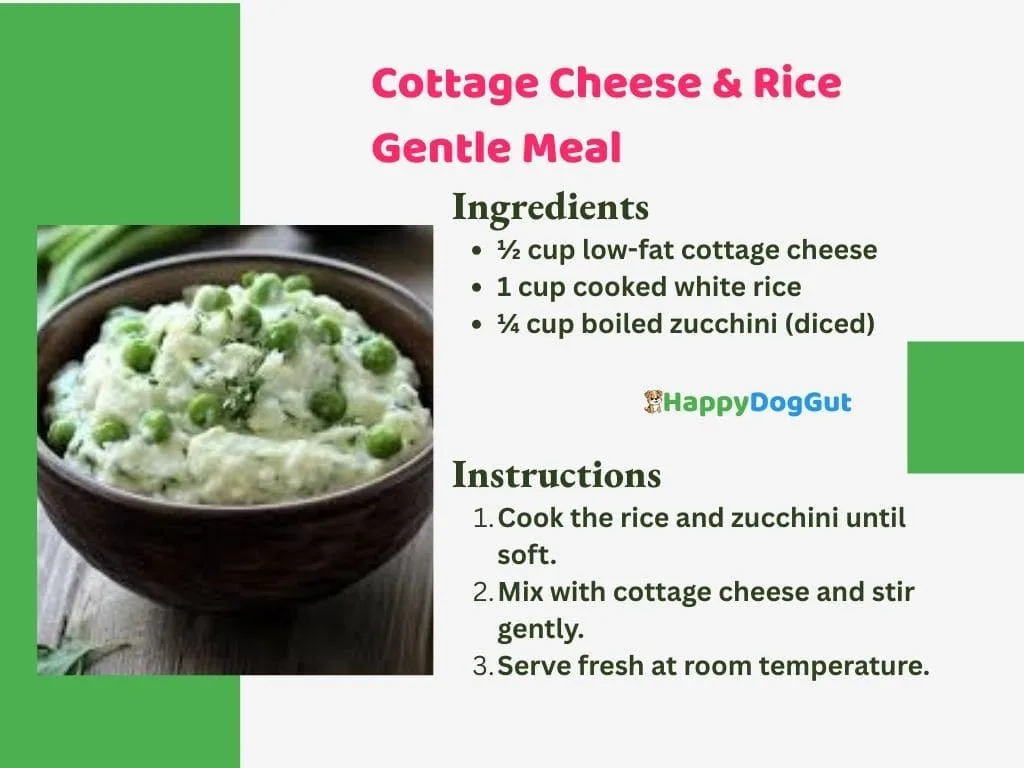
5. Cottage Cheese & Rice Gentle Meal
- Ingredients:
- ½ cup low-fat cottage cheese
- 1 cup cooked white rice
- ¼ cup boiled zucchini (diced)
- Instructions:
- Cook the rice and zucchini until soft.
- Mix with cottage cheese and stir gently.
- Serve fresh at room temperature.
- Benefits: A mild, gut-friendly meal that provides probiotics and calcium.
Feeding Guidelines for Sensitive Stomach Dog Diet
When switching your dog to a homemade diet, balance and portion control are key.
Every dog is different, but here are some general guidelines to keep meals safe, nutritious, and easy to digest:
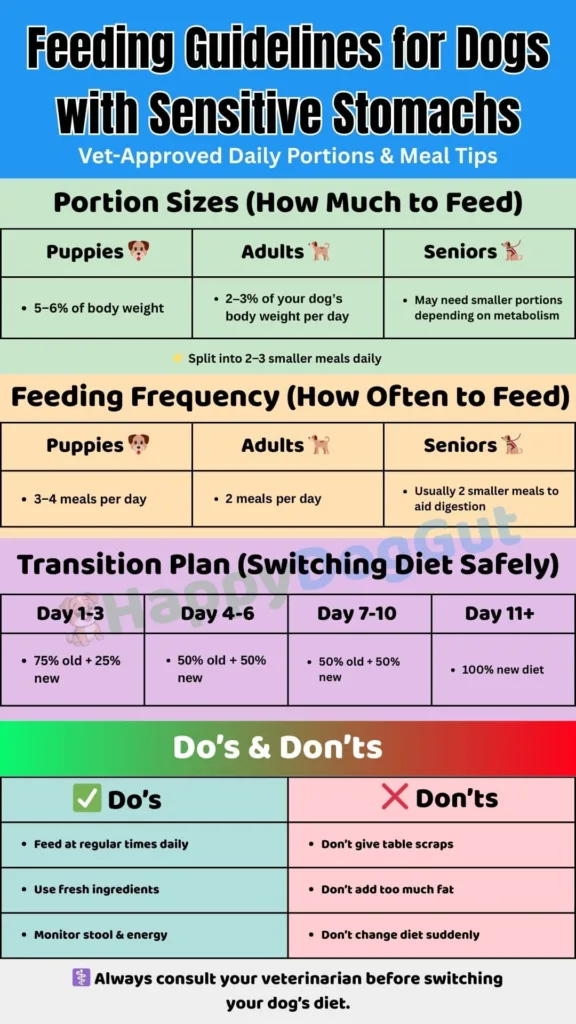
Portion Size
- Adult Dogs: A common rule is to feed about 2–3% of your dog’s body weight per day.
- Example: A 20 lb (9 kg) dog needs about 0.4–0.6 lbs (180–270 g) of food daily.
- Puppies: Require up to 5–6% of body weight, split into 3–4 meals a day for growth support.
- Senior Dogs: May need smaller portions depending on activity level and metabolism.
Meal Frequency
- Puppies (up to 6 months): 3–4 meals per day.
- Adults (6 months+): 2 meals per day.
- Seniors: Usually 2 smaller meals to aid digestion.
Nutritional Balance
- Protein (40–50%): Chicken, turkey, beef, fish, or eggs.
- Carbohydrates (25–30%): Rice, oats, sweet potatoes.
- Vegetables (20–25%): Carrots, spinach, pumpkin, peas.
- Healthy Fats (5–10%): Fish oil, olive oil, or flaxseed oil.
- Supplements: Homemade meals often miss essential nutrients like calcium, vitamin D, and omega-3. A vet-recommended multivitamin or calcium powder should be added.
Transitioning Safely
- Day 1–3: Mix 25% homemade food with 75% old diet.
- Day 4–6: 50% homemade, 50% old food.
- Day 7–10: 75% homemade, 25% old food.
- Day 11: 100% homemade diet.
Slow transition prevents diarrhea, vomiting, or stomach upset.
⚠️ Note:
Always consult your veterinarian before fully switching diets. Dogs with sensitive stomachs, allergies, or medical conditions may require a custom meal plan.
Puppies often need extra care when it comes to digestion—see our full Best Puppy Foods for Sensitive Stomachs guide.
Supplements to Add for Balance
Homemade food is amazing, but some nutrients need to be added:
- Calcium: Add crushed eggshell powder or vet-approved calcium supplement.
- Omega-3: Fish oil capsules or flaxseed oil.
- Probiotics: Sprinkle dog-safe probiotics or plain kefir.
Also Read: Best Probiotics for Dogs with Sensitive Stomachs
Mistakes to Avoid in Homemade Dog Food
- Using onions, garlic, grapes, or chocolate (toxic).
- Overfeeding protein without carb/fiber balance.
- Skipping vet guidance for long-term diets.
- Using too much dairy or fat → leads to diarrhea.
Real-Life Case Study: Daisy the Golden Retriever
Daisy, a 5-year-old Golden Retriever, struggled with constant diarrhea and lack of energy. After switching to a homemade sensitive stomach diet (chicken, rice, pumpkin, probiotics), Daisy’s digestion improved in just 3 weeks. Her coat became shinier, and her energy returned.

👉 Proof that small diet changes can create a big difference.
FAQs on Homemade Dog Food for Sensitive Stomachs
Does homemade dog food for sensitive stomachs really work?
Yes. Homemade food allows you to control ingredients and avoid fillers or additives that often irritate sensitive stomachs. Using easily digestible proteins, rice, and pumpkin can help reduce digestive issues.
Is homemade food better than kibble for sensitive stomachs?
In many cases, yes. Kibble may contain artificial preservatives and fillers, while homemade food uses fresh, whole ingredients that are gentler on digestion and promote better nutrient absorption.
How often should I feed homemade food?
Most adult dogs do well with two balanced meals per day. Puppies, however, may require 3–4 smaller meals to support growth and prevent stomach overload.
Can I give rice daily to my dog?
Yes, rice is safe for daily feeding if combined with lean protein and vegetables. However, feeding only rice can lead to nutritional gaps, so always aim for balance.
Should I add supplements to homemade diets?
Yes. Calcium, omega-3 fatty acids, and probiotics are essential for a complete diet. Without these, your dog may develop nutrient deficiencies over time.
Can homemade food fully replace kibble?
Yes, but it should be done under veterinary guidance. A vet can help ensure the diet has the right balance of protein, carbs, fats, vitamins, and minerals.
What if my dog still has stomach problems?
If your dog continues to have diarrhea, vomiting, or bloating despite eating homemade food, consult your vet. The issue may be due to food allergies, parasites, or another underlying digestive condition.
Can I give my dog pumpkin for a sensitive stomach?
Yes, pumpkin is a vet-approved natural remedy that helps with both diarrhea and constipation. It’s rich in fiber and prebiotics that support gut health. 👉 Learn more in this detailed guide: Can I Give My Dog Pumpkin for Sensitive Stomach? (Vet Answered)
Final Thoughts
Homemade dog food for sensitive stomachs is one of the best ways to help dogs with chronic digestive issues. With the right recipes, ingredients, and vet guidance, you can give your pup meals that support digestion, energy, and overall health.
Start with simple meals like chicken & rice, introduce probiotics, and watch your dog thrive. For dogs recovering from diarrhea or loose stools, you can also try our simple Homemade Chicken and Rice for Dogs with Diarrhea Recipe — it’s gentle, nutrient-balanced, and vet-approved
If you’re deciding between grain-free and grain-inclusive options, check out our detailed comparison: Grain-Free vs Grain-Inclusive Dog Food for Sensitive Stomachs (Vet-Approved Guide).

Hi, I’m Maddy, the writer behind HappyDogGut.com.
I’m passionate about helping Dog parents understand Gut Health, Sensitive Stomachs, and Natural Nutrition for dogs.
Every article I create is vet-approved, research-backed, and experience-driven, so your pup can enjoy a healthier, happier gut.
Happy Gut = Happy Dog!
All content on Happy Dog Gut follows our Editorial Policy.




Pingback: Why Does My Dog Have Soft Stools but is Acting Normal (Vet-Approved)