
Diarrhea is a common digestive issue in dogs, and at some point, most owners will deal with it. Sometimes it shows up as slightly loose stool, while other times it’s more watery and frequent. This difference alone can cause confusion, especially when you’re trying to figure out how serious the situation really is.
One of the most common questions dog owners ask is simple but stressful: how long does diarrhea last in dogs? Without clear timelines, it’s hard to know whether to stay calm and observe or start worrying that something more serious may be going on.
The uncertainty often feels even heavier for puppy owners. Puppies tend to dehydrate faster and react more strongly to digestive changes, while adult dogs may bounce back more quickly. On the other hand, seeing diarrhea in an adult dog that usually has a strong stomach can also be unsettling. Adding to the confusion, many dogs continue acting playful and energetic even while having loose stools, which leaves owners unsure how concerned they should be.
This guide focuses on clear timelines and severity clues to help you understand what’s typical and what’s not. You’ll learn how watery diarrhea differs from loose stool, what recovery often looks like, and when extra attention may be needed. You’ll also find practical context around diet, including Dog foods for Loose Stool, to support calmer digestion along the way.
⚠️ This article is for educational purposes only and does not replace veterinary advice.
What Counts as Diarrhea in Dogs?
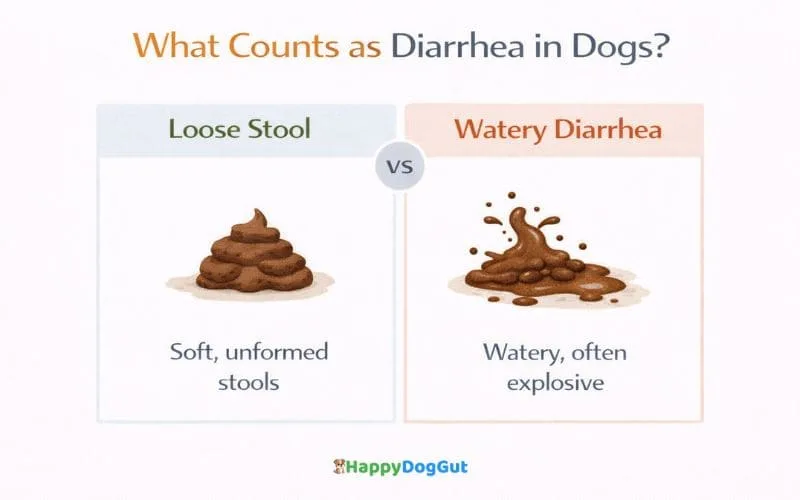
Diarrhea in dogs isn’t just one thing. It can range from slightly soft stools to very watery bowel movements, and understanding these differences helps owners judge what’s typical and what needs closer attention.
Loose Stool vs Watery Diarrhea
Loose stool is softer than normal but still has some shape. Watery diarrhea, on the other hand, has very little form and often happens more urgently. Watery stool usually leads to more fluid loss, which is why it’s often considered more concerning than mildly loose stool.
Frequency vs Consistency
How often your dog goes to the bathroom matters just as much as how the stool looks. A single loose bowel movement may not be a problem, while frequent trips outside with ongoing loose or watery stool suggest the digestive system is under more stress.
Short-term Digestive Upset vs An Ongoing Issue
Short-term diarrhea often follows a diet change, mild stress, or eating something unusual and tends to improve within a day or two. Ongoing diarrhea is different—it lasts longer, may come and go, or never fully resolves. Duration and pattern over time are key clues in telling the difference.
Looking at stool consistency, frequency, and how long symptoms last together gives a clearer picture than focusing on just one sign.
How Long Does Diarrhea Last in Dogs on Average?
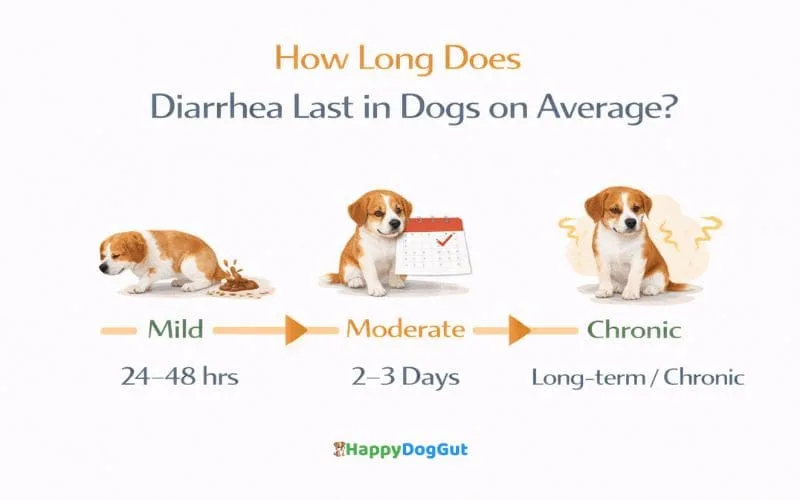
The duration of diarrhea in dogs depends on what triggered it and how the digestive system responds. Looking at general timelines can help owners understand what’s typical and when closer observation is needed.
🟢 Mild / Diet-Related Diarrhea
Typical Duration: 24–48 hours
Diarrhea caused by a sudden food change, mild stress, or eating something unusual often resolves within a day or two. Stool may start out loose and gradually become firmer as digestion settles. Many dogs remain active and comfortable during this stage.
🟡 Moderate Digestive Upset
Typical Duration: 2–3 days with improvement
Moderate diarrhea may involve multiple loose bowel movements per day, but improvement should be noticeable over time. Frequency usually decreases first, followed by better stool consistency. During this phase, some owners look into Best Dog foods for loose stool to support steadier digestion.
⚠️ Ongoing or Recurrent Diarrhea
Longer timelines are possible
When diarrhea continues beyond a few days or keeps returning, it may point to underlying digestive sensitivity or gut imbalance. Recovery often takes longer, and patterns over time become more important than single episodes.
Understanding these ranges helps owners stay calm, track progress, and avoid rushing into unnecessary changes when digestion simply needs time to normalize.
While most diarrhea episodes are short-lived, duration alone doesn’t tell the full story. Certain patterns, stool changes, and behavior shifts can signal when a digestive issue needs closer attention. Understanding When to worry about diarrhea in dogs helps owners move beyond timelines and recognize warning signs that shouldn’t be ignored.
Learning When loose stool needs Veterinary attention helps define that boundary more clearly.
Puppy vs Adult Dogs — Does Diarrhea Last Longer?
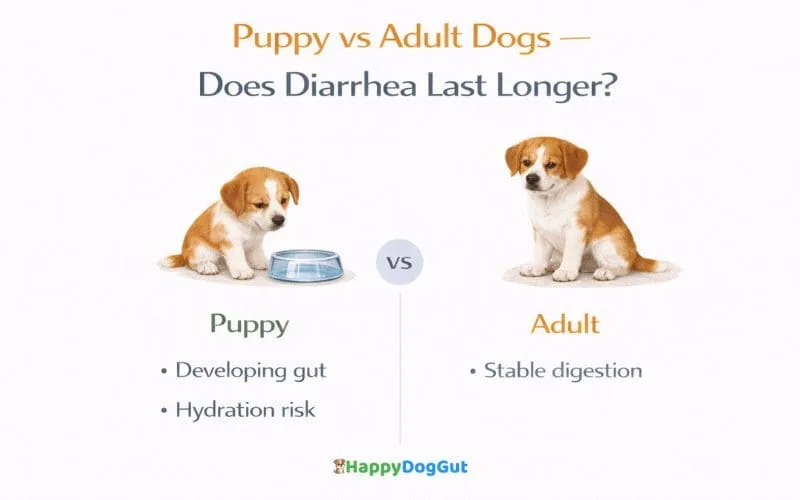
Diarrhea doesn’t affect all dogs the same way. Age plays a big role in how long digestive upset lasts and how the body handles fluid loss.
🐶 Puppies have developing digestive systems
Puppies’ guts are still maturing, which makes them more sensitive to diet changes, stress, and new environments. Because their digestion is less stable, diarrhea in puppies may last a bit longer or appear more intense—even when the cause is mild.
🐾 Adult dogs usually have more stable digestion
Most healthy adult dogs recover from short-term diarrhea more quickly. Their digestive systems are better equipped to adapt, and symptoms often improve within expected timelines as long as no underlying sensitivity is present.
💧 Why Puppies dehydrate faster
Puppies have smaller bodies and less fluid reserve, so water loss from diarrhea affects them more quickly. Even mild diarrhea can impact hydration faster in puppies than in adult dogs, which is why close observation is especially important at a young age.
While diarrhea in puppies can look more concerning, it isn’t always a sign of something serious. Understanding age-related differences helps owners stay calm and respond appropriately without unnecessary panic.
Acute vs Chronic Diarrhea in Dogs
Not all diarrhea follows the same pattern. Understanding whether diarrhea is Acute or Chronic helps set realistic expectations about recovery time and next steps.
🟢 Acute Diarrhea (Sudden, Short-term)
Acute diarrhea comes on quickly and is often linked to a clear trigger—such as a sudden food change, dietary indiscretion, mild stress, or a temporary digestive imbalance. In most cases, acute diarrhea improves within a few days as the gut settles. Stool consistency usually improves gradually, and dogs often continue acting fairly normal.
⏳ Chronic Diarrhea (Recurring or Long-lasting)
Chronic diarrhea looks different. It may last for weeks, come and go, or never fully resolve. Instead of steady improvement, owners often notice repeated flare-ups or stools that never quite firm up. This pattern can suggest ongoing digestive sensitivity, food intolerance, or gut inflammation rather than a one-time upset.
If diarrhea keeps returning or never fully resolves, knowing How Vets Diagnose Chronic GI Issues in Dogs can clarify when advanced testing becomes part of the conversation.
⚖️ Why Timelines Differ
Acute diarrhea usually resolves once the trigger passes and the digestive system rebalances. Chronic diarrhea takes longer because the underlying issue continues to irritate the gut. In these cases, recovery depends more on long-term diet consistency and digestive support than on time alone.
Dogs with ongoing symptoms often benefit from structured diet approaches. Many owners explore Best Dog foods for Chronic Diarrhea to help support long-term gut stability rather than focusing on quick fixes.
Understanding the difference between acute and chronic diarrhea helps owners avoid false reassurance—and also avoid unnecessary panic when diarrhea is clearly short-term.
Watery Diarrhea vs Loose Stool — Why Severity Matters
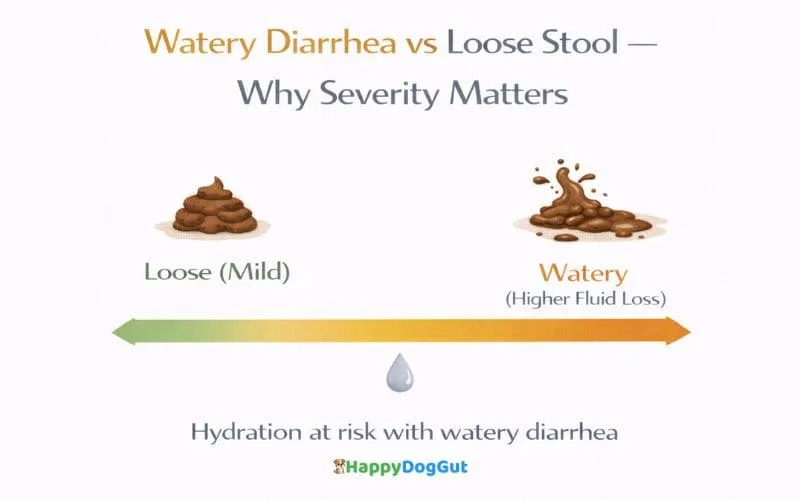
Not all diarrhea carries the same level of concern. Understanding the difference between watery diarrhea and loose stool helps owners judge urgency without jumping to conclusions.
💧 Watery Diarrhea and Dehydration Risk
Watery diarrhea contains very little solid matter, which means the body is losing fluids more quickly. When this type of stool happens repeatedly, the risk of dehydration increases—especially in puppies, small dogs, or dogs that aren’t drinking normally.
🟢 Loose Stool is often less Urgent
Loose stool still has some shape and usually reflects mild digestive upset. Many dogs experience soft stool temporarily after diet changes or mild stress, and it often improves on its own as digestion settles.
🔁 Why Frequency Matters
How often diarrhea occurs is just as important as how it looks. A single loose bowel movement is usually less concerning than frequent watery stools throughout the day. Repeated episodes place more stress on the digestive system and increase fluid loss over time.
Severity is best judged by looking at stool consistency, frequency, and how your dog is acting overall. When these factors are considered together, it becomes easier to tell when diarrhea is mild and when closer observation is needed.
Dehydration Risk With Diarrhea in Dogs
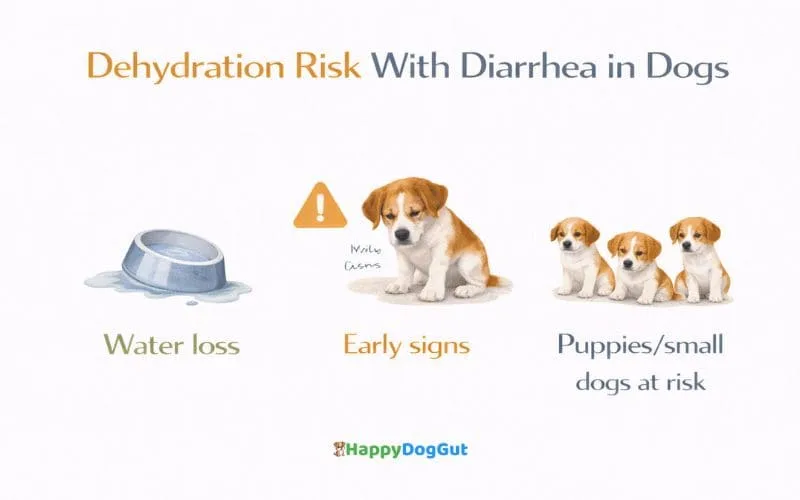
Diarrhea doesn’t just affect stool quality—it can also impact hydration. Understanding how water loss happens helps owners recognize when closer observation is needed.
💧 Why Water loss happens
During diarrhea, food and fluids move through the digestive system more quickly than usual. This reduces the time the body has to absorb water, which can lead to fluid loss—especially if bowel movements are frequent or watery.
👀 Early Signs owners can observe
Mild dehydration isn’t always obvious at first. Some early signs include drinking less than usual, darker urine, or slightly dry gums. These changes can develop gradually, which is why paying attention to daily habits matters.
🐶 Why Puppies and Small dogs are higher risk
Puppies and smaller dogs have less fluid reserve compared to larger adult dogs. Even mild diarrhea can affect their hydration more quickly. Because of this, diarrhea in puppies often deserves closer monitoring, even when they seem playful and alert.
Most cases of mild diarrhea don’t lead to serious dehydration, but being aware of these factors helps owners respond calmly and appropriately as digestion recovers.
When Diarrhea May Point to a Bigger Gut Issue (Including IBD)
Most diarrhea in dogs is short-term and resolves as digestion settles. However, there are situations where ongoing diarrhea may suggest that the gut is dealing with more than a simple upset.
🔁 Diarrhea that keeps Returning
If diarrhea improves briefly but keeps coming back, it may indicate an ongoing digestive sensitivity rather than a one-time trigger. Recurrent episodes often suggest that something in the diet or gut environment continues to irritate the digestive system.
💩 Stool that Never fully Firms up
Some dogs don’t have constant watery diarrhea but also never produce consistently firm stools. This pattern—soft, loose, or inconsistent stool over long periods—can be a sign that the gut isn’t fully recovering between flare-ups.
🧠 Gut Inflammation as a possible factor
Chronic irritation in the digestive tract can interfere with normal stool formation. While this doesn’t automatically mean a serious condition, ongoing inflammation may play a role when diarrhea becomes persistent or unpredictable. In these cases, diet often becomes a key part of long-term management rather than short-term symptom control.
Dogs with these patterns may benefit from structured, inflammation-aware feeding strategies. Learning more about Diet Support for dogs with IBD can help owners understand how targeted diet approaches are used to support dogs with sensitive or inflamed guts—without jumping to conclusions or self-diagnosis.
This kind of diarrhea is less about waiting it out and more about identifying patterns, maintaining consistency, and supporting gut balance over time.
Home Care Support for Short-Term Diarrhea
When diarrhea is mild and short-term, calm home care and close observation are often enough to support recovery. The focus is on helping the digestive system settle without rushing into unnecessary changes.
🍽️ Gentle Diet Approach
Simple, easy-to-digest foods are often better tolerated during short-term diarrhea. The goal isn’t to permanently change your dog’s diet, but to reduce digestive workload while the gut regains balance. Learning What to feed a Dog after diarrhea can help owners understand this gentle approach.
💧 Hydration Comes First
Diarrhea can affect fluid absorption, even when symptoms seem mild. Making sure your dog has steady access to fresh water supports digestion and overall comfort during recovery. Drinking habits are just as important to observe as stool quality.
👀 Observation Over Quick Fixes
Short-term diarrhea often improves gradually. Watching patterns—such as stool firming over time, normal appetite returning, and steady energy—provides clearer guidance than trying multiple changes at once.
Some owners also explore simple home-prepared options like Homemade Chicken and Rice for dogs with diarrhea to better understand temporary feeding strategies, keeping changes minimal and short-lived.
A calm, consistent approach gives the digestive system the best chance to recover naturally.
When Diarrhea Is NOT Considered Normal
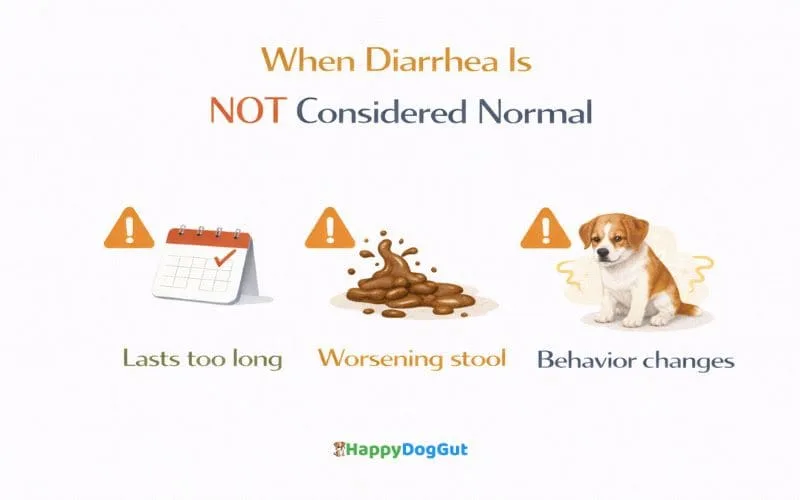
Most mild diarrhea in dogs follows a predictable pattern and improves with time. However, certain signs suggest that diarrhea may be moving beyond a typical digestive upset and deserves closer attention.
⏳ Lasting beyond the Expected timeline
If diarrhea continues for several days without noticeable improvement, it may no longer fall into the “wait and watch” category. Duration matters—ongoing symptoms often tell a clearer story than a single bad day.
💩 Worsening Stool Quality
Diarrhea that becomes more watery, more frequent, or harder to manage over time isn’t typical of short-term digestive upset. A lack of gradual improvement can signal that the gut is struggling to rebalance on its own.
🐾 Changes in Behavior or Appetite
Digestive issues don’t happen in isolation. When diarrhea is paired with low energy, reduced interest in food, or changes in normal behavior, it may suggest that discomfort is affecting your dog more broadly.
Noticing one of these signs doesn’t automatically mean something serious is happening. It simply means the pattern has shifted from “mild and improving” to “persistent or changing,” which is an important distinction when deciding next steps.
When to See a Veterinarian
While many cases of diarrhea in dogs are mild and short-lived, there are situations where checking in with a veterinarian is a sensible next step. Knowing these triggers helps owners act thoughtfully rather than out of panic.
⏳ Symptoms lasting beyond a Normal Timeline
If diarrhea continues for several days without improvement, or keeps returning after brief recovery, it may be time to seek guidance. Ongoing symptoms often suggest that the digestive system isn’t fully settling on its own.
💧 Severe or Repeated Watery Diarrhea
Watery diarrhea that happens frequently throughout the day can lead to faster fluid loss. When stool becomes consistently watery or episodes increase rather than decrease, closer evaluation may be helpful to understand what’s driving the severity.
🥣 Loss of Appetite or Difficulty keeping food down
A dog that stops eating, refuses meals for an extended period, or struggles to keep food down alongside diarrhea may need additional support. Appetite changes often provide important clues about overall comfort.
🐾 Noticeable Behavior Changes
Low energy, withdrawal from normal activities, or signs that your dog just doesn’t feel like themselves can matter as much as stool changes. When behavior shifts along with diarrhea, it’s worth paying closer attention.
🚰 Dehydration Concerns
Reduced water intake, darker urine, or fewer bathroom breaks can indicate dehydration. Puppies, small dogs, and senior dogs are especially sensitive to fluid loss, making hydration an important factor to monitor.
🩺 A veterinarian can help determine whether symptoms fall within a normal digestive upset or whether additional evaluation is appropriate—especially when diarrhea doesn’t follow a typical recovery pattern.
Recognizing these signs early helps owners make informed decisions while keeping their dog’s comfort and safety front and center.
Dogs That May Take Longer to Recover From Diarrhea
Not every dog recovers from diarrhea at the same pace. Some dogs naturally need more time for their digestive system to settle, even when symptoms are mild.
Dogs with Sensitive Stomachs
Dogs known for digestive sensitivity often react more strongly to diet changes, stress, or new foods. Their stools may take longer to firm up after diarrhea, and symptoms can linger without necessarily getting worse. For these dogs, long-term diet consistency matters more than quick fixes. Many owners explore Best Dog foods for Sensitive Stomachs to support steadier digestion.
Puppies and Senior dogs
Puppies have developing digestive systems, which makes them more prone to longer recovery times. Seniors, on the other hand, may digest food more slowly as their bodies age. In both cases, even short-term diarrhea can take extra time to fully resolve, making gentle care and close observation especially important.
Dogs with a history of Gut issues
Dogs that have dealt with repeated digestive upset in the past may experience longer or recurring diarrhea episodes. Their gut may already be sensitive or easily disrupted, which can slow recovery. In these situations, some owners consider supportive options like Probiotics for dogs with sensitive stomachs to help maintain gut balance over time.
Understanding which dogs may need extra patience helps set realistic expectations and reduces unnecessary worry during recovery.
FAQs: How Long Does Diarrhea Last in Dogs?
How long is too long for dog diarrhea?
For many dogs, mild diarrhea improves within 24–48 hours. If diarrhea continues for several days without improvement, or keeps returning after brief recovery, it may no longer be considered typical. Duration and pattern over time matter more than a single episode.
Is watery diarrhea worse than loose stool?
Watery diarrhea usually leads to faster fluid loss, which makes it more concerning than mildly loose stool. Loose stool often reflects mild digestive upset, while frequent watery diarrhea deserves closer observation—especially in puppies or smaller dogs.
How long does puppy diarrhea usually last?
Puppy diarrhea often lasts a bit longer than in adult dogs because their digestive systems are still developing. Mild cases may resolve in a couple of days, but puppies should be watched closely since dehydration can happen more quickly at a young age.
Can stress cause diarrhea in dogs?
Yes, stress can affect digestion. Travel, changes in routine, new environments, or anxiety can trigger diarrhea even when diet hasn’t changed. Stress-related diarrhea often improves once routines settle, though sensitive dogs may take longer to normalize.
Should I stop feeding my dog during diarrhea?
In mild cases, some owners choose a brief pause or a gentler feeding approach rather than stopping food entirely. The goal is to reduce digestive workload, not withhold nutrition long-term. Appetite and comfort should guide decisions.
When does diarrhea mean something more serious?
Diarrhea may be more concerning if it lasts beyond expected timelines, becomes more watery or frequent, or is paired with behavior changes like low energy or loss of appetite. Patterns that don’t improve over time are more important than one-off episodes.
Can probiotics shorten diarrhea duration?
Probiotics may help support gut balance in some dogs, especially those with sensitive digestion. However, responses vary, and probiotics aren’t instant solutions. They’re best viewed as supportive tools rather than guaranteed fixes for diarrhea.
How do I know if my dog is dehydrated?
Early signs of dehydration can include reduced water intake, darker urine, dry gums, or lower energy. Puppies, seniors, and small dogs are more sensitive to fluid loss, so hydration is important to monitor during diarrhea.
Final Thoughts
Diarrhea in dogs is often short-term and improves as the digestive system settles. In many cases, a little time and consistency are all that’s needed for stools to return to normal.
🟢 Timeline and Severity both matter.
How long diarrhea lasts and how severe it is provide valuable clues. Mild, brief loose stools are very different from ongoing watery diarrhea that doesn’t improve. Looking at patterns over time helps owners decide when to simply observe and when to take the next step.
🐾 Observation works better than panic.
Watching stool consistency, frequency, appetite, and energy gives a clearer picture than reacting to a single episode. Small improvements—like fewer bowel movements or firmer stool—often signal that recovery is underway.
⚖️ Every Dog’s gut is different.
Some dogs bounce back quickly, while others need extra support, especially those with sensitive digestion or a history of gut issues. When stool changes linger, exploring Dog foods for loose stool may help support steadier digestion. For longer-term patterns, guides on Best Dog foods for Chronic diarrhea and Diet support for dogs with IBD can offer helpful context around structured diet approaches.
Taking a calm, informed approach helps most dogs recover comfortably—and helps owners feel confident along the way.

Hi, I’m Maddy, the writer behind HappyDogGut.com.
I’m passionate about helping Dog parents understand Gut Health, Sensitive Stomachs, and Natural Nutrition for dogs.
Every article I create is vet-approved, research-backed, and experience-driven, so your pup can enjoy a healthier, happier gut.
Happy Gut = Happy Dog!
All content on Happy Dog Gut follows our Editorial Policy.
Pingback: Why Does My Dog Have Soft Stools but is Acting Normal (Vet-Approved)
Pingback: Best Dog Foods for Chronic Diarrhea – Long-Term Gut Support Guide
Pingback: When to Worry About Diarrhea in Dogs: Warning Signs & Timelines
Pingback: When to See a Vet for Loose Stool in Dogs (Clear Signs)