Chronic digestive problems in dogs can be frustrating and confusing. Recurring loose stool, ongoing diarrhea, intermittent vomiting, or stools that never seem fully firm often leave owners wondering what’s really going on. Many start by adjusting food, adding fiber, or trying probiotics—hoping a simple change will settle the gut.
When symptoms keep returning, anxiety naturally increases. Questions about testing, cost, and what a vet might find can feel overwhelming. Understanding how vets diagnose chronic GI issues in dogs helps replace that uncertainty with clarity. In most cases, the process is structured, step-by-step, and far less dramatic than many owners expect.
Veterinarians don’t immediately jump to invasive procedures. Instead, they typically begin with basic screening tests and build from there, ruling out common causes before considering more advanced diagnostics. This layered approach helps protect your dog from unnecessary stress while gathering meaningful information.
If your dog has ongoing digestive sensitivity, learning about Diet Support for Dogs with IBD or reviewing What to feed a dog with Colitis can provide helpful background on how nutrition fits into the bigger picture.
This guide explains what actually happens during veterinary evaluation—calmly and clearly—so you understand the process without jumping to conclusions.
⚠️ This article is for educational purposes only and does not replace veterinary advice.
What Counts as a Chronic GI Issue in Dogs?
Not every episode of diarrhea or vomiting qualifies as “chronic.” Dogs can have short-term digestive upset that resolves within a few days. A chronic GI issue is different—it follows a pattern that lasts longer or keeps returning.
⏳ Symptoms lasting three weeks or more
When loose stool, diarrhea, or vomiting continues beyond a few weeks—or improves briefly and then returns—it moves into the chronic category. Time is one of the clearest defining factors.
🔁 Recurrent Digestive Cycles
Some dogs don’t have constant symptoms, but they experience repeated flare-ups. A week of improvement followed by another round of loose stool suggests the gut isn’t fully stabilizing.
💩 Stool that never fully firms up
If your dog’s stool is consistently soft, pudding-like, or unpredictable—even without severe diarrhea—it may indicate ongoing irritation or imbalance rather than a one-time upset.
⚖️ Appetite or Weight fluctuations
Chronic GI issues can sometimes affect nutrient absorption. Changes in appetite, gradual weight loss, or difficulty maintaining weight are important context clues.
🔍 Acute vs. Chronic — why the difference matters
Acute digestive issues tend to be sudden and short-lived, often linked to diet changes or stress. Chronic problems develop over time and may require structured evaluation to understand the underlying cause.
For dogs dealing with ongoing loose stool patterns, nutrition often becomes part of the long-term plan. Our guide on Best dog foods for Chronic diarrhea explains how targeted diets can support stool consistency while the underlying issue is being evaluated.
Recognizing when digestive symptoms cross from temporary to chronic helps owners know when observation isn’t enough—and when a deeper look may be needed.
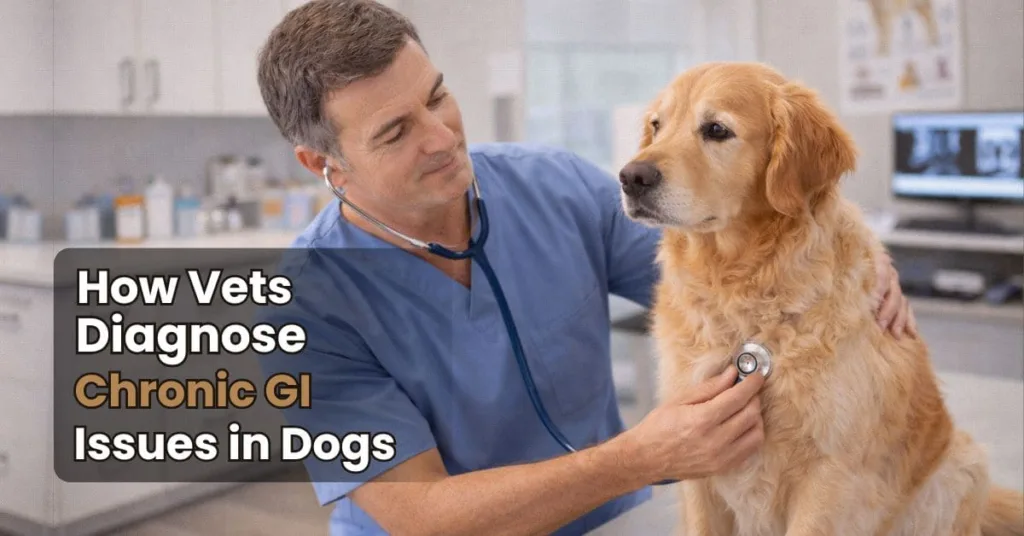
How Vets Diagnose Chronic GI Issues in Dogs
Understanding how vets diagnose chronic GI issues in dogs can make the process feel far less intimidating. Most veterinarians follow a structured, evidence-based approach rather than jumping straight to advanced procedures.
🧭 A step-by-step evaluation
Diagnosis usually begins with the least invasive, most informative tests first. Vets gather a detailed history—diet changes, treat habits, symptom timelines—before recommending diagnostics. Each step builds on what’s learned in the previous one.
🔎 A rule-out process, not guesswork
Chronic digestive symptoms can overlap between different conditions. Instead of assuming a single cause, vets methodically rule out common and treatable possibilities first, such as parasites, infections, or dietary triggers.
🧪 Why they don’t jump to biopsy first
Advanced procedures like endoscopy or biopsy are typically reserved for cases that don’t respond to simpler testing or diet trials. Starting with invasive testing would expose dogs to unnecessary stress when many issues can be identified earlier in the process.
📊 Testing builds in layers
Think of the process as narrowing a funnel. Basic screening tests come first. If symptoms persist, more targeted diagnostics follow. This layered strategy helps protect your dog while steadily moving toward clearer answers.
Most importantly, the goal isn’t to rush into a diagnosis—it’s to gather reliable information step by step so decisions are thoughtful, balanced, and supportive of long-term gut health.
Step-by-Step Process: How Vets Diagnose Chronic GI Issues in Dogs
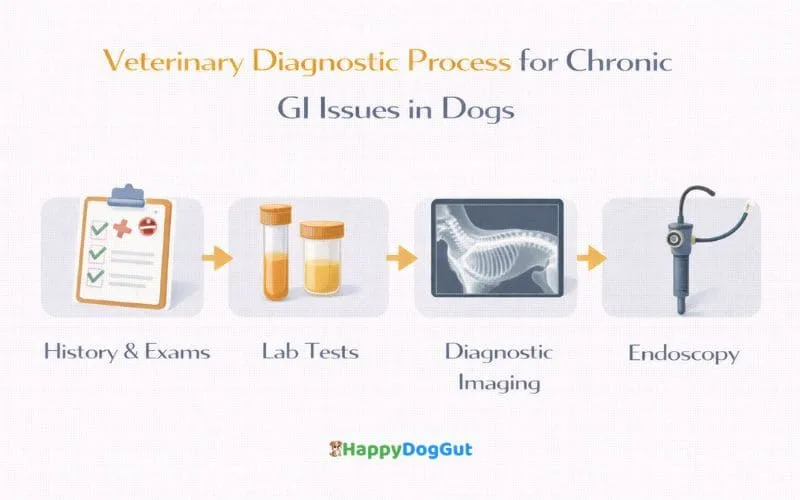
Chronic digestive problems aren’t diagnosed in a single visit or with one test. Instead, veterinarians follow a structured, layered process designed to rule out common causes first before moving toward more advanced evaluation.
This step-by-step approach helps:
- Identify treatable causes early
- Avoid unnecessary invasive testing
- Reduce stress for both dog and owner
- Build evidence gradually rather than guessing
In most cases, vets begin with simple, non-invasive tests and progress only if symptoms persist or remain unexplained. Each step provides clues that guide the next decision, making the process both systematic and evidence-based.
Below is a clear breakdown of the stages veterinarians typically use when evaluating chronic gastrointestinal issues in dogs.
Step 1 — Fecal Testing
In many cases, the first step in evaluating chronic digestive symptoms is a simple fecal test. This non-invasive screening helps rule out some of the most common and treatable causes of ongoing loose stool or diarrhea.
🧫 Parasite Screening
Even dogs that appear healthy can carry intestinal parasites. Some parasites shed intermittently, meaning they don’t show up in every sample. Identifying and addressing parasites early can resolve symptoms without moving to more advanced testing.
🦠 Checking for Bacterial Imbalance
Fecal tests can also provide clues about abnormal bacterial populations in the gut. While not all imbalances are serious, certain patterns may help explain chronic irritation or recurring stool changes.
🔁 Why repeat fecal tests may be needed
Because parasite shedding can vary from day to day, a single negative result doesn’t always rule everything out. Vets sometimes recommend repeating fecal tests to increase accuracy before moving to the next diagnostic layer.
🐾 Simple and Low-stress
Fecal testing is straightforward and typically stress-free for dogs. It doesn’t require anesthesia or invasive procedures, which is why it’s often the logical first step in a structured diagnostic plan.
Starting with fecal testing allows veterinarians to rule out common causes efficiently, keeping the evaluation process methodical and measured rather than rushed.
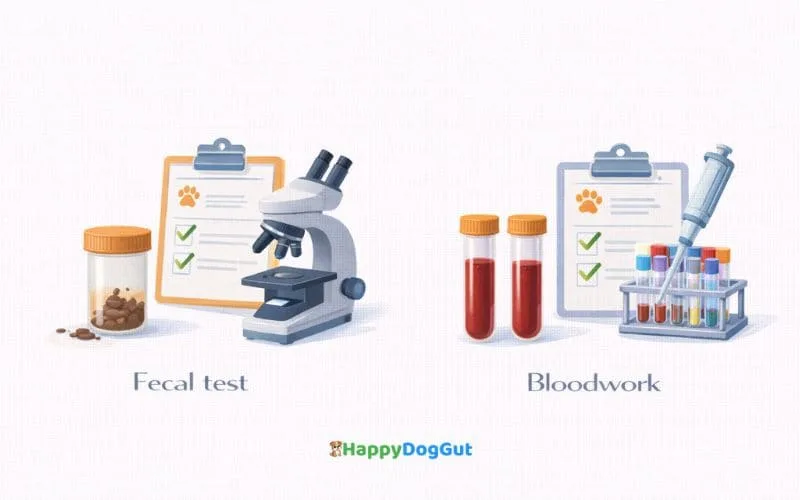
Step 2 — Bloodwork for Digestive Clues
If fecal testing doesn’t fully explain ongoing symptoms, veterinarians often recommend bloodwork as the next step. Even when the main complaint is loose stool or vomiting, blood tests can reveal important information about how the entire body is responding.
🩸 Organ function markers
Blood panels evaluate how key organs—such as the liver, kidneys, and pancreas—are functioning. Digestive symptoms sometimes reflect broader metabolic or organ-related issues, which bloodwork helps identify or rule out.
🔥 Inflammation Indicators
Certain values may suggest inflammation or immune system activity. While bloodwork alone doesn’t diagnose conditions like IBD, it can provide supportive clues that guide the next stage of evaluation.
🥩 Protein levels
Chronic GI issues can affect nutrient absorption. Low protein levels in blood tests may signal that the intestines aren’t absorbing nutrients properly, which can influence both diagnosis and dietary planning.
⚡ Electrolyte balance
Electrolytes such as sodium and potassium help regulate hydration and muscle function. Chronic diarrhea can disrupt this balance, and bloodwork helps assess whether supportive care is needed.
🔍 Why bloodwork matters—even if stool is the main concern
Digestive symptoms don’t exist in isolation. Bloodwork gives veterinarians a broader picture of your dog’s overall health, ensuring that the evaluation considers the whole body—not just the gut.
By layering bloodwork after initial screening, vets continue narrowing possibilities in a thoughtful, structured way without jumping prematurely to advanced procedures.
Step 3 — Imaging (Ultrasound & X-Rays)
If symptoms continue after basic testing, imaging may be the next step. Tools like abdominal ultrasound and X-rays allow veterinarians to look inside the abdomen without surgery, helping them gather more detailed structural information.
🖥️ Ultrasound to assess Intestinal thickness
An abdominal ultrasound provides a real-time view of the intestines. Vets can evaluate whether the intestinal walls appear thicker than expected, whether layers look normal, and whether there are changes that suggest chronic irritation. Ultrasound doesn’t confirm a specific diagnosis on its own, but it offers important visual clues.
📷 Ruling out obstruction
X-rays are often used to check for foreign objects, blockages, or abnormal gas patterns. Even in chronic cases, imaging helps ensure that mechanical issues aren’t contributing to ongoing digestive symptoms.
🧠 Checking Lymph nodes and Surrounding organs
Ultrasound can also assess nearby lymph nodes and abdominal organs. Changes in these areas sometimes provide context about inflammation or immune activity in the digestive tract.
🏗️ Identifying Structural abnormalities
Imaging helps rule out masses, unusual thickening, or structural changes that may require further evaluation. It’s part of the “rule-out” process—not a final answer on its own.
Imaging adds another layer of clarity to the diagnostic pathway. By combining visual information with lab results and clinical history, veterinarians move closer to understanding what may be driving chronic GI symptoms—without making assumptions too early.
Step 4 — Diet Elimination Trials

When initial tests don’t reveal a clear cause, veterinarians often use a structured diet trial as part of the diagnostic process. This step isn’t just about feeding differently—it’s about observing how the gut responds under controlled conditions.
🥩 Novel Protein Diets
Novel protein diets use a protein source your dog hasn’t eaten before, such as duck, venison, or rabbit. The goal is to reduce the chance of an immune or sensitivity reaction tied to familiar ingredients. If you want to understand how these diets are selected, our guide on Best Novel Protein Dog foods explains the concept in more detail.
🧬 Hydrolyzed Protein Diets
Hydrolyzed diets break proteins down into smaller components that are less likely to trigger immune responses. These formulas are often used when multiple protein sensitivities are suspected. For a deeper explanation, see Hydrolyzed Protein Dog food Explained.
⏳ Strict Trial Period (Typically 6–8 weeks)
Diet elimination trials require consistency. Dogs are fed only the prescribed diet—no treats, table scraps, flavored medications, or extras—usually for six to eight weeks. This timeframe allows inflammation to calm and provides a clear picture of whether symptoms improve.
🔍 Why Diet trials are Diagnostic tools
A structured diet trial can help confirm or rule out food-related triggers without invasive procedures. If symptoms improve significantly and return when old foods are reintroduced, that response offers valuable diagnostic insight.
Diet trials demand patience, but they often provide clarity. In many cases, they help narrow the focus before more advanced testing is considered, keeping the evaluation process thoughtful and evidence-based.
Step 5 — Endoscopy and Biopsy (Advanced Testing)
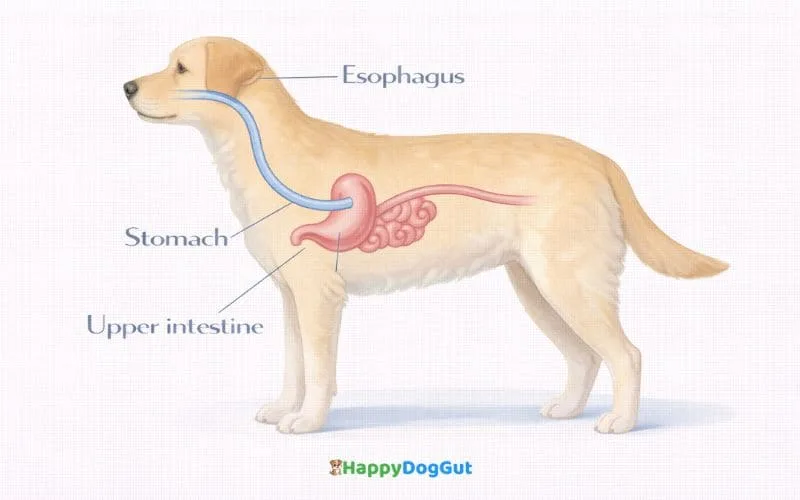
Endoscopy and biopsy are typically considered only when symptoms persist despite earlier testing and structured diet trials. This step is not the starting point—it’s part of a deeper evaluation when chronic GI signs remain unexplained.
🔬 Used when symptoms continue
If loose stool, vomiting, weight changes, or appetite issues don’t improve with basic testing and dietary adjustments, vets may recommend advanced diagnostics to gather more precise information.
🧪 Collecting Small tissue samples
During an endoscopy, a thin flexible camera is guided into the digestive tract while the dog is under anesthesia. Small tissue samples (biopsies) can be collected safely. These samples are then examined under a microscope by a pathologist.
🧠 Confirming the type of Inflammation
Biopsy results can help determine whether inflammation is present and what type it is. This distinction matters because different inflammatory patterns may respond to different management approaches.
📋 Helping Confirm conditions like IBD
While imaging and bloodwork can suggest inflammation, biopsy is often the most definitive way to confirm Inflammatory Bowel Disease (IBD). Even then, it’s part of a broader clinical picture—not a standalone label.
🛑 Not a First-line test
Because endoscopy requires anesthesia and specialized equipment, it’s generally reserved for cases where simpler steps haven’t provided answers. Many dogs improve before this stage is ever needed.
Understanding this step helps reduce fear. Advanced testing isn’t about assuming the worst—it’s about gaining clarity when the digestive system isn’t responding as expected, allowing care decisions to be informed and targeted rather than guess-based.
Why Vets Use a Layered Approach
When owners hear about multiple tests, it can feel overwhelming. But there’s a reason veterinarians follow a structured, layered process instead of jumping straight to advanced procedures.
🩺 Least Invasive options come first
Veterinary medicine prioritizes simple, low-risk steps before moving toward more involved testing. Fecal exams and bloodwork provide valuable information without anesthesia or complex procedures. If those early steps identify the issue, more invasive diagnostics may never be needed.
💰 Cost is considered thoughtfully
A layered approach also helps manage financial impact. Rather than ordering every test at once, veterinarians build logically from basic to advanced. This ensures owners aren’t paying for procedures that may not be necessary.
🐾 Reducing Stress for the dog
Chronic GI patients are often already uncomfortable. Limiting invasive testing unless clearly needed helps reduce additional stress and recovery time. Many dogs respond well to early-stage diagnostics and diet trials alone.
📚 Evidence-based Progression
This method isn’t guesswork—it’s grounded in clinical reasoning. Each step either rules something out or narrows possibilities. Decisions are made based on data gathered along the way, not assumptions.
A layered diagnostic pathway reflects responsible veterinary care. It balances clarity, safety, cost-awareness, and medical reasoning—supporting both the dog’s well-being and the owner’s peace of mind.
Conditions Vets May Be Evaluating
When a veterinarian works through the diagnostic process, the goal isn’t to label a condition quickly—it’s to understand what may be driving ongoing digestive symptoms. Chronic GI signs can overlap across several different conditions, which is why careful evaluation matters.
🦠 Inflammatory Bowel Disease (IBD)
IBD involves ongoing inflammation within the digestive tract. Symptoms often include chronic loose stool, vomiting, appetite fluctuations, or weight loss. Diagnosis typically requires multiple steps, and long-term management often includes structured nutrition plans such as those discussed in Diet Support for dogs with IBD.
💩 Colitis
Colitis refers to inflammation of the colon. Dogs with colitis often have frequent, urgent bowel movements and may pass mucus or small amounts of blood. Unlike small intestinal issues, colitis symptoms are usually more related to urgency and stool frequency.
🥩 Food Intolerance or Food Sensitivity
Not all chronic GI problems are immune-based. Some dogs react poorly to specific ingredients without having a true allergy. Diet elimination trials help determine whether symptoms improve when certain foods are removed.
🧪 Malabsorption Disorders
In some cases, the intestines may struggle to absorb nutrients properly. This can lead to chronic loose stool and weight changes despite a normal appetite.
🦠 Chronic Infection
Persistent bacterial or parasitic imbalances can sometimes contribute to ongoing digestive symptoms, especially if initial screening didn’t fully resolve the issue.
These possibilities explain why diagnosis takes time. Many conditions share similar outward signs, so veterinarians rely on a structured, layered approach to narrow down what’s truly affecting the gut.
For a calm, veterinarian-reviewed perspective on when digestive symptoms become more serious, Cornell University’s College of Veterinary Medicine provides an Authoritative Canine Diarrhea Overview, including common triggers, such as persistent loose stool or recurring gastrointestinal signs that may warrant professional evaluation.
🟢 FAQs: How Vets Diagnose Chronic GI Issues in Dogs
How do vets test for IBD in dogs?
Vets don’t rely on a single test to diagnose IBD. The process usually includes fecal exams, bloodwork, imaging, and diet elimination trials first. If inflammation is strongly suspected and symptoms persist, biopsy samples collected through endoscopy may help confirm the diagnosis. IBD is typically diagnosed after ruling out other common causes.
Do all dogs need endoscopy for chronic diarrhea?
No. Many dogs improve with simpler steps such as parasite screening, blood tests, and structured diet trials. Endoscopy is usually reserved for cases where symptoms continue despite initial evaluation. It’s considered an advanced diagnostic tool—not a first-line test.
Is bloodwork enough to diagnose GI problems?
Bloodwork provides important clues about inflammation, protein levels, organ function, and hydration status. However, it rarely gives a complete diagnosis on its own. Instead, it helps narrow possibilities and guide the next step in the diagnostic process.
How long does the diagnostic process usually take?
It depends on symptom severity and how the dog responds to early steps. Some issues are identified quickly through fecal testing or diet trials. More complex cases may require several weeks of structured evaluation before a clear direction is established.
Are diet trials considered diagnostic?
Yes. Structured diet elimination trials are often used as diagnostic tools. If symptoms improve significantly on a controlled diet and return when previous ingredients are reintroduced, that response provides meaningful information about food-related triggers.
Can ultrasound detect colitis?
Ultrasound can show thickening or changes in intestinal walls and surrounding structures, but it doesn’t confirm colitis by itself. Imaging offers supportive information that must be interpreted alongside clinical signs and other test results.
What if all tests come back normal?
When standard tests are normal, vets may reassess diet, stress factors, medication history, and symptom patterns. Sometimes chronic digestive sensitivity exists without a clear structural abnormality. In those cases, management focuses on long-term gut support rather than a single label.
Is chronic loose stool always IBD?
No. Chronic loose stool can have multiple causes, including food intolerance, colitis, malabsorption issues, or chronic infection. IBD is only one possible explanation and is usually considered after other causes have been ruled out.
Final Thoughts
Chronic digestive problems can feel overwhelming, but they rarely require rushed decisions. Ongoing loose stool, vomiting, or appetite changes are best evaluated through a structured, step-by-step approach rather than guesswork.
Veterinary diagnostics are designed to rule things out gradually. Fecal tests, bloodwork, and imaging help narrow possibilities before more advanced procedures are considered. This layered process protects your dog from unnecessary stress while building reliable information over time.
Diet trials are not just management tools—they’re often part of the diagnostic pathway. A carefully controlled food trial can reveal whether ingredients are contributing to symptoms, sometimes eliminating the need for more invasive testing.
Biopsy and endoscopy, when needed, are typically reserved for cases that don’t respond to earlier steps. They are not the starting point, but rather a final layer used to confirm specific types of inflammation.
Most importantly, patience plays a major role. Chronic GI issues take time to evaluate properly. Quick answers aren’t always accurate answers.
If your dog is dealing with ongoing digestive symptoms, learning about Best Dog foods for Chronic Diarrhea can support stool consistency during evaluation. For dogs diagnosed with inflammatory conditions, structured Diet Support for dogs with IBD may become part of long-term care. And if you’re unsure whether symptoms warrant professional attention, understanding When to See a Vet for Loose Stool can help guide that decision.
Clear steps, steady observation, and professional guidance together create the most balanced path forward for long-term gut health.

Hi, I’m Maddy, the writer behind HappyDogGut.com.
I’m passionate about helping Dog parents understand Gut Health, Sensitive Stomachs, and Natural Nutrition for dogs.
Every article I create is vet-approved, research-backed, and experience-driven, so your pup can enjoy a healthier, happier gut.
Happy Gut = Happy Dog!
All content on Happy Dog Gut follows our Editorial Policy.