
Food allergies and food intolerance are becoming increasingly common concerns among dog owners, especially as more dogs experience ongoing digestive issues, itchy skin, or unexplained reactions to regular diets. As a result, many pet parents come across the term hydrolyzed protein dog food—often through a veterinarian recommendation—and feel confused about what it actually means and whether their dog truly needs it.
🤔 Unlike grain-free or limited-ingredient diets that are widely marketed, hydrolyzed protein dog food is not a trend or lifestyle choice. It’s a form of medical nutrition designed to reduce the chance of the immune system reacting to food proteins. Because of its specialized purpose, it’s usually discussed when dogs show persistent signs of food sensitivity or intolerance that don’t improve with simpler diet changes.
🧠 Many owners first start exploring this option after noticing repeated symptoms such as loose stools, vomiting, or skin flare-ups—common signs associated with food-related sensitivities. Learning to recognize Signs of Food Intolerance in Dogs can help provide helpful context before considering advanced diet options. It’s also important to understand which ingredients are most likely to cause issues, especially when evaluating both regular foods and prescription diets.
This article explains what hydrolyzed protein dog food is, when veterinarians commonly recommend it, its pros and cons, and what alternatives may be appropriate—so you can make informed, confident decisions.
⚠️ This article is for educational purposes and does not replace veterinary advice.
What Is Hydrolyzed Protein Dog Food?
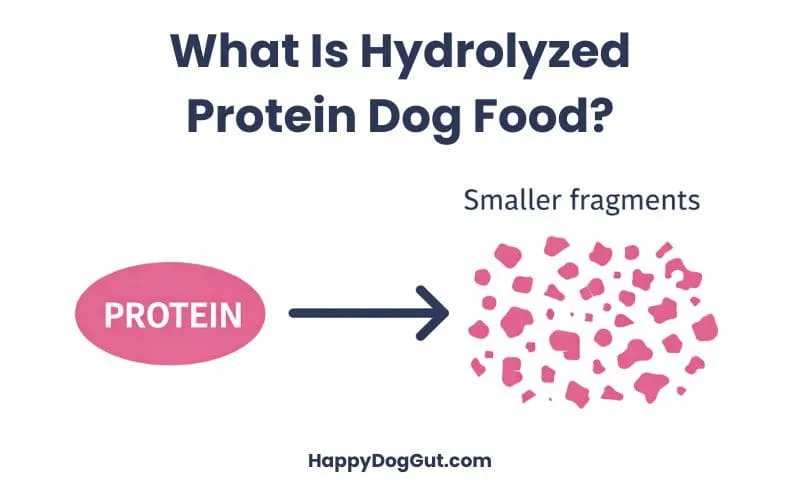
Hydrolyzed protein dog food is a specially formulated diet where protein sources are broken down into very small fragments, called peptides or amino acids. This process—known as hydrolysis—changes the structure of the protein so the dog’s immune system is far less likely to recognize it as a trigger.
🔬 Simple Definition (in everyday terms)
In regular dog food, proteins remain intact. In hydrolyzed diets, those proteins are pre-digested into tiny pieces before your dog eats them. Because the fragments are so small, the body typically doesn’t react to them the way it might react to whole proteins like chicken or beef.
🛡️ Why the Immune System Reacts less
Food allergies and some intolerances happen when the immune system mistakes a protein for a threat. Hydrolyzed protein dog food helps by making the protein fragments too small to set off that immune response. This is why these diets are often used during elimination trials or when multiple proteins seem to cause reactions.
🍽️ How it Differs from Regular Protein
Regular diets—even those labeled “gentle” or “natural”—still contain intact proteins. Limited ingredient foods reduce the number of ingredients, but the proteins are unchanged. Hydrolyzed diets go a step further by changing the protein itself, which is why they’re typically considered a medical nutrition tool rather than a standard diet option.
Hydrolyzed protein dog food isn’t about higher quality or trend-based feeding—it’s about reducing immune recognition of proteins. That’s what makes it unique, and why it’s usually discussed in more complex digestive or allergy-related situations.
For dogs that don’t require this level of protein modification, simpler approaches like Limited Ingredient Dog Foods may sometimes be enough to support digestion.
Why Vets Recommend Hydrolyzed Protein Diets

Veterinarians usually recommend hydrolyzed protein dog food in situations where simpler diet changes haven’t been enough. These diets are not meant for every dog, but they can be helpful when food-related reactions become persistent, confusing, or difficult to isolate.
🔁 Chronic Food Allergy Concern
When a dog shows repeated signs of food-related issues—such as digestive upset, skin irritation, or recurring discomfort—vets may look for ways to reduce immune reactions to food altogether. Hydrolyzed diets are designed specifically to limit immune recognition of proteins, which is why they’re often discussed when allergies are suspected but not clearly identified.
According to the WebMD, Food allergies and Food-related Immune responses can be complex and are often explained in veterinary and pet health guides that describe how dogs’ bodies may react to certain proteins and dietary components. Trusted medical sources note that gastrointestinal signs, skin irritation, and recurrent symptoms can sometimes be linked to adverse food reactions, and that careful dietary evaluation—including hypoallergenic and hydrolyzed approaches—is part of how professionals assess and manage these situations.
🧪 Used as an Elimination Diet Tool
One of the most common reasons vets use hydrolyzed protein dog food is during an elimination diet. Because the proteins are broken down into very small fragments, the diet helps remove common triggers while keeping nutrition consistent. This makes it easier to observe whether symptoms improve without constantly changing ingredients.
Hydrolyzed diets are frequently used during an Elimination Diet Trial, especially when dogs have already been exposed to multiple protein sources.
🐕 For Dogs reacting to Multiple Proteins
Some dogs don’t tolerate common proteins like chicken, beef, lamb, or fish—and may even react to several limited-ingredient foods. In these cases, switching proteins alone may not help. Hydrolyzed diets are sometimes chosen when Novel Protein Diets haven’t produced clear improvement.
🍽️ Support for Sensitive Digestion
Dogs with sensitive stomachs may struggle with intact proteins even when allergies aren’t obvious. While hydrolyzed diets aren’t the first option for mild sensitivity, they may be considered when gentler approaches—such as carefully selected Dog Foods for Sensitive Stomachs—don’t fully resolve symptoms.
Veterinarians recommend hydrolyzed protein dog food as a targeted nutrition strategy, not a default solution. It’s typically used when food reactions are ongoing, complex, or unclear—and when careful observation and consistency are especially important.
Conditions Where Hydrolyzed Dog Food Is Commonly Used
Hydrolyzed protein dog food is typically discussed in specific situations where food-related reactions are suspected but difficult to pinpoint. While it’s not meant for casual diet changes, veterinarians may consider it when symptoms are ongoing, recurring, or involve multiple systems.
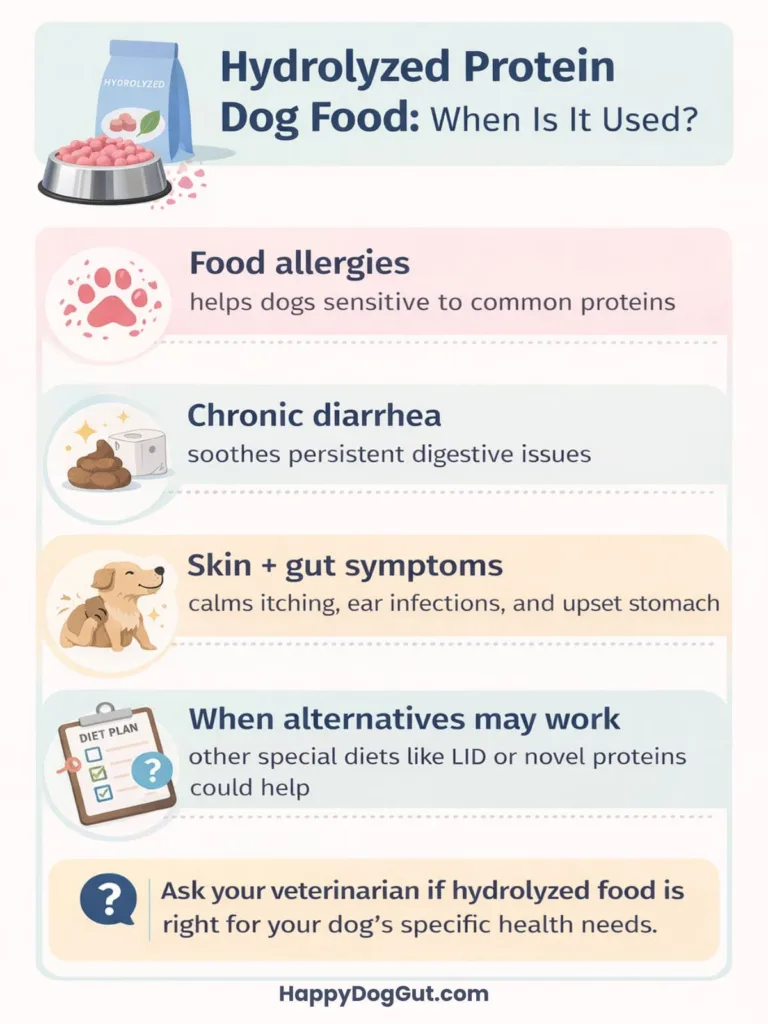
🍽️ Food Allergies
Dogs with suspected food allergies may react to intact proteins commonly found in standard diets. When symptoms persist despite switching proteins or trying limited-ingredient foods, hydrolyzed diets are sometimes used to minimize immune recognition of food proteins. This can help create a more controlled feeding environment while observing symptom changes.
💩 Chronic Diarrhea
Ongoing or frequently recurring diarrhea can be frustrating for both dogs and owners. When dietary causes are suspected—especially after other gentle diets haven’t worked—hydrolyzed protein dog food may be considered to reduce digestive stress and limit potential triggers. For a broader look at dietary approaches commonly used for long-term stool issues, our guide on Foods often used for Chronic Diarrhea Support offers additional context.
🧴 Skin and Gut Symptoms Together
Some dogs show both digestive signs (like loose stools or vomiting) and skin-related issues (such as itching or ear discomfort). This combination can point toward food-related sensitivity rather than a single isolated issue. In these cases, hydrolyzed diets may be discussed as a way to simplify protein exposure while monitoring both skin and digestive responses.
Hydrolyzed protein dog food is usually considered when symptoms involve more than one system or when simpler diet changes haven’t provided clear answers. Its role is to support observation and consistency—not to serve as a one-size-fits-all solution.
Pros & Cons of Hydrolyzed Protein Dog Food
Like any specialized diet, hydrolyzed protein dog food has clear advantages—but it also comes with limitations. Understanding both sides helps set realistic expectations and avoids unnecessary long-term use when simpler options may work just as well.
✅ Pros of Hydrolyzed Protein Dog Food
🛡️ Minimal Immune reaction
Because the proteins are broken into very small fragments, the immune system is less likely to recognize them as allergens. This is the main reason hydrolyzed diets are often discussed when food allergies or complex sensitivities are suspected.
🧪 Helpful during Elimination Diets
Hydrolyzed protein dog food is commonly used as part of elimination-style feeding plans. Its highly controlled protein structure allows for more consistent observation of symptoms without constantly changing ingredients.
⚙️ Highly Controlled Formulation
These diets are carefully formulated with strict ingredient control, which reduces variability. This consistency can be useful when dogs have reacted unpredictably to multiple foods or proteins in the past.
❌ Cons of Hydrolyzed Protein Dog Food
💰 More Expensive than Standard Diets
Hydrolyzed diets are typically priced higher due to specialized processing and formulation. This can make them less practical as a first option or for long-term feeding without a clear need.
😐 Less Palatable for Some Dogs
Because the proteins are altered, some dogs find hydrolyzed foods less appealing in taste or smell. This can affect appetite, especially during the first few weeks.
🔁 Not Always needed long-term
Once symptoms improve and triggers are better understood, many dogs can transition to less restrictive options—such as carefully chosen Limited Ingredient Dog Foods—without ongoing issues.
Hydrolyzed protein dog food is a targeted nutrition tool, not a default solution. It offers valuable benefits in specific situations, but it’s not always the most practical or necessary choice once dietary triggers are better managed.
Hydrolyzed Protein vs Other Special Diets
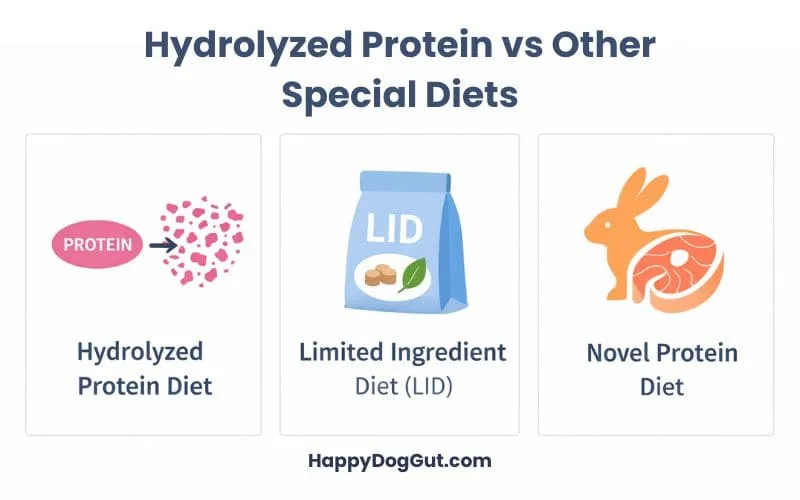
When managing food-related sensitivities, dog owners often encounter multiple “special diet” options. Understanding how hydrolyzed protein dog food compares to other commonly recommended diets can help clarify when each approach makes sense—and when it may not.
🧾 Hydrolyzed vs Limited Ingredient Diets
🥣 Limited Ingredient Diets (LID) focus on reducing the number of ingredients—usually one protein and one carbohydrate—to minimize potential triggers. However, the proteins remain intact, which means dogs with true immune reactions may still respond poorly.
🧬 Hydrolyzed Protein dog food, on the other hand, changes the protein structure itself. This makes it less likely to trigger immune recognition, which is why it’s often considered when LID options haven’t produced clear improvement.
If your dog shows mild or occasional sensitivity, a limited ingredient approach may be enough. Our guide on Limited Ingredient Dog Foods explains when this simpler option is commonly used.
🦆 Hydrolyzed vs Novel Protein Diets
🦌 Novel Protein Diets introduce proteins a dog hasn’t eaten before—such as duck, venison, or rabbit—to reduce the chance of a reaction. These diets can be very effective for many dogs, especially when common proteins are the issue.
🧬 Hydrolyzed Protein Dog Food differs in that it doesn’t rely on “new” proteins. Instead, it alters proteins so they’re less recognizable to the immune system. This makes hydrolyzed diets useful when dogs react to multiple proteins, including novel ones.
For dogs earlier in the sensitivity journey, novel proteins may be a practical step before moving to hydrolyzed options. You can explore this approach in more detail in our guide to Novel Protein Diets for Dogs.
🧪 Hydrolyzed vs Hypoallergenic Foods
🔬 The term “hypoallergenic” can be confusing. Some hypoallergenic foods are simply limited ingredient or novel protein diets, while others are actually hydrolyzed.
🧬 Hydrolyzed Protein Dog Food is typically the most controlled form of hypoallergenic nutrition because the protein structure is intentionally modified. Not all foods labeled hypoallergenic use this process, which is why reading labels and understanding formulation matters.
Our overview of Hypoallergenic Dog Foods for Sensitive Stomachs breaks down how these diets are commonly categorized and used.
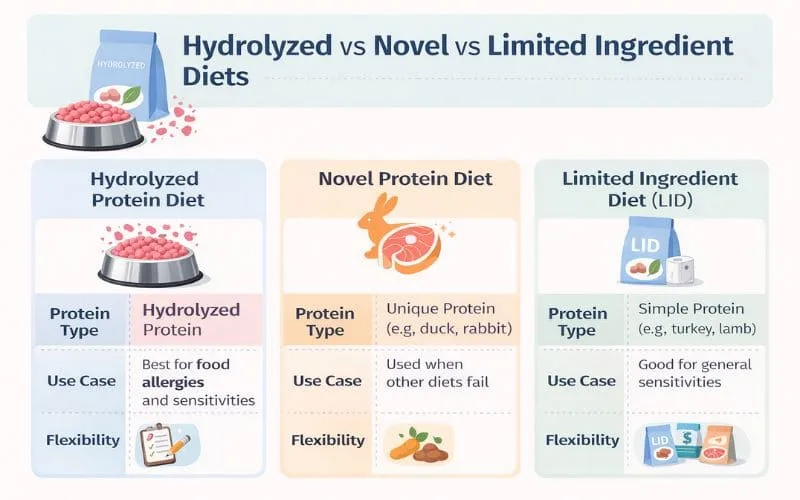
Hydrolyzed protein dog food offers the highest level of protein modification, but it’s not always the first or best step. Limited ingredient and novel protein diets often work well earlier on, while hydrolyzed diets are usually considered when reactions are persistent or unclear.
Is Hydrolyzed Protein Dog Food Safe Long-Term?
A common question among dog owners is whether hydrolyzed protein dog food is meant to be a lifelong solution or a temporary step. The answer often depends on why the diet was started and how the dog responds over time.
🕒 Short-term vs Long-term use
In many cases, hydrolyzed diets are introduced as a short-term or trial diet, especially during elimination phases. The goal is to calm the immune response and observe whether symptoms improve when potential food triggers are removed. For some dogs, this period helps clarify whether food is truly the underlying issue.
For other dogs—particularly those with complex or recurring reactions—hydrolyzed protein dog food may be used for a longer period. This doesn’t mean it’s unsafe, but it does mean the diet is being used as a management tool rather than a cure.
🩺 Why Veterinary Supervision Matters
Because hydrolyzed diets are highly specialized, they’re typically monitored by a veterinarian. Ongoing guidance helps ensure the diet continues to meet nutritional needs and that symptoms are improving as expected. It also helps determine whether and when other diet options may be appropriate.
🔁 Transitioning off Hydrolyzed Food
If symptoms stabilize, many dogs can eventually transition to less restrictive diets—such as carefully selected sensitive-stomach or limited-ingredient foods. A slow, structured transition is important to avoid digestive setbacks. Following a proper Dog Food Transition Plan supports smoother changes and clearer observation of how a dog responds.
Hydrolyzed protein dog food can be safe both short-term and long-term when used appropriately, but it’s rarely meant to be a default choice forever. The focus is stability first, then reassessment—always guided by how the dog responds.
Alternatives to Hydrolyzed Protein Dog Food
While hydrolyzed protein dog food can be helpful in specific situations, it’s not the only option for managing food-related sensitivities. In many cases, dogs respond well to less restrictive diets that still support digestion and reduce exposure to common triggers. Exploring alternatives can be especially useful once symptoms stabilize or if hydrolyzed diets feel unnecessary long-term.
🦆 Novel Protein Foods
Novel protein diets use protein sources a dog hasn’t eaten before—such as duck, venison, or rabbit—to reduce the chance of an immune reaction. These diets work by changing the protein source, rather than altering the protein structure itself. For many dogs with mild to moderate sensitivities, this approach is often effective and easier to maintain than hydrolyzed diets. Our guide to Best Novel Protein Dog Foods explains when this option is commonly considered.
🧾 Limited Ingredient Diets
Limited ingredient diets focus on simplicity, usually offering one protein and one carbohydrate source. While the proteins remain intact, reducing ingredient variety can still lower digestive stress. These diets are often a practical step before considering hydrolyzed protein dog food, especially for dogs with less complex sensitivities. You can learn more about how this approach works in our overview of Best Limited Ingredient Dog Foods.
🐕 Digestive Support Diets
Some dogs don’t need protein modification at all but benefit from formulas designed to support digestion. These diets typically include easily digestible proteins, balanced fiber, and gut-supporting nutrients. They may be appropriate when symptoms are primarily digestive rather than immune-driven.
Hydrolyzed protein dog food is one tool among many. Novel protein, limited ingredient, and digestive support diets can often meet a dog’s needs with fewer restrictions—especially when sensitivities are mild or improving. Choosing the right option depends on how the dog responds over time, not on labels alone.
How to Transition to Hydrolyzed Dog Food Safely
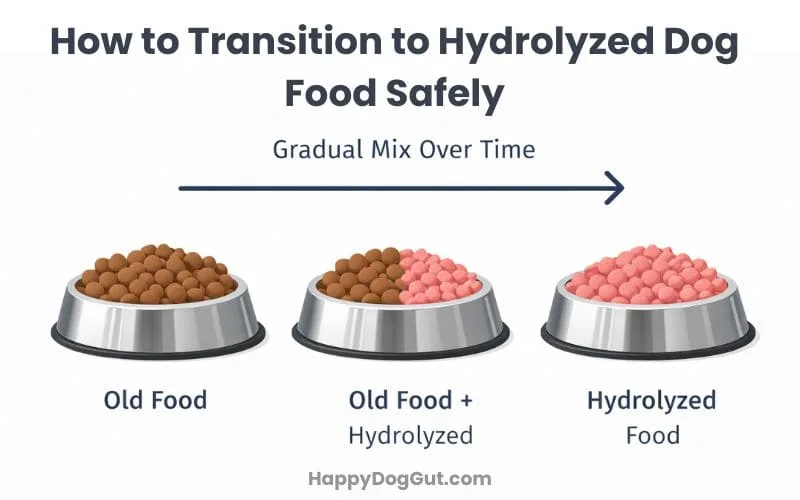
Switching to hydrolyzed protein dog food should always be done gradually. Even though these diets are designed to be gentle, a sudden change can still upset digestion—especially in dogs that already have sensitive stomachs.
🗓️ Follow a 10–14 Day Transition
A slow transition allows the digestive system to adjust without added stress. A typical approach includes:
- Days 1–3: Mostly current food, small amount of hydrolyzed food
- Days 4–7: Gradually increase hydrolyzed food
- Days 8–14: Fully transition to hydrolyzed protein dog food
Taking your time helps reduce the risk of loose stools, gas, or refusal to eat during the switch.
🚫 Avoid Treats during The Transition
Treats—even ones your dog usually tolerates—can interfere with observation during this period. Eliminating treats keeps ingredients consistent and makes it easier to tell how your dog is responding to the new diet. Once digestion stabilizes, treats can be reintroduced carefully if appropriate.
👀 Monitor Digestion and Behavior
Pay attention to stool quality, appetite, energy level, and any skin changes. Minor adjustments are normal early on, but patterns matter more than single days.
For a detailed breakdown of transition timing and common mistakes to avoid, our Dog Food Transition Guide provides additional step-by-step support.
Transitioning to hydrolyzed protein dog food slowly—and without extra dietary variables—gives the best chance for digestive stability and clear results.
When Hydrolyzed Protein Is NOT Necessary
While hydrolyzed protein dog food can be helpful in specific situations, it isn’t always the right or required choice. Many dogs with digestive sensitivity improve through simpler dietary adjustments, without needing highly specialized protein modification.
🌱 Mild Digestive Sensitivities
Dogs that experience occasional gas, soft stools, or mild stomach upset—especially after diet changes—often respond well to gentler options. In these cases, improving meal consistency or switching to a sensitive-stomach formula may be enough without moving to a hydrolyzed diet.
🧾 Single-Ingredient Intolerance
If a dog reacts to just one specific ingredient (such as chicken or beef), identifying and removing that trigger can resolve symptoms. Diets using alternative proteins or limited ingredient formulas may work just as effectively, without the need for hydrolyzed protein dog food.
🍪 Treat-Related Reactions
In many households, digestive upset comes not from meals but from snacks. Rich treats, high-fat chews, or ingredient-heavy rewards can quietly trigger loose stools or discomfort. Before changing a dog’s main diet, it’s worth evaluating treat choices and quantities. Our guide to Best Dog Treats for Sensitive Stomachs explains how snack selection can influence digestion.
Hydrolyzed protein dog food is most useful when reactions are persistent, complex, or unclear. When sensitivities are mild, isolated, or treat-related, simpler solutions may provide the same relief with fewer restrictions.
FAQs About Hydrolyzed Protein Dog Food
What is hydrolyzed protein dog food?
Hydrolyzed protein dog food is a specialized diet where proteins are broken down into very small fragments. These fragments are less likely to trigger an immune response in dogs that struggle with food allergies or intolerances. This type of food is usually recommended when standard or limited-ingredient diets haven’t helped clarify the cause of symptoms.
Is hydrolyzed dog food better than grain-free dog food?
Hydrolyzed dog food and grain-free food serve different purposes. Grain-free diets remove grains but still contain intact proteins, while hydrolyzed protein dog food changes the protein structure itself. For dogs with true food allergies or reactions to multiple proteins, hydrolyzed diets may be more effective than simply removing grains.
Can puppies eat hydrolyzed protein dog food?
Yes, puppies can eat hydrolyzed protein dog food when it’s formulated to meet growth requirements and recommended by a veterinarian. Puppies have sensitive digestive systems, so these diets are sometimes used when early food reactions are suspected. However, they’re usually chosen carefully to ensure proper nutrition during growth.
How long should dogs stay on hydrolyzed protein food?
The length of time varies. Some dogs use hydrolyzed protein dog food for several weeks during an elimination phase, while others may stay on it longer if symptoms improve and alternatives cause flare-ups. The goal is usually stability first, followed by reassessment rather than permanent use by default.
Is hydrolyzed protein dog food only for allergies?
Not always. While it’s commonly used for food allergies, hydrolyzed protein dog food may also be considered for dogs with chronic digestive issues or unclear food reactions. It helps simplify protein exposure when symptoms involve both digestion and skin.
Does hydrolyzed protein dog food help with chronic diarrhea?
It can help some dogs when diarrhea is suspected to be food-related. By reducing immune and digestive reactions to proteins, hydrolyzed diets may support more consistent stools. However, diarrhea can have many causes, so diet is only one part of the overall picture.
Is hydrolyzed protein dog food safe for long-term feeding?
Hydrolyzed protein dog food is generally safe when used appropriately and monitored. Some dogs remain on it long-term without issues, while others transition to less restrictive diets once triggers are identified. Ongoing evaluation helps determine whether continued use is necessary.
Can dogs eat treats while on hydrolyzed protein food?
During elimination or trial phases, treats are usually avoided unless they match the same hydrolyzed formulation. Adding regular treats can reintroduce proteins that interfere with results. Once stability is achieved, treat choices may be reassessed carefully.
What are alternatives if hydrolyzed protein dog food isn’t needed?
Many dogs do well on novel protein diets, limited ingredient foods, or gentle digestive-support formulas. These options can be less restrictive while still supporting sensitive digestion. Hydrolyzed protein dog food is typically reserved for more complex or persistent cases.
Final Thoughts: Using Hydrolyzed Protein Dog Food Wisely
Hydrolyzed protein dog food is best viewed as a specialized nutrition tool—not a default feeding choice. It plays an important role when food-related reactions are persistent, unclear, or involve both digestive and skin symptoms. For many dogs, it provides a structured way to reduce immune responses and bring stability back to feeding routines.
🩺 Veterinary guidance matters. Because hydrolyzed diets are designed for specific situations, professional input helps ensure they’re used appropriately and for the right length of time. This guidance also supports timely reassessment, which is just as important as starting the diet itself.
🌱 Many dogs don’t need hydrolyzed food long-term. Once triggers are better understood and symptoms improve, less restrictive options often work well. Exploring alternatives such as Novel Protein Diets or carefully selected sensitive-stomach foods can provide similar benefits without ongoing limitations.
If you’re navigating ongoing digestive or allergy-related concerns, understanding the broader context is key. Learning more about Signs of Food Intolerance in Dogs can help identify patterns earlier. You may also find it helpful to explore Novel Protein Dog Foods as a next step, or review options commonly used for Sensitive Stomach Diets.
Hydrolyzed protein dog food works best when it’s part of a thoughtful, step-by-step approach—focused on stability first, then flexibility as your dog’s needs become clearer.
With the right information and careful observation, feeding decisions can feel less overwhelming and more confident over time.

Hi, I’m Maddy, the writer behind HappyDogGut.com.
I’m passionate about helping Dog parents understand Gut Health, Sensitive Stomachs, and Natural Nutrition for dogs.
Every article I create is vet-approved, research-backed, and experience-driven, so your pup can enjoy a healthier, happier gut.
Happy Gut = Happy Dog!
All content on Happy Dog Gut follows our Editorial Policy.