
Loose stool in dogs can be unsettling, but it’s important to know that loose stool does not automatically mean an emergency. Many dogs experience soft or loosely formed stools at some point, and one episode alone doesn’t always signal a serious problem. The challenge for most owners is knowing where to draw the line—and that’s where anxiety often starts.
One common source of confusion is the difference between loose stool and diarrhea. Loose stool may still have some form, while diarrhea is typically watery and urgent. Because the terms are often used interchangeably online, it’s easy to assume the worst before understanding what’s actually happening.
For many owners, the biggest question is simple but stressful: when to see a vet for loose stool. Should you wait and observe, or is it time to make an appointment? Google searches around this topic are usually fear-driven, fueled by uncertainty rather than clear guidance.
Dogs can sometimes have soft stools while still acting playful, eating normally, and showing no other changes. If that sounds familiar, learning Why does my dog have Soft Stools but is acting normal can help put those signs into perspective. Timeline also matters—understanding How long does Diarrhea last in dogs often makes the decision process clearer.
This guide is designed to provide calm boundaries and vet-informed clarity, helping you decide when observation is enough and when professional support makes sense—without jumping to conclusions or self-diagnosing.
⚠️ This article is for educational purposes only and does not replace veterinary advice.
What Is Considered Loose Stool vs Diarrhea in Dogs?
Understanding the difference between loose stool and diarrhea can make it much easier to decide whether to observe calmly or take the next step.
💩 Loose but formed vs Watery stool
Loose stool is softer than normal but still has some shape or form when passed. Diarrhea, on the other hand, is typically watery, runny, and harder for dogs to control. This distinction matters because loose stool often reflects mild digestive upset, while watery diarrhea usually places more stress on the body.
⏱️ Frequency matters as much as consistency
How often your dog needs to go outside is just as important as what the stool looks like. A dog passing loose stool once or twice may simply be experiencing a temporary digestive change. Repeated trips outside, especially with urgency, suggest the gut may be more irritated.
🟢 Why loose stool is often monitored first
Because loose stool is frequently short-term and mild, it’s often reasonable to monitor it before rushing to the vet—especially if your dog is eating, drinking, and acting normally. Many cases improve as the digestive system settles.
Knowing these differences helps owners stay calm, avoid unnecessary worry, and focus on patterns rather than reacting to a single bowel movement.
When to See a Vet for Loose Stool
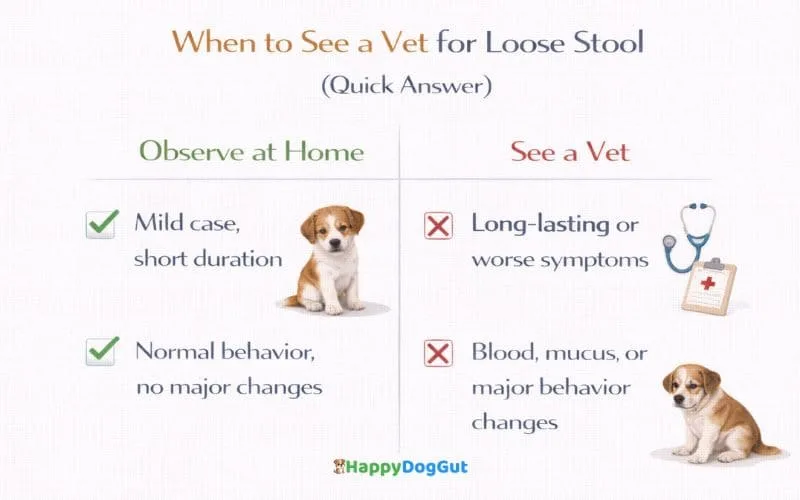
If you’re trying to decide when to see a vet for loose stool, the key isn’t a single soft bowel movement—it’s the overall pattern your dog is showing over time. Loose stool often starts as a mild issue, but certain signals shift it from “safe to observe” to “worth getting checked.”
🟢 Loose Stool can usually be observed when:
- Stool is soft but still somewhat formed
- Episodes are infrequent and not increasing
- Your dog is eating normally and staying hydrated
- Energy levels remain playful and alert
- Stool consistency shows gradual improvement over 24–48 hours
In these situations, the digestive system is often adjusting on its own, and calm observation is usually appropriate.
⚠️ Seeing a vet becomes more important when:
- Loose stool lasts several days without improvement
- Stool becomes progressively softer or watery
- Bowel movements become very frequent or urgent
- Appetite drops or meals are skipped repeatedly
- Energy levels decrease or your dog seems “off”
- Blood or mucus appears more than once
- Loose stool improves briefly but keeps returning in cycles
These patterns suggest the gut may not be settling on its own and could benefit from professional evaluation.
🧠 Why patterns matter more than a Single stool
One soft stool doesn’t explain much. What matters is direction—is your dog getting better, staying the same, or getting worse? Vets look at duration, severity, and behavior together, not in isolation. That same approach helps owners decide when observation is enough and when it’s time to get support.
This framework helps reduce fear-based decisions while still making room for timely care when loose stool crosses from mild digestive upset into something that needs attention.
Timeline Rules — How Long Loose Stool Is Too Long?
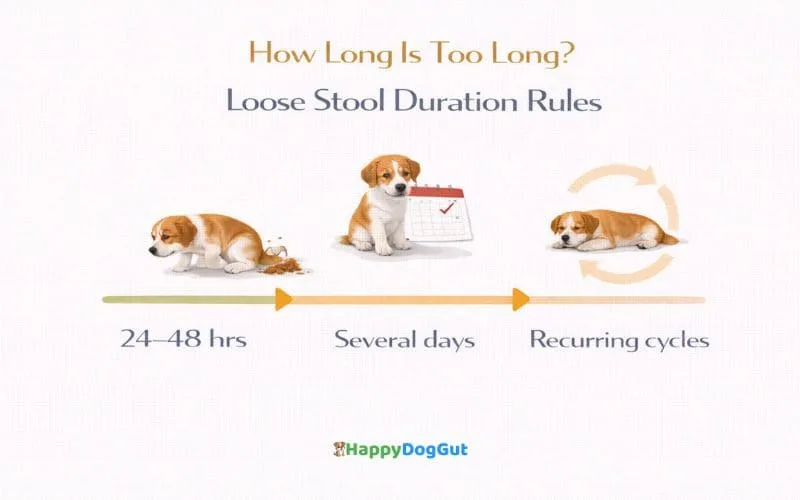
When loose stool shows up, time and pattern are often the most helpful guides. Instead of focusing on a single bowel movement, it’s more useful to look at how stool quality changes over a short window.
The 24–48 hour Monitoring Window
In many dogs, loose stool related to mild digestive upset, stress, or a recent diet change begins to settle within one to two days. During this time, stools may still be soft, but you should start to see small signs of stabilization—such as fewer trips outside or slightly better form.
Improvement Matters more than Perfection
You’re not waiting for stool to become completely normal right away. What matters is direction. Gradual improvement might look like stool holding shape a bit better, longer gaps between bowel movements, or your dog returning to normal energy and appetite. When there’s no change at all—or stool becomes softer or more frequent—that lack of progress is meaningful.
Repeating soft stool cycles
Loose stool that clears up briefly and then returns follows a different pattern than a one-time upset. These repeating cycles often point to ongoing digestive sensitivity or an unresolved trigger, rather than something that will fully resolve on its own.
Looking at timelines helps owners avoid both extremes—worrying too early or waiting too long. For a deeper look at expected recovery windows across different digestive situations, our guide on How long does Diarrhea last in dogs offers helpful context for deciding when observation is enough and when to reassess.
Emergency Symptoms That Require Immediate Vet Care
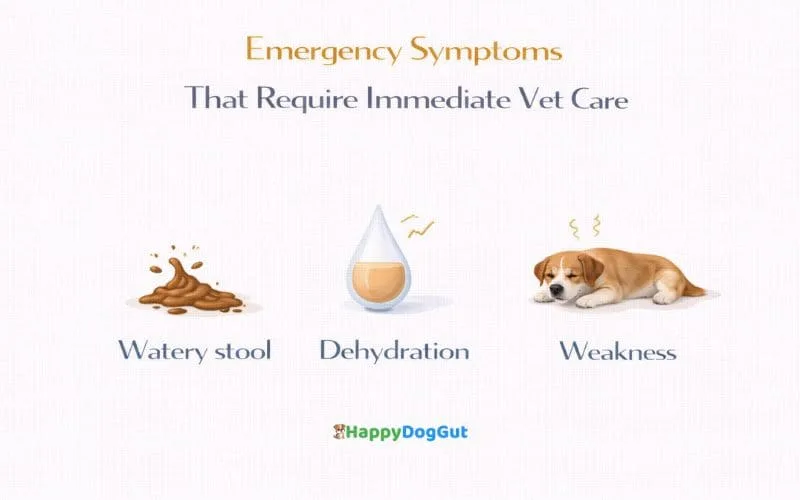
Most cases of loose stool don’t require urgent care. However, certain signs signal that the body may be under significant stress and waiting is no longer the safest option.
💦 Profuse, Watery Stool that doesn’t Slow down
When stool is completely liquid and happening frequently within a short period, the risk of rapid fluid loss increases. This pattern suggests the digestive system isn’t stabilizing on its own.
🩸 Blood in Stool combined with Weakness
Small streaks of blood alone don’t always signal urgency, but blood paired with weakness, collapse, or extreme fatigue changes the situation. This combination suggests the issue may be affecting more than just digestion.
🚰 Clear Signs of Dehydration
Dry or tacky gums, very little urine output, sunken eyes, or reluctance to drink can indicate dehydration. When fluid loss isn’t being replaced, the body needs support quickly.
Before symptoms become severe, maintaining hydration is a key priority. Electrolyte solutions may help support fluid balance in mild cases, especially when stool is loose but the dog is still active. Learn more about safe usage in our guide on Electrolytes for dogs with diarrhea.
🐾 Severe Lethargy or Collapse
A dog that is unusually weak, unwilling to move, or not responsive to normal interaction may be experiencing systemic stress rather than a mild gut issue.
This section isn’t meant to cause alarm. It exists to clearly define urgent boundaries—situations where loose stool is no longer something to monitor at home and veterinary care should be sought promptly.
Risk Factors That Lower the “Wait It Out” Threshold
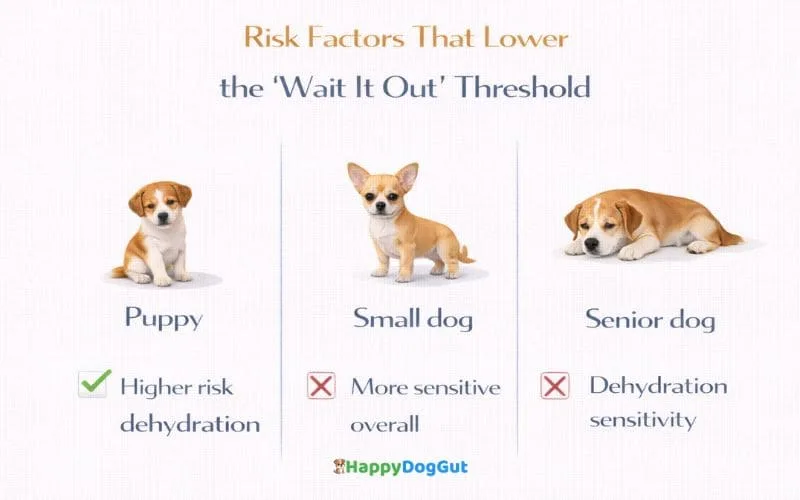
Not every dog has the same margin for recovery when loose stool appears. Certain risk factors make it more important to move from observation to veterinary guidance sooner—even if stool changes seem mild at first.
🐶 Puppies and Senior dogs
Puppies have developing digestive and immune systems, while senior dogs may process food and fluids more slowly. In both cases, loose stool can affect hydration and overall balance more quickly, leaving less room to simply “wait it out.”
🐾 Small Breeds
Smaller dogs have less fluid reserve than larger breeds. Even short periods of loose stool can lead to faster dehydration or noticeable energy changes, which is why soft stool in small dogs often deserves closer monitoring.
🦠 Dogs with a history of Gut issues
Dogs that have experienced recurring digestive upset, food sensitivities, or chronic loose stool may take longer to recover. Their digestive systems are often more reactive, making repeated or lingering soft stool more meaningful than in dogs with no gut history.
💊 Dogs currently on Medication
Some medications can affect digestion or fluid balance. When loose stool appears in dogs taking ongoing medication, it’s important to consider how their system is already being challenged, which can lower the threshold for seeking professional input.
Understanding these risk factors helps owners make more informed decisions. It’s not about assuming the worst—it’s about recognizing when a dog has less buffer for digestive disruption and may benefit from earlier support rather than delayed action.
Loose Stool With Behavior Changes — Why Vets Take This Seriously
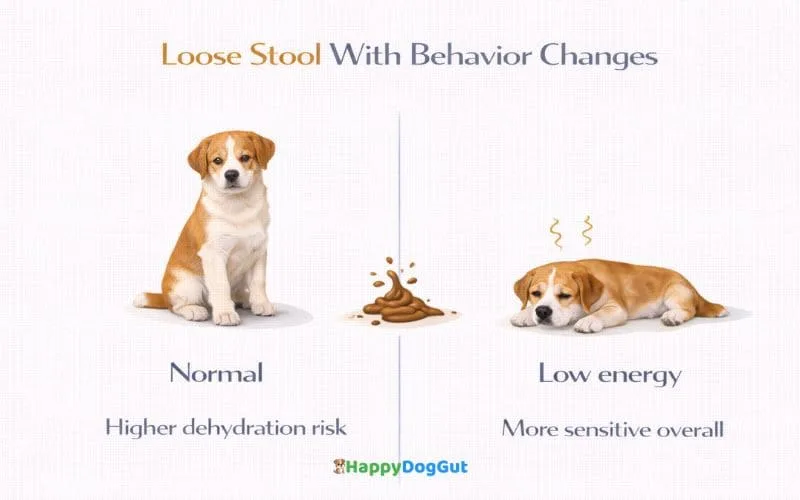
Loose stool on its own can be mild. Loose stool plus behavior changes is what shifts the situation. Veterinarians look beyond poop because behavior shows how the whole body is coping.
🍽️ Appetite Loss or Reduced Interest in food
Skipping one meal can happen with a minor stomach upset. But when a dog repeatedly refuses food, eats far less than usual, or shows no interest in treats they normally love, it suggests the digestive issue may be affecting overall comfort.
🐕 Drop in Energy or Enthusiasm
Most dogs with mild loose stool still want to play, walk, and interact. A noticeable energy drop—sleeping more than usual, avoiding activity, or seeming tired—adds weight to the stool changes and signals the body may be under more stress.
🧠 “Not themselves” behavior
Owners often sense subtle changes before anything else. Restlessness, hiding, clinginess, irritability, or just seeming off can be important clues. These shifts matter even if stool doesn’t look dramatically worse.
🔍 Why Stool alone isn’t enough
Poop shows what’s happening in the gut. Behavior shows how the dog feels overall. Vets assess both together because a dog can compensate for digestive upset—until they can’t.
🧭 Behavior > Poop Principle
A soft stool with a happy, energetic dog is very different from the same stool paired with appetite loss and lethargy. When behavior changes accompany loose stool, vets take it more seriously because it often points to a bigger impact on the body, not just digestion.
Watching the whole dog—not just the litter box—helps owners make better, calmer decisions about next steps.
What Tests a Vet May Consider
When loose stool doesn’t follow a typical recovery pattern, veterinarians may look beyond observation alone. This doesn’t mean extensive testing is always needed—often, it starts with gathering clearer information.
🧪 Fecal Tests (Basic overview)
Fecal tests help vets look for common contributors to digestive upset, such as parasites or imbalances that may affect stool quality. These tests are often simple and non-invasive, providing helpful context rather than immediate answers.
📋 Diet History Review
In many cases, a detailed diet review is just as important as any test. Vets often ask about recent food changes, treats, table scraps, supplements, and feeding routines. Understanding what a dog eats—and how often it changes—can explain loose stool without needing further testing.
🧠 Why tests aren’t always the first step
Loose stool is frequently linked to temporary digestive sensitivity or diet-related factors. Because of this, vets may first recommend observation, diet consistency, or gentle adjustments before moving toward diagnostics. Testing is typically considered when symptoms persist, repeat, or appear alongside behavior changes.
For owners preparing for a visit, understanding what tests vets use for chronic digestive issues can reduce uncertainty and make the evaluation process feel more predictable.
This preview is meant to set expectations—not provide instructions. Veterinary decisions are based on the full picture, including stool patterns, behavior, history, and response over time.
When Diet Support Is Tried Before a Vet Visit
In some situations, loose stool can be managed initially with calm observation and diet support—especially when symptoms are mild and your dog otherwise seems well.
🟢 Mild loose Stool with no other symptoms
When stool is soft but still formed, bowel movements aren’t overly frequent, and there’s no blood or ongoing mucus, many vets consider short-term monitoring reasonable. This is especially true if loose stool appears after a minor diet change or routine disruption.
🐾 Dog is acting normal
Energy levels, appetite, and behavior matter. Dogs that remain playful, alert, and interested in food often tolerate gentle diet adjustments without needing immediate veterinary care. Behavior stability supports the decision to observe rather than act quickly.
⏱️ Short duration and Improving trend
Loose stool that begins to improve within 24–48 hours—fewer bathroom trips, slightly firmer stool, or longer gaps between bowel movements—often responds well to diet consistency rather than testing.
In these cases, owners sometimes explore targeted nutrition options. Learning about Dog foods for Loose Stool can help identify diets designed to support stool firmness, while guides on Best Dog foods for Sensitive Stomachs offer insight into gentler formulations that many sensitive dogs tolerate better.
Diet support isn’t about replacing veterinary care—it’s about recognizing when a mild digestive issue may benefit from consistency before escalation.
When Loose Stool May Signal a Chronic Gut Issue
Loose stool that doesn’t fully resolve can follow a different pattern than a short-term digestive upset. Recognizing these patterns helps owners understand when the gut may need longer-term support rather than more time.
🔁 Stool that never fully Firms up
Some dogs don’t have dramatic diarrhea but also never produce consistently firm stools. When soft stool becomes the “normal,” it may suggest the digestive system isn’t fully stabilizing between meals or days.
📆 Recurrent Soft Stool over time
Loose stool that improves briefly and then returns—week after week—often points to an unresolved trigger. These cycles can be linked to food sensitivities, stress-related gut responses, or ongoing digestive imbalance rather than a one-time issue.
🧠 Inflammation as a Possible factor
When the gut lining is irritated over time, it can interfere with normal stool formation. This doesn’t automatically mean a serious condition, but chronic irritation or inflammation may play a role when loose stool becomes persistent or unpredictable.
For dogs showing these patterns, a longer-term approach is often more helpful than repeated short fixes. Learning about Diet Support for dogs with IBD can provide context on how structured, gut-aware feeding strategies are used to support dogs with ongoing digestive sensitivity—without jumping to conclusions or self-diagnosing.
Understanding when loose stool shifts from temporary to chronic helps owners move from waiting it out to supporting gut balance more intentionally.
Puppies With Loose Stool — When to See a Vet Faster
Loose stool in puppies deserves a bit more caution—not because something is always wrong, but because puppies have less room for error when digestion is off.
💧 Faster Dehydration Risk
Puppies lose fluids more quickly than adult dogs and have smaller reserves to begin with. Even mild loose stool can affect hydration sooner, which is why timelines tend to matter more at a younger age.
🦴 Immature Digestion
A puppy’s digestive system is still developing. Changes in food, treats, stress, or environment can disrupt digestion more easily, and recovery may not follow the same predictable pattern as in adult dogs.
⚖️ Narrow Safety Margin
Because puppies are growing rapidly, loose stool paired with appetite changes, low energy, or reduced drinking can have a bigger impact in a shorter amount of time. These combinations lower the threshold for seeking guidance.
🐾 Reassurance with Awareness
Many puppies experience mild digestive upset and recover just fine. The key is watching trends closely and acting sooner if stool doesn’t improve or behavior changes appear.
With puppies, it’s often better to check in earlier rather than wait too long—supporting growth and comfort without unnecessary worry.
FAQs: When to See a Vet for Loose Stool
How long can loose stool last before seeing a vet?
For many dogs, mild loose stool that’s improving can be monitored for 24–48 hours. What matters most is direction—if stools are gradually firming and your dog feels normal, observation is often reasonable. If there’s no improvement or symptoms worsen, it’s time to reassess.
Is loose stool less serious than diarrhea?
Often, yes. Loose stool usually has some form and may reflect mild digestive upset. Watery diarrhea tends to cause faster fluid loss. That said, duration and behavior matter more than labels—ongoing loose stool with other changes deserves attention.
Can stress cause loose stool that needs a vet visit?
Stress can absolutely affect digestion, especially in sensitive dogs. Travel, routine changes, or anxiety may trigger soft stools. If stress-related loose stool doesn’t settle once routines normalize—or repeats frequently—it’s reasonable to seek guidance.
Should I wait 24 hours before calling a vet?
In mild cases where your dog is eating, drinking, and acting normal, a short observation window is often fine. If loose stool becomes more frequent, more watery, or is paired with appetite or energy changes, waiting may not be the best choice.
Is mucus with loose stool concerning?
Occasional mucus can appear when the colon is irritated and doesn’t always signal a problem. Frequent or increasing mucus, especially over multiple bowel movements, suggests ongoing irritation and is worth monitoring more closely.
Do probiotics delay a needed vet visit?
Probiotics can support gut balance for some dogs, but they’re not a substitute for veterinary care. If loose stool persists, worsens, or is paired with behavior changes, adding supplements shouldn’t delay getting professional advice.
What matters most when deciding to see a vet?
Look at the combination: how long loose stool lasts, whether it’s improving or worsening, and how your dog feels overall. Behavior and trends over time often provide clearer answers than stool appearance alone.
Final Thoughts
Loose stool in dogs doesn’t automatically mean panic. Many dogs experience short-term digestive changes that resolve with time, consistency, and calm observation. The key is knowing what to watch—not reacting to every soft stool as a crisis.
A single episode rarely tells the full story. What matters is how loose stool behaves over time—does it improve, stay the same, or return again and again? Looking for trends helps you make clearer decisions without unnecessary stress.
⏱️ Timeline + Behavior = Better decisions.
How long loose stool lasts, whether it’s getting better or worse, and how your dog feels overall provide the most useful guidance. Energy level, Appetite, and Attitude often say more than stool consistency alone.
🐾 Vet visits are Support—Not Failure.
Seeing a veterinarian doesn’t mean you overreacted. It means you recognized when observation wasn’t enough. Understanding When to worry about diarrhea in dogs can help you feel confident about that boundary. For dogs with ongoing patterns, learning about Best Dog foods for Chronic Diarrhea and Diet Support for dogs with IBD offers helpful context around longer-term gut support.
Staying informed, patient, and attentive puts you in the best position to support your dog’s digestive health—without fear, and without guesswork.

Hi, I’m Maddy, the writer behind HappyDogGut.com.
I’m passionate about helping Dog parents understand Gut Health, Sensitive Stomachs, and Natural Nutrition for dogs.
Every article I create is vet-approved, research-backed, and experience-driven, so your pup can enjoy a healthier, happier gut.
Happy Gut = Happy Dog!
All content on Happy Dog Gut follows our Editorial Policy.
Pingback: How Long Does Diarrhea Last in Dogs? Timeline & When to Worry