Seeing your dog still has loose stool after chicken and rice can be frustrating—especially when you’ve carefully followed the feeding instructions and expected your dog’s stomach to settle within a day or two. Chicken and white rice is one of the most commonly used short-term diets for mild digestive upset because it’s gentle on the stomach and easy to digest. While it helps many dogs recover, it isn’t a solution for every cause of diarrhea.
Recovery also isn’t instant. Some dogs begin passing firmer stools within 24 hours, while others may need a couple of days before their digestive system starts getting back on track. That’s why it’s important to look at the overall trend rather than expecting the very next bowel movement to be normal.
Sometimes the problem is related to portion sizes, feeding mistakes, or switching foods too quickly. In other cases, persistent loose stools can point to food sensitivities, parasites, stress, or an underlying digestive condition that a bland diet alone can’t resolve. Paying attention to your dog’s appetite, energy level, hydration, and stool consistency will give you a much clearer picture of how well they’re recovering.
👉 If you’re new to using a bland diet, start with our Bland Diet for Dogs to learn when it’s appropriate, how to prepare it correctly, and how long it should typically be fed.
In this guide, we’ll explain why loose stools may continue after a chicken and rice diet, what you can do at home to support recovery, and when it’s time to contact your veterinarian.
Is It Normal to Still Have Loose Stool After Chicken and Rice?
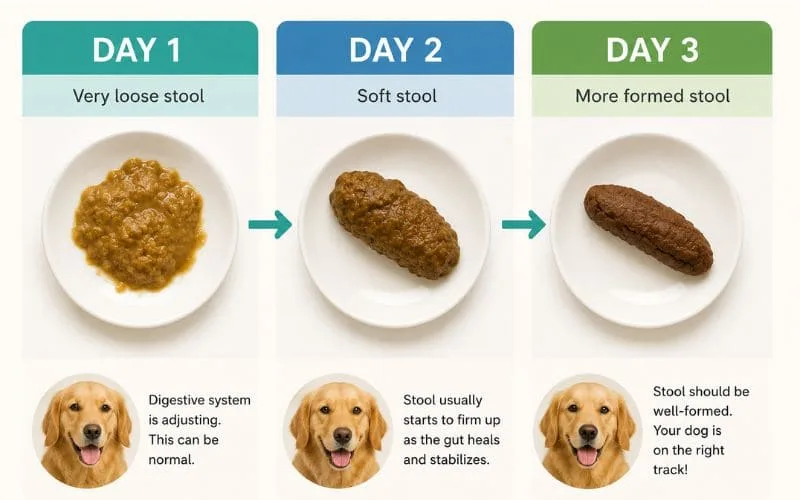
Yes, in many cases it is. Chicken and rice is gentle on the digestive system, but it doesn’t fix diarrhea overnight. Even if you’ve started feeding a bland diet, it’s normal for your dog’s stool to stay loose for the first day or two while the intestines recover.
What matters most is whether your dog is showing steady improvement. If they’re eating normally, staying hydrated, and becoming more energetic, slightly loose stools during the early recovery period aren’t usually a reason to panic.
🕒 What Recovery Usually Looks Like
| Timeline | What You Can Expect |
|---|---|
| First 24 hours | Stool may still be loose or soft. Some dogs also have fewer bowel movements as their digestive system settles. |
| 24–48 hours | Many dogs start passing more formed stools, although they may not be completely firm yet. Appetite and energy often continue improving. |
| After 48 hours | You should notice gradual progress. If the stool hasn’t improved at all—or it’s becoming worse—it may be time to look beyond the bland diet. |
💡 Don’t expect one perfect bowel movement. Recovery usually happens gradually, with each stool becoming a little firmer over the next couple of days.
If you’re unsure whether your dog is actually on the right recovery diet, it’s worth reviewing the basics first. Our guide on Bland Diet for Dogs explains when a bland diet is appropriate, which ingredients work best, and how long most dogs should stay on it before transitioning back to their regular food.
How Long Should Chicken and Rice Take to Work?
Chicken and rice isn’t an instant cure for diarrhea. Instead, it gives your dog’s digestive system a chance to rest while the intestines recover. Most dogs start showing improvement within 24 to 72 hours, although the exact timeline depends on what caused the diarrhea in the first place.
🗓️ Day 1
During the first 24 hours, don’t expect perfectly normal stools. Your dog may still have loose poop, but you might notice other positive changes first, such as a better appetite, more energy, or fewer trips outside.
🗓️ Day 2
By the second day, many dogs begin passing stools that are more formed. They may still be soft, but they shouldn’t be as watery or frequent as before. This is usually a good sign that the digestive system is starting to recover.
🗓️ Day 3
By day three, many dogs have noticeably firmer stools and are feeling much better. If there’s little to no improvement by this point—or your dog’s diarrhea is getting worse—it could mean the underlying problem isn’t responding to a bland diet alone.
Keep in mind that feeding the right amount matters, too. Giving too much food at once can slow recovery, even if you’re feeding the right ingredients.
Not sure if you’re feeding the correct portions? Read How Much Chicken and Rice Should You Feed a Dog? for weight-based feeding charts, meal frequency, and portion recommendations to help your dog’s digestive system recover more comfortably.
10 Reasons Your Dog Still Has Loose Stool After Chicken and Rice
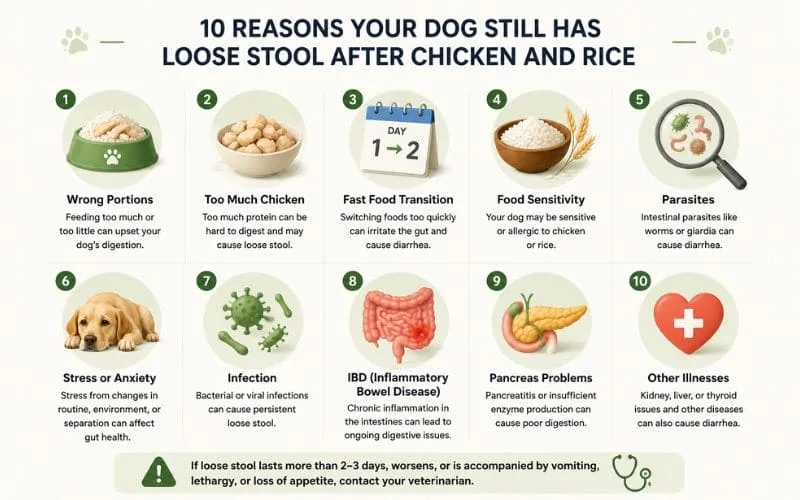
If your dog’s stool is still loose after switching to chicken and rice, don’t assume the bland diet has failed. In many cases, the real issue is something that’s slowing recovery or causing diarrhea to continue.
Here are the most common reasons.
1. You’re Not Feeding the Correct Portions
Even a gentle diet can upset your dog’s stomach if the portions aren’t right. Feeding too much at once forces the digestive system to work harder, while feeding too little may not provide enough energy for recovery.
Most dogs do better with smaller, more frequent meals instead of one or two large ones. This gives the intestines more time to digest food without becoming overloaded.
💡 Portion size should always match your dog’s weight and activity level.
👉 Unsure how much to feed? Check our How Much Chicken and Rice Should You Feed a Dog? guide for weight-based feeding charts and meal schedules.
2. There’s Too Much Chicken in the Meal
Many owners assume adding extra chicken will help their dog recover faster. Unfortunately, the opposite can happen.
Chicken provides lean protein, but too much protein at once can be harder to digest while the intestines are irritated. A bland diet works best when the chicken and rice are properly balanced rather than heavily loaded with meat.
For most dogs, a balanced chicken-to-rice ratio is gentler on the digestive system and gives the gut time to heal.
💡 More chicken doesn’t always mean better recovery.
3. The Food Transition Happened Too Quickly
If you recently switched from your dog’s regular food straight to chicken and rice—or switched back too soon—the sudden diet change itself can contribute to loose stools.
Dogs generally have sensitive digestive systems, and rapid food changes don’t give the gut enough time to adjust. Even after diarrhea improves, returning to regular kibble too quickly may cause loose stools to come back.
Once your dog is improving, transition gradually over several days instead of making another sudden change.
👉 Learn the safest way in our Dog Food Transition Guide.
4. Your Dog Has an Underlying Food Sensitivity
Sometimes the problem isn’t the bland diet—it’s one of the ingredients.
Although chicken is commonly recommended for digestive upset, some dogs don’t tolerate it well. If your dog has a sensitivity to chicken or another ingredient they’ve been eating, loose stools may continue despite the diet change.
Other signs can include itching, frequent ear infections, excessive licking, or recurring digestive issues.
If diarrhea keeps returning every time chicken is introduced, talk with your veterinarian about other bland protein options or a long-term diet plan.
5. Intestinal Parasites Are Still Causing Diarrhea
Parasites such as worms or protozoa can continue causing loose stools no matter what your dog eats.
Dogs often pick up parasites from contaminated soil, standing water, dog parks, or infected feces. While some dogs show obvious symptoms, others may only have ongoing soft stools.
Additional signs may include:
- Weight loss
- Mucus in the stool
- Occasional vomiting
- A dull coat
⚠️ A bland diet won’t eliminate parasites. Your veterinarian may recommend a fecal test to identify the cause and prescribe the right treatment.
6. Stress Is Affecting Your Dog’s Digestion
Dogs can develop digestive upset from stress just like people do.
Moving to a new home, boarding, travel, fireworks, visitors, or changes in routine can all trigger temporary diarrhea. Even if you’re feeding chicken and rice, the stool may stay loose until your dog’s stress level settles.
If your dog is otherwise bright, eating well, and behaving normally, keeping a calm routine and avoiding additional diet changes often helps the digestive system recover naturally.
7. A Bacterial or Viral Infection Is Still Running Its Course
Some stomach infections simply take longer to resolve.
Bacteria, viruses, or contaminated food can irritate the intestines for several days. While chicken and rice may reduce digestive workload, it won’t treat the infection itself.
If your dog develops symptoms such as vomiting, fever, bloody diarrhea, severe lethargy, or refuses food, don’t continue waiting at home.
⚠️ These signs should be evaluated by a veterinarian as soon as possible.
8. An Inflammatory Bowel Disease (IBD) May Be Involved
If your dog has repeated episodes of diarrhea or chronic digestive problems, there may be an underlying condition such as inflammatory bowel disease (IBD).
IBD causes ongoing inflammation in the digestive tract, making it difficult for the intestines to absorb nutrients normally. A temporary bland diet may reduce symptoms for a short time, but it usually won’t solve the underlying problem.
Signs that deserve veterinary attention include recurring diarrhea, weight loss, poor appetite, or symptoms that keep coming back over weeks or months.
👉 Learn how veterinarians investigate long-term digestive problems in How Vets Diagnose Chronic GI Issues in Dogs.
9. Pancreatic or Digestive Enzyme Problems
Some dogs struggle to digest food because their pancreas doesn’t produce enough digestive enzymes or isn’t functioning properly.
When food isn’t broken down correctly, nutrients pass through the intestines without being fully absorbed, often leading to chronic loose stools, weight loss, or large, greasy bowel movements.
These conditions require proper diagnosis and treatment—they won’t improve with chicken and rice alone.
If your dog continues losing weight despite eating normally, schedule a veterinary examination.
10. Another Health Condition May Be Causing the Problem
Not every case of diarrhea starts in the digestive tract.
Hormonal disorders, liver disease, kidney disease, certain medications, toxin exposure, and other medical conditions can all cause ongoing loose stools. In these situations, chicken and rice may temporarily reduce irritation but won’t treat the actual illness.
⚠️ If your dog’s diarrhea lasts more than a few days, keeps returning, or is accompanied by vomiting, weight loss, blood in the stool, or unusual behavior, it’s time to contact your veterinarian instead of continuing the bland diet.
👉 Learn which symptoms shouldn’t be ignored in When to See a Vet for Dog Diarrhea.
Signs Your Dog Is Actually Improving
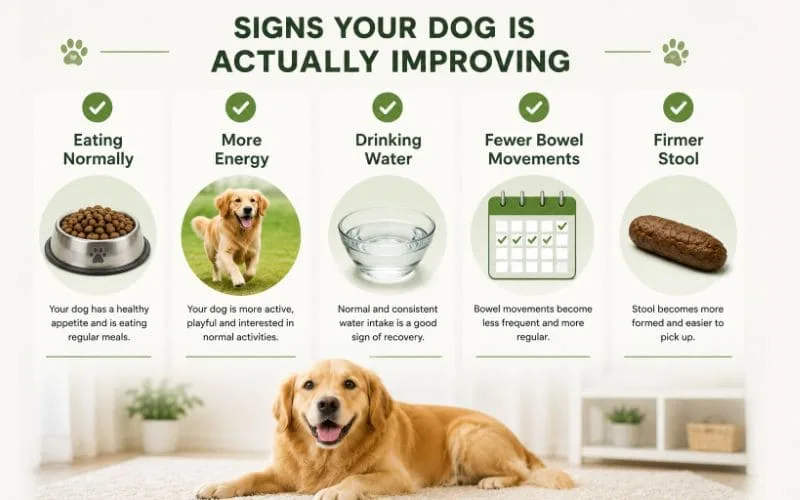
It’s easy to judge recovery by looking at your dog’s stool, but that’s only part of the picture. In many cases, other signs improve before the poop returns to normal. Looking at your dog’s overall condition gives you a much better idea of whether the bland diet is working.
Here are some encouraging signs to watch for:
- ✅ A Healthy Appetite: Your dog is eating meals without hesitation and doesn’t seem nauseous.
- ✅ More Energy: They’re acting more like themselves, showing interest in walks, toys, or family activities.
- ✅ Good Hydration: They’re drinking water normally, and their gums remain moist rather than dry or sticky.
- ✅ Fewer Bowel Movements: Instead of rushing outside every couple of hours, bathroom trips become less frequent.
- ✅ Stools are becoming more formed: They may still be soft, but each bowel movement looks firmer than the last.
Recovery doesn’t always happen in a straight line. One softer stool doesn’t necessarily mean your dog is getting worse if their appetite, energy, and hydration continue improving.
Want to know what else to look for during recovery? Read Signs Your Dog’s Gut Is Healing to learn the positive changes that show your dog’s digestive system is getting back on track.
Signs the Bland Diet May Not Be Working
A bland diet should gradually help your dog’s digestive system settle. If your dog is getting worse instead of better after a couple of days, it’s time to stop assuming chicken and rice will solve the problem.
⚠️ Watch for these warning signs:
- ❌ Diarrhea is getting worse instead of becoming more formed.
- ❌ Vomiting continues or starts after beginning the bland diet.
- ❌ Blood appears in the stool, especially if it’s more than a small streak.
- ❌ Your dog is losing weight or looks noticeably thinner.
- ❌ Signs of dehydration, such as dry gums, sunken eyes, or unusual tiredness.
- ❌ Refusing food or showing no interest in eating for more than a day.
💡 One loose stool isn’t usually a reason to worry. However, if one or more of these signs develop, the problem may be more than a simple upset stomach. Your dog may need a veterinary exam to identify the underlying cause and receive the appropriate treatment.
Learn which symptoms shouldn’t be ignored in When to Worry About Dog Diarrhea and When to See a Vet for Dog Diarrhea.
What You Can Do at Home
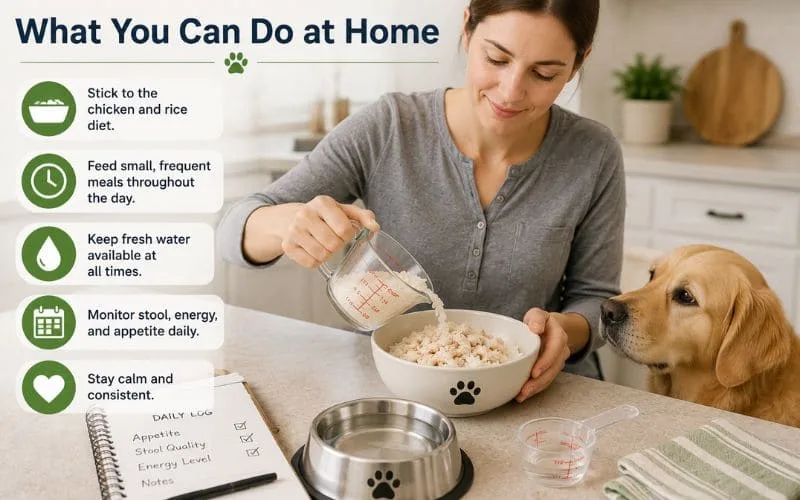
If your dog is otherwise bright, eating, and drinking normally, there are a few simple things you can do at home to support recovery while keeping a close eye on their progress.
💧 Keep Your Dog Hydrated
Diarrhea causes your dog to lose fluids more quickly than usual. Make sure fresh, clean water is always available and encourage your dog to drink regularly. If they’re drinking normally and staying hydrated, that’s a positive sign.
🥣 Feed Measured Portions
Stick to small, measured meals instead of offering large portions. Overfeeding—even with chicken and rice—can put extra strain on the digestive system and slow recovery.
👉 Need help with portion sizes? See How Much Chicken and Rice Should You Feed a Dog? for weight-based feeding recommendations.
🚫 Skip Treats and Table Scraps
Avoid treats, chews, fatty foods, and table scraps until your dog’s stool has returned to normal. Even a small snack can irritate an already sensitive digestive system and undo the progress you’ve made.
🔄 Don’t Keep Switching Foods
It can be tempting to try a different food every day if your dog isn’t improving quickly, but frequent diet changes often make digestive upset worse. Give the bland diet enough time to work unless your veterinarian advises otherwise.
👉 When it’s time to return to regular food, follow a gradual plan in our Dog Food Transition Guide to reduce the risk of another upset stomach.
💩 Watch for Changes in Stool
Instead of focusing on a single bowel movement, look for trends over the next couple of days. Firmer stools, fewer bathroom trips, and a more predictable routine are all signs that your dog may be heading in the right direction.
📝 Keep a Simple Symptom Diary
Writing down when your dog eats, drinks, and has bowel movements can help you spot patterns that are easy to miss. Note the stool consistency, any vomiting, changes in appetite, and energy levels. If you end up visiting your veterinarian, this information can also make it easier to explain what’s been happening.
💡 Small, consistent improvements are usually more meaningful than one good or bad day. Monitoring your dog’s overall progress can help you decide whether home care is working or if it’s time for veterinary advice.
Foods That Can Make Recovery Take Longer
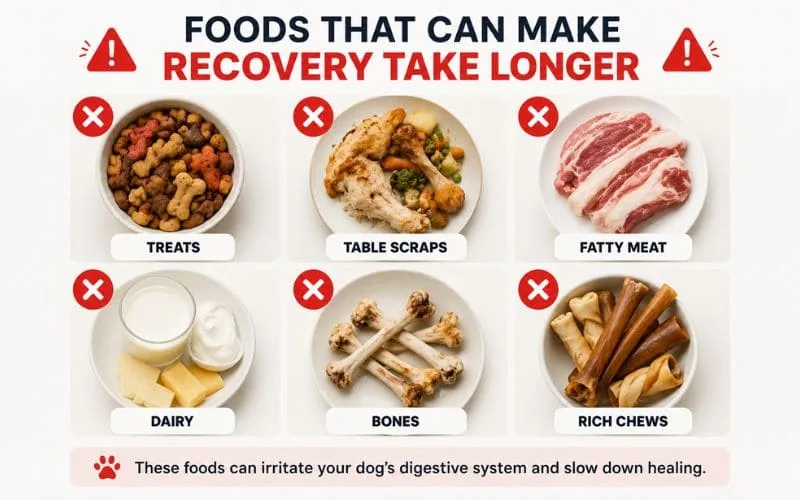
While your dog’s digestive system is healing, even small diet mistakes can delay recovery. The goal is to keep meals as simple and gentle as possible until the stool returns to normal.
Here are some foods it’s best to avoid during this time:
- 🚫 Treats: Even healthy dog treats can introduce extra ingredients that irritate a sensitive stomach.
- 🚫 Table Scraps: Human foods are often too rich, salty, or seasoned for a dog recovering from diarrhea.
- 🚫 Fatty Meats: Bacon, sausage, hamburgers, or heavily marbled meat can be difficult to digest and may make diarrhea worse.
- 🚫 Dairy Products: Milk, cheese, and ice cream can trigger digestive upset, especially in dogs that are lactose intolerant.
- 🚫 Bones: Bones can irritate the digestive tract and increase the risk of choking, blockages, or constipation.
- 🚫 Rich Chews: Pig ears, bully sticks, rawhide, and similar chews are often high in fat or difficult to digest while the gut is recovering.
Keep your dog on a simple, consistent diet until their stools are firm again. Introducing treats or rich foods too soon can set recovery back, even if your dog seemed to be improving.
For a complete list of foods that can upset a sensitive stomach, read Foods to Avoid for Dogs With Sensitive Stomachs before adding anything new to your dog’s diet.
Should You Continue Chicken and Rice or Stop?
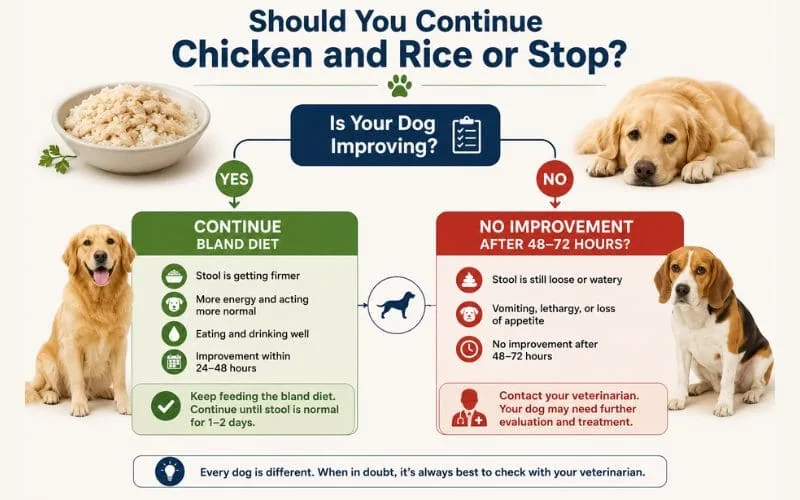
Chicken and rice is meant to be a short-term recovery diet, not a long-term solution. Whether you should continue or stop depends on how your dog is responding over the first few days.
✅ Continue the Bland Diet If…
Keep feeding chicken and rice for a little longer if your dog is showing clear signs of improvement, such as:
- ✅ Stools are becoming firmer each day.
- ✅ Appetite is normal or improving.
- ✅ Energy levels are back to normal.
- ✅ Vomiting has stopped.
- ✅ Your dog is drinking water and staying hydrated.
If recovery continues, you can usually begin transitioning back to your dog’s regular food gradually rather than making a sudden switch.
⚠️ Stop Relying on Chicken and Rice If…
A bland diet isn’t meant to replace proper medical care. It’s time to reassess if you notice:
- ❌ No improvement after 48–72 hours.
- ❌ Diarrhea is getting worse instead of better.
- ❌ Vomiting, blood in the stool, or signs of dehydration develop.
- ❌ Diarrhea keeps returning every time you stop the bland diet.
In these situations, the loose stool may be caused by an underlying problem that chicken and rice alone can’t fix.
📋 Quick Decision Guide
| If Your Dog Is… | What You Should Do |
|---|---|
| Showing steady improvement | ✅ Continue chicken and rice for another day or two, then gradually transition back to their regular diet. |
| About the same after 2–3 days | ⚠️ Contact your veterinarian for advice instead of continuing the bland diet indefinitely. |
| Getting worse or developing new symptoms | 🚨 Stop relying on home care alone and have your dog evaluated by a veterinarian as soon as possible. |
💡 Chicken and rice should support recovery—not become your dog’s permanent diet. If there’s no clear improvement within a few days, it’s time to look for the underlying cause rather than simply continuing the same meals.
When It’s Time to Contact Your Veterinarian
Most cases of mild diarrhea improve with rest, hydration, and a bland diet. However, if your dog isn’t getting better—or develops additional symptoms—it’s a good idea to have them evaluated by a veterinarian. Early treatment can often prevent a minor problem from becoming more serious.
⚠️ Contact your veterinarian if your dog has any of the following:
- ❌ Diarrhea lasting longer than 72 hours with little or no improvement.
- ❌ Blood in the stool, especially if it’s more than a small streak.
- ❌ Repeated vomiting or an inability to keep food or water down.
- ❌ Signs of dehydration, such as dry gums, sunken eyes, or unusual weakness.
- ❌ A Puppy or Senior dog with ongoing diarrhea, as they’re more likely to become dehydrated quickly.
- ❌ A chronic medical condition, such as diabetes, kidney disease, liver disease, or another illness that could complicate recovery.
- ❌ Severe lethargy, weakness, or a dog that’s unusually quiet and not acting like themselves.
💡 These signs don’t always mean there’s a serious illness, but they do mean your dog should be examined rather than continuing home treatment alone.
For a more detailed breakdown of warning signs, read When to Worry About Dog Diarrhea and When to See a Vet for Dog Diarrhea. These guides explain which symptoms can usually be monitored at home and which ones deserve prompt veterinary care.
How to Transition Back Once Stools Improve
Once your dog’s stools have been firm for 24–48 hours, it’s usually safe to start transitioning back to their regular food. Avoid switching all at once, as a sudden change can upset the digestive system and cause loose stools to return.
Instead, gradually mix your dog’s regular food with the chicken and rice over several days, increasing the amount of regular food while reducing the bland diet. This gives the digestive system time to adjust without putting unnecessary stress on the gut.
If loose stools return during the transition, slow the process down and contact your veterinarian if the problem continues.
For a step-by-step schedule, read our Dog Food Transition Guide. It explains exactly how to switch your dog back to their normal diet while reducing the risk of another digestive upset.
Frequently Asked Questions
Why is my dog still pooping liquid after Chicken and Rice?
Liquid diarrhea after starting a chicken and rice diet doesn’t always mean the diet has failed. It may simply be too early, especially during the first 24–48 hours. However, if the diarrhea stays watery for more than a couple of days or gets worse, there may be an underlying issue such as parasites, an infection, food sensitivity, or another medical condition that needs veterinary attention.
Can Chicken and Rice make diarrhea worse?
For most dogs, chicken and rice is easy to digest. However, it can make diarrhea worse if your dog is sensitive to chicken, the portions are too large, or the diet isn’t balanced properly. If your dog’s symptoms worsen after starting the bland diet, it’s a good idea to contact your veterinarian.
Should I add pumpkin?
Plain canned pumpkin (without added sugar or spices) may help some dogs by adding soluble fiber, but it isn’t necessary in every case. If you choose to use it, add only a small amount and monitor your dog’s response. If diarrhea continues, pumpkin alone isn’t likely to solve the underlying problem.
👉 Learn more in Pumpkin for Dogs With Diarrhea.
How many days should I continue feeding Chicken and Rice?
Most dogs only need a bland diet for 2–3 days, or until their stools have been firm for at least 24–48 hours. After that, you can gradually transition back to their regular food instead of continuing chicken and rice long-term.
Should I stop feeding if diarrhea continues?
No. Unless your veterinarian advises otherwise, your dog still needs nutrition while recovering. Continue offering small, measured meals and make sure fresh water is always available. If diarrhea isn’t improving after 48–72 hours or new symptoms develop, contact your veterinarian for guidance.
Can probiotics help?
Some dogs may benefit from probiotics because they can help support a healthy balance of gut bacteria during recovery. However, they aren’t a replacement for identifying the cause of ongoing diarrhea, and results can vary from one dog to another. If your dog’s symptoms persist, speak with your veterinarian before adding supplements.
Can stress cause loose stool?
Yes. Stress from travel, boarding, moving, loud noises, or changes in routine can trigger temporary digestive upset in some dogs. Once the stressful situation passes and your dog’s routine returns to normal, the stool often improves as well.
Does every dog respond to Chicken and Rice?
No. While chicken and rice work well for many dogs with mild digestive upset, it isn’t the right solution for every case. Dogs with food sensitivities, chronic digestive diseases, parasites, infections, or other health conditions may continue having loose stools until the underlying cause is properly treated.
Final Thoughts
Chicken and rice can be an effective short-term diet for dogs with mild diarrhea, but it’s not a cure for every cause of loose stool. While many dogs begin improving within a day or two, some continue having diarrhea because of food sensitivities, parasites, infections, or other underlying health conditions that require different treatment.
As your dog recovers, look at the whole picture—not just the stool. A healthy appetite, good energy, normal hydration, and gradually firmer bowel movements are all encouraging signs that the digestive system is healing.
💡 If your dog’s progress stalls, diarrhea lasts longer than a few days, or new symptoms such as vomiting, blood in the stool, or severe lethargy develop, it’s time to seek veterinary advice rather than continuing the same diet indefinitely.
With the right care—and a little patience—most dogs recover well from a simple upset stomach. The key is knowing when home care is enough and when your dog needs a professional evaluation.

Hi, I’m Maddy, the writer behind HappyDogGut.com.I’m passionate about helping dog parents better understand gut health, sensitive stomachs, and nutrition through clear, practical, and research-based content. Every article is carefully researched using trusted veterinary and pet health resources, so you can make more informed decisions for your dog’s digestive health.Happy Gut = Happy Dog! 🐾
All content on Happy Dog Gut follows our Editorial Policy.