When your dog has been dealing with digestive issues—like diarrhea, gas, or stomach upset—the biggest question most owners have is: “Is my dog actually getting better?”
The good news is that as your dog gut is healing, the body starts showing clear signs of improvement. But these signs are often subtle, and many dog owners either miss them or misinterpret them.
Understanding what recovery looks like—and how long it takes—can help you stay on the right track and avoid unnecessary changes that might slow down progress. In this guide, we’ll break down the most important signs that your dog gut is healing, along with a realistic recovery timeline and what you should expect at each stage.
What Does It Mean When Your Dog’s Gut Is Healing?
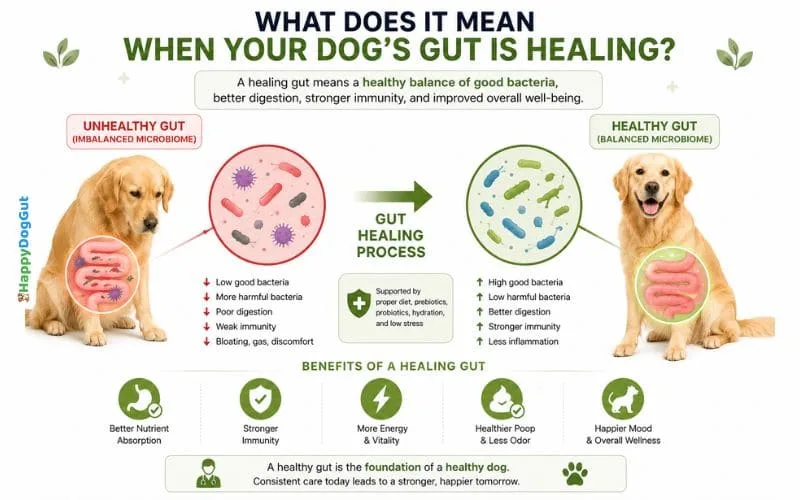
When your dog’s gut is healing, it means their digestive system is slowly returning to a healthy, balanced state. This doesn’t happen overnight—it’s a gradual process where the body repairs itself and restores normal function.
At the center of this recovery is the gut microbiome, which is the community of beneficial bacteria living in your dog’s intestines. When your dog has digestive issues, this balance is often disrupted. As healing begins, that balance starts to rebuild.
👉 If you want a deeper understanding of how this works, you can read Dog Gut Bacteria Explained.
🦠 Gut Microbiome Is Restoring
One of the first signs of healing is that good bacteria start to grow again.
This helps:
- Push out harmful bacteria
- Stabilize digestion
- Support overall gut balance
A healthier microbiome means your dog’s digestive system can function more smoothly.
🔥 Inflammation Starts Reducing
When the gut is irritated or inflamed, it can cause symptoms like diarrhea, discomfort, or vomiting.
As healing begins:
- The gut lining starts to repair
- Inflammation decreases
- The digestive system becomes more stable
👉 This is why symptoms gradually become less intense over time.
🍽️ Digestion Improves
As the gut heals, your dog becomes better at breaking down and processing food.
You may notice:
- Less stomach upset
- More consistent digestion
- Reduced gas or bloating
This is a strong sign that the gut is functioning properly again.
⚡ Nutrient Absorption Returns to Normal
When the gut is unhealthy, your dog may not absorb nutrients properly—even if they’re eating good food.
During recovery:
- The gut lining heals
- Nutrient absorption improves
- Energy levels increase
👉 This is often when you start seeing your dog become more active and healthier overall.
👉 Gut healing = Balance coming back
Your dog’s body is slowly moving from a state of imbalance and irritation to stability and proper function.
When your dog’s gut is healing, you won’t see one big change—you’ll notice small improvements adding up over time.
👉 That’s why patience and consistency are so important during recovery.
Signs Your Dog’s Gut Is Healing
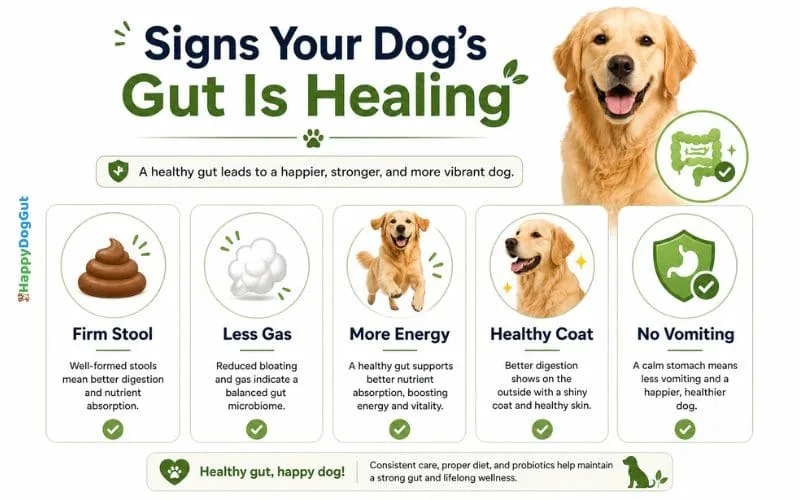
When your dog’s gut is healing, the changes don’t happen all at once. Instead, you’ll start noticing small but clear improvements in different areas of your dog’s health.
These signs are important because they show that your current diet, routine, and gut support plan are actually working.
Here are the key signs to look for:
💩 Stool Starts Becoming More Firm and Regular
One of the earliest and most reliable signs of gut healing is improvement in stool quality.
You may notice a gradual change:
- Loose or watery stool
- Semi-formed stool
- Firm, well-shaped stool
At the same time:
- Diarrhea becomes less frequent
- Bowel movements become more predictable
👉 If you’re working on improving stool consistency, choosing the right diet can help. You can explore options in Best dog foods for loose stool.
🐕 Less Gas and Bloating
As gut bacteria becomes more balanced, digestive discomfort starts to decrease.
You may notice:
- Less gas
- Reduced bloating
- Fewer stomach noises
Your dog may also appear more comfortable after meals.
👉 If gas has been a problem, adjusting diet can make a big difference. Check Best dog foods for Gas and Bloating in dogs.
🍽️ Improved Appetite
A healthy gut often leads to a more stable and natural appetite.
Signs of improvement include:
- Your dog eats meals without hesitation
- No skipping meals
- Less picky eating
👉 When digestion feels normal again, dogs naturally regain interest in food.
⚡ Increased Energy Levels
As nutrient absorption improves, your dog starts getting more energy from their food.
You may notice:
- More activity
- Increased playfulness
- Better overall mood
👉 This is a strong sign that the body is functioning more efficiently.
🐾 Healthier Skin and Coat
Gut health and skin health are closely connected.
As the gut heals:
- Itching may reduce
- Skin irritation may improve
- Coat may become shinier and healthier
👉 In many cases, skin issues are linked to digestion. You can learn more in Signs of food intolerance in dogs.
🤮 Reduced Vomiting or Upset Stomach
If your dog was previously experiencing vomiting or frequent stomach upset, these symptoms should start to decrease as the gut heals.
Look for:
- Fewer vomiting episodes
- More stable digestion
- Less stomach sensitivity
👉 This is a key sign that your dog’s digestive system is becoming more balanced.
Gut healing isn’t about one big change—it’s about multiple small improvements happening together.
👉 When you see these signs combined, it’s a strong indication that your dog’s gut is healing and moving in the right direction.
Dog Gut Healing Timeline (What to Expect)
One of the most important things to understand about gut health is that healing takes time. Many dog owners expect instant results, but gut recovery happens in phases—and each phase shows different signs of improvement.
Knowing what to expect at each stage can help you stay consistent and avoid making unnecessary changes that might slow down progress.
🟢 Phase 1: Initial Relief (1–3 Days)
This is the early stage of recovery where you may start seeing small improvements.
What usually happens:
- Symptoms begin to slightly improve
- Vomiting or discomfort may reduce
- Stool is still soft or inconsistent
👉 At this stage, the gut is just starting to calm down. Inflammation is beginning to reduce, but the system is not fully stable yet.
🟡 Phase 2: Stabilization (1–2 Weeks)
This is where noticeable progress starts to happen.
You may observe:
- Stool becoming more formed and consistent
- Less frequent digestive issues
- Appetite returning to normal
- Reduced gas and bloating
👉 During this phase, beneficial gut bacteria are rebuilding, and digestion is becoming more stable.
🔴 Phase 3: Full Recovery (3–8 Weeks)
This is the final stage where your dog’s gut is close to fully healed.
Signs include:
- Firm, regular stools
- No recurring diarrhea or vomiting
- Stable digestion
- Normal energy and behavior
👉 At this point, the gut microbiome is balanced again, and your dog’s digestive system is functioning properly.
If your dog is in the early or middle stages of healing, following a structured approach can help speed up recovery and prevent setbacks.
👉 You can follow a step-by-step plan in Dog Gut Reset Protocol: 48–72 hour plan for sensitive stomachs to support gut healing safely.
🧠 Important Reminder
👉 Every dog is different.
Some dogs recover quickly, while others take longer depending on:
- Severity of the issue
- Diet quality
- Consistency in routine
- Underlying health conditions
Gut healing is not instant—it’s a gradual process with clear stages.
👉 The goal is not just quick relief, but long-term stability and prevention of future problems.
Signs Your Dog’s Gut Is NOT Healing
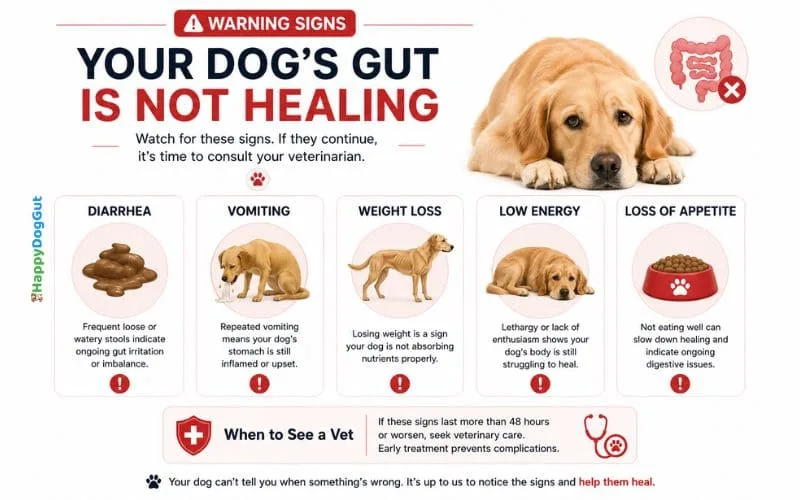
While it’s important to recognize positive signs of recovery, it’s equally important to know when things are not improving. Sometimes, despite diet changes or basic care, your dog’s gut may still struggle to heal—and ignoring these signs can lead to more serious problems.
Here are the key warning signs that your dog’s gut is not healing properly:
💩 Ongoing Diarrhea
If your dog continues to have loose stool or diarrhea without improvement, it’s a clear sign that the gut is still irritated or unbalanced.
Watch for:
- Diarrhea lasting more than a few days
- No improvement in stool consistency
- Frequent bowel movements
👉 To understand when this becomes serious, read When to worry about diarrhea in dogs.
⚖️ Unexplained Weight Loss
If your dog is losing weight even though they are eating (or trying to eat), it may indicate poor nutrient absorption.
This can happen when:
- The gut lining is not fully healed
- Nutrients are not being properly absorbed
- Chronic digestive issues are present
👉 Weight loss is never a normal part of recovery and should be taken seriously.
🍽️ No Appetite or Refusing Food
A healthy dog usually shows interest in food. If your dog is:
- Skipping meals
- Eating very little
- Showing no interest in food
👉 It may indicate ongoing discomfort, nausea, or a deeper issue affecting digestion.
🤮 Constant Vomiting
Occasional vomiting may happen during early recovery, but frequent or ongoing vomiting is a red flag.
It may signal:
- Continued gut irritation
- Underlying digestive disorders
- Incomplete recovery
If vomiting persists, it’s important not to delay professional help.
👉 If symptoms are not improving—or getting worse—it means the gut is not healing properly.
If your dog shows one or more of these signs consistently, it’s time to stop guessing and get expert advice.
Learn more in:
Many dog owners assume that recovery just takes time, but ongoing symptoms often mean something else needs to be addressed—whether it’s diet, gut health support, or an underlying medical condition.
👉 Acting early can prevent long-term complications and help your dog recover faster.
How to Support Gut Healing Faster
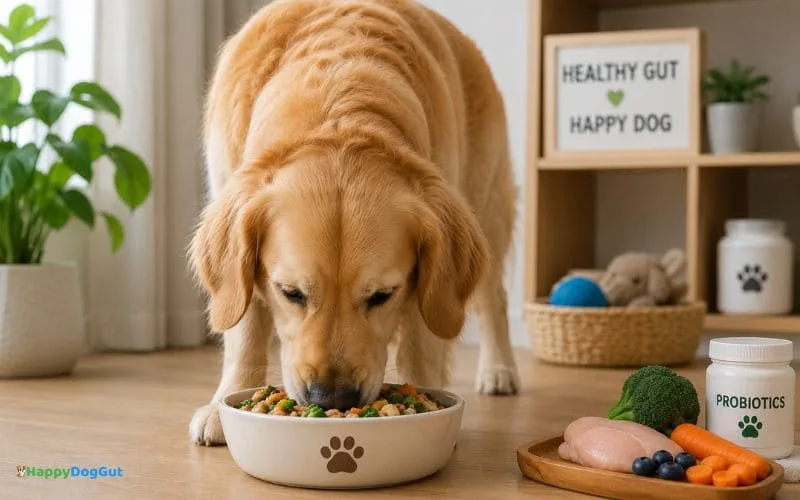
If your dog’s gut is already healing, the goal now is to support that recovery and avoid setbacks. The right steps can speed up healing, while small mistakes can slow it down.
Here are the most effective ways to help your dog’s gut recover faster:
🍽️ Feed a Consistent Diet
Consistency is one of the most important factors in gut healing.
Frequent changes in food can confuse the digestive system and disrupt the balance of gut bacteria. Sticking to a stable, high-quality diet allows the gut to:
- Adjust properly
- Improve digestion
- Reduce irritation
👉 If you’re unsure what to feed, check Best dog food for sensitive stomachs for reliable options.
🦠 Add Probiotics
Probiotics help restore and maintain healthy gut bacteria, which is essential during recovery.
They can:
- Replenish beneficial bacteria
- Improve digestion
- Reduce diarrhea and gas
👉 You can explore options in Best probiotics for dogs with sensitive stomachs to support gut balance effectively.
🌱 Use Prebiotics
Prebiotics act as food for good bacteria, helping them grow and thrive inside the gut.
They play a key role in:
- Strengthening the gut microbiome
- Supporting long-term stability
- Improving stool consistency
👉 Learn how they work in Prebiotics for gut health in dogs.
🔄 Avoid Sudden Changes
One of the biggest mistakes during recovery is making sudden changes to diet or routine.
This can lead to:
- Digestive upset
- Loose stool
- Delayed healing
👉 Always follow a gradual transition approach, as explained in Dog Food Transition Guide: How to switch without stomach upset.
🔁 Follow a Gut Reset Plan
If your dog is recovering from more serious digestive issues, a structured approach can help stabilize the gut faster.
A gut reset plan can:
- Calm inflammation
- Restore balance
- Improve digestion in the early stages
👉 You can follow a step-by-step approach in Dog Gut Reset Protocol: 48–72 hour plan for sensitive stomachs.
Supporting gut healing isn’t about doing everything at once—it’s about doing the right things consistently.
👉 A stable diet, proper gut support, and patience can significantly speed up recovery and prevent future digestive problems.
Common Mistakes That Slow Down Gut Healing
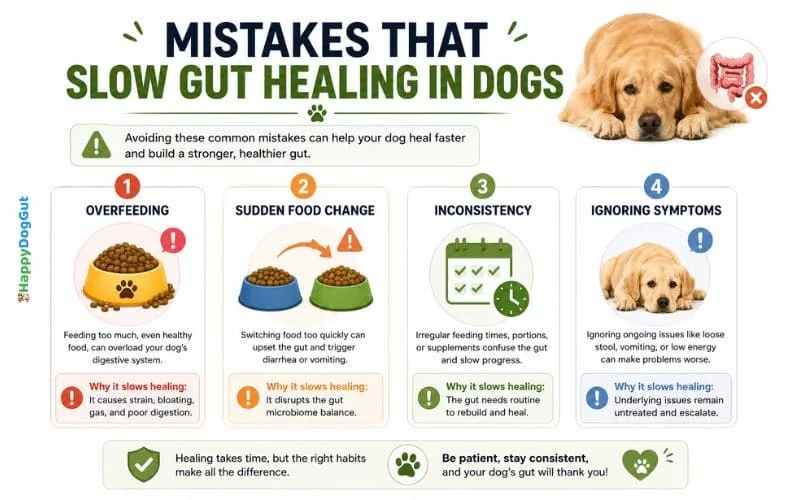
Even when you’re doing the right things, a few common mistakes can quietly slow down your dog’s recovery. Many dog owners unintentionally delay gut healing by making changes too quickly or overlooking important signals.
Avoiding these mistakes can make a huge difference in how fast your dog recovers.
🔄 Switching Food Too Fast
One of the biggest mistakes is changing your dog’s food too quickly.
During gut recovery, the digestive system is already sensitive. Sudden diet changes can:
- Disrupt gut bacteria balance
- Cause diarrhea or vomiting
- Reset progress you’ve already made
👉 Instead, always transition food gradually and give your dog’s system time to adjust.
🍽️ Overfeeding
It might feel natural to give your dog extra food—especially when they start eating again—but overfeeding can put stress on the gut.
Too much food can:
- Overload the digestive system
- Cause bloating and discomfort
- Slow down healing
👉 Smaller, controlled portions are much easier for the gut to handle during recovery.
⚠️ Ignoring Ongoing Symptoms
Some dog owners assume that healing just takes time and ignore warning signs—but not all symptoms are part of recovery.
If your dog continues to show:
- Diarrhea
- Vomiting
- Low energy
- Poor appetite
👉 It may mean the gut is not healing properly, and the underlying issue still needs attention.
⏳ Inconsistent Routine
Dogs thrive on consistency—especially when it comes to digestion.
An inconsistent routine (feeding times, food type, or supplements) can:
- Confuse the digestive system
- Disrupt gut bacteria
- Delay recovery
👉 Keeping a stable routine helps the gut settle and heal more effectively.
Gut healing isn’t just about what you do—it’s also about what you avoid.
👉 Small mistakes can slow progress, while consistency and patience can speed it up significantly.
FAQs About Dog Gut Healing and Recovery
How do I know my dog’s gut is improving?
You can tell your dog’s gut is improving by observing small but consistent positive changes over time.
The most reliable signs include:
Stool becoming more firm and regular
Reduced gas, bloating, or stomach noise
Improved appetite
More energy and normal behavior
Less frequent vomiting or digestive upset
These changes don’t happen all at once. Instead, they appear gradually as the gut starts to stabilize.
👉 If you notice multiple improvements happening together, it’s a strong indication that your dog’s gut is healing in the right direction.
How long does gut healing take in dogs?
Gut healing timelines vary depending on the severity of the issue, but most dogs follow a general pattern:
Mild issues: a few days to a week
Moderate issues: 1–2 weeks
Chronic problems: 3–8 weeks or longer
Factors that affect recovery time include diet quality, consistency, gut health support, and underlying conditions.
👉 The key is consistency—quick improvements can happen, but full recovery takes time and proper care.
Can a dog’s gut heal on its own?
In some mild cases, a dog’s gut can begin to heal on its own—especially if the issue is temporary, like a minor upset stomach.
However, relying completely on natural recovery is not always the best approach.
Without proper support:
Healing may take longer
Symptoms may return
Underlying issues may remain unresolved
👉 Supporting gut health with proper diet, probiotics, and consistency helps ensure faster and more stable recovery.
Do probiotics speed up gut healing?
Yes, probiotics can help speed up gut healing when used correctly.
They work by restoring beneficial bacteria in the gut, which helps:
Improve digestion
Reduce diarrhea and gas
Strengthen gut balance
However, probiotics are not a standalone solution.
They work best when combined with:
A consistent, high-quality diet
Proper feeding routine
Overall gut support
👉 Think of probiotics as a support tool that enhances recovery—not a quick fix on their own.
Why is my dog’s gut recovery slow?
Slow recovery is more common than many dog owners expect, and it usually happens due to one or more underlying factors.
Common reasons include:
Inconsistent diet or frequent food changes
Poor-quality food
Lack of gut support (probiotics/prebiotics)
Chronic digestive conditions
Stress or environmental changes
👉 Gut healing is a gradual process, and any disruption can slow it down. Staying consistent is the most important factor for progress.
What should I feed a dog during gut healing?
During gut recovery, the focus should be on feeding food that is easy to digest and gentle on the stomach.
Ideal diet characteristics include:
High-quality, limited ingredient formulas
Easily digestible proteins
Balanced fiber content
Avoid:
Sudden diet changes
Heavy, processed foods
Foods known to trigger sensitivity
👉 A stable, simple diet helps the gut recover without additional stress.
Is occasional vomiting normal during gut healing?
Mild or occasional vomiting can happen in the early stages of recovery, especially if the gut is still stabilizing.
However, it should:
Decrease over time
Not happen frequently
Not worsen
👉 If vomiting continues or becomes more frequent, it may indicate that the gut is not healing properly and needs further attention.
Can gut healing improve my dog’s skin and overall health?
Yes, gut health plays a major role in your dog’s overall well-being.
As the gut heals, you may notice improvements beyond digestion, including:
Healthier skin and reduced itching
Shinier coat
Better energy levels
Stronger immune system
👉 This happens because a healthy gut improves nutrient absorption and reduces inflammation throughout the body.
Final Thoughts
When it comes to gut health, one of the most important things to remember is that healing takes time. There’s no instant fix—real recovery happens gradually as your dog’s digestive system restores balance.
That’s why paying attention to the small signs of improvement matters. Changes like better stool, improved appetite, and higher energy levels are all indicators that your dog is moving in the right direction.
👉 Signs matter more than speed
The most effective approach is to stay patient and consistent. Avoid making sudden changes, stick to a stable routine, and continue supporting your dog’s gut with the right diet and care.
👉 Consistency is what leads to long-term results
At the end of the day, a healthy gut means a healthier, happier dog—and the effort you put in now will make a lasting difference.

Hi, I’m Maddy, the writer behind HappyDogGut.com.I’m passionate about helping dog parents better understand gut health, sensitive stomachs, and nutrition through clear, practical, and research-based content. Every article is carefully researched using trusted veterinary and pet health resources, so you can make more informed decisions for your dog’s digestive health.Happy Gut = Happy Dog! 🐾
All content on Happy Dog Gut follows our Editorial Policy.