

Finding the best canned dog food for sensitive stomachs isn’t always as simple as choosing the first wet food you see on the shelf. If your dog frequently experiences loose stools, vomiting, excessive gas, or digestive discomfort after meals, the right canned food can play an important role in supporting a healthier, more comfortable digestive system. Its higher moisture content and softer texture often make wet food easier for some dogs to digest, especially during periods of digestive sensitivity.
That said, not every canned dog food is created with sensitive stomachs in mind. Some recipes contain unnecessary fillers, artificial additives, or multiple protein sources that may be difficult for certain dogs to tolerate. Others focus on highly digestible ingredients, balanced fiber, and quality protein to help support normal digestion and overall gut health.
💡 If you’re still unsure whether your dog has a sensitive stomach or another digestive issue, start with our Dog Sensitive Stomach Guide to understand the common causes, symptoms, and when it’s time to seek veterinary advice.
In this guide, we’ll compare some of the best canned dog food for sensitive stomachs, explain what makes a quality wet food, highlight the ingredients to look for (and avoid), and share practical buying tips so you can choose the option that’s the best fit for your dog’s individual needs.
What Is the Best Canned Dog Food for Sensitive Stomachs?
If you’re looking for the best canned dog food for sensitive stomachs, choose a formula made with highly digestible ingredients, quality animal protein, moderate fiber, and no unnecessary fillers or artificial additives. Limited-ingredient recipes are often a great choice for dogs with digestive sensitivities, while foods containing prebiotics and omega fatty acids can help support long-term gut health.
Our Top 5 Picks
🥇 Hill’s Science Diet Sensitive Stomach & Skin Wet Dog Food – Best Overall
🥈 Purina Pro Plan Sensitive Skin & Stomach Wet Dog Food – Best for Everyday Digestive Support
🥉 Blue Buffalo Basics Limited Ingredient Diet Wet Food – Best Limited Ingredient Formula
⭐ Natural Balance Limited Ingredient Reserve Wet Dog Food – Best for Food Sensitivities
⭐ Wellness Simple Limited Ingredient Diet Wet Dog Food – Best for Gentle Digestion
Note: Every dog has unique nutritional needs. The best canned food depends on your dog’s age, health history, food sensitivities, activity level, and any recommendations from your veterinarian.
How We Chose the Best Canned Dog Foods
With so many canned dog foods on the market, finding the right option for a dog with a sensitive stomach can feel overwhelming. Rather than choosing products based on popularity alone, we evaluated each recipe using practical factors that matter most for digestive health, ingredient quality, and everyday feeding. Here’s what we looked for before including any food on this list.
High-Quality Protein
A highly digestible source of animal protein is the foundation of a good wet dog food. We prioritized recipes made with clearly named proteins—such as chicken, turkey, salmon, or lamb—instead of vague meat by-products or unnamed animal ingredients. Quality protein helps support muscle maintenance while being gentler on the digestive system.
Easy-to-Digest Ingredients
Dogs with digestive sensitivities often do better on simple recipes made with wholesome, recognizable ingredients. We favored foods that include digestible carbohydrates like rice or potatoes and avoid excessive fillers, artificial colors, flavors, and preservatives that may upset some dogs.
Limited Ingredient Recipes
For dogs with suspected food sensitivities, fewer ingredients can make it easier to identify and avoid potential dietary triggers. Many of our top picks use limited-ingredient formulas that focus on a single animal protein and a carefully selected list of supporting ingredients without unnecessary extras.
Digestive Support
We gave preference to canned foods that offer additional digestive benefits, such as natural sources of fiber, prebiotics, or ingredients that help maintain a healthy gut microbiome. These nutrients can support regular digestion and promote healthier stool quality over time.
Complete and Balanced Nutrition
Every recommendation on this list is formulated to provide complete and balanced nutrition for the intended life stage, helping ensure your dog receives the essential nutrients needed for overall health—not just digestive support. This means the foods are designed to meet established nutritional requirements when fed as directed, making them suitable for everyday feeding rather than short-term use alone.
Best Canned Dog Food for Sensitive Stomachs (Top Picks)

Finding the right wet food can make a noticeable difference for dogs with digestive sensitivities. The products below were selected based on ingredient quality, digestibility, nutritional balance, brand reputation, and current product formulations. We also looked for recipes that provide complete and balanced nutrition, use quality protein sources, and avoid unnecessary fillers whenever possible. While every dog has unique dietary needs, these options consistently stand out for supporting healthy digestion and are among the most trusted choices recommended by veterinarians and experienced pet owners.
1. Hill’s Science Diet Sensitive Stomach & Skin Wet Food
Best For:
Adult dogs with sensitive digestion and occasional stomach upset.
Key Features
- Highly digestible ingredients
- Prebiotic fiber to support a healthy gut microbiome
- Omega-6 fatty acids and vitamin E for skin and coat health
- Complete and balanced nutrition for adult dogs
Pros
- ✔ Easy to digest for many dogs with sensitive stomachs
- ✔ Supports digestive and skin health together
- ✔ Backed by extensive nutritional research
- ✔ Suitable for long-term daily feeding
Cons
- ✘ Premium price compared to many grocery-store brands
- ✘ Limited flavor variety
Key Ingredients
Chicken, pork liver, rice, carrots, spinach, prebiotic fiber, vitamins, and minerals (recipe varies slightly by formula).
Approximate Calories
Around 320–360 kcal per 12.5 oz can (varies by recipe).
Life Stage
Adult
Why We Chose It
Hill’s Science Diet has earned a strong reputation for developing research-backed nutrition, and its Sensitive Stomach & Skin line is one of the most commonly recommended options for dogs with mild digestive issues. The recipes combine highly digestible ingredients with prebiotic fiber to nourish beneficial gut bacteria and provide complete daily nutrition. Many pet owners also notice improvements in stool quality and skin condition after switching to this formula.
2. Purina Pro Plan Sensitive Skin & Stomach Wet Food
Best For:
Dogs that need digestive support along with healthy skin and coat nutrition.
Key Features
- Real animal protein as the first ingredient
- Easily digestible formula
- Natural prebiotic fiber for digestive health
- Rich in omega fatty acids
Pros
- ✔ Highly palatable for picky eaters
- ✔ Supports healthy digestion and skin
- ✔ Made by one of the most established pet nutrition companies
- ✔ Complete and balanced for everyday feeding
Cons
- ✘ Slightly more expensive than standard canned foods
- ✘ Some recipes may not suit dogs with specific protein sensitivities
Key Ingredients
Real meat (such as salmon or turkey, depending on the recipe), rice, broth, vitamins, minerals, and digestive-support ingredients.
Approximate Calories
Approximately 340–400 kcal per can, depending on the recipe.
Life Stage
Adult
Why We Chose It
Purina Pro Plan consistently performs well in independent reviews because of its digestible formulas, quality control, and nutritional research. The Sensitive Skin & Stomach recipes focus on gentle ingredients while providing the protein and essential nutrients active adult dogs need. For many dogs transitioning from regular canned food, this formula offers an excellent balance between digestibility and complete nutrition.
3. Blue Buffalo Basics Limited Ingredient Wet Food
Best For:
Dogs with suspected food sensitivities or owners looking for a limited-ingredient canned diet.
Key Features
- Single animal protein source
- Limited ingredient recipe
- Easily digestible carbohydrates
- Added omega fatty acids for skin and coat support
Pros
- ✔ Simple ingredient list
- ✔ Available in several novel protein options
- ✔ Free from chicken, beef, dairy, corn, wheat, soy, and eggs in many recipes
- ✔ Includes pumpkin and flaxseed to support healthy digestion
Cons
- ✘ More expensive than conventional canned foods
- ✘ Grain-free recipes may not be necessary for every dog
Key Ingredients
Depending on the recipe, ingredients may include duck or turkey, potatoes, pumpkin, flaxseed, fish oil, and added vitamins and minerals.
Approximate Calories
About 430–520 kcal per 12.5 oz can, depending on the recipe.
Life Stage
Adult Maintenance (AAFCO)
Why We Chose It
Blue Buffalo Basics is designed specifically for dogs with food sensitivities. Each recipe uses a single animal protein source paired with easily digestible carbohydrates, making it easier to avoid ingredients that may trigger digestive discomfort. We also like that these recipes include pumpkin, flaxseed, and fish oil to provide additional digestive and skin support while meeting AAFCO nutritional standards for adult maintenance.
4. Natural Balance Limited Ingredient Canned Dog Food
Best For:
Dogs with food sensitivities or those following an elimination diet under veterinary guidance.
Key Features
- Limited ingredient recipe with a single animal protein source
- Easily digestible carbohydrate source
- No artificial colors or flavors
- Complete and balanced nutrition for adult dogs
Pros
- ✔ Simple ingredient list that’s easy to evaluate
- ✔ Available in several protein options, including novel proteins
- ✔ Good choice for dogs with common food sensitivities
- ✔ Suitable for long-term feeding when recommended
Cons
- ✘ Fewer flavor options than some competing brands
- ✘ Premium price point
Key Ingredients
Depending on the recipe, ingredients may include duck, salmon, sweet potatoes, broth, vitamins, and minerals.
Approximate Calories
Around 380–430 kcal per 13 oz can, depending on the recipe.
Life Stage
Adult
Why We Chose It
Natural Balance has built its reputation around limited-ingredient nutrition. Instead of packing recipes with multiple protein sources and unnecessary fillers, these canned formulas focus on a short ingredient list that’s easier for many sensitive dogs to tolerate. For pet owners trying to identify possible food triggers, this approach can simplify diet management while still providing complete daily nutrition.
5. Wellness Simple Limited Ingredient Wet Food
Best For:
Dogs with digestive sensitivities that benefit from a straightforward, limited-ingredient diet.
Key Features
- Single-source animal protein
- Easily digestible ingredients
- No wheat, corn, soy, or artificial preservatives
- Added flaxseed for omega fatty acids
Pros
- ✔ Clean ingredient profile
- ✔ High-quality protein sources
- ✔ Suitable for many dogs with food intolerances
- ✔ Made without unnecessary fillers
Cons
- ✘ Higher cost than many mainstream wet foods
- ✘ Limited availability in some local stores
Key Ingredients
Turkey or lamb (depending on the formula), potatoes, broth, flaxseed, vitamins, and minerals.
Approximate Calories
Approximately 360–430 kcal per 12.5 oz can.
Life Stage
Adult
Why We Chose It
Wellness Simple focuses on providing balanced nutrition with fewer ingredients, making it easier for owners to manage dogs with sensitive digestion. The recipes emphasize quality animal protein while avoiding many common dietary triggers. We also like that the formulas include omega fatty acids to support healthy skin alongside digestive wellness.
6. Merrick Limited Ingredient Diet Wet Food
Best For:
Dogs that need a protein-rich canned diet with fewer potential food triggers.
Key Features
- Deboned meat as the primary protein source
- Limited ingredient formula
- Grain-free recipe
- Rich in naturally occurring nutrients
Pros
- ✔ High-quality animal protein
- ✔ Simple ingredient list
- ✔ Good palatability for many picky eaters
- ✔ Suitable for dogs with certain food sensitivities
Cons
- ✘ Grain-free formulas aren’t necessary for every dog
- ✘ Some recipes are relatively high in calories
Key Ingredients
Deboned turkey, duck, or lamb (varies by recipe), potatoes, broth, vitamins, and minerals.
Approximate Calories
Around 390–470 kcal per 12.7 oz can.
Life Stage
Adult
Why We Chose It
Merrick combines premium-quality protein with a simplified ingredient profile, making it a solid option for dogs that need fewer dietary ingredients without sacrificing nutrition. The recipes are highly palatable and provide complete daily nutrition while minimizing unnecessary additives that may upset sensitive digestive systems.
7. Instinct Limited Ingredient Wet Food
Best For:
Dogs with multiple food sensitivities that may benefit from novel protein recipes.
Key Features
- Single animal protein source
- Limited ingredient formula
- No grain, dairy, eggs, or artificial additives
- Complete and balanced nutrition
Pros
- ✔ Excellent selection of novel proteins
- ✔ Minimal ingredient list
- ✔ High meat content
- ✔ Ideal for many elimination diet plans
Cons
- ✘ One of the more expensive options
- ✘ Rich formulas may require a gradual transition
Key Ingredients
Rabbit, turkey, lamb, or other single animal proteins (depending on the recipe), broth, peas or pumpkin, vitamins, and minerals.
Approximate Calories
Approximately 360–460 kcal per can, depending on the recipe.
Life Stage
Adult
Why We Chose It
Instinct’s Limited Ingredient line is designed specifically for dogs with food sensitivities. Each recipe focuses on a single animal protein paired with a short list of carefully selected ingredients, reducing exposure to common dietary triggers. The high meat content and simple formulation make it a popular choice among owners managing chronic digestive issues or suspected food intolerances, while still delivering complete and balanced nutrition for everyday feeding.
8. Royal Canin Digestive Care Wet Dog Food
Best For:
Adult dogs that experience occasional digestive upset or benefit from highly digestible daily nutrition.
Key Features
- Highly digestible protein sources
- Balanced blend of dietary fiber
- Supports healthy stool quality
- Complete and balanced nutrition for adult dogs
Pros
- ✔ Developed using veterinary nutritional research
- ✔ Helps promote healthy digestion and consistent stools
- ✔ Highly palatable for many dogs
- ✔ Suitable for long-term daily feeding
Cons
- ✘ More expensive than many standard canned foods
- ✘ Contains grains, which may not suit every owner’s preference
Key Ingredients
Chicken, pork by-products, rice, vegetable fiber, fish oil, vitamins, and minerals (ingredients vary slightly by region).
Approximate Calories
Around 340–380 kcal per can, depending on the formula.
Life Stage
Adult
Why We Chose It
Royal Canin is known for formulating diets that target specific nutritional needs rather than following ingredient trends. Its Digestive Care formula combines highly digestible proteins with a balanced fiber blend to support healthy digestion and improve stool quality. While it isn’t a limited-ingredient diet, it’s an excellent option for many dogs with mild digestive sensitivities that simply need a gentle, nutritionally balanced wet food.
9. Canidae PURE Wet Dog Food
Best For:
Dogs with food sensitivities that benefit from a simple, grain-free recipe.
Key Features
- Limited ingredient formula
- Single animal protein in many recipes
- No corn, wheat, or soy
- Nutrient-rich ingredients with added vitamins and minerals
Pros
- ✔ Short, easy-to-understand ingredient list
- ✔ Several protein options available
- ✔ Good choice for dogs with common food sensitivities
- ✔ Complete and balanced nutrition
Cons
- ✘ Premium pricing
- ✘ Limited retail availability compared to larger brands
Key Ingredients
Salmon, lamb, duck, or chicken (depending on the recipe), peas, broth, sunflower oil, vitamins, and minerals.
Approximate Calories
Approximately 350–430 kcal per 13 oz can, depending on the recipe.
Life Stage
Adult
Why We Chose It
Canidae PURE focuses on keeping recipes simple without compromising nutritional quality. The limited ingredient approach can make digestion easier for some dogs while helping owners avoid unnecessary ingredients that may contribute to food sensitivities. The recipes also provide balanced nutrition suitable for everyday feeding.
10. Nulo Freestyle Limited+ Wet Dog Food
Best For:
Dogs with sensitive digestion that need a high-protein, limited-ingredient canned diet.
Key Features
- Single animal protein source
- Limited ingredient recipe
- No chicken, eggs, dairy, corn, wheat, or soy in many formulas
- Added vitamins and minerals for complete nutrition
Pros
- ✔ High-quality protein sources
- ✔ Excellent option for dogs with multiple food sensitivities
- ✔ Minimal ingredient list
- ✔ Highly digestible formula
Cons
- ✘ One of the more expensive options on the market
- ✘ Fewer flavor varieties than some competing brands
Key Ingredients
Turkey, salmon, cod, duck, or lamb (depending on the recipe), broth, chickpeas or lentils, vitamins, and minerals.
Approximate Calories
Around 340–420 kcal per can, depending on the recipe.
Life Stage
Adult
Why We Chose It
Nulo’s Limited+ line is designed for dogs that thrive on simple recipes made with quality ingredients. Each formula features a single animal protein source and avoids many common dietary triggers, making it a practical choice for dogs with food sensitivities or recurring digestive discomfort. The recipes are rich in animal protein and provide complete, balanced nutrition for everyday feeding.
Comparison Table: Best Wet Dog Foods for Sensitive Stomachs
| Product | Best For | Protein Source | Limited Ingredients | Life Stage |
|---|---|---|---|---|
| Hill’s Science Diet Sensitive Stomach & Skin | Overall digestive support | Chicken | No | Adult |
| Purina Pro Plan Sensitive Skin & Stomach | Digestive & skin support | Salmon/Turkey (varies) | No | Adult |
| Blue Buffalo Basics | Food sensitivities | Single protein | ✅ Yes | Adult |
| Natural Balance Limited Ingredient | Elimination diets | Single protein | ✅ Yes | Adult |
| Wellness Simple | Everyday limited ingredient feeding | Single protein | ✅ Yes | Adult |
| Merrick Limited Ingredient Diet | High-protein nutrition | Single protein | ✅ Yes | Adult |
| Instinct Limited Ingredient | Multiple food sensitivities | Single protein | ✅ Yes | Adult |
| Royal Canin Digestive Care | Stool quality & digestion | Highly digestible proteins | No | Adult |
| Canidae PURE | Simple grain-free nutrition | Single protein | ✅ Yes | Adult |
| Nulo Freestyle Limited+ | Premium limited ingredient diet | Single protein | ✅ Yes | Adult |
Our Overall Pick: Hill’s Science Diet Sensitive Stomach & Skin Wet Food stands out for its combination of highly digestible ingredients, research-backed formulation, and complete daily nutrition. However, if your dog has suspected food sensitivities or needs an elimination diet, a limited-ingredient option like Natural Balance, Instinct, or Wellness Simple may be a better fit. Always transition to a new food gradually over 7–10 days and consult your veterinarian if digestive issues persist or worsen.
Why Wet Food Can Be Easier on Sensitive Stomachs
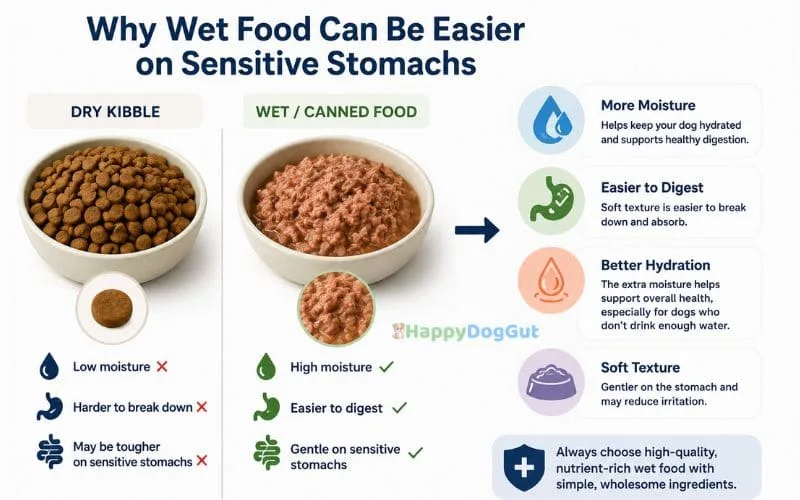
For some dogs, switching from dry kibble to a high-quality canned diet can help make mealtime easier on the digestive system. While wet food isn’t automatically better for every dog, its higher moisture content, softer texture, and often simpler formulation may be beneficial for dogs with occasional stomach sensitivity or those recovering from digestive upset.
Here’s why many dogs tolerate wet food well:
Higher Moisture Content
One of the biggest advantages of canned food is its naturally high moisture content, which typically ranges from 70% to 80%. Extra moisture helps support hydration, especially for dogs that don’t drink enough water throughout the day. Staying well hydrated also helps maintain normal digestive function and overall health.
Easier to Digest
Many wet foods are made with highly digestible proteins and gentle carbohydrate sources that are easier for some dogs to process. Because canned food contains more moisture and is less dense than dry kibble, it may move through the digestive system more comfortably for dogs with mild digestive sensitivities.
Soft Texture
The soft consistency of wet food requires less chewing and can be easier for puppies, senior dogs, and dogs recovering from illness or dental problems. For some sensitive dogs, the softer texture may also be gentler on the stomach during periods of digestive discomfort.
Supports Better Hydration
Proper hydration plays an important role in healthy digestion. Dogs that eat canned food naturally consume more water with each meal, which can help maintain normal stool consistency and support overall digestive health. While wet food isn’t a treatment for diarrhea or constipation, staying hydrated is especially important whenever a dog is experiencing digestive issues.
💡 Planning to feed a temporary bland diet before switching to regular wet food? Read our Bland Diet for Dogs for step-by-step feeding guidelines, portion recommendations, and tips for transitioning your dog safely back to a complete and balanced diet.
Signs Your Dog May Benefit From Canned Food
Not every dog with a sensitive stomach needs to switch to canned food. However, for some dogs, a high-quality wet diet can be easier to eat, digest, and tolerate than dry kibble. If your dog shows any of the signs below, it may be worth discussing a dietary change with your veterinarian.
Frequent Vomiting
Occasional vomiting can happen for many reasons, from eating too quickly to minor digestive upset. However, if your dog vomits regularly after meals, it may be a sign that their current diet isn’t the best fit. A canned food made with highly digestible ingredients may be easier on the stomach, but frequent or severe vomiting should always be evaluated by your veterinarian to rule out an underlying medical condition.
Recurring Diarrhea or Loose Stools
Dogs that frequently experience loose stools may benefit from a wet food formulated with digestible proteins, balanced fiber, and gentle ingredients. While changing to a stomach-friendly diet can help some dogs, persistent diarrhea shouldn’t be ignored.
If your dog’s stool is still loose after several days on a bland diet, our guide on Dog Still Has Loose Stool After Chicken and Rice explains the most common reasons, what you can try at home, and when it’s time to contact your veterinarian. Likewise, if your dog seems perfectly happy despite having soft stools, you may also find our article on Soft Stools but Acting Normal helpful for understanding when the problem can be monitored at home and when it deserves closer attention.
Picky Eating
Some dogs simply prefer the smell, flavor, and soft texture of canned food. If your dog consistently ignores dry kibble but eagerly finishes wet food, switching to a nutritionally balanced canned diet—or using it as a meal topper—may encourage more consistent eating without sacrificing nutrition.
Difficulty Staying Hydrated
Canned food contains significantly more moisture than dry kibble, making it a good option for dogs that don’t drink enough water throughout the day. The extra moisture helps support hydration, which plays an important role in normal digestion and overall health.
Senior Dogs
As dogs age, they may develop reduced appetite, slower digestion, or difficulty chewing hard kibble. A softer canned diet is often easier to chew and swallow while also providing additional moisture that can help support hydration in older dogs.
Dental Problems or Missing Teeth
Dogs with dental disease, sore gums, or missing teeth may struggle to chew dry food comfortably. Because canned food requires much less chewing, it can make mealtimes more comfortable while still providing complete and balanced nutrition. If your dog suddenly has trouble eating, it’s important to schedule a veterinary dental examination rather than assuming the problem is food-related.
A canned diet isn’t necessary for every dog with a sensitive stomach, but it can be a good option for dogs that struggle with digestion, hydration, chewing, or appetite. If digestive problems continue despite changing foods—or are accompanied by vomiting, weight loss, blood in the stool, or low energy—consult your veterinarian to determine the underlying cause before making long-term dietary changes.
Ingredients to Look For in Wet Dog Food for Sensitive Stomachs

Not all canned dog foods are formulated the same. If your dog has a sensitive stomach, choosing a recipe with gentle, high-quality ingredients can make a meaningful difference in digestion and overall gut health. Here are some of the most important ingredients to look for when comparing wet dog food options.
Single Animal Protein
Dogs with food sensitivities often do better on recipes that contain just one primary source of animal protein. A single-protein formula makes it easier to identify potential food triggers if digestive issues develop and can simplify an elimination diet when recommended by your veterinarian.
Common options include:
- Chicken
- Turkey
- Salmon
- Lamb
- Duck
If your dog has a known intolerance to a particular protein, look for a recipe that uses an alternative protein source instead.
Prebiotics
Prebiotics are specialized fibers that feed the beneficial bacteria living in your dog’s digestive tract. A healthy gut microbiome plays an important role in normal digestion, nutrient absorption, and stool quality.
Some common prebiotic ingredients include:
- Chicory root
- Dried beet pulp
- Inulin
- Fructooligosaccharides (FOS)
These ingredients help nourish beneficial gut bacteria without adding live microorganisms to the food.
Fiber
The right amount of dietary fiber helps support healthy digestion and more consistent stools. Soluble fiber absorbs water and can help improve stool quality, while insoluble fiber supports normal movement through the digestive tract. A balanced combination of both is often ideal for dogs with mild digestive sensitivities.
If you’d like to learn more about how different types of fiber support digestive health, check out our guide on Fiber Supplements for Dogs with Sensitive Stomachs, where we explain the best fiber sources and when they may be helpful.
Omega-3 Fatty Acids
Omega-3 fatty acids, commonly sourced from fish oil, help support overall health and may promote a healthy inflammatory response. They also contribute to healthy skin, a shiny coat, and may benefit the digestive system as part of a balanced diet.
Look for ingredients such as:
- Fish oil
- Salmon oil
- Menhaden fish oil
Pumpkin
Pumpkin is a natural source of both soluble and insoluble fiber, making it a popular ingredient in many digestive-support recipes. In appropriate amounts, it can help maintain normal stool consistency while also providing vitamins, minerals, and antioxidants that support overall wellness.
While pumpkin can be a helpful ingredient, it should be part of a complete and balanced diet rather than the primary solution for ongoing digestive problems.
Highly Digestible Carbohydrates
Carbohydrates provide energy, but choosing easily digestible sources is especially important for dogs with sensitive stomachs. Gentle carbohydrate sources are often easier to process than heavily refined fillers or difficult-to-digest ingredients.
Some commonly used digestible carbohydrates include:
- White rice
- Brown rice
- Oatmeal
- Potatoes
- Sweet potatoes
These ingredients can provide energy while helping create a recipe that’s gentler on the digestive system.
Takeaway: The best wet dog foods for sensitive stomachs focus on simple, digestible ingredients rather than long ingredient lists. A quality animal protein, balanced fiber, prebiotics, omega-3 fatty acids, and easily digestible carbohydrates work together to support healthy digestion and provide complete daily nutrition.
Ingredients to Avoid in Wet Dog Food for Sensitive Stomachs
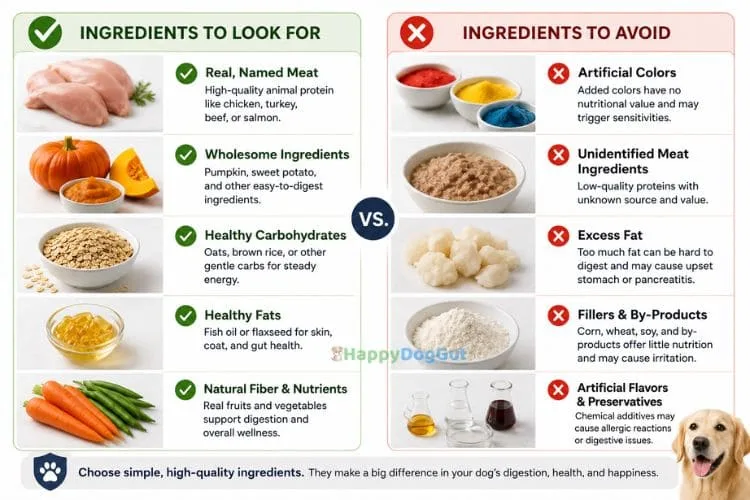
Choosing the right ingredients is just as important as avoiding the wrong ones. While every dog is different, certain ingredients are more likely to cause digestive discomfort in sensitive dogs. Reading the ingredient label carefully can help you make a more informed choice when selecting a canned diet.
Artificial Colors and Flavors
Artificial colors and flavors don’t provide any nutritional benefit. They’re primarily added to make pet food more appealing to people rather than dogs. Whenever possible, choose recipes that rely on quality ingredients instead of artificial additives.
Unnecessary Fillers
Some lower-quality dog foods contain fillers that offer little nutritional value and may be harder for certain dogs to digest. While not every filler is harmful, recipes packed with inexpensive ingredients instead of quality protein may not be the best choice for dogs with sensitive digestion.
Look for foods where real animal protein is one of the first ingredients rather than formulas that rely heavily on low-quality fillers.
Excess Fat
Dietary fat is an essential part of a balanced diet, but recipes that are excessively high in fat can be difficult for some sensitive dogs to tolerate. In certain cases, rich foods may contribute to digestive upset, especially if your dog has recently recovered from vomiting or diarrhea.
A moderate-fat formula is often a better choice unless your veterinarian recommends otherwise.
Unnamed Meat Ingredients
Ingredients listed as “meat,” “animal fat,” or “meat by-products” without clearly identifying the animal source can make it difficult to know exactly what your dog is eating. For dogs with food sensitivities, it’s generally better to choose recipes that clearly specify the protein source, such as:
- Chicken
- Turkey
- Salmon
- Lamb
- Duck
This makes it easier to avoid ingredients that may trigger digestive problems.
Too Many Protein Sources
Recipes that combine several different animal proteins aren’t necessarily unhealthy, but they can make it harder to identify the ingredient responsible if your dog develops a food sensitivity. For dogs with recurring digestive issues, a simpler recipe featuring a single primary protein source is often a more practical starting point.
If you’d like a deeper look at ingredients that may contribute to digestive problems, our guide on Dog Food Ingredients to Avoid for Sensitive Stomachs explains which ingredients deserve extra attention and how to read a dog food label with confidence.
The best canned foods for sensitive stomachs aren’t defined by a long list of trendy ingredients. Instead, look for simple, clearly labeled recipes made with quality protein, digestible carbohydrates, and balanced nutrition while avoiding unnecessary additives and overly complicated ingredient lists.
Grain-Free vs. Grain-Inclusive Canned Food: Which Is Better?
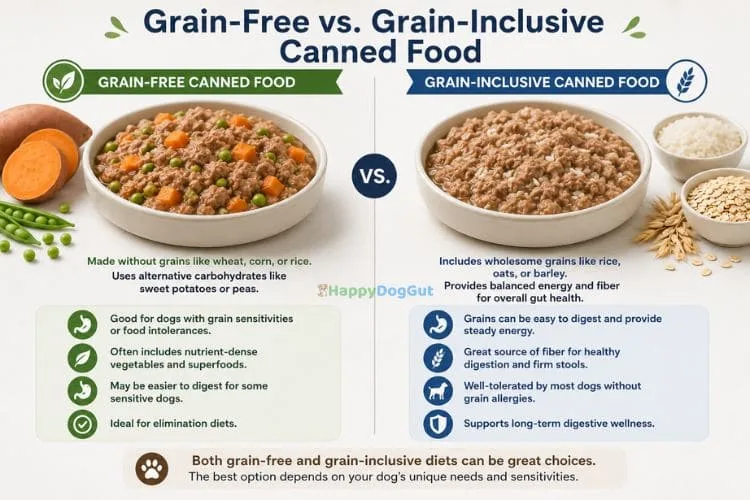
One of the most common questions dog owners ask is whether a grain-free or grain-inclusive canned food is better for a sensitive stomach. The truth is that neither option is automatically healthier. The best choice depends on your dog’s individual needs, digestive history, and any food sensitivities diagnosed by your veterinarian.
Here’s a closer look at the differences.
Grain-Free Canned Food
Grain-free recipes replace grains like rice, oats, or barley with ingredients such as potatoes, sweet potatoes, peas, or lentils.
Pros
- May be helpful for dogs with a confirmed grain sensitivity or allergy.
- Often available as limited-ingredient recipes.
- Frequently paired with a single animal protein source, making them useful for some elimination diets.
Cons
- Grain-free doesn’t automatically mean easier to digest.
- Most dogs digest properly cooked grains without any problems.
- Some grain-free diets have been investigated for a possible association with certain heart conditions in dogs, although the exact relationship is still being studied.
Grain-Inclusive Canned Food
Grain-inclusive recipes contain digestible grains such as rice, oatmeal, or barley alongside quality protein sources.
Pros
- Provides carbohydrates that many dogs digest well.
- Often includes ingredients like rice or oats that are gentle on the digestive system.
- Offers complete and balanced nutrition for most healthy dogs.
Cons
- Not suitable for dogs with a confirmed grain allergy, although true grain allergies are relatively uncommon.
- Some lower-quality foods may rely too heavily on inexpensive grains instead of quality animal protein.
Which Dogs May Benefit From Each?
A grain-free canned food may be worth considering if your dog has a veterinarian-confirmed grain sensitivity or is following an elimination diet to identify potential food triggers.
For most dogs with sensitive stomachs, however, a grain-inclusive recipe made with easily digestible grains like rice or oatmeal is often an excellent choice. These ingredients are well tolerated by many dogs and can provide a reliable source of energy without causing digestive upset.
The most important factor isn’t whether a food contains grains—it’s the overall quality of the recipe. Look for a diet with a clearly named animal protein, digestible ingredients, balanced fiber, and complete nutrition that matches your dog’s life stage.
If you’re unsure which option is right for your dog, our detailed guide on Grain-Free vs. Grain-Inclusive Dog Food for Sensitive Stomachs compares the benefits, potential drawbacks, and situations where each type of diet may be the better choice.
Don’t choose a canned food simply because it’s labeled “grain-free.” Instead, focus on ingredient quality, digestibility, and your dog’s individual nutritional needs. For many dogs with sensitive stomachs, a well-formulated grain-inclusive diet can be just as gentle—and sometimes even a better choice—than a grain-free alternative.
How to Transition to a New Canned Food
Even the best canned dog food should be introduced gradually. Switching diets too quickly can upset your dog’s digestive system and may lead to vomiting, gas, or loose stools. A slow transition gives the beneficial bacteria in your dog’s gut time to adjust to the new food, helping reduce the risk of digestive upset.
While some dogs adapt within a few days, a 5–7 day transition works well for most healthy adult dogs. Dogs with a history of digestive issues may benefit from an even slower transition if recommended by their veterinarian.
Day 1
- 75% current food
- 25% new canned food
Start by mixing a small amount of the new food with your dog’s current diet. Monitor their appetite, stool quality, and overall behavior over the next 24 hours.
Day 2
- 75% current food
- 25% new canned food
If your dog is eating well and showing no signs of digestive upset, continue with the same ratio for another day. This gives the digestive system additional time to adjust.
Day 3
- 50% current food
- 50% new canned food
Increase the amount of the new food while reducing the old diet. Continue watching for signs such as vomiting, diarrhea, excessive gas, or a noticeable loss of appetite.
Day 4
- 25% current food
- 75% new canned food
If your dog continues to tolerate the new diet well, increase the proportion of canned food again. Most dogs adjust smoothly when changes are made gradually.
Days 5–7
- 100% new canned food
By this stage, most dogs can eat the new food exclusively. Continue monitoring stool consistency and appetite during the first week. Mild changes in stool can occur temporarily, but persistent vomiting, diarrhea, or refusal to eat should be discussed with your veterinarian.
If your dog has a particularly sensitive stomach or has experienced digestive problems during previous food changes, consider extending the transition over 10–14 days instead of rushing the process.
Need a more detailed step-by-step plan? Our Dog Food Transition Guide explains how to switch foods safely, avoid common transition mistakes, and recognize signs that your dog may need a slower schedule.
Tip: Resist the urge to switch foods again if you notice mild digestive changes during the first day or two. Frequent diet changes can make it harder for your dog’s digestive system to adapt and may prolong stomach upset. Give the new food enough time to evaluate how your dog responds, unless your veterinarian advises otherwise.
Can Wet Food Help Dogs Recover From Diarrhea?

Wet food can be a helpful part of a dog’s recovery, but it’s important to understand that not all canned foods are designed for dogs recovering from diarrhea. During recovery, your dog’s digestive system needs foods that are gentle, easy to digest, and nutritionally balanced. Once your dog starts feeling better, you can gradually transition back to a complete everyday diet.
Here’s the difference.
Recovery Diet
A recovery diet is intended for short-term feeding while your dog’s digestive system settles after an episode of diarrhea or vomiting. These diets typically focus on simple, easily digestible ingredients that are less likely to irritate the stomach.
Common recovery diets include:
- A veterinarian-recommended gastrointestinal diet
- A temporary bland diet, such as boiled chicken and white rice
- Easily digestible canned foods recommended by your veterinarian
The goal is to give the digestive tract time to recover while maintaining hydration and providing enough nutrients during the healing process.
If you’re unsure what to feed during recovery, our guide on What to Feed a Dog After Diarrhea explains which foods are appropriate, how long to feed them, and when it’s safe to return to a regular diet. If you’re using a homemade bland diet, you’ll also find practical portion recommendations in How Much Chicken and Rice Should You Feed a Dog With Diarrhea?.
Everyday Canned Food
Once your dog’s stool has returned to normal and they’re eating comfortably again, it’s time to transition back to a complete and balanced everyday diet. This is where a high-quality canned food for sensitive stomachs may be a good option.
Unlike temporary recovery diets, everyday canned foods are formulated to provide all the essential nutrients your dog needs for long-term health. Many recipes also include highly digestible proteins, balanced fiber, and digestive-support ingredients that can help maintain healthy digestion after recovery.
Remember that even if you’re switching to a gentle canned food, the transition should still be gradual to avoid upsetting your dog’s digestive system again.
Wet food can support recovery from diarrhea, but it shouldn’t replace an appropriate recovery diet during the acute stage unless your veterinarian recommends it. First, focus on helping your dog’s digestive system recover with a suitable short-term diet. Once symptoms have resolved, gradually transition to a complete and balanced canned food that supports long-term digestive health.
When to Contact Your Veterinarian
Most cases of mild digestive upset improve with rest, hydration, and an appropriate diet. However, ongoing vomiting, diarrhea, or changes in your dog’s behavior can sometimes indicate a more serious health problem that requires professional care.
Contact your veterinarian promptly if your dog:
- Has diarrhea that lasts longer than 24–48 hours without improvement.
- Vomits repeatedly or cannot keep food or water down.
- Has blood in the stool or black, tarry-looking feces.
- Becomes unusually tired, weak, or difficult to wake.
- Refuses to eat for more than 24 hours (or sooner for puppies and senior dogs).
- Shows signs of dehydration, such as dry gums, sunken eyes, or reduced skin elasticity.
- Has severe abdominal pain, excessive bloating, or a swollen abdomen.
- Develops diarrhea shortly after eating something toxic or a foreign object.
- Has frequent digestive problems despite eating a high-quality diet.
- Is a puppy, senior dog, or has an underlying medical condition, as these dogs can become seriously ill more quickly.
While changing to a gentle canned food may help support healthy digestion, persistent or recurring digestive issues shouldn’t be treated with diet changes alone. Identifying and addressing the underlying cause is the best way to protect your dog’s long-term health.
If you’re unsure whether your dog’s symptoms are serious, our guide on When to Worry About Dog Diarrhea explains the warning signs that shouldn’t be ignored. You can also read When to See a Vet for Dog Diarrhea for a detailed checklist of symptoms that require prompt veterinary attention.
Takeaway: A quality canned diet can support digestive health, but it isn’t a substitute for veterinary care. If your dog’s symptoms are severe, persist beyond a couple of days, or are accompanied by warning signs like blood in the stool, repeated vomiting, dehydration, or lethargy, contact your veterinarian as soon as possible.
Frequently Asked Questions
Is canned food better than dry food for dogs with sensitive stomachs?
Not necessarily. Both wet and dry foods can support digestive health when they’re made with high-quality, easily digestible ingredients. Some dogs do better on canned food because of its higher moisture content and softer texture, while others thrive on dry kibble. The best choice depends on your dog’s individual needs, age, activity level, and digestive history rather than the type of food alone.
Can wet food stop diarrhea?
No. Wet food doesn’t cure diarrhea, and it shouldn’t be considered a treatment. However, a gentle, highly digestible canned diet may be easier for some dogs to tolerate during recovery or after their digestive system has stabilized. If diarrhea lasts more than a day or two, becomes severe, or is accompanied by vomiting, lethargy, or blood in the stool, contact your veterinarian.
How long should I feed canned food?
That depends on why you’re feeding it. If you’re using canned food as part of a temporary recovery plan, your veterinarian may recommend transitioning back to your dog’s regular diet once digestion has returned to normal. If you’ve chosen a complete and balanced canned food that meets your dog’s nutritional needs, it can also be fed as a long-term daily diet.
Is grain-free canned food better for sensitive stomachs?
Not always. Most dogs digest properly cooked grains like rice and oatmeal without any problems. Grain-free diets are generally most appropriate for dogs with a confirmed grain sensitivity or when specifically recommended by a veterinarian. For many dogs with sensitive stomachs, a well-formulated grain-inclusive recipe can be just as gentle and nutritious.
Can puppies eat canned food?
Yes. Puppies can eat canned food as long as it’s specifically formulated for growth or all life stages and provides complete and balanced nutrition. Their nutritional requirements are different from those of adult dogs, so it’s important to choose a formula that’s appropriate for their age and size.
Should I mix wet and dry food?
Yes, many dog owners successfully feed a combination of wet and dry food. Mixing the two can improve palatability, increase moisture intake, and add variety to your dog’s meals. Just be sure to adjust portion sizes so your dog receives the correct number of calories each day and transition gradually when introducing any new food.
Can canned food cause diarrhea?
It can, especially if you switch foods too quickly or choose a recipe that doesn’t agree with your dog’s digestive system. Rich formulas, sudden diet changes, or ingredients your dog is sensitive to may lead to loose stools. In some cases, digestive supplements added during a diet change can also contribute to temporary stomach upset. If you’re using probiotics alongside a new diet, our guide on Can Probiotics Cause Diarrhea in Dogs? explains why this can happen, when it’s considered normal, and when it may indicate a larger problem.
Final Thoughts
Finding the right canned food for a dog with a sensitive stomach isn’t about choosing the most expensive brand or the recipe with the longest ingredient list. Instead, focus on a diet that’s made with high-quality protein, easily digestible ingredients, balanced nutrition, and a formula that matches your dog’s individual needs.
If you’re looking for an overall recommendation, Hill’s Science Diet Sensitive Stomach & Skin Wet Food stands out for its research-backed formulation, highly digestible ingredients, and consistent quality. That said, it isn’t the best choice for every dog. Dogs with food sensitivities may do better on a limited-ingredient recipe, while others may thrive on a grain-inclusive formula with gentle carbohydrates like rice or oatmeal.
No single canned food works for every dog. Age, activity level, medical history, food sensitivities, and personal preferences all play a role in finding the right diet. That’s why it’s important to read ingredient labels carefully, compare nutritional information, and choose a food that’s complete and balanced for your dog’s life stage rather than relying on marketing claims alone.
Whenever you introduce a new food, make the transition gradually over 5–7 days (or longer if your dog has a history of digestive issues). A slow transition gives your dog’s digestive system time to adjust and helps reduce the risk of stomach upset caused by sudden diet changes.
Finally, remember that while the right canned food can support digestive health, it isn’t a cure for ongoing gastrointestinal problems. If your dog continues to experience frequent vomiting, diarrhea, weight loss, poor appetite, or other persistent digestive symptoms despite changing foods, schedule an appointment with your veterinarian. Identifying the underlying cause is the most effective way to improve your dog’s long-term health and comfort.
With a little patience and the right nutrition, many dogs with sensitive stomachs can enjoy comfortable digestion, healthier stools, and happier mealtimes for years to come.

Hi, I’m Maddy, the writer behind HappyDogGut.com.I’m passionate about helping dog parents better understand gut health, sensitive stomachs, and nutrition through clear, practical, and research-based content. Every article is carefully researched using trusted veterinary and pet health resources, so you can make more informed decisions for your dog’s digestive health.Happy Gut = Happy Dog! 🐾
All content on Happy Dog Gut follows our Editorial Policy.