If your dog poops right after eating, you may wonder whether it’s completely normal or a sign that something is wrong with their digestion. Some dogs seem to need a bathroom break almost immediately after finishing a meal, while others only do it occasionally.
In many cases, this behavior is linked to a natural digestive response called the gastrocolic reflex, which stimulates bowel movements after eating. However, frequent or urgent pooping after meals can also point to issues like sensitive stomachs, gut imbalance, poor diet quality, or digestive irritation.
Understanding the difference between normal digestive behavior and warning signs is important—especially if your dog also has loose stool, gas, or stomach discomfort. In this guide, we’ll explain why dogs poop right after eating, when it’s normal, and what you can do to support healthier digestion.
Is It Normal for Dogs to Poop Right After Eating?
Yes—in many cases, it is completely normal for a dog to poop right after eating. Some dogs naturally have a very active digestive response after meals, especially puppies and dogs with faster metabolisms.
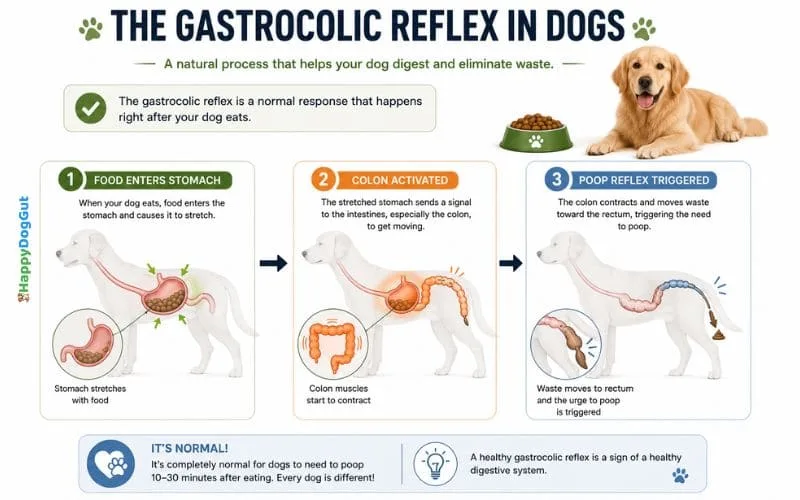
The main reason this happens is something called the gastrocolic reflex.
🔄 What Is the Gastrocolic Reflex?
The gastrocolic reflex is a natural body response that happens after eating.
When food enters your dog’s stomach:
- The stomach stretches slightly
- Signals are sent through the digestive system
- The colon becomes more active
This movement can trigger the urge to poop shortly after a meal.
👉 In simple terms: Eating activates the digestive tract, which can stimulate a bowel movement.
🐶 It’s Very Common in Puppies
Puppies often poop soon after eating because their digestive systems move food much faster than adult dogs.
Puppies:
- Eat more frequently
- Digest food quickly
- Have less bowel control
👉 This is why many puppy owners notice their dog needing to poop almost immediately after meals.
🐕 Some Adult Dogs Do It Too
Even healthy adult dogs may occasionally poop after eating—especially if they:
- Eat on a consistent schedule
- Have strong digestive reflexes
- Consume large meals
👉 As long as the stool looks normal and your dog isn’t showing other symptoms, it’s usually not a problem.
🟢 Occasional Pooping After Eating = Usually Normal
If your dog:
- Poops normally after meals
- Has firm stool
- Seems healthy and active
👉 Then this behavior is generally considered normal.
🔴 Frequent Urgency or Diarrhea = Not Always Normal
However, if your dog:
- Rushes outside urgently after every meal
- Has loose stool or diarrhea
- Strains while pooping
- Shows gas or stomach discomfort
👉 It may indicate digestive irritation, sensitive stomach issues, or gut imbalance rather than a normal reflex.
The important thing isn’t just how quickly your dog poops after eating—it’s the overall quality of digestion.
👉 Normal stool + Healthy behavior = Usually fine
👉 Frequent urgency + Digestive symptoms = Worth investigating
Why Does My Dog Poop Right After Eating?
If your dog poops right after eating, there usually isn’t just one single cause behind it. In many cases, it’s related to how the digestive system naturally responds to food—but sometimes it can also signal digestive sensitivity or diet-related problems.
Here are the most common reasons this happens:
🍽️ Gastrocolic Reflex (Natural Body Response)
The most common explanation is the gastrocolic reflex, which is a normal digestive response.
When your dog eats:
- The stomach stretches
- Digestive nerves activate
- The intestines begin moving
This tells the body to make room for incoming food, which can trigger a bowel movement shortly after eating.
👉 Some dogs simply have a stronger digestive reflex than others.
🐶 Puppies Digest Food Faster
Puppies often poop more quickly after meals because their digestive systems work faster than adult dogs.
Compared to adult dogs, puppies:
- Eat more often
- Process food more rapidly
- Have smaller digestive systems
👉 This is why frequent bowel movements are much more common in younger dogs.
If your puppy also has a sensitive stomach, choosing the right food can help support healthier digestion. You can explore options in Best Puppy foods for Sensitive Stomachs.
🦠 Gut Imbalance or Sensitive Stomach
Dogs with sensitive stomachs or poor gut health may experience stronger digestive reactions after meals.
When gut bacteria becomes imbalanced:
- Digestion becomes less stable
- Stool quality may worsen
- Urgency after eating can increase
👉 To understand how gut health affects digestion, read Dog Gut Bacteria Explained.
🌾 Poor Diet or Low-Quality Ingredients
The quality of your dog’s food plays a major role in digestion.
Low-quality foods containing:
- Artificial additives
- Fillers
- Hard-to-digest ingredients
can irritate the digestive system and lead to more urgent bowel movements after meals.
👉 You can learn which ingredients may contribute to digestive problems in Dog Food Ingredients to avoid for sensitive stomachs.
💩 Loose Stool or Digestive Irritation
If your dog’s stool is soft or inconsistent, pooping right after eating may be linked to digestive irritation rather than a normal digestive reflex.
This is especially true if your dog also has:
- Frequent loose stool
- Gas
- Stomach noises
- Mild discomfort after meals
👉 Improving stool quality can often reduce urgency. You can explore dietary options in Best Dog foods for loose stool.
For many dogs, pooping after eating is completely normal. But when it happens alongside loose stool, urgency, or digestive discomfort, it may point to deeper gut or diet-related issues.
👉 The key is to look at the overall digestive picture, not just the timing of the bowel movement.
When Is Pooping After Eating NOT Normal?
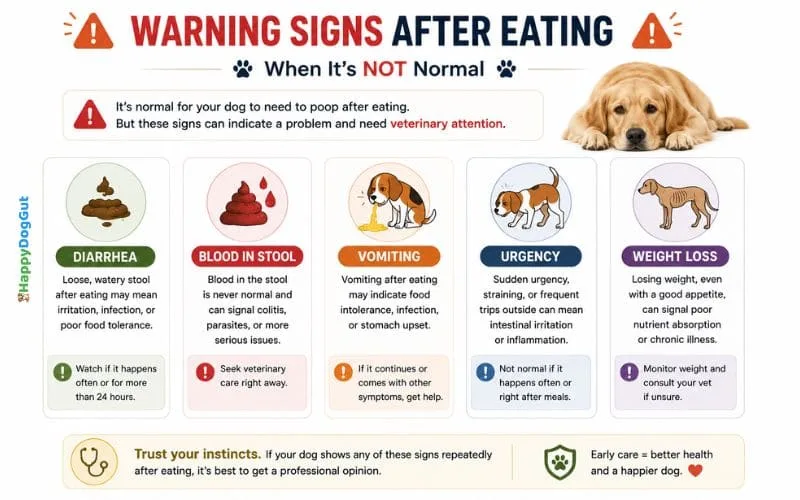
While many dogs naturally poop after meals, there are times when this behavior may point to a digestive problem rather than a normal body response. The biggest difference is usually found in the stool quality, urgency, and additional symptoms.
If your dog shows any of the following signs regularly, it’s important to pay closer attention.
💩 Diarrhea Every Time After Eating
If your dog has loose stool or diarrhea almost every time they eat, that’s not considered normal.
This may indicate:
- Digestive irritation
- Food intolerance
- Gut imbalance
- Poor diet quality
👉 Occasional soft stool can happen, but repeated diarrhea after meals usually means the digestive system is struggling.
If you’re unsure when diarrhea becomes serious, read When to Worry about Diarrhea in dogs.
⚠️ Straining While Pooping
A healthy bowel movement should happen without difficulty.
If your dog:
- Strains excessively
- Looks uncomfortable
- Takes a long time to poop
👉 It may signal inflammation, digestive irritation, or bowel issues rather than a normal digestive reflex.
🩸 Blood in Stool
Blood in your dog’s stool should never be ignored.
It may appear as:
- Bright red streaks
- Dark or black stool
- Mucus mixed with blood
This can be linked to:
- Intestinal inflammation
- Severe irritation
- Infection or other digestive problems
👉 Blood in stool always deserves veterinary attention.
🚨 Sudden Urgency After Every Meal
Some dogs calmly poop after eating—but others suddenly rush outside or can’t hold it.
Frequent urgency may indicate:
- Sensitive digestion
- Colon irritation
- Gut imbalance
👉 This is especially important if the behavior starts suddenly or becomes more frequent over time.
⚖️ Unexplained Weight Loss
If your dog is pooping frequently after meals and losing weight, it may suggest poor nutrient absorption.
This can happen when the digestive system is unable to properly process food.
👉 Weight loss combined with digestive symptoms is a strong sign that something more serious may be happening.
🔗 When Should You See a Vet?
If your dog shows ongoing digestive symptoms along with urgent bowel movements after eating, it’s important to know when professional help is needed.
👉 Learn more in:
👉 Pooping after eating can be normal.
👉 But frequent diarrhea, urgency, blood, or weight loss are not things to ignore.
The key is to focus on your dog’s overall digestive health—not just how quickly they poop after meals.
What Happens Inside Your Dog’s Digestive System After Eating?
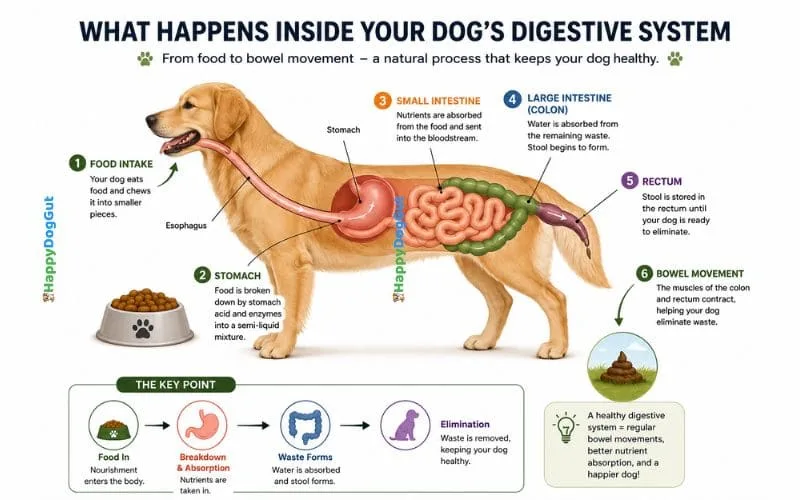
To understand why some dogs poop shortly after meals, it helps to know what happens inside the body right after eating. The process is actually a normal part of digestion and is designed to help move food through the digestive system efficiently.
Here’s a simple breakdown of what happens:
🍽️ The Stomach Starts Stretching
As soon as your dog eats, food enters the stomach and causes it to expand slightly.
This stretching sends signals to the digestive system that new food is arriving and digestion is about to begin.
👉 The body immediately starts preparing for the next stage of digestion.
🧠 Nerves Signal the Colon to Become Active
Once the stomach stretches, special digestive nerves become activated.
These signals travel through the digestive tract and tell the colon (large intestine) to start moving existing waste through the body.
This process is part of the gastrocolic reflex, which is a completely natural digestive response.
👉 In simple terms, eating tells the body:
“New food is coming in, so it’s time to make room.”
💩 A Bowel Movement Gets Triggered
As the colon becomes more active, your dog may suddenly feel the urge to poop.
For some dogs, this happens:
- Within a few minutes after eating
- More commonly after large meals
- More strongly in puppies or sensitive dogs
👉 This is why some dogs head straight to the door right after finishing their food.
🐶 Why Some Dogs React More Strongly Than Others
Not every dog has the same digestive sensitivity.
Some dogs naturally have:
- Faster digestion
- Stronger gastrocolic reflexes
- More sensitive digestive systems
This can make bowel movements happen more quickly after meals—even when the dog is otherwise healthy.
🧠 Simple Way to Understand It
👉 Eating activates the digestive system.
👉 The digestive system activates the colon.
👉 The colon triggers a bowel movement.
In many dogs, this is completely normal and simply part of how their body processes food.
Pooping after eating doesn’t automatically mean something is wrong. In many cases, it’s simply the digestive system responding the way it’s designed to.
👉 The important thing is to watch for other symptoms like diarrhea, urgency, or discomfort that may suggest an underlying digestive issue.
How to Improve Digestion and Reduce Urgent Pooping
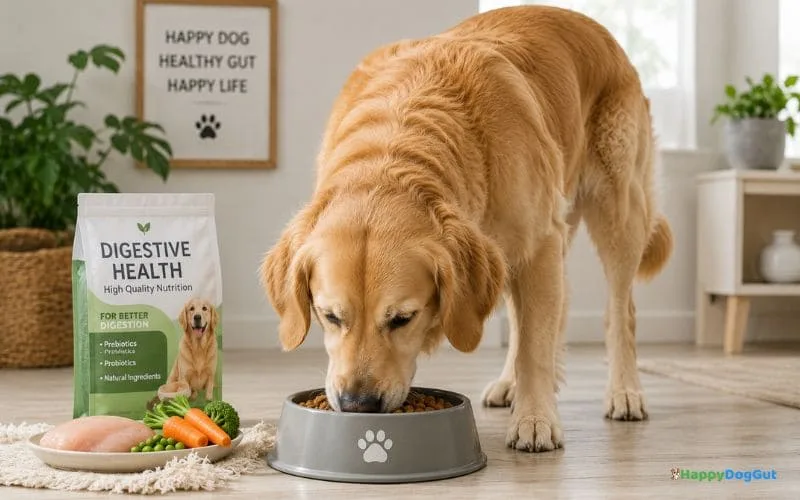
If your dog poops right after eating occasionally, it’s usually not a problem. But if the behavior becomes frequent—especially with loose stool or urgency—improving digestion can often make a noticeable difference.
The goal is to support a healthier, more stable digestive system instead of just reacting to the symptoms.
Here are some of the most effective ways to help:
🍽️ Feed Higher Quality Food
The quality of your dog’s food has a direct impact on digestion.
Low-quality foods with fillers, artificial additives, or hard-to-digest ingredients can irritate the digestive tract and lead to faster bowel movements after meals.
Switching to a more digestible, balanced diet may help:
- Improve stool consistency
- Reduce digestive irritation
- Support better nutrient absorption
👉 If you’re looking for better diet options, check Best Dog food for sensitive stomachs.
🌾 Add Fiber Carefully
Fiber helps regulate digestion and improve stool quality, but it needs to be balanced properly.
The right amount of fiber can:
- Slow digestion slightly
- Support healthier bowel movements
- Improve stool firmness
However, adding too much fiber too quickly can actually worsen digestive upset.
👉 You can explore safe options in Best Fiber Supplements for dogs with sensitive stomachs.
🦠 Support Gut Health
A balanced gut microbiome helps digestion work more smoothly.
When gut bacteria is disrupted, dogs may experience:
- Loose stool
- Digestive urgency
- Gas and discomfort
Adding probiotics may help restore balance and improve digestive stability over time.
👉 Learn more in Best Probiotics for dogs with sensitive stomachs.
🚫 Avoid Overfeeding
Large meals can overstimulate the digestive system and trigger stronger bowel movements after eating.
Overfeeding may lead to:
- Faster digestive activity
- Stomach discomfort
- Urgent pooping after meals
👉 Smaller, controlled portions are often easier for the digestive system to handle.
⏳ Keep Feeding Schedule Consistent
Dogs generally digest food better when meals happen on a regular schedule.
An inconsistent routine can:
- Disrupt digestion
- Increase urgency
- Make bowel movements less predictable
Feeding your dog at the same times each day helps the digestive system stay more stable and balanced.
Improving digestion is often the best long-term solution for dogs that frequently poop right after eating.
👉 Small changes—like better food, proper fiber, and a consistent routine—can make a big difference in your dog’s digestive health over time.
Puppies vs Adult Dogs: Is There a Difference?
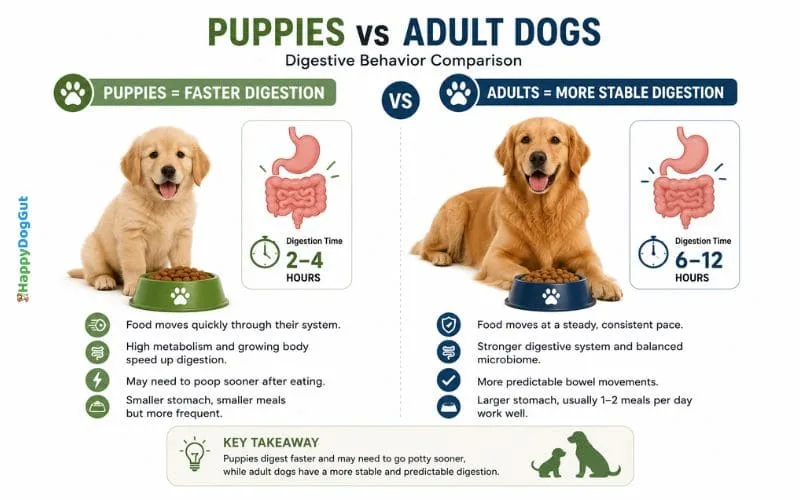
Yes—there’s a big difference between how puppies and adult dogs digest food and respond after meals.
This is important because pooping right after eating is often much more normal in puppies than it is in fully grown adult dogs.
🐶 Puppies Naturally Poop More Often
Puppies have very active digestive systems and smaller stomachs, which means food moves through their bodies more quickly.
Compared to adult dogs, puppies:
- Eat more frequently
- Digest food faster
- Need more bathroom breaks throughout the day
👉 This is why many puppies poop shortly after meals without it being a serious concern.
⚡ Faster Digestion in Puppies
Because puppies are growing rapidly, their bodies process nutrients at a faster rate.
Their digestive systems are designed to:
- Absorb nutrients quickly
- Move food through the intestines faster
- Eliminate waste more often
👉 In young puppies, it’s completely normal to need a bowel movement within minutes after eating.
🐕 Adult Dogs Should Be More Stable
Adult dogs usually have slower, more predictable digestion compared to puppies.
Most healthy adult dogs:
- Have more consistent bowel habits
- Poop fewer times per day
- Show less urgency after meals
👉 Occasional pooping after eating can still be normal in adults, especially due to the gastrocolic reflex. However, frequent urgency, loose stool, or digestive discomfort should not be ignored.
⚠️ When to Pay More Attention in Adult Dogs
If an adult dog suddenly starts pooping urgently after meals—especially with symptoms like diarrhea, gas, or vomiting—it may suggest:
- Sensitive stomach issues
- Gut imbalance
- Diet-related irritation
- Digestive problems
Changes in bathroom habits are often more meaningful in adult dogs than in puppies.
👉 Puppies = faster digestion and more frequent pooping is normal
👉 Adult dogs = digestion should usually be more stable and predictable
The important thing is to focus on the overall quality of digestion, stool consistency, and any additional symptoms your dog may be showing.
Signs Your Dog’s Digestion May Need Help
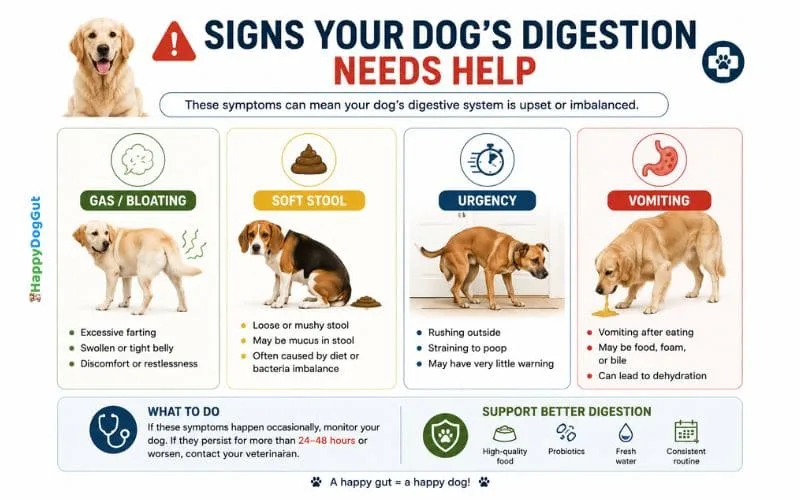
Occasionally pooping after eating can be completely normal—but when it’s combined with other digestive symptoms, it may indicate that your dog’s digestive system needs extra support.
The key is to look for patterns rather than focusing on just one symptom.
Here are some common signs that your dog’s digestion may not be functioning properly:
💨 Excess Gas or Bloating
Frequent gas is often one of the first signs of digestive imbalance.
You may notice:
- Strong-smelling gas
- Stomach noises
- Mild bloating after meals
This can happen when food isn’t being digested efficiently or when gut bacteria becomes unbalanced.
👉 You can learn more in Best dog foods for Gas and Bloating in dogs.
💩 Soft Stool or Loose Stool
Healthy digestion usually produces firm, well-formed stool.
If your dog regularly has:
- Soft stool
- Loose bowel movements
- Inconsistent stool quality
👉 It may suggest irritation in the digestive tract or difficulty processing food properly.
🚨 Frequent Urgency After Meals
A strong urge to poop immediately after eating—especially every single meal—can sometimes point to digestive sensitivity rather than a normal gastrocolic reflex.
This is especially important if your dog:
- Rushes outside urgently
- Cannot hold bowel movements well
- Seems uncomfortable after eating
🤮 Vomiting or Stomach Upset
Vomiting combined with frequent bowel movements may indicate that the digestive system is under stress.
This can happen due to:
- Sensitive stomachs
- Poor diet quality
- Gut imbalance
- Digestive irritation
If your dog shows multiple digestive symptoms together, it’s worth paying closer attention.
Some dogs with ongoing digestive issues also show broader signs of stomach sensitivity and gut imbalance.
You can explore more symptoms in 7 signs your dog has a sensitive stomach (what most owners miss).
🧠 Key Takeaway
👉 One mild symptom occasionally may not be serious.
👉 But multiple digestive symptoms happening together usually mean your dog’s digestion needs support.
Paying attention early can help prevent small digestive issues from turning into long-term problems.
FAQs About Dogs Pooping Right After Eating
Why does my dog poop immediately after eating?
The most common reason dogs poop immediately after eating is something called the gastrocolic reflex. This is a natural digestive response where eating stimulates movement in the intestines and colon, triggering a bowel movement shortly after a meal.
In many dogs, this is completely normal—especially if the stool is firm and your dog seems healthy overall.
However, if your dog also has:
Loose stool
Urgency
Gas
Vomiting
Digestive discomfort
It may indicate a sensitive stomach, gut imbalance, or diet-related issue rather than a normal digestive response.
Is it normal for puppies to poop right after eating?
Yes, it’s very common for puppies to poop shortly after meals.
Puppies have:
Faster metabolisms
Smaller digestive systems
More frequent feeding schedules
Because of this, food moves through their digestive system more quickly than it does in adult dogs.
In most cases, frequent bowel movements in puppies are completely normal unless they are accompanied by diarrhea, vomiting, or poor appetite.
Can food cause urgent pooping in dogs?
Yes, food quality can directly affect how quickly your dog needs to poop after eating.
Low-quality or hard-to-digest ingredients may irritate the digestive tract and lead to:
Urgent bowel movements
Loose stool
Gas and bloating
Some dogs are also sensitive to certain ingredients, which can make digestion less stable.
Switching to a more digestible, high-quality diet often helps improve stool consistency and reduce urgency.
How many times should a dog poop each day?
Most healthy adult dogs poop between 1–3 times per day, although this can vary depending on:
Age
Diet
Activity level
Feeding frequency
Puppies usually poop more often because they eat more frequently and digest food faster.
What matters most is consistency. Sudden changes in bathroom habits—especially combined with digestive symptoms—may indicate that something is affecting your dog’s digestion.
Can probiotics help dogs that poop right after eating?
In some cases, yes. Probiotics may help support digestive balance by improving the health of beneficial gut bacteria.
They can help:
Improve stool consistency
Reduce digestive irritation
Support more stable digestion
However, probiotics work best when combined with:
A high-quality diet
Consistent feeding routine
Proper portion sizes
They are most helpful when urgent pooping is linked to gut imbalance or digestive sensitivity.
When should I worry if my dog poops after every meal?
You should pay closer attention if your dog:
Has diarrhea after meals
Strains while pooping
Shows urgency every single time
Vomits frequently
Loses weight
Pooping after meals itself isn’t always a problem, but ongoing digestive symptoms usually mean the digestive system needs support or medical attention.
Can too much fiber make dogs poop more often?
Yes, excessive fiber can sometimes increase bowel movements.
While fiber helps regulate digestion, too much fiber may:
Speed up stool production
Increase poop frequency
Cause softer stool in some dogs
Fiber should always be balanced carefully based on your dog’s digestive needs.
Why did my adult dog suddenly start pooping right after eating?
If an adult dog suddenly develops urgent bowel movements after meals, it may signal a change in digestion rather than a normal habit.
Possible causes include:
Diet changes
Gut imbalance
Sensitive stomach issues
Digestive irritation
Mild illness or stress
Sudden changes in bathroom habits are usually more important in adult dogs than in puppies and should be monitored closely.
Final Thoughts
If your dog poops right after eating occasionally, it’s usually nothing to worry about. In many cases, it’s simply a natural digestive response and part of how the body processes food.
👉 Occasional bowel movements after meals = Often normal
However, if your dog regularly experiences loose stool, urgent bathroom trips, gas, vomiting, or digestive discomfort after eating, it may be a sign that something deeper is affecting their digestion.
👉 Frequent loose stool or digestive symptoms = Worth investigating
The good news is that many digestive issues can improve with the right diet, better gut support, and a consistent feeding routine. Paying attention to small changes early can help prevent bigger problems later.
👉 Healthy digestion plays a major role in your dog’s overall health and comfort
At the end of the day, understanding your dog’s digestive patterns is one of the best ways to support long-term gut health and well-being.

Hi, I’m Maddy, the writer behind HappyDogGut.com.I’m passionate about helping dog parents better understand gut health, sensitive stomachs, and nutrition through clear, practical, and research-based content. Every article is carefully researched using trusted veterinary and pet health resources, so you can make more informed decisions for your dog’s digestive health.Happy Gut = Happy Dog! 🐾
All content on Happy Dog Gut follows our Editorial Policy.